Category: online | 線上 | 온라인으로 | オンライン

The online field has been one of the mainstays since I started writing online in 2003. My act of writing online was partly to understand online as a medium.

Online has changed in nature. It was first a destination and plane of travel. Early netizens saw it as virgin frontier territory, rather like the early American pioneers viewed the open vistas of the western United States. Or later travellers moving west into the newly developing cities and towns from San Francisco to Los Angeles.

America might now be fenced in and the land claimed, but there was a new boundless electronic frontier out there. As the frontier grew more people dialled up to log into it. Then there was the metaphor of web surfing. Surfing the internet as a phrase was popularised by computer programmer Mark McCahill. He saw it as a clear analogue to ‘channel surfing’ changing from station to station on a television set because nothing grabs your attention.

Web surfing tapped into the line of travel and 1990s cool. Surfing like all extreme sport at the time was cool. And the internet grabbed your attention.

Broadband access, wi-fi and mobile data changed the nature of things. It altered what was consumed and where it was consumed. The sitting room TV was connected to the internet to receive content from download and streaming services. Online radio, podcasts and playlists supplanted the transistor radio in the kitchen.

Multi-screening became a thing, tweeting along real time opinions to reality TV and live current affairs programmes. Online became a wrapper that at its worst envelopes us in a media miasma of shrill voices, vacuous content and disinformation.

  • Bing versus search giants

    I have been playing with Bing for a little while now, so here’s my thoughts. The first thing that struck me about Bing is that most media commentators don’t get it. A classic example of what I mean is The search continues by Paul Taylor of the Financial Times (June 4, 2008). In his article Paul compares Bing to Google.

    Steve Ballmer would definitely like to be Google, because he knows that the Microsoft heartland of productivity and enterprise software is going to be offering much lower margins when it goes into cloud computing. Ballmer has no choice but to go after the search market.  But in order to fight the shark in the fish tank he first of all has to get Microsoft’s search products up to a challenger weight to take on Google. The first way that this is happening is the efforts that Microsoft has done to use Google’s size and success against itself in a set of regulatory judo moves. The second step is try try and fatten up on smaller fry.

    If you are going to gobble up one of the smaller fish you don’t have that many choices. Whilst Yahoo! got mauled by Microsoft, having to jettison Yang from the CEO chair along the way, it is still alive and kicking with a larger marketshare than MSN/Live/Bing search (though curiosity kicked Bing into second place for a few days during its launch).

    The ideal second choice is Ask.com.

    Why Ask.com?

    • Ask has moved away from competing in the main search space by focusing on a demographic focused on ‘married women who need help with their busy lives’. It has essentially put up the white flag of surrender
    • Ask doesn’t have marketing muscle, it doesn’t have budgets for high-profile advertising campaigns. Microsoft has cash to burn on hiring agency marketing muscle in the form of Crispin Porter + Bogusky. Television is an ideal vehicle to reach married women who need help with their busy lives and advertising agencies like Crispin  Porter + Bogusky love TV adverts
    • Ask’s promise of being a natural language search engine where you could ask questions set the bar low enough that Microsoft could at least try and match it with Bing by utilising the expertise and technology Microsoft got when it acquired PowerSet
    • A lot of Ask’s traffic comes from toolbars that sit in the chrome of a browser (thats the grey bit above the web page where the address box and the buttons are).  Given that in 2005,  at one point Microsoft was even tagging Ask’s MyWebSearch toolbar as a “Toolbar Browser Hijacker”, it would be easy to sweep those busy married women along with a new complex web browser like IE8 that they don’t have the time to customise and a search web page that looks a lot like what they usually go to anyway

    Plagiarism

    Bing JPG

    In case you missed that last statement the likeness of the Ask.com home page and the Bing home page are strikingly similar in customisation and layout.

    Ask JPG

    The positioning against Google is try and give Bing some credibility but the results and the search audience experience says that its all about Ask.com. Do you think Bing would have really got any air time from Paul Taylor if they had said we’ve brought out a new search engine that is just like Ask.com?

    Industry innovator?

    It would seriously damage Microsoft’s aspiration to be seen as an industry innovator rather than kludging together products that kind of look like the real thing. The copier is something that the company has been dubbed with countless times before for good reason:

    • DOS versus CP/M
    • Windows versus the Mac
    • Zune versus iPod/iTunes
    • SQL Server versus Oracle or IBM DB2
    • XBox versus PlayStation

    Bing isn’t truly innovative (I am sure people worked hard to get it out the door in the same way they would at a Russian tractor factory, but its not innovative in a transformational way); its an imitation of a well-established fading product in Ask. It is the search engine equivalent of an over-the-hill punch drunk journeyman boxer who is easy prey for a frustrated large but untalented bully to reign down punches on. The whole thing feels a bit grubby to me: less successful crooning innovator Bing Crosby (he helped pioneer the use of tape recorders in studios, funding Ampex’s research into the area building on AEG’s Magnetophon), more like the mafioso catchphrase Bada Bing.

  • Microsoft IE + other news

    Microsoft IE

    It is hard to explain how dominant Microsoft IE or Internet Explorer was for online access. For years Microsoft IE was the tip of a range of technologies that integrated with online experiences that sustained Windows dominance.

    I was a late adapter to online banking since for years my bank required the use of Microsoft IE. Microsoft IE security technology was required for anything in Korea due to a government mandated ActiveX security digital certificate that relied on Microsoft IE.

    EU Plans Fresh Strike on Microsoft – WSJ.com – there a flaw in it as Microsoft could still configure the browsers and tweak them to make them difficult to alter guaranteeing MSN / Live / Bing ‘unwilling’ traffic off 404 pages and the search box in the browser chrome

    Microsoft calls off EU antitrust hearing over IE – Microsoft legal counsel accused EU of being inflexible in that they wouldn’t fit in around MS’ busy diary to discuss Microsoft IE

    It’s Time For Microsoft To Face Reality About Search And The Internet (MSFT)

    Business

    Pricing, WOM, PR Efforts Get Recession Boost

    Consumer behaviour

    Generation Mobile: Internet and Online Media Usage on Mobile Phones among Low-Income Urban Youth in Cape Town, South Africa

    A.L.L. = Afghan Lessons Learned for Soldiers – interesting site by US servicemen looking to plug the knowledge gaps that US DoD training leaves. Using a blog platform for simplicity

    Design

    Cathay Pacific – Meet the team who go the extra mile to make you feel special – really nice bit of flash work that encourages you to play with the animation

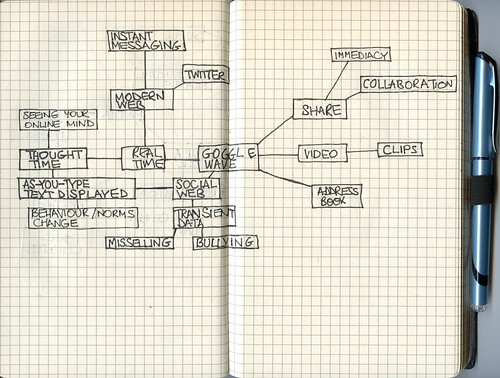
    Google eats Microsoft’s lunch with the launch of Google Wave | Econsultancy – really surprised at how hard Microsoft PR and marketing teams got played on this launch. The ironic thing was that Google took this straight out of the Microsoft playbook

    Gadget

    LED TVs hit the market, but will they sell? » VentureBeat

    Media

    Social media reality check

    China’s Mobile Internet Advertising | Digital China Guide

    UK government challenged by alternative Digital Britain report – Brand Republic News – Brand Republic

    The Media Business: Seeing through the Haze Surrounding Websites, Blogs and Social Media

    The Media Business: The Challenges of Online News Micropayments and Subscriptions

    Online

    How can Twitter dig itself out of hashtag hell? | Blog | Econsultancy

    Mobile Internet in China is about to heat up! | Digital China Guide

    Fake Reviews. Now now kids, play nice… at Malcolm Barclay

    Retailing

    Multiple Brand Personality Disorder: Who’s confusing who? | Econsultancy

    Victoria’s Secret enters mobile commerce arena – Mobile Marketer – Commerce

    ICFF: Kikkerland’s Booth Becomes a Meal for Those in Need – PSFK.com

    Bloggasm » Anti-Starbucks filmmakers hijack the coffee company’s own Twitter marketing campaign

    Software

    Panasonic: Open-source smartphones are the future » VentureBeat – Panasonic is going to re-enter foreign mobile phone markets with new open source-based phones

    Telecoms

    Total Telecom – Sea change at Nokia – interesting analysis of the Nokia business

  • Cultural energy crisis?

    Mark Fisher argued that there was an effective cultural energy crisis in his article Running on empty published in the New Statesman online. His premise was that culture lacked the energy it had in previous decades. That the noughties are encompassed by a sense of cultural deceleration. He argues that cultural changes were driven by technology and that these technologies gave cultures their indelible mark: what he calls a ‘technological rapture’ that is absent from present culture.

    The present moment might in fact be best characterised by a discrepancy between the onward march of technology and the stalling, stagnation and retardation of culture.

    He characterises the web in its ‘web 2.0’ incarnation as regurgitating older media forms and having a parasitic relationship on ‘old media’ forms and that web 2.0 encourages us to ‘behave like spectators’. That web 2.0 deprives cultural movements of a ‘laboratory’ to evolve before hitting the mainstream and the networked world provides us with a broadly homogenised culture. Fisher summarises that ‘that technology will not deliver new forms of culture all on its own’.

    I think that Fisher’s rhetoric is first-rate, many of the assertions can be disproved (if we had a homogeneous culture, then why is Clear Channel’s radio business going through a long and lingering death spiral)?

    I find his point about technology not delivering new forms of culture all on its own most interesting though as I don’t believe that it ever did deliver new forms of culture. It helped them certainly, but it is only one ingredient in cultural change.

    The 1960s and the 1970s were as much about a new individual consumerism and a disillusionment with government as much as technological leap forwards. The acid house and rave movement, whilst influenced by cheap computing, digital samplers, MDMA manufacture and cheaper analogue synthesisers it was also influenced by the depressing soulless nature of the 1980s.

    Secondly, I’d argue that technological innnovation is ‘lumpy’ at the moment there isn’t one ‘world changing’ paradigm shift recently. Recent ones would have been the ‘web, affordable jet travel, the contraceptive pill, colour television, desktop page layout software and the ubiquitous mobile phone.

    Many of the energetic sub-cultures that Fisher describes had a similar parasitic nature on old media and cultures that he attributes to web 2.0. Jungle would have been nowhere without the Amen Break from the b-side to Color Him Father by The Winstons released back in 1969. Acid house pioneers saw a clear lineage between themselves and electronic music pioneers like Kraftwerk. House and garage were as much about recreating in electronic means the sounds of the Salsoul record label as they were about blazing a new trail. And I haven’t even mentioned Andy Warhol or the way rock music raped and plundered rhythm and blues.

    Finally maybe cultural progress or energy has moved from being a linear track of occurrences: hippies -> progressive rock -> glam rock -> punk and disco -> new romantics -> rave to a massively parallel cultural shift as we can access and tune into Japanese music, Korean films and read about Finnish design in a moment-by-moment way that wouldn’t have been possible before? More on culture here.

  • Pen pals

    When I was a kid, I, along with with the rest of my primary school class had pen pals. We learned about life in the US from students at an elementary school in Palo Alto. I learned what root beer, a peanut butter and a grape jelly sandwich and granola tasted like. I found out how exciting it was to play Pong and how much of a drag it was to go on a road trip to the Yellowstone national park. I was shocked to hear that girls played football and found out what it was like to go to an American football match. We fell out of touch when my pen pal went to summer camp one year, tweens are fickle that way.

    My Mam has used cards and occasional letters to keep in touch with former work colleagues who she worked alongside 45 years ago in a manual telephone exchange as a operator in a small Irish market town. (In those days, you didn’t dial a number directly like you did today, an operator made the connection for you operating a series of peg boards and was also involved in parts of the billing through a docketing system. Now you can dial pretty much any number around the world from a cell phone in your pocket or the Skype software on your home computer).  Despite that they are now in North America and Ireland, the pen pals keep each other abreast of major life developments and kept alive the ties that bound them together as work colleagues sharing a shift roster all them years before.

    Now being a pen pal is a more adult affair. Fear of peadophiles, multi-channel television stations and the immediate commications environment of the internet has reduced pretty much all the factors that made writing to pen pals an attractive activity for kids.  If you were ten today, why communicate by letter when reality television allows you to see inside other people’s lives with your own eyes, you don’t need to wait a week or more for a letter you could chat to new-found friends on Club Penguin?

    I went through the Wikipedia article on pen pals to see if I could find useful information to colour this posting with. I found out about the phenomena of prison pen pals. In the US (and most other countries) penal systems, convicts don’t have access to internet communications, so the mail system, limited phone calls and visits are their only way of communicating with their contacts. Combine that with bad boy (or girl) charm and you can understand why prison pen pals has a niche appeal (the site design is effective if dated with mid 90s GIF clip art and MIDI melodies that go with profiles: most of them seem to be fans of the musical Annie and have ‘Its a hard knock life’ as their profile music).

    What does the demise of the pen pal mean that we will have a change in the kind of networks and the nature of networks that we have in the future in comparison to previous generations? I think that whilst we may have hundreds of social network friends, these networks are likely to be ‘looser’ than pen pal contacts, an exchange of letters has got to be a different interaction to wall postings and Facebook status messages.

  • GeoCities

    When people ask me about social media: teach them how to do <insert an activity> on <insert the name of a service de jour> and I say sure I can teach you that (for a fee). Much of the value comes from being curious, this is as much about the way think and look at things as anything else. The second is trying to learn from history, which is why I was curious about the likes of Geocities. You can pick up skills as you go along, once you know what you want to do.

    Historic interest and Geocities

    However, services come and go, but the conversation remains. A classic case-in-point is GeoCities. Yahoo! has non-announced that it is shuttering this pioneering social network at the end of the year. GeoCities was founded in the mid-1990s and grew rapidly (ok so this was the dial-up era and the page building tools on it were the then equivalent of cutting edge-bandwidth hogging web 2.0 tools).

    The site was organised into neighbourhoods of common interest: Silicon Valley for technology for example where ‘birds of a feather’ could ‘flock together’. The page creation tools were broadly comparable to MySpace profiles: people foisted poor aesthetics, bad web design and golden labrador digital photographs on an early online audience.

    From a standing start in the middle of 1995, two years later they were the fifth most trafficked property on the web and a million-plus registered users (or Homesteaders as GeoCities called these web pioneers).

    In college, I found lots of great content on GeoCities and cited some of the homesteaders pages as references in my essays and degree course work.

    Yahoo! acquired the company for 2.87 billion USD in early 1999, this was cited as his ‘first rocket ship ride‘ by veteran VC Fred Wilson. There are obvious parallels to Facebook in this meteoric growth.

    When I worked at Yahoo!, the disastrous terms of service debacle at GeoCities post-acquisition change in the terms of service where ‘the company owned all rights and content, including media such as pictures’ were held up as a lesson that we should learn from. Whilst Yahoo! quickly reversed this decision there was an exodus of homesteaders. It was an expensive mistake that we were loath to repeat when working with newer services like flickr. Again this sounds like some of the debacles that Facebook has faced. Indeed Facebook’s current terms of service includes rights on the user content that is far greater than in the current Yahoo! terms of service, here is the relevant section from Facebook’s Terms of Use:

    … an irrevocable, perpetual, non-exclusive, transferable, fully paid, worldwide license (with the right to sublicense) to use, copy, publicly perform, publicly display, reformat, translate, excerpt (in whole or in part) and distribute such User Content for any purpose, commercial, advertising, or otherwise, on or in connection with the Site or the promotion thereof, to prepare derivative works of, or incorporate into other works, such User Content, and to grant and authorize sublicenses of the foregoing.

    GeoCities like Facebook with its Beacon service had a scandal on its hands over user privacy. The FTC found that GeoCities had engaged in deceptive acts and practices in contravention in their privacy act. Subsequently, a consent order was entered into which prohibited GeoCities from misrepresenting the purpose for which it collects and/or uses personal identifying information from consumers.

    Time moved on and GeoCities became a key part spam email acting as a redirect page for online pharmacies and replica watch sellers alongside more conventional GeoCities user pages. Over the past years the site traffic for GeoCities dropped faster than shareholder value at Yahoo!. The lesson here is that the Twitter or Facebook or today, can be the GeoCities of tomorrow. In fact, only five of the top 15 web service of a decade ago still have a similar kind of profile today.

    If we look beyond web services to world history we can all think about eras and empires that have past, yet thinking (from the likes of Niccolò Machiavelli, Sun Tzu | 孙子, Miyamoto Musashi | 宮本 武蔵 and Carl Von Clausewitz) is as relevant today as it was when they created it centuries or millenia ago. In the grand scheme of things being open and understanding the concepts of conversation are more important than the latest tools. Whilst I still get excited about the ‘new Twitter’, I still like to keep things in perspective. I have cross-posted this at my employer’s blog. More content on ideas can be fund here.