Category: oprah time | 書評 | 서평 : 文芸批評

Welcome! I guess the first question that you have is why oprah time? Well in my last year of college I used to sit in the house that I shared with my landlord and write my essays whilst watching cable TV.

There I would be sipping tea, writing away and referencing from text books spread around me on the couch and coffee table. One of the programmes on the in the background was Oprah Winfrey. A lot of the show was just background noise. But I was fascinated by Oprah’s book club.

She’d give her take on a book, maybe interview the author. And then it would be blasted up the New York Times bestsellers list. This list appears weekly in the New York Times Book Review. Oprah’s book club was later emulated by other talk show hosts, notably the UK’s Richard Madeley and Judy Finegan.

On the high end you had Melvyn Bragg‘s South Bank Show when they profiled an author of the moment.

When I came to writing my own review of books that I’d read, I was was brought back to that time working on a sofa. Apple laptop in hand. It made sense to go with Oprah time.

You might also notice a link called bookshelf. This is a list of non-fiction books that I have kept. And the reasons why I have kept them.

If you’ve gone through my reviews and think that you’d like to send me a book to review. Feel free to contact me. Click this link, prove that you’re human and you will have my email address.

  • April 2024 newsletter – no. 9

    April 2024 newsletter introduction

    Welcome to my April 2024 newsletter which marks my 9th issue. We managed to make it through the winter and the clocks moved forward allowing for lighter evenings in the northern hemisphere.

    Strategic outcomes

    The number nine is full of symbolism in a good way. In Chinese culture it sounds similar to long-lasting. It was strongly associated with the mystical and powerful nature of the Chinese dragon. From the number of dragon types and children to the number of scales on the dragon – which were multiples of 9. You have nine channels in traditional Chinese medicine. In Norse mythology there are nine worlds and Odin the all-father hangs on the tree of life for 9 days to gain knowledge of the runes.

    Social media-related cognitive dissonance

    A couple of conversations with people, spurred me to write this next piece.

    I know it’s obvious and common sense, but it needs to be said occasionally. This time last year, I was on a Zurich work trip, providing support to a teammate running a workshop for a client who viewed the agency as the least worst option. We did good work and built temporary rapport, we got insight about the wider client-side politics at play. It was the classic example of the complexities involved in agency life and Lord knows we already have enough internal politics in our own shops to deal with.

    The photo I shared on Instagram at the time gave no clue to what was happening, serving as a reminder to consider the curated nature of social feeds when scrolling through.

    April work trip to Zürich

    New reader?

    If this is the first newsletter, welcome! You can find my regular writings here and more about me here

    Things I’ve written.

    • Fads versus real trends
    • A quick guide to jargon used in pharma marketing.
    • What my answers to Campaign’s a-list questions would look like.
    • Boutique e-tailers and why the multi-brand luxury retail sector has gone from boom to bust.
    • Very Ralph and other things – Ralph Lauren’s world building abilities and how others from a cancer patient or overseas migrant workers have bent the world to their needs, or made a new one.

    Books that I have read.

    • There are a few books that I revisit and the March 1974 JWT London planning guide is one of them. In many respects it feels fresh and more articulate than more modern tomes.
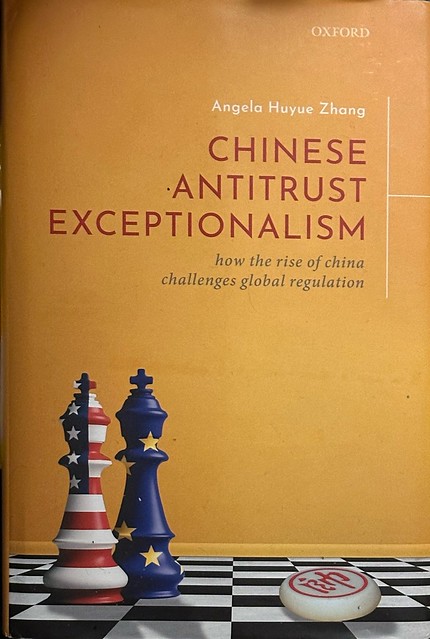
    • Chinese Antitrust Exceptionalism by Angela Zhang sounds exceptionally dry to the uninitiated. But if like me, you’ve worked on brands like Qualcomm, Huawei or GSK you realise how much of an impact China’s regulatory environment can have on your client’s success. Zhang breaks down the history of China’s antitrust regulatory environment, how it works within China’s power structures and how it differs from the US model. What becomes apparent is that Chinese power isn’t monolithic and that China is weaponising antitrust legislation for strategic and policy goals rather than consumer benefit. It is important for everything from technology to the millions of COVID deaths that happened in China due to a lack of effective vaccines. Zhang’s book won awards when it first came out in 2021, and is still valuable now given the relatively static US-China policy views. Given the recent changes in Hong Kong where she lives, we may not see as frank a book of its quality come out of Hong Kong academia again on this subject matter.
    • Van Horne and Riley’s Left of Bang was recommended by a friend who recently left military service. It codified and gave me a lexicon for describing observations of focus group dynamics and observation-based shopper marketing. Probably of bigger value to people more interested in the analytical side of behavioural science is the bibliography – which is extensive.

    Things I have been inspired by.

    Sustaining a sustainable brand

    Kantar do a good webinar series called On Brand with Kantar. I got to watch one of them: Why consumers ignore brands’ sustainability efforts. Consumers are reticent to trust in brand’s sustainable efforts. Kantar’s recommendation is to stay the course and continue to demonstrate real sustainability. Kantar’s work complemented System 1’s Greenprint US-orientated sustainable advertising report. There is a UK-specific version as well with half a dozen ideas for marketers published in partnership with ITV.

    Media platform trends

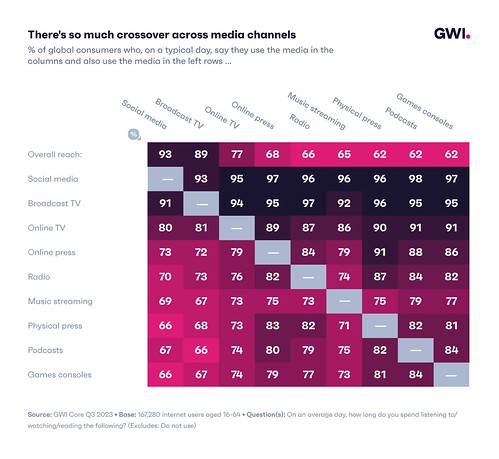
    GWI released their 2024 Global Media trends report. GWI takes a survey based approach to understand consumer media behaviour.

    • Broadcast TV still commands the greatest share of total TV time, despite Netflix, Amazon Prime Video and a plethora of other streaming platforms from Criterion to Disney+.
    • Survival/horror players are most excited about gaming luxury collabs, whether or not luxury brands are equally excited about survival or horror gamers is a bigger question.
    • Games console ownership has halved in the past ten years. This surprised me given how many of my friends have a Switch or PlayStation 5. It probably explains why Microsoft is focusing on being a publisher rather than on platforms as well.

    Japanese online media spend

    Dentsu published a report looking into 2023 Advertising Expenditures in Japan. A couple of interesting outtakes.

    • They focused exclusivity on internet advertising, which gives you a good idea on where they want the balance of media spend to go, rather than necessarily the right tool for the right job. Yes digital is very important, BUT, we live in a world were we are wrapped by and consume layers of digital and analogue media.

    We can see from GWI data that this viewpoint is likely to be still excessively myopic in terms of media due to offline – online media linkages. This is likely to be even more so in Japan that still has a more robust traditional media industry.

    There_s_so_much_crossover_across_media_channels
    • Internet advertising reached a new high, despite being a couple of years after the Olympic games were hosted in Tokyo. (Media spend when a country hosts the olympics tends to be skewed that year upwards).

    One thing I would flag is that this report is based on surveying people across the Japanese advertising industry and built on their responses. So there maybe some biases built into that process. Overall it’s a fascinating read.

    Social media engagement benchmarks

    RivalIQ published their 2024 Social Media Industry Engagement bench report, download it to get the full details. Three things that struck me straight away:

    • Macro-level decline across platforms on engagement rate, which matches the trends that Manson and Whatley outlined ten years ago in their Facebook Zero paper for Ogilvy Social.
    • If brands didn’t need enough reason already to reduce exposure to Twitter, the falling engagement rates on the platform add additional reasons. Overall video seemed to underperform on engagement compared to photos.
    • One thing leaped out to me in the industry verticals data, if you are looking to reach student age adults, why not consider collaborating with higher education institution social media accounts rather than influencers?

    Shocking health outcomes

    The Hidden Cost of Ageism | A Barrier to Innovation & Growth | Future Work – sparked a lot of discussion with its implications on workplace practices, particularly within the advertising sector. What was less discussed but more important was the implications of ageism related biases on healthcare treatment.

    Under-treatment or Over-treatment: Older adults may receive less aggressive treatment options or are overtreated because of age-related biases, rather than based on individual health needs and preferences.

    Dismissal of Concerns: Healthcare providers might dismiss older patients’ health issues as inevitable parts of ageing, potentially overlooking treatable conditions.

    Age-Based Prioritisation: In some cases, age influences the allocation of healthcare resources, with younger individuals being prioritised over older ones, assuming they have more “life worth living.”

    The Hidden Cost of Ageism | Future Work

    MSNBC News in the US did a report on what it called a ‘Post-Roe underground’ echoing the underground railroads to free slaves in the Southern states and the Vietnam war era draft dodgers who escaped north to Canada. This time it is to help women access abortion pills or procedures in other states or Mexico.

    MSNBC

    My friend Parrus hosted a talk on World Health Day, more on that here, the key takeaway for me was not trying to replicate developed market solutions in developing markets. Instead think about how it could be reinvented. Thinking that could be extended beyond health care to consumer goods, telecoms and technology sectors as well.

    Luxury market shake-up

    Business of Fashion covered a US court case where two women brought a lawsuit against Hermès, alleging purchase of its sought-after Birkin bag is dependent on purchase of other products and is an “illegal tying arrangement” that violated US antitrust law.

    5D3_1690

    Hermès is more vulnerable than other brands because it owns its retail stores. The case, if successful could have implications far beyond the luxury bag-maker. For instance, how Ford selected prospective owners for its GT-40 sports cars, or most Ferrari limited edition for that matter.

    While we’re on the subject of luxury, LVMH are rerunning their INSIDE LVMH certificate which is invaluable for anyone who might work on a luxury brand now or in the future. More here.

    Morizo

    Toyota are on a tear at the moment. They correctly guessed that electric cars were too expensive at the moment and focused hybrids as a stepping stone to electric and hydrogen fuel cell production. They have also successfully use the passion for driving in their products and their marketing. The Toyota GR Yaris was a result of Chairman Akio Toyoda instructing engineers to make something sporty enough to win the World Rally Championship and affordable.

    He also outed himself as a speed demon who went under the nom de plume of Morizo.

    Quebec

    For many English speakers one of the most dissonant experiences is being confronted by a language you can’t speak. It’s part of the reason why ireland managed to become the European base of companies like Alphabet and and Intel. So I was very impressed by this campaign by the Quebec government to attract visitors and inbound investment.

    Things I have watched. 

    I watched Mr Inbetween series one in March and managed to work through series two and three this month. I couldn’t recommend them highly enough as a series. They just keep building on each other.

    Over Easter, I revisited some old VHS tapes my parents still had and rediscovered the Christopher Walken science fiction horror film “Communion.” It epitomizes its era, with alien abduction narratives emerging during the Cold War and permeating popular culture from “Close Encounters of the Third Kind” to “The X-Files,” tapering off after 9/11. “Communion” demonstrates how effective editing and minimal special effects can heighten tension and emotion. Despite the film’s incredulous premise, Walken delivers a fantastic performance.

    Modesty Blaise” is from a time when comic book adaptations were uncommon in cinemas. This 1966 adaptation of the 1960s comic strip shares stylistic similarities with “Barbarella” and stars a young Terence Stamp. I received a tape copy from a friend who was attending art college at the time. The depiction of the computer as a character with emotional reactions in the film feels contemporary, echoing the rise of virtual assistants like Siri and ChatGPT, despite being portrayed as a mainframe. It is interesting to contrast it with Spike Jonze’s movie Her made 50 years later.

    Useful tools.

    A lot of the tools this month have been inspired by my trusty Mac slowly dying and needing to get my new machine up and running before my old machine gave out.

    Time Machine

    Apple’s native backup software, Time Machine, serves as a personal sysadmin for home users. Regular backups are essential. If a crucial document disappears while you’re working on it, Time Machine, coupled with a Time Machine-enabled hard drive, allows you to retrieve earlier versions of the document, potentially saving your sanity in critical moments.

    Microsoft Office

    I prefer the one-off payment model over Office 365 services. I use Apple’s Mail, Contacts, and Calendar apps instead of Outlook. While Office is available for just £100, which is reasonable considering its features, I still prefer Keynote over PowerPoint for creating presentations.

    Superlist

    Many of you may recall Wunderlist, which Microsoft acquired, but much of its original charm was lost in the transition to Microsoft To Do. Superlist is a reboot of Wunderlist by the original team, this time without Microsoft’s involvement. It’s available on iOS, macOS, and the web, catering to both individual and team task management needs.

    https://youtu.be/2MzzbRhYlSA?si=04eBXH-MqKLpX2bN

    ESET Home Security Essential

    I used to rely on Kaspersky, and while I generally like their products, I have concerns about the potential influence of the Russian government. Therefore, I switched providers. ESET has a strong reputation and offers better Mac support than F-Secure. I can recommend their ESET HOME Security Essential package.

    Amazon Basics laptop sleeve

    I use a various bags depending on my destination and activities. Over the years, I’ve found that Amazon Basics brand laptop sleeves work well for my machines. They’re often among the cheapest options available and tend to outlast the computers they protect. 

    Laptop camera cover

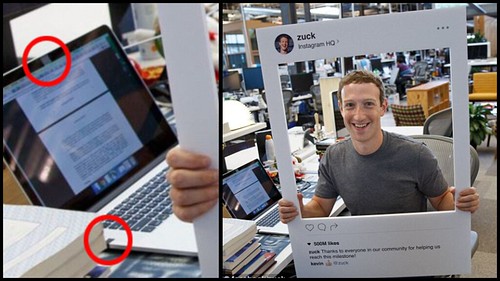
    Cover on Mark Zuckerberg laptop camera! You must have to follow this:-

    The photo of Mark Zuckerberg’s laptop with tape covering the camera raised awareness about privacy. Webcam privacy covers, such as a sliver of plastic that slides across, are ideal as they allow your laptop to close fully. A pro tip is to use a red LED torch to clearly locate your camera when applying the stick-on cover.

    Protective case and keyboard cover

    I’m a big fan of clip-on polycarbonate shells to protect my laptop, as they provide a better surface for the stickers that personalize my machine over time. You don’t necessarily need a big-name case. The one I have came with a keyboard cover that works well. Anything that prevented Red Bull, coffee, or croissant flakes from getting under my keys is worth doing.

    Screen protector film

    The screen protector film provides great protection and is easy to apply and clean, even for beginners like me. I’ll update you if my opinion changes.

    The sales pitch.

    I have enjoyed working on projects for PRECISIONeffect and am now taking bookings for strategic engagements or discussions on permanent roles. Contact me here.

    More on what I have done here.
    bit.ly_gedstrategy

    The End.

    Ok this is the end of my April 2024 newsletter, I hope to see you all back here again in a month. Be excellent to each other and enjoy the bank holiday.

    Don’t forget to like, comment, share and subscribe!

    Let me know if you have any recommendations to be featured in forthcoming issues. 

  • Chinese Antitrust Exceptionalism

    Chinese Antitrust Exceptionalism by Angela Zhang sounds exceptionally dry to the uninitiated. Zhang is a senior legal academic who works at the University of Hong Kong, which until recently got a front row seat to China disputes with both the European Union and the United States. Given the recent changes in Hong Kong where she lives, we may not see as frank a book of its quality come out of Hong Kong academia again on this subject matter if it was viewed to fall under the purview of ‘state secrets’. With the new security law that has come in, definitions have been left deliberately vague and wide-reaching.

    Chinese antitrust exceptionism

    So why is Chinese Antitrust Exceptionalism of interest?

    If like me, you’ve worked on brands like Qualcomm, Huawei or GSK you realise how much of an impact China’s regulatory environment can have on your client’s success. Around the time I worked on one client, they were shamed on the evening TV news and some of their staff disappeared for questioning by the authorities. They then reappeared months later looking haggard and worn out. It is new important for everything from technology to the millions of COVID deaths that happened in China due to a lack of effective vaccines.

    Zhang breaks down the history of China’s antitrust regulatory environment, how it works within China’s power structures and how it differs from the US model. The rise of antitrust was as much down to bureaucratic politics of the Chinese government.

    What becomes apparent is that Chinese power isn’t monolithic and that China is weaponising antitrust legislation for strategic and policy goals rather than consumer benefit.

    Zhang talks about how regulatory hostage taking and public shaming was a tool of the regulatory authorities from early on.

    The book then looks at foreign reactions to Chinese government from EU investigations to current US-China trade restrictions and discusses how China weaponised its regulatory frameworks making ‘hostage taking’ trans-national in nature.

    Last of it’s type?

    Zhang’s book won awards when it first came out in 2021, and is still valuable now given the relatively static US-China policy views. More on Chinese Antitrust Exceptionalism here. More book reviews here.

  • March 2024 newsletter – no. 8

    March 2024 newsletter introduction

    Welcome to my March 2024 newsletter which marks my 8th issue.

    Strategic outcomes

    I am glad that I have moved to the eighth issue. In between St Patrick’s day happening in March, and the number 8 being lucky according to the Chinese in a good place – I figure its a good omen for this issue. 8 symbolises prosperity, joy and infinity. In Chinese pricing strategy 8 holds a similar role to 9 in western markets, so $58, $88 and $688 are frequent pricing points.

    Love on St. Patricks

    St Patrick’s day is particularly lucky for one Chinese city above all others: Yiwu in Zhejiang province is often called Christmas town. In reality it’s a city selling ‘small commodities’ better known to you and I as tat. The Christmas town epitaph came from it being the centre for the global Christmas decorations trade. It’s also where most of the St Patricks Day decorations are made including the leprechaun hats popularised around the world by Irish pubs.

    New reader?

    If this is the first newsletter, welcome! You can find my regular writings here and more about me here

    Things I’ve written.

    • Razors for strategists – how we can apply the principle of philosophical razors to aid faster solutions for client work, while also bearing in mind their limitations.
    • Vicki Dutton – Singapore’s forgotten fashion icon.
    • Brand clichés – a bit of honesty from the trenches.
    • CMOs – their demise and evolution considered.
    • AI two-step – corporate leaders reluctant to admit AI-related job losses.

    Books that I have read.

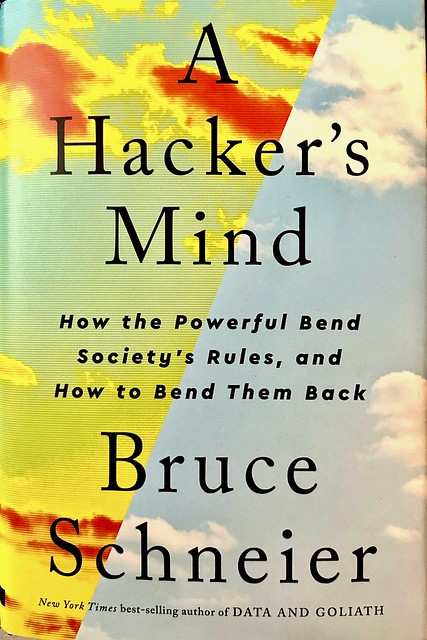
    • A Hacker’s Mind by by veteran technologist Bruce Schneier provides a guide to the different way people have found loopholes to ‘hack’ systems. Schneier is trying to write a social movement book,, but while it’s interesting enough to read on a plan, it will be harder for it to get people moving as he intends.
    • I picked up this book from Scheltema book store just off Dam Square in Amsterdam during a work trip, with a bit of time-off bolted on the end. Browsing the English language book section of foreign book stores often gives recommendations that you wouldn’t otherwise look at. Tales from the Cafe: Before the Coffee Gets Cold is book two of a four-book series by Japanese author Toshikazu Kawaguchi is difficult to characterise in terms of genre. It’s a time travel novel with distinct rules that keep its universe coherent. It’s a book that is suitable for children, but not aimed at children- in this respect its more like the childhood books that I read growing up than are popular now as the ‘young adult’ genre. It’s about love lost, but not a romance novel – the love covered is a mix of loneliness of a widower, an orphaned child and a past romance. There is something delightful about the book, especially as it captures the minutae of everyday Japanese life.
    • Historian Dan Jones portrayal of medieval wars in his Essex Dogs series is very well written and accessible. It’s an ideal holiday read, if you can handle the grim subject matter. The Wolves of Winter is a richer story with greater intrigue in the plot line.
    • Back in the early 1990s chaos theory was very much in the public zeitgeist in a rather similar way to the internet from the late 1990s to early 2000s and artificial intelligence now. I have noticed mentions of chaos theory has started to pop up again as an idea in email newsletters. Fluke Chance, Chaos and Why Everything We Do Matters resurrects chaos theory as an analogy and hypothesis for everything from global politics to emotion-driven behaviours. The author Dr Brian Klaas is a social scentist by training and has taken a few leaves out of the Malcolm Gladwell school of writing with stories to pull in the audience. I would liked to see a bit more evidence-based findings in the book. But it is a good read.

    Things I have been inspired by.

    TheOrangeblowfish, a Shanghai design-led agency did an amazing retail / out of home activation for Arc’teryx museum on what looks like a 3D OOH execution a la Ocean Outdoor’s Deepscreen sites in the UK.

    Oliver’s white paper on How Brands Can Build Customer Trust looks at how brands can communicate about sustainability in their marketing. It’s a nice first step as a discussion document. There are a few areas I would like them to explore further:

    The gains earned by behavioural science are argued about, with practitioners relying on models that are often seen as overly complex and stacking of marginal gains. It has footholds in trying to drive meaningful changes in health, where small gains on paper mean a big change in lives saved, or made better. This LSE discussion on how it can be used to make democracy work better was interesting, especially given how many elections will be taking place in 2024.

    Finally this paper on the polarisation of popular culture is likely to affect the way marketers think about product choice, media and culture over time. Media buying itself becomes a political act, beyond advertising on overtly political media channels and indicates a widening of the lived experience gap in society. We could see this already in the UK with Brexiter favoured brands.

    Things I have watched. 

    The Knockdown – A Chinese drama where a Chinese Communist Party team goes to investigate a business and runs into widespread corruption. The corruption is centred around a fishmonger who gets tired of thugs and the grind of graft – he then reinvents himself as a gangster within the system. While it’s not Breaking Bad or The Sopranos, it is a good insight into how the Chinese government wants to see itself.

    Flic Story – Alain Delon plays a detective pursuing a dangerous criminal in post-war France. This is based on the true story of criminal Emile Buisson who terrorised France. I did wonder whether the roof top chase scenes influenced Jackie Chan’s classic Hong Kong film Police Story in terms of plot and tension rather than his acrobatic skills?

    Season 1 of Mr Inbetween had been recommended to me for years, people would rave on about it in the same way you hear about Breaking Bad or The Wire. A friend eventually sent me there copy on Blu-Ray. It has elements of Man Bites Dog about it – which makes sense when you find out it was originally adapted from Scott Ryan’s The Magician – a short fly-on-the-wall rockumentary film about a Melbourne underworld enforcer and occasional killer. Unlike Man Bites Dog – the violence is used sparingly in between the tedium of everyday life and office politics. Helen Mirren had apparently recommended it widely at the time. I am looking forward to season 2 which reputedly takes a darker turn.

    Useful tools.

    Sensia AI

    Sensia AI is an interesting set of tools for consumer brands to easily monitor satisfaction and potential problems with their products and that of their competitors quickly, with ease and efficiently. Sensia analyses diverse data, from online reviews to e-commerce; offering useful insights. I was looking at it for consideration with regards an FMCG project that didn’t come off in the end. If you are interested. Check out some sample reports here, and if it looks of interest – contact Iris Chung.

    Passport Online

    Travel this year? Passport ready

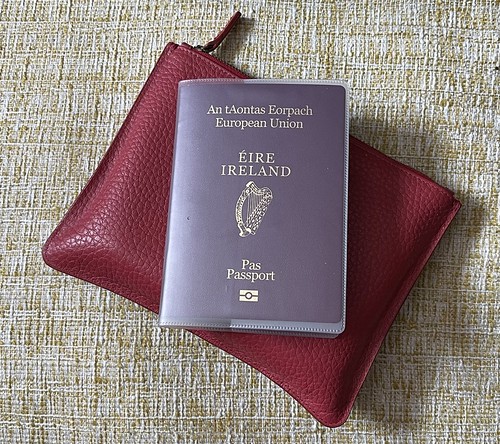
    I am an Irish citizen. The Irish government’s process to renew my passport and passport card via an online service was really easy. The service is called Passport Online and I couldn’t recommend it highly enough.

    Untranslatable

    Not necessarily something that you would use day-to-day; but definitely of interest during digging into market research transcripts or transliteration of campaigns across different markets and languages. Untranslatable is a dictionary of idioms and expressions. The creators are native speakers, so you get the different cultural nuances.

    New ways of using Miro

    If you work in brand or connections planning or have thought customer experiences you’ve probably heard of Milanote, Miro or Mural. They also came to the fore with COVID-19 as virtual workshops became much more of a thing. Recently, I have been experiencing new user cases for these platforms. To present:

    • Creative briefs.
    • Sharing creative with clients.
    • A quick folder that holds key documents and shows the links between them.

    Zettelkasten

    Trying to build that vast mental model to then wrap into a narrative for clients. Vicky Zhao revisits the analogue technique of Zettelkasten. Your mileage may vary. It does remind me of the way I use social bookmarking as a data bank and mind maps as a creative process in writing. I can also recommend Umberto Eco’s How to Write a Thesis for similar organisation ideas.

    The sales pitch.

    Now taking bookings for strategic engagements from April, or discussions on permanent roles. Contact me here.

    More on what I have done here.

    bit.ly_gedstrategy

    The End.

    Ok this is the end of my March 2024 newsletter, I hope to see you all back here again in a month. Be excellent to each other and watch out for any April fools tricks being attempted on you.

    Don’t forget to get in touch, share and subscribe!

    Let me know if you have any recommendations to be featured in forthcoming issues. 
  • A Hackers Mind by Bruce Schneier

    I eagerly anticipated reading A Hackers Mind, being a long-time follower of Bruce Schneier’s blog. A Hackers Mind caters to the well-informed individual. Schneier commences by defining what constitutes a hacker, delving into the essence of hacking and its widespread prevalence.

    A hackers mind

    Subsequently, Schneier takes us on a journey into a hackers mind, guiding us through fundamental hacks targeting:

    • ATMs (automatic teller machines or cash machines)
    • Casinos
    • Airline frequent flier miles
    • Sports systems
    • Financial networks
    • The legal realm
    • Politics

    Through these examples, Schneier aims to illustrate the parasitic nature of hacks on the systems they target, offering various techniques to impede or render them unfeasible. In doing so, he makes a broader socio-political statement about how the very foundation of the economy and society is continuously ‘hacked’.

    The implication is that power lies in a hacker’s mind being applied to the systems that govern our lives. And that with the right mindset and ‘hack’ the ordinary person can turn the tables on those in power. 

    When this happens it makes great film or television. (A classic example of this would be ITV’s People vs. Post Office which told the story of postmasters combating wrongful prosecutions due to software defects. The reality was that in that particular case, it actually took the media coverage around the TV drama being shown to actually start moving the needle.) 

    Schneier in his book recognises that over time societies have evolved to become more equitable over time. He also attributes late stage capitalism to the hackers mindset, mixed with resources and technical capability in law or finance. The book is designed to wake the public up with a view to them also developing a A Hackers Mind and hacking the system back to equilibrium.

    It’s an interesting light read, but I think VR pioneer and author Jaron Lanier writes better books focusing on the inequities inherent in the intersection of technology, culture and society. A great example of this is his book Who Owns The Future?

    I don’t think Schneier gets close to inspiring his desired outcome with A Hacker’s Mind, but if you want something above the usual airport reading then it gets a thumps up from me, but it won’t be staying on my book shelf for me to re-read it at a later date. For more book reviews and recommendations go here. For recommendations of non-fiction books in particular go here.

  • February 2024 newsletter – No.7

    February 2024 newsletter introduction

    Welcome to my February 2024 newsletter which marks my 7th issue. I hope that your year of the dragon is off to a great start.

    Strategic outcomes

    The number 7 is a bit of a mixed bag, depending on how you look at it. In the old testament, the 7th heaven is where God’s throne is, alongside the angels. It had been considered a place of happiness, hence Gwen Guthrie’s Seventh Heaven. In Mandarin, the number is considered generally a positive thing, the number is a homophone for ‘arise’ and ‘life essence’. But that’s only half the story.

    Chinese Ghost Story

    Indications of 7’s unlucky nature include the seventh month in the lunar calendar being a ‘ghost month’. In Cantonese, it is a homophone for a vulgar way of saying penis. I hope your February wasn’t a dick of a month. 

    For film buffs it’s almost 28 1/2 years since the transgressive crime thriller Seven was released. It was a break out hit and became the seventh highest grossing film of 1995, behind Die Hard with a Vengeance, Toy Story and Apollo 13. It beat out other films like Braveheart in box office earnings, but Braveheart ran away with the Oscars. 

    Let’s hope that feng shui master Michael Chiang is correct in terms of the positive energies from the year of the dragon.

    New reader?

    If this is the first newsletter, welcome! You can find my regular writings here and more about me here

    Things I’ve written.

    • FOOH – and the ethical and marketing challenges it presents with a thought experiment harking back to the golden age of pornography.
    • Technonationalism – how current technological developments mirror the cold war and the 20th century Asian economic miracle.  
    • Innovation signalling – how innovation is used by brands for show, rather than for genuine progress.
    • Pipes by Yahoo – a remarkable web service that also causes us to reflect on the post modern web of today.
    • Hong Kong measurements – how something as simple as measurement units are a melding of culture, history, modernity and politics in a time of change.
    • Y2K was always more than a fashion phase, but it seems to have faded from the zeitgeist which means the fashion takes have no context. Here’s a bit of context for you.

    Books that I have read.

    • What the Taliban Told Me by Ian Fritz. Fritz writes really, really well, otherwise I probably wouldn’t have been able to complete his personal memoir about his upbringing, service in Afghanistan onboard an AC-130 gunship and depression. In some ways it reminded me of Jarhead – Anthony Swofford’s memoirs of his life up to the time of being in the US Marines during the first Gulf War. Swofford’s book came out a decade and a half after his service. Fritz’ book feels much more immediate and without the flashes of humour and beauty that was in Swofford’s book.
    • Leftover Women: The Resurgence of Gender Inequality in China by Leta Hong Fincher. This was originally written in 2016, but has been updated to incorporate changes over subsequent years. It shows how government policy, ethnographic-nationalism, law enforcement, the legal system, collective punishment and community pressure is applied on modern women. I still find the content covering domestic violence shocking. This isn’t the China of Mao where in theory women hold up half the sky, instead it seems to be on a trajectory that would eventually see it closer to Mao’s view of China’s population, or Ceaușescu’s Decree 770 and other associated pro-natalist laws. This is a world away from the equally oppressive one-child policy, which had been brought in to deal with population related problems from the Mao-era.
    • The Big Book of Cyberpunk edited by Jared Shurin. I am huge fan of cyberpunks better known authors: William Gibson, Neal Stephenson and Bruce Sterling. This collection of 100+ stories written by authors from 25 countries is a mixed bag, but that’s no bad thing.

    Things I have been inspired by.

    J Walter Thompson Wunderman Thompson VML Intelligence launched their annual Future 100 report. It’s a great read and its continuity over the years makes it stand apart from the plethora of trends reports that get published every year. Their trends which intersect luxury and health are particularly interesting:

    • Althluxe
    • Bioharmonizing spas
    • Longevity resorts
    • Idyllic idleness

    Author Cory Doctorow’s essay for Locus magazine plays devil’s advocate in considering the future of the crypto-based ecosystem and artificial intelligence is well worth a read. Doctorow speculates on what kind of bubble artificial intelligence is likely to become and the effect that its deflation may have. He draws on the outcomes of tech bubbles in the past including the dot com bubble and the telecoms bubble that accompanied it.

    Just Conecting published a report on what seems to work on LinkedIn. It’s an interesting snapshot of what works at the moment, I am sure things will change over time as the algorithm evolves. Much of the focus seems to be orientated towards personal branding over business brands.

    Over at Japan House, I marvelled at the exhibition Ainu Stories: Contemporary Lives by the Sara River. The Ainu are native to Japan’s northern islands and have survived for millenia in the extreme cold. Historically they were discriminated against, but now there is an appreciation of their culture. The art pieces on display are unique in their design, but share the attention to detail one sees in other Japanese work.

    The Science Museum has an amazing exhibition on: Zimingzhong 凝时聚珍: Clockwork Treasures from China’s Forbidden City. Prior to the opium wars, UK craftsmen created fantastic clockwork-powered creations that were given as gifts to the emperor of China. The exhibition finishes on June 2, 2024. I went during Chinese new year. I came away with a refreshed appreciation of modern watchmaking complications, in particular devices like ‘minute repeaters’.

    NS Lyons magnus opus The China Convergence is read by Regina Doman. Lyons’ premise is that western systems have converged with China’s approach to governance due to the rise of the technocrat. In this respect his perspective is similar to that shared by documentary maker Adam Curtis. Like Curtis, Lyons’ The China Convergence asks uncomfortable questions of us. Are we basically a less extreme version of the same system to the presses of mass and scale?

    While we’re talking China, I can recommend the China Update YouTube account that provides a concise summary of Chinese business news and economic analysis garnered from a wide range of Chinese and western business publications.

    Finally, IPSOS ongoing collection of reports this time reflects on the power of nostalgia. This time focusing on youth culture from cottage-core, Barbie mania, vinyl to vintage technical clothing and streetwear and the underlying drivers behind it. Why Nostalgia Is So ‘Fetch’ Right Now by Samira Brophy is well worth a read.

    2023 Global Trends Report by ACROSS Health is a great census of healthcare professional media preferences and insight into omnichannel communications trends for pharmaceutical marketing. It is good reading and indicates that pharma clients who have an excessive efficiency bias and want to go to digital-only customer journeys will be left behind by peers taking a mixed approach.

    Things I have watched. 

    Agent Hamilton – Carl Gustaf Hamilton is a Swedish answer to James Bond or Jack Ryan. Hamilton was the main character in a series of books written by a former investigative journalist, Jan Guillou, who served time in Sweden for exposing illegal intelligence operations. Guillou wrote the first Hamilton book in 1986 and the last one in 2012.

    Blake and Mortimer – if you’re a fan of TinTin, you’ll like Blake and Mortimer as both come from the French -Belgian comic tradition. This cartoon series is based on the adventures of an eminent Scottish scientist and a British military intelligence officer in mid-century Europe. It’s nice light entertainment and I can recommend the graphic novels as well of which there are now 30+ stories including the Before Blake and Mortimer off-shoots. The authors have also wrote other excellent series like XIII.

    Useful tools.

    Audio Hijack 4.3

    Rogue Amoeba’s Audio Hijack has been a mainstay on my Mac for far more years than I care to mention. It was great for everything from recording conference talks to putting together quick and dirty talk tracks that concepting films can be cut too. Version 4.3 features OpenAI’s Whisper transcription software that can cater to transcribing dozens of languages. I have found it better than tools like Otter.ai for me.

    Krisp

    Krisp.ai is a freemium service providing intelligent noise cancellation, call transcripts and meeting notes all in one. It works with Teams, Google Meetup, Slack and Zoom.

    Obsidian

    Just like Evernote back in the day, Obsidian has become a bit of a cult app for those that find it really useful. At its heart, it is a note taking and writing application. It will sync between desktop and mobile devices, but that costs $8/month – which is expensive. I haven’t been using it beyond a quick trial, as I have a well-defined set of tools that I use and Obsidian didn’t really slot in well. But I can appreciate the value of it to others. One thing I would be leery of, if you are moving to Obsidian is the cottage industry in snake oils salespeople hawking the ‘ultimate’ online course for Obsidian. Instead check out Obsidian’s own community pages of courses.

    Todoist

    Todoist is a shareable to do list that places it somewhere between quick and dirty project management and personal productivity. I am giving it a try following a recommendation from a friend. It’s not about whether products like this are good or not, but usually if it fits into your style of working, so your mileage may vary.

    Personal Update.

    the adforum phnx 2024 jury badge

    More details on the awards here.

    The sales pitch.

    Now taking bookings for strategic engagements (from the end of April onwards) or discussions on permanent roles. Contact me here.

    More on what I have done to date here.

    bit.ly_gedstrategy

    The End.

    Ok this is the end of my February 2024 newsletter, I hope to see you all back here again in a month. Be excellent to each other.

    Don’t forget to share and subscribe!

    Let me know if you have any recommendations to be featured in forthcoming issues.