Category: web of no web | 無處不在的技術 | 보급 기술 | 普及したテクノロジー

The web of no web came out of a course that I taught at the La Salle School of Business at the University Ramon Llull in Barcelona on interactive media to a bunch of Spanish executive MBA students. The university wanted an expert from industry and they happened to find me by happenstance. I remember contact was made via LinkedIn.

I spent a couple of weeks putting together a course. But I didn’t find material that covered many of things that I thought were important and happening around us. They had been percolating around the back of my mind at the time as I saw connections between a number of technologies that were fostering a new direction. Terms like web 2.0 and where 2.0 covered contributing factors, but were too silo-ed

So far people’s online experience had been mediated through a web browser or an email client. But that was changing, VR wasn’t successful at the time but it was interesting. More importantly the real world and the online world were coming together. We had:

  • Mobile connectivity and wi-fi
  • QRcodes
  • SMS to Twitter publishing at the time
  • You could phone up Google to do searches (in the US)
  • Digital integration in geocaching as a hobby
  • The Nintendo Wii controller allowed us to interact with media in new ways
  • Shazam would listen to music and tell you what song it was
  • Where 2.0: Flickr maps, Nokia maps, Yahoo!’s Fireeagle and Dopplr – integrated location with online
  • Smartphones seemed to have moved beyond business users

Charlene Li described the future of social networks as ‘being like air’, being all around us. So I wrapped up all in an idea called web of no web. I was heavily influenced by Bruce Lee’s description of jeet kune do – ‘using way as no way’ and ‘having no limitation as limitation’. That’s where the terminology that I used came from. This seemed to chime with the ideas that I was seeing and tried to capture.

  • 48 hours with the Apple Watch

    My experiment with the Apple Watch is part of a larger project. I  decided to experiment with wearables a while ago. My first experiment was with the Casio G-Shock+ series of watches that takes the well-loved brand and drops some rudimentary notification function, BlueTooth LE capability and a companion iPhone app together as a workable but unambitious package.

    The Apple Watch is a different experience and has a different ethos to the Casio G-Shock+. The Apple Watch experience starts as soon as you receive the package.

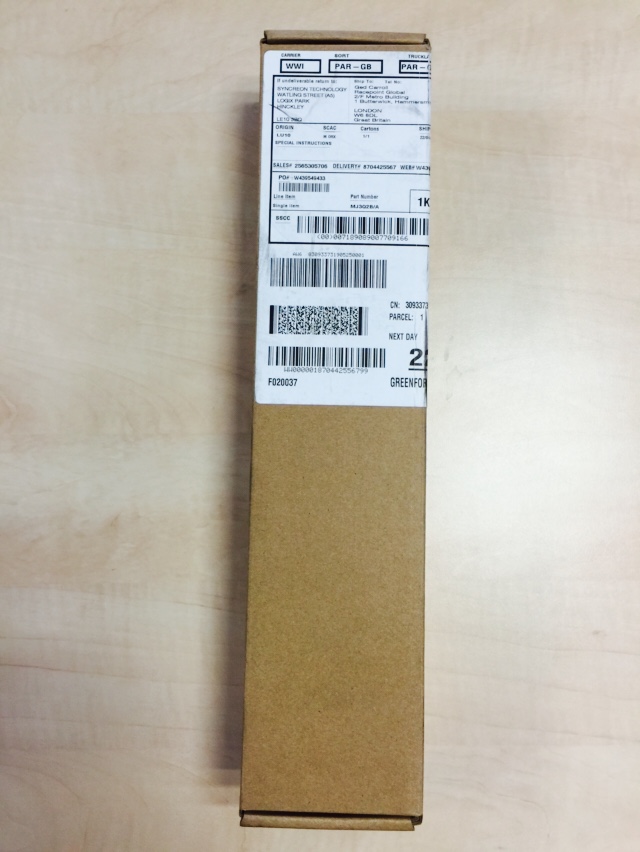
    I was surprised to be presented the box by security in reception, mainly because it had roughly the same size and weight as a toner cartridge for the office colour photocopier / printer.
    Untitled
    My immediate reaction was that Apple may have made the packaging look like this to mask the first drop of watches from over-ambitious eBay entrepreneurs in the postal service.
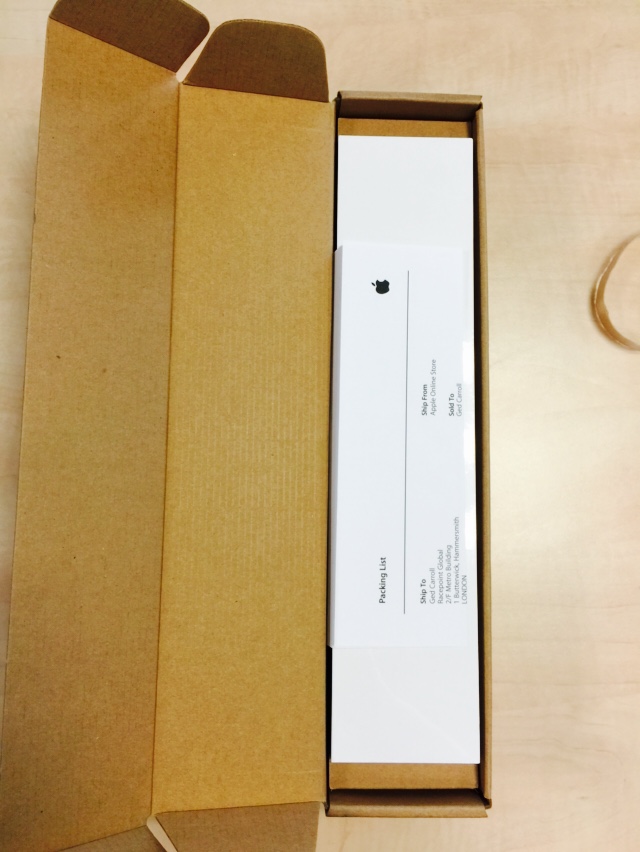
    Untitled
    But it soon became apparent that Apple had built a packing equivalent of a Winnebago RV for the watch.
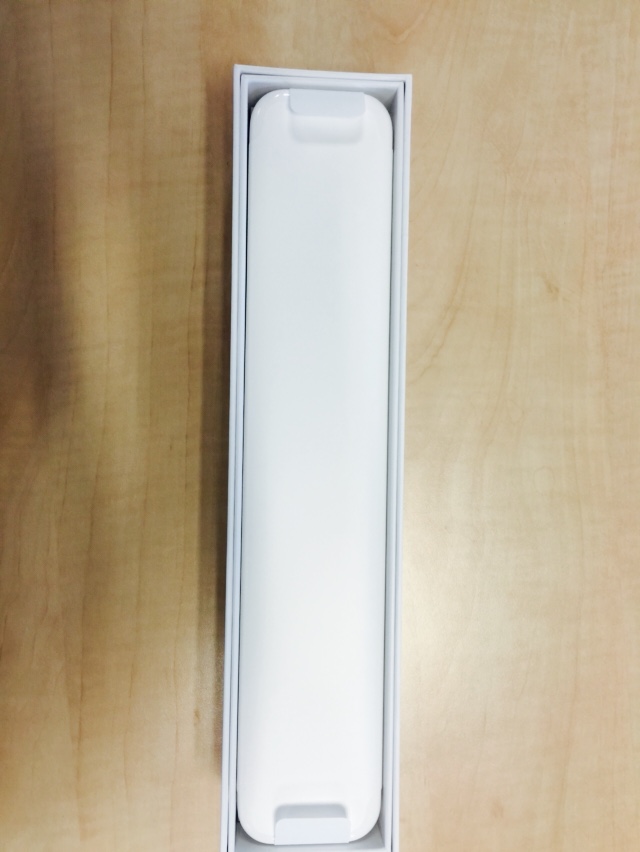
    Untitled
    Inside a long heavy duty cardboard box is a giant whale of a coffin for the watch and space underneath for the charging cable and plug in charger. All of this seems at odds with Apple’s move over the years towards less wasteful, more environmentally friendly packaging.

    At the same time the experience didn’t feel special to me, just slightly perplexing, ok very perplexing. I have been involved in the launch of a new Huawei smartphone over the past few weeks and that packaging provided a more luxurious experience.

    An email arrives to my home account letting me know that I can set up a live video call with someone who will help me set up my watch. An alarm bell rings in the back of my head that makes me think that the product might not ‘just work’ which the a core tenet of the Apple experience.

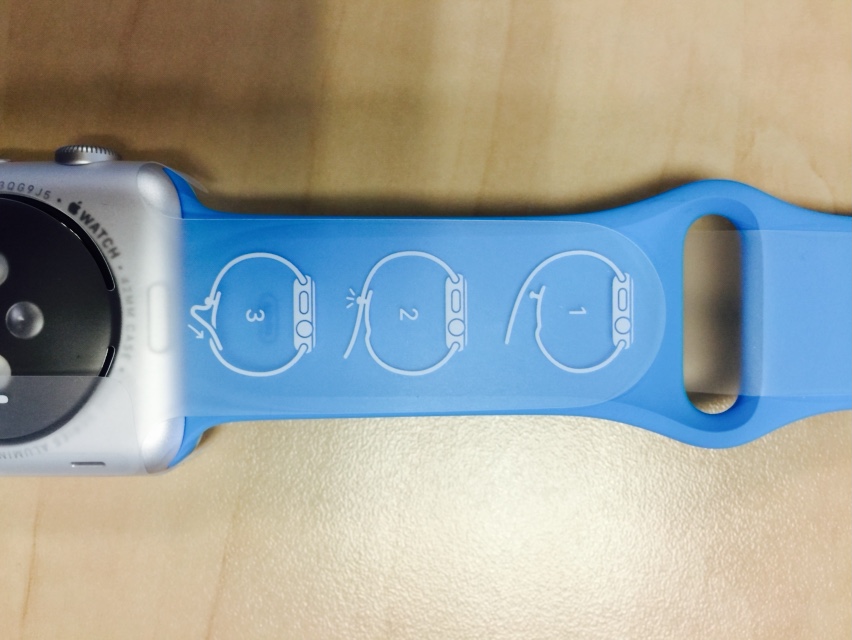
    The watch itself has some nice industrial design touches.
    Untitled
    The Apple Watch strap was easy even for a mechanical klutz like me to change, by pushing a button and sliding the strap in or out of a groove on the case.

    The case is nicely made (as something the price of a premium Casio or Hugo Boss watch should be). However as a bit of a watch head the case did not blow me away, if I didn’t know about it’s smarts it felt very much like a Fossil watch.

    Switching it on and pairing it with my iPhone was very easy, the problems began when the iPhone app schlepped across all my iPhone applications that had Apple Watch capability, without a thought for how often I use them. This means that the home screen is covered in an acne rash of default and third-party applications, 80 per cent of which I don’t regularly use.

    Whilst I am in awe of the the way the device hides the process of syncing with the iPhone I am less impressed by the slow speed of glance content loaded from the iPhone more slowly than it would be to just take the iPhone from my pocket and look.
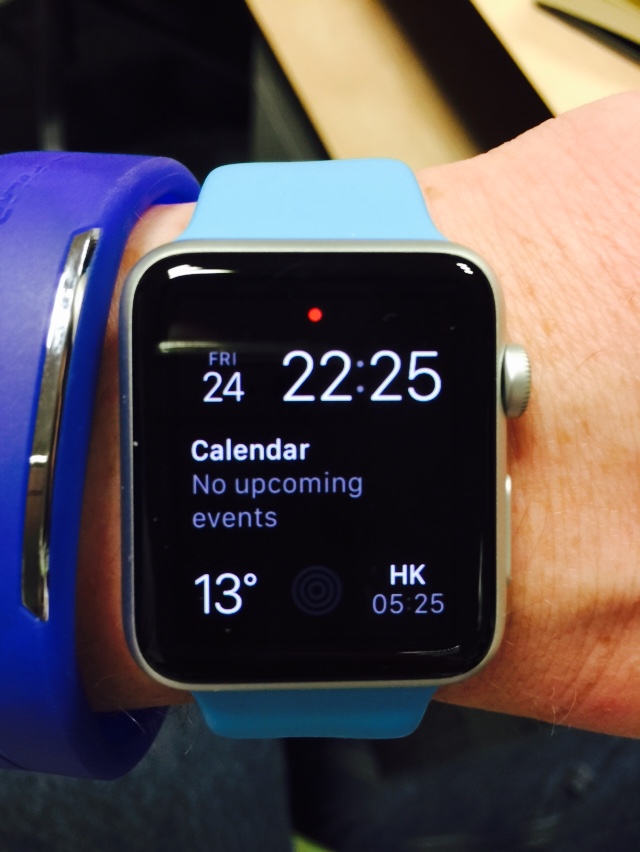
    Untitled
    When glances do appear, they appear in an amazingly high resolution.

    The killer app

    The haptic alerts were handy and Accuweather had made the best Watch app. WeChat shamed Twitter with its comparative usefulness. But ultimately I still don’t know a compelling reason to own an Apple Watch beyond trying to understand where it fits in a customer’s digital life.

    The Apple Watch is a two-handed device, for instance unlocking the Watch by typing in your PIN. Flashback to a childhood encounter with a friend’s Casio Databank flooded my memory whilst unlocking the watch.

    I found that I tended to use the crown when the watch wasn’t on my wrist, probably sounds a bit pointless.

    Like the Casio G-Shock+ before it, Apple hadn’t mastered prioritising alerts or putting intelligence behind them. I think that this a major issue, since app developers will try to go for maximum notification real estate as part of the ‘grab’ of the attention economy. I think that this is an Achilles Heel of wearables in general.

    Conclusions

    The Apple Watch didn’t encourage me to ‘play with it’ to find out its features, the way other Apple products from the original sit-up and beg Mac to the iPod and iPhone did. I can’t say that I have had any real enjoyment out of using one. So much so, that I was quite happy to leave it in its charger most of Sunday, whilst my iPhone is never an arms length away.

    Notifications are going to become very tiresome, very fast.

    It isn’t particularly friendly to use and at 48 hours in, I still haven’t really got to grips with the device.

    This feels like a first step in a long journey needed to fix the human smartwatch interface.

    The Apple Watch feels like a solution looking for a problem, just in the same way that the Mac only found its calling with Aldus desktop publishing software and an Adobe powered laser printer, so the Apple Watch is dependent on some clever app development in the future.

    I suspect the kind of programmable world that we would need for the device to thrive, for instance your iPhone seeing that you have enough time in your diary, ordering your morning coffee at Starbucks and then the Watch telling you to step in the cafe and pick it up just as you are about to walk past doesn’t exist yet.

    The experience did get me to marvel at the engineering that went into the device, but at the moment it feels that all that effort has been largely unrewarding in terms of customer experience. I still wear my collection of G-Shocks or fine Swiss watches on my right wrist. I don’t think that many watchmakers have much to worry about yet, except those targeting the mid-market of big brand, mediocre movements.

    More information

    On smart watches, I’ve decided to take the plunge
    On wearing a smartwatch
    On Wearables

  • Android device fragmentation + more

    Android Sales: Guess how many Android devices are available for sale | BGR – 18,000 different types of Android devices which is an insane amount of device fragmentation. Imagine the pain in Android device testing needed and that isn’t even getting into different app stores and non-Google Android devices –  a la Russia and China. More wireless related content here.

    Regarding Chrome’s Power Efficiency on OS X | The Verge – interesting how Google is falling into the same traps when coding across platforms that Microsoft did

    Why China’s economy is slowing and what it means for everything | Quartz – interesting bit of economic analysis via charts

    Fascinating chart in HBR (above) on the relative change in valuation of Brands… | Broadstuff – interesting data on the decline of brand value

    Hush Technology will block snoring but play your alarm with its smart earplugs | VentureBeat – interesting how noise cancelling technology has shrunk

    Moscase Is Like Batman’s Utility Belt For Your iPhone | TechCrunch – the modular nature of the back is quite interesting, I like the e-ink screen

    Daring Fireball: The Apple Watch Edition’s Upgrade Dilemma – it won’t be replacing my Swiss watch any time soon

    Nokia nears deal to buy Alcatel-Lucent mobile networks unit | Hong Kong Economic Journal Insight – two turkeys won’t make an eagle

    GSMA Intelligence – interesting diagram talking about latency and bandwidth requirements of different applications on mobile networks when you scroll down the page

    Activist Puts Pressure on Qualcomm – WSJ – inevitable when one looks at the increasing competition in the chip business for them and the move by major players (Apple, Samsung, Huawei)

    Samsung Galaxy S6 review: It’s what’s on the outside that counts | Ars Technica – this review is emblematic of the pedestal that Samsung has fallen off

    LINE CEO bets on selfies and macho stamps to expand overseas | Japan Times – really interesting insight into app localisation and branding

    Twitter Ends its Partnership with DataSift – Datasift Blog – ok this could be interesting

    These slides are all you need to make the case for an all-flash data center | SiliconANGLE – that responsive data has to change the economics of cloud as well and not in a good way

    Exclusive: Twitter A/B testing a Yahoo style directory for non-logged in users | SiliconANGLE – and Google seems to be supplementing search results with content from DMOZ about links

    If Nokia Map Unit Is for Sale, Microsoft, Apple and Yahoo All Might Want a Look | Re/code – it makes sense that Nokia would want to sell this separately from the phones, but who would it go to

  • The Amazon Dash button post

    At the beginning of this month Amazon launched an addition to their Dash ordering hardware with the Amazon Dash button. There was a lot of incredulity amongst the media heightened by the unfortunate timing which overlapped with April’s Fool Day.

    Why the incredulity?

    I would break the cynicism down into two broad buckets:

    • The Amazon Dash button has a very singular usage / use case, narrower even the Yo! app which was a bit of a tech fad last year. Critics are at best uncertain that consumers would use them? I generally buy toilet rolls every 4-6 months, do I really need a button for that?
    • The Amazon Dash button implies that the hardware required is ridiculously cheap. How many boxes of washing powder, packets of Mac & Cheese or toilet rolls would be required for a button to break even?
    Business perspective

    Rather than ripping into this into too much depth I thought I would share Benedict Evans’ interesting hypothesis about the Amazon Dash button:

    Amazon is trying to eliminate both vendor and brand decisions, and turning itself into a utility company – get your house connected to power, water, gas and Amazon. And choosing which commodity product you need is just another piece of friction to be removed by Amazon’s kaizen

    There are some interesting directions that come out of this view point. Let’s break Benedict’s analysis down chunk-by-chunk:

    • Eliminating vendor decisions: there are two prongs to this. Firstly, it would reduce the basket size for supermarkets and also reduce impulse purchases. Let’s think about the Walmart ‘beer and diapers’ retail urban legend for a moment – if you weren’t shopping for the diapers, you aren’t likely to have picked up the beer next to it as you would have had no reason to go near those shelves. By implication it is also an attack on some of the categories carried in convenience stores. Given that the button is about ‘just-in-time’ shopping it implies that the users are not likely to have rooms in their lives for big box retailers or CostCo. The buttons are likely to aimed at urban dwellers rather than the suburbs were larger homes and larger vehicles to do the big box store shop are the norm – Sam’s Warehouse is safer than Walmart in this scenario
    • Eliminate brand decisions: since sales are diverted from supermarkets this also affects their private label sales, especially where they are acquired by accident as lookalikes stacked next to well-known brands. Challenger brands find that switching becomes much harder as they can’t intercept the customer at the point-of-intent through shopper marketing and the opportunity cost for the consumer gets raised due to the comparative nature of the friction in purchase.  It also begs a question about how much it affects the share price of WPP and other marketing combines who have spent big on shopper marketing acquisitions over the past few years. Do buttons offer a net gain or loss of value to them? I do know that the button puts Amazon in a much more powerful position versus vendors in terms of discount pricing to retailer and warehousing. The key to understand the power  that Amazon would bring is ‘choosing which commodity product you need…’. The very idea of a product being boiled down to a commodity buy would scare the living daylights of the average brand manager in an FMCG mega-corp
    • Turning itself into a utility: for Amazon this is about locking the consumer in via Prime to the consumer life. At the present time, logistics costs have been an increasing proportion of the cost of sales for Amazon, there must be a hope that the scale of grocery shopping will bring down the price of Prime and drive profits higher?

    There is no reason why the likes of Tesco, Ocado or Iceland couldn’t have done this. The wider Dash technology would make it easier for consumers to do grocery shopping and reduce the friction of online purchases. Instead they seem to have wanted to reduce cashier numbers inshore and focused on self-service tills. Time will tell if they made the right technological choice.

    What about the user?

    This is designed to make the consumers life easier and I can see how it makes purchase of otherwise annoying to shop for items frictionless, but it only works within reason. You can’t have a wall of buttons on the front door of your fridge freezer and just when do you press the button in the bathroom to order up more razor blades or toilet roll? What happens during the run up to Christmas when Amazon has had sub-optimal performance with regards deliveries on occasion? What is the buying frequency required to make the button habit forming, used without thinking about it, without consideration. When does the opportunity cost for the consumer tip in their favour regarding button usage?

    What I don’t have yet is a clear understanding on depth and breadth of the customer problem being solved by the Dash button.

    Product design

    The original Dash device was interesting because it represented a rejection of the broader theme of convergence where functionality is subsumed from dedicated hardware into a software layer running on a computer, via a web browser, tablet or smartphone. Instead Dash is a shopping appliance and wouldn’t look out of place in a cupboard full of Braun kit.

    The Dash button represents a further evolution of specialist hardware, a brand-specific, tactile hardware interface. It mirrors software like IFTTT’s ‘Do’ application, the Yo! messenger app and the Dimple smartphone button project.

    For non-food products like toilet rolls that come in a plastic bale that is quickly discarded, there may not be a barcode to scan in on your Dash device. Instead you would have to ask for a new pack of Charmin’ or more Mach3 razors. Processing each voice message is expensive, which makes the opportunity cost around creating dedicated buttons for certain classes of product much more attractive. Amazon first and foremost is a data-driven company, they will know which product categories that they want to have buttons for. However, what makes on an Excel spreadsheet doesn’t always make sense to the consumer…

    More information

    Amazon Dash button
    Benedict Evans newsletter edition 106
    Investing in smart logistics | Fidelity Worldwide Investments
    Amazon, in Threat to UPS, Tries Its Own Deliveries | WSJ (paywall)
    Supply Chain News: A 360-Degree View of E-Fulfillment Part 1 | Supply Chain Digest
    Amazon joins numerous startups in building delivery networks to disrupt Fedex and UPS. | DataFox
    The Amazon Dash post
    Dimple smartphone button project | Indiegogo
    SpinVox: the shocking allegations in full | The Kernel

  • Smart home: is all we want is a better burglar alarm?

    The Bluetooth SIG (Special Interest Group) put together some PR-able research on what consumers think about the smart home.

    Methodology
    First of all the methodology:  online survey of over 4,000 US, UK and German consumers. The sample size is better than many, however I don’t know if the sample was self-selecting or what kind of biases might be in there. Since it was gathered solely online one has to have a certain amount of skepticism on sample make-up. But to do this as a telephone survey, they would have had to make in excess of 170,000 phone calls to get the 4,000 respondents to the smart home research.

    The nature of the questions means that answers are prompted which would again affect consumer attitudes rather than open answers which are then categorised.

    Finally, some cultures (like the Japanese) are much more accepting of technologies than others. Home ownership differences will also add into the mix depending on the depth of capital expenditure required to deploy a given technology. Renting is much more common in Germany, the UK has an aspiration to purchase.

    How valid are consumer opinions?
    In evolutionary products such as a new chocolate bar or toilet roll, consumer opinions on developments make more sense than a largely unwritten future a la the smart home, as Steve Jobs is reputed to have said:

    “It’s really hard to design products by focus groups. A lot of times, people don’t know what they want until you show it to them.”

    On to the results
    They put together some nuggets of data from the questions as diagrams, the most interesting was
    Print
    Ease-of-use is an interesting, but largely predictable response. I guess useful was assumed rather than asked in this question.

    There was a comparative lack of interest in smart appliances in comparison to smart environment controls (lighting, HVAC and home security). I suspect that this is partly because ‘smart’ technology has rolled out first in offices with touch control A/C and motion-controlled lighting – where respondents have been exposed to it.

    The thing that puzzles me is why one would want to control some of this smart home technology via the internet. Something like smart lighting doesn’t need to connect to a cloud but instead use local sensors whether it is a Bluetooth MAC address or infra-red heat signature that moves. More gadget related content here.

    More information
    From Sci-Fi to Reality: Almost Half of Consumers Think The Smart Home Will be Mainstream in Five Years
    Bluetooth SIG (Special Interest Group)

  • Cheaper luxury goods + more things

    Cheaper luxury goods could be on the way in Asia, say analysts | SCMP – cheaper luxury goods is due to a mix of market forces in the likes of China and cracking newer luxury markets, according to the article. There is also the upward competition from premium streetwear products that is forcing cheaper luxury goods (paywall)

    What Luxury Brands Can Learn From Baijiu’s Anti-Corruption Comeback | Jing Daily – this move at re-positioning the brand away from gifting to everyday consumption is similar to work that I did with Bordeaux wines in China

    NSA spying caused 9 percent of foreign firms to dump U.S. clouds | SiliconAngle – I don’t think that the military industrial complex would care

    Magic Lantern Brings Linux to Canon EOS Cameras | Hack-a-day – interesting dual boot camera project

    Patagonia Repair Partnership – iFixit – really interesting bit of native advertising by Patagonia

    An update on Microsoft’s approach to Do Not Track – Microsoft on the Issues – disappointing

    Road Warrior: Waiting on the Elio, a Three-Wheeled Dream Car of the Future | NYTimes.com – I like the look of this is reminds me of the Messerschmitt KR200 and the Volkswagen 1 Litre concept car

    Russian internet trolls are trained to spread propaganda in three-person teams | Quartz – interesting approach to social content marketing using astro-turfing and sock puppetry

    Amazon Dash Button – interesting idea

    US Used Zero-Day Exploits Before It Had Policies for Them | WIRED – not terribly surprising, regulation and policy is always behind technology

    Wearables market action is all in the wrist says market-scryer IDC – wrist devices dominate wearable products

    Ditch the Keyboard, Take Notes By Hand | Mother Jones – really interesting, showing the importance or artefacts

    If you weren’t head-hunted or referred, it’s hardly worth applying for that new job | Quartz – interesting shows the importance of loose networks, presumably driven by communications technologies from email to social

    Meerkat, Periscope, and Hope | Techpinions – interesting analysis

    Bits or pieces?: So Amazon fired a warning shot at supermarkets and everyone went April Fool? – interesting reading

    Renegades of Junk: The Rise and Fall of the Drexel Empire | Bloomberg Business – great article on the rise of junk bonds

    Meerkat Vs Periscope: Tech journalist is a sickly mess | BGR – shows west coast journalists as being basically sock puppets

    5 Key Highlights from the 2015 Apparel and Footwear Research – Euromonitor International – economic trends rather than anything else. Slower growth in China and decline in Russia