My interest in business or commercial activity first started when a work friend of my Mum visited our family. She brought a book on commerce which is what business studies would have been called decades earlier. I read the book and that piqued my interest.
At the end of your third year in secondary school you are allowed to pick optional classes that you will take exams in. this is supposed to be something that you’re free to chose.
I was interested in business studies (partly because my friend Joe was doing it). But the school decided that they wanted me to do physics and chemistry instead and they did the same for my advanced level exams because I had done well in the normal level ones. School had a lot to answer for, but fortunately I managed to get back on track with college.
Eventually I finally managed to do pass a foundational course at night school whilst working in industry. I used that to then help me go and study for a degree in marketing.
I work in advertising now. And had previously worked in petrochemicals, plastics and optical fibre manfacture. All of which revolve around business. That’s why you find a business section here on my blog.
Business tends to cover a wide range of sectors that catch my eye over time. Business usually covers sectors that I don’t write about that much, but that have an outside impact on wider economics. So real estate would have been on my radar during the 2008 recession.
We’re less than a month away from the year of the pig on February 5, 2018. Marketers need to be cautious using Chinese zodiac signs.
Chinese new year is a time of gifting. It may be red envelopes with cash, Christmas style gifts (like a new iPhone), or zodiac animal themed gifts. Shops often gift if you buy above a certain amount. I bought a sweatshirt in Decathalon and was given a Mickey Mouse towel free to celebrate the year of the rat.
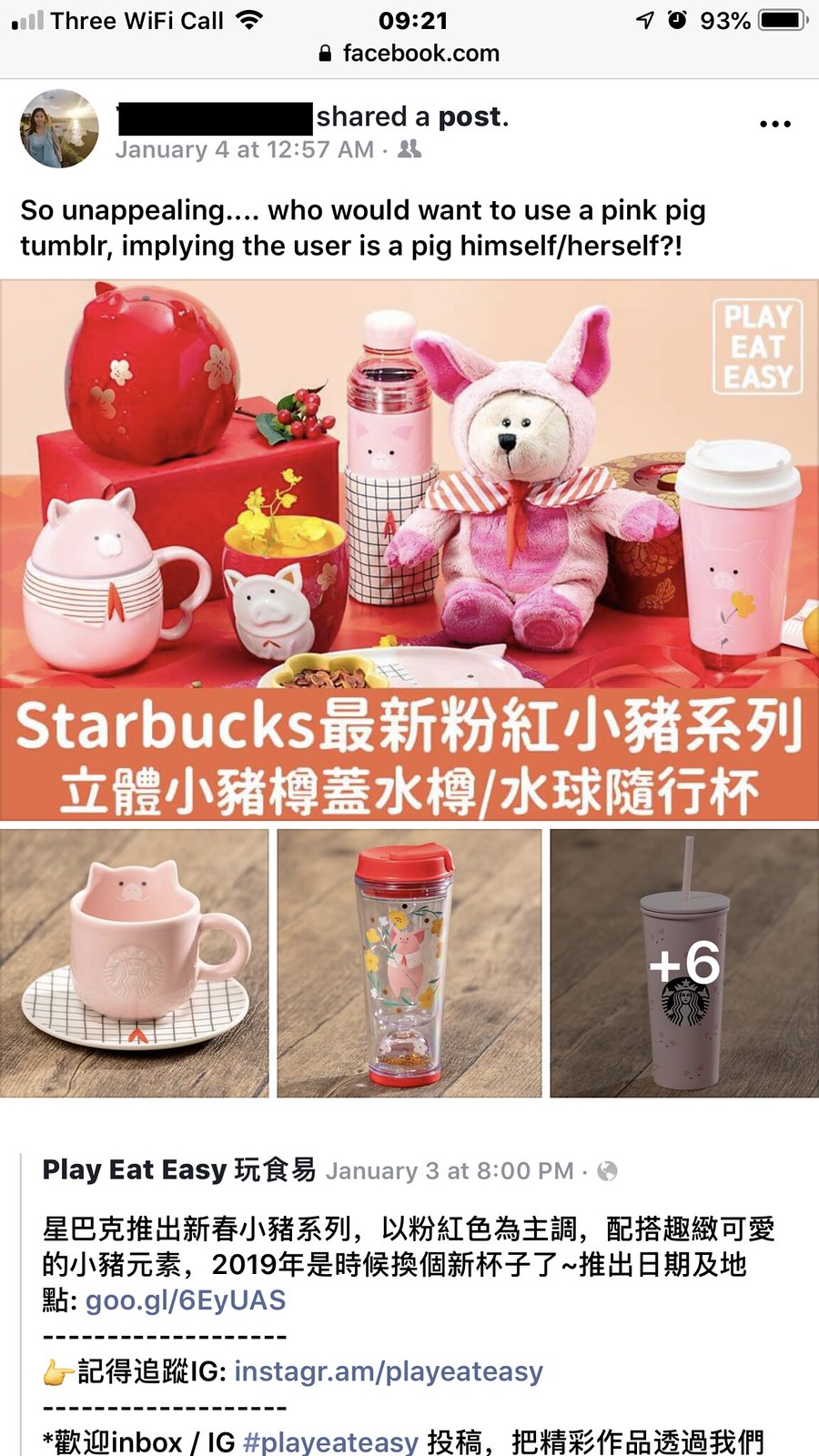
If you have a premium bank account you might be given a zodiac ornament of some type. Coffee shops like Pacific Coffee and Starbucks get in on the act with zodiac animal themed merchandise and gift cards. Zodiac signs are big business.
Of all the zodiac signs, the pig presents some unique challenges for marketers.
On one hand it can be seen as a kawaii or cute looking creature, like the Hong Kong cartoon character McDull. A pig is also seen as gluttonous and fat. Chinese and other east Asian cultures are not shy about saying if someone is fat. This means that consumers can more be sensitive about their body image.
Starbucks Hong Kong seems to have upset a small but significant number people who have shared their dislike on Facebook.
They didn’t want a pig faced coffee tumbler because of what it implied about them whilst they used it.
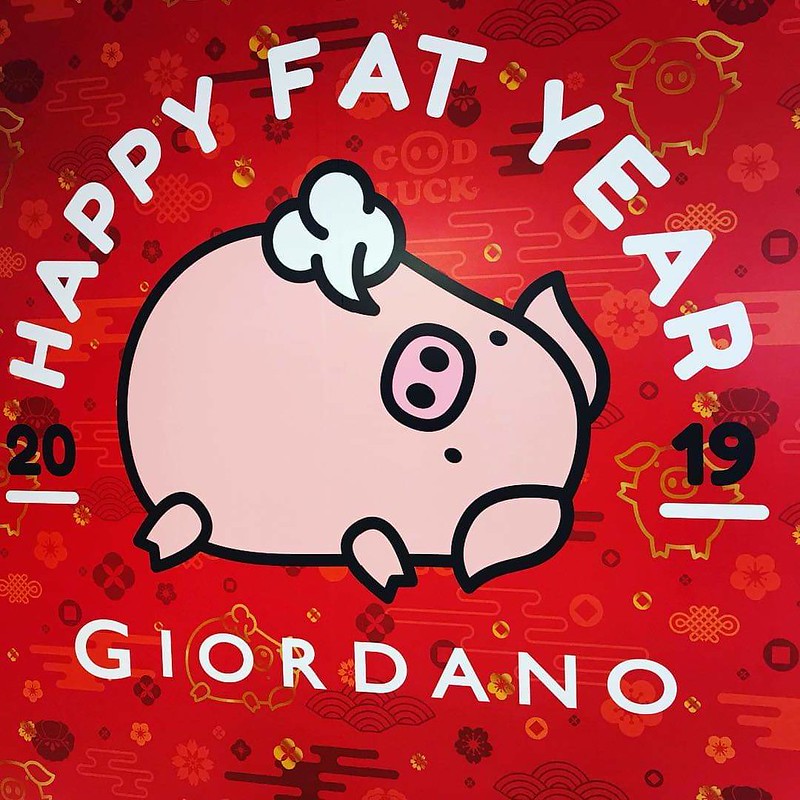
Hong Kong clothing brand Giordano have played with the concept of the pig in their promotions. Again the association between this design on clothing and the wearer could be an interesting one. The idea of a fat year, meaning a prosperous year maybe lost in translation for some Hong Kongers.
The key takeout for brands should be to practice critical thinking. They need to go beyond the cute design and repetition of last years gift with a different animal design. Think about the context and interaction of the end user with the product. What does the symbolism say about them? More related content here.
David D Clark was involved in the designing the internet as it moved into the commercial sphere. He rose to prominence in the 1980s through to the mid-1990s. In the talk at Google’s Mountain View campus he goes over much of the process. The things he says about network economics and security is particularly interesting.
Outtakes
In the 1970s it was about getting the protocols right, they needed to debug both the code and the specification that went alongside.
1980s made hierarchies to make things scale as everything got bigger.
1990s brought in the commercial internet, the specific goal of specifications was to shape industry structure. Protocol boundaries define industry structures.
Quality of service development was compromised because it didn’t work economically for network providers. Specifically by concern about internet telephony. Standards adaptation was affected the internet service providers efforts to get value out of applications that run over the top (like Google).
His discussions on designing the internet with politicians are particularly intriguing. There are still unanswered questions about societal and political accountability. There is a space for anonymous actions and an accountable internet would fall back to sovereign states including authoritarian regimes.
Availability as well as integrity and cryptography (disclosure control) are important for security. The internet is insecure by design. Conscious decisions were taken to put risky actions into the internet. This gave us Flash, Acrobat and the Chrome browser.
Embedding risky actions to provide attractive features for users, versus ensuring that these are only between people who you know. Trustworthiness is key.
Protocol features affect industry power, adding more features may give power to the wrong people. The prime example of this is the work that the Chinese government have been doing with Huawei to try and define real ID, censorship and cyber sovereignty into next generation standards. More related content here.
ICE-ing – a method of protest using vehicles with internal combustible engines
Sometimes writing posts are a matter of serendipity. I was out walking in Stepney Green and came across a series of electric vehicle charging points. I hadn’t paid any attention to them before.
Right about the time that I noticed them; I saw that the parking bays in front of the charging points were all taken up by petrol or diesel engined vehicles. This being London were parking spaces tend to be a premium, I took a picture of the dissonant scene and quickly moved on.
I came in and then read a piece of how truck owners in the US were trolling Tesla supercharging points. Car culture is still huge and overwhelmingly celebrating petrol engined vehicles. But in the US there is a definite sub-text to the protests; one of class war. Metropolitan elite Democrats versus middle America truck-owning Republicans hence ice-ing.
I revisited the photo that I took earlier in Stepney Green. All the vehicles in the photo were mid-range Mercedes cars with the exception of the Nissan pick-up truck. What would the odds have been of a super-mini in the row of parked vehicles if this was just about parking spaces? Was it British ice-ing
It didn’t seem organised; but more of an organic system. Some first ‘person like me’ committed the transgressive act of parking in a charging bay. This then gave ‘permission’ for others to do it as well and the spaces filled up.
There are a number of reasons for a consumer to not want to purchase an electric car when looking for a vehicle:
Cost
Energy density / range
Speed of recharging
Charging point network
Vehicle choice
A bigger and harder to crack issue for vehicle manufacturers is one of values. Electric cars don’t have a culture behind them. They may have good road performance but they are the wholemeal bread of the automotive world. Something you should so, rather than something you are passionate about driving. Internal combustion engines won’t go quietly into the night.
BMW going into formula E and launching the i8 using the design language from the M1 was a nod towards making electric sexy. But on its own its like spitting in a hurricane. One Japanese vehicle manufacturer knew how to make electric (and petrol) vehicles exciting through
Customisation
Tinkering
Community
Noise
Spectacle
Unfortunately for the automotive industry that vehicle manufacturer is Tamiya. Tamiya is a Shizuoka based manufacturer of remote control cars for hobbyists.
Maybe the answer isn’t about marketing but about engineering?
You can change the fuel without changing the excitement, noise or spectacle.
Hydrogen powered combustion engines offer similar energy density and performance to petrol cars, but with water as the waste product rather than carbon monoxide. Battery technology currently relies on a lithium and most of the world’s supply comes out of a high desert in Chile – we’ve replaced one finite resource (oil) with another (lithium and rare earth metals).
Toyota is already experimenting with hydrogen in Japan. BMW have done pilot programmes in the past and hydrogen as been trialled in heavy goods vehicles.
At a macro level, the world is in a pretty strange place at the moment. Populism is at the centre of uncertainty across many countries in terms of political direction, macro economics, technology and consumer uncertainty.
Populism and nationalism is on the march: Duterte in the Philippines. Trump in the US. The German right wing populism leaning political party AfD is shifting the Overton window in Germany. The yellow vests in France and the UK is channeling anger into political activism along fringe party lines providing an opportunity for populism. The UK has seen a rise in far right grassroots media mirroring the rise of The Canary and similar publications on the left both of which fuel different forms of populism. The Russians don’t need to do it as the populism and divisive politics is homegrown. The Queen’s speech called for unity in the country and the UK government’s Prevent anti-radicalisation programme has more far right cases than Islamic extremists. Even China has been gradually moving to a Han nationalism as part of its more forceful foreign policy. India and Pakistan have both seen a rise in sectarian politics. This has impacts in terms of foreign trade and economic growth. We are already seeing domestic brands rising in China and India; we may see a decline in brands and product SKUs in the likes of the UK – all of which will impact advertising budgets. At an agency office level; the chilling effect of nationalism is going to affect the movement of talent on both client and agency side. It’s hard to articulate the atmosphere of an agency that I was working in the day after the Brexit vote without using the word bereavement. I know people in my family and peers who are moving away. Over time this will impact culture and creativity. It is hard to remember but back in the 1970s the UK was much more parochial and less multi-cultural than it is now. Everyday things we take for granted like good food were much poorer experiences.
There are so many variables in play we don’t know where populism and divisive politics is going, but there are dark possibilities to the government ‘by the seat of their pants’ which seems to be prevalent.
Cryptocurrency and block chain: We’ve seen a wide range of crypto currencies decline in values this year. What are the factors might drive a recovery? Why would there be a spike in demand? I don’t know what that ‘X factor’ would be. I suspect that experiments in block chain such as verifying online media spend to prevent online fraud will start bumping up against the limitations of the technology. Blockchain has a relatively low transaction rate compared to legacy payment systems. Decentralisation still isn’t as good as an Oracle database or a mainframe a la the traditional banking system. Some applications just make no sense.
From Farm to Blockchain: Walmart Tracks Its Lettuce – The New York Times – is a classic example of technology for technology’s sake. How much lettuce would Walmart be selling day in, day out? That data has to be collected across a complex supply chain. Secondly, its a privatised centralised blockchain which negates the technical benefits of Blockchain and makes me wonder why IBM weren’t selling in Db2 or Oracle high transaction speed relational database on a z-series mainframe. It’s announcements like this that makes one wonder if blockchain has jumped the shark.
Virtual reality hasn’t seen the level of adoption that was predicted. The problem is no longer one of technology hardware (lets ignore battery life for a little while) but content. VR changes the way stories are told and experienced, it makes it hard to build brand experiences and compelling content. Microsoft has managed to build a community of early adopters in Altspace – a Second Life type environment. Augmented reality (AR) has been sporadically adopted and Apple has been putting a lot of work into building creator tools, but the decline of Blippar. Magic Leap’s demo film for its partnership with Cheddar doesn’t currently look like a compelling AR application to me. It does mirror, anecdotal evidence that suggests the most common use of VR is to replicate a big TV experience in a small space through the Netflix application.
https://youtu.be/xjYE-joYjQs
If 2017 and 2018 were the years when ad fraud became the bête noire of marketers, 2019 might see harder questions asked of influencer marketing practices. The move from influencers to micro-influencers was down to cost per reach and engagement. The move to nano-influencers implies a similar kind of shift again. Yet it seems to be largely taken on blind faith by marketers at the moment that influencers are good thing. I think many of the challenges that influence marketing faces when I wrote about them earlier are still valid. One question that I haven’t seen seriously considered by marketers is when you’re in a culture where ‘selling out’ has moved from being shameful to gen-x; to a badge of validation in the space of a decade that has to change the value proposition that influence brings? As a marketer the possible answer to that question worries me.
The focus on ad fraud might be partly responsible for a slight resurgence in the realisation brand advertising is valuable. Performance advertising is about the now, brand advertising is all about sowing acorns that are reaped for decades to come. As a concept it’s easy to grasp at an empirical and research driven level. But when marketers typically stay in a role for a short time, the now becomes of outsized importance. They have to make an impact and then plan their exit strategy in what’s typically a three year cycle. Brand is hard for FMCG (fast moving consumer goods) brands to take on board as they see channel and shelf disruption from the likes of Amazon and Ocado. They have experimented with the direct sales model a la Birch Box and Dollar Shave Club, but that will only work with certain products. Consultants selling disruption are selling chaos; clients hedging against black swans often miss where change isn’t happening – consumer behaviour doesn’t change at the speed of PowerPoint. I’ll leave the last word on digital disruption to Mark Ritson.
It’s hard to get emotional or feel any of the romance of news media from a home page, but the paper edition carries with it the great cultural power of journalism. Print editions will become the ‘couture’ offering of the news brands – loss-making but important assets for building and retaining authority and influence over the market
Validation of traditional media can be seen all around us. Amazon printing catalogues, online brands having flagship stores. Underground and out of home adverts for e-commerce businesses surround me as I go about my daily life in London.
Stories with everything – I don’t know whether the recent trend of every social platform having a short form video function that disappears a la ‘stories’ is a wider socio-cultural trend or the constant carousel of changing formats as part of a ploy to keep users engagement rate up. For established platforms there is little to be lost by throwing new features agains the wall and seeing what sticks.
I’ve omitted talking about 5G as it will take more than a year to get up and running. It won’t be clear what its application is until we start to see how effective the network is in practice. Gadgets like fold out phones won’t fundamentally change the pictures under glass interface used in smartphones for the past decade or so. Their impact may be exaggerated due to their high cost that consumers will bear one way or another.
I realise that these are a series of random thoughts but would be interested to know what you think. Feel free to comment below.
Keyboardio Blog — December 2018: A startling discovery – one of the worst tales I’ve heard about manufacturing in Shenzhen; this is off-the-hook. Keyboardio have been extraordinarily unlucky. Keyboardio are famous for making custom mechanical keyboards
Defiant Xi Jinping Says No One Can Dictate Reforms to China – Bloomberg – depending how you read this statement “No one is in the position to dictate to the Chinese people what should and should not be done.” This could be defending legitimacy of CCP AND OR Chinese firms and people can do what they like abroad with impunity