Ni hao – this category features any blog posts that relate to the People’s Republic of China, the Chinese communist party, Chinese citizens, consumer behaviour, business, and Chinese business abroad.
It is likely the post will also in other categories too. For example a post about Tong Ren Tang might end up in the business section as well. Inevitably everything is inherently political in nature. At the moment, I don’t take suggestions for subject areas or comments on content for this category, it just isn’t worth the hassle.
Why have posts on China? I have been involved in projects there and had Chinese clients. China has some interesting things happening in art, advertising, architecture, design and manufacturing. I have managed to experience some great and not so great aspects of the country and its businesses.
Opinions have been managed by the omnipresent party and this has affected consumer behaviour. Lotte was boycotted and harassed out of the country. Toyota and Honda cars occasionally go through damage by consumer action during particularly high tensions with Japan.
I put stuff here to allow readers to make up their own minds about the PRC. The size of the place makes things complicated and the only constants are change, death, taxes and the party. Things get even more complicated on the global stage.
The unique nature of the Chinese internet and sheltered business sectors means that interesting Galapagos syndrome type things happen.
I have separate sections for Taiwan and Hong Kong, for posts that are specific to them.
Unilever moves global comms planning to Mindshare from PHD | Media | Campaign Asia – huge win for Mindshare and a move away at the global level between planning guidance and media buying. It would be analogous to investment managers to go back to taking advice from sell-side analysts. I guess part of the problem is trying to get global guidance to be implemented at a country level
China’s Tariff Cuts Won’t Hurt Daigou Business For Now | Jing Daily – China plans to reduce tariffs on 187 consumer goods, including cosmetics, apparel, health supplements, food, and pharmaceuticals. The new policy will go into effect on December 1. The average tax rate will drop to 7.7 percent from 17.3 percent.
China’s Toutiao Tried to Buy Reddit — The Information – One reason was general skittishness among Reddit’s investors about selling to a Chinese internet company whose user and revenue numbers were tough to assess – and there is the burn
Apple: Chinese Buying Huawei et. al. but Sticking with iPhone, Says Morgan Stanley – Barron’s – The Jigaung data also highlights that in the 4 weeks ending October 22nd, more “switchers” left their Chinese branded smartphone for an iPhone than iPhone users left for a Chinese branded smartphone, across all local vendors. In fact, Apple’s net switching rate, or the net amount of switchers gained/lost as a percentage of all brand switchers increased to 7.6% in the latest 4 week period, up from 6.7% in the prior 4 week period ending October 8th. Comparatively, Vivo was the only Chinese smartphone vendor to gain “net switchers”, albeit at a significantly lower rate. We expect this trend to only accelerate as future data sets will include the period after the iPhone X first began shipping.
Inside Speedfactory: Adidas’ Robot-Powered, Shoe Production Facility | WIRED – Adidas Speedfactory interesting explorations in automation and customisation in manufacturing. Speedfactory would also allow manufacturing to be moved closer to where the product will be sold. Speedfactory could have an impact on globalisation if commercialised.
Consumer behaviour
3 Must Know Trends of Affluent Millennials In Shanghai | Jing Daily – The post-90s generation is also eager to engage in experience-based shopping, and many are adventurous FIT travelers. According to the report, 56 percent of their travel expenditure is on overseas trips, and their overseas spending has increased more than 40 percent in the past two years – at the expense of e-commerce
WPP stalls supplier payments ‘to boost year-end results’ – DecisionMarketing – An internal email leaked to the newspaper read: “Cash balances are one of the most important indicators there are of the health of a business and so every year WPP looks to maximise its cash position reported in the year-end accounts.” It went on to ask for help chasing cash owed to WPP and “slowing down payments to our creditors”. – I wonder if they are slowing down the paying of staff OOPs?
McKinsey on digital marketing: Personalization is not what you think | ZDNet – The first thing [is] that people, when they talk about personalization, often confuse it with targeting. Absolutely every client that I talk to and every person in the industry, we all want to do better targeting. I think personalization has a piece of that, but I think of personalization as really helping manage a customer through their journey. That could include advertising. That could include experiences, both physical and digital. But it’s that end-to-end view of helping the client, the customer, get through that journey in a thoughtful way
Media
Facebook explains ad policies to users, but industry wants more | Advertising | Campaign Asia – the post is focused on empowering users to take action, leaving them with the onus. The post, she continues, acknowledges that Facebook does not have the ability to police and manage the content that is produced and shared in its different environments, and requires a concerted effort from end users to brands to their agencies and beyond. “Does that address the demands asked of Facebook to take greater responsibility for the content on their platform? Unlikely,” she said. More Facebook related content here.
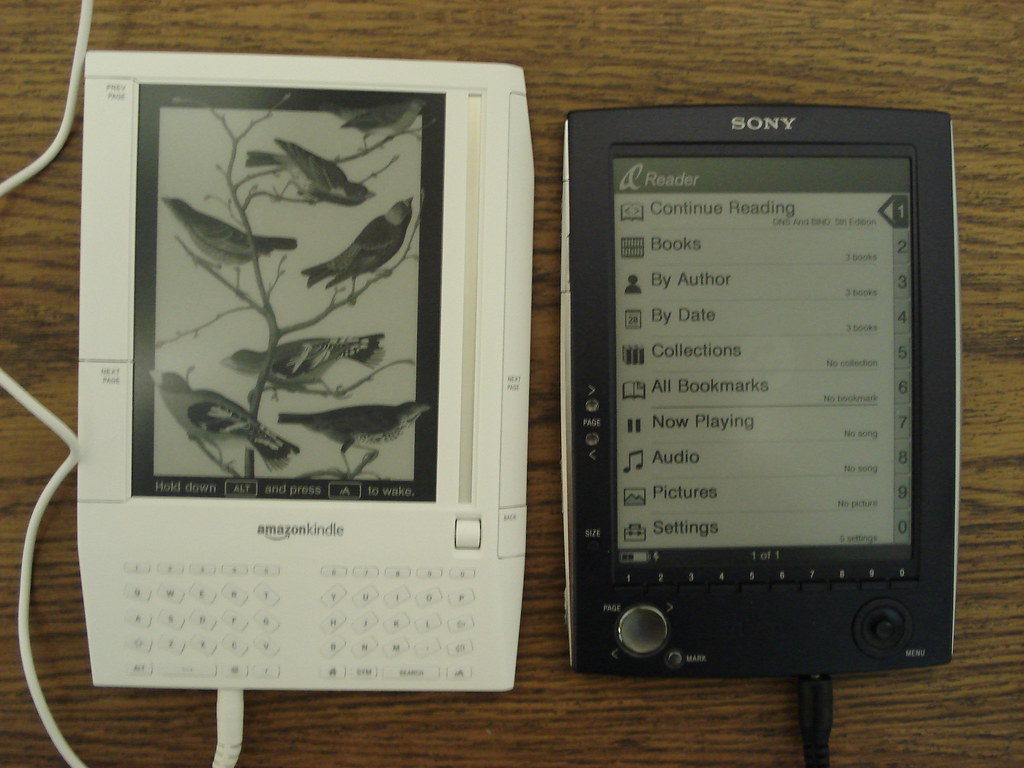
I was blown away when I realised that it was the tenth anniversary of the the Amazon Kindle. Ten years, think about that for a moment.
If you look at the original Kindle versus the latest model you can see how the design language moved from a ‘BlackBerry’ type product design to a smartphone type design. Along the way it benefited from improvements in e-ink display technology to provide a crisper viewing experience. Sony’s competitor might have looked more modern bit it didn’t manage to get the marketing mix and the hardware / services mix right.
Sony’s failure indicated while you could be successful in a number of media markets, it didn’t guarantee success in other media.
Ten years ago today, we launched the first-ever Kindle. Happy 10th birthday @AmazonKindle and thank you to all the Kindle readers and authors! pic.twitter.com/qelfniBSK1
Rather like Apple products Kindle is a combination of hardware, software (including content), payment infrastructure and the Whispernet global mobile virtual network.
Like Apple, Amazon came in and refined an existing business model. Companies like Sony made very nice e-readers, but they didn’t have the publisher relationships and market access that Amazon had.
Context rather than convergence
In a time where consumer electronics thinking was all about convergence, from the newly launched iPhone to the Symbian eco-system, Amazon were determined to come up with a single purpose device.
Amazon resisted the trend and created a dedicated device for reading. That is why you have a black-and-white e-ink screen and an experience exclusively focused on seamless content downloads.
Yes, they’ve rolled out tablets since, but even the latest range stick to the original Kindle playbook. Some of their decisions were quite prescient. The Kindle was deliberately designed so that it didn’t require content to be side loaded from personal computer like an iPod.
The Kindle has survived the smartphone and the tablet device as a reading experience. Even if ebooks didn’t conquer the book publishing market in quite the way Amazon had planned.
Using the U.S. legal system to clear the field
Amazon was helped out by the US government prosecuting Apple under the Sherman Act. Wikipedia has a good summary of this case. On the face of it Apple was doing a similar structured deal with publishers on book pricing to what it had done previously with record companies for iTunes music.
This case effectively stalled Apple book store momentum and lumbered Apple with overzealous US government overwatch. The consumer benefit has been minimal – more on that later. The irony of all this is the way Amazon has leveraged its monopolistic position to decimate entire sectors of the retail economy.
The interesting thing about this case, say compared to the Apple | Qualcomm dispute is that Apple still kept Audible audio book sales in iTunes throughout this dispute and didn’t look at ways to bounce the iPad Kindle app from the app store. Audible is an Amazon-owned company.
By comparison, Amazon bounced Apple’s TV from its own e-commerce platform and has taken a long time to support the AppleTV app eco-system – long after the likes of Netflix.
Piracy in China
Amazon hasn’t had it all its own way. China had a burgeoning e-book market prior to the Kindle and Chinese consumers used to read these books on their laptops. Depending which store you used; it might have more books at a cheaper price because intellectual property wasn’t ironed out. This has undermined Amazon’s slow entry into the Chinese e-book marketplace.
A cottage industry sprang up that saw Kindles acquired in the US and Japan shipped back to China and reflashed with software that made them compatible with the local app stores. These Kindles were bought at a subsidised price as Amazon looked to sell devices to sell books.
The Kindle brain phenomenon
I moved from the UK to Hong Kong to take up a role and tried to lighten my burden by moving my reading from books to the Kindle. I found that I didn’t retain the content I read. I enjoyed the process of reading less and did it less often. I wasn’t an e-book neophyte I had enjoyed reading vintage pulp fiction novels as ebooks on Palm devices and Nokia phones in the early 2000s as a way of passing them time on my commute.
Talking to friends their experience was similar. I now read on the Kindle or listen to audio books only for pleasure. I tend to buy my reference books in the dead tree format. There is something more immediate about the process of reading from a ‘real book’ rather than an e-book.
It seems that digital natives aren’t ready to give up books just yet. Studies about the use of digital technology and e-books in education are mixed and anecdotal evidence suggests that technology industry leaders liked to keep the level of digital content in their children’s lives at a low threshold.
The Kindle hasn’t replaced the bookshelf and the printing press yet.
Pricing
Disposing of the medium didn’t mean that we got cheaper e-books. On Amazon it is worth looking carefully to see what is the cheapest format on a case by case basis. Kindle competes against print books and secondhand books.
Secondhand books win hands down when you are looking at materials beyond bestsellers. A real-world book is easier to gift and Amazon Prime allows for almost instant gratification. The Kindle starts to look like Amazon covering all the bases rather than the future of publishing. This may change over time, a decade into online news was a more mixed media environment than it is now – but Kindle feels as if it has reached a balance at the moment. More related content here.
How the Chinese Government Fabricates Social Media Posts for Strategic Distraction, not Engaged Argument by King, Pan & Roberts – Chinese regime’s strategy is to avoid arguing with skeptics of the party and the government, and to not even discuss controversial issues. We show that the goal of this massive secretive operation is instead to distract the public and change the subject, as most of the these posts involve cheerleading for China, the revolutionary history of the Communist Party, or other symbols of the regime (PDF) – fascinating study, more online related content here.
Soothsayer in the Hills Sees Silicon Valley’s Sinister Side – The New York Times – “If you’re a mark of social media, if you’re being manipulated by it, one of the ways to tell is if there’s a certain kind of personality quality that overtakes you,” he says. “It’s been called the snowflake quality. People criticize liberal college kids who have it, but it’s exactly the same thing you see in Trump. It’s this kind of highly reactive, thin-skinned, outraged single-mindedness. I think one way to think of Trump, even though he is a con man and he is an actor and he’s a master manipulator and all that, in a sense he’s also a victim. I’ve met him a few times over 30 years. And what I think I see is someone who has moved from kind of a New York character who was in on his own joke to somebody who is completely freaked out and outraged and feeling like he is on the verge of a catastrophe every second. And so my theory about that is that he was ruined by social media.”
Design
IBM Type – IBM have open sourced their tailor-made corporate font Plex
Marketing
Huawei’s new global corporate brand swagger | Analysis | Campaign Asia – Huawei so closely reflects China’s new ambitions that it would be easy to consider the tech giant as a proxy for Brand China. But Tan bristles at the suggestion. “Huawei is a global company,” she reminds us. “You can see our overseas revenue is larger than China, so we really want to position our brand as a global brand.”