Category: gadget | 小工具 | 가제트 | ガジェット

What constitutes a gadget? The dictionary definition would be a small mechanical or electronic device or tool, especially an ingenious or novel one.

When I started writing this blog the gadget section focused on personal digital assistants such as the Palm PDA and Sony’s Clie devices. Or the Anoto digital pen that allowed you to record digitally what had been written on a specially marked out paper page, giving the best of both experiences.

Some of the ideas I shared weren’t so small like a Panasonic sleeping room for sleep starved, but well heeled Japanese.

When cutting edge technology failed me, I periodically went back to older technology such as the Nokia 8850 cellphone or my love of the Nokia E90 Communicator.

I also started looking back to discontinued products like the Sony Walkman WM-D6C Pro, one of the best cassette decks ever made of any size. I knew people who used it in their hi-fi systems as well as for portable audio.

Some of the technology that I looked at were products that marked a particular point in my life such as my college days with the Apple StyleWriter II. While my college peers were worried about getting on laser printers to submit assignments, I had a stack of cartridges cotton buds and isopropyl alcohol to deal with any non catastrophic printer issues and so could print during the evening in the comfort of my lodgings.

Alongside the demise in prominence of the gadget, there has been a rise in the trend of everyday carry or EDC.

  • I like: StarTech Thunderbolt 3 adapter

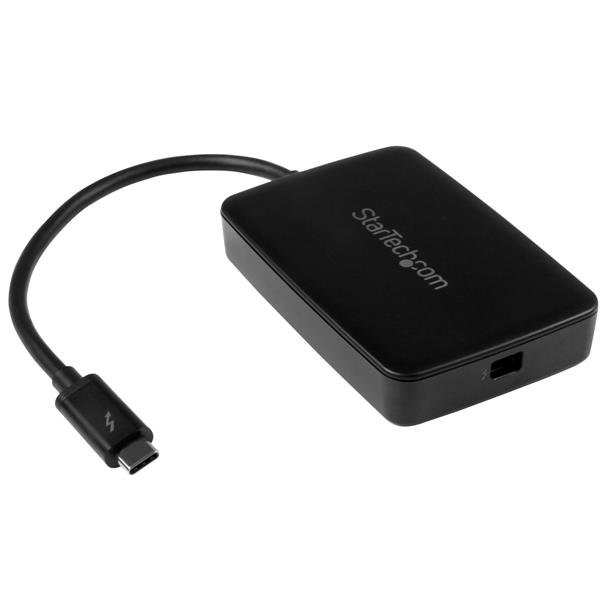
    I like the StarTech Thunderbolt 3 adapter, or to give it its full name: StarTech.com TBT3TBTADAP Thunderbolt 3 to Thunderbolt 2 Adapter.

    Like many people who have bought a new Apple laptop recently. The move to USB-C / Thunderbolt 3 has been extremely disruptive. I spent a fortune on new accessories. One thing I wasn’t prepared to do was throw away my Belkin hubs and Apple Cinema monitors. I tried Apple’s own Thunderbolt 2 – Thunderbolt 3 adapter; and it worked inconsistently. One day I would switch on my computer and the monitor or hub wouldn’t work. For apparent no reason, on a seemingly random basis.

    StarTech ThunderBolt 3 to ThunderBolt 2 adapter

    StarTech are a Canadian company who have been involved in unsexy, but necessary parts of the technology and video industry. Their focus is purely on interconnectivity of different video display standards. Whilst they aren’t a well known brand like Logitech or Belkin, there are probably some of their products used by your office sys.admin. They used to make a well respected Thunderbolt 2 hub, that didn’t seem to ship to the UK. So in desperation I decided to give their adaptors a chance. 

    Let’s get the negative aspects about them out of the way first. They are bulky, with the electronics coming in a case about the size of a stack of playing cards, rather than a small pack of chewing gum like Apple’s own convertors. They’re in a shade of dark grey only a sys.admin could love. 

    But once you get over these cosmetic issues you get a product that just works. It is ironic that I had to go to a non-Apple supplier to get this most Apple of attributes. I can wholeheartedly recommend these convertors. 

    More on my trials and tribulations with USB-C / Thunderbolt 3 here.

  • By innovation only. Yet another iPhone launch

    Apple’s September 10 event ‘By innovation only’ marked the autumn season of premium smartphone launches. It is also a bellwether of what we can expect from the technology sector.

    Mark Twain’s ‘History doesn’t repeat itself, but it rhymes’ fits especially well in the smartphone business. From a consumer perspective Apple’s 2019/20 iPhone range is basically the same phones but with more camera features. Other vendors are going to come out with handsets with more camera and 5G modems.

    All of them are going to be trapped in the same pictures-under-glass metaphor. The smartphone industry as a whole (with the iPhone as bellwether) is trapped in its own version of groundhog day.

    5G? Not so fast

    Whilst 5G sounds good on new handsets, there’s five points to consider:

    • Early generation handsets for a new wireless standards tend to have poor battery lives
    • 5G phones are only as good as 5G networks
    • There aren’t applications to make use of 5G networks
    • A lot of mobile usage happens on home or other wi-fi networks. 5G is competing with your home broadband connection rather than your patchy cellular connection
    • 5G isn’t really about smartphones

    When you see all launches (like this picture from the Huawei Mate 30 launch); just remember the five points above and process the slick technology spin through this lens.

    5G competition isn't cellular its wi-fi on smartphone

    In Huawei’s case they’re basically launching very pretty €1,000+ 5G Mi-Fi hotspots with point-and-shoot camera functionality, since they’re an Android phone without access to Google services. The Porsche Design variants come out at closer to €2,500 – ideal for bored, but patriotic 土豪.

    Price inelasticity

    Apple’s iPhone X and XS models tested the the price elasticity of premium smartphones. The market spoke. This year’s prices have stayed the same rather than increasing. You could argue that the value proposition has increased through a year’s worth of bundled services. Of course, its only worth anything if you use the services.

    Differentiation through services

    Seven years ago I was sat in a hotel restaurant in Seoul and overheard Flipboard going through a pitch they wanted to deliver to Samsung. Samsung eventually tried out Flipboard and free content subscriptions to help sell the Galaxy S3.

    Apple decided to build their own free subscription model based around streaming video. This is to:

    • Differentiate its new devices from competitors
    • Provide a recurring revenue stream from iPhone users with older devices
    • Utilise the massive data centres that Apple has been building for the past decade

    Built to last

    The use of superior materials has resulted in iPhones lasting longer. Add this to pricing and for many people, their first iPhone is a pre-owned iPhone. They are handed down in families or to older relatives. This has built Apple a large user base. The big question is whether they can turn this footprint into services.

    There is a tension between new phone sales in a saturated marketplace, versus a growing base of service users.

    More information

    Apple Live Event: Apple Cuts Prices for Sales, New Subscribers – Bloomberg 

    Apple Event: Upgrades, Upgrades, Upgrades – Tech.pinions 

    The iPhone and Apple’s Services Strategy – Stratechery by Ben Thompson 

    Apple is making its iPhones last longer. That’s a good thing | Macworld 

  • Carry nothing + more things

    Men Know It’s Better to Carry Nothing – The Cut – Mediumwomen clean up because fashion allows it. She pointed to the size of women’s bags, which allow us — like sherpas or packhorses — to lug around the tool kits of servitude. A woman is expected to be prepared for every eventuality, and culture has formalized that expectation. Online, lists of necessities proliferate: 12, 14, 17, 19, 30 things a woman should keep in her purse. Almost all include tissues, breath mints, hand sanitizer, and tampons — but also “a condom, because this is her responsibility, too.” (A woman’s responsibility for everyone else’s spills extends to the most primal level.) – I don’t think that this ‘carry nothing’ mentality of men is true any more. One only has to look at the backpacks carried around. Or the whole EDC culture of over-engineered products to optimise the carry experience, making a lie of carry nothing as a concept. For a lot of men, the car is the handbag, but that’s a whole other discussion around the idea of carry nothing. More consumer behaviour related content here

    Gender ad bans set ‘concerning’ precedent, say advertisers | FT – the publishing ban only applies to direct marketing: members of the public, media outlets and sites like YouTube can continue to share banned materials.

    Amazon offered vendors ‘Amazon’s Choice’ labels in return for ad spending and lower prices – Digiday – shit meet fan….

    REON POCKET | First Flight – personal cooling device using Peltier effect to cool behind the neck

    Silicon Valley’s China Paradox | East West Centerthe period from 2014 to 2017 as a time of “segmentation and synergy,” two words that on their face are opposites of each other. Their juxtaposition forms the core of what Sheehan labels “Silicon Valley’s China paradox.” While at a corporate level US and Chinese companies were entirely separate, the flow of money, people, and ideas reached an all-time high during this period. “This is when you saw a lot of investors from China showing up in Silicon Valley, some prominent US researchers and engineers joining Chinese companies in positions of leadership, and ideas flowing in two directions,” said Sheehan. He noted that the concept of shared bicycles, now popular in US cities, started in China, and both Chinese and US companies have been active in the development of autonomous vehicles. Even while the relationship between the two national governments was in many ways going sour, “the relationship at the grassroots level, the technology relationship, was still very free-flowing,” he noted. Sheehan suggested that the relationship has now entered a new and uncharted phase, which he termed the new “technology cold war,” with the US government asserting national policies in what was previously considered a private arena. This new phase has three dimensions, he said. The first is an effort to disentangle the interconnected technology com- munities that bind the two countries together. In 2018, the US Congress passed the Foreign Investment Risk Review and Modernization Act (FIRRMA). This new legislation increases US government oversight and supervision of Chinese investment in Silicon Valley, Sheehan pointed out. The US State Department also began restricting visas for Chinese graduate students working in sensitive fields of science and technology. The second dimension is height- ened competition between US and Chinese companies in other countries. In general, “American companies know they can’t win in China, and Chinese companies know they can’t make a dent in the US market,” according to Sheehan. So US and Chinese companies are competing in markets such as India, Brazil, and Southeast Asia. (PDF)

    Why Consumers Aren’t Buying Electric Cars | naked capitalism – no great surprise

    US smart speaker update – (PDF)

    Fake news and cyberwarfare from China in Hong Kong protests | Slate – really good analysis of some of the online events happening in Hong Kong

    The big scoop: what a day with an ice-cream man taught me about modern Britain | Food | The Guardian“Since Brexit, people have less money, and less confidence in spending money. They haven’t got the money in their pockets they had a few years ago.”

    Apple and Samsung phone sales are down, and $1,000+ prices are one reason why – BGR – less convinced by this explanation – BlackBerry could have fitted into this format as well in its decline

    In-house marketing ‘costing firms lost productivity and creativity’ | Netimperative – but is the pay-off worth it should be the question

    US and China investors battle over Indian digital payments boom | Financial Times – so I think that Payments in India will turn out to be a White Elephant but the FT thinks that its a growth market

    Revealed: Johnson ally’s firm secretly ran Facebook propaganda network | Lynton Crosby | The Guardian – a lot positive advocacy campaigns can learn from this

    Are Companies About to Have a Gen X Retention Problem? HBR – or why are gen-y self entitled snowflakes part 43

    Taiwan primaries highlight fears over China’s political influence | Financial Times – Want Want China Times and Cti TV deny they take instructions from China’s Taiwan Affairs Office like good little United Front puppets. Who would you trust them or the FT?

    TikTok creator ByteDance to enter smartphone market, following deal with Smartisan | SCMP – not convinced by this move

    Boris Johnson to unveil biggest ad campaign since Second World War to prepare for ‘no deal’  – 100 million that realistically would need to be spent in 9 or so weeks. That’s a lot of gaslighting….

    Filling hospitals with art reduces patient stress, anxiety and pain – imagine seeing those tiles whilst well medicated

    Websites are (probably) making less money because of GDPR – MIT Technology Review – the caveats read so wide its hard to conclude anything from this really

  • Illegal spy camera + more things

    Illegal spy cameras are still easy to find in Shenzhen’s gadget paradise | Abacus – this will make you very paranoid. The size of the devices now mean that you can have illegal spy cameras everywhere. Smartphone adoption has driven the quality of small cameras up and their size down.

    Jollibee acquires US-based Coffee Bean & Tea Leaf | Marketing | Campaign Asia – this is huge. Coffee Bean and Tea Leaf is a credible Starbucks competitor with a substantial footprint and great tasting coffee. It has a substantial presence in the US and Asia, with a particularly big footprint in Korea. Korea is one of the major coffee consuming nations in Asia.

    Inside Amazon’s pitch for new audio ads in music on Alexa devices | AdAge – Amazon sells 15 and 30 second radio type adverts. It looks like a modern version of Rediffusion style radio that piped content directly into consumer homes in the post war period. Cable radio used to be a thing in the United Kingdom Barbados, Malaysia, Malta, Singapore and Hong Kong….

    Forever 21 Sent Some Customers Atkins Diet Bars And People Are Very Angry | Buzzfeed News – I wonder what persuaded Atkins to come to Forever 21 with this tie-up. Is there something in their customer base demographic profile that isn’t obvious to me? I could see why at first glance Forever 21 could have seen the product drop as a ‘delight’ for customers. But in retrospect the sensitivity is understandable. It is also interesting how Forever 21 took the brunt of consumer displeasure on what was a co-promotion with Atkins.

    Extinction Rebellion breaks into fashion in Stella McCartney sustainability campaign | The Drum – Extinction Rebellion gets co-opted by fashion brands. The FT have an interesting interview with Greta Thunberg about how XR and he wider climate change protest movement spiralled out of control

  • Secure empty trash + more news

    How to replace El Capitan’s missing Secure Empty Trash | Macworld – SSD as security risks. This is because sold state drives can only be read and written to a limited amount of times which poses problems when you want to do three or more overwrites on a regular basis as part of the secure empty trash process. The irony being that hard disks despite their many faults are more secure. More on SSDs here.

    Fake Everything 2019 Update – 50 odd examples of how the online advertising marketplace is thoroughly corrupted. This is well worth a good read if you have anything to do with digital marketing. This should bring up questions around efficiency and effectiveness. Unfortunately this seems to have been supplanted by the cult of disruption above everything else.

    Internet advertising to grow at slowest rate since 2001 dotcom bust | Media | The Guardian – deceptive visuals, but interesting analysis. We’re now in the tyranny of high numbers. The sheer size of numbers required to drive percentage increases mean that growth had to slow. You also have concerns about the data supporting online advertising media planning and measurement due to ad fraud (see the Fake Everything 2019 update above this as a good primer). In addition, there is now data available that underlines concerns about having a more balanced media mix in play. More on online advertising here.

    AR/VR early stage valuations soften, leading to investment and acquisition opportunities | VentureBeat – China investing more in VR and AR than the US. These investments seem to be focused exclusively on domestic market requirements.

    Hackers breach FSB contractor, expose Tor deanonymization project and more | ZDNet – interesting that Tor networks have been breached. Tor was developed by US defence department grants to provide secure internet communications for people living under repressive regimes.