Ideas were at the at the heart of why I started this blog. One of the first posts that I wrote there being a sweet spot in the complexity of products based on the ideas of Dan Greer. I wrote about the first online election fought by Howard Dean, which now looks like a precursor to the Obama and Trump presidential bids.
I articulated a belief I still have in the benefits of USB thumb drives as the Thumb Drive Gospel. The odd rant about IT, a reflection on the power of loose social networks, thoughts on internet freedom – an idea that that I have come back to touch on numerous times over the years as the online environment has changed.
Many of the ideas that I discussed came from books like Kim and Mauborgne’s Blue Ocean Strategy.
I was able to provide an insider perspective on Brad Garlinghouse’s infamous Peanut Butter-gate debacle. It says a lot about the lack of leadership that Garlinghouse didn’t get fired for what was a power play. Garlinghouse has gone on to become CEO of Ripple.
I built on initial thoughts by Stephen Davies on the intersection between online and public relations with a particular focus on definition to try and come up with unifying ideas.
Or why thought leadership is a less useful idea than demonstrating authority of a particular subject.
I touched on various retailing ideas including the massive expansion in private label products with grades of ‘premiumness’.
I’ve also spent a good deal of time thinking about the role of technology to separate us from the hoi polloi. But this was about active choice rather than an algorithmic filter bubble.
China’s Choice for Hong Kong’s Chief Executive Reveals Its Own Insecurity – The Diplomat – I thought that John Lee was likely to be Carrie Lam‘s successor when he was appointed her deputy last June. As others have observed, John Lee looked most likely to be the person in charge during vast parts of Ms Lam’s administration. While others said that CY Leung would want to run again (he probably does as his ambition knows no bounds). I didn’t rate CY’s chances, given how close he was to the Hong Kong business community. The only unknown had how many terms Carrie Lam might sit before John Lee took over. Now we know, despite Ms Lam wanting to spend time with her family since 2019, it wasn’t until Omicron infections increasing in the city that she was definitely a one term chief executive. John Lee’s appointment is a message to the city’s oligarchs as much as it is to the general populace of Hong Kong. Security isn’t balanced with commerce, John Lee will be focusing on a single dimension everything else is noise. John Lee is more likely to have strong connections with the 14K rather than CK Hutchison. There is a widespread concern expressed that the mainland government (with John Lee as its instrument) will take Hong Kong’s oligarchs assets away from them.
China Is Challenging NATO Over Russia’s Ukraine War: Jens Stoltenberg – The NATO chief said the attendance of Asia Pacific partners was important “because the crisis has global ramifications,” not least due to the role of China in giving tacit support for Moscow’s invasion. – this is some of China’s worst scenarios playing out
Jacky Cheung and Nicholas Tse Star in ‘War Customised’ – Variety – After the squashing of the pro-democracy protests that flared up and turned violent in the second half of 2019, a Beijing-imposed National Security Law has changed many aspects of Hong Kong society, ranging from education to elections and entertainment. This has caused cinemas to withdraw certain films from release, the passing of a film censorship law that specifically includes security concerns, and the self-imposed exile of some filmmakers and talent. – interesting footer that I suspect will feature on many future Variety coverage of Hong Kong movies
The Resignation of Britain’s Judges Is the Final Blow to Hong Kong – The Atlantic – The exodus of Hong Kongers and foreign city residents has reached such a level that even the city’s chief executive, who announced this week that she will not seek a second term, admits that Hong Kong is experiencing a brain drain. Her replacement will almost certainly be a former police officer who has been saddled with U.S. sanctions and who helped trigger the 2019 protests. His elevation would cement that, above all else, the authorities in Beijing view the issue of security as paramount, even at the cost of business interests, rapidly decreasing civil liberties, and professional accountability. If Hong Kong is to be thought of as a bridge linking East and West, Steve Tsang, the director of the China Institute at London’s School of Oriental and African Studies, said the infrastructure still exists, but the obstacles erected by Beijing have now rendered it a tough passage. “A bridge can be there, and people can use it and cross and mix and interact and benefit each other,” he told me. “Or a bridge can be there with barricades being put up by one side, and with people on one side not being allowed to use the bridge … I think that is what we are looking at in Hong Kong.”
The Franciscan monk helping the Vatican take on — and tame — AI | Financial Times – “Algorithms make us quantifiable. The idea that if we transform human beings into data, they can be processed or discarded, that is something that really touches the sensibility of the Pope,” – interesting that there is less concern about the effects of automation
How Putin aged into a classic oil state autocrat | Financial Times – On a visit to New York in 2003, Vladimir Putin pitched himself to investors as an economic reformer willing to engage western capitalists, telling us that Russia was more than just another petrostate and shared the values of a “normal European nation”. Those words ring hollow now that Putin is invading Ukraine, but he seemed sincere at the time. Having taken over a nation battered in the late 1990s by financial crisis and default, he was pushing privatisation and deregulation. – what’s really interesting is the degree of change over time. Everything seems to hinge on Putin’s great power internal narrative
JD.com/Richard Liu: another tech boss bites the dust | Financial Times – Antitrust regulators picked market leader Alibaba as their main target, allowing JD to increase market share. JD fully controls its supply chain, warehouses and transport. That means it offers a slicker experience for customers than peers dependent on third-party services. That also makes it a big employer, another plus in Beijing’s eyes. Unfortunately, an asset-heavy business model becomes a weakness when prices and wages are rising. In the fourth quarter, JD posted a quarterly loss. General expenses rose 89 per cent. Fulfilment costs rose more than a tenth. China’s slowdown amid lockdowns in Shanghai and other big cities is a further threat to sales. Alibaba has already reported the slowest quarterly growth since going public in 2014 – the increase in general expenses needs more probing, why is it so high?
The Death of Streetwear Culture is a Class Issue | High Sobriety – in its ‘80s and ‘90s heyday, by and large streetwear culture was driven by the kids from low-income neighborhoods in major American cities. The very term “streetwear” bears that notion—it’s a style born in the streets, in schoolyards, on handball and basketball courts, and on brownstone stoops. More often than not, streetwear heroes—athletes and rappers—came from the working class
One of the cultural things that most defined the 1980s for me was the Moviedrome series of films on BBC 2. Late on a Sunday night, audiences were introduced to films by film director and academic Alex Cox.
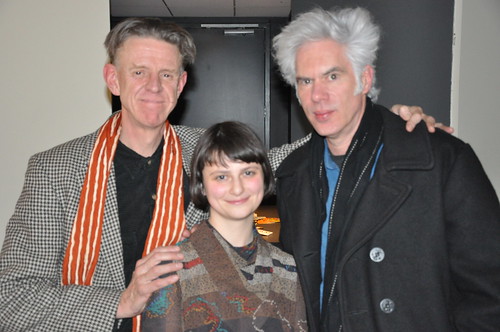
Alex Cox and Jim Jarmusch with film programmer Cristina Cacioppo
Cox had a singular vision and an encyclopaedic knowledge that he used to showcase the film to be played with two to three minute introductions. He was like an art college mate that you could go and watch a film with at a midnight showing and then discuss it over a cup of coffee in a transport café afterwards, only for the different elements of the conversation to percolate through your thoughts on the drive home and over the next few days at work.
He made the audience more literate and personally gave me a better appreciation of film. More importantly, Cox taught me to explore film, which is why I tend to be not that interested in having conversations about the James Bond series, but am more animated by Hong Kong cinema of the 1980s and the 1990s. Over time, I was able to go back and use sources like Wikipedia and IMDb and draw even more threads together to give me context about film and allow me to explore new things. but the framework was put in place by Alex Cox and his producer Nick Jones who where the original power house behind Moviedrome.
IMDb
While information has become more accessible online, it doesn’t mean that its necessarily accurate. At the time of me writing his post, according to the Moviedrome profile on IMDb, Alex Cox only presented the films until 1992. However you can find videos on YouTube for at least some of the introductions, such as Bring Me The Head of Alfredo Garcia that was shot in 1994.
Curation and context
Moviedrome also showed the power of curation and context settings. I would choose Alex Cox over Netflix every time if offered the choice. Alex Cox’s Moviedrome introductions are still sought out by people on YouTube, which shows that there is a latent interest in the concept. Mark Kermode was used in the introductory role by BFI’s online film player service, but it somehow lacks that singular vision. Kermode did a great short interview with Alex Cox on the making of Moviedrome below.
Check out this introduction to Moviedrome when Mark Kermode interviews Alex Cox.
Mark Cousins took over a relaunched Moviedrome from 1997 through to 2000. I haven’t included his seasons here. I never got to see the Cousins’ introductions. I was finishing college, working shifts and eventually moving city to live in a shared house. None of which was conducive to a regular date with the TV.
By all accounts he did a good job to resurrect Moviedrome following on from Alex Cox and producer Nick Jones who had collaborated together on the first iteration of Moviedrome.
Season 1
Season 1 saw Alex Cox doe his first set of Moviedrome introductions in American style hotel room set with the cold cathode tube Moviedrome signage glinting through the window. One got the sense that the set was exceptionally flimsy.
The Wickerman
The Wickerman was an early 1970s classic of British horror before it appeared on Moviedrome. It had a steady viewership when it was shown late at night on television. Over time something about the hidden pagan cult on a remote Scottish island gave it a following outside the UK and it became a cult film in North America. There has since been a Hollywood remake and it also influenced the Scandinavian themed horror film Midsummer. Almost as important for me was Alex Cox explaining what a cult film was, which very much fitted into the eclectic taste that I had in films. He gave me a lexicon that helped me articulate and then fully understand my love of film.
Electra Glide in Blue
Cox pulled together a number of threads in his introduction to Electra Glide in Blue, some of the connections were quite strange and elegiac in a number of different ways. In some ways it was a motorcycle tribute with its Monument Valley setting to the John Ford westerns (like The Iron Horse), there was the influence of gay movie Scorpio Rising and also seeing it as response to Easy Rider. If it wasn’t for Cox’s analysis I wouldn’t have bothered watching it. It has a dissonant ‘odd’ feel to the film that was very ‘New Hollywood’ and a great supporting cast. Finally there is the Chicago connection. The soundtrack was done by members of Chicago and the film was directed by their former producer.
Diva
Maybe its the fact that I work in advertising that I am such a big fan of French thrillerDiva, but Alex Cox’s Moviedrome critique of it being a film of style rather than narrative intrigued me rather than put me off to watch it. I still enjoy watching Diva immensely.
Razorback
I don’t usually watch horror movies that look as if they are a shelf filler at the local video rental shop. Which on the face of it was what Razorback looked like. The director has previously shot pop videos and brought a sense and style of sensibility to the film. There is also a well produced surreal dream-like sequence in the middle from one of the characters wondering back to civilisation dazed and dehydrated. Cox focused on the dark vision portrayed of Australian life; Crocodile Dundee without the humour. Sexism, a love of Elton John songs, slaughter houses, killing kangaroos for pet food and nasty characters that are asking to be killed. This is mostly achieved by the wild boar of the title.
Big Wednesday
Big Wednesday is a surfing drama based on the director’s early adulthood. Cox points out the military obsession of John Milius, whom he considers mad but at least honest about its madness. Milius had grown up in Malibu, some of his friends were drafted to Vietnam and he had surfed with serving members of the Marine Corp based out of Camp Pendleton. Milius had been turned down from serving in the US Marines due to asthma. Cox compared it to American Graffiti and Steven Spielberg famously thought that it was like ‘American Graffiti meets Jaws‘. I saw the sadness of The Deer Hunter at the centre of it, rather than American Graffiti, but I can see what Spielberg meant with the loss of innocence through the 1960s and into the early 1970s. Milius managed to get early 1970s surf legend Gerry Lopez to do some of the water scenes (Lopez is the surfer’s, surfer – the person to whom Kelly Slater looks up to). The Cox intro persuaded me to watch a film that I would have otherwise skipped over despite my love of Endless Summer.
Fat City
If you’d have asked me to watch a boxing movie like Raging Bull or Rocky I would have turned you down flat. They’ve never appealed. The Moviedrome introduction challenged my perception. Yes, Fat City is a film about boxers, but not really about boxing. Instead its about the conversations and relationships outside the ring. The camaraderie and kindness that bought them together during difficult times. At the time Cox noted that was unusual; I’d argue that its even rarer now.
The Last Picture Show
Alex Cox set The Last Picture Show up as a discussion about the use of black and white film as an artistic statements. This was the first black and while film to be shot after studios demanded a total pivot to colour in order to take advantage of colour televisions. As Cox himself noted, few film makers have done this since, yet it has been used to great effect in advertisements and music videos. His critique of why black and white hadn’t been embraced where appropriate was down to the inherent conservativism in Hollywood culture.
Hollywood has certainly become more conservative since the decline of ‘New Hollywood’ and Cox’s career itself suffered after making Walker. The film has since been vindicated by its re-release by The Criterion Collection, while Hollywood has decided to instead regurgitate the Marvel universe on screen.
The film itself is about the decline of a small town, with the last cinema closing. The characters seem to be doomed to make the same mistakes as previous generations and its a beauty capture of small town life and personalities.
Barbarella
Barbarella was something that I was vaguely aware of as I had seen stills showing its 1960s futurism with posts of lexan in the set design and Jane Fonda in knee boots. A number of my more art inclined friends had the poster in their bedroom, but hadn’t seen the film either.
Alex Cox noted that the film was a (newspaper) comic book adaptation which was rare at the time. Modesty Blaise had been turned into a film, as had The Spirit which at that time had been adapted by ABC as a feature length one off. There were four Dick Tracy films in the post-war period and we were just over a year or so before Warren Beatty would play Dick Tracy alongside Madonna. This is all so vastly different to the Hollywood of today. He is brutally honest about the abilities of the director, but praises the actors, set and costume design.
Barbarella introduced me to French sci-fi comics and the worlds of creators like Pierre Christin and Jean Giraud aka Moebius.
The Hired Hand
Spaghetti westerns had got into the American movie zeitgeist at the end of the 1960s and early 1970s. Clint Eastwood tried make films like Sergio Leone in High Plains Drifter and The Outlaw Josey Wales. Peter Fonda had his go after the success of Easy Rider with The Hired Hand. Cox in his introduction to this ‘acid western’ (aka New Hollywood ‘hippies’ trying to make Spaghetti Westerns) admitted that this wasn’t a great film. It is noticeable only for the performance of Warren Oates, someone who Cox characterised as the kind of actor that Peter Fonda, Dennis Hopper and Ed Harris all would have agreed was a great actor.
I love spaghetti westerns and this homage is ok, but Cox would go on to show better examples of the western genre later on in the Moviedrome series.
Johnny Guitar
Johnny Guitar is one of the older films to feature on Moviedrome. The film was made in 1954 and as Cox told it, the film’s back story was as intricate as anything that appeared on screen. The film adapted a book that seems to have been written with one eye on it being a vehicle for Joan Crawford. The script was written by blacklisted leftists and the production shot by a cheap studio who wanted to try a new type of colour film.
Professional rivalry saw Joan Crawford get very drunk and act out. While the film didn’t do that well at the US box office, it was lauded by members of the French new wave including François Truffaut. The reason why that happened is that the main characters are played against type and Crawford plays a blinder as a strong principled woman in the lead. ‘Johnny Guitar’ aka Sterling Hayden’s role is diminished to make room for her.
All of this is playing out in a Hollywood being racked by McCarthyism at the time. Its an interesting Hollywood western, but it isn’t as big for me because I was watching at a different time and got to enjoy many of the high notes in European westerns before seeing Johnny Guitar.
The Parallax View
Nowadays psychometric tests and computer assisted recruitment are part of everyday life. The Parallax View highlighted these techniques in a kind of dark algorithm decades before private military contractors or QAnon.
I had the Iran Contra scandal during my childhood, the EU Echelon report, 9/11, the war on terror, Edward Snowden and the false hunt for WMD since. All of which gives The Parallax View a different context for me today than viewers back in 1988.
Alex Cox set a very different context for viewers back in 1988. He looked at The Parallax View from the perspective of the Kennedy assassination (he also hints at the Bobby Kennedy assassination as well). I remember watching The Parallax View a couple of years earlier in black and white one summer’s night on the family farm in rural east Galway with my uncle and grandmother. I watched it during Moviedrome and have watched it again since, including a screening at the BFI. I think it’s Warren Beatty’s standout film performance from his career.
It was out of this and other mysteries that conspiracy theorists grew into a cottage industry and spawned the likes of The X-Files and the Lone Gunmen.
Today we seem to be living in a looking glass world, where the more reactionary members of society are searching for a ‘real truth’ often following nebulous clues on online forums.
The Long Hair of Death
The Long Hair of Death is an Italian horror film made in 1964. The film was made in black and white, this allowed Alex Cox to return to the point he made about The Last Picture Show, of how black and white films can look better.
At the time Hammer studio and Roger Corman has been turning out lots of films in colour, many with a similar witchcraft theme to The Long Hair of Death. The Long Hair of Death uses a similar plot device to The Wickerman with people being burned alive in wicker structures. The Italian director behind this Antonio Margheriti went on to make a number of films with a theme about vengeance from beyond the grave. He made a variety of exploitation films through to 1997, including the Richard Harrison’s best spaghetti western Vengeance.
Invasion of The Body Snatchers
I think that I might have seen the Invasion of The Body Snatchers earlier than the Moviedrome screening, but I can remember the Alex Cox gave me a greater appreciation for what on the surface of it was a derivative black and white 1950s film. I can remember countless reproduction posters for the film on sale in the area around Matthew Street in Liverpool, The Palace and the Bluecoat Chamber indie shopping areas around the time that I watched this.
According to a friend at the time, the poster was supposed to give people bad acid trips if they dropped their blotting paper in a room with this on the wall as it harshed their mellow.
Alex Cox praises the original film and its remake as both being equally good. Invasion of The Body Snatchers in his view is a hybrid of science fiction and film noir, something that he compares to Kiss Me Deadly. He draws parallels in the film to the souless nature of modern American life in the 1950s which placed a higher emphasis on conformity prior to the existentialism that sprang out of the 1960s counterculture. There is also McCarthyism which blighted America during the 1950s. Don Siegel considered this the best film that he ever made. That is quite some claim given that his film history includes Clint Eastwood films: Dirty Harry, Escape from Alcatraz and Coogan’s Bluff.
The Fly
The Vincent Price film The Fly was featured in Moviedrome. I was only familiar with the David Cronenberg remake which featured the amazing Jeff Goldblum in probably his best screen performance. Vincent Price was also an amazing actor of both stage and screen. Alex Cox points out how The Fly was one of a number of films that mixed horror and science fiction as a commentary on the effects of nuclear radiation as part of a wider concern about nuclear war.
In the US there was Them!,The Incredible Shrinking Man and Forbidden Planet. The UK had the Quatermass series of TV dramas and films. Japan had it’s kaiju films starting with Godzilla which were inspired by the Daigo Fukuryū Maru (第五福龍丸) exposure to fallout from the Castle Bravo hydrogen bomb tests.
One From The Heart
I had not come across One From The Heart before. Alex Cox provided context around the film in terms of it being Francis Ford Coppola’s film after Apocalypse Now. That it had been shot on the Zoetrope sound stages and was a flawed if admirable effort in storytelling and soundtrack selection, trying to have an almost music video level of narrative synergy.
The film has great talent like Harry Dean Stanton in it, but I found it to be a curate’s egg. I also am not as enamoured with ‘New Hollywood‘, though each Marvel and Michael Bay film I see produced drives me closer to Mr Cox’s perspective.
The Man Who Fell To Earth
Most of the reviews you will read about The Man Who Fell To Earth will eulogise David Bowie’s performance. Alex Cox acknowledged it as probably the best of Bowie’s career. But Cox’s real interest in The Man Who Fell To Earth is the work of director Nicholas Roeg. Its a great example of his work. Typically his direction visually is very good. It’s the editorial: where Roeg excels with films that are structurally very complex and convoluted.
The Good, The Bad and The Ugly
Truth be told, I first watched The Good, The Bad and The Ugly when I was very young. If it was now, child services would probably have got involved. But back then, it just gave me a lifelong love of spaghetti westerns. By the time I watched it again on Moviedrome, I got to see it for at least the third or fourth time.
Alex Cox points out that he considers The Good, The Bad and The Ugly is an overly long epic, that if released now (in 1988) would have easily won an Oscar. What I didn’t know until Moviedrome was the story of Richard Harrison recommended Clint Eastwood to Sergio Leone as a suitable protagonist in A Fistful of Dollars.
Richard Harrison was a fitness instructor turned actor who got some small breaks in the Hollywood studio system due to his first wife being the daughter of a studio executive at American International Pictures who were known for producing exploitation films.
He went on to shoot sword and sandal films in Italy, this then lead to spy films and spaghetti westerns. Eventually he worked around the world appearing in some Shaw Brothers films, Filipino productions for Silver Star Film Company and Yugoslavian productions.
One-Eyed Jacks
Marlon Brando’s self directed western One-Eyed Jacks can’t really hold a candle to the works of Sergio Leone. Its one of those films where the story behind the production is as interesting as the film itself. Alex Cox explained how Stanley Kubrick was linked to the film, but walked away as Brando was so hard to work with. Instead, Brando stepped into the director’s chair for only one time. An experience that left him dispirited and never directed again. Brando brought an obsessional level of detail and went full method in terms of his acting. The film is visually stunning.
He got drunk with Karl Malden where a scene required them to be under the influence. As a western it’s not bad, but the hubris and mythology around the film’s production will only take you so far. For years you couldn’t get a nice version of it, but it looks lovely on Blu-Ray. The original 5-hour director’s cut is considered lost, which is probably for the best.
Director Martin Scorsese is a fan of the film and championed a restoration of the film.
Season two
Season two of Moviedrome was arguably even more eclectic than season 1 and leant more heavily on films from the 1950s, but don’t let that put you off. In season 2, Cox moves out of the motel room set and pops up in drive through cinema which has been put together using some sketchy chromakey work. Cox seems to have shot his introductions in different places on the west coast of the United States from Los Angeles to the desert further south in the likes of New Mexico.
The Man with X-Ray Eyes.
The Man with X-Ray Eyes was an interesting choice of film by Alex Cox and Nick Jones. It was one of several films that Roger Corman directed. They could have picked any of his Edgar Allen Poe adaptions such as The Fall of The House of Usher, The Ravenor The Masque of The Red Death. At one stage Roger Corman managed to make 20 films in Connemara, which is a barren area in the west of Galway, over a four year period. Alex Cox justifies screening The Man with X-Ray Eyes because it shows how Corman manages to take a ‘humanitarian stance’ whilst creating exploitation genre films.
Jabberwocky
Jabberwocky was a fantasy with the strain of the ridiculous that mirrors at least some of the work that Terry Gilliam had previously done with Monty Python. It was inspired by Lewis Carroll’s poem, Japanese kaiju films like Godzilla and a society that had gone berserk. The sense of the ridiculous was carried on to Gilliam’s other later films including Brazil and The Time Bandits. Alex Cox didn’t do an intro so much as recite the Lewis Carroll poem.
Gilliam has been an iconoclast of a director and Jabberwocky is as good an introduction as any to his post-Monty Python work.
D.O.A.
D.O.A. like Scarface or The Irishman is one of them films that film people think that you should like. It’s cult in the sense that it has had an outsized impact for its budget. In many respects its a good solid film noir and was well shot.
Cox points out that the film had by the time of broadcast preserved its cult status for 40 years and had been recently remade. He then went on to focus on soundtrack wolf whistle that happens every time an attractive lady appears on screen. Once you realise, it gets ridiculous.
Prior to Moviedrome, D.O.A. had been shown on the BBC a number of times before. It didn’t feel ‘cult’ to me since it was a faithful standby film on late night British TV. Watching Derek Malcolm’s Film Club introduction made me appreciate the Moviedrome approach so much more. Malcolm sells D.O.A.; where as Cox got you to watch it because of its imperfections.
Malcolm was the voice of authority, the kind of person who would watch the South Bank Show religiously. Cox was gently subversive by comparison.
The Thing From Another World
I was a huge John Carpenter fan, so when Alex Cox explains that The Thing From Another World was the original inspiration for Carpenter’s The Thing I was sold. He speculates that Howard Hawks may have been the actual director as the overlapping dialogue style was a signature of his.
Cox then ties the crashed UFO premise in the plot with the proported Roswell Incident. Its hard to explain how popular UFOs and flying saucers were during the cold war and immediate post-cold war period. The interest then diminished after 9/11.
The Incredible Shrinking Man
Cox himself admitted that parts of The Incredible Shrinking Man were unintentionally funny. It isn’t the greatest science fiction film. What Alex Cox believed made the film unique was its political and moral stance. The film’s director Jack Arnold made a number of oddball science-fiction movies in the 1950s, including The Creature from the Black Lagoon and Tarantula. All his science-fiction films of that era seem to deal in one way or another with the atom bomb. He irradiated ants via nuclear test which then became giant creatures. Aliens from a planet ravaged by nuclear war take refuge on earth and a man who passes through a radioactive mist starts to shrink. The film explores some pretty profound issues and it would have been interesting viewing the film’s ending speech in the run up to the civil rights movement.
The Incredible Shrinking Man came soon after the Japanese film Godzilla. Cox points out that during the mid 1950s, in the US film industry only Jack Arnold was exploring the issues and concerns around nuclear annihilation. And he was doing so though the medium of science fiction b-movies.
The California Dolls
The California Dolls is a film that I haven’t revisited since Moviedrome showed it back in 1989. It has a lot of good ingredients. Its directed by Robert Aldrich who had directed the Dirty Dozen and features Peter Falk who most people know from day time re-runs of Columbo.
In the words of Alex Cox at the time
Like all road movies, this one is about America and the death of the American dream. But unlike most other road movies, it isn’t elitist or obscure
Alex Cox, Moviedrome
It tries to answer how do the protagonists hold on to their self respect in a corrupt society where money is the only store of value? This was coming out of the economic turmoil of the late 1970s when America was racked by inflation, carpet baggers like Sir James Goldsmith and globalisation. In many respects it reminded me a lot of the Paul Newman ice hockey film Slap Shot.
THX 1138
In THX 1138, George Lucas arguably made his best film early on in his career. Cox gives us some of the legend that came up around the film. The name apparently came from George Lucas’ car registration plate. The film was funded by Francis Ford Coppola.
Cox doesn’t think that its a great film because he considered to to be so alienated from real life. Ironically it feels more relevant now. The film made great use of brutalist architecture of what’s now the San Francisco BART mass transit system when filming. It draws on a number of influences such as Aldus Huxley’s Brave New World. There is also a similarity with the book version of Logan’s Run which came out as a film later. I think the coincidence with Logan’s Run is more a reaction to similar societal issues, a pivot to a more authoritarian world from the restless summers of the 1960s with race riots, anti-war protests and student sit-ins.
Stardust Memories
How meta does it get when you have a film about a film maker reflecting on in life and relationships that were in turn the inspiration for his films. This is the central concept behind Stardust Memories.
It should be of no surprise that it was Woody Allen who made Stardust Memories. At the very least, the film seems to be an allegory of his life. Back when Moviedrome featured Stardust Memories, it was a few years before Allen’s relationship with Soon Yi Previn and allegations of child molestation would come out. I think Allen’s complicated legacy means that you wouldn’t see as an effusive praise heaped on Woody Allen today. Despite all that, I still enjoy his take on dystopian science-fiction with his 1973 film Sleeper which I watched one Saturday night during the summer on the family farm in rural Ireland.
Night of The Comet
Season two of Moviedrome focused heavily on 1950s b-movies and Night of The Comet fitted right in despite being made in 1984. Alex Cox points out how the stylistic aspects of the Night of The Comet including colour filters and time lapse can’t conceal a lack of drive in the narrative. At the time Alex Cox wouldn’t realise that this film would go on to influence Joss Wheldon. It’s also notable that the main protagonists are strong female characters.
The Grissom Gang
If the Night of The Comet was a 1950s style sci-fi b-movie shot in the 1980s, then The Grissom Gang could be best described as a James Cagney style gangster film shot in 1971.
Alex Cox seems to have featured it because like The California Dolls earlier in the season, he considered it an under-appreciated Robert Aldrich film. He points out that the film is too brightly lit, which was common on Aldrich’s colour films. The film didn’t break new ground, it was good for what it was. But I didn’t bother re-watching it since.
Ace In The Hole
Billy Wilder did Ace In The Hole after Sunset Boulevard. Unlike Sunset Boulevard it didn’t do well at the box office, yet Wilder was said to be very proud of it as a film. Kirk Douglas plays a big city reporter stuck in the sticks who cynically exploits the plight of a man trapped in a cave on an indian reservation.
Alex Cox highlighted that Billy Wilder wrote, produced and directed all his films and chose his collaborators carefully.
Alphaville
Alphaville had been on the radar of film fans as its one of the best known French new wave type films. Alex Cox celebrated director Jean-Luc Godard’s ability to create a science fiction film through careful cinematography in hotel halls, and use signage and reflections to provide a futuristic sheen to the film without the use of special effects.
Two-Lane Blacktop
Two-Lane Blacktop is a road movie with a hot rod car, a muscle car, a couple of drivers and mechanic who pick up a hitchhiker. Alex Cox considered to be a car equivalent of Easy Rider. It is more interesting to watch than say The Cannonball Run or Smokey and The Bandit – but that’s setting the bar pretty low.
Trancers
It’s a cheaply made but enjoyable science fiction film. Trancers has a film noir vibe. Protagonist Jack Deth is like a parody of Mike Hammer. It used industrial sites just outside Los Angeles as a good deal of its backdrop which matched its film noir feeling with the post-apocalyptic future. The film borrowed liberally from Blade Runner and the Terminator. Trancers improbably managed to go on to become a franchise of five films. This is probably due to incredibly tightly managed production budgets and the improbable content appetite of the video rental market at the time, rather than midnight cinema showings.
Alex Cox critiqued the homeless people that looked too clean and highlighted a Father Christmas scene as his personal highlight of the film. He was right, like the cowboys in old Hollywood films the homeless people were too clean.
The Buddy Holly Story
Plane crashes devastated the music industry during the 1950s and 1960s. We lost Jim Reeves, Otis Redding, Hawkshaw Hawkins and most of the Bar Kays. But the crash that took Buddy Holly and friends probably had the biggest impact on music culture. The Buddy Holly Story gives a good account of Holly’s career.
Alex Cox wasn’t enamoured with the film genre or the musical performances, but he did seem to be impressed with the way Gary Bussey managed to bring Buddy Holly to life as a likeable control freak.
Five Easy Pieces
I didn’t need Moviedrome to sell me on Five Easy Pieces, as a kid I loved films set around the oil industry. Back in the 1970s companies like Shell held open days and their oil refinery looked like a cathedral of aluminium clad pipes. Add to this the dramatic flames that flared up at night and I was hooked.
Alex Cox in his introduction to the film highlights its numerous connections with Easy Rider. It was made by the same production company, both films featured Jack Nicholson and was shot by the same cinematographer. There is also a class aspect to the work, like Easy Rider, Five Easy Pieces celebrates the working man.
Sweet Smell of Success
Tony Curtis and Burt Lancaster don’t exactly sound like the kind of leads that you would have typically had in a cult film like the Sweet Smell of Success. Alex Cox focused on director Alexander MacKendrick who was born in Boston, Massachusetts but educated in Scotland. MacKendrick directed some of Ealing Studios most famous comedies, including Whiskey Galoreand The Ladykillers. Sweet Smell of Success was his first American film; an incredibly funny indictment of the media and public relations and its influence of American life.
Sunset Boulevard
Season two of Moviedrome finished with the Billy Wilder film Sunset Boulevard. Alex Cox is a fan of Billy Wilder and this was the second of his films to feature in the second season. Sunset boulevard is a drama based in Hollywood, about Hollywood as it makes the transition from silent movies to the ‘talkies’ as films with audio were called back then.
Season three
Season three of Moviedrome started with one of my favourite films: John Carpenter’s Assault on Precinct 13. This was 1990, some 15 years before it would be remade by director Jean-François Richet. You had British classics Brazil and Get Carter, my first chambara film Yojimbo and a couple of great non-Sergio Leone spaghetti westerns A Bullet For The General and The Great Silence.
The Terminator like Sunset Boulevard before it was an odd choice of cult film because of the way it blew up the box office. It’s almost like calling Jaws a cult film.
On the face of it there is an eclectic collection, but there are some red threads running through the season beyond the film’s cult status. I didn’t appreciate all of the films in season three, but it did help me to understand what I did like in film.
Season three leaned into a mid century America theme with Cox seen to be on a pre-war stainless steel rail carriage in what I suspect is supposed to ape a Pullman roomette leaving him in front of pre-war era American cinema with neon signage. I suspect that many of Cox’s introductions in season three were filmed in Almería and the surrounding area of southern Spain where Cox lived at the time.
Assault on Precinct 13
John Carpenter’s Assault on Precinct 13 works on so many levels. Its slow building tension punctuated by violence owes a lot to the pacing of spaghetti westerns. The sparse brooding electronic soundtrack (what would now be called synth wave) reminiscent goes together with the film like a Morricone soundtrack and a Sergio Leone film. Carpenter is a unique all-round talent in film making. Jean-François Richet’s remake of Assault on Precinct 13 gets some great performances out of Gabriel Byrne, Ethan Hawke, Drea DiMatteo, Brian Dennehy and Lawrence Fishburne. It has verve and is brutally kinetic, but all this comes at the expense of tension built up in Carpenter’s version.
Alex Cox points out how director John Carpenter borrowed from Hollywood classics Night of the Living Dead and Rio Bravo. Some of the dialogue lines even come from Sergio Leone’s Once Upon a Time In The West. (In some respects this was Tarantino’s method done before Quentin Tarantino was even making film). In true Moviedrome fashion he points out that the acting is awful, as was the costume design. There are only two women in the film and they both wear identical sweaters with an identical fit, (this could have been to save on special effects if they might be used).
Cox goes on to point out that the later They Live is probably Carpenter’s best film, that it has a similar messy violent ending to Assault on Precinct 13. The premise of Yuppies as aliens exploiting the poor humans was a unique idea that gave They Live the leg up. I think both films are fantastic, but then I am much more of a John Carpenter fan than Alex Cox seems to be.
The last point I would note is how the Moviedrome guide which accompanied season three (and also included details of previous seasons) suggested sources for movie still photography and soundtracks, but not copies of the films themselves on laserdisc or video tape. Thinking back to my own memory of purchasing films, it only started a year or two later, initially with John Woo films from Manga Entertainment and a company whose name I can’t remember but put out spaghetti westerns including Keoma and Requiscante on VHS format tapes.
Brazil
Brazil is the second Gilliam film featured on Moviedrome. Season two had featured is post Monty Python directorial debut Jabberwocky. Brazil was a big studio film, but the studios didn’t like what they got.
Alex Cox in his introduction traces Gilliam’s influences including the American MAD comics, France’s Métal Hurlant graphic novels and Soviet director Sergei Eisenstein. Gilliam said that he was inspired by being in the middle of a police riot in Los Angeles and the industrial landscape of Welsh steel town Port Talbot. Cox uses Brazil as a case study in what can befall a film in the studio system including insensitive edits and non-releases. What I didn’t realise until Cox mentioned it was that Brazil was part two of a trilogy that starts with The Time Bandits and finishes with The Adventures of Baron Munchausen all three of which are about the ‘subjugation of magic to realism’.
Get Carter
From magical realism to dark realism. Get Carter catches the corrupt criminal Newcastle of the 1960s with its crumbling Victorian tenement housing and fine historic being replaced by brutalist architecture that was no better. A few years later former council leader T Dan Smith would be involved in a corruption trial that would bring down members of the conservative government. T Dan Smith was also responsible for a flourishing of the arts and further education in Newcastle, much of which tends to be forgotten; as was his dream of a ‘Brasilia of the north’.
Cox focuses on Get Carter being an ugly nasty gangster film in terms of its realism compared to the likes of the Kray brothers and compares it favourably to similarly themed films including Brighton Rock and Villain. Michael Caine plays the role really well and Mike Hodges keeps the plot running along at a rate of knots. Almost two decades later in The Guardian Cox argued that the darkness in the film had been misinterpreted by many has a criticism of ‘red trade unionism’ and a malaise of nationalised industries, which just wasnt the case. He also made some good points on how the British film industry was reshaping our collective view of recent history.
Goin’ South
Goin’ South is a Jack Nicholson vehicle. I am not the biggest fan, as Jack Nicholson tends to play Jack Nicholson. I came of age as an independent cinema goer around about the time of The Witches of Eastwick, and his pantomime Joker performance in Batman which also might have something to do with my view on Jack Nicholson films in general. Goin’ South is from that time when the creative energy had ebbed out of Hollywood westerns.
Alex Cox talks about the film in terms of it’s links to Easy Rider in terms of the film makers. He also points out that the movie was made at the La Joya ranch in Mexico where John Wayne had made many films. It lacked the interesting performances that other western films had and the Spaghetti western aesthetic that Eastwood brought with him back to Hollywood productions. While Cox liked seeing Nicholson alongside Belushi and DeVito, I still don’t understand what makes this a Moviedrome worthy film?
Dead of Night
Dead of Night is a British anthology horror movie made at Ealing Studios during the second world war. It is well directed and shot, I can agree with Alex Cox that its a wonderfully made film for what it is. But again struggle to understand why it was a cult film. I enjoyed watching it at the time, but have never looked at it again since.
The Terminator
It’s a bit odd thinking of The Terminator as a cult film, but it is a great film, apart from some more matte effects. Cox saw a clear parallel with other 1980s LA science fiction films like Trancers due to its punk aesthetic. He makes the point that The Terminator is better due to its script and its villain. He also reveals the debt that Cameron owed to an old episode of The Outer Limits called The Soldier where an assassin from the future returns to the present.
The Honeymoon Killers
The Honeymoon Killers is a bleak film about an odd couple where the woman insists on going along with her criminal boyfriend on his escapades. This involves him killing women he has befriended or married. Its cheaply made, but gets better as it goes on. Alex Cox liked that it had a similar visual look and feel to Night of The Living Dead.
Ulzana’s Raid
It wouldn’t be Moviedrome if there wasn’t a Robert Aldrich film or two in a season. Ulzana’s Raid was considered to be an allegory to the Vietnam conflict by some critics. It is notable that the film shows the horror and moral ambiguity of war.
The Loved One
The Loved One is less of a cult film than a teachable lesson in how not to do film making. Based on a novel by Evelyn Waugh, the writers managed to mess with a perfectly good story. Not even a guest performance by Liberace as a coffin salesman can save the film. You can hear Alex Cox’ take here. Unsurprisingly the film doesn’t seem to have been published on Blu-Ray.
An American Werewolf in London
I seem to remember this being a popular film during my time in secondary school and it having been screened a few times on TV prior to its appearance on Moviedrome. As Alex Cox points out An American Werewolf in London follows the well trodden rules of what a werewolf film should be. Many werewolf films were a bit hokey. An American Werewolf in London cut through the clutter, particularly with its transformation scenes to my young mind. Looking back at Michael Jackson’s Thriller video, you can see the stylistic similarities between it and An American Werewolf in London. In 2017 Landis spoke to The Guardian about the making of Thriller.
There were things that I didn’t notice at the time which Alex Cox captures in his introduction. The fact that the sound track manages to cram so many songs in with moon in the title, like a demented Spotify play list and its dedication to Prince Charles and Diana on the occasion of their wedding. Alex Cox points out that this cheesy brand of patriotism could only have come from an American. This season was a couple of years before Andrew Morton’s book exposed the marital problems that Charles and Diana were having to a wider public audience.
Its also hard to believe that the same John Landis who directed the Blues Brothers and National Lampoon’s Animal House directed An American Werewolf in London.
Yojimbo
Moviedrome was my gateway to the films of Akira Kurosawa with the showing of Yojimbo. It was sufficiently influential to me that I named this blog partly after the genre of film that Yojimbo belongs to. As Alex Cox pointed out, Yojimbo was the inspiration of A Fistful of Dollars – the start of Sergio Leone’s dollar trilogy of spaghetti westerns. It is important because it is beyond good versus evil type stories and based around an antihero. Alex Cox pointed out that while Akira Kurosawa was considered to be worthy of an Oscar lifetime achievement ward, he felt ashamed at how little he had learned in 50 years of film-making, and that he would have to keep working until he died, in the hope that he would one day get it right. Which says a lot about how he viewed his craft.
A Wedding
A Wedding is a Robert Altman film feating Mia Farrow. Its one of them films that I am supposed to like but feel ambivalent about. But thanks to Alex Cox, at least I can have an opinion about it. I am not quite sure how it earned its cult status and I’d only recommend it to Robert Altman completists. I have nothing against Mr Altman per se and loved M*A*S*H which I felt was one of the best comedies about the carnage of war and how the Vietnam war was affecting American society. It entertained but also touched you. A Wedding is not M*A*S*H.
A Wedding explores class and prejudice in America. The bride’s family don’t like the Italian heritage of the groom.
Phenix City Story
ThePhenix City Story is an exposé film like Reefer Madness or the Buford Pusser biopic Walking Tall. Alex Cox considered it an early example of ‘product placement’ on screen. It is the story of slot machine vendors and card sharps operating in Alabama in the years following the Second World War. African Americans were noticeable by their absence.
Walk on The Wild Side
In Walk on The Wild Side a rural boy is entangled with artist who has become a prostitute. Its an early role for Jane Fonda.
Alex Cox commented more about the periphery of the film. The New Orleans locations were later copied by other films. The film is set in the United States of the 1930s, but it could just as the America of Reagan and George Bush senior; the homeless hero, widespread unemployment and drivers won’t stop to pick up hitch-hikers. The most famous element of the film, by the way, isn’t the acting or the directing or any of that stuff. It’s the title sequence, designed by Saul Bass. Bass was famous for film posters and graphic design of title sequences from the 1950s onwards.
The Great Silence
The Great Silence probably one of the most dystopian spaghetti western movies you will ever see. Alex Cox described it as it “the most horrible ending of any film I’ve ever seen. It was considered too grim that the producers asked Corbucci to shoot another. Apparently, that version played in certain Middle Eastern countries, where spaghetti westerns, like action films were popular, but they have to had a happy ending.
It is an amazing film, but its similarity to Clint Eastwood’s pale imitation Joe Kidd killed the chance of The Great Silence from being screened in the United States.
A Bullet For The General
There is a genre of spaghetti western films called Zapata westerns. These were based around the Mexican revolution, even though they were shot in southern Spain. These films often had a left leaning political message. In A Bullet For The General Lou Castell plays an American mercenary hired to kill a revolutionary leader. He uses a naive Gian Carlo Volante as a way to get access to the revolutionary.
Down by Law
Jim Jarmusch is a director that Alex Cox is a bit of a fan of. One thing Cox also likes is black and white films. Down by Law is black and white film made in 1986 about two protagonists who were fitted up for a crime and helped to escape by a murderer.
Season four
By the time season four of Moviedrome the series was an institution with me and my friends. We’d discuss the films that we liked and the one’s that we were most looking forward to. This season’s intro breaks the fourth wall and shows a US dinner’s interior that is inside a sound stage.
The Beguiled
The Beguiled is a curate’s egg of a western with Clint Eastwood as an injured civil war soldier in an odd community of women. Alex Cox used it as a way of telling the story of Clint Eastwood and Don Siegel. I wouldn’t say that The Beguiled is a cult film, but its not a bad film to watch.
Vamp
Vamp is a camp horror film featuring Grace Jones and set design by Keith Haring and Andy Warhol. Its a bit better than Andy Warhol’s factory films with way higher production values. Its the kind of weird curio that was a signature of Moviedrome. I wouldn’t watch the film again, but it isn’t bad.
Knightriders
Knightriders features Ed Harris and is directed by George A Romero. Despite being a George A Romero film, it doesn’t involve horror. Alex Cox used his introduction to explain the American phenomenon of renaissance fairs, which includes jousting competitions.
Bizarrely in Knightriders this jousting happens with the knights mounted on motorcycles.
Something Wild
Something Wild is one of them romantic comedies that were always available at the video rental shop. They had some actors that you had heard of, but you never knew anyone who had actually watched it. In this case, the film is a bit more risqué than normal for an American rom com with Melanie Griffith in PVC and the occasional pair of handcuffs – in some ways it feels a little bit like British cinema. Alex Cox praised its ‘weird twist’ and a soundtrack including featuring John Cale, Laurie Anderson, David Byrne, Celia Cruz, Big Audio Dynamite, Big Youth and The Fine Young Cannibals. Director Jonathan Demme went on to make Philadelphia in 1993, one of Tom Hanks best films ever and a number of music documentaries.
Carnival of Souls
Carnival of Souls has oodles of cinematic style in a 1960s horror film. The weird thing about it is that the film wasn’t shot in the likes of Italy, but in Laurence, Kansas by the director, his neighbours and people from his community.
Carnival of Souls may sometimes look like it has shots missing (even the ‘restored’ version has charmingly ragged edges). But minute for minute it is better entertainment, and has better direction and more inspired performances, than films costing tens of millions more.
Alex Cox for Moviedrome on Carnival of Souls
Badlands
Alex Cox has a thing for murder spree films. Previously he’d featured the Honeymoon Killers on Moviedrome. Badlands is a better film with a young Martin Sheen playing one of the protagonists alongside Sissy Spacek. The film was very successful at the box office, which is rare for a film that is also artistically acclaimed. Cox focused on Badlands director Terence Malick. He only directed a couple of films and did script doctoring
The Prowler
I can barely remember anything about The Prowler save that it was a 1950s era film focused on police corruption. Going back to notes from the time, I see that Alex Cox focused on the director in his introduction. Joseph Losey had a string of films behind him when he was blacklisted during the McCarthy era of Hollywood. He left to go to Europe and made a succession of films under a pseudonym that were even more successful than his earlier US films including one with a young Alain Delon.
Performance
The UK had a golden era of gangster films before Tamer Hassan, Vinnie Jones or Craig Fairbass. Performance was one of the greats alongside Richard Burton’s Villain and Michael Caine’s Get Carter, which featured earlier on in Moviedrome. Performance captures ‘swinging London’ in the 1960s with Anita Pallenberg, Mick Jagger and a young James Fox as the titular gangster of the film.
At Close Range
At Close Range is a crime film, but one with some fantastic acting talent including Christopher Walken and a young Sean Penn. At Close Range is a stylish film not that far off a ‘Brat Pack’ movie meets early ‘Michael Mann’.
Alex Cox’s introduction points out that the film is made by the scions of Hollywood royalty and the positive trajectory of their subsequent careers. The script writer gets a fair bit of consideration. His father had shopped colleagues during the McCarthy era and went on to work on On The Waterfront. And in this film he has a son testify against his father in another trial.
The Duellists
The Duellists is the most un-Ridley Scott film you are likely to see from the director. It makes more sense that David Putnam was involved as well. It is an adaption of Joseph Conrad’s The Duellists. It is stylish but not particularly engaging as a film.
Cape Fear
As a child, I was more used to Robert Mitchum as an old character actor in made for TV specials that used to be popular like The Winds of War. Looking at Cape Fear makes you realise that he was a mid-century equivalent of Robert De Niro. I got to see Robert De Niro playing the Robert Mitchum character in a Martin Scorsese remake of the film pretty soon after I saw the original. Back then I spent a lot of time at then new cinema complex at the Croft retail park.
The Music Lovers
The Music Lovers allowed Alex Cox to tick the box for British cinema lovers by including a Ken Russell film. I always thought that Ken Russell was well regarded and and productive film director. Cox pointed out that Russell was not flavour of the month with many film critics which came as a surprise to me. It is based on the life of Russian composer Peter Ilych Tchaikovsky who marries as a way to deal with his homosexuality and things don’t work out the way he planned.
Manhunter
Michael Mann managed to make Alex Cox’s list at last. Manhunter is based on Red Dragon, the first book in the Hannibal Lector series of books by Thomas Harris. Mann gave Miami Vice its style and verve. He brings a clean white-out aesthetic to the series of films that is a sharp contrast to Silence of The Lambs which had been released around the time of the Moviedrome episode. Alex Cox focuses on the comparison of the Lecters: Brian Cox and Anthony Hopkins and Hollywood’s obsession with Englishmen as villains. FBI Agent Gately was played by William Petersen, whom many people know better as the CSI character Gil Grissom.
Hell’s Angels on Wheels
Hell’s Angels on Wheels made Alex Cox’s selection for a number of reasons. Firstly, it is shot by the same people who did Easy Rider the following year. Yet it is a very different film from Easy Rider. The rebels are the heroes, but the film action is pretty staid, all be it with a fair amount of sexual tension. Alex Cox focuses on the subsequent storied careers of those involved from Easy Rider to E.T.
Rumble Fish
Like some of the other films in the series, you could argue that Rumble Fish is a classic rather than a cult film. It had top shelf stars in it like Matt Dillon. What I didn’t realise until watching the Alex Cox introduction was the Rumble Fish was shot back-to-back with a movie adaptation of The Outsiders. In this respect I was reminded of the relationship between Wong Kar Wai’s Ashes of Time and Jeff Lau’s The Eagle Shooting Heroes – both riffed off Louis Cha’s novel The Legend of the Condor Heroes. The idea of a letter from a high school class getting Coppola interested in a book to movie project like The Outsiders, seems quaint now. It is hard to believe that Hollywood worked that way. Rumble Fish was an adaption of another book by The Outsiders author.
Rumble Fish was in black and white and has an art house feel to it.
Whatever Happened to Baby Jane?
Whatever Happened to Baby Jane continued the theme of showing Robert Aldrich films by Alex Cox. You have two Hollywood greats: Joan Crawford and Bette Davies as the protagonists. I didn’t realise until I watched the introduction that Aldrich had also done sequels of a sort.
Solaris
Solaris is a classic of Soviet cinema. I loved the way they shot some b-roll footage in Tokyo to try and pretend that it was the Russia of the future with weaving flyovers and Toyota saloons. Interestingly, Alex Cox compared it to The Shining whereas most people compared it to 2001: A Space Odyssey. It was directed by Andrei Tarkovsky and according to Alex Cox was one of the shortest of his films. The film is extraordinary, but I also remember how Cox very honestly admitted how little he knew about Soviet cinema and culture at the time. He described the film as conceptually better than 2001: A Space Odyssey.
Mishima: a life in four parts
The little I knew of Yukio Mishima before this showing was that he had written a couple of good books, that I am attempting to read at the moment and had right wing views. It is interesting that his biopic Mishima: a life in four parts was directed by American Paul Schrader. Relatives of Yukio Mishima had a say in the film leading to relative restraint in the portrayal of his gay lifestyle.
Schrader came up with a film that is complex, beautifully made with a great soundtrack and very divisive. The Japanese film establishment hated it. Yukio Mishima is the kind of character that was taboo to talk about at the time.
Cox was known for his sympathies towards left wing regimes like the Sandinistas (at the time this was made, Ronald Reagan had only just left office less than two years before), so I was curious what Cox would make of it. He treated the film surprisingly even handedly. Mishima is a complex character and I am sure the Moviedrome presenter appreciated that. Its also hard to associate the film that you watch with Schrader’s other works like Taxi Driver.
Season five
Season four had zig-zagged through film at a rate of knots that I didn’t know what to expect of Moviedrome season five. The first episode opened with a curious double bill Mad Max 2 and F for Fake. The title sequence riffed on King Kong, the building entrance featured instead of the Empire State Building was the then base of the BBC World Service at Bush House on Aldwych.
Mad Max 2
The George Miller directed film Mad Max 2 made a star of Mel Gibson and was visual shorthand for dystopian landscapes for years afterwards. It also reminded me of an old Hollywood western from the likes of John Ford. The villains in biker gear and bondage wear while the good guys were pale clothing more in tune with the desert conditions or animal pelts.
The protagonist anti-hero wears biker gear that has seen better days. Alex Cox points out that Mad Max 2 is a better sequel than the original and then compares this to the relationship between A Fistful of Dollars and For A Few Dollars More.
F for Fake
F for Fake is one of Orson Welles’ later films made in 1973. It is done in a documentary style about various forgers and con artists, with a strong implication that Welles and his career are as much fakery as anything else. That’s unfair to Welles the artist. Alex Cox talked about how Welles had suffered unfairly after being black-listed as a communist by Hollywood. Something that would dog is post-war career. It also affected the critical viewpoint on films like Citizen Kane for American film experts.
F for Fake is emblematic of Welles is later output and it is cleverly done, but you get the sense of it being made with limitations.
Dead Ringers and Rabid
This entire evening was based on the film career of David Cronenberg. What I didn’t realise until this screening was that Cronenberg had started studying biochemistry before pivoting to English in college. This probably influenced his early films like Rabid. Rabid is essentially a Canadian take on a typical Dario Argento movie. I could imagine Argento having done an Italian version of Cronenberg’s Scanners too.
Dead Ringers is the kind of mystery that Britain used to turn out in the 1940s, all be it much more graphic in nature. The casting of Jeremy Irons as the protagonist improved the polish and general characterisation of the film’s main characters. The big mystery for me was why Videodrome wasn’t in this double bill.
Junior Bonner
Modern western movie Junior Bonner is an atypical Sam Peckinpah film. Steve McQueen plays a modern-day rodeo cowboy rather than the typical It was also an odd film to choose as a vehicle to talk about Peckinpah’s career. I didn’t realise until Alex Cox mentioned it that Peckinpah started in TV production during the 1950s and then moved to the movie industry. This is fascinating as most of the talent traffic pivoted the other way in the late 1960s. By the time you get television shows from the 1970s; most Hollywood actors were metaphorically down on their luck guesting on shows like The Love Boat, Buck Rogers in The 23rd Century and CHIPs.
The Serpent and The Rainbow
The Serpent and The Rainbow was filmed in the Dominican Republic and Haiti by director Wes Craven. Alex Cox used the opportunity to talk about Craven’s more influential films The Hills Have Eyes, A Nightmare on Elm Street and People Under the Stairs. All of which makes it odder that Cox chose this film over the others to feature in Moviedrome. I like it as I think it has some great actors like Cathy Tyson and Bill Pullman in the film.
Les Diaboliques
At first glance, Les Diaboliques is a French language murder film. Alex Cox praised for its ability to frighten audiences and I recommend sticking with it through to the end. The film also became a vehicle for Cox to tell the audience off for their reluctance to watch foreign language films. The director also made Wages of Fear. A film about trucking explosives across South America.
The Spider’s Stratagem
The Spider’s Stratagem is an Italian film made by Bernardo Bertolucci. He is more famous for The Last Emperor and Last Tango in Paris. The Spider’s Stratagem was originally made for Italian television and addressed the murder of a man by fascists. The excesses of the fascist era were still an area of sensitivity for Italians. Despite being an interesting film, I can’t find any evidence that The Spider’s Stratagem never made it to DVD, Blu-Ray or streaming service for English language viewers.
Escape from New York
Escape from New York features amazing performances by Kurt Russell and Lee van Cleef. Alex Cox doesn’t hold Escape from New York in the same regard that I do. So its interesting that he was prepared to have it in Moviedrome instead of They Live. It turns out that Cox took issues with special effects created for the film by James Cameron.
Alligator
Alligator was screened as a double bill with Q The Winged Serpent and I didn’t remember watching Alligator at all, but do vividly remember Q. You can see Alex Cox’s introduction to Alligator here. His introduction to Alligator is chock full of movie trivia, but not necessarily a reason to watch the film.
Q The Winged Serpent
Q The Winged Serpent is something I vividly remember watching on Moviedrome. Its Ray Harryhausen type monster and a plot line involving an Aztec god were really impressive. There was something about the ambience of the film which also gelled with the Kolchak The Night Stalker TV series which was running on late night television about the same time. Both were shot in what feels like was supposed to be early 1970s New York and both could have existed in a shared universe. The reality was that Q came out in 1982.
Alex Cox points out the hybrid slasher movie meets King Kong high concept to Q and introduces the film’s real star: the Chrysler Building. He also admits that the director doesn’t have taste but praises his guerrilla approach to film making which regularly got him in trouble with the city authorities and the police.
Wise Blood
Wise Blood was interesting as a film to me because of its core idea of a man trying to form a ‘Church of Truth Without Christ’ which I found intriguing. I thought that it touched on the essential need for people to have rituals and order, even if they didn’t have faith in their lives. The setting of the film feels atemporal in nature. While it is supposed to start in the post war period it doesn’t stay that way. The film meanders along with what Alex Cox called a ‘strange dark quality’ more like one would expect from a European art film. The film was directed by John Huston and funded by a German film company. Like Diva shown during the first season of Moviedrome this a film about atmosphere and vibe rather than storyline.
Witchfinder General
Witchfinder General was the second part of a Moviedrome double bill alongside Wise Blood. The grouping didn’t really make that much sense. The film like Hammer Studios horror films was regularly shown on British TV at the time. But don’t let that put you off. Vincent Price does a fantastic job as the protagonist Matthew Hopkins, a historical figure who chased down witches and warlocks in England. There is something other-worldly about the ‘day for night’ shots that appear in this and other similar films.
Lolita
I don’t know if Lolita would be called a cult film today. It might be considered to be a classic. It has great stars like James Mason, Shirley Winters and Peter Sellers. Adrian Lyne filmed a remake with Jeremy Irons as the protagonist in 1997, however in the current environment with concerns about child safety and sky high anxiety levels I couldn’t imagine it being made today at all. From the perspective of a film expert in 1992, a young Stanley Kubrick managed to pull off a miracle by filming an unfilmable book by Russian author Vladimir Nabokov.
Cox went on to talk about Kubrick not being the untouchable director that most film experts treated him as at the time.
…I would be delinquent in my iconoclastic duty if I didn’t add that I think Stanley has lately taken to pulling the odd fast one. Not that it’s necessarily his fault – he’s been so lionized by the movie critics of this planet that he’s become uncriticizable. I think both The Shining and Full Metal Jacket are seriously inadequate films, but you wouldn’t find many professional pundits who’ll admit to anything like that. They’re all so afraid of Kubrick, and so desperate to find out what he’s up to, and to be among the first to see his next long-awaited offering, that the average review of a new Kubrick movie reads like a press release from the distributor. Is no one brave enough to opine that Full Metal Jacket should have been shot on location? Does not one lone dissenting voice feel that The Shining was a boring film?
Alex Cox – Moviedrome
Play Misty for Me
Clint Eastwood directed Play Misty for Me – the story of a late night radio disc jockey whose life is affected by a romantic event with what would now be called a ‘stan’. As a film this feels very now in terms of its subject matter and the increased accessibility of influencers and celebrities. I don’t know if its a cult film as its well known and generally quite popular. Although it is an American film, there is something about it that reminds me of 1970s and 1980s European ‘giallo’ films.
Alex Cox points out how Clint Eastwood uses many of the motifs found in Don Seagal films as part of Play Misty for Me. He compares it to Dario Argento’s works as well.
Walker
Walker was the high point of Alex Cox’s film making career and the one that probably permanently closed the door for him in Hollywood. It features Ed Harris and tells the tale of a 19th century American mercenary who ends up as the president of Nicaragua. Back in 1987, there were clear parallels with the Contras. One could also point out the similarity to Eric Prince of Blackwater and Frontier Services Group fame.
Cox doesn’t critique his own film, but instead reads a review from the BFI which compares it to Werner Herzog, Sam Peckinpah and Alejandro Jodorowsky. I think the comparison with Peckinpah and Herzog are certainly fair.
The film got its cult status primarily from its lack of commercial success, yet high quality – which is why it was released on Blu Ray by The Criterion Collection.
Tracks
Tracks now seems unremarkable given the number of more recently produced films about returning war dead. At the time it was interesting as it directly addressed America’s involvement in Vietnam. A lot of its atmosphere comes from the film being shot on Amtrak trains, giving it an other-worldly feel. You can find out what Cox thought about the film on Moviedrome here.
The Day of the Locust
The Day of the Locust is a classic example of an odd type of film to me. It is a period film, but is shot in a manner that makes you believe that it could have been made back in the 1950s or 1960s. Alex Cox pointed out that Hollywood universally seems to show the inside of the film business in a largely negative light.
The Big Knife
The Big Knife is yet another Robert Aldrich film featured on Moviedrome. The most interesting aspect of the film for me was how young Jack Palance looked like a real heart throb rather than a villainous stone cold killer – which were the kind of performances that made up most of his career. Its a good film noir genre film that just happens to be set in the middle of Hollywood. Palance plays a complicated character under pressure from his studio.
Season six
What I didn’t know at the time was the season six would be pen-ultimate season of Moviedrome. We see Cox as an old time cinema organist as he hams it up on screen in various black and white films. This season would see Django appearing alongside some other lesser known spaghetti westerns and the surprisingly under-watched Sean Connery film The Hill.
Darkman
Darkman is a character created by Sam Raimi that feels very much today like a comic book franchise. In this case, the comic books and novels span off the film rather than the film adapting comics. You can see aspects of Universal’s monster characters in there, a bit of Batman, Mr Hyde, The Spirit and the Punisher. If he’s a comic book character he’s aimed at the young adult and adult reader.
Cox laments that the film doesn’t have the creativity of Raimi’s Evil Dead franchise. I like Darkman. I think it has a great cast including Liam Neeson, Frances McDormand and Bruce Campbell.
House of Games
For the life of me, I couldn’t remember House of Games at all. Alex Cox praised it principally for its titles and the typography design.
Escape from Alcatraz
Don Siegel’s Escape from Alcatraz was show on TV a number of times before it appeared on Moviedrome. I also remember the iconic poster design on videos peering down in the video rental shop, it was a well watched film during the 1980s before it appeared on Moviedrome. I don’t think that it fits into the conventional cult film definition. Alex Cox’s introduction talked about how Patrick McGoohan had gone from playing number six in The Prisoner, to playing the prison warden in Escape from Alcatraz.
There is also a certain symmetry between Clint Eastwoods portrayal of San Francisco police detective ‘Dirty’ Harry Callaghan and Alcatraz inmate Frank Morris.
A Man Escaped
I don’t remember A Man Escaped at all. I can see why Alex Cox liked it so much as a film. Its nicely shot and has authenticity from the director not using professional actors. A trait of some of the films that ran though Moviedrome. Cox also commented on how the film focused on the ‘small details’.
The Hill
The Hill is the kind of classic film that you would expect The Criterion Collection to publish; yet hasn’t been published by them yet. It is directed by Sidney Lumet and got one of the best performances ever out of Sean Connery. This was out at the height of Connery’s stardom. Goldfinger and Marnie had come out the previous year. The Hill came out the same year as Thunderball.
Cry-Baby
Cry-Baby is a classic John Walters film featuring a young Johnny Depp. Depp’s star is on the wane now with allegations of spousal abuse from Amber Heard and a break down in the relationship with his management team. However earlier in his career around the time of Cry-Baby he was an amazing talent appearing in Platoon, Edward Scissorhands and What’s Eating Gilbert Grape. John Waters had just completed Hairspray. Both films featured 1950s Baltimore as a backdrop and were off kilter pastiche takes of John Hughes-type teen dramas with a healthy slice of Americana. I didn’t realise at the time that Cry Baby didn’t get the box office success of Hairspray.
Lenny
Dustin Hoffman biopic of Lenny Bruce Lenny seems unremarkable today. Its hard to appreciate now how controversial Bruce was at the time. His formula of no-holds barred social commentary is pretty standard fair in stand up comedy performances, but instead he was viewed as obscene and prosecuted for it. Today Bruce is a patron saint of comics and a key part of the beat generation. Alex Cox points out that Lenny is emblematic of Bob Fosse’s career of as a film director including Cabaret.
Invasion of the Body Snatchers
Invasion of the Body Snatchers is a remake of a classic 1950s science fiction film that was supposed to channel a number of cold war era anxieties. Cox had featured the original back at the beginning of Moviedrome and its interesting that he thought enough about the remake to screen it as well. Alex Cox considered this to be a good remake of a good film and thought highly of director Philip Kaufman who went on to make The Right Stuff and The Unbearable Lightness of Being. Kaufman’s remake reflects a different America, one where the post-Vietnam, post-Watergate hand of unseen but felt political power lurking in the background.
Romance of a Horsethief
Its a bit of an odd combination to have as a double bill to Invasion of the Body Snatchers. The main thing I remember about Romance of a Horsethief was Yul Brynner. The film never made it to DVD or Blu-Ray. Cox considered it a far from perfect film. Jane Birkin and Serge Gainsbourg were the key reasons to watch.
Gothic
Ken Russell makes his second appearance with Gothic – a film about the origin of Mary Shelley’s novel Frankenstein. Cox points out that the 1980s in many ways were a similar time to now. Back then, video publishers like Virgin started finance low budget film productions, in a similar way to the role of streaming platforms now. Madcap low-budget, high energy directors like Ken Russell benefited from this cash flow that allowed them to bypass the Hollywood studio system. This also explains how the Alex Cox biopic of Sid Vicious – Sid & Nancy got made.
The Navigator: A Medieval Odyssey
The Navigator is an interesting film to watch. It is a medieval film made in New Zealand decades before The Lord of the Rings trilogy. Alex Cox has problems with the acting and it’s effect on the film. But one can’t deny that the film is conceptually brilliant.
Weekend
It was only a matter of time before Jean-Luc Godard again appeared on Moviedrome after Alphaville. Weekend is the tale of a couple going to visit the wife’s father and mother to kill them for what they will inherit. Cox praised it for a particular long tracking shot and critiqued its far left political slant.
Rebel Without a Cause
The James Dean star-making film Rebel Without a Cause by Nicholas Ray needs no introduction from me. The film and James Dean are both things you are supposed to like as the epitome of cool. Which explains why its outsized influence is outside cinema inspiring fashion through the decades that followed with its portrayal of American work wear and biker wear as fashion icons. The only film with a bigger impact was A Streetcar Named Desire which inspired wearing t-shirts as an outer garment. Alex Cox thought that it was hard to say if James Dean was a great actor, but he definitely considered Ray a great director.
200 Motels
Frank Zappa’s 200 Motels is an odd pairing with Rebel Without a Cause. Beloved of Q magazine readers, Frank Zappa wasn’t on my must watch list at the time. Its an odd mix of comedy sketches, concert footage and animation. Think Sesame Street for hippies.
Django
This was the first time that I had seen Django and I remember sitting there in the early hours of Monday morning nursing a cup of tea after the double bill. What the hell had I just seen? The most bizarre spaghetti western ever with prostitutes wrestling in the mud and a machine gun in a coffin. I went back and watched it a number of times since and it is up there in terms of my favourite westerns after the dollars trilogy and Once Upon a Time in the West.
Grim Prairie Tales
Grim Prairie Tales was a second part of a western double bill led by Django. It features the excellent Brand Dourif who appeared in another Moviedrome favourite Wise Blood. This time he plays a mild mannered clerk around the campfire with a bounty hunter played by James Earl Jones in a wig. Think Edgar Allen Poe on the range.
Run of the Arrow
Run of the Arrow is an unusual western when a civil war veteran marries into the Sioux and has to pick a side when the Sioux go on the warpath. Alex Cox is a big fan of director Sam Fuller and cinematographer Joseph Biroc.
Verboten!
Verboten! is similar to Run of the Arrow in that in both films the protagonist is a war veteran. Both were directed by Sam Fuller. Verboten! is a romance that deals with the post-war rise of Nazism during the Marshall Plan period of economic reconstruction in Germany.
The Long Riders
The Long Riders occurred at the end of the popularity of Hollywood westerns. A fair bit of its aesthetic is taken from spaghetti westerns. Casting actor siblings provided the visual consistency you needed for the tale of brothers in the gang. Alex Cox featured The Long Riders mainly because it was better than Young Guns which was the only western of note that had been put out over the past few years.
The Big Combo
The Big Combo is a 1950s detective film. I thought that it was pretty derivative. What Alex Cox makes enthusiastic about the film is the way that its shot from a low angle and lit to make the best use of harsh shadows.
Face to Face
Face to Face is a fantastic western with a who’s who of European western stars: Tomas Milian, William Berger and Gian Maria Volontè. Alex Cox thought of it as a political parable on the rise of European fascism with strong overtones of Jorge Luis Borges’ literary works. I hadn’t realised until Moviedrome educated me was that Volontè had been blacklisted as a communist, until Sergio Leone had given him work on the Dollars trilogy.
Requiescant
Requiescant is one of the best non-Leone spaghetti westerns that I watched. I managed to get a copy of it on VHS after I saw it on Moviedrome. Tracking down a copy in either English or Italian is more difficult now. Lou Castel who played the worldly American mercenary in A Bullet for the General plays the foster son of a preacher and Mark Damon plays his nemesis. Cox points out that the director Carlo Lizzani was a leftist who tried to make it politics understandable to as wide an audience as possible.
What Have I Done to Deserve This?
What Have I Done to Deserve This is an early film by Pedro Almodóvar. He has made better films. Its a kitchen sink drama set around the high rise apartment blocks of Madrid and is a critique of wider consumerist life in Spain. Cox goes on to give us a run down on Spanish accents with the Madrid accent being the equivalent of BBC English in the country. This also explained by the Spanish didn’t watch Mexican cinema at the time. But What Have I Done to Deserve This? contains a cinematic easter egg featuring a photo in the background of Mexican director Emilio Fernandez, whom Almodóvar admired for his work.
Carrie
Carrie was a staple of popular culture during the 1980s and 1990s. It was regularly was shown on TV late at night and was a video rental shop favourite. The cinema poster was an iconic image that people could recognise even if they hadn’t watched the film. It was the first Carrie you thought of before Sarah Jessica Parker’s Carrie Bradshaw appeared in Sex and the City. Alex Cox points out the similarity of Brian de Palma’s Carrie and works by Dario Argento such as Suspiria. Carrie was de Palma’s first hit movie and was the first of a series of films that would be made from Stephen King novels. A trend that continued on to recent times with It. The way the film flips between dreams or hallucinatory segments and ‘real life’ reminded me a good deal of the Nightmare on Elm Street film series. Carrie was remade in 2013, I haven’t seen the remake yet.
Season seven
Season seven of Moviedrome was the last season featuring presenter Alex Cox. The theme of this season of Moviedrome introductions seemed to ape The Third Man. According to the internet, Alex Cox and Nick Jones tried to get the BBC to licence and include The Mattei Affair in this season. There is a wider mystery of how The Mattei Affair has never been properly distributed on DVD or Blu Ray despite being an excellent film that won the grand prize at The Cannes Film Festival and seems to have been buried since then.
The Andromeda Strain
I rewatched The Andromeda Strain during the COVID epidemic and it felt very now despite being produced in 1971. Director Robert Wise tells the story well as scientists try and investigate a deadly organism that is carried to earth on a US government satellite that crash-lands in New Mexico. Its hard to explain how big Michael Crichton was as an author during the 1960s through the 1990s. Crichton qualified as a doctor at Harvard Medical School, but went into writing instead turning out novels, TV shows and movie scripts. He became the king of the in-flight book. The first book under his own name is The Andromeda Strain in 1969 and this was quickly licensed for $250,000 – roughly equivalent to just under $2 million in today’s money. The film isn’t exactly in cult territory with a high budget of $6.5 million (almost 50 million in today’s dollars) and took in 8.2 million in US theatre rentals alone. Added on this would be foreign markets, broadcast rights, video tapes, laser discs, DVDs, Blu Rays and movie streaming.
Alex Cox commented on how the film made use of split-screen sequences and that it was shot in CinemaScope. At the time TV sets had a squarer shaped screen than today, so movies were often shown a small ‘letter box format’ or ‘panned and scanned’ to focus on the action which meant that you missed a lot of the film. Split screen sequences became a bit of a thing in the 1960s and early 1970s. He compared the ‘matter of factness’ in much of The Andromeda Strain with mundane technical exchanges to Stanley Kubrick’s 2001. Director Robert Wise had previously edited some of Orson Welles’ most famous films.
Fiend Without a Face
Fiend Without a Face was a double bill to The Andromeda Strain. And both start off with mysterious deaths and other worldly causes. Its not a great film by any means and I think Alex Cox liked it was more due to its visual similarity to Dr Strangelove at some points.
Talk Radio
Talk Radio is an Oliver Stone film. Stone has lost a lot of his popularity due to the way he held Hugo Chavez and Vladimir Putin in high regard. It’s based on the life of Alan Berg, a radio host killed by neo-nazis in 1984 who had a liberal world view. Protagonist Barry Champlain is less focused in his world view, he is more like an aggressive stand up comedian like the late Bernard Manning who used to shred as many members of the audience in his Embassy Club in Manchester.
Like Berg, Champlain too dies, but in the meantime he also wrestles with depression and marital breakdown. American talk radio now is associated with the legacy of right wing hosts like Rush Limbaugh. At the time of broadcast in 1994, Alex Cox’s favourite films by Oliver Stone were JFK and Salvador. No mention of the crowd-pleasing Scarface, which was interesting if a little bit obvious for Moviedrome. Its also interesting that Cox seems to disagree with Stone’s world view which he considers to be broadly in line with the Hollywood ‘limousine liberal’.
Carnal Knowledge
Carnal Knowledge in retrospect is a typical (if such a thing can be said) Moviedrome film. A bit of new Hollywood heritage with Jack Nicholson starring. Art Garfunkel makes one of his film appearances and it also features the great actress Candice Bergen. Director Mike Nichols made The Graduate, Catch-22, Biloxi Blues and Primary Colours. Cox frames the discussion around Nichols’ habit of doing films around angst-ridden middle class Americans. He likes the way the characters age in appearance and in their acting over a three decade period.
I find the ending where Nicholson appraises all of his sexual partners over the years in a slideshow with a demeaning cynical overview as exceptionally uncomfortable viewing. The character has no decorum at all.
Coogan’s Bluff
Coogan’s Bluff is one of the earlier Don Siegel / Clint Eastwood movies. Moviedrome featured other’s previously such as Escape from Alcatraz. The Southwestern nature of Eastwood’s sheriffs deputy character is a nice visual segue way from his western works to the later works of him playing Inspector Harry Callaghan. It was a film that was on the shelf of video rental stores and got shown on TV regularly. So is a little bit against the Moviedrome formula of largely unscreened films. I pinged a friend about the Moviedrome intro and the one recollection he had was a diversion that Alex Cox took into the history of the state of Arizona. I can’t remember specifically watching it on Moviedrome, but probably did so. The country lawman who goes to the big city had its day in the early 1970s as a formula with the TV series McCloud.
The Narrow Margin
The Narrow Margin is a classic film noir based on a train full of mob assassins. Alex Cox was a fan of the director who also made Tora Tora Tora and Soylent Green. He also appreciated the zippy dialogue and the novelty of shooting on a train and excellent cinematography.
The Harder They Come
The Harder They Come is a Jamaican film that is part Midnight Cowboy and part Butch Cassidy and the Sundance Kid. There is a very meta aspect to the film when the protagonist goes to see Django at the cinema. The protagonist Ivan fancies himself as the anti-hero Django, which explains his later actions living out that fantasy. Moviedrome was the first time that I had seen the film, but I had heard the soundtrack previously. The key dialogue ‘Who’s da bad man, who can draw?’ echoed around UK clubs at the time thanks to Darren McDonald aka Dee Pattern who sampled the film on his track ‘Who’s the badman’; the Sound System mix still blows up dancefloors today.
Alex Cox considered it to be one of the best non-rockumentary music films ever. He rightly praises its soundtrack and thinks is a great film as well. He points out the unvarnished aspects of the protagonist’s character. He is terrified of going to jail and is a mgsoinyst.
Salvador
Before the current left wing authoritarian regime and a society rocked by the atrocities of MS-13, a plucky trendy left wing militia overthrew an authoritarian right wing regime. Not even Oliver North’s back op backing the Contra right wing rebels could defeat them. Back in the 1980s El Salvador was a trendy liberal cause, hence Oliver Stone making Salvador. Woods was nominated for an Oscar for his role in the film. He was already quite the star, having appeared in Sergio Leone’s Once Upon a Time in America. In recent years Woods has been cancelled because of the conservative views that he now holds.
Cox compares the film with Platoon, which he believes is an inferior Oliver Stone film.
People Under the Stairs
People Under the Stairs is a Wes Craven horror movie overshadowed by his Nightmare on Elm Street franchise. The underlying race politics and visual connection with video games that Alex Cox latched on to makes it feel much more now, than 1991 in many respects.
Halloween
John Carpenter’s Halloween and its protagonist Michael Myers spawned a franchise of horror films and kicked off the trend for slasher horror films including Nightmare on Elm Street, Friday the 13th and I Know What You Did Last Summer. Alex Cox praised the use of steadicam to give Michael Myers first person view which was really cleverly done.
The Baby
The Baby is a strange 1960s film that was actually filmed in the 1970s. It gives it an odd feel. Its got the kind of dialogue that I expected to see sampled on gabba and happy hardcore records. Alex Cox compares it to Play Misty For Me and The Beguiled. What’s more interesting about the Alex Cox introduction is his discussion of directors for hire versus auteurs.
Carny
Carny reminded me a bit of Taxi Driver due to Jodie Foster’s character and Midnight Cowboy. What I didn’t realise until I watched the introduction was that the film was a vehicle for a member of The Band. The Band connection explains some of the visual motifs in the film. Alex Cox also mentioned how the film sensitively treated all the cast regardless of their look, height or abilities – something that you would have not expected in the Hollywood of the 1970s and 1980s. Also keep an eye out for a young Gary Bussey.
The Girl on a Motorcycle
The Girl on a Motorcycle is a cult classic film for a number of reasons. Firstly, its cast of Alain Delon and Marianne Faithfull. The solarised footage in the film giving it a far out look. The film poster which showed that Marianne Faithfull was naked under her leather catsuit. This poster was famous during the 1980s and 1990s. There seems to have been a move away from having art exhibition, festival or film posters as home decor. Its unsurprising that The Girl on a Motorcycle became a Moviedrome film.
Psychomania
If oddness was a sole measure of a cult film then Psychomania would definitely count. Its an American motorcycle gang style film, but shot in the UK. The gang’s leader is dead already and so can’t be killed again, which echoes the British film industry’s penchant for horror movies at the time. Psychomania has been lovingly remastered and published on Blu-Ray by the British Film Institute.
Race with the Devil
Race with the Devil is an odd mix of genres, horror, counterculture, a road movie and a thriller. Two couples with an RV make the trip from Texas to Colorado for a skiing adventure and then things get interesting. Peter Fonda ups the counterculture cred of the film. Cox criticises the acting of Peter Fonda. The 1970s era motorhome would still be plush today.
Detour
Detour is featured due to its tale of outrageous misfortune. Cox felt that the film is too short and too many voiceovers.
Rope
Rope is the first Hitchcock directed film that Alex Cox included in Moviedrome. Cox admits that the film is famous – so on the face of it a classic rather than a cult classic. According Cox it was that the film, like 84C MoPic, looks as if it has been shot in one take, some thing that he considers a worth cinematic experiment.
84C MoPic
84C MoPic or 84 Charlie Mopic is a Sundance winning film that depicted the experience of American soldiers. It made Moviedrome because of the film’s unique perspective literally seen through the lens of a US Army documentary film maker and protagonist. 84C is the job code that the US Army used at the time. The film is let down by cleanliness of of the actors according to Alex Cox.
To Sleep with Anger
To Sleep with Anger comes across as an African American take on Cape Fear. Danny Glover plays out of type and comes up with a villain that Robert Mitchum or Robert DeNiro would have been proud of. The film didn’t do that well at the box office, but give it time. I thought it was a really good thriller. Alex Cox described it as the best film he would show that season on Moviedrome.
Contempt
Contempt or Le Mepris to give it its original French title would be a cult film purely on the basis that it is directed by Jean-Luc Godard and featured a young Brigitte Bardot. It also features the underrated Jack Palance as a villainous producer. It’s a film about the process of making films. Alex Cox talks about how international free trade agreements had disrupted international film productions.
Excalibur
John Boorman’s Excaliburis a fantastic telling of the Authurian tale. I like it because it has a sword and sorcery type feel to the film. What I didn’t realise was that director John Boorman made this film, when his plans to make a version of Lord of The Rings fell through. It’s got Gabriel Byrne and Liam Neeson in it together – two of Ireland’s best film actors.
Nothing Lasts Forever
Nothing Lasts Forever is a music biopic of piano player Adam Beckett who gets shot by the FBI by mistake. I think Cox chose the film more for the movie trivia that he could wrap around the introduction rather than the film itself. The film is innoffensive and I am surprised that it was part of the unshown catalogue of films that the BBC had licensed, given that it would have been perfectly fine for a summer Sunday afternoon, which used to be ‘dead space’ in the BBC schedule. I don’t see anything in it from a cult status point of view, save that it had a bit of a following in Soviet-era Russia.
Naked Tango
Naked Tango is a film noir featuring a woman with a hidden identity who gets into a world of trouble and intrigue. Its a bit like an Argentinean version of West Side Story and a large chunk of cliched tango-ing. The film is interesting but lacking in a lot of areas but the locations and photography are really good; something that Alex Cox notes in his Moviedrome introduction. Naked Tango was distributed on VHS tape, but never managed to make the jump to DVD or Blu-Ray.
Apartment Zero
Apartment Zero was the second part of an Argentinian film double bill. It was just over a decade after the Falklands war and I remember people at work commenting on the fact that the BBC shouldn’t be showing Argentinian films. Which goes back to the nature of Moviedrome being partly political in nature. The reason for this is that it was based around the singular view of Cox. The film itself reminds me a bit of Hitchcock in terms of the way the characters are developed.
Major Dundee
At first Major Dundee seems like every other Hollywood western. However I think that Richard Harris’ performance brings a lot to the film. I considered Hollywood westerns dismissively, having had an early childhood full of John Wayne films that felt interchangeable. The raw authenticity and beautiful camera work of spaghetti westerns appealed more. Maybe things would have been different if the the first spaghetti westerns that I watched weren’t Sergio Leone. Major Dundee has a fantastic cast but was let down by his relationship with the studio.
Bring Me the Head of Alfredo Garcia
Bring Me the Head of Alfredo Garcia is a name that marketers probably hated. Its not memorable, is too long, but it is intriguing. Cox admitted that he hated it when he first watched it, but over the years he realised it was a great film hidden behind b-movie tropes. Benny the protagonist reminded me of Hunter S Thompson when I watched it. Cox goes on to comment that Benny is likely how a failing Peckinpah saw himself.
Cox claims that it is Peckinpah’s second best film after The Wild Bunch (which is far too well known and appreciated to be a cult movie). This is high praise indeed from the Moviedrome presenter.
Kiss Me Deadly
Although we didn’t know it at the time, Kiss Me Deadly, a Robert Aldrich directed film was an appropriate way to end the run of Alex Cox hosted films on Moviedrome. This is a classic film noir featuring the Mickey Spillane character Mike Hammer. Cox considers Mike Hammer to be the perfect anti-hero in terms of the acting. He also valued the film’s capacity to shock. In some ways it feels quite modern rather like the Bosch TV series on Amazon Prime – which is as close as we would get to current film noir genre material in the 21st century.
More information
Alex Cox on film promoting his Introduction to Film book. The ethos very closely mirrors the approach to Moviedrome.
Back in 2020, Alex Cox proposed a fantasy film festival to be held in Liverpool in 1972. Some of the films would have been familiar to Moviedrome viewers, whilst others would not.
The Moviedromer tumblr account which borrowed extensively from the BBC published Moviedrome guide was invaluable as well.
Russia Seized Millions of Dollars of Swiss Luxury Watches in Moscow – Russian customs service agents took millions of dollars of Audemars Piguet watches. Audemars Piguet had closed its boutique in Moscow. The Russians allege that Audemars Piguet was in breach of customs regulations. The reality is that its retaliation for Switzerland joining other countries in levying sanctions on Russia. In this respect its similar to the state-sanctioned theft of aircraft from Irish aircraft leasing companies. There are a few problems with these Audemars Piguet watches. The Russian market for Swiss watches in 2021, accounting for 260m Swiss francs (£212m) of shipments, according to the Federation of the Swiss Watch Industry; which puts the country in the top 20 acquirers of Swiss watches.
Audemars Piguet Offshore models are long sought after by watch collectors. The problem that Russia will have with the watches is the inability of them to be serviced. The company will have a record of the serial numbers involved and won’t service them when they come up for maintenance in a few years time. AP watches have a reputation for being great watches, but aren’t robust like say a Rolex in terms of their need to be serviced.
Russia seems to be pretty determined to have western sanctions on the country for a long time to come yet.
Geely questions future in Russia despite opening for China’s carmakers | Financial Times – Tu Le, managing director of Sino Auto Insights, noted that the Chinese carmakers are relatively inexperienced when it comes to maintaining a brand’s reputation in western markets. “They’ve never had to deal with these kinds of external pressures in how they were perceived by foreign consumers,” he said. “A lot of these companies, they’re going to have to do business in Europe, or they’re going to have to do business in the United States. If they seem too eager to fill that void [in Russia], I will bet you money it is going to have some backlash in those regions.”
Judy Asks: Are Europeans Ready to Pay the Price for Ukraine’s Sovereignty? – Carnegie Europe – Carnegie Endowment for International Peace – The grim truth is that many in the West would be ready to accept compromises over Ukraine’s sovereignty in order to stop the war. In countries neighboring Russia, there is a strong understanding that such compromises would seriously weaken our security, hence they are ready to pay a high price to avoid them. However, among Western experts and policymakers, assessments of the balance between different interests seem to vary. The thinking that some degree of accommodation of Russia’s interests might be needed to reach stability has not disappeared. This is a dangerous and misguided logic
Lanvin Group plans New York IPO in SPAC deal | Vogue Business – Lanvin Group, the fashion arm of Chinese conglomerate Fosun International which includes the French heritage label Lanvin, plans to list in New York in a SPAC deal, the second high-profile fashion firm to make the move since Ermenegildo Zegna late last year. Lanvin Group announced Tuesday it is combining with special-purpose acquisition company Primavera Capital Acquisition Corporation in a deal that values the group at $1.5 billion, according to an emailed statement. Lanvin Group expects to raise up to $544 million from the deal and from existing investors, and will use the funds to expand its portfolio, including future luxury acquisitions
A Chinese Nickel Market Mystery – WSJ – Market ructions amid war aren’t unusual. But the London Metal Exchange’s retroactive cancellation of nickel trades this month appears to be unprecedented. One question is whether the Hong Kong-owned exchange intervened to rescue a Chinese nickel tycoon. – the exchange is owned by the Hong Kong Stock Exchange
I went down a rabbit hole when investigating a post that I have in draft at the moment and discovered The Mattei Affair. I got to find out more about Eni – one of Europe’s oil supermajors. Even though I had worked in the oil industry at the start of my carrier I didn’t have a good understanding of the story of Enrico Mattei. Despite the great work done in documenting the industry though Daniel Yergin‘s book The Prize published in 1990. Yergin’s book was recognised as the defacto history of the industry back when I worked in the oil industry.
Francesco Rosi
Who would have thought that a film maker would have been able to make a film about a prosaic story like the life of an oil industry executive? Francesco Rosi managed to create something special with The Mattei Affair. Enrico Mattei was an extraordinary oil industry executive who helped Italy recover economically from the post-war period until his death in 1962 in a mysterious private plane crash. Rosi has a very distinctive story style mixing documentary footage with docu-drama, often performed by non-professional actors. In this respect The Mattei Affair mirrors Rosi’s 1961 film of Sicilian bandit Salvatore Giuliano.
The story line covers different aspects of Mattei’s career and then loops back to the aftermath of the plane crash providing an innovative form of non-linear storytelling.
Rose’s film production became part of the story itself. A journalist that Rosi had used to research The Mattei Affair himself disappeared which added to the mystery surrounding Enrico Mattei and the film. Rose’s search for the missing investigative journalist became part of the film itself.
So The Mattei Affair is a remarkable film for all sorts of reasons.
Mauro De Mauro
Mauro De Mauro was the journalist that Rosi had hired to dig into The Mattei Affair and try to find out what had happened. At the time De Mauro worked for L’Ora newspaper based in Palermo, Sicily. He disappeared in September 1970 and his body was never found.
Hard to find
De Mauro wasn’t the only hard to find aspect of The Mattei Affair. For a film that won the grand prize at the Cannes Film Festival it had been very hard to find, even in the world of YouTube. It had a limited screening in the US with just one screen showing the film in New York back in 1973. It doesn’t appear at film festivals as a retrospective.
The BBC apparently tried to licence it for broadcast in the mid-1990s and failed. Bootleg DVDs of the film occasionally surface, but its never been licensed and released on Blu-Ray or DVD, which is very strange indeed, given the remarkable nature of the film and story behind it.
The New York Times review of the film published on May 21, 1973 described the film as an ‘immensely honorable but unsuccessful film’, rather like the reviewer was trying to bury a film that they themselves were intrigued by and had enjoyed watching.
I found the film to be intriguing, enjoyable and beautifully shot. I was haunted by the story that I had seen on screen and am puzzled by the film’s lack of wider distribution – given the significant nature of the film in its own right.
Subaru Impreza 22B
Nothing brings home the inflationary world of cars at the moment like this review of the Subaru Impreza 22B STi. This was the first Impreza model to do well in rallying after the legacy, though much of this was down to the disqualification of Toyota’s Celica GT-4 cars that had been previously all-conquering. These cars were sold in Japan and made it outside on the grey market import scene over time, there were less than 500 of this particular model made. One of these Subaru cars with just the delivery mileage had been put in storage for over 20 years and sold for £295,000 in 2020.
This Subaru isn’t a bonkers road going version of the Ford RS200 or an Audi Sport Quattro of the mid-1980s. This nicely kept, but worn in version of the Impreza 22B STi is still worth more than £200,000. By comparison you can buy a 1987 vintage Toyota Celica GT-4 from Japan (so it will have been well looked after in comparison to the UK, with just 77,000 kilometres on the clock) for about 4.2 million yen or £26,000 plus import costs. You can find even better bargains if you are prepared to have up to 100,000km on the clock.
For that you are getting a similarly fast Japanese piece of Group A homologation rally history in a smaller package and prettier looking. And its a Toyota, which means the kind of reliability that Mercedes used to be famous for. And with the extra money you can buy yourself a 1980s vintage Porsche 911 SC or even an early 1990s Porsche 911 Carrera 4 coupé.
Open AI takes on e-sports
Open AI built a machine to do for e-sports for DeepMind did for Go. The Open AI team focused on Dota 2. More from a talk by the Computer History Museum here.
All of this is very impressive, but we are still a good distance from having a ‘general purpose AI’ that works across multiple disciplines. Once the system is trained on a particular model, it can’t then learn new skills or areas of expertise and apply the knowledge across areas. The models used in Open AI are deep reinforcement learning (or Deep RL in programmer lingo), all of which goes back to the neural network academic work done from the mid-1980s to the early 1990s. It was first applied to a backgammon game.
Interest in it amongst technologists is due to one book first written in 1998: Reinforcement Learning: An introduction. The point being is that ‘AI’ champions like Google and others, haven’t moved the science of artificial intelligence on any further, but are throwing more processing power at it instead.
Your Hit Parade
I came across this 1955 TV show that was syndicated around NBC TV and radio affiliate stations as black and white film. It was interesting to see the way primary programme sponsor Lucky Strike was integrated into the show. Secondary sponsor ‘Pin Curls’ got a very brief mention at the beginning of the show, in a ‘blink and you’d miss it’ kind of placement.
“readings of radio requests, sheet music sales, dance hall favorites and jukebox tabulations”
Your Hit Parade chart methodology
The use of the word tabulate to indicate how the hit parade chart was compiled, implying mechanical computing in the background. I don’t know whether a juke box could of determined the number of plays of each record at the time. Dance hall favourites sounds particularly nebulous. Finally radio plays wasn’t included in the chart mechanism, instead there was the vague ‘reading out of radio requests’.
By 1949, we know that there were steps taken to try and stamp out paid placement aka Payola, but music publishers didn’t engage with this process in a positive manner. When it eventually became a scandal the big music companies tried to tie payola to rock and roll music. Independent record companies or music publishers frequently used payola to promote rock and roll on American radio. The reason for these payments was to get around DJs own biases regarding ‘black sounding music’. Payola got put under a spotlight after a congressional investigation in 1958 and 59 that killed DJ Alan Freed’s career and saw Dick Clark transition to television.
Hino Motors is a car and truck manufacturer best known for its iconic Hino trucks. It started its convoluted origin story spinning out of manufacturing company owned by Tokyo Gas.
Before there was Hino trucks, there were a small amount of half tracks and armoured personnel carriers made for the Imperial Japanese Army. After the war Hino got into the truck business and for a brief while also made cars. The pretty Hino Contessa coupé showed potential, but becoming part of the Toyota group saw Hino focus on commercial vehicles under its own name.
Hino trucks with their winged logo marked my childhood in Ireland. Hino trucks pulled palleted loads on taunt liner trailers, shipping containers and flat bed trailers of hay. The supermarket delivery wagons, the bakers lorry, skip deliveries, ready mix and the dairy picking up milk from my Uncle’s farm were all using Hino trucks. The distinctive unblinking three green lights on the roof of oncoming Hino trucks stood out of the total darkness of rural Irish roads.
I had Robert ‘Pino’ Harris to thank for making Ireland the Hino trucks capital of Europe at the time. And his Hino trucks success story is one of a singular focus on relationships and customer service.
Adidas ousts China chief as sales suffer after consumer boycott over Xinjiang | Financial Times – Allison Malmsten, sportswear analyst at China-focused consultancy Daxue Consulting, said that since the boycott, Nike and Adidas have ceded their top position on ecommerce apps such as Alibaba’s Tmall. In their place, local online retailers have promoted Li-Ning and Anta, making the “competition a lot stiffer”.Jonathan Cummings, Asia-Pacific president of brand consultancy Landor and Fitch, said that after years of market dominance, Adidas and Nike were being challenged by “cheaper domestic brands that have become stronger”.Adidas generated nearly a quarter of its sales in the Greater China region in the first half of last year, the bulk of which came from mainland China. – it will be interesting to see where adidas will try to go in China and whether they feel it is worth riling western customers to arrest their decline in China
The rising costs of China’s friendship with Russia | Financial Times – When the Russian invasion of Ukraine started two weeks ago, Jane Yan, a senior executive at a machine parts maker in eastern China, says she was not too worried about the impact. After all, buyers in Russia and Ukraine accounted for less than 5 per cent of the company’s overseas sales last year. But as the full ferocity of the Russian onslaught started to become apparent, the outlook shifted dramatically. Important clients in countries such as Poland and Germany cancelled orders with the Zhejiang-based company. “A Munich-based client said ‘it feels terribly wrong to send money to a country that is tolerating war in Ukraine — sorry’,” said Yan, who asked that her employer not be identified. She added that inquiries from European buyers have also fallen sharply since the conflict started. “I hope the war ends as soon as possible.” – I wonder how prevalent this consumer boycott actually is of Chinese products?
Culture
Why disco will never truly die — Quartz – interesting, but full of American privilege, but no love for producers like Giorgio Moroder, Luxxury, Dimitri from Paris, Late Night Tuff Guy or The Reflex
Ideas
How factory robots lead to human deaths – Futurity – “For decades, manufacturers in the United States have turned to automation to remain competitive in a global marketplace, but this technological innovation has reduced the number of quality jobs available to adults without a college degree—a group that has faced increased mortality in recent years,” says lead author Rourke O’Brien, assistant professor of sociology at Yale University.
“Our analysis shows that automation exacts a toll on the health of individuals both directly—by reducing employment, wages, and access to healthcare—as well as indirectly, by reducing the economic vitality of the broader community.”
Since 1980, mortality rates in the United States have diverged from those in other high-income countries. Today, Americans on average die three years sooner than their counterparts in other wealthy nations.
EACH NEW ROBOT PER 1,000 WORKERS LED TO ABOUT 8 ADDITIONAL DEATHS PER 100,000 MALES AGED 45 TO 54 AND NEARLY 4 ADDITIONAL DEATHS PER 100,000 FEMALES IN THE SAME AGE GROUP. Automation is a major source of the decline of US manufacturing jobs along with other factors, including competition with manufacturers in countries with lower labor costs, such as China and Mexico.
Previous research has shown that the adoption of industrial robots caused the loss of an estimated 420,000 to 750,000 jobs during the 1990s and 2000s, the majority of which were in manufacturing.
Can Intel out-design Apple in terms of chips? I think that is certainly possible, possibly even extremely likely
Can Intel compete with Apple on process? Possibly soon, if they managed to partner with Samsung or TSMC. Certainly in the longer term if Intel’s process engineers get their mojo back, or they continue to partner with TSMC or Samsung
Roundtable: A Brutally Honest Conversation on the Metaverse – Web 2.0 Is about the individual/the corporation, and Web 3.0 is about the collectivist statement, or the community / collectivist environment, in some ways. – interesting that there is a whole piece missing about web 1.0 being about personal and organisation publishing and communications. Web 2.0 being a web of data and creativity