Category: ideas | 想法 | 생각 | 考える

Ideas were at the at the heart of why I started this blog. One of the first posts that I wrote there being a sweet spot in the complexity of products based on the ideas of Dan Greer. I wrote about the first online election fought by Howard Dean, which now looks like a precursor to the Obama and Trump presidential bids.

I articulated a belief I still have in the benefits of USB thumb drives as the Thumb Drive Gospel. The odd rant about IT, a reflection on the power of loose social networks, thoughts on internet freedom – an idea that that I have come back to touch on numerous times over the years as the online environment has changed.

Many of the ideas that I discussed came from books like Kim and Mauborgne’s Blue Ocean Strategy.

I was able to provide an insider perspective on Brad Garlinghouse’s infamous Peanut Butter-gate debacle. It says a lot about the lack of leadership that Garlinghouse didn’t get fired for what was a power play. Garlinghouse has gone on to become CEO of Ripple.

I built on initial thoughts by Stephen Davies on the intersection between online and public relations with a particular focus on definition to try and come up with unifying ideas.

Or why thought leadership is a less useful idea than demonstrating authority of a particular subject.

I touched on various retailing ideas including the massive expansion in private label products with grades of ‘premiumness’.

I’ve also spent a good deal of time thinking about the role of technology to separate us from the hoi polloi. But this was about active choice rather than an algorithmic filter bubble.


  • The Exponential Era by Espindola & Wright

    The Exponential Era is a business strategy book published by the IEEE Press as part of its series on technology, innovation and leadership. David Espindola and Michael Wright work at Intercepting Horizons and advise at the University of Minnesota.

    The book is a concise 182 pages including its index. It has a satisfying hard cover about the height and width of a paperback book. The book proportions reminded of many of the books that we used to have my secondary school’s library. It felt right in my hand. Its a small thing, but it matters.

    The exponential era

    The secondary school analogy goes further; the book summarises knowledge and makes it relatively easily digestible.

    The Exponential Era includes:

    • The threat of platforms and their ability to disrupt market sectors
    • Why people find it hard to grasp the change brought about by the future
    • Megatrends with the kind of utopian tone that reminded me of Alvin Toffler, George Gilder and John Naisbitt
    • Horizon monitoring
    • Agile approach to development
    • Test and learn
    • Feedback based strategic decisions which relies extensively on the technology sector’s fetishisation of John Boyd’s OODA model
    • The Innovator’s Dilemma
    • Future business ethics

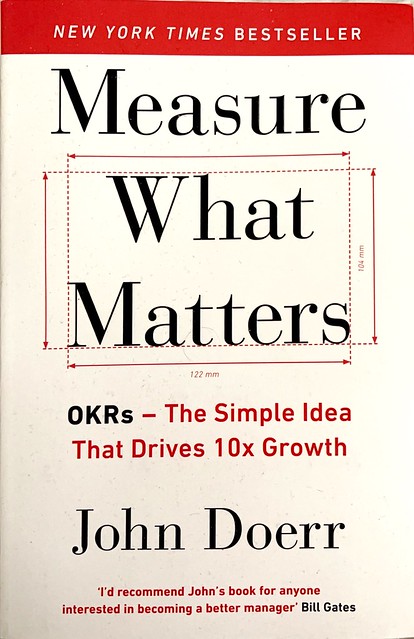
    The book consolidates the kind of reading that people in technology and marketing would likely have read anyway. Chances are if you’ve already read books like Saving Big Blue, Measure What Matters, The Lean Startup and Zero to One, then The Exponential Era isn’t written for you.

    Who should read this book?

    Instead this book seems to be an increasingly diminished audience. A company too small for it’s management to have been lectured on disruption by McKinsey, Bain, BCG or Accenture. But still large enough to be concerned. Like McKinsey et al Espindola and Wright are looking to create disruption fear and sell their SPX methodology to re-engineer their business. I would have thought the c suite in most businesses would have at least done enough reading to have a high level understanding of the content in the book.

    The book’s relentless utopian optimism reminded me a lot of business works from the 1970s to the dot com era. I think that The Exponential Era will be of most use to junior people at the start of their career looking for a primer rather than its intended audience.

  • Bullwhip effect aka Forrester effect

    Bullwhip effect

    I came across the bullwhip effect as a descriptor recently in discussions around the global chip shortage. Bullwhip effect is a concept that is well known in supply chain circles.

    The bullwhip effect is also known as the Forrester effect. Disruption ripples back from the retailer, through the wholesaler, manufacturer, on to their suppliers and so on.

    The usual causes for the effect are:

    • Demand forecast updating – this might be where a company might want to change their product mix to match consumer demand, if a product is very successful or grossly underperforms
    • Order batching – where members of the supply chain round up, or round down the quantity of orders. This happens with the periodic memory gluts or shortages affecting the technology sector
    • Price fluctuations – price discounts can encourage non-linear increases in purchases as it becomes worthwhile for customers to stock up, hedging against increased prices down the line. Oil reserves would be a classic example of this phenomenon
    • Rationing and gaming – buyers and sellers delivering over or under their order quantities. An example of this would be the actions of Enron in US electricity markets. This could be used in a positive way to promote changing the supply chain like renewable sources of electricity generation
    My, what a big holster you have.

    What caused the global chip shortage that is driving the bullwhip effect?

    There were three causes to the global chip shortage

    1. Partial shutdown – The semiconductor industry went through a partial shutdown because of the COVID-19 epidemic. This meant that there was a smaller supply of chips.
    2. Unusual increase in demand – Home working drove an increase in demand: increased sales in PCs, wi-fi routers, external hard drives, mice, keyboards, printers and so on. There was also a corresponding increase in home entertainment as consumers upgraded smart TVs, Apple and Roku set top boxes. This all coincided with the launch of the next generation of gaming consoles by Sony and Microsoft – which can usually drive a squeeze on their own
    3. Supply chain disruption – A fire in Japan at Renesas Electronics. A trade war affecting Chinese semiconductor manufacturers. Freezing winter weather in Texas disrupting employees and their businesses. Now there is a drought in Taiwan affecting TSMC – the world’s largest semiconductor foundries

    More related posts here.

    More information

    Chip shortage is starting to have major real-world consequences 

    Global chip shortage: everything you need to know | CAR Magazine

    The global semiconductor shortage can be explained by the bullwhip effect 

    Chip industry pressures spur Renesas to diversify | Financial Times

    Taiwan’s chip industry under threat as drought turns critical | Financial Times

    Texas winter storm blackouts hit chip production | Financial Times

  • Bill Bernbach & things that made last week

    Bill Bernbach

    Advertising pioneer Bill Bernbach in conversation with Helmut Krone talk about advertising with some interesting examples of what we’d now call challenger marketing. I have been reading Bill Bernbach Said this week. Its a book of quotes from Bernbach that advertising DDB compiled over his time as a leader. The Avis ads were famous to me as they were cited by my lecturers in college.

    I want my MTV

    George Lois talks about ‘I want my MTV’ and Lee Clow talks about working on Apple‘s advertising in the 1980s in a panel at the 2013 Cannes Lions. Interesting lines about the courage to fight for your work, which is much harder to do now. I want my MTV is an example of creating demand pull from consumers through the cable TV companies.

    Steve Jobs apparently referenced Bill Bernbach in meetings with Lee Clow, which is unusual for 25 year old non-marketer, even today. From the beginning Jobs was citing the Sony brand as an influence.

    Skate birds

    RTÉ News made a short film on how Irish women are taking up skateboarding and making the sport more inclusive by nature. The skate park looks like one of the original concrete ones from the first era of skateboarding popularity during the late 1970s. Skateboarding had a small but dedicated following, probably less so than the UK.

    Storytelling in County Clare

    Great archive footage of Irish storytelling in 1979, shot in a pub in Co. Clare. Seanchaí (shan-a-key) were Irish storytellers, they entertained crowds in pubs and local households before television. With recordings devices, researchers travelled around the countryside capturing oral history, songs and stories for National Folklore Archive, now kept at University College Dublin. In the 1960s at tourism picked up in Ireland, there was increased interest in their craft.

  • Conglomerate discount

    Conglomerate discount wasn’t a concept that I was that familiar with. Conglomerates had gone out of style in the west during the 1960s to the 1990s.

    Western conglomerates

    Classic conglomerate examples would be

    • GEC
    • ITT
    • Litton Industries
    • Lonhro
    • Teledyne
    • Textron

    Spivs and financiers bought in and broke them up into their constituent parts. Or a new CEO would do it themselves to focus on core competencies and release value for shareholders.

    Conglomerate discount

    A conglomerate discount is when the stock market values a diversified group of businesses and assets at less than the sum of its parts. This is because investors are worried about the management not being able to focus on improving the operational performance and figuring out a coherent strategic direction.

    Michael Milken moderating the panel on Investing African Prosperity  - Los Angeles, 1 May 2013
    Michael Milken who was famous for financing leveraged buyout deals

    Taking advantage of a conglomerate discount

    So our spiv financier could borrow money, buy the company at a discount. Sell off parts to pay off the loan and be left with more money than they initially had to borrow. Many of the constituent companies couldn’t be sold quickly as a going concern. Instead they were shut, machines sold for scrap and their factory land sold for redevelopment.

    Asian conglomerates

    Asian business people, especially those running Hong Kong and Chinese companies don’t view conglomerates in quite the same way.

    Li Ka Shing 李嘉诚
    Li Ka shing

    The Li family manage two publicly listed companies in Hong Kong. They came out of the merger of Cheung Kong Holdings and Hutchison Whampoa.

    Cheung Kong

    Cheung Kong Industries was formed in the 1950s as a plastic flower manufacturer during the post-war industrialisation of Hong Kong. It evolved into a property investment company after the 1967 riots and Cheung Kong Holdings was established in 1971. Over the next decades it became one of Hong Kong’s largest developers and land owners.

    In 2015, the group went under a reorganisation, the groups property assets were spun off into what is now CK Asset Holdings.

    Hutchison Whampoa

    Hutchison Whampoa was bought in 1979. HSBC had a strategic holding in the company and sold that on to Cheung Kong. They also provided Cheung Kong with the loan to make the purchase. In 2015, Cheung Kong bought the parts of Hutchison Whampoa that it didn’t already own. It eventually became CK Hutchison Holdings, incorporating all the non-property aspects of the Cheung Kong – Hutchison Whampoa combine.

    In addition, the Li family have some of the shares in businesses that they own held in the Li Ka shing Foundation (LKSF).

    CK Hutchison and CK Asset Holdings

    CK Hutchison Holdings and CK Asset Holdings both trade at a conglomerate discount. However, the Li family has a controlling share in them. This probably explains why they haven’t come under attack by an activist shareholder from within China or abroad.

    In his article for Apple Daily Yeung Wai-hong explains how the Li family uses the concept of conglomerate discount to their advantage.

    The CK Hutchison Holdings and CK Asset Holdings creation allowed shareholders to see clearly delineated businesses. One focused on property, the other one on non-property assets in 2015.

    CK Asset Holdings started to blur the lines buying into businesses that more sensibly fit into CK Hutchison Holdings – aircraft leasing, pubs and utilities. Creating conditions for a conglomerate discount that is disadvantageous to non-family shareholders. The bigger business has a larger turnover. Even if the profit margin is lower, management still have an excuse to raise their salary and benefits.

    CK Asset Holdings has a large amount of cash on hand indicating a lack of investment opportunities. Recently CK Asset Holdings bought shares in utilities from LKSF in exchange for shares in CK Asset Holdings.

    I’ll let Yeung Wai-hong explain the next bit

    …CK Asset promised to buy back shares equivalent to the amount of HK$17 billion and cancel them. Whether the equity will be diluted is up to the minority shareholders. If they do not accept buyback, their equity will be diluted; if they do, then it won’t. The buyback price is about 10% more than the average share price of CK Asset, so the minority shareholders do have a chance to cash in at a “high price.” However, the buyback price of HK$51 per share is only 53% of the net asset value after deducting the debt. So accepting the buyback is like allowing Li’s family to grab a bargain at half price.

    Conglomerate discount by Yeung Wai-hong, Apple Daily Hong Kong (March 29, 2021)

    If that happened outside Hong Kong there would be shareholder class action suits. The theory goes that these trades slowly put the squeeze on minority shareholders at a discount. Transferring value to the Li family. Eventually allowing for a gradual privatisation of the business at the expense of retail shareholders.

    Once this has been done the value of the assets at their full price can be realised. More finance related content here.

    More information

    ‘Conglomerate discount’ | Yeung Wai-hong | Apple Daily 

    Britannica, T. Editors of Encyclopaedia. “Conglomerate.” Encyclopedia Britannica, September 26, 2007.

  • New Zealand + more news

    New Zealand

    An end to cigarettes? New Zealand aims to create smoke-free generation | New Zealand | The Guardian  – banning tobacco sales to people born after 2004, will drive illegal sales. New Zealand could quite easily have a prohibition type situation on his hands with rampant tobacco smuggling and organised crime. New Zealand has been a leader in tobacco legislation but replication of this in other countries could be challenged in courts on grounds of discrimination 

    Business

    The vanishing billionaire: how Jack Ma fell foul of Xi Jinping | Financial Times – the Yahoo! and Softbank Alipay ownership piece should be read by anyone looking to invest in Chinese stocks. Bilking the western investors was seen as a mark of loyalty by the Chinese government

    China

    Invisible China: How the Urban-Rural Divide Threatens China’s Rise – ChinaTalkXi Jinping just like two days ago was bragging about all these gangs that he’s been able to crack down on it. But the fact that he’s able to say he cracked down on [3,600 “mafia like groups] means that there were a whole lot more than [3,600 ganges- to crack down on in the first place. In the past few years, a few of the potential faults that you write about if China isn’t able to increase its workforce and find decent jobs for the common folk who haven’t made it to the cities yet is crime and social unrest. What are your thoughts about criminal enterprise in China and how it feeds into the themes that you talk about in your book? In the 1980s in Mexico, there was no crime. It wasn’t the Mexico that we know today. The Mexican government talked about what a safe place it was as they were growing very fast. Of course, everybody had a job. Everybody was employed. And that’s China today. China’s not a dangerous place, but Mexico wasn’t a dangerous place in the 1980s. What happened in Mexico, of course, is China happened, right? Wages in Mexico went up, as everybody got employed and the factories in Mexico decided to move. The maquiladoras moved to China. They moved back to the United States. They moved to elsewhere in the world and suddenly, within a couple years, 10 million people lost their jobs and that was 20% of the Mexican labor force – such a great interview

    Consumer behaviour

    Covid-19 and the rise in news misinformation – Press Gazette – “Our analysis of traffic to the top 100 global English-language news sites reveals that while news consumption soared overall in 2020, untrustworthy news sites saw bigger surges in readership” – Hat tip to Alan Morrison

    Finance

    How Dublin quietly became dumping ground for some of Europe’s riskiest corporate loans | Irish Times – shadow banking special purpose vehicles moved from Holland to Ireland

    Ideas

    Books that suck you in and books that spin you out – Austin Kleon 

    Systems Thinking in Seven (7) Images 

    Luxury

    Louis Vuitton joins China’s JD.com amid online luxury battle | Vogue Business – interesting move, is Tmall losing its grip?

    How Arnette Is Leading the Movement to Bio-Friendly Eyewear – bioplastics

    Gucci “Aria” Show Reveals Co-branded Balenciaga Pieces – SLN Official – this all looks like the the kind of shanzhai items I would have seen back when I first visited Shenzhen 15 years ago

    Marketing

    Browse our library of ebooks, webinars and videos – handy collection of resources by Meltwater

    Retailing

    What brands should know about Zhihu | Vogue BusinessInitially invite-only, Zhihu has grown into an online content community of 75.7 million average monthly active users, who ask and answer questions and have access to in-depth articles, columns, videos and live-streaming sessions, often produced by the platform’s 43.1 million content creators… It makes most of its revenues through online advertising, but also offers a membership programme and online education to users, as well as content-commerce solutions to brands

    How the pandemic helped Walmart battle Amazon Marketplace for sellers | Reuters 

    The a16z Marketplace 100: 2021 

    Security

    Future Trends: Far-Right Terrorism in the UK – A Major Threat? | Global Risk Insightsthere are also reasons to think that far-right terrorism may not develop into the major threat. Large ideological schisms exist within the far-right milieu (such as disagreements over anti-Semitism, capitalism, and violent vs democratic action) that keep far-right activity fractured. Far-right groups also tend to disintegrate due to infighting at a higher rate than Islamist groups do. Additionally, law enforcement may find far-right groups easier to infiltrate and monitor, as there would not be any linguistic or cultural barriers to surmount

    The $1 billion Russian cyber company that the US says hacks for Moscow | MIT Technology ReviewOne area that’s stood out is the firm’s work on SS7, a technology that’s critical to global telephone networks. In a public demonstration for Forbes, Positive showed how it can bypass encryption by exploiting weaknesses in SS7. Privately, the US has concluded that Positive did not just discover and publicize flaws in the system, but also developed offensive hacking capabilities to exploit security holes that were then used by Russian intelligence in cyber campaigns. 

    Much of what Positive does for the Russian government’s hacking operations is similar to what American security contractors do for United States agencies. But there are major differences. One former American intelligence official, who requested anonymity because they are not authorized to discuss classified material, described the relationship between companies like Positive and their Russian intelligence counterparts as “complex” and even “abusive.” The pay is relatively low, the demands are one-sided, the power dynamic is skewed, and the implicit threat for non-cooperation can loom large

    US Senator Who Served as Ambassador to Japan Lauds Closer Ties but Issues Warning | Voice of America – EnglishAmerican concern about technology transfers extends beyond its relationship with Japan. “When the U.S. shares its cutting-edge technology with allies, it runs the risk that some of what is shared ends up in the hands of adversaries,” she said. For his part, Hagerty says that compared with four years ago, when he first took up the post as U.S. ambassador to Japan, the strategic challenge facing America “continues to get more serious, particularly with respect to China.”

    Technology

    Designed by Apple in California, Not Assembled in China | Above Avalon – Apple’s brand is less dependent on where its assembled

    Logic Chip Teardown From Early 1990s IBM ES/9000 Mainframe | HackadayThe 1980s and early 1990s were a bit of an odd time for semiconductor technology, with the various transistor technologies that had been used over the decades slowly making way for CMOS technology. The 1991-vintage IBM ES/9000 mainframe was one of the last systems to be built around bipolar transistor technology, with [Ken Shirriff] tearing into one of the processor modules (TCM) that made up one of these mainframes – I remember when I was at college that bipolar / CMOS hybrid chips were touted to provide a radically faster computer chip

    2102.12627] How to represent part-whole hierarchies in a neural networkThis paper does not describe a working system. Instead, it presents a single idea about representation which allows advances made by several different groups to be combined into an imaginary system called GLOM. The advances include transformers, neural fields, contrastive representation learning, distillation and capsules. GLOM answers the question: How can a neural network with a fixed architecture parse an image into a part-whole hierarchy which has a different structure for each image? The idea is simply to use islands of identical vectors to represent the nodes in the parse tree. If GLOM can be made to work, it should significantly improve the interpretability of the representations produced by transformer-like systems when applied to vision or language