Category: media | 媒體 | 미디어 | メディア

It makes sense to start this category with warning. Marshall McLuhan was most famous for his insight – The medium is the message: it isn’t just the content of a media which matters, but the medium itself which most meaningfully changes the ways humans operate.

But McLuhan wasn’t an advocate of it, he saw dangers beneath the surface as this quote from his participation in the 1976 Canadian Forum shows.

“The violence that all electric media inflict in their users is that they are instantly invaded and deprived of their physical bodies and are merged in a network of extensions of their own nervous systems. As if this were not sufficient violence or invasion of individual rights, the elimination of the physical bodies of the electric media users also deprives them of the means of relating the program experience of their private, individual selves, even as instant involvement suppresses private identity. The loss of individual and personal meaning via the electronic media ensures a corresponding and reciprocal violence from those so deprived of their identities; for violence, whether spiritual or physical, is a quest for identity and the meaningful. The less identity, the more violence.”

McLuhan was concerned with the mass media, in particular the effect of television on society. Yet the content is atemporal. I am sure the warning would have fitted in with rock and roll singles during the 1950s or social media platforms today.

I am concerned not only changes in platforms and consumer behaviour but the interaction of those platforms with societal structures.

  • CD ROM history + more news

    CD ROM reflections

    How “God Makes God” is a 1993 CD ROM about probability, game theory, genetic algorithms, and evolutionary strategies | Boing Boing – I remember having my mind blown by this CD ROM at college. It reminded me of Jostein Gaarder’s book Sophie’s World in terms of its approach to making philosophy entertaining and accessible. I remember reading Sophie’s World around the same time as having played How God Makes God. There was something about HyperCard and the CD ROM authoring tools that followed. Amidst all the brochureware there were creators who drove extraordinary media projects, most notably for me was the game Myst, which I don’t think has been bettered. I suspect part of it was the excitement of new ‘hyper-media’, the limitations of the tools (though 640MB storage at the time seemed vast when I was using an Apple PowerBook 165 with 4MB of RAM and an 80MB hard drive at the time) and the media economics of the time. CD-ROM authoring tools were becoming more sophisticated. CD manufacturing plants were proliferating, lowering the cost per CD ROM disk and CD recordable drives were relatively affordable in the price range of $10,000 – $20,000. Still eye wateringly expensive, but this was a vast improvement from just two years before and allowed for better prototyping, small production runs and testing across devices.

    Design

    3D printed IKEA hack experiences by Uppgradera on Etsy – really interesting aspects to the designs

    Ethics

    Instacart Is a Parasite and a Sham | The New RepublicThe gig economy company, like many of its peers, has seen business skyrocket during the pandemic—while exploiting workers and even failing to turn a profit. That last bit reminds me a lot of the first generation dot com companies who tried to break through the wall of economics and succeed by moving at internet speed. This time they seem to have supplemented the usual ‘throw money at it’ approach with a lack of morality

    Ideas

    How Claude Shannon’s Information Theory Invented the Future | Quanta Magazine – the idea of binary encrypted signals

    Innovation

    Activist Firm Urges Intel to ‘Explore Alternatives’ to Manufacturing Its Own Chips – ExtremeTech – there are national security issues with this. I suspect this is just an opening salvo by Dan Loeb

    Regulators tell Jack Ma’s Ant Group to rectify five problemsthe five areas included: Ant’s inadequate governance; regulatory negligence; unlawful profit-seeking; monopolistic practices and; infringement of consumer rights, said China’s central bank vice governor Pan Gongsheng.

    China orders Ant Group to rein in unfettered expansion as regulators put up fences around financial risks | South China Morning PostAnt must return to its origins in online payments and prohibit irregular competition, protect customers’ privacy in operating its personal credit rating business, establish a financial holding company to manage its businesses, rectify any irregularities in its insurance, wealth management and credit businesses, and run its asset-backed securities business in accordance with regulations, the People’s Bank of China’s deputy governor Pan Gongsheng said in a statement on Sunday.

    Luxury

    From TikTok to Depop: Fashion’s new trend funnel | Vogue Businesstrends like leather, feathers, neutrals or hot pinks, were relatively easy to follow: the trend funnel moved from runway to rack, with some help from popular culture along the way. This year, Gen Z users on TikTok and Depop jumpstarted a new trend funnel, quickly giving rise to aesthetics like “cottagecore” and “dark academia”, influencing young shoppers’s purchases. “If one of your favourite [TikTok] creators changes their aesthetic due to a particular trend, a whole style can be born out of it,” says Yazmin How, TikTok’s content lead. “The fashion industry is no longer the only voice directing the new season’s trends. People are tapping into TikTok to see what emerging styles are ‘in’ and what previously popular trends are coming back around.” TikTok trends manifest into purchases on Depop, where 90 per cent of users are Gen Z. In step with the rise of the cottagecore trend on TikTok, search for the term on Depop rose 900 per cent between March to August, when it reached its peak. Greater connectivity and increased time at home has boosted the amount of these consumer-led movements, and brands whose aesthetics fit the trends are benefiting, like LoveShackFancy, who specialises in the prairie dresses and gingham blouses associated with cottagecore’s countryside aesthetic – reminds me a bit of the Harajuku trends from the past 30 years. Culture and the trends that come out of it, are now massively parallel in nature

    Online

    FarmVille Once Took Over Facebook. Now Everything Is FarmVille. – The New York Times – legacy is in growth hacking techniques used to make it popular in the first place

    Why Bella Poarch’s “M to the B” video was the top TikTok of 2020 – VoxTikTok automates the mix of all these topics, going farther than any other platform to mimic the human editor.” At the same time, he says, it’s also “an eternal channel flip, and the flip is the point: there is no settled point of interes t to land on. Nothing is meant to sustain your attention.” The result, he argues, is what essentially amounts to “soft censorship,” or a feed that becomes as “glossy, appealing, and homogenous as possible rather than the truest reflection of either reality or a user’s desires.” How did a perfectly average competitive dancer become the No. 1 internet celebrity in the world? Why did half a billion people watch Poarch’s face bob up and down? Because these two women are the logical endpoint of the world’s most powerful entertainment algorithm: young people centering their conventional attractiveness in easily repeatable formats

    Retailing

    Amazon and the Rise of the Retail “Sniffer” Algorithm | The Fashion Lawthe “sniffer algorithm” – or better yet, “one or more” sniffer algorithms that not only sniff out topics that a speaker is potentially interested in but that also “attempt to identify trigger words in the voice content, which can indicate a level of interest of the user.” For example, as Amazon’s patent application states, “A keyword that is repeated multiple times in a conversation might be given assigned a higher priority than other keywords, tagged with a priority tag.” At the same time, “a keyword following a ‘strong’ trigger word, such as ‘love’ might be given a higher priority or weighting than for an intermediate trigger word such as ‘purchased.’” – when does assistance become creepy?

    Security

    NSO used real people’s location data to pitch its contact-tracing tech, researchers say | TechCrunch – and here is the original report on which the article is based Nso Group’s Breach Of Private Data With ‘fleming’, A Covid-19 Contact-tracing Software ← Forensic Architecture 

    Insecure wheels: Police turn to car data to destroy suspects’ alibis | NBC Newsinvestigators have realized that automobiles — particularly newer models — can be treasure troves of digital evidence. Their onboard computers generate and store data that can be used to reconstruct where a vehicle has been and what its passengers were doing. They reveal everything from location, speed and acceleration to when doors were opened and closed, whether texts and calls were made while the cellphone was plugged into the infotainment system, as well as voice commands and web histories. But that boon for forensic investigators creates fear for privacy activists, who warn that the lack of information security baked into vehicles’ computers poses a risk to consumers and who call for safeguards to be put in place

    Web of no web

    Tencent backs Chinese healthcare portal DXY in $500M round | TechCrunch – China has done a lot of work to move towards telemedicine and technology augmented health. Tencent’s WeChat was used by local governments for their COVID certificates, tracking and tracing applications. More Tencent related content here.
  • Plastic surgery hack + more

    Hackers threaten to leak plastic surgery pictures – BBC News – this follows on from the hack on Finnish mental health services. Given the link between plastic surgery and self image; black hat hackers have a lot of sustained leverage. More security related posts here.

    Regulators tell Jack Ma’s Ant Group to rectify five problemsthe five areas included: Ant’s inadequate governance; regulatory negligence; unlawful profit-seeking; monopolistic practices and; infringement of consumer rights, said China’s central bank vice governor Pan Gongsheng. China orders Ant Group to rein in unfettered expansion as regulators put up fences around financial risks | South China Morning PostAnt must return to its origins in online payments and prohibit irregular competition, protect customers’ privacy in operating its personal credit rating business, establish a financial holding company to manage its businesses, rectify any irregularities in its insurance, wealth management and credit businesses, and run its asset-backed securities business in accordance with regulations, the People’s Bank of China’s deputy governor Pan Gongsheng said in a statement on Sunday.

    Beijing launches antitrust investigation into Alibaba | FT – of course, its not political.

    Who’s behind Marcus Rashford? – UnHerd – interesting profile of Roc Nation’s UK arm

    SolarWinds Adviser Warned of Lax Security Years Before Hack – Bloomberg – I’d be surprised if there isn’t shareholder class action suits now

    The OnlyFans revolution – The FaceSelena suggests we ​“talk about OF in a way that doesn’t glamourise the economics of the operation”. Instead, we need a more ​“nuanced conversation about the nuts and bolts of what the actual labour looks like. We aren’t seeing the injustices. It’s either focused on our trauma or on the glamorous hyperbolic examples, while most of us are somewhere in the middle.”  There are many sides to running an OnlyFans that are less visible, including work that goes into maintaining a profile and the emotional labour involved in keeping up with fans. Historically, sex workers basically act as ad hoc therapists to their clients – it’s said to come with the territory, from escorting to camming to BDSM. And the ​“girlfriend experience” applies here too. A key part of the site’s success is one-to-one connection – often creators’ bios will explicitly state they talk with all their followers – for the right brands there is an opportunity for influence campaigns

    North American Semiconductor Equipment Industry Posts November 2020 Billings – Semiconductor Digest – generally a good sign for the global economic outlook. A dip in semiconductor equipment is usually the canary in the coal mine for global economic time.

  • 2020 media diary

    I was inspired to write a 2020 media diary after re-reading a post that I had contributed to Stephen Waddington’s blog back in 2015 that looked at my online and offline media consumption. Prior to COVID; it wouldn’t have changed that much from the 2015 variant. In fact in 2020, a lot is still the same through COVID. A number of the changes had happened had been driven prior to COVID.

    But lets start off the 2020 media diary with the COVID effects.

    Zoom fatigue

    When I started off working in agency life. Being able to work from home wasn’t possible for a couple of reasons. I didn’t have my own space that I could work at. Even if I could, I would need to find a block of work where I would need to write and concentrate rather than bounce ideas of colleagues.

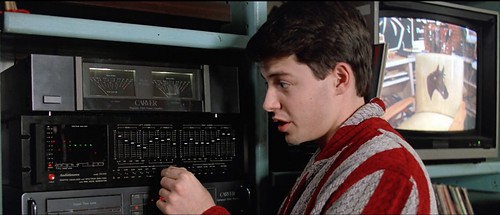
    Carver M-500t power amplifier at the top

    I idealised working from home as a bit like the early bits of Ferris Bueller’s Day Off. Working in my pyjamas, with a kick ass hi-fi. The future is more banal. I own a nice Sony pre and power amp combo rather than a Carver Audio system based around the M-500t power amplifier.

    But what its actually meant was an extension of the working day and a blurring of the line between work and personal time. I empathised with those people I saw using the edge of the bed as an office chair and their dressing table as a desk on Zoom calls.

    Zoom fatigue set in. Zoom was tiring for a few reasons. Calls were often stacked up one after the other. Secondly you couldn’t carve out blocks of time for it like email. Instead its a constant low level presence; rather like Stack or WhatsApp groups. When you did a group video call, there is a lot happening on screen and its much more of a cognitive load than your average meeting. Finally there is the extension of the working day.

    And no, I haven’t managed to work in my dressing gown.

    Return of the desktop

    If I had written my 2020 media diary before March, I would have referenced discussions around ‘post-PC age’; even if it wasn’t mirrored in my own behaviour. I primarily used my Mac for content creation because I spent a lot of my time outside the home. Not being so mobile has meant that my iPhone has been used less and my Mac has been used much more.

    Continuity provided integration across my iPhone, iPad and Mac. All my messenger apps have a desktop client, which I can toggle between on the Mac. A lot of the apps in my personal use made no sense as I have been by my home entertainment set up all the time. Ocado stopped supporting their mobile app as they become overwhelmed with orders; which meant that my shopping was completed on my Mac. My iPhone was then only really useful as a phone.

    Messenger for keeping in touch and on track

    I have been using messenger clients for almost as long as I have been online. I used to have them all together in an app called Adium X on the Mac. Unfortunately that isn’t possible any longer. Instead I am using a hodge podge of clients

    WeChat, LINE, Signal, Skype, Apple Messages, Slack, Zoom, Teams, WhatsApp and KakaoTalk. Over the past 12 months Signal has become very popular and I am using WeChat with contacts inside and outside China much less. Signal took off because of concerns about privacy amongst my network at home and abroad.

    Secondly, I have been using my Mac as my primary messaging device which was definitely an effect that COVID had on my 2020 media diary.

    From always on to keeping it off

    When I started to use internet based services, you made an active decision to get online. You dialled up or logged on. For the best part of the past few decades we moved towards an always-on world. People often complained about the amount of email received at work; the way the email client was a constant draw, when they could be getting things done instead. First my Mac at home was constantly connected to the internet and mobile phones allowed us to be called directly on the go. Then we had mobile email and a nascent web experience. From there it was apps. My 2020 media diary has seen this accelerate even further. Immediacy has been accelerated even further and has been making people burn out and feel sick.

    Turning off and keeping the internet off has now become an active decision. All be it, one that has become much harder to make.

    Flickr is an archive

    Flickr is still my visual archive and an essential part of my 2020 media diary; but since I have been out and about much less. Its less of a source of anxiety for me since Smugmug purchased it from Yahoo!

    Facebook is private groups

    I continue to use Facebook in a similar way to developer friends using Stack Overflow or other forums for professional social discourse on a couple of private groups. I go directly into the groups, I don’t bother looking at the home page news feed.

    Twitter: paring back

    Back in 2019, I started to cut back what I posted on Twitter and how long I wanted it to be on there. Generally posts won’t last more than a week on my profile.

    My Instagram has been paired back and just shares a record from my collection now and again. Just enough activity for people to know that I am still alive, but that’s it.

    Media content

    2020 saw me bulk up my vinyl collection. I bought digital music and vinyl records on Bandcamp. I also bought CDs and vinyl from the Discogs marketplace.

    The major change has been the way I listen to my music. When I was out and about I use a late model iPod Classic upgraded with 256GB flash memory storage. My listening has now moved to my Mac. I invested in a high quality pair of headphones (Beyerdynamic x Massdrop.com DT177X Go for home listening, they are 32 ohms which makes them very easy to drive). I don’t have to worry about driving them with a big amplifier. I also don’t need noise cancelling to deal with the the clutter of my office surroundings. My Bose headphones are charged but unused for the past eight months.

    I have been using my Mac’s native Podcasts app and have pretty much given up watching news from the major UK news channels. The whole Brexit debacle and a failure to hold politicians of all parties accountable meant that I instead listen to content from the likes of RTÉ, CNBC, NPR, NHK and KBS instead. I get this content via their podcasts.

    I still have an Apple TV box that I use for Bloomberg TV, Yahoo! Finance (which is surprisingly good), Netflix, Amazon Prime Video and iTunes store content.

    News is print, the web and RSS.

    Given everything that has been going on, I decided to invest in a print and digital Financial Times subscription. Why print? I like to scan my news quickly on the newspaper with my morning coffee. I can then dive into stories that catch my eye in more depth online. Placement on print provides a layer of context that digital doesn’t really have.

    My RSS reader of choice is still Newsblur.com. That is now supplemented through email updates from Sinocism, the China Research Group and a whole pile of marketing and advertising newsletters.

    I still read magazines. I am currently subscribed to Monocle and the US edition of Wired magazine. I have print and digital access to both.

    Search promiscuity

    I still bookmark with pinboard.in and now have almost 55,000 bookmarks at the time of writing. This represents a ‘trusted universe’ of web pages that I often search in first before going to DuckDuckGo and then Google. I use DuckDuckGo as my first option of search engine. It isn’t because it the best, but for many searches its good enough. Going there first means that I am giving Google less of my data, which has incremental benefits from a privacy point of view. I would like to see DuckDuckGo improve the quality of its organic search results, but that is likely to be a slow process since it is based on Bing search technology.

    Brands that cut through

    I first wrote the headline brands that cut through in my 2015 post. And I started to question as I wrote my 2020 media diary, what does cut through mean in a COVID world? I don’t need the kind of purpose advertising that Dettol came up with in the UK.

    For many of the brands that I like, the product is the marketing – the online marketing efforts of these brands are coincidental.

    COVID tested service brands. Ocado came close to losing me as a customer.

    Hermes reinforced my impression of their service being dreadful.

    The Royal Mail and Parcelforce delivery people continued to shine. Though I have qualms about Amazon’s business practices, they did what I wanted them to. Prior to lockdown I had upgraded my parents to a newer model Apple iPad and have Facetimed them every day. Each day the quality has been consistently good.

    If one brand stood out in terms of its marketing, it was Carhartt US stood out for me this year in the way that it tried to be useful in a low key way to the essential workers and first responders in its customer base.

    Authority in crisis

    Five years ago, if you had told me that I wouldn’t be listening to the BBC any longer and that the prime minister would be so bad at handling a crisis. I wouldn’t have believed you. It sounds like some fantastical dystopian vision. Some institutions have managed to burn through a lot of latent goodwill, moral and intellectual authority. But it’s not just the UK. The Hong Kong government has issues that go beyond the 2019 protests; with a diffusion of power and responsibility. In the US, the Trump administration was surreal. The one bright light being Mike Pompeo, who was at least consistent with regards China.

    Examples of the kind of good leadership that we should expect, stood out for their abnormality; when in reality it should be the other way around. Democracy should give us great leaders in moments of crisis, shouldn’t it?

    Veering towards the jackpot

    In William Gibson’s last two books The Peripheral and Agency, there is the concept of a slow and steady apocalypse known as the jackpot. It isn’t one thing that does the human race in like a meteor, a rogue AI or a nuclear holocaust. Instead its a slow drumbeat of events over decades: changes in weather, mass pandemics, flood, drought and populism.

    I’ve previously enjoyed William Gibson’s visions of the near and far future. It taught me a lot about technology and where the rubber hit the road between tech and people. 2020 has felt like we’ve veered towards the jackpot. Now having lived in Hong Kong post-SARS, I realise that feeling is overly dramatic. We have historically lucked out in the west. COVID-19 posed a unique challenge, because you spread the virus before you exhibit symptoms, which is remarkably different to SARS and other conditions. I hope I am here in five years time to review this 2020 media diary and write a more upbeat 2025 media diary.

  • Creatives outputs + more things

    Different times | Campaign magazineIt’s tempting to look at the best of today’s creatives and compare them with the greats: David Abbott, John Webster, Helmut Krone, George Lois, Ed McCabe, Mary Wells, Bill Bernbach, Paul Arden, Sir John Hegarty. And to think there’s no-one around who could hold a candle to any of them. But is it a fair comparison? They were working with account men like Frank Lowe, Tim Bell and Nigel Bogle, they were working with media guys like Mike Yershon, directors like Ridley Scott, Alan Parker, Hugh Hudson, and planning hadn’t even been invented then. Of course it was easier to do great work, everyone wanted great work. There weren’t hundreds of TV channels and big data and micro-targeting, and ad tech, and dozens of different platforms, and five campaigns shown at creative pitches. What was wanted was quality not quantity, one fantastic ad not a dozen space-fillers. It was, in fact, much easier in those days to do great work. Sure the competition was tougher, but everyone was agreed on what they wanted, ads that made the public sit up and take notice. I know the people working today may not have stood up against the greats. But I’m not sure that if any of the greats had been working today, they would have been able to produce great work either. – Dave Trott on the futility of comparisons that relate to now, versus then and changing ad environment for creatives (and everyone else for that matter). The contrast in creatives and their output is very striking. One cannot ignore the nature of the medium in the creative process. The move to social seems to have kneecapped creatives and creativity. By comparison earlier media revolutions like television enhanced creativity. Creatives were constantly learning new ways of creativity within the medium. The copywriters seems to have reduced their standing in creatives even more than visual designers. How can platforms provide creatives with a similar range that legacy media did? What can creatives do to recover their own mojo as a profession? More marketing related content here.

    Pop Mart/Asian IPOs: go figure | Financial TimesPop Mart, which sells $8 boxes of figurines, has taken advantage of its newfound popularity to join the listing boom in Hong Kong. Shares nearly doubled in value on the first day of trading on Friday. As with other recent Asian listings, a redirection of money previously set aside for the postponed Ant Group listing appears to have fuelled the frenzy. Demand has also been boosted by the approaching holiday shopping season.

    Coca-Cola Launches Global Creative and Media Agency ReviewsCoca-Cola is launching a full global review of its media buying and planning services. The creative portion of the review encompasses creative, experiential marketing, production management and shopper marketing. “We are on a journey to fundamentally transform and dramatically improve the effectiveness and efficiency of our marketing investments,” a Coca-Cola spokesperson told Adweek. “By improving our processes, eliminating duplication and optimizing spend, we will generate significant savings to fuel reinvestment in our brands. “Media and creative agency services require significant investment from our brands. They are also a crucial component of our ongoing digital transformation journey to drive our business. With that in mind, we have decided to undergo a complete redesign of our media and creative agency models in an effort to align the strategic, operational, and commercial needs of our new, networked organization,” the spokesperson added. “This will necessitate a full review of our media and creative planning and buying practices, as well as our media and creative agency appointments and commercial relationships around the world. We expect this process will be completed by the end of 2021.”

    Pompeo shames MIT, calls Chinese authorities ‘jackbooted thugs’ in remarks about academic freedom | South China Morning Post“A Fulbright student coming in from some country ought not be returned to their home country and to suffer from the jackbooted thugs that now want to take the information that they got, send them back into the United States only to have them just take a little bit more information that they’re going to hand off to the Chinese [Ministry of State Security] … or the People’s Liberation Army”, he said. “MIT wasn’t interested in having me to their campus to give this exact set of remarks,” Pompeo said in his opening address. The school’s president, L. Rafael Reif, he added, “implied that my arguments might insult their ethnic Chinese students and professors”. – interesting, if true, that US universities are no platforming politicians to avoid offending Beijing

    The Hottest Campaign Ads on Twitter Didn’t Really Work: StudyThe PAC, Priorities USA, spent a good chunk of the cycle testing the effectiveness of ads, some 500 in all. And, along the way, they decided to conduct an experiment that could have potentially saved them tons of money. They took five ads produced by a fellow occupant in the Super PAC domain—the Lincoln Project—and attempted to measure their persuasiveness among persuadable swing state voters; i.e. the ability of an ad to move Trump voters towards Joe Biden. A control group saw no ad at all. Five different treatment groups, each made up of 683 respondents, saw one of the five ads. Afterwards they were asked the same post-treatment questions measuring the likelihood that they would vote and who they would vote for. The idea wasn’t to be petty or adversarial towards the Lincoln Project, which drew both fans and detractors for the scorched-earth spots it ran imploring fellow Republicans to abandon Trump. It was, instead, to see if Twitter virality could be used as a substitute for actual ad testing, which took funds and time. If it turned out that what the Lincoln Project was doing was proving persuasive, the thinking went, then Priorities USA could use Twitter as a quasi-barometer for seeing how strong their own ads were. But that didn’t turn out to be the case. According to Nick Ahamed, Priorities’ analytics director, the correlation of Twitter metrics—likes and retweets—and persuasion was -0.3, “meaning that the better the ad did on Twitter, the less it persuaded battleground state voters.” The most viral of the Lincoln Project’s ads—a spot called Bounty, which was RTed 116,000 times and liked more than 210,000 times—turned out to be the least persuasive of those Priorities tested. – I think that there a lot of lessons for creatives and strategists in this piece of research in terms of eliciting behaviour change, beyond politics

    China shadows the rise of Hong Kong’s next tycoons – Nikkei Asia – Avoid politics, build trust: One dynasty heir speaks on a generation’s dilemma

    How The 1985 Downturn Set The Silicon Wafer Industry On A Path To Consolidation That Continues Today – Semiconductor Digest – a great read

    A transatlantic effort to take on Big Tech | Financial TimesCompanies are counting on the incoming Biden administration, which will include a number of tech-friendly officials from Barack Obama’s time in the White House, to help them stand up to Europe. It shouldn’t. One of the huge risks for the new administration is that it will be seen as too cosy with concentrated corporate power. Witness the cries already coming from the left about some of Mr Biden’s appointees who have backgrounds in private equity. Individual appointees should be judged on their own merits. If we didn’t let anyone from either the finance or the technology industries into the new administration, we would be the poorer for it. Take Gary Gensler, a former Goldman Sachs executive, who is now Mr Biden’s chief markets adviser. He cleaned up derivatives trading while at the Commodity Futures Trading Commission during the Obama years – grab the popcorn

    About Google’s approach to research publication – Google DocsA cross functional team then reviewed the paper as part of our regular process and the authors were informed that it didn’t meet our bar for publication and were given feedback about why. It ignored too much relevant research — for example, it talked about the environmental impact of large models, but disregarded subsequent research showing much greater efficiencies. Similarly, it raised concerns about bias in language models, but didn’t take into account recent research to mitigate these issues. We acknowledge that the authors were extremely disappointed with the decision that Megan and I ultimately made, especially as they’d already submitted the paper. Timnit responded with an email requiring that a number of conditions be met in order for her to continue working at Google, including revealing the identities of every person who Megan and I had spoken to and consulted as part of the review of the paper and the exact feedback. Timnit wrote that if we didn’t meet these demands, she would leave Google and work on an end date

    Pioneer DJ reports 82 per cent rise in the sale of entry-level DJ controllers during lockdown – Tech – Mixmag 

    Hong Kong’s Civil Servants Under Siege – The DiplomatI think the oath taking is a big deal. If you don’t sign it, they will immediately assume you will be against the government one day. Most of us don’t agree with this practice. Those who are almost retired and are older think it’s quite normal. They stress that Hong Kong is a part of China, and civil servants have the responsibility to uphold the policies issued by the government and support it no matter what we think. But most of the newer recruits, what we care about is that freedom of speech is protected. The Basic Law guarantees our freedom of speech. No matter what career we have, we should enjoy this right.

    RTOS port to RISC-V core for high reliability designs | EE News Europe – opportunities that previously would have gone to ARM

    Wikipedia Matters by Hinnosaar, Hinnosaar, Kummer and Slivko – we conduct a randomized field experiment to test whether additional content on Wikipedia pages about cities affects tourists’ choices of overnight visits. Our treatment of adding information to Wikipedia in- creases overnight stays in treated cities compared to non-treated cities. The impact is largely driven by improvements to shorter and relatively incomplete pages on Wikipedia (PDF)

  • Technics SL-1200 & things that caught my eye this week

    Discogs wrote a really good article about the cultural impact of the Technics SL-1200 series of turntables. Technics have relaunched the turntable with a renewed emphasis on high-fidelity sound. The Cultural Impact of the Technics SL-1200 Turntable, Then and Now

    Inside a Technics SL-1200 turntable with DJ Fix founder Jon Hildenstein

    ZAK Agency did some qualitative interviews amongst young people for their opinion on diary products.

    Opinions on dairy products

    And if you’re tired of dairy farming, what about cows as a method of carbon capture? Courtesy of Rabobank. The theory is that by carefully managing grassland grazing, farmers can feed their livestock and maximise carbon capture. Part of this process is helped by the use of virtual fencing on the open range. I am sure that it makes sense from a mathematical point of view, but what about growing natural forests?

    Opinion | When Can I Get a Coronavirus Vaccine in America? – The New York Times – I know, I know. You’d much prefer to hear about the minutae of my fingernails than another coronavirus post. I am not trying o do anything but point out to you the great interactive infographic in the article. You put in some basic detail and gives you an idea of where you would be likely to sit in the queue.

    Where are you in the vaccines queue interactive chart from New York Times

    It bases your placement on the following information:

    • Age
    • American county where you live
    • High priority profession status (medical worker, teacher, first responder etc)
    • COVID related health risks

    Its all rather clever.

    Taiwan’s flag carrier EVA Air have released a waterproof packable jacket that caught my eye. As airline merchandise goes its subtly branded on the hood. The print design, cut and fabric give it a look that would be at home on screen in either Blade Runner or Cyberpunk 2077.

    https://youtu.be/C4qO9xMgq80

    More design related posts here.