Category: singapore | 新加坡 | 싱가포르 | シンガポール

Welcome to the Singapore category of this blog. So first up a disclosure, back when I worked in Hong Kong, I did some work for the Singapore government ‘home team’. The work was done for their Central Narcotics Bureau and the Singapore Prison Service. Beyond friends that live there, I have no connections commercial or otherwise with Singapore now.

I have had the opportunity visit the city state and really loved it. Is it better to Hong Kong, politics non withstanding I don’t think a true comparison works that way. It has a more Germanic character than Hong Kong, but both are very similar in terms of the people and the built environment.

This is where I share anything that relates to Singaporean business issues, the Singaporean people or culture. Often posts that appear in this category will appear in other categories as well. So if Singapore Air launched a new ad campaign. And that I thought was particularly interesting or noteworthy, that might appear in branding as well as Singapore la.

So far, I haven’t had too much Singaporean related content here at the moment. That’s just the way things work out sometimes.

I am fascinated by the way Singapore has been deftly playing China to increase its stature as the place to do business. I am only interested in local politics when it intersects with business. An example of this would be legal issues affecting the media sector for instance.

If there are Singaporean related subjects that you think would fit with this blog, feel free to let me know by leaving a comment in the ‘Get in touch’ section of this blog here.

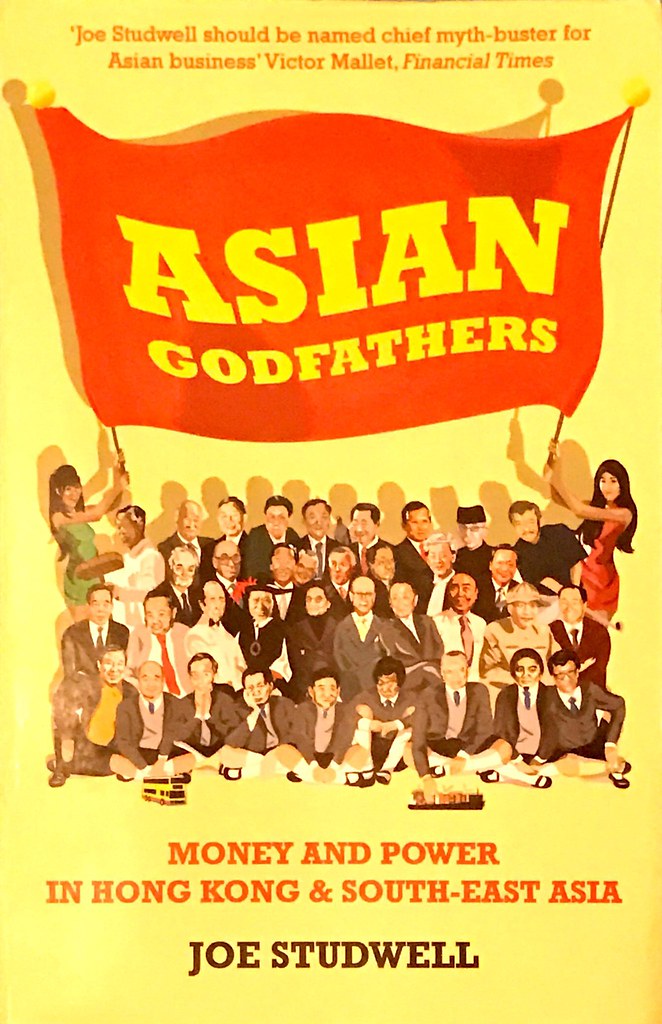
  • Asian Godfathers by Joe Studwell

    I’d read Joe Studwell’s How Asia Works over lunar new year so Asian Godfathers was an obvious follow-on. Studwell dealt directly with the reasons for East Asia’s economic growth and Southeast Asia’s failing to follow them.

    Asian Godfathers

    Studwell attached this same subject through through a different lens. Studwell looks at it through the lens of the business community in these different countries. In Asian Godfathers, he tells the story through Asia’s business tycoons. From the taipans of Hong Kong to Stanley Ho – the Macau gambling tycoon.

    The Asian godfathers were generally cosmopolitan privileged people who where in the right place at the right time. Some of them had colourful origin stories as black marketers selling fake medicines and blockade runners. Mao’s China relied on business tycoons across Asia when the country had closed itself off from the world.

    Studwell tells of an elderly tycoon who goes to sleep in a bedroom with no windows, such was his paranoia about revenge from the families of people who had been ‘treated’ with his black market antibiotics decades earlier.

    This also explains the paranoia that Hong Kong’s tycoons had over politicised youth in Hong Kong  as well. These are the people who are most likely to kick back against their rent seeking businesses.

    But these Asian Godfathers are just a side show in a wider panorama of political greed and incompetence across Southeast Asia. Asian Godfathers is more like Hotel Babylon than an economics analysis like How Asia Works, yet it delivers its message forcefully. More related content here.

  • The South China Sea: The Struggle for Power in Asia by Bill Hayton

    In The South China Sea; Hayton sets an ambitious goal for himself to try and unpick the claims and counter claims on territory in the area. It is a massive convoluted story that encompasses colonial powers, oil companies and a plethora of Asian countries.

    In the end no one comes out of it with glowing colours. China is easy to paint as a villain and it has played to type. But other countries and major powers have made constant mis-steps and it has become an intractable problem. The more hawkish may see the inevitability of war with China.

    On the Chinese side, it makes sense for them to escalate a fight with one of their neighbours; as a Chinese idiom puts it ‘kill a chicken to scare the monkey’ and distract from the pain of change at home.  The history is wrapped up with rising nationalism and aspirations of China and its neighbours.

    From the American perspective, it makes sense to have the war with China further away from the Homeland, so the South China sea rather than the Pacific ocean.

    Hayton doesn’t take a standpoint one way or the other leaving the reader to decide.

    From a reading perspective, the tangled nature of the claims makes the book more difficult to read in small bursts. I tried reading it as a commuting book and it took a while to get it done.

    More book reviews here. More details on The South China Sea: The Struggle for Power in Asia

  • The QRcode post

    A few years ago, I was involved in a project that used a QRcode across OOH (out of home) activity for a retail launch. We had it on advertising hoardings and on the back of public transport.  QRcode scanners varied in performance. In addition you had to think about:

    • Contrast – did the code stand out?
    • Relative aspect – would it be too big or too small for the audience to scan?

    In the UK, the QRcode is seen by marketers as old hat (but then marketers and consumers in Europe didn’t ‘get’ them in the same way that their peers in Asia did). Many people don’t really understand how to use them.

    Early adopters downloaded QRcode readers. But now, due to the uptake in Asian usage we will see QRcode reader function build into the phone operating system instead.
    QRcode 101
    Above is the picture of the local cafe around the corner from my office. The QRcode contrast is just ok, but the glyph is too disjointed. I am not too sure if this is by design, or due to a poorly maintained inkjet printer.  The image is too blurred for devices to read. I asked a member of staff about it and he told me that he thought it was some type of logo…

    More on QRcodes here.

  • Rediscovering Quora + more

    Probably the biggest thing that happened was me rediscovering Quora the question-and-answer network. I replied to a question ‘What are the major reasons behind Yahoo’s drastic downfall?‘ and then republished it as a blog post with a few more bits and bobs. Traffic blew up on the post when Dave Farber published a link to it in his Interesting People email list. I read Yahoo’s $8 Billion Black Hole – Bloomberg Businessweek on Thursday and it felt like part two of my piece on Yahoo! which looks to now and forward whereas I looked at macro factors and heritage. Rediscovering Quora also reminded me of the lost opportunity in Yahoo! Answers.

    Great video mash-ups plugged the gap post the Game of Thrones series launch

    I got to see Keith Weed present an aggregate view of social as it pertains to Unilever’s brands and whilst on stage he revealed that they had an inter-agency war room set up to steer the media spend around Knorr’s #LoveAtFirstTaste campaign.

    Short of Tinder integration I don’t really know what else they could have done. I do wish that it wouldn’t keep recommending chicken dishes to me though. Check out the campaign site here and the ad below.

    Really nice creative driven by MullenLowe.

    Pepsi went big with a digital OOH augmented reality campaign in Singapore. Most AR projects tend to be smaller rather than going for giant screens. Pepsi has an under-appreciated heritage in pioneering media devices. It did QRcodes on cans in western markets, so far ahead of consumer adoption that they had to provide instructions on the cans explaining what a QRcode was. This was on Pepsi Max which is right in that young adult / youth marketing space.

    Hasbro who own the Monopoly board game, posted this surreal live stream on their Facebook page. It is strangely compelling like some bizarre form of performance art.

  • Come to Singapore + more

    Come to Singapore

    Come to Singapore! The Sights (And Branding) Are Lovely | WIRED – it feels very Monocle-esque in terms of editorial style. Come to Singpore! is very different to the Conde Naste Traveller type editorial. Singapore is aiming at developing a start-up culture so targetingWired (US) readers make a good deal of sense. More Singapore related posts here.

    Decline of cyberspace

    William Gibson on the decline of cyberspace. It is fascinating in terms of how Gibson’s inspiration has evolved over time. He was reacting against genres that he didn’t want to write as much as ideas he wanted to convey. The ability to say no, is a very interesting creative process and it reminds me of an interview I saw with an Apple executive talking about why the iPod didn’t have an FM radio.

    Renault Alpine Vision

    Interesting to see Renault going back to Alpine’s sports roots with the Vision sports coupe. It is made to a similar formula to the original 1960s cars that made Alpine famous. A light, small car, a rear-mid engine placement with a highly tuned small capacity engine. Performance is viewed by the Alpine team in much more holistically with an equal focus on handling and breaking.

    Tesla Model X

    I am a sucker for well done manufacturing and process films. The first one up is from Tesla, highlighting robots working in a manufacturing cell on their X model vehicle. Tesla has had problems around areas like panel fit. I am not sure if they have resolved those quality issues, but robots should provide them with a very consistent process and higher throughput.