Category: technology | 技術 | 기술 | テクノロジー

It’s hard to explain to someone who didn’t live through it how transformation technology has been. When I was a child a computer was something mysterious. My Dad has managed to work his way up from the shop floor of the shipyard where he worked and into the planning office.

One evening he broad home some computer paper. I was fascinated by the the way the paper hinged on perforations and had tear off side edges that allowed it to be pulled through the printer with plastic sprockets connecting through holes in the paper.

My Dad used to compile and print off work orders using an ICL mainframe computer that was timeshared by all the shipyards that were part of British Shipbuilders.

I used the paper for years for notes and my childhood drawings. It didn’t make me a computer whiz. I never had a computer when I was at school. My school didn’t have a computer lab. I got to use Windows machines a few times in a regional computer labs. I still use what I learned in Excel spreadsheets now.

My experience with computers started with work and eventually bought my own secondhand Mac. Cut and paste completely changed the way I wrote. I got to use internal email working for Corning and internet connectivity when I went to university. One of my friends had a CompuServe account and I was there when he first met his Mexican wife on an online chatroom, years before Tinder.

Leaving college I set up a Yahoo! email address. I only needed to check my email address once a week, which was fortunate as internet access was expensive. I used to go to Liverpool’s cyber cafe with a friend every Saturday and showed him how to use the internet. I would bring any messages that I needed to send pre-written on a floppy disk that also held my CV.

That is a world away from the technology we enjoy now, where we are enveloped by smartphones and constant connectivity. In some ways the rate of change feels as if it has slowed down compared to the last few decades.

  • Drones in advertising and things that caught my eye this week

    Pepsi has got in on drones in advertising before it all goes a bit lame and tired. Some really interesting projection mapping type effects as well

    Drones in advertising builds on work that has been done since the Beijing olympics on the use of drone swarms for massed visuals that are complementary to fireworks and 3D projections

    Audi advert: Kevin Smith, Jason Meyes. Enough said (oh and some cameos from actors who’ve appeared in Marvel comic film adaptations including pioneer Stan Lee)

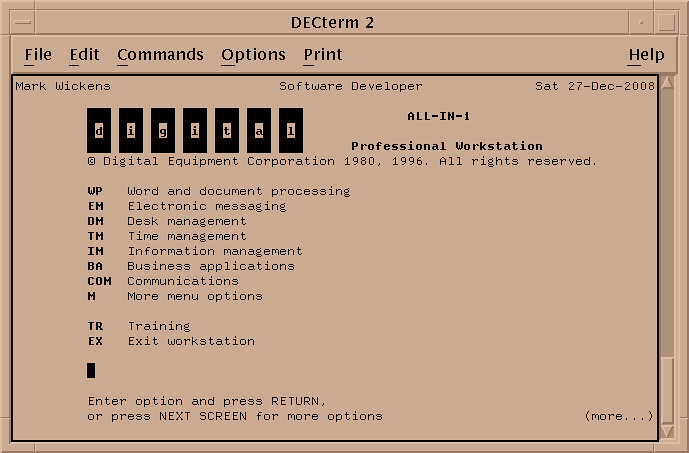
    Enterprise storage outfit Box.net have a great interview with Stewart Butterfield of Slack (and Flickr fame). Some interesting comments on how a GUI isn’t always the right interface for people who use keyboards. This is so right. I remember working on terminal screens when I worked in a call centre and the ease with which I could quickly tab around screens, rather than having to reach for a mouse to click a multitude of radio buttons. More design related posts here.

    Scottish National Party member of parliament Mhairi Black gave an interview back in March. I found it interesting as it shows that kind of impact social media will have on future political careers, particularly when it it will provide greater clarity than the 2009 debate around David Cameron’s raving history. Imagine if you were presented at the age of 50 with selected fringe thoughts you had at 19 years old?

    As Black notes:

    My uncle summed it up when he said that, when he was a teenager, he just used to shout at the telly. My generation tweets and there is a record of it.

    What adult doesn’t look back to things they said when they were 16 or 17 and go, ‘Oh my God?’

    The difference is my comments are being dragged out for the whole world to see.

    No trite social media analysis or fantastic technical wizardry just a great idea, client belief and a budget made 3M Korea’s Unforgettable Post-It Proposal

    Finally Helios is a new Hong Kong film gaining traction in the Chinese box office. In the face of a lack of new Hong Kong actors coming through, it was interesting that the new blood came in the form of Korean boy band member Choi Siwon who also performs some of Super Junior’s mandarin repertoire

  • Nokia N900

    This throwback gadget the Nokia N900 comes from before Nokia decided to go with Windows Mobile as its smartphone operating system. It had started to develop Maemo as a successor operating system to Symbian Series 60. Meamo was a Linux kernel based mobile operating system which owed its heritage to the Debian Linux distribution.

    The N900 was the first phone which showed Nokia’s ideas in developing an alternative to the Android and iPhone eco-systems. Symbian was a powerful operating system, with true multitasking but there were issues that just tidying up the UI and introducing capacitive touch wouldn’t address.  For a mature operating system, I had to reboot my Nokia phones surprisingly often, basic apps like the address book didn’t work if you had over a thousand contacts – so most sales people out there.

    The predecessor of the Nokia N900 was the 770 internet tablet which was launched back at the end of 2005, which was the iPad before the iPad.
    Nokia N900
    Trying to trial this device is a bit hard as it relied on web services such as an app store that no longer exists. Secondly it offers an experience comparable to an Android or iPhone powered by a processor that is several generations older, so you have to make allowances for the fact that the Nokia N900 can feel slow at times.
    Nokia N900
    Let’s start with the industrial design. The phone is relatively thick, partly due to its keyboard and replaceable battery design feels good to hold.

    The Danger Sidekick-esque slide-out keyboard which would be handy for the world of OTT messaging services like WhatsApp, WeChat and LINE. It isn’t a full keyboard like the Nokia E90 Communicator that I used to own but it is more usable than say a Blackberry Bold. The keyboard feels solid and stable.
    Nokia N900
    The camera surround on the back has a stand that pops out for when you want to use the phone to watch content or as a glorified desk clock.

    The dialler on the phone is easier to use than the iPhone and did what it came on the tin – its slight gradient feels like Apple pre-iOS7. Nokia’s HERE mapping service was responsive, it seems to be the one thing on the phone still supported.
    Nokia N900
    Nokia’s Mozilla-based browser still works and provided an experience similar to modern smartphones, but slower (this is partly due to the processor inside the phone).

    Now the Nokia N900 stands a testament to lost potential, the following Nokia N9 and N950, looked like polished products. Stephen Elop saw things differently and despite the Nokia N9 selling well in the few markets that he allowed it to sell, put the company on its fateful relationship with Microsoft. Presumably Elop and his team felt that they couldn’t sustain the innovation of Maemo, which would have required a move to Qualcomm processors away from Intel. Nokia had backed WiMax rather than LTE with Intel, so the company was on the wrong foot. The decline is now a matter of well recorded history with Microsoft having eventually taken over a much diminished phone business. Some of the N9 team went on to build Jolla – a small phone company that built a smartphone and tablet to showcase their SailfishOS operating system. It remains to be seen if other phone manufacturers will launch products using it. But it does offer consumers outside North America a more secure option to an Android handset. More gadget related content here.

  • Virtual cockpit & things from this week

    Razorfish Berlin’s interactive brochure for Audi to promote the TT coupe’s virtual cockpit. I was reminded of an ad that Mercedes did where the phone became the rear view mirror of a car, emphasising performance. Also McDonald’s had used the mix of print and circuits with phones to create beat making place mats.

    But I find the intersection of print and digital an exciting space, even if the virtual cockpit concept doesn’t appeal to me that much.

    More related content here.

    Leo Burnett Italy created an app for P&G’s Always brand that directly addresses the insecurity women may feel in an unfamiliar area at night time; it connects them with a friend, to protect them on your way home.

    It is a smart play for the brand to maximise how it can be useful to consumers.

    Celebrity music streaming service Tidal faced critics at launch, this was probably the best of them

    I love this old video about Bell Laboratories’ complex in Holmdel, New Jersey that AT&T have put on YouTube as part of their efforts to digitise their archives. This is Silicon Valley before Silicon Valley

    At the other end of the spectrum, Ogilvy Hong Kong for Hong Kong Clean-Up produced a campaign that puts DNA analysis into an Orwellian future.

  • 48 hours with the Apple Watch

    My experiment with the Apple Watch is part of a larger project. I  decided to experiment with wearables a while ago. My first experiment was with the Casio G-Shock+ series of watches that takes the well-loved brand and drops some rudimentary notification function, BlueTooth LE capability and a companion iPhone app together as a workable but unambitious package.

    The Apple Watch is a different experience and has a different ethos to the Casio G-Shock+. The Apple Watch experience starts as soon as you receive the package.

    I was surprised to be presented the box by security in reception, mainly because it had roughly the same size and weight as a toner cartridge for the office colour photocopier / printer.
    Untitled
    My immediate reaction was that Apple may have made the packaging look like this to mask the first drop of watches from over-ambitious eBay entrepreneurs in the postal service.
    Untitled
    But it soon became apparent that Apple had built a packing equivalent of a Winnebago RV for the watch.
    Untitled
    Inside a long heavy duty cardboard box is a giant whale of a coffin for the watch and space underneath for the charging cable and plug in charger. All of this seems at odds with Apple’s move over the years towards less wasteful, more environmentally friendly packaging.

    At the same time the experience didn’t feel special to me, just slightly perplexing, ok very perplexing. I have been involved in the launch of a new Huawei smartphone over the past few weeks and that packaging provided a more luxurious experience.

    An email arrives to my home account letting me know that I can set up a live video call with someone who will help me set up my watch. An alarm bell rings in the back of my head that makes me think that the product might not ‘just work’ which the a core tenet of the Apple experience.

    The watch itself has some nice industrial design touches.
    Untitled
    The Apple Watch strap was easy even for a mechanical klutz like me to change, by pushing a button and sliding the strap in or out of a groove on the case.

    The case is nicely made (as something the price of a premium Casio or Hugo Boss watch should be). However as a bit of a watch head the case did not blow me away, if I didn’t know about it’s smarts it felt very much like a Fossil watch.

    Switching it on and pairing it with my iPhone was very easy, the problems began when the iPhone app schlepped across all my iPhone applications that had Apple Watch capability, without a thought for how often I use them. This means that the home screen is covered in an acne rash of default and third-party applications, 80 per cent of which I don’t regularly use.

    Whilst I am in awe of the the way the device hides the process of syncing with the iPhone I am less impressed by the slow speed of glance content loaded from the iPhone more slowly than it would be to just take the iPhone from my pocket and look.
    Untitled
    When glances do appear, they appear in an amazingly high resolution.

    The killer app

    The haptic alerts were handy and Accuweather had made the best Watch app. WeChat shamed Twitter with its comparative usefulness. But ultimately I still don’t know a compelling reason to own an Apple Watch beyond trying to understand where it fits in a customer’s digital life.

    The Apple Watch is a two-handed device, for instance unlocking the Watch by typing in your PIN. Flashback to a childhood encounter with a friend’s Casio Databank flooded my memory whilst unlocking the watch.

    I found that I tended to use the crown when the watch wasn’t on my wrist, probably sounds a bit pointless.

    Like the Casio G-Shock+ before it, Apple hadn’t mastered prioritising alerts or putting intelligence behind them. I think that this a major issue, since app developers will try to go for maximum notification real estate as part of the ‘grab’ of the attention economy. I think that this is an Achilles Heel of wearables in general.

    Conclusions

    The Apple Watch didn’t encourage me to ‘play with it’ to find out its features, the way other Apple products from the original sit-up and beg Mac to the iPod and iPhone did. I can’t say that I have had any real enjoyment out of using one. So much so, that I was quite happy to leave it in its charger most of Sunday, whilst my iPhone is never an arms length away.

    Notifications are going to become very tiresome, very fast.

    It isn’t particularly friendly to use and at 48 hours in, I still haven’t really got to grips with the device.

    This feels like a first step in a long journey needed to fix the human smartwatch interface.

    The Apple Watch feels like a solution looking for a problem, just in the same way that the Mac only found its calling with Aldus desktop publishing software and an Adobe powered laser printer, so the Apple Watch is dependent on some clever app development in the future.

    I suspect the kind of programmable world that we would need for the device to thrive, for instance your iPhone seeing that you have enough time in your diary, ordering your morning coffee at Starbucks and then the Watch telling you to step in the cafe and pick it up just as you are about to walk past doesn’t exist yet.

    The experience did get me to marvel at the engineering that went into the device, but at the moment it feels that all that effort has been largely unrewarding in terms of customer experience. I still wear my collection of G-Shocks or fine Swiss watches on my right wrist. I don’t think that many watchmakers have much to worry about yet, except those targeting the mid-market of big brand, mediocre movements.

    More information

    On smart watches, I’ve decided to take the plunge
    On wearing a smartwatch
    On Wearables

  • Android device fragmentation + more

    Android Sales: Guess how many Android devices are available for sale | BGR – 18,000 different types of Android devices which is an insane amount of device fragmentation. Imagine the pain in Android device testing needed and that isn’t even getting into different app stores and non-Google Android devices –  a la Russia and China. More wireless related content here.

    Regarding Chrome’s Power Efficiency on OS X | The Verge – interesting how Google is falling into the same traps when coding across platforms that Microsoft did

    Why China’s economy is slowing and what it means for everything | Quartz – interesting bit of economic analysis via charts

    Fascinating chart in HBR (above) on the relative change in valuation of Brands… | Broadstuff – interesting data on the decline of brand value

    Hush Technology will block snoring but play your alarm with its smart earplugs | VentureBeat – interesting how noise cancelling technology has shrunk

    Moscase Is Like Batman’s Utility Belt For Your iPhone | TechCrunch – the modular nature of the back is quite interesting, I like the e-ink screen

    Daring Fireball: The Apple Watch Edition’s Upgrade Dilemma – it won’t be replacing my Swiss watch any time soon

    Nokia nears deal to buy Alcatel-Lucent mobile networks unit | Hong Kong Economic Journal Insight – two turkeys won’t make an eagle

    GSMA Intelligence – interesting diagram talking about latency and bandwidth requirements of different applications on mobile networks when you scroll down the page

    Activist Puts Pressure on Qualcomm – WSJ – inevitable when one looks at the increasing competition in the chip business for them and the move by major players (Apple, Samsung, Huawei)

    Samsung Galaxy S6 review: It’s what’s on the outside that counts | Ars Technica – this review is emblematic of the pedestal that Samsung has fallen off

    LINE CEO bets on selfies and macho stamps to expand overseas | Japan Times – really interesting insight into app localisation and branding

    Twitter Ends its Partnership with DataSift – Datasift Blog – ok this could be interesting

    These slides are all you need to make the case for an all-flash data center | SiliconANGLE – that responsive data has to change the economics of cloud as well and not in a good way

    Exclusive: Twitter A/B testing a Yahoo style directory for non-logged in users | SiliconANGLE – and Google seems to be supplementing search results with content from DMOZ about links

    If Nokia Map Unit Is for Sale, Microsoft, Apple and Yahoo All Might Want a Look | Re/code – it makes sense that Nokia would want to sell this separately from the phones, but who would it go to