Category: consumer behaviour | 消費者行為 | 소비자 행동

Consumer behaviour is central to my role as an account planner and about how I look at the world.

Being from an Irish household growing up in the North West of England, everything was alien. I felt that I was interloping observer who was eternally curious.

The same traits stand today, I just get paid for them. Consumer behaviour and its interactions with the environment and societal structures are fascinating to me.

The hive mind of Wikipedia defines it as

‘the study of individuals, groups, or organizations and all the activities associated with the purchase, use and disposal of goods and services.’

It is considered to consist of how the consumer’s emotions, attitudes and preferences affect buying behaviour. Consumer behaviour emerged in the 1940–1950s as a distinct sub-discipline of marketing, but has become an interdisciplinary social science that blends elements from psychology, sociology, social anthropology, anthropology, ethnography, marketing and economics (especially behavioural economics or nudge theory as its often known).

I tend to store a mix of third party insights and links to research papers here. If you were to read one thing on this blog about consumer behaviour, I would recommend this post I wrote on generations. This points out different ways that consumer behaviour can be misattributed, missed or misinterpreted.

Often the devil is in the context, which goes back to the wide ranging nature of this blog hinted at by the ‘renaissance’ in renaissance chambara. Back then I knew that I needed to have wide interests but hadn’t worked on defining the ‘why’ of having spread such a wide net in terms of subject matter.

  • Interface design

    Interface design

    This reflection on interface design has taken a while to write. When I started we were on the cusp of Apple’s Worldwide Developer Conference. If you’re interested in technology, but aren’t an Apple fan it still matters as it sets the agenda. Apple’s moves affect wearables, smartphones, tablets and OTT (over the top) TV services.
    The New York Times published an interesting article Apple Piles On the Apps, and Users Say, ‘Enough!’.
    Ignore the title of the article itself, which is a function of clickbait rather than content. Instead, it provides an good critique of interface design across platforms. It highlights:
    • The difficulty in finding and installing other apps inside Messages. Many users aren’t aware of the functionality. This is different to the ‘interface as oldster barrier’ that SnapChat had. DoorDash – a Deliveroo analogue dropped a support after a few months due to a lack of users. Apple took a second run at this with iOS 11 trying to improve discoverability
    • Apple 3D touch isn’t used to drive contextual features by app developers
    • The Apple Watch’s mix of crown, button and small touch screen made ‘lean in’ interactive apps hard. The Apple Watch interface isn’t learned by ‘playing’ in the same way that you can with a Mac or an iPhone. Apple’s forthcoming watchOS update looks to have Siri ‘guess’ what you want. It wants to provide contextual information to users (and reduce interactions)
    If you ignore 3D touch for a moment, these problems are cross platform in nature. (Some vendors like Huawei have attempted a similar 3D touch feature in their own apps. They did not try to get developer adoption.)
    Thinking about Messenger app developers struggle to integrate disparate features into the interface. The exceptions are:
    • LINE
    • WeChat – the take up of mini-apps in WeChat have been disappointing performers. Is this indicating a possible ceiling for functionality?
    Wearables as a category looks thin, with Apple being one of the largest players. Pebble got acquired by Fitbit. Jawbone seems to be a dead company walking. Their blog was last updated in October 2016, Twitter in February. It’s ironic: their original BlueTooth headset business would now be a great opportunity.
    I’ve tried Casio’s BlueTooth enabled G-Shock, four Nike Fuelbands and a Polar wearable. I am on my second Apple Watch and I still don’t know what the real compelling use case is for these devices.
    So how does this stuff come about? I think its down to the process of creation, which affects analysis and critical analysis of the product. Creation in this case is essentially throwing stuff up against the wall until it sticks and then the process becomes reductive. As a case in point, look how smartphones have evolved to the slab form factor. 
    Throwing stuff against the wall
    I’ve worked enough times on digital products to understand the functionality is king. It’s the single most important thing. I’ve worked on products that wonderful functions but:
    • Consumers didn’t know they had a need, its hard to get consumers to build new habits. Forming habits can be hard
    • They were a bitch to sign up with. Yahoo!’s sign-up process killed products. It’s a fact. We’d get consumers hyped up, we’d deliver them to the relevant page and they wouldn’t convert. I didn’t blame them, if I wasn’t an employee or digital marketer I’d have done the same
    That’s how products are now built. The focus is on speed of execution of the idea. It isn’t about thinking through the complete experience. Agile methodologies with their short sprints puts emphasis on function. Away from data to feed into big picture optimisation. A function focus means that you end up with ‘lean in’ interaction designs as default.
    There aren’t many organisations that get it right. I’d argue that the early Flickr team and Slack ‘got it’. Though there are common factors:
    • Both Flickr and Slack had common key team members
    • Both products fell out of failure. Flickr came out of tools for Game Neverending. Slack began as a tool in the development of Glitch
    Where are the ergonomists and futurists?
    There are people who can provide the rigorous critique.
     
    Back in the day organisations with large R&D functions like NASA and BT employed writers to envisage the future. Staring into the future became a career. People like Syd Mead provided a visual map of the future. Mead and others did a lot of work thinking about the context of technology to users. At the present time lots of criticism levelled at VR glasses is it being anti-social. This comes as no surprise to anyone who has read William Gibson’s Neuromancer. Social interaction is more likely to come glasses wearer to glasses wearer. It will happen in a virtual third space. Neal Stephenson explored this third space in Snow Crash. The Black Sun was a virtual night club.

    Bill Moggridge, designer of the GRiD Compass computer – the world’s first laptop thought a lot about ergonomics. The laptop had a 11 degree slope from pop-out leg to the keypad. This is something that your MacBook Pro or Surface doesn’t have. There is a lack of depth in technology design compared to what Moggridge had. He brought in psychologists and studied human computer interaction. He eventually co-founded IDEO.

    Whilst the elements that Moggridge looked at were well known the thinking doesn’t seep into product categories. We are very good at asking can a product be made. We are poor at asking what does the product really mean. Apple’s viewpoint on the tablet segment is a case in point.

    The vast majority of tablets are used for lean back media consumption from watching films and reading books to reviewing emails. It can work as a productivity device in specific circumstances with custom built apps – say field sales or replacing a pilot’s flight paperwork. The keyboard and power of modern Macs (and PCs) provide a better tool for content creators; whether its analysing a spreadsheet or writing this blog post. 

    Yet, since its launch by Steve Jobs, Apple has viewed the iPad as a new PC. The iPad Pro has been designed to try and catch up in features with the Mac. It is ironic that Microsoft has moved a slim ‘MacBook clamshell design’ analogue into its latest Surface range.  

    Shanzhai

    It is very different to the pragmatic design ethos of China’s ‘shanzhai‘ gadget markers who came up with both laughable and exceptionally smart solutions. Everything from the dual SIM phone to the phone / electric razor hybrid. Successes bloomed, educated a collective knowledge of makers and a manufacturing ecosystem of facilitators, while the oddities slipped into the night.

    The manufacturing ecosystem played a crucial role in upping smartphone quality. Metal phone enclosures started to trickle down to other manufacturers once Apple had grown the capability of CNC manufacturers with orders for thousands of machines in Foxconn factories. This also fed expertise in how to use these machines in mass manufacturing. Which shows how physical interface design can be influenced almost as fast as software interface design in terms of commercial rivals.
  • Louis Vuitton personalisation + more things

    Louis Vuitton Personalisation

    Louis Vuitton personalisation feature is really interesting. It brings NikeID magic to their retail experience. Customisation makes even more sense in a luxury context like the Louis Vuitton personalisation feature. I think that it will also impact secondhand sales – flair is much more of a personal decision, which will impact secondhand sales.

    If the Louis Vuitton personalisation could be done as an after-market, then that gives Louis Vuitton additional incremental retail revenue.

    Digital catnip

    Scott Galloway manages to get his academic colleague Adam Alter to highlight some of the techniques used to make apps as digital catnip. B.J. Fogg pretty much wrote the book on captology literally: Persuasive Technology: Using Computers to Change What We Think and Do.

    Nir Eyal took Fogg’s work and simplified it even further in his book Hooked. Adam Alter and Scott Galloway provide a good primer to the principles involved and the likely outcomes.

    Jennifer Cardini

    The soundtrack of my week has been this mix by Jennifer Cardini of Correspondent Records. Cardini has a background in DJing, music and sound design which explains some of the atmospheres.

    Instagram lead generation

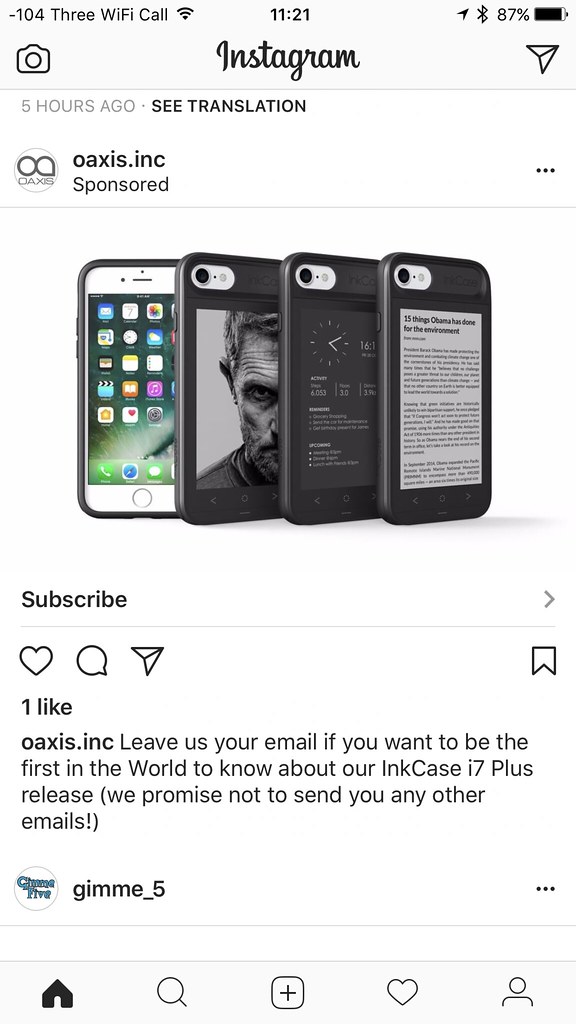
    This is probably old news, but it was the first time that I noticed it in my feed. Instagram has an email collection facility that reminded me of Twitter cards. Its a great idea that can help tie Instagram engagement closer to e-commerce sales

    Untitled

    Flickr search

    Flickr has been tweaking its design and has improved its search. These changes have largely happened under the radar. In my experience, the biggest move was that the ‘camera roll’ has been depreciated in menu positions so that you no longer click on it by accident. It’s good to see the continual improvements in a time of substantial change at Yahoo! / Oath or whatever Verizon calls it. Flickr talked about the changes it made to the user’s profile page on its blog.

    SaveSave

  • Smartphone addiction + more

    Smartphone addiction

    Smartphone addiction gets the Scott Galloway treatment. Childhood smartphone addiction has been a social and government issue in China for years as part of wider concerns over online and mobile gaming. So in some respects Galloway on smartphone addiction feels behind the curve. What is more interesting is how smartphone addiction goes beyond gaming into areas like airline loyalty schemes.

    40 years of hip hop

    The Hood Internet have done an amazing four minute edit of forty years of hip hop. It’s razor sharp precision. I have a pretty good knowledge of old school hip hop and couldn’t name all the tracks. The cuts are so short, Shazam isn’t likely to help either.

    Chinese dream

    BBH Shanghai have created a beautiful ad for Audi China which features science fiction author Hao Jing Fang. This feels like a mix of Wong Kar-wai and cyberpunk fiction. In some ways it isn’t that far from the aesthetic in present day Chinese tier one cities central business districts. It represents a brighter techno-utopian future than I would expect in an advert for American or European consumers.

    In some ways what was the American dream is now the Chinese dream. This implies a Chinese golden age of sorts, but there a number of headwinds to this dream from demographics to the authoritarian nature of the party.

    Louis Vuitton

    Louis Vuitton have been doing a lot of forward thinking content and events. Whilst this video is beautifully shot, it feels retro by comparison to other things that they’ve done. I went to the Louis Vuitton series exhibition was far more forward looking than this video.

    Work in Progress

    Carhartt Work In Progress created this great skate video in Italy.

    AZZURRO from Carhartt Work In Progress on Vimeo. Work In Progress have been consistently doing a great job commissioning content. In this respect, I would put them right up there on Red Bull in terms of quality, if not quantity of content. The alignment with skateboarding in this film is perfect.

  • Pipes + more news

    Pipes

    Pipes – Yahoo! Pipes analogue, lets just hope that they haven’t captured the ‘flakey’ experience. I often remember hearing Yahoo! Pipes being compared to owning a British sports car. Instead I would prefer that Pipes provide the Mazda MX5 (Miata) experience where you get the experience but none of the broken ass crap of owning an MGB

    Business

    Is 2017 the beginning of the end for the app economy? TheNextWeb – not exactly the beginning of the end. More like a new normal – one thing that’s missing is the importance of building inside existing app eco-systems such as WeChat, Facebook Messenger etc. Whilst WeChat have made headway with mini-apps it will be interesting to see if Facebook can duplicate their success.

    Korea

    Why young South Koreans are turning away from religion | Arts & Culture | Al Jazeera – a certain amount of this turning away is geography. Korea had a mix of buddhism and Shamanism historically. Buddhist monasteries and temples were often in the mountains close to nature. Shamanism depended on closeness with nature – so again being out in the middle of nowhere. You throw in the move to cities, the break down of familial connections through distance and time poverty. More on Korean related topics here.

    Luxury

    Luxury Brands Leave Youku in Favor of China’s Younger Video Platforms | L2

    Marketing

    Ambition: Exploring the digital marketing revolution – interview with Philip Kotler

    Ambition: Mastering mobile internet strategy in China by Winston Ma – nice white paper that looks at cinema’s role in reaching customers as part of an omnichannel approach

    Media

    Why the Chinese Will Pay for Content That Americans Won’t – Bloomberg – De Dao and other paid media. Part of the reason is that the quality of much free media is lacklustre due to pleasing the state ranking above delighting the audience.

    Security

    Russian Hackers Are Using Google’s Own Infrastructure to Hack Gmail Users | Motherboard

    Does Slack allow your boss to spy on you? — Quartz – yes, but only with output rather than outcome-focused measures on productivity. It will reinforce the practices of poor managers rather than help make good managers

    Web of no web

    Russian internet giant Yandex shows off its self-driving car | Engadget

    The Surprising Repercussions of Making AI Assistants Sound Human | WIRED – interesting nuances of voice interface design

  • Black technology (黑科技)

    Black technology

    An all-compassing phrase that I’ve heard being used by Chinese friends Hēi kējì in Pinyin or black technology. It’s been around for a couple of years but recently gained more currency among people that I know.

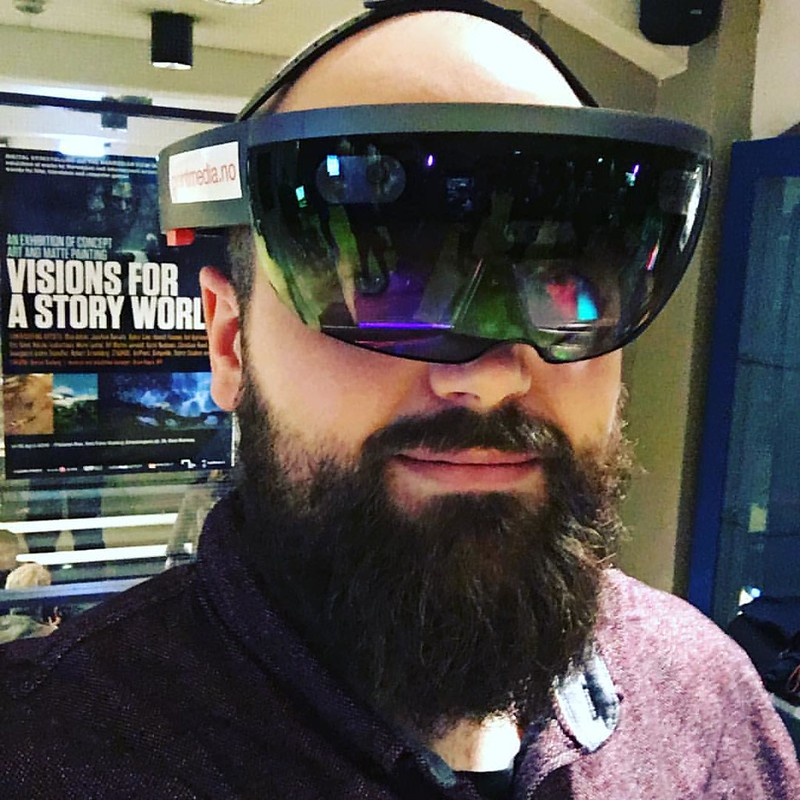
    Microsoft Hololens 💥

    It is used as a catchall for disruptive / cool innovative products. What constitutes ‘black technology’ is subjective in nature but generally Chinese would agree on some examples such as:

    • Magic Leap
    • Microsoft Holo Lens
    • Bleeding edge silicon chips with an extraordinary amount of memory or machine learning functionality built in
    • Tesla self-driving cars

    Magical quality

    The key aspect is that the product as ‘magical quality’ in the eyes of the user. Technology companies have tried to use it in marketing to describe the latest smartphone and app features like NFC, gesture sensitive cameras and video filters. Your average Chinese consumer would see this as cynical marketing hype. Xiaomi had been guilty of this over the past couple of years. Chinese netizens aren’t afraid to flay the brands for abusing the term black technology.

    As technology develops, the bar for what represents black technology will be raised higher.

    Manga origins

    According to Baidu Baike (a Quora-like Q&A service / Wikipedia analogue) it is derived from the Japanese manga Full Metal Panic! (フルメタル·パニック! |Furumetaru Panikku!).

    In the manga black technology is technology far more advanced than the real world. An example of this would be ‘Electronic Conceal System’ – active optical camouflage used on military helicopters and planes in the manga. It is created by the ‘Whispered’ – people who are extremely gifted polymaths who each specialise in a particular black technology.

    In the manga they are frequently abducted and have their abilities tested by ‘bad organisations’ who support terrorism. Whispered also have a telepathic ability to communicate with each other. If they stay connected for too long there can be a risk of their personalities coalescing together. Similar content can be found here.

    More information

    黑科技 (动漫中出现的词语)- Baidu Baike
    Full Metal Panic – Amazon