Category: event | 事件 | 그룹 회의 | 出来事

If you look at the dictionary definition for event it comes out as:

  • A thing that happens or takes place, especially one of importance
  • A planned public or social occasion.

It’s also a synonym for contests that might be part of a larger sports competition. I can’t think of any event that I have covered in this blog on the basis of my being a speaker or attendee would really qualify as one of importance.

Event is a category that I get to use sporadically. You will find a mixed bag of posts in here.

Social media marketing conferences that I spoke at or attended, particularly when social media was immature sector. The ironic thing is the lack memory in the sector. The problems that people are having are still the problems that were being had on social media marketing over a decade and a half ago.

In that respect I feel that conferences were a poor investment of my time. The benefit from the events were the people that I met and got to have sidebar conversations with. Thats were the most interesting conversations happened, some of which influenced thinking that I have shared here down the line.

I also managed to go to a few talks including one by the likes of Charles Dunstone who was then the head of Carphone Warehouse. Carphone Warehouse were a major retail presence in the UK, Ireland and some continental European countries as an intermediary between the mobile network provider and the customer.

That business now seems to be largely gone. And my record of his speech is of historical interest only.

  • Swytch & others at Mobile Monday demo night

    I just got back from Mobile Monday’s demo night ran at the Thistle Marble Arch featuring Swytch, Quiztix, Mylo, Viewmaker, Pronto and Adsy. This evening’s event used the facilities of an Informa-ran telecoms conference: Service Delivery Innovation Summit. I missed the start of the event so my notes probably miss part of the applications on display.

    Swytch – multiple mobile numbers on an application, these numbers could be different country codes and not only allowed calls but messages too. The Swytch application is basically a VoIP client rather than a soft SIM. There are other similar services especially in Africa, at the moment the founders think that their USP is the provision of access multiple UK mobile numbers, but I am not sure Swytch is  defensible. I don’t want to even go there with potential use cases

    Quiztix – Q&A game on both Android and iOS, because of its focus on venues as a metaphor for different game levels a couple of people were interested in reskinning it for brands. The most interesting thing for me was the way that they used advertisements to level-up within the game – increasing ad engagement.

    Mylo – was a classic millenial application that helped facilitate splitting bills in house share. The application collects billing data from suppliers including Sky. Ovo Energy. Payment of one’s share could be done by PayPal. They admitted that at the moment they had no business model.

    ViewMaker – location-enabled AR application that allowed a user to show & publish geotagged content. The business focus was to be infrastructure for other application or brands who wanted to publish their own data. They didn’t currently have a plan to overlay information from other sources such as Foursquare, Flickr or Google Maps at moment. One thing surprised me in the Q&A session was that clients not interested in indoor positioning yet.

    Pronto – A Deliverance-type food service with some key differences. Instead of it being a web interface, Pronto relies on GPS for location. Secondly they have a really simple menu, in order to allow two-second ordering and swifter delivery. The menu doesn’t change very often which is great if you are an ‘eat to live’ person. The application recently launched in Italy and is coming to London soon. Apparently a reliable set of delivery drivers is a problem because of the piece rate / zero-hour contract nature of the work they aren’t necessarily as reliable to showing up as one would like.

    Adsy  is mobile or PC platform to create mobile applications that reminded me of a  simple HyperCard set – but no scripting for fuller functinoality. They are handy for building catalogues, or a card-based personal site and can be embedded like a Slideshare or YouTube clip.  It was deliberately kept simple and non-technical to appeal to teens – which was interesting given that most CMOs think of teens as master hackers…

    IFS – IFS has its own innovation lab and they demonstrated a working prototype of wearables driving business efficiencies – business notifications to wearables, logistics etc from ERP system. Think of a smart watch as a pager. I think that most of the interesting aspects of this was the connectivity with the legacy systems. Given the current lack of compelling use cases for smart watches this could be interesting due to the provision of glance-able data.

    OpenTRV – TRV is a thermostatic radiator valve. They wished to use technology to control temperature localised within a house radiator by radiator. The current model by the likes of Nest or Honeywell relying on one centralised thermostat per house controlling a boiler was considered to be a broken model. They are aiming to lower the cost of their smart TRV 10 pounds per unit.

    More wireless related content here.

  • First Apple Watch impressions

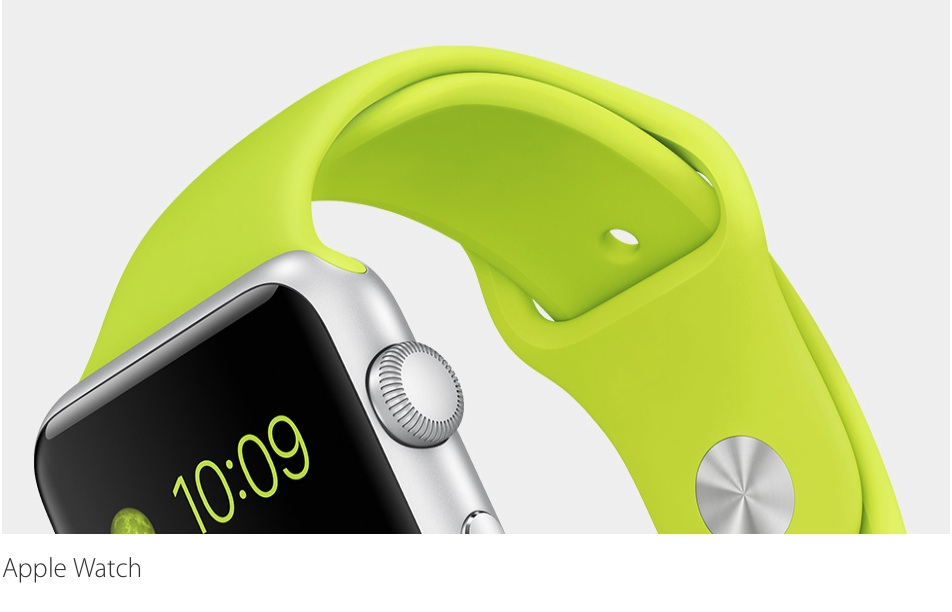
    I was underwhelmed by the Apple Watch wearable product. It is impressive what they have done, but from a product design point of view the case looks cumbersome rather like a slightly better Samsung Gear. The use of haptics was one of the smarter things that I saw in the demonstration and the use of emoji as an essential ‘social lubricant’ borrows heavily from Asian mobile usage of stickers on the likes of LINE, KakaoTalk and WeChat.

    Looking at the demonstrations, I still think that the use case for a wearable still isn’t there for mainstream consumers. The use cases for haptic communications for instance were downright creepy and I wasn’t convinced by the cloud of spots interface. The fitness app and workout apps were similar to products from the likes of Suunto and Polar or the miCoach app by adidas for a smartphone. There needs to be more general purpose apps, then the Apple fitness option might be able to drive out the fitness sector.

    In terms of the industrial design, I was particularly interested in the strap. Apple has borrowed a distinctive looking catch and strap connector  from one of the strap designs from the now defunct Ikepod Watch company co-founded by Marc Newson who recently joined Apple’s design team.

    Ikepod Megapod strap
    ikepod

    First Apple Watch strap. This probably explains why Marc Newson was brought on board as part of Jonny Ive’s team; as the Ikepod strap was something that he had designed back in the mid to late 1990s. You can see it on the Hemipod watch design here.
    applewatch

    While the case shape looks suspiciously like a homage to H Moser, I think that luxury brands won’t be particularly concerned, at least at this first Apple Watch, lets hope that future iterations prove me wrong. More on design here.

  • Bruce Schneier @Google

    Bruce Schneier

    Bruce Schneier on the state of the internet. Schneier is one of the smartest people on information security and the implications of how systems change to affect consumer privacy and security

    Bruce Schneier’s @Google Talk

    Key takeaways

    • The internet has been changed by a change in the elites involved in running it. In the early commercial internet through to the mid-noughties their was a libertarian post-hippy element at the centre of it. You had engineers and bodies with a somewhat countercultural outlook. This is no longer the case
    • The technological models haven’t changed that much: time-sharing –> client server model –> managed services –> cloud computing
    • Locked down end points are interesting because the consumer has much less control: Apple’s app store, Kindle store etc –> new model of security; someone else takes care of it. Users have to trust vendors from iOS devices to GMail and Yahoo! Mail – what he calls feudal security. It reminds me a lot of the power of the chaebols in Korea
    • Cloud platform companies are starting to look like banks where consumer trust is being compromised. NSAgate is just a minor part of that.
    • The internet magnifies power, consumers tend to have power when technological change first comes along, existing powerful bodies take a while to get up to speed but are more effective.

    Four classes of internet tools of power:

    • Content filtering / data loss prevention
    • Use control
    • Marketing
    • Surveillance – personal data collection

    Facebook is changing social norms, affecting what people is normal and regular for profit. Allignment of corporate and government power: Facebook is NSA’s wet dream

    • Ubiquitous data collection is the ‘end of pre-history’ where some things were recorded to where everything is recorded.
    • Cyber-nationalism with ITU looking to wrest control of the internet from the US to local governments
    • We are a forgetting species so the technology will transform both personal and societal relationships. Second order social consequences make all this unpredictable

    Bruce Schneier believes that the nature of power is changing from hard to soft power; the nature of social control has changed dramatically. Making privacy salient makes consumers aware and less likely to adopt a service.

    No part of the internet commons, but a collection of privately-owned public spaces, which affects legality and control. More internet related content here.

  • Bob Barker interviews….

    Bob Barker is a client that I worked with on nascent digital work for RFI Studios. Bob worked as the CMO of Alterian. Alterian started off in customer experience management, they did a series of acquisitions when I worked with them including Mediasurface the CMS company. The company was acquired by SDL and some part of it was sold on to private investors.

    Recording
    Flip video camera

    Bob decided to delve into social media and understand it as a marketer. The Flip Video camera which includes basic software inspired him to do video content. Bob had a ‘Gorilla tripod‘ for the Flip and the lighting was just done with daylight. I did an interview with Bob Barker for his blog last week, you can read his take on things on his blog.

    I realise that we talk through a number of social platforms, so here is a list of what I use:

    • iMessage – though I have found it to be flaky
    • Skype
    • Fastladder.com for RSS feeds. I am currently experimenting with FavShare as a Fastladder client on my iPad and iPhone which started after my interview with Bob
    • Pinboard.in for social bookmarking
    • IFTTT to syndicate content
    • Microblogging: I use the Twitter client on my Macs at home, and m.twitter.com on my iPhone. I use Weibo’s iPhone client and WeiLark for the Mac to post on my Sina.com Weibo account, rather than Sina’s sluggish web interface
    • I use Kakao Talk and Tencent Weixin (WeChat) social messaging clients on my iPhone. The international versions of these tools don’t have all the features the local ones.

    I use a mix of technology:

    • MacBook Pro
    • Dell 22 inch widescreen display
    • MacBook Air
    • iPhone
    • iPad
    • Samsung feature phone with dual SIMs

    The video is on YouTube so may not be available to all readers. You can find Bob’s video channel here.

  • London conference on cyberspace

    The Foreign and Commonwealth Office of the British Government has always had the best online presence of all the different government departments, but I still find it interesting that it is they rather than the department of media and culture who are looking to lead a discussion on the future of the web and associated technologies. The FCO are hosting a conference on cyberspace in London on November 1-2, 2011 and are extending it online through social media platforms. I can’t help but feel the dialogue is aimed as much within the UK as internationally.

    Of course, the ironic thing is that the UK isn’t at all progressive in terms of all things internet related compared to the likes of South Korea, Singapore, Hong Kong, Australia, Iceland or Finland to name but a few countries. The Digital Economy Bill and actions done by the likes of Ed Vaizey have shown resistance rather than working out how it can benefit from the change. The music industry tried to fight the change and has torn itself apart so it will be interesting to see how that stance will work out. I look forward to following the conference on cyberspace; in cyberspace.

    Find out more here. More online related topics here.