Ideas were at the at the heart of why I started this blog. One of the first posts that I wrote there being a sweet spot in the complexity of products based on the ideas of Dan Greer. I wrote about the first online election fought by Howard Dean, which now looks like a precursor to the Obama and Trump presidential bids.
I articulated a belief I still have in the benefits of USB thumb drives as the Thumb Drive Gospel. The odd rant about IT, a reflection on the power of loose social networks, thoughts on internet freedom – an idea that that I have come back to touch on numerous times over the years as the online environment has changed.
Many of the ideas that I discussed came from books like Kim and Mauborgne’s Blue Ocean Strategy.
I was able to provide an insider perspective on Brad Garlinghouse’s infamous Peanut Butter-gate debacle. It says a lot about the lack of leadership that Garlinghouse didn’t get fired for what was a power play. Garlinghouse has gone on to become CEO of Ripple.
I built on initial thoughts by Stephen Davies on the intersection between online and public relations with a particular focus on definition to try and come up with unifying ideas.
Or why thought leadership is a less useful idea than demonstrating authority of a particular subject.
I touched on various retailing ideas including the massive expansion in private label products with grades of ‘premiumness’.
I’ve also spent a good deal of time thinking about the role of technology to separate us from the hoi polloi. But this was about active choice rather than an algorithmic filter bubble.
By the 1980s, radio dramas were in decline. This is in stark contrast to the first half of the century when famous literary and comic book characters had their own shows which covered everything from science fiction and fantasy to crime and horror. Famous names like Sherlock Holmes, Count Dracula, Batman, Superman, The Spirit, Buck Rogers, Flash Gordon, Philip Marlowe and Sam Spade all appeared on radio. The Star Wars radio dramas started as a project to fire interest in the genre.
An academic at the University of Southern California looked to respark interest in radio dramas, using the local campus radio station to rejuvenate NPR Playhouse – the umbrella vehicle for radio dramas on the US National Public Radio (NPR).
These aren’t the droids you are looking for by Scott Beale
The university students moved on from adapting short stories and suggested adapting Star Wars. Director George Lucas was an alumni of USC and helped the production licensing the music and sound effects for a nominal dollar fee. The BBC helped out in return for broadcasting rights in the UK and some of the original stars including Mark Hamill signed on as cast members.
USC went on to dramatise two out of the three films from the original Star Wars trilogy. While they were originally multi-part series, an enterprising YouTuber has put them all together.
Star Wars: Return Of The Jedi: originally 6 episodes (1996) – made by HighBridge Audio instead of NPR or USC. HighBridge had distributed the previous recordings as a recording box set and when NPR and USC couldn’t make the recordings, they stepped in to do it instead.
The Star Wars radio dramas, alongside vintage recordings are enjoying a second life on YouTube in parallel to the increased consumer interest in podcast documentary dramas and Audible’s rejuvenation of audio books.
Jack Ryan final season
Amazon Prime’s adaptation of Tom Clancy’s Jack Ryan franchise is probably the best adaptation that I have been. But all good things must come to an end and we are seeing the final season being rolled out. John Krasinski has arguably played the best version of the titular character and the writers have managed to modernise the show sympathetically. They have managed to make each season very relevant. This time Ryan is investigating a conspiracy of crime that might envelope the entire ‘black budget operations’ of the intelligence and defence communities.
The roads lead back to Myanmar via Shan State rebels and an NGO ostensibly set up to help victims of human trafficking. I look forward to seeing where the rabbit hole goes next.
Threads
I am on Threads – a new micro-blogging alternative to Twitter; so far it’s been underwhelming despite the rapid climb in new members. I am also on Mastadon and Post.News.
Godzilla Minus One
While American adaptions of Godzilla feel grandiose and bloated in nature, Japanese adaptions by Toho Pictures have managed to refresh and take an interesting new take on the titular character in Shin Godzilla. Godzilla Minus One changes things up by setting his rampage in a post-war Japan already devastated by the United States.
I was sat thinking about a client project the other day. I was using Miro as a way to articulate my thoughts into something that the creatives could work with. As I stared off at a Post-It note on my wall that made up part of the prototype the idea that the tools are changing sailed in and sat at the front of my thoughts. I became deeply uncomfortable.
At a conscious level I know that technology and the tools that I use based on it are changing all the time. But what made me more uncomfortable was a deeper shift in the model of how the tools interacted with me and where the control sat. Sometimes it feels as if we longer use them, instead they use us. To what end has never been clearly articulated.
This quote from my first agency boss describes the nascent online landscape of the late 1990s:
After 50 years of radio and TV pushing marketing messages at people, it took technology to turn it around so that people pull in the information they want. Today’s new consumer has a cultural comfort with interactivity that just keeps building on itself, and it’s all because the technology is finally where it needs to be to let them do it.
I just couldn’t imagine the same thing being said about the experience of most netizens in our social platform dominated world today. The tools are changing, they now use us more than we use them.
I was particularly struck by this statement quoted in a BBC article and attributed to Thomas Bangalter
“Daft Punk was a project that blurred the line between reality and fiction with these robot characters. It was a very important point for me and Guy-Man[uel] to not spoil the narrative while it was happening.
“Now the story has ended, it felt interesting to reveal part of the creative process that is very much human-based and not algorithmic of any sort.”
That was, he says, Daft Punk’s central thesis: That the line between humanity and technology should remain absolute.
“It was an exploration, I would say, starting with the machines and going away from them. I love technology as a tool [but] I’m somehow terrified of the nature of the relationship between the machines and ourselves.”
A couple of my friends had home computers that were used as glorified games consoles. There was little technological value in playing Daley Thompson’s Decathlon or Frogger using the rubbery keyboard of a Sinclair ZX Spectrum. My school had a computer lab with three seldom used BBC microcomputers and I had one lesson on using Excel during my time in school. This all meant that I really came to computing in the late 1980s and early 1990s. I was a self taught Mac user. From someone who was used to hand writing or typing documents, cut-and-paste was a radical new way of creating a document.
Having my own Mac and printer helped me get through my degree relatively stress free compared to my peers who largely relied on the University’s computer and printing services facilities.
Over the time I have used computing, I’ve noticed that technology tools are changing and not for the better. Computers were seen to be personally empowering and enabling. This age of computing is encapsulated by a phrase attributed to Steve Jobs about the Mac being ‘a bicycle for the mind‘. Steve Jobs also used the analogy of a computing appliance and used both Cuisinart and Sony product philosophies as exemplars for the Apple II and Mac.
In many respect, this was similar to the vision that Stewart Brand had for the ‘back to the land’ hippie movement bible The Whole Earth catalog. The subtitle of the catalog was ‘Access to Tools’. The tools in question were an assortment of recommendations including books, maps, garden implements, specialised clothing, woodworking tools, forestry gear, tents, welding equipment, professional journals, early synthesizers, and personal computers.
Mother of All Demos
Throughout his life Brand has had a knack of being at the right place and at the right time. Including help facilitate Doug Engelbart’s ‘Mother of All Demos‘ – a public demonstration of prototype technologies that mapped out our digital age. Being in the audience for the Mother of All Demos must have been mind-blowing at the time. For an audience that would have found computer terminals transformative, there would have been a realisation that their tools are changing right in front of their eyes.
Cuisinart
Mac Classic
The rounded edges and corners of the Apple II’s plastic case was inspired by Cuisinart, as was the Mac Classic’s ‘sit up and beg‘ stance. The idea that the the Mac was a ‘computing appliance’; something that just worked. For IT professionals of a certain age who had invested in Microsoft skills, this was mistaken for the Mac being a ‘toy’.
Before the web, this led to a religious type split. I have been a proud Mac user since 1989, which gives you an idea on where I sat. The IT professionals did not believe in personal user empowerment, but they would also struggle with the way tools are changing now as well. The thinking of these IT professionals can be seen in the clunky experience of using SAP enterprise software today.
The overlooked HyperCard
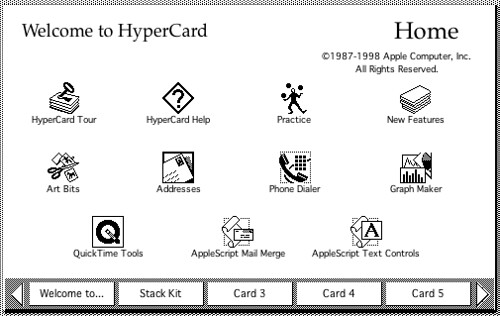
Some of the tools were brilliant ideas but didn’t get widespread adoption. My personal favourite of software in this category would be Apple’s HyperCard. HyperCard was a framework that allowed you to build processes from an address book or digital brochures to mind-blowing experiences and even running factories.
For example, Northwest Airlines managed their entire plane maintenance management programme using HyperCard. Nabisco ran at least one factory using HyperCard as an enterprise resource planning platform.
HyperCard was ‘No Code Tools‘ before the founders of AirTable or Zoho Creator were even born.
Danny Goodman who wrote a lot of the guides to HyperCard, went on to write some of the best books for programming assorted web and mobile technologies from JavaScript to iOS development.
This empowerment extended to many web technologies and web services. Email, forums and chat apps radically changed business and personal networks. It was now easier to access information and expertise. The late 1990s and email saw increased worker collaboration across offices and departments. You saw services like Yahoo! Pipes provided to ‘power-user’ consumer netizens during the Web 2.0 era. RSS newsreaders like Newsblur do a similar job, as do social bookmarking services like pinboard.in.
Modal interfaces and software buttons
When electronic products first moved into the home they had mechanical buttons. Buttons limited functionality, but allowed for the creation of highly intuitive products. Buttons have since been proven to be faster and safer to use automotive applications than touch screens. The use of touch screens being driven as by the car manufacturers marketing department. Logic controls were buttons connected to servos that provided a slimmer finish, a more sophisticated looking product.
Depending on the device they also allowed for the use of software.
But sophistication gave way to confusion as buttons often had to do multiple jobs and use a modal interface. I spent a good deal of my childhood programming my parents video recorders and setting the time on their digital watches and clocks in the home and the car.
Modal interfaces have their place. During my time as a student I worked for MBNA in customer service roles. The modal interface of the CardPac software allowed me to move around a customer record much faster than a point and click ‘windows type’ application. This was particularly important handling stressed customers who have been waiting to speak to a customer services rep in a phone queue.
I would switch into edit mode and quickly tab through fields of data faster than scrolling down and hunting and pecking with a mouse and cursor.
It’s not so much fun if you make one error programming a mid-1980s video cassette recorder and have to go cycle through the rest of the process to go back to the beginning and start again.
You also started to see software defined buttons. This appeared on machine tools and music instruments first. If there was ‘Mac like moment’ for software defined switches, it was the launch of the first commercially successful digital synthesiser: the Yamaha DX-7.
The Yamaha DX7 was so powerful, yet challenging to use – that a veritable cottage industry of books and tutorial videos like the one above. One of the most prominent manual writers was Lorenz Rychner, who wrote guides for various Yamaha electronic instruments as well as later Casio, Kawai, Korg and Roland instruments that was inspired by the Yamaha DX7. Eventually when personal computers became used in music production, Yamaha DX7 editing software appeared as well.
Getting these electronic instruments to work saw a new artist credit appear on albums and singles; that of MIDI programmer. In the 1980s, the audio tools are changing, but experts are required to get the most out of them due to software defined buttons. Apple took this to its natural extreme with a MacBook Pro model that replaced function keys with a touch screen that changes controls based on what software programme is being used at a given time.
Pictures under glass
Technology allowed the entire display surface to become software defined buttons, directly with your fingers. This robbed people of the tactic feedback of a button, knob or lever to create a phenomenon of ‘pictures under glass‘. This changes our relationship between our tools and how we interact with them. It also opened up new ways of interaction.
Swiping and gestures
Korean smartphone manufacturer managed to reduce the kind of gesture tracking that was previously in living rooms with Sony EyeToy series of devices controlling a Sony Playstation of Microsoft Kinect into a smartphone handset.
Pantech’s Vega LTE smartphone allowed control at a distance. This was based on technology from eyeSight to do gesture controls.
Within applications, dating app Tinder created gestures that became ‘common language‘ – to swipe left as in reject an option. But the very gesture of swiping left was part of gamification as the tools are changing from working for us, to us working for them. They are no longer tools of personal liberation in terms of ideas and thinking.
Digital drugs
Captology to captured users
To talk about how tools changed and became items of personal enslavement one has to back to the late 1990s. B.J. Fogg is a combination of media theorist and technologist with a doctorate in communications and heading a behavioural design lab at Stanford University.
The insight that B.J. Fogg had was that with the right design cues, computers could become ‘charismatic’ in nature. They could manipulate behaviour. Professor Fogg converted his doctorate paper into a new discipline that he called ‘captology‘ ( from computers as persuasive techologies). By 2003, Fogg had realised that some of the methods had negative impacts on users. He flagged ethical use to his own students and in his book Persuasive Technology: Using Computers to Change What We Think and Do.
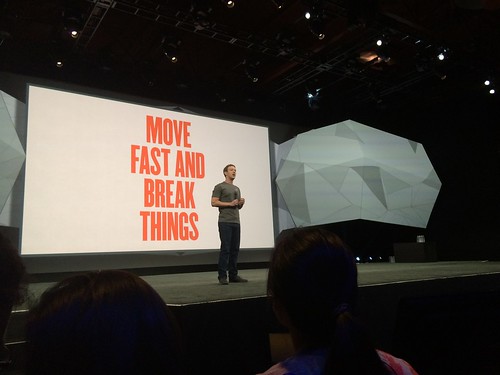
Unfortunately, a number of Fogg’s students and readers took these unethical tactics into Silicon Valley businesses and used them as ‘growth hacks’ for brands as diverse as Tinder (swipe right) and Robinhood the stock trading app that gamified transactions. This was the dark side of ‘move fast and break things’ mentality prevalent in Silicon Valley at the time.
Other’s like Fogg’s student Tristan Harris saw what was happening and were horrified. Harris went on to co-found The Center for Humane Technology – an organisation raising awareness of the problems and holding the organisations to account.
Addiction
What was then termed internet addiction or video gaming addiction was by recognised as an issue by both the World Health Organisation (WHO) and the Chinese government. As far back as 2006, China estimated the number of addicts in its country as numbering 2 million children and young adults.
Psychoactive tools
Modern technology didn’t bring a distortion of reality on their own. Regulation and media owners have a lot to do with it. The origin of the modern ‘filter bubble’ was said to be syndicated talk radio host Rush Limbaugh as media regulations were relaxed. This allowed media eco-systems to be created that catered to left wing or right wing views. There was no longer a common view, which people could hold different opinions over, but ‘the truth’ and ‘alternative facts’
“You’re saying it’s a falsehood, and Sean Spicer, our press secretary, gave alternative facts,”
Kellyanne Conway quoted in The Atlantic magazine
A combination of societal isolation, reductive algorithmic models, bad actors and dark pattern designs leave users more vulnerable in the online world. Machine learning and internet content allow for the creation of an overwhelming amount of content.
Whole worlds can be created. This means that there is no social glue of common experiences. There is no consensus and technology enables the bar bell.
Being boring
So enough about digital drugs. Let’s back to something more boring. In the appropriately titled essay The Future is Boring by Eliane Glaser published by Monocle in its Monocle Companion Volume 2: 50 essays for a brighter future; the author discusses the pointless rituals of techno-capitalism. The reason for these pointless rituals is often that the tools are changing, providing useless digitally mediated services and access that is ultimately unfulfilling in both form and function.
I was reluctant to put fingers to keyboards to type up a blog post about ChatGPT for planning. I didn’t want to be THAT person that turns out personal branding content on the latest fad as narcissistic clickbait. There is also a larger question of is it worth using ChatGPT for planning now that it has moved to a subscription model? Finally, while the next evolution of ChatGPT won’t be launched for a while, it propertied abilities seem to be evolving in certain areas the more people use it. Much of what I will cover in ChatGPT for planning also has an application with Bing’s search chat interface, or services like Notion.
Thinking about ChatGPT for planning, came after colleagues working the design team introduced me to their experimental efforts using Midjourney for image creation. Autumn rolled into winter, and ChatGPT started to become more accessible as a tool for the general public.
What is ChatGPT?
ChatGPT is a class of machine learning platforms known as a large language model. It’s given a huge amount of data and analyses it. It then uses that data to build a probability based model for what might come after a given set of terms. For instance, a user may type:
Tell me about Fenway Park, the baseball stadium in Boston
And it would be highly probable that ChatGPT would talk about how the park is home to the Boston Red Sox major league baseball team because there is so much content out online about the Boston Red Sox and Fenway Park.
In this respect, the mechanism of ChatGPT seems to resemble Bayesian inference based on Bayes theorem in output, if not, mode of action.
Bayes Theorem
Named after the mathematician Thomas Bayes, the theorem describes the probability of an event, based on prior knowledge of conditions that might be related to the event. For example, if the risk of having a car accident is known to decrease with the number of years driving without an accident; Bayes’ theorem allows the risk to an individual based on their prior driving record to be assessed more accurately by conditioning it relative to their driving experience, rather than simply assuming that the individual is typical of the wider population.
Bayesian inference
Bayesian inference is a type of statistical inference where Bayes’ theorem is used to update the probability for a hypothesis as more evidence or information becomes available. It works better with dynamically updatable data (like a user correction).
Clear boundaries in using ChatGPT for planning
I could see some obvious risks in ChatGPT in terms of how it works and in how it presents its responses. But, the more that I have looked into ChatGPT, the more that I saw how it could be useful. But that is contingent on having well-defined immutable guard rails are employed in the use of ChatGPT.
A quick story
This isn’t about using ChatGPT for planning, but using ChatGPT to help a friend out in January this year as they worked on their master’s degree. They were studying law and wanted to write an essay on a particular arcane area of law, doing a comparison between how it is implemented in two countries.
We didn’t ask ChatGPT to write the essay, but used it to recommend academic authors who would have written papers on the areas of investigation, with a view to reading their works and incorporating their thinking as citations.
We got names. Some of them wrote about law, but not the specific area that we asked about. Others didn’t seem to exist at all when we looked them up via academic database tools and Google. ChatGPT’s process had somehow conjured them up.
I would not be surprised if these examples that have been called out are just the tip of the iceberg and others have got away with similar practices largely undetected. Also knowledge workers may be reticent to admit whether, or how much they rely on machine learning based tools. Think about that for a moment…
Watchouts of using ChatGPT for planning
ChatGPT can give you an example in terms of writing style. ChatGPT has been used successfully as a church sermon writing tool as an example. But everything needs to be separately fact checked – trust but verify.
Secondly, ChatGPT can be used to ideate around a theme, in a similar way to using a thesaurus. This could be things like language for messaging, inspiration for search terms or even terms to use in the creation of stimuli for mood boards. Again, I would look to check all of this against a thesaurus as well.
Additional inspiration on using ChatGPT for planning
I was sparked to lead this post based on footage that I watched about a priest in South India with regards a robotic elephant. Robots in religion have taken off in both Shinto and Hindu ceremonies.
Japan
Academics have widely talked about how the Shinto-based belief system have aided Japanese societal acceptance of robots, in comparison to western society. Secondly, Japanese authors have been exploring what it means to be human and what kind of dilemmas and opportunities do robots and AI bring in a future society. Robots in religion are a natural extension of robots in society.
Buddhism leads the way
What’s less commented on is that Japan’s buddhist temples have been leading robots in religion. The reality is that many Japanese see Shinto and Buddhism as complementary in nature and get involved in both beliefs.
Japan has some unique religious challenges that are interlinked. Temples are struggling as less people are active in their religious practice, the factors for this decline is multi-factorial in nature.
A second challenge that as the population shrinks roles need to be automated. What started in factories is now impacting the food and beverage sector (vending machines and restaurant robo-serving staff), so it was only a matter of time that robots in religion would supplement the clergy.
India
In India robots in religion is about kindness and de-risking religious ceremonies. In South India elephants take part in religious ceremonies. However the conditions that elephants are kept in can be cruel in nature and even result in death. Secondly, elephants can unintentionally kill or injure people involved in a religious celebration. This report on NHK World shows how robots in religion have been adapted to Hindu needs.
Finally, the elephant robot is used in celebrations over a large geographic area and is easily transported around. Robots in religion are likely to make even more sense as India urbanises even further, as the benefits are amplified in the denser environment.
How confucianism, communism (in particular Stalin’s take on Leninism) and an accident of history has led to the nationalistic, fragile, insecure Chinese state with imperial ambitions we know today.
China’s ‘trinket town’ at heart of push for renminbi trade | Financial Times – Yiwu was one of the first cities in China to allow individual merchants to settle larger cross-border deals in renminbi. Most cities have an annual cap of $50,000. Given Yiwu’s reputation for cheap goods and flexible terms, helped by the fact that wholesalers do not pay either corporate tax or market rent, exporters have sufficient bargaining power to request settlement in renminbi. “When you have only one place to go to purchase something, the seller sets the terms on how transactions are settled,” said James Wu, a Yiwu-based furniture exporter who began demanding renminbi payments from Middle Eastern clients last year – the last quote is a great example of
Interesting video from NHK World on how temples are adapting to a lack of new attendees and priests. I am not sure whether this is down to demographic change or the secularisation of society
A Pokémon-Card Crime Spree Jolts Japan – WSJ – Japan has been staggered by a Pokémon crime spree. Stores are now paying for banklike security to ward off villains who go to extraordinary lengths, even rappelling down the side of buildings, to plunder Pokémon. Hosaka was working in senior care when he had the idea of opening a cozy card shop in the suburb of Machida where customers could mingle at tables. Instead, he says, the little cards, “have become like Rolex watches, gold, silver, platinum or used cars.” – It makes sense when you think of the cards being ‘real life NFTs’
Criminal Rolex Gangs and Traveling with Watches, Part I – WOE – crime affecting luxury consumption. Interesting that London is a crime centre is prominently name checked alongside Johannesburg, South Africa. This will impact luxury retailers, luxury travel and hospitality and auction houses
Luxury
Bay Area Lawsuit Alleges Man Spent $220,000 To Get A Watch He Never Got – there’s also the added complexity of Shreve recently losing its status as a Patek AD. The lawsuit brings some ten causes of action against Shreve, including breach of contract, intentional and negligent misrepresentation, fraudulent concealment, false promise, and unfair business practices, pursuant to California’s Unfair Competition Law – this was only a matter of time. Its the same in the UK
Ad agencies and clients clash: tension over transparency in fees, services | Ad Age – a talent shortage has left agencies without enough senior executives to service accounts. Combined, such factors contribute to what marketers see as an increasing lack of transparency. One executive who leads procurement across marketing and content for a major consumer goods company said the discounts and rebates that media agencies, in particular, get from a media buy have always been “murky,” but one area agencies have always been transparent in is breaking down their fees. The brand executive said auditors, working on behalf of the marketers, have previously been able to get agencies to disclose their margins, overheads and salaries without protest—it’s standard practice and allows clients to know they are being charged a fair price. But that’s starting to change, they said, having run into issues with getting shops to break down their fees in the recent agency review their company underwent
Media
This Year Next Year: 2023 Global Mid-Year Forecast – GroupM – calls the end of radio’s global growth story. Even taking into account streaming, WPP says that, globally, ad-supported audio has peaked. It will grow just 0.3% this year, says GroupM then “remain roughly flat over the next five years”. It’s about to join newspapers, magazines and broadcast television in a downward trajectory. GroupM also tackles the impact of AI on the industry. It reckons that within five years, the portion of “AI-enabled” advertising revenue globally will be worth $800bn. What is impossible to quantify is whether any of that is new money. Most likely, none of it. What is also impossible to quantify is just how dramatic the AI-driven reductions in cost of production will be. That sounds a relatively benign question until one realises that all those reduced costs are human jobs. GroupM identifies five key themes: Regulation (particularly around data privacy); connected TV (and an annualised 10%+ growth in the segment)’; AI “is likely to inform, or touch in some way, at least half of all advertising revenue by the end of 2023”; retail media to overtake TV by 2028; and “new business growth” (which sounds like the sort of thing an agency person would put in their predictions). Most importantly though, the GroupM outlook points to a more more significant factor. We’re at the end of a cycle that was defined by shifts between advertising channels, and then the disruption of Covid. “We are at an inflection point where the secular drivers of advertising growth above and beyond GDP growth are maturing, the pandemic upheaval is receding and the dynamic rise of digital advertising has slowed. This is the basis of our underlying forecast of mid-single-digit advertising growth over the next five years. However, the pervasive impact of AI on the world of advertising could change that.”
AI at Work: What People Are Saying | BCG – leaders love it, workers don’t. Businesses have only addressed the needs of leaders, which probably dialled up the anxiety with a sense that AI is something that happens to you and your career rather like a bad car accident
Beeper — All your chats in one app. Yes, really. – clients like Adium became less useful as Google and other services went away from common protocols and the IM giants AOL, MSN and Yahoo! disappeared. Beeper are trying to address this
The Threat of Decivilisation | Quillette – President Macron when having a Chatham House type discussion with sociology experts used the phrase processus de décivilisation – as a descriptor for the widespread civil and political unrest that has rocked France.
Rishi Sunak and Emmanuel Macron
On the face of it, decivilisation is an appropriate term if Macron believed that there was something rotten at the centre of French society. But the phrase decivilisation is problematic and Macron has been capitalised by French on the political left.
Renaud Camus
The crux of the left’s criticism is a work by the author Renaud Camus. Camus became famous writing a book called Tricks about a series of up to 45 stories (depending which edition you read) about one-night stands he had travelling around the world as a gay man in the late 1970s. Decades later Camus became more famous for his contributions to ideas of the far right, notably the great replacement concept in reaction to increased immigration in France from former French colonies. While these works were published in French they were summarised for English readers in his book You Will Not Replace Us!
In his works he describes the gradual takeover of France as decivilisation.
The left
The left drew a line between Camus work and Macron’s phrase and assumed that it was a way to build a bridge to the resurgent far right in France.
The reality is more complex. The degree of change in French society has driven backlashes in French society, in a similar way that Brexit and small boat immigration did in the UK. The problem for the left is that these reactionaries would have been natural constituents of the left. The left, like in many countries, instead has pivoted to degree educated urban dwellers, abandoning the workers to the far right.
Is French society really breaking down?
It’s hard to tell whether ‘decivilisation’ is really happening. Civil disturbances tend to happen during times of economic unrest and in the past has been a reset. There is a body of opinion who believe that social media has its thumb on the scales, driving things harder and faster without a countervailing force to help balance things out over time, like happened in previous decades.
Japan Rail Companies Limit Train Passes Due to Chip Shortage – these stored value cards also allow consumers to buy things in combinis as well as travel. They are similar to Hong Kong’s Octopus cards. What’s happening to the chips through? Japanese YouTubers have published advisory videos around the debacle for tourists to Japan. It seems to be a drive towards registration as much as anything else
Cigars are still a thing. This looks like a feature length video produced in conjunction between the YouTuber and a cigar manufacturer.
Marketing
Multi-factored reasons in nature why campaigns seem to be working less well. We know that as campaigns have become more digital, campaigns have been less effective and marketers being less confident in their campaigns. Interesting the way brand building on digital is danced around. The channels often dont work and measures are BS only a technologist would love.