Category: london | 倫敦 | 런던 | ロンドン

Why London?

First of all I live in London, I put down my roots here because of work. Commuting from the outside towns into the city takes a long time. People only tend to do that when they don’t have to come in every day or getting their kids into a good school is important for them.

Secondly it is an area distinct from the rest of the UK, this is partly down to history and the current economic reality. It is distinct in terms of population make-up and economic opportunity. London has a culture that is distinct from the rest of the UK, partly due to its population make-up. Over 30 percent of the city’s inhabitants were born in another country. From music to fashion, its like a different country:

  • As one women’s clothing retailer once said on a news interview ‘The further north you go; the more skin you see’.
  • The weekend is a huge thing outside the city. By comparison, it isn’t the big deal in London. The reason was that there were things you could enjoy every night of the week.
  • You can get a good cup of coffee
  • The city was using cashless payments way before it became universal elsewhere in the country
  • The line has extended into politics. London opposed Brexit. London, like other major cities it is one of the last holdouts of Labour party support in the 2019 UK general election

London posts often appear in other categories, as it fulfils multiple categories.

If there are London subjects that you think would fit with this blog, feel free to let me know by leaving a comment in the ‘Get in touch’ section of this blog here.

  • An odyssey to get online

    I have gone through a number of journeys to get online. This year I will have been connected to the internet for 20 years. I actually had email even longer. Back in 1994, I was working on a temporary contact at a company called Optical Fibres – a collaboration between Corning and UK cable maker BICC. Even back then there was price pressure on optical fibre as globalisation kicked in, less than a decade later where I worked is now a greenfield site, half of which is included in the space for expansion of a Toyota engine factory.

    I had an email address that was a number.
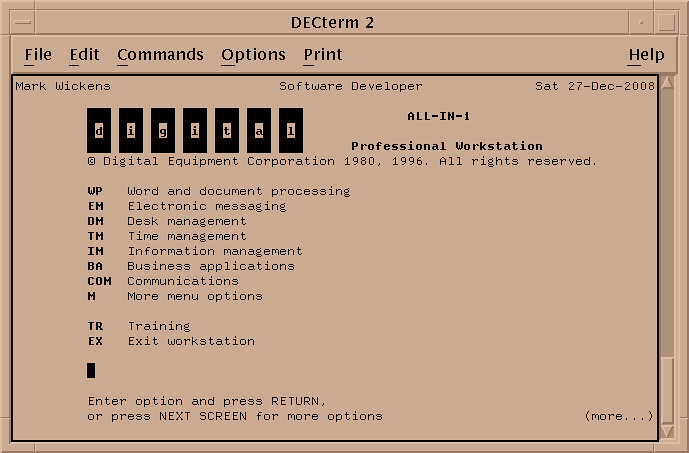
    DEC ALL-IN-1
    It was attached to a DEC VAX ALL-IN-1 productivity suite account. I was able in theory to email anyone who worked at Corning sites around the world. But email was my only form of being able to get online..

    While ALL-IN-1 was able to support external (pre-internet) email networks like CompuServe, I only dealt with people internally. It was a step up from having to check the pinboards in communal areas and the sporadic internal mailroom deliveries.

    Having managed to get online, I sent my first spam email, when I tried to offload some Marks and Spencers vouchers that I had been given on to my colleagues, but that’s a story for another time.

    In September that year I went back to school, this time to university. Computer labs had changed a bit in five years or so since I left secondary education. The computers were on an ethernet local area network, this local network was connected to the nascent internet.

    I had an email address with a ‘@hud.ac.uk’ domain, but my name was still a number. My teachers didn’t use email as part of their teaching process then and you couldn’t submit your work via email. Email was a POP3 format. Given that it saved emails on the machine I spent an inordinate amount of time getting my own computer up for running on the college facilities against the rules.

    It involved a mix of software and hardware kludges, since I had to make use of the AppleTalk port on the laptop to somehow connect to the ethernet network at college.

    Internet access at college was quite liberating. I was able to do online research and cite online articles. I kept in touch with a couple of friends at college and university from home who also had email at the time: for free.

    I got a Yahoo! email address during my last year of college so that I had something which would last me beyond graduation.

    My year after graduation was largely lacking in connectivity. I hunted around for an cyber cafe which were starting to crop up around the place. I eventually found one around the corner from James Street station which I used to go to with my friend Andy on a Saturday. I would bring a floppy disk with my CV on to reply to a series of job ads from The Guardian, PR Week and Campaign. I showed Andy how to use Netscape during this time.

    The cafe atmosphere and dedication to good coffee was reminiscent of independent cafes today in London, I remember seeing a couple of multimedia art exhibits there occasionally – this was back when Flash was bleeding edge and promised a whole new world of visual stimulation.

    A move to London meant around the clock access to the net through work. I lived in a house of five Serbs and no phone line and smartphones were HP personal organisers that allowed you to clip a Nokia 2110 on the back or an infra red connection between an Ericsson SH-888 phone and a laptop or early PalmPilot device.

    I built up a collection of early house music sets encoded in Real Media files from an FTP site in Chicago hosted by the people who ran what become Deephousepage. At the time they used a faculty account at the University of Wisconsin-Madison, which would have provided high quality free hosting.

    A lot of this material was legendary to me, only a small amount of it made it on cassettes as far as Liverpool in the late 1980s. 1980s Chicago was as distant to me as the Northern Soul scene in Wigan some 20 years previously.  My FTP client would run at work during the weekend, I would bring in a CD-R and get it burnt down during the week. I also did the same for the latest software that I used on my Mac.

    After 18 months of shared housing, I bought my own place to the north of London in the Home Counties, nothing fancy, but it was my own space and I could finally have a phone line. At this time, Freeserve was offering fixed price connectivity dialling into a free phone 0800 number. And I had my first email account at home.

    I had a Palm Vx PDA which allowed me to sync web content on to the device and read it on the way home .

    I moved job, wasn’t that keen on it and started to think about what was next and getting ready to potentially go freelancing.
    Jaguar
    The economy went into dot.com freefall and I finally upgraded my computer to a second generation iBook. I then upgraded that machine to OS X and the new operating system highlighted to me the need to go and start using internet broadband. Freeserve was my first choice of DSL provider, simply because it was easy to upgrade from my dial up connection.

    The internet suddenly started to become much more useful. Yahoo! Messenger and email kept me connected to my London-based friends when I walked out of the agency role I had into the world of freelancing.

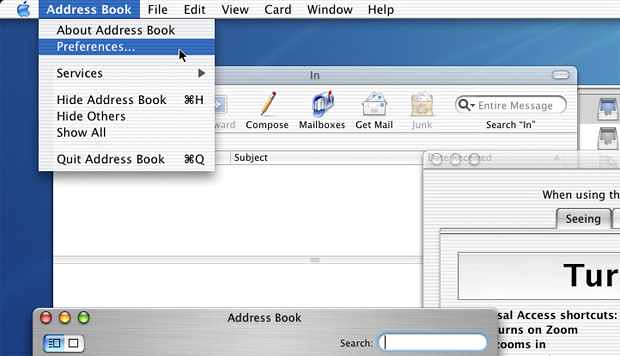
    Around this time, I got my first smartphone, a Nokia 6600. I had tried using my Nokia 6310i phone as a wireless modem for my Palm PDA but it was a painful process. What moved things forward was the IMAP email account I got as part of Apple iTools. IMAP allows email to be synched across different devices.

    This was all still done over GPRS and later EDGE. 3G services were limited, crippled and the network reception was awful – truth be told it still is in many places. Truth be known things have improved incrementally.

    I went through a succession of Palm Treo and Nokia Symbian smartphones until finally moving to the iPhone. The killer application was an address book that just worked rather than corrupting my data or bricking the handset.

    Whilst the first five years I saw big changes in my wired netizen status, over the past five years my connectivity has changed little if at all. The key change being an iPad at home as an additional mode of access. I still use DSL, mobile internet which is patchy and upgraded equipment around the same essential paradigms. More online related content here.

    More information

    Quick History of ALL-IN-1 | Email Museum

  • That Jeremy Clarkson post (or lies, damn lies and sentiment analysis)

    It isn’t often that my thoughts turn to Jeremy Clarkson. This is mainly because being a car-less resident of London (and late of Hong Kong); I don’t really have much reason to pay attention to Top Gear. Secondly, there is only one Stig and that’s my childhood sporting hero – rally driver (and probably Sweden’s fastest pensioner) Stig Blomqvist.
    Stig Blomqvist - Lada VFTS 1600cc
    But I couldn’t avoid the fracas when it exploded as a story across the media.

    I was particularly struck by PR Week’s coverage of the story: Jeremy Clarkson’s popularity on social media plummets after BBC ‘fracas’. Yeah, right! The problem with stories like this is about how you slice the data and interpret it.

    Social media conversation as a mode of popular measure

    The very nature of a conversation is the ebb-and-flow. Mr Clarkson would need to be more worried if he no longer was a topic of conversation as it would indicate that his celebrity had run its course. If everyone was unified in agreement when the volume of conversation would be lower, but it doesn’t necessarily measure popularity, but polarity of sentiment.

    Sentiment analysis

    Sentiment analysis is worthy of a post in of itself. Machine sentiment analysis is generally no more than 65% accurate. That sounds pretty good until you see the results. When done properly it is usually supplemented by manual analysis, to pick up on colloquial language, sarcasm or complex sentence construction – all of which can fool the smartest systems. So any argument built on sentiment as a key indicator is built on a foundation of sand.

    Social following

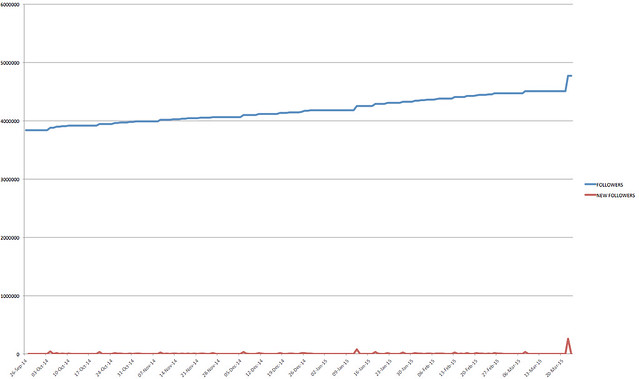
    If we look at the amount of followers on Jeremy Clarkson’s Twitter account using social media monitoring tool Sysomos MAP; we see numbers that suggest his popularity on social has surged rather than declined as he became embroiled in controversy.
    clarkson
    The story we are actually seeing is a polarisation of opinion with detractors becoming increasingly vocal and fans becoming firmer in their support. As a brand marketer, having a client that stands for something is the jumping off point for great creative. You are not constrained by having to please everyone and so great marketing can happen:

    • Red Bull – Gives You Wings
    • Hooters – Delightfully tacky, yet unrefined
    • Mid-1980s – 90s Guinness – Pure Genius
    • Audi – Vorsprung durch Technik

    At the moment, Jeremy Clarkson probably doesn’t have a lot to worry about in terms of his social popularity; so long as the lawyers don’t get too involved his popularity is likely to sustain him in media work of some sort for a while yet. More online related content here.

    More information
    Jeremy Clarkson’s popularity on social media plummets after BBC ‘fracas’ | PR Week
    Stig Blomqvist

  • Dreadzone at Under The Bridge, Stamford Bridge

    It has become a tradition that my friend Simon and I meet up to catch Dreadzone on their annual tour last Friday. Simon had come in from Saudi Arabia so its a pretty big deal for us. This was the first time I had been to a gig at Under The Bridge. The space is a purpose-built live venue under the stadium where Chelsea play.
    Dreadzone at Under The Bridge, Stamford Bridge

    It is the most comfortable venue that I have been to. Molton Brown products in the toilet, spotless facilities, comfortable seats and a stand-up area in front of the stage. There are screens all around the venue to allow you to follow the gig and a great sound system.

    Dreadzone put on a great gig, lower energy then previous gigs I had seen them at, but still a great performance. The location of the venue brought out a really mixed audience. Friends and family of the band, long-time Dreadzone fans, middle class professionals with fading celtic tattoos, elderly punks and older mods. I suspect that there were some locals as well, nice young things who looked rah.

    The gig seemed to be supporting the reissue of Dreadzone’s album Sound, which is due to be repressed on vinyl. It is interesting that Sound isn’t snared up with a record label. I presume that the band own the masters and are consequently in control of their own releases. Sound was released in 2001, six years after their breakthrough album Second Light. It is designed more as a record to be taken as its whole, rather than a series of more accessible songs. Different genres flow through the album and it works as a live playlist. Although they did make sure to put in some crowd pleasers as well. More events here.

  • Swytch & others at Mobile Monday demo night

    I just got back from Mobile Monday’s demo night ran at the Thistle Marble Arch featuring Swytch, Quiztix, Mylo, Viewmaker, Pronto and Adsy. This evening’s event used the facilities of an Informa-ran telecoms conference: Service Delivery Innovation Summit. I missed the start of the event so my notes probably miss part of the applications on display.

    Swytch – multiple mobile numbers on an application, these numbers could be different country codes and not only allowed calls but messages too. The Swytch application is basically a VoIP client rather than a soft SIM. There are other similar services especially in Africa, at the moment the founders think that their USP is the provision of access multiple UK mobile numbers, but I am not sure Swytch is  defensible. I don’t want to even go there with potential use cases

    Quiztix – Q&A game on both Android and iOS, because of its focus on venues as a metaphor for different game levels a couple of people were interested in reskinning it for brands. The most interesting thing for me was the way that they used advertisements to level-up within the game – increasing ad engagement.

    Mylo – was a classic millenial application that helped facilitate splitting bills in house share. The application collects billing data from suppliers including Sky. Ovo Energy. Payment of one’s share could be done by PayPal. They admitted that at the moment they had no business model.

    ViewMaker – location-enabled AR application that allowed a user to show & publish geotagged content. The business focus was to be infrastructure for other application or brands who wanted to publish their own data. They didn’t currently have a plan to overlay information from other sources such as Foursquare, Flickr or Google Maps at moment. One thing surprised me in the Q&A session was that clients not interested in indoor positioning yet.

    Pronto – A Deliverance-type food service with some key differences. Instead of it being a web interface, Pronto relies on GPS for location. Secondly they have a really simple menu, in order to allow two-second ordering and swifter delivery. The menu doesn’t change very often which is great if you are an ‘eat to live’ person. The application recently launched in Italy and is coming to London soon. Apparently a reliable set of delivery drivers is a problem because of the piece rate / zero-hour contract nature of the work they aren’t necessarily as reliable to showing up as one would like.

    Adsy  is mobile or PC platform to create mobile applications that reminded me of a  simple HyperCard set – but no scripting for fuller functinoality. They are handy for building catalogues, or a card-based personal site and can be embedded like a Slideshare or YouTube clip.  It was deliberately kept simple and non-technical to appeal to teens – which was interesting given that most CMOs think of teens as master hackers…

    IFS – IFS has its own innovation lab and they demonstrated a working prototype of wearables driving business efficiencies – business notifications to wearables, logistics etc from ERP system. Think of a smart watch as a pager. I think that most of the interesting aspects of this was the connectivity with the legacy systems. Given the current lack of compelling use cases for smart watches this could be interesting due to the provision of glance-able data.

    OpenTRV – TRV is a thermostatic radiator valve. They wished to use technology to control temperature localised within a house radiator by radiator. The current model by the likes of Nest or Honeywell relying on one centralised thermostat per house controlling a boiler was considered to be a broken model. They are aiming to lower the cost of their smart TRV 10 pounds per unit.

    More wireless related content here.

  • Londons property boom & more news

    Londons property boom

    It’s hard to put the scale of London’s property boom into words, so here are some charts | Quartz – looking at these numbers makes me feel really uneasy. Londons property boom has been fuelled by external money and a massive increase in population. There are quality of life issues that won’t deter the absentee owners of Londons property boom; but will deter key staff. Then there is the distortion of the UK economy caused by Londons property boom.

    Design

    Jellyfish Tank Installation Opens After Store Hours – PSFK – this is so cool, I like the mix of forms. It’s like something out of a William Gibson novel

    Innovation

    StarHub encourages locals to donate unused talk time | Marketing Interactive – making a virtue out of the evils of telecoms bundling

    Marketing

    Are your Western Marketing Strategies Failing to Understand the Chinese Consumer? | LinkedIn – a lot of the time, yes

    Media

    Trust in Sponsored Content Runs Low | Marketing Charts – there are any number of reasons that this result could have occurred through poor survey design, however if it is true marketers, professional and amateur ‘media brands’ need to revise the way they do sponsored content to be more relevant and less salesy

    For Taylor Swift, the Future of Music Is a Love Story – WSJ There are a few things I have witnessed becoming obsolete in the past few years, the first being autographs. I haven’t been asked for an autograph since the invention of the iPhone with a front-facing camera. The only memento “kids these days” want is a selfie. It’s part of the new currency, which seems to be “how many followers you have on Instagram.” 

    Fan Power 
    A friend of mine, who is an actress, told me that when the casting for her recent movie came down to two actresses, the casting director chose the actress with more Twitter followers. I see this becoming a trend in the music industry. – This then begs the question what would a record label bring to the table for an artist?

    Online

    A Chinese internet giant has an app to help students cheat on their homework | Quartz – firstly is this cheating when we live in an internet enabled age and the collaborative aspect is a handy contrast to an education system that teaches kids by rote. Secondly it seems like a great way for Baidu to burnish its knowledge search credentials. Lastly what a great potential platform for ad targeting little emperors and empresses

    Your Selfie Idea Is Not Original. It’s shit. – Tumblr account says it so you don’t have to

    Tencent’s WeChat offers personalized, real-world postcards in diversifying move | Shanghai Daily – interesting the ways in which Tencent is experimenting with integrating online and offline through baby steps

    Just Like Facebook, Twitter’s New Impression Stats Suggest Few Followers See What’s Tweeted (Danny Sullivan/Marketing Land) – not terribly surprising given the stream of content

    Retailing

    Retail review: J. Crew | SCMP.com – interesting issue around retail planning (paywall). More related content here.

    Web of no web

    Samsung, Nest, ARM and others say Smart homes need more than WiFi and Bluetooth, propose Thread IP6 mesh network | 9to5Google – interesting to see how this fits with ZigBee low-power Bluetooth etc.

    Wireless

    China Mobile to quit WiFi rollout | The Register – didn’t make money