Blog

  • The Jony Ive post

    Looking back on the career of Jony Ive, its hard to believe where the company came from. When Steve Jobs returned to Apple he picked through much of Apple and didn’t like what he saw. He did see something in Jonathan Ive and the small cadre of product designers left at Apple.
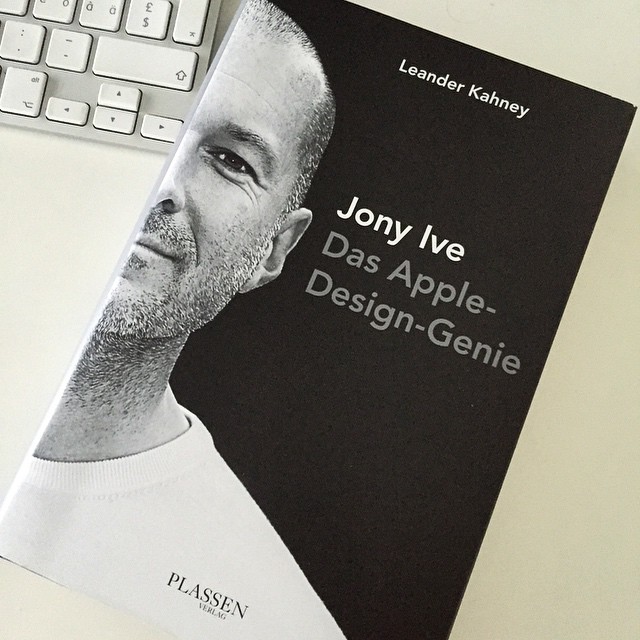
    Meine neue Bettlektüre. Jony Ive.

    Ive’s moving on from Apple some 27 years after he joined is a long innings. During that time Apple went from having a near death experience as a computer maker to selling luxury goods.

    Whilst Ive is one of the world’s best known product designers; he has had his fair share of failed products.

    • The Apple Cube
    • The Newton MessagePad 110

    I consider Ive’s body fo work as head of design at Apple to break down into three periods:

    The Candy Age

    ‘The Candy Age’ was about putting fun back into computers like the iMac. It was a break from Apple’s previous pseudo corporate product design such as the platinum or ‘Snow White’ design language. Around this time you had big organic forms that CAD and tough polycarbonate plastics made possible. From Silicon Graphics Octane and O2 workstations to retro styled Smeg fridges; fun was in.

    The Jony Ive led design team took the transparent prototypes that were usually used to see how products go together and look for things like pinched cables into production. This made a virtue of the innards.

    This provided clear differentiation between Apple and beige box PCs whilst still providing out of the box functionality of an internet appliance. It was this mix of timing and plug-and-play functionality that drove iMac and iBook sales as much as product design.

    This was when Apple started to move from being a ‘weird’ platform to a cool platform.

    Speaking of cool, Jobs pushed both the engineering and design team to keep the amount of cool fans in the devices to a minimum to reduce device noise.

    Pseudo Bauhaus

    Apple started to go from coloured translucent polycarbonate to white polycarbonate and metal. You see this in the second iteration of the iBook which went from looking like a funky toilet seat to a a clean white laptop design. The last generation PowerBooks and early MacBooks in aluminium alloys where a premium version. It gave use the iconic iPod earphones and the early iPod classic designs.

    There was a move to recto-linear shapes and details that were a nod to Dieter Rams work at Braun. During this time Ive was interviewed for the documentary Objectified and specifically stated that their products looked to embrace Rams’ ten rules of good design.

    Size Zero

    Apple was obsessed with size. There is an apocryphal story about Steve Jobs dropping a prototype iPod into a fish tank. He noticed that air bubbles came out of the case. Jobs jumped on this as proof that there was wasted internal space. What this story missed is the emphasis Jobs put on thermal performance.

    Motorola came out with two products in 2004 and 2005. One was the PEBL. The phone was rounded and smooth like a pebble – a tactile pleasure. The second was the RAZR, a phone that was broad and really thin for a feature phone. The RAZR was the more successful.

    We know that Jobs used the RAZR, he pulled his phone out on stage. You can see the influence of the RAZR in slim devices like the iPhone, the MacBook Air and the iPad.

    If Apple couldn’t make it thin, they made it small. That’s the reason why Apple went with the ‘waste paper bin’ Mac Book Pro. Being circular also cut interconnect distances in theory.

    The problem with size zero is that Apple designed itself into a corner:

    • Thermal management became an issue. As I write this my MacBook Pro is blowing up a hurricane. Apple’s Mac Pro line had to be redesigned from the ground up because the ‘waste paper basket’ design couldn’t handle the heat dissipation required for major machines
    • Minimalism to the point of commodisation. Because Ive reduced the phone down to resembling a thick sheet of class, it meant that differentiation through industrial design didn’t matter. Hence why its really hard to tell one phone from another
    • Environmental impact and repairability. Apple has to use special robots to disassemble iPhones for recycling. Apple AirPods are unrepairable and professional grade laptops can’t be upgraded post-purchase. On the MacBook Pro you have ultra slim keyboard keys that are intolerant of use

    Jony Ive leaves a mixed legacy behind at Apple. His departure gives the design team an opportunity to push the reset button and come up with a new design language for products moving forwards.


  • Chinas booming streetwear scene + more

    Inside Chinas booming streetwear scene – Inkstone – great video on Chinas booming streetwear scene that’s morphing into someithing very different

    Tesco Is Said to Work With Israel’s Trigo on Cashierless Stores – Bloomberg – if Chinese cashier less stores experience is anything to go by, this might not be a good idea

    ‘Adapt or die’ – Martin Sorrell’s message to ‘Pavlovian’ ad industry holding companies – Mumbrella AsiaS4 Capital’s low overheads and a cheaper wage bill due to the average employee age being 25 at Mightyhive – the programmatic firm – and 33 at MediaMonks, the production house, meant it could deliver greater bang for the buck than the networks – so its not a smart marketing play but a manpower cost play? We’re better run because we employ cheaper staff? Sorrell gets made to look like a chump in this article; I’d also suggest that he does his homework looking at effectiveness and creativity more closely

    Opinion | A Major Police Body Cam Company Just Banned Facial Recognition – The New York Times – interesting move by Axon. The US seems to be doing to facial recognition what the EU did to online data with GDPR

    FCB parts with Nivea amid rising tensions, including allegations of homophobic remark | AdAgeclient reported said ‘we don’t do gay’ on agency call. That’s being leaked from FCB staff or freelancers

    Crazy/Genius: Are Influencers Frauds or the Future? – The Atlantic – the dystopian age of whuffie capitalism

    Nike Withdraws Products After Brand Partner Vexed China for Supporting HK | Jing Daily – Nike and the bullshit of brand purpose, especially when you contrast this to the Colin Kapernick campaign. When sales are lacklustre principles go to shit

    Huawei Personnel Worked With China Military on Research Projects – Bloomberg – looks like a mix of internal security work (analysing emotions in online video content, and external security on collecting and analysing satellite images and where 2.0 data. One also has to remember that Qualcomm has got a heavy national security background in the US. Given the current situation this news couldn’t have landed at a worse time for Huawei.

    Naomi Wu has an interesting discussion on professionalism versus engagement to maximise pay off on video. You need to have 2 million+ viewers to make the transition from 1080P to 4K worthwhile

    Carrefour sells 80% of China grocery business — Quartz – surprised they didn’t use China to jump start experience on e-commerce so they could take Amazon on in the home market. Talk about a missed opportunity

    China’s millennials are mourning the end of an era in online hook-up culture | Quartz – really interesting, given how early marketers like China Merchants Bank used drift bottle for its CSR programme. Its also unsurprising given China’s tightening grip on media distribution

  • BMW NEXTGen & things that made the week

    BMW NEXTGen event included a concept car the BMW Vision M Next. What I found most interesting about this is how BMW whilst looking forward with the i8 and the M Next; is still stuck with designs resembling the Giorgetto Giugiaro designed M1(E26) of the late 1970s. Don’t get me wrong, when I was a pre-teen my ideal car would have looked like the BASF sponsored M1 track car with the spiral paint work. It would have been nextgen for my pre-teen self, in the same way that the future also looked like a Star Trek communicator. Though our current smartphones would look nextgen to the original Star Trek set and prop designers.

    BMW M1 écurie BASF série PROCAR 1980

    Here’s what the M Next looks like (© Copyright BMW AG, München, Deutschland.)

    BMW M Next courtesy of BMW

    Which raise an interesting question. From a branding perspective does iconic legacy design make it harder to draw a line under one technology as you transition to another? We have various bias’ in our expectations, some of which BMW have tried to challenge with the sonic experience in their cars. I’d argue that they need to think about this outside the vehicles as well. From a safety perspective and because part of driving a BMW is being ‘seen’ to drive the marque.

    I think that there’s still work to be done by BMW and other manufacturers on getting their arms about the future of performance from a brand perspective, for a post-ICE (internal combustion engine) age.

    Abacus (a tech media publication from the South China Morning Post) has channeled the Pixel Boys to come up with a way of trying to make the Chinese tech sector make sense to foreigners. China Tech City | Abacus is well worth checking out.

    In an era when there is a chance that Jeremy Corbin could be a prime minster in waiting should a general election come along, And I speak with people who profess to be MacBook totting communists. I am surprised that Marxman haven’t seen a resurgence in popularity. I randomly came across this great interview of them by a French TV programme around about the time their first album broke.

    Hong Kong’s leaderless movement against the Chinese extradition law (or their CIA paymasters if you believe the Chinese government) have been doing some really nice creative to rally internal and international audiences to their cause. There were print ads that ran in the newspapers of many G20 countries and video content. Taking the politics to one side for a moment, just look at the craft in this video. At the time I have written this has been dubbed into:

    • Taiwanese variant of Chinese
    • Dutch
    • English
    • French
    • German
    • Bahasa Indonesia
    • Italian
    • Japanese
    • Nepali
    • Norwegian
    • Spanish
    • Swedish
    • Tagalog

    It makes Led By Donkeys look a poor effort in comparison.

    Bubble tea shops are opening around London outside of the usual China town locations. It’s success is in a sharp contrast to the likes of Jamies and Patisserie Valerie chains recent closures. Bubble tea actually came out of Taiwan in the late 1980s and London has been way behind in adopting the drink. Asian Boss tracked down the Taiwanese inventor of bubble tea Lin Hsiu Hui (of Chun Shui Tang) and the interview is great.

  • Flickr best social network experience + more

    Flickr best social network experience going / Boing Boing – I believe that flickr best social network experience at present, but I am not blind to the communities flaws

    An Oral History of Oakleys, the Most Badass Sunglasses of the 1990s | MEL Magazine – or how Luxottica made a great brand merely good. More related content here.

    The Ad Contrarian: The Stupidity Of Ignoring Older People | Ad Contrarian – interesting, it used to be that half the lifetime spend was done before the age of 35. Given that most marketing is short term programmes marketing to older people as well makes sense

    China Counterfeiters’ Hot Product in 2019? Peppa Pig Couture | Jing Daily – interesting China’s fake clothing people have been cranking out snide Peppa Pig wear; including dreaming up Burberry, Chanel, Louis Vuitton, Off-White and Givenchy collaborations that haven’t happened! It’s wonderful and subversive at the same time

    They welcomed a robot into their family, now they’re mourning its death – The VergeWilliams understands that companies have bottom lines and that gadgets come and go, but Jibo was also designed to appeal to children, and those kids are now learning what it means to own a robot and have no control over its fate – pretty dark stuff. It sounds like the product succeeded with customers but was too pricey for what was required – A couple of things here; it wasn’t that long ago that we thought Japanese people were odd for having Shinto funeral ceremonies for their dead Aibos. Now we see similar behaviour playing out for Jibo. Secondly, unlike the first Aibo, Jibo is essentially a cloud personality, which begs the question when’s the move towards device based AI etc coming back as seeing your kids cry is too much?

    Dolce & Gabbana’s Expanded Sizing “Proves They’re Really about Selling Clothing,” Not Just Leveraging it — The Fashion LawDolce & Gabbana has announced that it will increase its sizing to include garments that will range up to size 54 in Italy, the approximate equivalent of a stateside size 18? You bet it is. The move by the Milan-based brand to extend its sizing – which went into force with its currently available pre-fall collection – “makes it one of the most inclusive designer brands for women,” according to The Independent’s Olivia Petter, a far cry from most high fashion brands, which Fashionista’s deputy editor Tyler McCall says “stop much closer to a size 10 [or] below that even.” – I think its a smart move given their problems in China

    The crisis in creative effectiveness | WARCThere has been a serious declining trend in the effectiveness of creatively awarded campaigns over the last ten years. The most recent IPA/WARC Rankings data, explored in the new Crisis of Creative Effectiveness report, confirms this continuing decline; creatively awarded campaigns are now less effective than they have ever been in the entire 24-year run of data and are now no more effective than non-awarded campaigns. We have arrived in an era where award-winning creativity typically brings little or no effectiveness advantage.

    Top 1000 Brands | Intelligence | Campaign Asia – for China

    Study Shows Big Rise in Teen Vaping This Year – The New York Times and Juul faces House investigation over teen e-cigarette use – this is going to get regulated sooner rather than later and the whole Philip Morris International ‘dialogue’ campaign is going to leave some creative agencies holding the reputation equivalent of a live hand grenade

  • Mercedes 300D & things that made last week

    This video on the 1970s and 1980s Mercedes 300D is instructive in terms of the amount of work that was put into industrial design. What would now be called user experience in a more digital world. The Mercedes 300D was a workhorse of European taxi fleets during the 1970s and 1980s. They became a popular car in the developing world because they were so robust and there are still vintage car owners now who love them because of their design and engineering. When I close my eyes and think of Mercedes, this is the era that encapsulated the essence of Mercedes for me.

    Japan had a culture of non-fiction informational manga as well as the stuff that we’re used to seeing in the west. I’d not seen it done in anime before but ti works really well. Here is a short film made by the people that brought you Sailor Moon in the mid 1970s. It explains some of the incidents that form the base of UFO sightings and subsequent UFO conspiracy theories popular during the cold war.

    https://youtu.be/5k0Yz-iVxdY

    The social side of online computer games. Gaming like chat rooms and social before it brings together like-minded people. My cousin moved to Canada but keeps up with friends from college and home in Ireland over online gaming quests. But these people aren’t merely maintaining existing connections, but building new ones. What also becomes apparent is how detached many people are from their communities. Not just in major cities like London, but also small towns in Wales. More consumer behaviour related content here.

    Amazon is bringing Garth Ennis’ The Boys to the small screen. Karl Urban is a lean but less imposing Butcher and Wee Hughie ISN’T played by Simon Pegg….

    South China Morning Post’s Abacus channels The Pixel Boys to try and bring China’s tech giants to life for westerners: China Tech City | Abacus