Blog

  • Interface design

    Interface design

    This reflection on interface design has taken a while to write. When I started we were on the cusp of Apple’s Worldwide Developer Conference. If you’re interested in technology, but aren’t an Apple fan it still matters as it sets the agenda. Apple’s moves affect wearables, smartphones, tablets and OTT (over the top) TV services.
    The New York Times published an interesting article Apple Piles On the Apps, and Users Say, ‘Enough!’.
    Ignore the title of the article itself, which is a function of clickbait rather than content. Instead, it provides an good critique of interface design across platforms. It highlights:
    • The difficulty in finding and installing other apps inside Messages. Many users aren’t aware of the functionality. This is different to the ‘interface as oldster barrier’ that SnapChat had. DoorDash – a Deliveroo analogue dropped a support after a few months due to a lack of users. Apple took a second run at this with iOS 11 trying to improve discoverability
    • Apple 3D touch isn’t used to drive contextual features by app developers
    • The Apple Watch’s mix of crown, button and small touch screen made ‘lean in’ interactive apps hard. The Apple Watch interface isn’t learned by ‘playing’ in the same way that you can with a Mac or an iPhone. Apple’s forthcoming watchOS update looks to have Siri ‘guess’ what you want. It wants to provide contextual information to users (and reduce interactions)
    If you ignore 3D touch for a moment, these problems are cross platform in nature. (Some vendors like Huawei have attempted a similar 3D touch feature in their own apps. They did not try to get developer adoption.)
    Thinking about Messenger app developers struggle to integrate disparate features into the interface. The exceptions are:
    • LINE
    • WeChat – the take up of mini-apps in WeChat have been disappointing performers. Is this indicating a possible ceiling for functionality?
    Wearables as a category looks thin, with Apple being one of the largest players. Pebble got acquired by Fitbit. Jawbone seems to be a dead company walking. Their blog was last updated in October 2016, Twitter in February. It’s ironic: their original BlueTooth headset business would now be a great opportunity.
    I’ve tried Casio’s BlueTooth enabled G-Shock, four Nike Fuelbands and a Polar wearable. I am on my second Apple Watch and I still don’t know what the real compelling use case is for these devices.
    So how does this stuff come about? I think its down to the process of creation, which affects analysis and critical analysis of the product. Creation in this case is essentially throwing stuff up against the wall until it sticks and then the process becomes reductive. As a case in point, look how smartphones have evolved to the slab form factor. 
    Throwing stuff against the wall
    I’ve worked enough times on digital products to understand the functionality is king. It’s the single most important thing. I’ve worked on products that wonderful functions but:
    • Consumers didn’t know they had a need, its hard to get consumers to build new habits. Forming habits can be hard
    • They were a bitch to sign up with. Yahoo!’s sign-up process killed products. It’s a fact. We’d get consumers hyped up, we’d deliver them to the relevant page and they wouldn’t convert. I didn’t blame them, if I wasn’t an employee or digital marketer I’d have done the same
    That’s how products are now built. The focus is on speed of execution of the idea. It isn’t about thinking through the complete experience. Agile methodologies with their short sprints puts emphasis on function. Away from data to feed into big picture optimisation. A function focus means that you end up with ‘lean in’ interaction designs as default.
    There aren’t many organisations that get it right. I’d argue that the early Flickr team and Slack ‘got it’. Though there are common factors:
    • Both Flickr and Slack had common key team members
    • Both products fell out of failure. Flickr came out of tools for Game Neverending. Slack began as a tool in the development of Glitch
    Where are the ergonomists and futurists?
    There are people who can provide the rigorous critique.
     
    Back in the day organisations with large R&D functions like NASA and BT employed writers to envisage the future. Staring into the future became a career. People like Syd Mead provided a visual map of the future. Mead and others did a lot of work thinking about the context of technology to users. At the present time lots of criticism levelled at VR glasses is it being anti-social. This comes as no surprise to anyone who has read William Gibson’s Neuromancer. Social interaction is more likely to come glasses wearer to glasses wearer. It will happen in a virtual third space. Neal Stephenson explored this third space in Snow Crash. The Black Sun was a virtual night club.

    Bill Moggridge, designer of the GRiD Compass computer – the world’s first laptop thought a lot about ergonomics. The laptop had a 11 degree slope from pop-out leg to the keypad. This is something that your MacBook Pro or Surface doesn’t have. There is a lack of depth in technology design compared to what Moggridge had. He brought in psychologists and studied human computer interaction. He eventually co-founded IDEO.

    Whilst the elements that Moggridge looked at were well known the thinking doesn’t seep into product categories. We are very good at asking can a product be made. We are poor at asking what does the product really mean. Apple’s viewpoint on the tablet segment is a case in point.

    The vast majority of tablets are used for lean back media consumption from watching films and reading books to reviewing emails. It can work as a productivity device in specific circumstances with custom built apps – say field sales or replacing a pilot’s flight paperwork. The keyboard and power of modern Macs (and PCs) provide a better tool for content creators; whether its analysing a spreadsheet or writing this blog post. 

    Yet, since its launch by Steve Jobs, Apple has viewed the iPad as a new PC. The iPad Pro has been designed to try and catch up in features with the Mac. It is ironic that Microsoft has moved a slim ‘MacBook clamshell design’ analogue into its latest Surface range.  

    Shanzhai

    It is very different to the pragmatic design ethos of China’s ‘shanzhai‘ gadget markers who came up with both laughable and exceptionally smart solutions. Everything from the dual SIM phone to the phone / electric razor hybrid. Successes bloomed, educated a collective knowledge of makers and a manufacturing ecosystem of facilitators, while the oddities slipped into the night.

    The manufacturing ecosystem played a crucial role in upping smartphone quality. Metal phone enclosures started to trickle down to other manufacturers once Apple had grown the capability of CNC manufacturers with orders for thousands of machines in Foxconn factories. This also fed expertise in how to use these machines in mass manufacturing. Which shows how physical interface design can be influenced almost as fast as software interface design in terms of commercial rivals.
  • Tumblr + more news

    Tumblr

    ‘Nobody at Yahoo understood Tumblr’: Why Marissa Mayer’s big bet on Tumblr never panned out – this all sounded eerily familiar. I was at Yahoo! when it put together really interesting pieces of web 2.0 and social services. The piece on Tumblr was so reminiscent of Flickr, del.icio.us experience in many respects. Flickr was breaking even by the time it went to Yahoo!. Del.icio.us was a service that was run out of home server room in Joshua Schacter’s apartment that was really his coat cupboard. Like Tumblr, both had their finger on something. Yahoo! did early work on mobile; and the fumbled opportunity again looked like Tumblr. In all of these cases, the problem at Yahoo! seems to be process and senior management mindset rather than technology. Tumblr was just on a bigger scale in terms of cost; if not opportunity cost. – Despite Yahoo! growing through strategic acquisitions, it surfed a lot of waves a little too early; yet had a very late wave mentality (boring heavily from an analogy in Bob Cringely’s Accidental Empires). I hope that there is a better future for Tumblr. More related content here.

    Business

    Common Sense: Did the Jack Welch Model Sow Seeds of G.E.’s Decline? | New York Times – interesting read, I wonder whether this will discredit other parts of ‘Neutron’ Jack’s legacy

    How to prevent the UK’s self-destruction | HKEJ Insights – Jim O’Neill on the state of Britain

    In Pakistan, China presses built-in advantage for ‘Silk Road’ contracts – Reuters – China’s advantage isn’t IP, price or product but willingness to deploy cheap capital fast. Huawei isn’t bought because its better, but because its cheaper. A lot of the discount comes down to negative interest vendor loans provided by Chinese state banks to mobile networks rolling out Huawei equipment and services

    FMCG

    Nestle mulling sale of its nearly US$1 bn confectionary business in the US | SCMP – really interesting move that shows Nestle following a trend that PepsiCo tried to go down a number of years ago

    Aldi fires $3.4 billion shot in US supermarket wars | RTE – really interesting move with huge potential impact for FMCG brands

    Gadget

    Tech Fix: New iPad Pro Inches Toward Replacing PC, but Falls Short | New York Times – I still think of the iPad as predominantly a content consumption device. Whilst it can be great with apps for specific work, it isn’t a general purpose device like a Mac

    Luxury

    Women have no idea what to wear to work today — Quartz – ironically they are too illiberal for men’s clothing

    Media

    Dentsu Aegis Second Big Shop To Downgrade 2017 Ad Expansion | Mediapost

    Security

    Busting Thieves One Dyetonator At A Time | ogilvy.com

    London Bridge attack: how a crippling shortage of analysts let the London attackers through | UK news | The Guardian

    US intelligence agencies are beginning to build AI spies | Quartz – not surprising they would want to hand off first line analysis on data to machines. Machine learning works really well on things like counting the number of cats in a photo, so it would work really well for agencies like the NRA – national reconnaissance office

    Software

    The blockchain paradox: Why distributed ledger technologies may do little to transform the economy — Oxford Internet Institute

    WWDC 2017 — Some Thoughts – Learning By Shipping – interesting analysis – Steven Sinofsky was a senior executive at Microsoft

    Telecoms

    Nokia Touts NPU for Internet’s Next Chapter | EE Times

    Web of no web

    Indoor GPS could stop us getting lost – and make us spend more money | CityMetric – indoor navigation still feels clunky

    Wireless

    7 of the top 10 smartphone suppliers headquartered in China | Electroniq

    Q&A with Connie Chan | Techinasia – Connie works at A16z and really gets the Chinese eco-system better than anyone else on Sandhill Road

  • Louis Vuitton personalisation + more things

    Louis Vuitton Personalisation

    Louis Vuitton personalisation feature is really interesting. It brings NikeID magic to their retail experience. Customisation makes even more sense in a luxury context like the Louis Vuitton personalisation feature. I think that it will also impact secondhand sales – flair is much more of a personal decision, which will impact secondhand sales.

    If the Louis Vuitton personalisation could be done as an after-market, then that gives Louis Vuitton additional incremental retail revenue.

    Digital catnip

    Scott Galloway manages to get his academic colleague Adam Alter to highlight some of the techniques used to make apps as digital catnip. B.J. Fogg pretty much wrote the book on captology literally: Persuasive Technology: Using Computers to Change What We Think and Do.

    Nir Eyal took Fogg’s work and simplified it even further in his book Hooked. Adam Alter and Scott Galloway provide a good primer to the principles involved and the likely outcomes.

    Jennifer Cardini

    The soundtrack of my week has been this mix by Jennifer Cardini of Correspondent Records. Cardini has a background in DJing, music and sound design which explains some of the atmospheres.

    Instagram lead generation

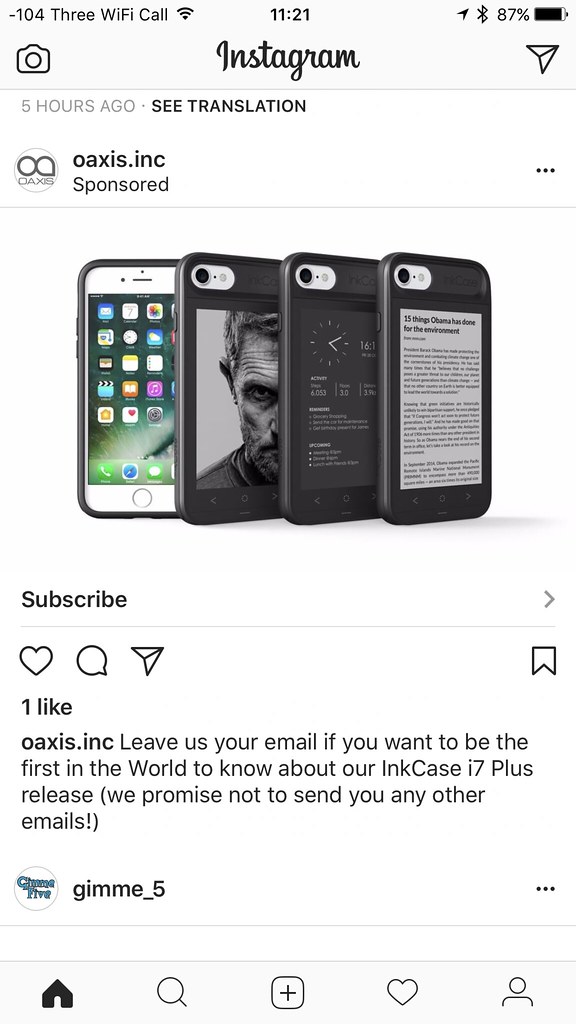
    This is probably old news, but it was the first time that I noticed it in my feed. Instagram has an email collection facility that reminded me of Twitter cards. Its a great idea that can help tie Instagram engagement closer to e-commerce sales

    Untitled

    Flickr search

    Flickr has been tweaking its design and has improved its search. These changes have largely happened under the radar. In my experience, the biggest move was that the ‘camera roll’ has been depreciated in menu positions so that you no longer click on it by accident. It’s good to see the continual improvements in a time of substantial change at Yahoo! / Oath or whatever Verizon calls it. Flickr talked about the changes it made to the user’s profile page on its blog.

    SaveSave

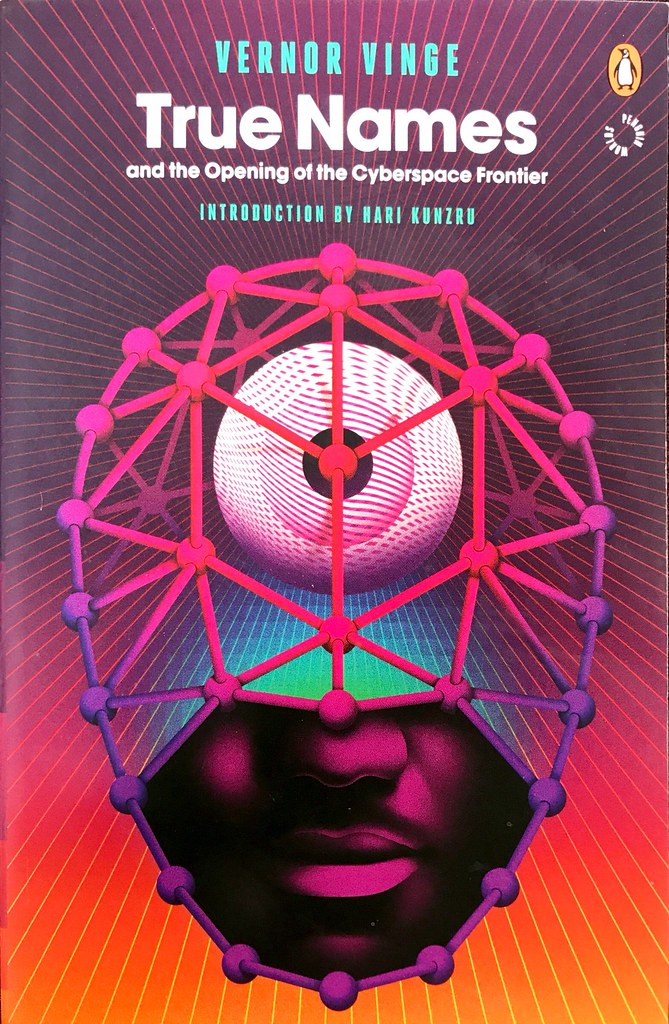
  • True Names by Vernor Vinge

    I was inspired to read True Names by a podcast. New York Times journalist John Markoff was interviewed by Kara Swisher on the Recode podcast in February and talked about reading science fiction to better understand how technology is likely to affect us.
    Untitled
    It’s actually a great piece of advice. Back in the day, large corporates used to employ authors to write stories based on scenarios as part of their research programmes. Many people have attributed the clamshell mobile phone to the Star Trek TV series and the flip communicator devices.

    Markoff outlined his favourite stories.

    “Snow Crash” by Neal Stephenson (1992): “The premise is, America only does two things well. One is write software, and the other is deliver pizzas. [laughs] What’s changed?”
    “The Shockwave Rider” by John Brunner (1975): Markoff said he built his career on an early understanding that the internet would change everything. He said, “[The Shockwave Rider] argued for that kind of impact on society, that networks transformed everything.”
    “True Names” by Vernor Vinge (1981): “The basic premise of that was, you had to basically hide your true name at all costs. It was an insight into the world we’re living in today … We have to figure it out. I think we have to go to pseudonymity or something. You’re gonna participate in this networked existence, you have to be connected to meatspace in some way.”
    “Neuromancer” by William Gibson (1984): Markoff is concerned about the growing gap between elders who need care and the number of caregivers in the world. And he thinks efforts to extend life are “realistically possible,” pointing to Gibson’s “300-year-old billionaires in orbit around the Earth.

    I had read Snow Crash relatively recently and Neuromancer was revisited last year. I had a vague recollection of The Shockwave Rider and True Names, but hadn’t read them in over 20 years.

    Vinge’s True Names is published by Penguin with a collection of essays from a range of technology thinkers including

    • Chip Morningstar and Randy Farmer who founded Habitat one of the first massive online multiplayer games, back when dial up bulletin boards were the bleeding edge. Farmer worked at Yahoo! when I was there and was involved in Yahoo! 360 and still consults on community / social platform issues
    • Bruce Schneier wrote about how security products fail us. Bruce is one of the world’s leading commentators on all things hack and cryptography related
    • Mark Pesce is better known now as an Australian-based computer academic, but two decades ago he invented VRML – a way of representing the internet as a 3D thing and prescient in the light of Oculus Rift and others.
    • Marvin Minsky; was a pioneer in AI and machine learning provided an afterward to the story

    That True Names managed to attract essays from these people should be an endorsement in itself.  Re-reading it two decades on, Vinge’s story echoes and riffs on the modern web. Hacking, cyberterrorism, constant government surveillance and the tension between libertarian netizens versus the regulated  real world. The central theme of Mr Slippy; a hacker who is identified by US government officials and co-opted as an unwilling informant and agent provocateur feels reminiscent of LULZSec leader and super grass Sabu. It’s amazing that Vinge wrote this in 1981 – although he envisages the web as being rather like a Second Life / Minecraft metaverse – with NeuroSky style interfaces.

    Penguin’s careful curation of essays riffing on the themes of True Names is where the real value is in my opinion. For someone who cares about technology and consumer behaviour. It is worthwhile keeping this book on the shelf and diving in now and again. More related posts here.

    More information
    Want to understand the future? Read science fiction, John Markoff says. | Recode
    Habitat Chronicles – thoughts on gaming, online products and community building by Chip Morningstar and Randy Farmer
    Schneier on Security
    Mark Pesce’s professional website and his columns for The Register
    Vernor Vinge lecture on long-term scenarios for the future via The Wayback Machine

  • Pornographers + more news

    Pornographers and social search

    Can These Pornographers End ‘MILFs,’ ‘Teens,’ and ‘Thugs’? | The Nation – when I was working on social search and folksonomies at Yahoo! a decade ago, yet pornographers are now amongst the most active users of the technology. A few things about how the pornographers worlds have changed. At the centre of this is the change in the market. Back in the day adult media companies and performers had their own sites that they sold their content through. They were found via search and audience aggregation sites that had teaser content.

    Then the tube sites came along and changed the game, the pornographers got pirated and mediated all at the same time. In order to get tube platform search to work for them, they had to embrace tagging, which revolved around the language that customers

    Business

    Haul For One: U-Haul Adapts & Reuses Abandoned Buildings | Urbanist – some of these are stunning for a modernist sucker like me

    DARPA Funds Development of New Type of Processor | EE Times

    Economics

    China’s Operation Australia: payments, power and politicians | Sydney Morning Herald – surely its what you’d expect an intelligence agency to do. Not really surprising, except for the change in tonality from Australia about China

    FMCG

    Chinese consumerism will reshape the world, and maybe even destroy it — Quartz – anything to do with China is the speed at which all this has occurred. What would the outcomes of that speed be? People wouldn’t have as many brand associations. Those brand associations would have built up in relatively short amount of time, as opposed to [being] handed down intergenerationally. Because of that speed, the amount of anxiety about having the right brand would be greater in that environment than in a place where this is unfolding slowly. Interesting also that Gerth talks about the right (communist) brands under Mao when people wanted a bike, a sewing machine and a wrist watch. I would also argue that there was latent knowledge of brands from pre-revolutionary times in older people based in Shanghai or historic brands like Tongrentang (TRT) founded in 1669

    Innovation

    WWII vehicle boneyards were essentially war machine landfills | Mashable  – Americans were so eager to get their hands on cheap surplus Jeeps that auto companies urged the government to leave them overseas, fearing they would cut into new car sales.

    I, Cringely The Robots are Coming! – I, Cringely – interesting read, but one that poses as much challenges as solutions

    Marketing

    What influencer marketing really costs – Digiday – interesting ranges in here

    Apple launches Business Chat for iMessage in developer preview | VentureBeat – looks like they have been taking a lesson or two from WeChat. I had seen Salesforce integration with iMessage and iChat demo-ed at one of the Cloudforce conference

    An aversion to logos could be Essential’s undoing | total telecom – its even more ridiculous that Essential actually have a logo that evokes Paul Rand and Saul Bass

    Media

    The One Big Reason Why BuzzFeed Needs TV – Bloomberg – so much for the online media business…. old media is the new sexy

    Apple’s new anti-tracking system will make Google and Facebook even more powerful – The Verge – a more marginal improvement than you’d think

    The Telegraph to publish daily edition on Snapchat – from 5pm today – I wonder what the monetisation model looks like?

    Entertainment Accounts Closed as Party Emphasizes News Control | China Digital Times – China clamping down on celebrity scandal accounts as well as accounts that would be disruptive to government

    Pathology of a Fake News Story – Thoughts On Journalism – Medium

    Facebook study shows what TV viewers are doing during commercial breaks | silicon beat

    Online

    Pinboard Blog – Pinboard acquires del.icio.us – a certain amount of irony in this which I’ll write about another time

    Security

    Russian malware link hid in a comment on Britney Spears’ Instagram | Engadget – really canny technique

    Software

    Apple is finally serious about artificial intelligence | Quartz – i’d disagree with the headline, but it has a good overview of the AI development pieces from Apple’s keynote

    Apple Just Joined Tech’s Great Race to Democratize AI | WIRED

    Why Apple is struggling to become an artificial-intelligence powerhouse – The Washington Post – Washington Post was bought by Jeff Bezos

    Technology

    Tom Oberheim On The Art Of Synthesizer Design | Synthtopia – amazing interview with Tom Oberheim on how he got into synthesiser design and talks about his products

    Andy Rubin’s new company already got screwed by Apple – BGRAlthough Apple didn’t object to the investment, SoftBank didn’t want the conflict to happen

    Car Fact Of The Day | Marginal Revolution – Huge increase in complexity in cars

    Google vs. Uber: How One Engineer Sparked a War – WSJ – interesting write up of Andrew Levandowski’s role in it. I didn’t realise he was Belgian and its interesting how Google Street View helped birth its autonomous car project

    Telecoms

    Network Time Protocol Hardened To Protect Users From Spying, Increase Privacy – Slashdot

    Web of no web

    Japan puts up satellite in step to build homegrown GPS- Nikkei Asian Review – Quasi-zenith devices to allow location data accurate to 6cm

    Listen and create ambient sounds easily – Ambient Mixer – great for sounds to work by