Category: gadget | 小工具 | 가제트 | ガジェット

What constitutes a gadget? The dictionary definition would be a small mechanical or electronic device or tool, especially an ingenious or novel one.

When I started writing this blog the gadget section focused on personal digital assistants such as the Palm PDA and Sony’s Clie devices. Or the Anoto digital pen that allowed you to record digitally what had been written on a specially marked out paper page, giving the best of both experiences.

Some of the ideas I shared weren’t so small like a Panasonic sleeping room for sleep starved, but well heeled Japanese.

When cutting edge technology failed me, I periodically went back to older technology such as the Nokia 8850 cellphone or my love of the Nokia E90 Communicator.

I also started looking back to discontinued products like the Sony Walkman WM-D6C Pro, one of the best cassette decks ever made of any size. I knew people who used it in their hi-fi systems as well as for portable audio.

Some of the technology that I looked at were products that marked a particular point in my life such as my college days with the Apple StyleWriter II. While my college peers were worried about getting on laser printers to submit assignments, I had a stack of cartridges cotton buds and isopropyl alcohol to deal with any non catastrophic printer issues and so could print during the evening in the comfort of my lodgings.

Alongside the demise in prominence of the gadget, there has been a rise in the trend of everyday carry or EDC.

  • The ten most popular posts of 2014

    First of all thank you for having visited my site this year, I thought I would revisit the most popular posts of 2014.

    1. The WhatsApp | Facebook post (part I) – On February 20, I woke up to find out that Facebook had acquired OTT messenger service Whatsapp for an apparently very large sum. I wrote two posts that day which tried to make sense of what was happening. I drafted the posts in a franchise Starbucks on the edge of the A41. If I had to sum up this post in one word it would be gobsmacked. You can read part II here
    2. Throwback gadget: Apple iPod hi-fi – my throwback gadget posts I write seem to do very well on an ongoing basis. I had a new old stock unit in storage which I brought out of storage and pressed into use when I moved back to the UK and wrote about what attracted me to this system. It seems to have a marmite reputation even amongst Apple fan boys
    3. The WhatsApp | Facebook post (part II) – part two of my analysis for the Whatsapp / Facebook acquisition came together later that morning after a Facebook and WeChat conversation with my friend Calvin Wong. I started to think about the why of the purchase in more detail
    4. Throwback gadget: Nokia E90 Communicator – Ironically for someone who maybe perceived for being digitally forward, I miss having a proper keyboard that I can still slip in a (Carhartt) jacket pocket. My ode to the E90 got picked up by Tomi Ahonen and the rest as they say was history
    5. On smart watches, I’ve decided to take the plunge – At the beginning of October I decided to experiment using a smart watch. This was the first of a couple of posts that outlined my thought process and what I found out through using the Casio G-Shock G+ watch
    6. Jargon watch: app constellation – I started off what I thought was a pretty straightforward post and got to be a bit of handful in the end. I went down the rabbit hole looking at the different app constellations rolled out by the worlds major internet companies. The research was manageable, but editing the HTML on the table turned turned out to be more of a handful than I expected
    7. The Apple Watch post – I stayed up to watch Apple’s messy online presentation of the Apple Watch. Whilst I was impressed by the technical expertise, I was unimpressed by the likely customer experience and was struck by the obvious ‘borrowing’ of design elements from Marc Newson’s Ikepod watch range of yore
    8. Garnier’s PS Cream campaign – Garnier’s advertising agency doing a classic PR hijack in China that shows the innovative environment of Chinese platforms and the blurring of lines of what PR actually means now
    9. My digital tool box – I was doing some work at the end of April and was struck by how many tools and hacks that I used to use in my daily work life were no longer available. I thought it would be a good idea to do a snapshot of the stuff I currently used for posterity. I hope to revisit it on a regular basis, we’ll see how it works out
    10. The Amazon Dash post – I am intrigued by new technology that seems to reject the icons-under-glass metaphor that seems to dominate convergence these days. Amazon Dash is a dedicated order-input device for Amazon’s grocery service in the US that wouldn’t have looked out of place in a Braun product brochure from the 1970s

    According to the site analytics that was the most popular posts of 2014. What was the favourite thing you read in 2014?

  • Chinadroid

    The modern mobile eco-system was built in the factories of China, in particular Shenzhen. But two mobile eco-systems exist: China and the rest of the world, hence Chinadroid.
    Downtown Shenzhen
    Chinadroid: These are phones that use the Android Operating System but have not gone through official channels for compatibility (CTS) or do not have a Google Mobile Services (GMS) license.

    A couple of scenarios are playing out to drive Chinadroid handsets:

    • Virtually no Android handset in China has access to Google services including the app store. Baidu estimates that are over 386 million active Android handsets in China, using different app stores and web services.  Some of these have a very different look-and-feel like Cyanogen or MIUI – Xiaomi’s flavour of Android
    • A second scenario is where smaller manufacturers don’t get Google to play ball and get them onboard with a GMS licence for those handsets that they do sell outside China. Google historically hasn’t bothered to scale to address the international aspirations of these tier two and tier three handset makers. Their product is probably being used across the developing world, from the Nigerian merchants with their suitcases of phones flown from Hong Kong to the virgin mobile markets of Burma or Laos. The big challenge with these secondary players is that they are market makers and not having them registered means that Google doesn’t get the full benefit of being able to onboard these people on to the internet and hooked into the Google eco-system
    • Will the Chinadroid situation drive a completely new OS system (like SailfishOS) with Chinese characteristics? Doing their own operating system has a lot of technical challenges, but it may be done for security reasons

    More information
    The Shenzhen Market Mini-Guide | Medium
    China now has 386 million active Android users | Techinasia
    The rise of the Shenzhen eco-system
    The smartphone value system
    Google I/O: who is Google trying to disrupt?

  • FES watch + more things

    Who’s Behind the E-paper FES Watch? – Digits – WSJ – interesting the way Sony has become an internal VC operation. It makes sense since they need disruptive innovation and they still have smart people. they also need to allow their engineering talent to keep having an outlet for their creativity. The FES watch is a classic quirky Sony product that is very clever. The disappointing bit was hearing them working with an external product design agency on the FES watch. Especially given the internal industrial design capability to deliver iconic designs and a wider design language across product ranges. More design related content here.

    Tightening too frightening for UK | HSBC – interest rate increase and lower than expected economic growth

    Oh No They Didn’t: European Parliament Calls For Break Up Of Google | SearchEngineLand – inevitable but not sure it will make an impact, Google must have expected this?

    Maglev elevators are coming that can go up, down, and sideways | Quartz – I love this

    Flickr is about to sell off your Creative Commons photos | DazedTech entrepreneur Stewart Butterfield left the company in 2008, but says that Yahoo-ordained plan is “a little shortsighted”. He added: “It’s hard to imagine the revenue from selling the prints will cover the cost of lost goodwill”. It’s the equivalent of looking for pennies that may have fallen down a crack in the sofa. Flickr photos are already used in the online and offline media. They have also been used to train image recognition algorithms, both of which are allowed by the licensing. The prints seems like a cheap, low value move.

    Supermarket own-brands generate more than half of UK grocery sales | BrandRepublic – bad news for CPG brands. And bad news for brands in general, particularly when one thinks about how Amazon is building its private label lines across several sectors

  • A laser cut record & things that made last week

    Laser cut record

    A frickin’ laser-cut record. How awesome is this? Back in the day there were efforts to use laser pick-ups to read vinyl records in a way that wouldn’t affect the records over time. Dragging a diamond tipped needle through a groove was viewed as destructive. The first prototype was demonstrated publicly in 1977.

    An American company called Finial demonstrated a commercial product. But its business no longer made sense and eventually the intellectual property was picked up by Japanese company ELP Japan. ELP Japan build laser turntables to order. The laser cut record turns this philosophy on its head. The record is no longer a valuable artefact, but something that can be replicated over and over again.

    A simple but delightful Japanese Vine. Simple but amazingly cute gerbil with a priceless reaction when its human stops stroking it. I remember petting the dog that I owned at the time and eliciting a similar reaction of why stop. This seems to be a reaction that’s hardwired in; a sudden stop in grooming by another might indicate that they sense danger and consequently I should be on alert.

    A totally awesome Japanese game for the Sony PlayStation featuring Godzilla and all manner of kaiju. The odd thing about this Bandai Namco game is that it is for the PS3 rather than the PS4 which is gaining the lions share of console sales. One can only guess that this was a project that massively overshot its initial launch date?

    A smooth jazz version of Van Halen’s Running With The Devil, which seems to use studio stems of this rock classic. It works amazingly well, which says a lot about Van Halen’s songwriting and general musicianship

    Finally a video of park life in Beijing. It is hard to emphasise the amount of smoking that happens in China, so this video shows you instead. More related content here.

  • On wearing a smart watch

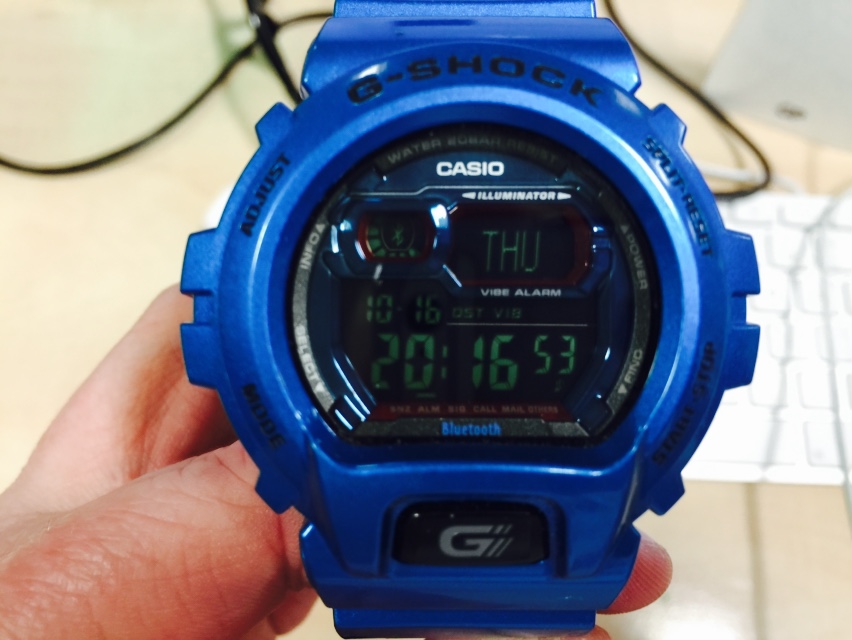
    At the beginning of the month I took the plunge and decided to buy a Casio G-Shock connected watch. After a week or of wearing a smart watch, I have a pretty good sense of the pros and cons of using it.
    Casio G-Shock Bluetooth

    The connection with the iPhone makes a major leap forward in the G-Shock experience. Using a G-Shock is rather like using an old computer system like a DEC VAX minicomputer, the experience is modal. Everything revolves around combinations of button pushes to get to the functionality of the watch. Realistically you can’t navigate this process while wearing a smart watch.  The manual is a quarter of an inch thick and the commands not exactly memorable. If you have clumsy fingers or are not paying attention you have to cycle through the complete set of button commands again
    g-shock modal nature
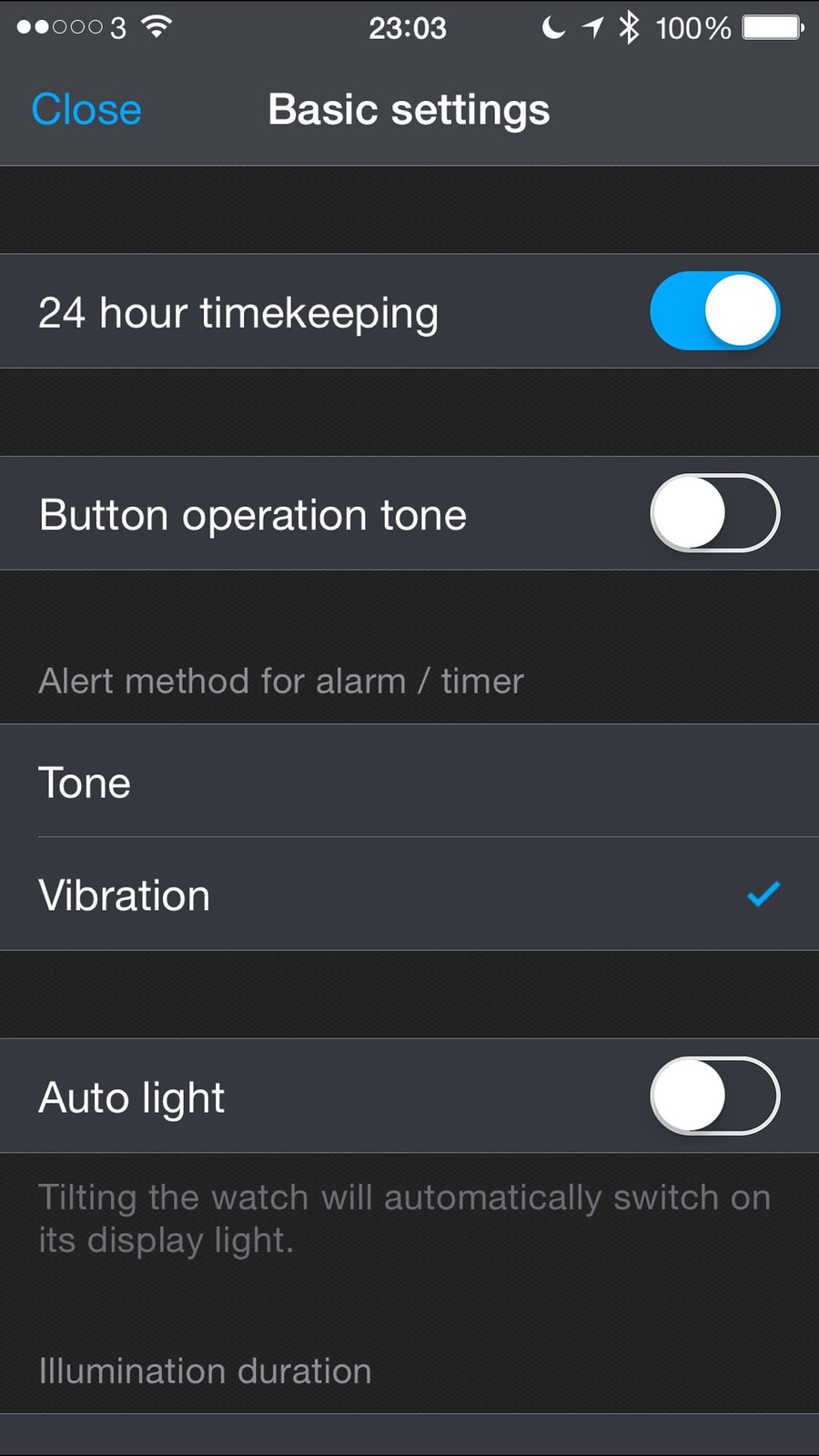
    The G+ iPhone application deals with every setting on the watch bar setting the time and date itself (which still requires a bit of button juggling).
    Untitled
    The achilles heel is battery life. Most of the facilities about the watch are about husbanding a relatively meagre lithium ion battery. What Casio’s engineers managed to achieve is imperfect but impressive. The battery life is the silent hand that ruled all aspects of the product design. In order to have a sealed in battery that lasted more than a day, Casio had to go with an old school battery. Out went modern G-Shock features such as the GPS module and atomic clock radio units used to provide accurate time based on location.

    Out too went the solar power option. Alerts seem to be polled every quarter of an hour for things like email. But then in this connected age, having a message to let me know that I don’t have email would be more noteworthy.

    This all had a number of effects:

    • The watch didn’t alert me to everything – that isn’t a bad thing. I do want my alerts to be consistent, so I shut down alerts from everything but Twitter, calendar and calls. I would have loved to have alerts for WeChat, SMS / iMessage messages, FaceTime and Skype calls but they aren’t on the programme (so far)
    • The watch did cure ‘phantom’ rings. I got to ignore ringtones out in public and at home unless my wrist shook. It also worked well when I couldn’t feel my phone vibrating in my Carhartt jacket
    • I remembered to take my phone with me on more occasions, the watch would vibrate if the Bluetooth link was broken

    The best bit of the phone for me was that it was still a G-Shock, it could be worn in the gym, the shower, whilst shaving, washing dishes or swimming. It is a watch for living rather than a Bluetooth-enabled human leash.

    More information
    On smart watches, I’ve decided to take the plunge