Category: ideas | 想法 | 생각 | 考える

Ideas were at the at the heart of why I started this blog. One of the first posts that I wrote there being a sweet spot in the complexity of products based on the ideas of Dan Greer. I wrote about the first online election fought by Howard Dean, which now looks like a precursor to the Obama and Trump presidential bids.

I articulated a belief I still have in the benefits of USB thumb drives as the Thumb Drive Gospel. The odd rant about IT, a reflection on the power of loose social networks, thoughts on internet freedom – an idea that that I have come back to touch on numerous times over the years as the online environment has changed.

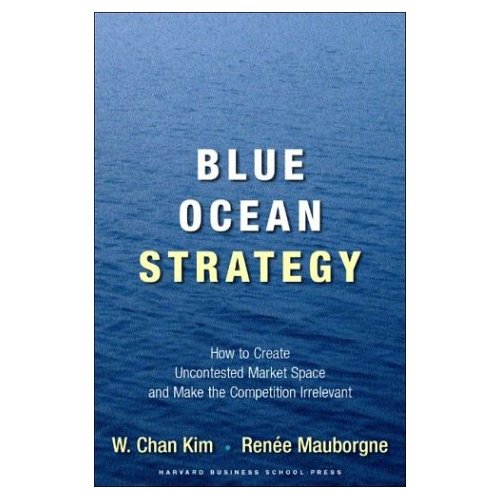
Many of the ideas that I discussed came from books like Kim and Mauborgne’s Blue Ocean Strategy.

I was able to provide an insider perspective on Brad Garlinghouse’s infamous Peanut Butter-gate debacle. It says a lot about the lack of leadership that Garlinghouse didn’t get fired for what was a power play. Garlinghouse has gone on to become CEO of Ripple.

I built on initial thoughts by Stephen Davies on the intersection between online and public relations with a particular focus on definition to try and come up with unifying ideas.

Or why thought leadership is a less useful idea than demonstrating authority of a particular subject.

I touched on various retailing ideas including the massive expansion in private label products with grades of ‘premiumness’.

I’ve also spent a good deal of time thinking about the role of technology to separate us from the hoi polloi. But this was about active choice rather than an algorithmic filter bubble.


  • WSJ Online tenth anniversary

    10th anniversary of WSJ Online

    The Wall Street Journal Online or as it calls itself the WSJ Online has been celebrating its tenth birthday with some retrospectives and future gazing.

    WSJ Online dot com disasters

    A couple of the articles caught my eye.The Best of the Worst by Kathryn Meyer (May 3, 2006) celebrates the suckiest ideas of the first dot com boom.

    CyberRebate

    CyberRebate did what it said on the tin; they charged you an outrageous price for an item and then promised you a rebate, they hoped to make money on the redemption drop-out – they were overwhelmed and drowned in a sea of debt.

    Digital currency

    Digital currency ideas (Beenz and Flooz) withered on the vine as they weren’t as universal as Mastercard or cash. PayPal survived because it kicked Western Union’s ass and we could all be credit-card merchants.

    iSmell

    iSmell was a device designed to release smells appropriate to the pages you surf (don’t even think about it, get your mind out of the gutter this instant) like some kind of b-movie experience enhancement craze of the 1950s.

    CueCat

    CueCat plugged into your PC (Windows only if you please) and allowed you to scan bar codes of magazines into your computer to get further information or content. This idea seems to have caught on in Japan with mobile phones and specialised software, so maybe they were too visionary?

    3Com Audrey

    The 3Com Audrey internet appliance was a great well engineered device killed by the ever decreasing price of PCs. I still rate its QNX-based OS and I like the product design on it.

    PointCast

    PointCast the push technology service that was a richer more engaging experience than RSS is today, but then I was sat at the end of a fat pipe whereas most users were on dial-up. Also marketers knowing the price of everything and the value of nothing used the service to carpet-bomb users with unwanted ads.

    Tech trends

    Tim Hanrahan’s piece on Tech’s 10-year Creep (May 8, 2006) brings out some interesting trends that have occurred. I have paraphrased and commented on his trends below

    Anytime, Anywhere: Push email and wireless internet access mean that getting online whilst traveling or wire-free on your couch or at Starbucks — is possible for $60 a month or so. However it eats into the work life balance.

    Think Better! Google basically.

    Putting Yourself Out There: Originally people liked their privacy, caller ID on phones was pushing the envelope in terms of social disclosure. Over the past five years people have gotten used to sharing personal information online. Chat rooms, forums, online dating followed by social-networking sites; to blogs and MySpace came to dominate. Easy-to-use tools, cheap to free storage and online social interaction brought out the pioneer spirit ‘Go web young man‘.

    The Post-Stuff World: Music downloads, ebooks, ripped movies. (But if its that post-stuff why is Amazon so successful selling books, everyone’s iPod is full of music ripped from CDs and people love their laptops, mobile phones, PDAs, crackberries, Nintendo and Sony handhelds). This techno-minimalism bollox didn’t wash with me.

    Free Information, Free People: People are exercising their free speech and there is a maelstrom of content out there that Technorati struggles to handle. The social web has replaced the techno web – (though when Soledad O’Brien hosted a show on MSNBC that featured a young Max Headroom-type avatar sidekick named Dev ten years ago (good gosh, was it that long ago?) was it precient of Second Life?) CNN now covers blog content as if it was matter-of-fact, though blogs often don’t have the same rigorous process behind them as well-written journalism.

    Picture of Soledad O’Brien courtesy of CNN.com. More related posts here.

  • Internet freedom

    A couple of stories related to internet freedom that came to my attention this morning.

    Internet freedom in China

    First off today’s New York Times magazine has an indepth feature about the challenges that China presents to Internet companies seeking a Chinese audience. Google’s China Problem (and China’s Google Problem) by Clive Thompson is balanced and well written. There are some interesting aspects to it:

    • The censorship is open rather than furtive
    • It involves self-censorship as a key element in it’s execution
    • Chinese people interviewed do not view freedom of speech as an absolute binary state (you’re free or you’re not) but as a continuum and are prepared to make trade-offs; so Google’s ‘Do the least evil’ approach makes more sense
    • The role of chat and forums in Chinese internet usage is far higher than we’re used to
    • The assumption that the US readership of the article enjoy ‘absolute’ freedom of speech and a resulting internet freedom

    The last point brings me on to the text of a speech given by US attorney general Alberto R. Gonzales at National Center for Missing and Exploited Children. 

    US threat to internet freedom

    Vigilant civil rights activists have noticed a number of items in the speech which would extend the government powers of censorship and surveillance well beyond child pornography with the implication being that in future US legislation freedom of speech and internet freedom may not be the absolute that it once was.

    Lauren Weinstein of pressure group People for Internet Responsibility made the following post to the Interesting People email list:

    In a speech a few days ago, Attorney General Gonzales announced DoJ plans to send Congress new legislation to control “pornography” and (apparently) ultimately to require activity log and other data retention by Internet Services (in follow-up interviews, Google and other search engines have been specifically discussed). Gonzales is pitching this legislation using child abuse as the hook. That is, he is arguing for tools to use against child abuse and child pornography — certainly a “third rail” issue these days where virtually everyone will support enforcement efforts. However, it’s also clear that the DoJ seems to have no intention of limiting such tools *only* to child-related areas. The legislation itself is currently titled: “Child Pornography and Obscenity Prevention Amendments of 2006”

    A transcript of the Attorney General’s speech is here:
    http://releases.usnewswire.com/GetRelease.asp?id=64319
    Note this key quote: “This legislation will help ensure that communications providers report the presence of child pornography on their systems by strengthening criminal penalties for failing to report it. It will also prevent people from inadvertently stumbling across pornographic images on the Internet.” Requiring the reporting of child pornography on systems (when it is known to exist) is something that few people would argue against, obviously.

    But let’s examine the second sentence again: “It will also prevent people from inadvertently stumbling across pornographic images on the Internet.” This seems to be addressing the entire broad category of non-child “pornography” (which of course can be defined in any number of ways in different locales and contexts), and suggests a requirement (here we go again!) for proactive ratings/controls (presumably ID or credit

    card based for “offensive” materials) for all (U.S.) Web sites. So this isn’t just about children, it’s likely about broader government controls over many U.S.-based Internet entities (of course, Gonzales doesn’t effectively address the issue of Web sites outside the country). Gonzales goes a lot further in another quote:

    “The investigation and prosecution of child predators depends critically on the availability of evidence that is often in the hands of Internet service providers. This evidence will be available for us to use only if the providers retain the records for a reasonable amount of time. Unfortunately, the failure of some Internet service providers to keep records has hampered our ability to conduct investigations in this area. As a result, I have asked the appropriate experts at the Department to examine this issue and provide me with proposed recommendations. And I am going to reach out personally to the CEOs of the leading service providers and to other industry leaders to solicit their input and assistance. Record retention by Internet service providers consistent with the legitimate privacy rights of Americans, is an issue that must be addressed.”

    Again, we see that protecting children — the goal that we all support — is being used as the raison d’etre to likely later propose broad data retention requirements on all manner of Internet services. Ironically, this is occurring shortly after calls for mandated data *destruction* legislation that arose in the wake of the DoJ vs. Google records battle (where I strongly supported Google’s stance).cted that this sequence would occur — though it is happening even faster than I expected. Record retention is a particularly risky area. DoJ might be expected to argue (as Gonzales implies) that such records would only be demanded in cases involving children.

    That’s today’s line. But in a general records retention environment, you cannot a priori retain only the records related to child abusers whom you don’t already know about — you must retain *everyone’s* records. While the criteria for records access might be child abuse today, does anyone seriously believe that calls for access to user log data will not massively expand over time, to the extent that such data is available? Of course it will. If the data exists, all manner of ostensibly laudable reasons for government digging through users’ Internet activities will be forthcoming. And that will create a wholly different kind of Internet, where ultimately our every action on the Net may be subject to retroactive inspection. The term “slippery slope” is definitely applicable.

    We need to see the specifics of legislation before detailed comments will be possible. But the handwriting is on the wall, and it does not bode well for either Internet users or Internet-related services.

    More related content here.

  • Day pass media model

    I first came across the day pass concept with Salon.com, its an interesting compromise between subscription content and ‘free content’. First of all, with the possible exception of consumer homepages there’s little free content on the web. Content that you don’t have to pay for has advertisements around the sides of the pages and in the text, these are often paid for on a ‘per click’ basis.

    Self described ‘premium’ publications like the Financial Times and The Wall Street Journal go for a walled-garden approach where you have a paid for subscription and they vend the content out.

    I consider this to be going after short-term gains and sacrificing their future.

    The day pass says my content is valuable; however if you engage with my sponsor, they will pay for your access to my content over the next 24-hours. It means I have a moral contract with them to listen to their sponsor (and actually Aviva the insurance company did a smart bit of work by tailoring their content to deliver their message to an Economist reader whilst at the same time getting over their positioning as a progressive innovative company), I understand the ‘real value’ of the content that I get to look at AND the publisher remains relevant to a modern net audience rather than trapped in the dead forest business.

    As Oscar Wilde said it is better to be talked about than not be talked about; in the online world, getting talked about means that you have to be accessible. Bloggers will tend not to blog about sites were people cannot go and see the content in context, for instance I have reduced the number of links I have to New York Times stories because of their part-way subscription model.

    During my day pass tour of the Economist, I came across a series of trend articles and a number of interesting podcasts for download touching on some of the editorial teams hot topics for 2005: economic change

    More related content here.

  • That was 2005

    January 2005

    Bez won Celebrity Big Brother, ten years after the peak of the Happy Mondays. London creative team Lee and Dan made an Al Qeada inspired calling card for Volkswagen that managed to leak out on to the web. Analysts at Credit Suisse First Boston won the monthly award for stating the bleeding obvious. We did a bit of homegrown analysis with the help of information from Popbitch to work out just how much News International made from the Prince Harry Nazi pictures. We also found that the Watchman character that the rc personality most resembled was The Comedian, more details on testing your Watchman Personality Inventory here.

    February 2005

    Words of the month were Mum Truck and KAGOY (kids get older, younger). Hunter S Thompson killed himself and half the media world pretended that they were avid readers of his work. The books of the month were Michael Collins by Tim Pat Coogan and The Electric Kool-Aid Acid Test by Tom Wolfe (another pioneer of the gonzo school of journalism). The US Army released details around its successful word-of-mouth marketing campaign to attract recruits. America’s Army a realistic 3D game garnered interest in soldiering as a career and was far more fruitful than their television advertising campaigns. Bob Cringely highlighted how 25 billion USD needed to be invested by VC funds in the next 18 months or else they would lose their management fees. This of course wouldn’t have anything to do with the bubbling up of Web 2.0 would it? Carly Fiorina was finally ousted from H-P much to the relief of its employees. Sci-Fi London hosted a fantastic all-nighter of Shaw Brothers classics including Super Infra Man and Monkey Goes West.

    March 2005

    renaissance chambara turned 1 years-old. Forrester mapped out trends in consumer electronics for 2005. March’s word was Search Arbitrage. Seymour Hersh highlighted the Pentagon’s plans for axis-of-evil club member Iran. Hersh’s pioneering journalistic approach contrasted with general media malaise. The Sony PSP picked up a lot of interest on the web with some hailing it as the new iPod, I don’t think so…. And most importantly the rc towers local pub got recognised as Pub of the Year by the Evening Standard.

    April 2005

    PR gossip blog Spin Bunny was shut down for the first time as an unnamed PR agency called in the lawyers. Red Bull’s Art of Can exhibition brought a bit of culture to the Truman brewery. Word of the month is Kronenbourg. H-P manages to launch survey results that make them look foolish. There was less content overall as we were burning the midnight candle at work.

    May 2005

    Flying Records, one of the UK’s foremost dance record shops finally closed its shutters after ten years at the forefront of the scene, however its spirit lives on as Andrew Baker now champions new tracks online working for distributor Goya Music. Palm launched the LifeDrive and it didn’t look that impressive compared to an iPod, retail therapy was thus avoided. Michelle Delio was found to have made up some of her stories that she contributed to Wired News. The word of the month was Sachet Marketing.

    June 2005

    Country Music Television appoints a vice president of Dukes of Hazzard in a brilliantly executed PR campaign to promotes its re-runs of the original series. Omega releases its Planet Ocean watch – the watch that the Seamaster should be. WTF Apple goes Intel! Web 2.0 starts looking bubblicious. It was a few months since the Miami Winter Music festival and the Ibiza season was just starting to kick-off so a bumper month was had in the vinyl stakes. Michael Jackson is found not guilty, but the court of public opinion isn’t so sure. The word of the month is Mommy Consultant, Burson-Marsteller’s phrase e-fluential missed out because it was too close to effluent and we wouldn’t want you to be under the opinion that we thought all bloggers were full of sh!t now would we?

    July 2005

    Cracks start to show in the eBay edifice. Fatigue for consumerism starts to set in. Coke rolls out their Love poster campaign, arguably the best piece of creative this year. The ongoing rising price of oil gives Hubbert’s Peak a mainstream audience as consumers wake up to the fact that oil isn’t going to get any cheaper or more plentiful. The New York Times celebrated the tenth birthday of e-commerce.

    August 2005

    Wired issues its ten-year netrospective ‘celebrating’ the original of the bubble with the Netscape IPO. Citizen journalism sees its first cynical cash in with the launch of Scoopt, a picture agency for the general public and their camera phone. Paparazzi sleep easy though. Music industry bodies blame everybody but themselves for the continued under-performance of their industry. Bob Cringely launches his NerdTV series of interviews and Stussy’s 25th (XXV) anniversary collection is full swing. Towards the end of the month I managed to survive Silicon Valley. In Utah, the heavy mob is used to deal with kids listening to repetitive beats in an incident rather like the infamous police raid in Nelson near Blackburn back in the day. I am sure American’s everywhere feel safer already. The harvest of quality dance music on an acid house tip.

    September 2005

    Chigger is the word. Nick Love’s film The Business reminds us why the 1980s were so good and so crap at the same time. Palm previews a Windows device, Dell stumbles and I try hard not to snigger, its especially hard when some bright spark calls Dell’s answer to the iPod Shuffle the Dell Ditty and styles it like a Ronson lighter. Apple launches the iPod Nano and gadgeteers recoil in horror from the Motorola ROKR. Nestle re-releases the Texan bar. Geek-in-chief at Sun Microsystems, Jonathan Schwartz, appeals to the troops to stop leaking confidential news via their blogs; via a blog!

    October 2005

    Designers Burro shut up shop, while Criminal opens a Covent Garden boutique and Matmos see sense and re-release the Telstar lamp. Disgraced analyst Harry Blodgett starts his own blog. Super Southerner is the phrase of the moment. Spin Bunny gets shut down for the second time, this time it looks like its permanent as the entire site is removed from Typepad, speculation is that a South Bank based agency was responsible for letting loose the dogs of law. The tune of the moment is Tiger Stripes – Spirited Away. In a pre-Halloween push Burger King’s clumsy viral marketing efforts get unmasked by Slate.

    November 2005

    Lynx launches a bespoke perfume in conjunction with Oki-Ni, research shows that music downloads have plateaued proving the proving the point that you can only buy so much crap. Talking of crap, Hypercolour looks like it may be making a come back. AOL makes its first interesting move in years by taking TV to the web and my even have a good business model. The word is Shorty (at least according to DJ Tim Westwood).

    December 2005

    Christmas comes in with a whimper and Sony messes up a street marketing campaign for the PSP. rc floats the concept of a media bond and futures market to capitalise on the digitisation of content, the long tail and too much sloshing around waiting to be invested. Bootlegs mixes of Aretha Franklin and Pink Floyd move the feet so that the mind will follow. The word of the month is Uncanny Valley. Designers Terratag have some awesome gear in their latest fashion collection. Amazon take a Hermann Goring approach to email marketing in the final run-up to Christmas. A brief trip to Ireland left me with a number of contradictory observations about the state of the Celtic Tiger.

    Image courtesy of Sanrio. More related content here.

  • 3iYing & teen marketing

    3iYing

    A design and marketing company called 3iYing has enlisted the help of 15 – 25 year old girls to help develop more effective marketing strategies.Earlier this year a group of 8 young women enlisted by 3iYing walked into the Virgin Mobile office and told them their teen marketing strategy was all wrong. The girls pointed out that pay-as-you-go tariffs cost too much for teen girls who usually resort to using ‘guilt-tactics’ on their parents to get them to pay.

    3iYing spurs guilt marketing

    Virgin listened and subsequently ran a campaign in CosmoGIRL that included tear out phones that allowed teens to make fake calls in front of their parents, thereby pushing their ‘guilt button’. 3iYing’s Chief Executive Heidi Dangelmaier came up with this approach having been a leading voice in girl market trends. The teen demographic has increased by 17 per cent over the last 10 years, Moreover the financial muscle of these teens in terms of home spending is growing even faster.

    Companies like Virgin, realising they cannot properly relate to this market are turning to alternative approaches like that offered by 3iYing. User-centred design and marketing has always proved a successful approach, by designing relevant services and consumer experiences. By listening to what teens really want will make for more compelling, teen-centric brands and products.

    Teens also provide insights into their parents, who were the best people to advise on how to manipulate the parents. Parents still hold the purse strings, but teens are the key to accessing their spend. Kudos to Steve. More related content here.

    Update: USA Today has an article about Gen Y in the workplace, basically they want a dot.com style work environment with a decent pension plan. Sounds similar to Gen X really, apart from the fact they are more mouthy and high maintenance. Kudos to Blake Barbera.