Ideas were at the at the heart of why I started this blog. One of the first posts that I wrote there being a sweet spot in the complexity of products based on the ideas of Dan Greer. I wrote about the first online election fought by Howard Dean, which now looks like a precursor to the Obama and Trump presidential bids.
I articulated a belief I still have in the benefits of USB thumb drives as the Thumb Drive Gospel. The odd rant about IT, a reflection on the power of loose social networks, thoughts on internet freedom – an idea that that I have come back to touch on numerous times over the years as the online environment has changed.
Many of the ideas that I discussed came from books like Kim and Mauborgne’s Blue Ocean Strategy.
I was able to provide an insider perspective on Brad Garlinghouse’s infamous Peanut Butter-gate debacle. It says a lot about the lack of leadership that Garlinghouse didn’t get fired for what was a power play. Garlinghouse has gone on to become CEO of Ripple.
I built on initial thoughts by Stephen Davies on the intersection between online and public relations with a particular focus on definition to try and come up with unifying ideas.
Or why thought leadership is a less useful idea than demonstrating authority of a particular subject.
I touched on various retailing ideas including the massive expansion in private label products with grades of ‘premiumness’.
I’ve also spent a good deal of time thinking about the role of technology to separate us from the hoi polloi. But this was about active choice rather than an algorithmic filter bubble.
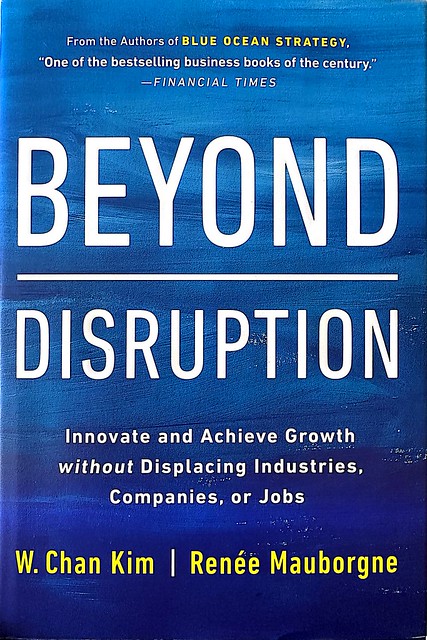
Beyond Disruption by W Chan Kim and Renée Mauborgne moves their focus from general business strategy in their book Blue Ocean Strategy. You can read my review of Blue Ocean Strategy which I originally read a number of years ago. By contrast this book looks at the idea of non-disruptive innovation. Non-disruptive innovation as a topic makes sense within the blue ocean / red ocean model.
Beyond Disruption book cover
Success has its own challenges.
Kim and Mauborgne face a Augean literary challenge. Blue Ocean Strategy was so successful at the time, that any subsequent book will look diminished in its success by comparison. Blue Ocean Strategy had something for everyone. To marketers it spoke of differentiation and salience, for business management types it was about differentiation and innovation. Beyond Disruption delves deeper into the nature of that innovation in a way that Blue Ocean Strategy didn’t.
In Beyond Disruption the authors posit that their blue ocean strategy approach was a blend of disruptive and non-disruptive growth.
Difficult narratives
Disruptive innovation by its very nature means destruction of existing businesses as a new one is created. A classic example of this would be the battles between regulators and taxi drivers with Uber, or city governments looking to protect the needs of their citizens from AirBnB. The ideas of Joseph A. Schumpeter fit in with the innovation stories coming out of Silicon Valley. Apple and Google didn’t invent the smartphone, but they came up with a design that captured larger scale consumer interest than Nokia devices and captured the market.
It is the predominant narrative in the media and business community at the moment around innovation. Disruptive innovation fits in with the conflict driven narrative of business. It is reinforced by adaption of military thinking in a literal manner to business strategy. The authors themselves point out about how much business decision-making is driven by aggression and fear.
Approach of Beyond Disruption
The approach of Kim & Mauborgne to ‘nondisruptive creation’ in Beyond Disruption is broken into two parts which cover
What it is and why it matters.
How to realise nondisruptive creation.
What it is and why it matters
Kim and Mauborgne focus a lot of time in the first part of the book explaining the economic and social impact of non-disruptive creation. The idea is that creating new markets doesn’t destroy existing marketplaces. In theory, value will be created on top of the existing economic order, rather than being substitutive in nature.That narrative is largely true, but there are exceptions to bear in mind.
If we think about the smartphone as a device category, even prior to Apple and Google displacing Nokia, cell phones were displacing existing categories. Sales of answerphones dropped, as did the sales of chocolate to children and the incidence of children smoking. Instead the pocket money was spent on handsets and PAYG (pay as you go) mobile tariffs.
Beyond Disruption outlines four sources of business advantage to non-disruptive creation:
Avoiding direct confrontations with established incumbents.
An effective way to respond to full-on disruption.
Support from internal stakeholders who will view non-disruptive innovation as less emotionally charged.
No evident backlash from external stakeholders.
The authors see this approach as a way to address the challenges of ESG and the fourth industrial age of automation.
How to realise non-disruptive creation
The authors start with the idea of the right perspective. This involves:
Leaders moving away from the ‘startup story’ of an innovative founder or co-founder. Instead the problem to be solved needs to be recognised first.
Don’t confuse the means with the end.
Focus on the many, not the few. Have a product that is likely to be adopted by a range of customers.
Identifying opportunities is considered in a separate section, the key point of which was the idea of empathetically observing newly emerging or unexplored problems. These ideas can then be explored further by understanding the scale of the challenge (amount of people affected etc) and understand the assumptions others have made that persuaded them to avoid the opportunity.
In conclusion
With Beyond Disruption, Kim and Mauborgne are looking to encourage a business more in keeping with the needs of stakeholder capitalism. More on Beyond Disruptionhere.
Is Open AI the equivalent of Sir Hiram Stevens Maxim? Maxim invented the Maxim gun. A belt fed machine gun that helped colonial powers grab territory in the scramble for Africa. It was reputedly used by one British official to help clear game from land that was soon to be put to farming use in Kenya. Later on it was used by both sides in the Russo-Japanese war and World War 1, due to Maxim’s business associate Sir Basil Zaharoff.
Investors are betting that Open AI will have a similar role in the battle shaping out between tech giants over generative machine learning related processes.
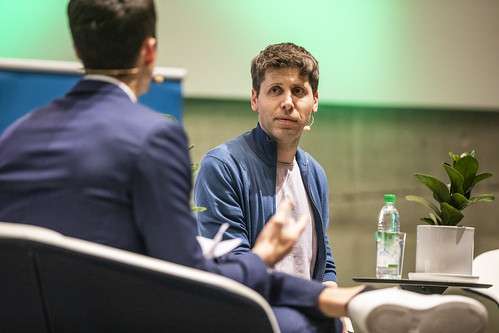
Sam Altman of Open AI
When a company that has issues with making profits can raise money at a valuation of $85bn, it becomes abundantly clear that investors in generative AI have taken leave of their senses
I can understand the argument that Richard Windsor is making with this argument. While others might point out how dominant funding drove Amazon’s present-day monopoly, there are other precedents like Netscape, General Magic, Uber and WeWork that others can point to.
There are bigger questions about whether the LLM approach is in itself a limited model to pursue? If so, Open AI could look more like when IBM bet the farm on Josephson Junctions. The use of synthetic data implies that LLM scaling might already be at its limit. Nvidia looks like a better bet from this angle despite its own extremely high valuation.
Brand purpose has a lot of issues, but it’s worthwhile bearing in mind the kind of marketing Unilever was pushing out prior to buying fully into the concept. These efforts came to light from social sharing about the the British ‘vulgar wave’ that contextualised Russell Brand.
Unilever Heart Brands UK
While China’s ads skewed conservative compared to the UK’s vulgar wave of 1997 – 2012, this Axe (Lynx in the UK and Ireland) ad isn’t exactly on brand purpose. The spokesperson in the advert is Edison Chen. At the time Chen was a star in Hong Kong’s entertainment circles. But getting involved in street fights and a leaked hard drive full of pornographic images of girlfriends he dated meant he withdrew from the industry. Now he is better known for owning streetwear brand CLOT.
Dove Sparks Boycott Calls Over New Partnership—’Never Buy Them Again’ | Newsweek – controversial question, but have Unilever gamed out that conservatives are more likely to use Irish Spring or similar products over Dove? I suspect that there might be something in the semiotics of cleanliness in this. African Americans by contrast might have challenges like ashen skin that would benefit from soap that cleans and moisturises, hence the popularity of shea butter based products.
Hong Kong
Architect Demi Lee on Kowloon’s Walled City. The comparison with the idea of rhizome was very interesting.
Ideas
Demi Lee’s video on how elements of cyberpunk are leaking into our current reality.
Dimensions of luxury as a post came together thinking about fictional influence account Gstaad Guy, Horizon Catalyst’s New Codes of Luxury report and Sense Worldwide’s Future of Luxury report.
Dimensions of luxury breaks down into three areas which Catalyst calls:
Traditional luxury
Contemporary luxury
Personal luxury
Nowadays, most luxury brands won’t fit neatly into these classifications. For instance the Swiss watch brand Blancpain would be considered to be traditional luxury, but the Swatch x Blancpain collaboration which borrows the design language of the 50 Fathoms dive watch is very much contemporary luxury. Part of this has been driven by many brands being part of large combines:
LVMH – depending when you look at the stock price, Europe’s largest company by value run by Bernard Arnault. Related to L Catterton private equity fund which has been financed deals such as Birkenstocks.
Kering – LVMH’s rival best known for Gucci. It is currently run by François-Henri Pinault
Richemont – Swiss listed group focused more on jewellery and watches than rivals. It has a range of brands including Dunhill, Montblanc and Panerai.
Swatch Group – which owns most of Switzerland’s premier watch brands
Fosun – China-based multi-sector conglomerate which owns a hodge podge of western heritage and luxury brands including Ahava, Folli Follie, Lanvin, Sergio Rossi, Silver Cross prams and St John knitwear.
Notable independents include The Rolex Trust and Hermés.
Traditional luxury
Unsurprisingly this is the kind of luxury that most people would think of. Timeless style, heirloom designs and peerless quality are likely to be the kind of language that springs to mind. When the luxury industry talks about sustainability and the circular economy, the lives of these traditional luxury products come into focus, since they are often passed down. The influencer behind Gstaad Guy in an interview with the FT talks about his favourite item of clothing being a Loro Piana vest that was his Grandad’s.
What we think of as ‘traditional’ luxury brands came out of businesses with heritage that are known for their quality
Loro Piana and Zegna were both high end fabric manufacturers before becoming ‘luxury brands’
Rolex made high quality reliable tool watches, as did Omega and Panerai.
Louis Vuitton made high quality robust trunks for travellers.
Zero Halliburton and Rimowa made cases that were ideal for air travel and protecting sensitive instruments and camera equipment. The Halliburton in Zero Halliburton actually refers to Halliburton Company who are famous for providing oilfield services.
Contemporary luxury
Contemporary luxury is where the greatest controversies of luxury tend to lie. Horizon Catalyst tend to tie up premium brands like AirBnB and Apple together with the luxury sector. It includes values like innovation and sustainability. But it doesn’t discuss what Dana Thomas calls the massification of luxury, with traditional European brands being more often being ‘Made In China’. This has driven a drive for brands to try and ‘shortcut’ their way to success. Luxury brands have adopted the techniques of streetwear brands were scarcity and limited drops fuel the ‘hype’. What Sense Worldwide called ‘Supremification’. Chanel is opening special UHNWI only boutiques. And ‘Made In China’ allowed China to develop its own ateliers.
Personal luxury
Catalyst defines personal luxury as subjective in nature, individual to each person and having a deeper connection with personal values. It could be items that might be considered treats like having their groceries delivered. Their discussion of everyday luxury would be familiar to marketers in terms of the ‘Lipstick effect’ familiar from Juliet Schor’s work during recessions. But it’s interesting that luxury is being defined by consumers and followed by brands. The classic example of this would be brands from Nike to LVMH getting on board with NFTs, following consumers and creators.
IPSOS conducts CX research on an annual basis. They surveyed 1,000 CX (customer experience) specialists around the world about the current state of CX in their businesses. The IPSOS CX research painted a complex picture of organisations. Key take outs of the CX research:
82% of respondents believed that CX investment will provide a competitive edge, but only 52% were expecting an increase investment over the next 12 months.
28% of respondents admitted that their organisation’s CX was worse than promised and only 15% of respondents consider their organisations ‘CX leaders’.
Only 52% have CX governance policies in place.
At the present time the majority of CX leaders have data integration issues and 46% now have to integrate AI as well, adding to their business challenge.
Environmentally friendly clothing brand Patagonia gets called out about the ‘greenwashing’ design of its buffalo work boots by the Rose Anvil YouTube channel who specialise in analysing boot and shoe design.
Standard Model: The Chanel J12 Eclipse Set – LUXUO – interesting, particularly given the manufacturing problems that Rolex has had with dual colour ceramic bezels. Chanel has managed to master this and master it across the whole watch. Matching bezel and case divisions.
Interesting analysis on supercar prices.
Profile of Lacoste.
Marketing
A few days of lunch time viewing from the IPA (Institute of Practitioners in Advertising) media planning and strategy summit. Interesting mix of presentations and case studies.
Really interesting case study on McDonalds and how the brand has evolved over two decades in the UK.
As I write the October 2023 newsletter. it’s getting noticeably darker outside earlier, but the sunrises reward us with a wider variation of colours. And we all have Halloween to look forward to. This is the third issue and I am still finding my way writing these things. I hope that the third time’s a charm, but I will let you be the judge of that. You can read the earlier ones here.
I looked into where the phrase ‘third time’s a charm’ came from. Apparently it comes from Old English Law, if a prisoner survived three attempts at hanging and survived, they would be set free.
You can find my regular writings here and more about me here. Let’s get it started!
Things I’ve written.
Climate despair – how NGOs and companies are failing young people in the way they talk about climate change and what they can do to change their communications to increase active participation in reducing the degree of climate change.
Technopolarity – how technology is subverting the power structures of elected governments and instead empowering the likes of Elon Musk.
Clustomers – how Intuit MailChimp’s ad campaign, whilst clever, might reinforce C-suite misconceptions around marketing and advertising
Tiny Habits by BJ Fogg. Fogg’s simple model for understanding individual behaviours has helped drive everything from health campaigns to online services. Tiny Habits how consumers and businesses can help foster behavioural change, one tiny habit at a time. More on my review of the book here.
The long awaited Mick Herron book The Secret Hours did not disappoint. It’s from the Slow Horses universe, but not a Slough House story per se. More than a nod to Boris Johnson’s stint as foreign secretary and prime minister. I will leave it at that rather than give you plot spoilers.
China A History by John Keay. Keay’s book was recommended to me by a number of people. In 535 pages he attempts the impossible in terms of covering China’s history as a civilisation through the start of Xi Jinping’s first administration. It’s a dense read – it’s well written, covering the complexity of history well. The current communist government is barely a footnote (ok exaggerating a bit here), but it puts things in perspective.
Spain A History edited by Raymond Carr. The book highlights the notable trends, intellectual and social, of each particular era in its history. Roman rule created the notion of ‘Spain’ as a distinct entity. The chapters on the Visigoth monarchy, Moorish Spain, the establishment, an empire, the eighteenth-century Enlightenment, all chart the cultural, political and economic arc of Spain. It then goes on to explore 19th century liberalism and the pivot during much of the 20th century towards authoritarian rule, followed by a return to democracy and onwards up to the 21st century. My favourite chapter was about the Visigoths, which was a period I didn’t know much about prior to reading this book – the author did a particularly good job of bringing the Visigoths to life on page.
Things I have been inspired by.
Halloween. I have been looking forward to the holiday for at least a month. Growing up in an Irish household with rural origins, I had an appreciation of the changing seasons and loved the traditions around Halloween, especially tales of the fairy forts and the banshee. It’s also a big money earner, in the advertising world allowing for interesting tactical executions that couldn’t otherwise be attempted. Outside advertising, ignoring increased food sales, a third of consumers will spend 51 – 100 USD on putting together their own costume, or buying one off the rack. The most hardcore 10% of those surveyed admitted to spending 250+ USD.
I was not into costumes, instead I look forward to the most is my Mum’s barmbrack. For the first time in a few years my Mum baked a few barmbracks and sent one of them to me. It’s a Halloween tradition. The barmbrack itself is a spicy fruited bread with a texture somewhere between brioche and and a pan loaf. Traditionally, the brack would contain a ring or trinket, which would turn up in a random slice.
When I was small, commercial bakeries still used to have a an aluminium ring that looked like it was from a cheap Christmas cracker contained wrapped in greaseproof paper baked into the brack.
Downloadable recipe PDF here (Dropbox) or here (Google Drive) if you fancy baking your own over the weekend.
While we’re on the subject of food, Hope & Glory’s collaboration between Lick paint and Heinz ketchup for a ketchup shade of wall paint creates talkability, though I wouldn’t be buying it for my own home.
Buoyant Bob – I am stil not sure if Buoyant Bob is a social object, a brand, both or something else. Buoyant Bob was a successful entry into the US cannabis marketplace. The brief in the campaign was to work around restrictions in cannabis advertising and show it as the most fun brand in the space.
Buoyant Bob was released as a single: retail takeovers, vinyl records at dispensaries, and fans sharing Instagram Stories using “The Man Who Got So High” all followed.
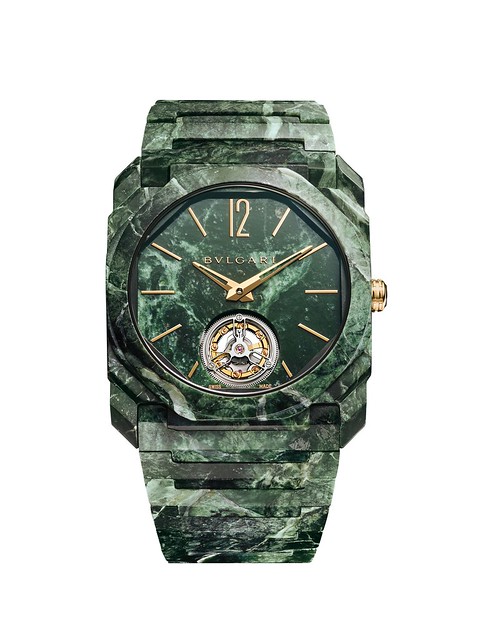
OnlyWatch – an auction in Geneva in aid of research Duchenne Muscular Dystrophy features one-off luxury watches from all of the major Swiss timepiece houses. Some of the entries are unique colour ways but Bulgari went the extra mile with their Octo Finissimo Tourbillon Marble. Their watches are already well known for being some of the thinnest timepieces available. A tourbillion is a demonstration of the watchmakers art. The one in this watch is just under 2mm thick – that’s just over double the thickness of a credit card for a moving mechanical assembly. And then they managed to cover the entire titanium case and strap of the watch in marble and make a marble dial – without making the watch any bulkier than its usual ridiculously slim case. It’s not something I would wear even if I could afford it, but I am in awe of the ingenuity.
Bulgari for OnlyWatch – Octo Finissimo Tourbillon Marble
Finally Dentsu Health published a great must-read byline on how media and entertainment can aid health equality. More here.
Things I have watched.
I got to see The Boy and The Heron early at the BFI London Film Festival. You won’t get any plot spoilers from me here. Official release is December 26 in the UK, December 8 in Hong Kong. It’s Studio Ghibli, what else do you need to know?
General Magic – a great documentary about a Silicon Valley start-up of the same name.. Back in the early 1990s General Magic was as visionary as Apple and as hyped as WeWork. If you’ve ever worked with a start-up or care about technology give it a watch. More on my thoughts here.
The Pentagon Papers – Despite this being a made-for-TV film, James Spader does a great job of playing Daniel Ellsberg; the RAND researcher to gave the materials to the media. In terms of pacing acting and storytelling, I would put this on a par with Robert Redford and Dustin Hoffman’s film adaptation of All The President’s Men.
Tampopo is a beautifully shot Japanese film with comedic moments that tells the story of a widow, her son and their ramen shop. More on what I thought of here.
A relatively modern Halloween tradition in the Carroll family has been watching It’s The Great Pumpkin, Charlie Brown – recommended for young and old alike. While my Dad and I usually end up watching The Crow later on. If you want more classic horror, then you could do worse than watching the livestream by the Creature Features show.
Useful tools
ITV Adlabs and Magic Numbers recovery budget planner
Pretty much essential to look at if you have responsibility for UK media spend at a brand. This allows you to examine various scenarios and see likely outcomes based on media spend. More here.
Google bundles generative AI and LLM with search
I downloaded Chrome especially to try this out, it looks a bit more mature than Bing’s initial integration of ChatGPT. Go here to give it a try if you’re a Chrome browser user.
Post-It Z-Notes
You’re workshopping something with clients or thinking something through on your own – Post-It notes are key. The own brand ones can vary from really good to useless, so spend a bit more and get proper Post-It notes. In fact, I’d advise that you go one step further and get Post-It Z-Notes. The notes alternate sides in terms of where the ‘sticky end’ is and if you lift them from the pad you get a ‘Z’ before they peel away. They come away effortlessly and work brilliantly if you have them in a desk holder.
Foldable wireless keyboard
At the start of my career, I used to have a Palm PDA ( personal digital assistant – think a smartphone, without the phone and communications bit). I also had a long commute to Luton on a daily basis. I got a lot of reading and writing done thanks to a ‘Stowaway’ foldable keyboard made by a company called Think Outside. The company no longer exists, but the desire to be able to turn my iPhone into a simple writing tool lives on. Recently, I have been using this foldable Bluetooth keyboard. It folds up, can be used on a train seat table or even an economy class aircraft seat and recharges easily. The keyboard isn’t the usual rubbery mess that you tend to get in a lot of these devices. It’s one fault so far is that it feels flimsy, but I have already got my money’s worth out of it in just a few months. I fire up the iPhone’s notes app and get to work. I can then edit and refine once I have a bit more time on my Mac at a more convenient time.
The sales pitch.
Now taking bookings for strategic engagements or discussions on permanent roles. Contact me here.
The End.
Ok this is the end of my October 2023 newsletter, I hope to see you all back here again in a month. DON’T FORGET TO PUT YOUR CLOCKS BACK BEFORE YOU GO TO BED ON SATURDAY. Let me know what you think or if you have any recommendations to be featured in forthcoming issues.