Category: ideas | 想法 | 생각 | 考える

Ideas were at the at the heart of why I started this blog. One of the first posts that I wrote there being a sweet spot in the complexity of products based on the ideas of Dan Greer. I wrote about the first online election fought by Howard Dean, which now looks like a precursor to the Obama and Trump presidential bids.

I articulated a belief I still have in the benefits of USB thumb drives as the Thumb Drive Gospel. The odd rant about IT, a reflection on the power of loose social networks, thoughts on internet freedom – an idea that that I have come back to touch on numerous times over the years as the online environment has changed.

Many of the ideas that I discussed came from books like Kim and Mauborgne’s Blue Ocean Strategy.

I was able to provide an insider perspective on Brad Garlinghouse’s infamous Peanut Butter-gate debacle. It says a lot about the lack of leadership that Garlinghouse didn’t get fired for what was a power play. Garlinghouse has gone on to become CEO of Ripple.

I built on initial thoughts by Stephen Davies on the intersection between online and public relations with a particular focus on definition to try and come up with unifying ideas.

Or why thought leadership is a less useful idea than demonstrating authority of a particular subject.

I touched on various retailing ideas including the massive expansion in private label products with grades of ‘premiumness’.

I’ve also spent a good deal of time thinking about the role of technology to separate us from the hoi polloi. But this was about active choice rather than an algorithmic filter bubble.


  • Internet of Bodies

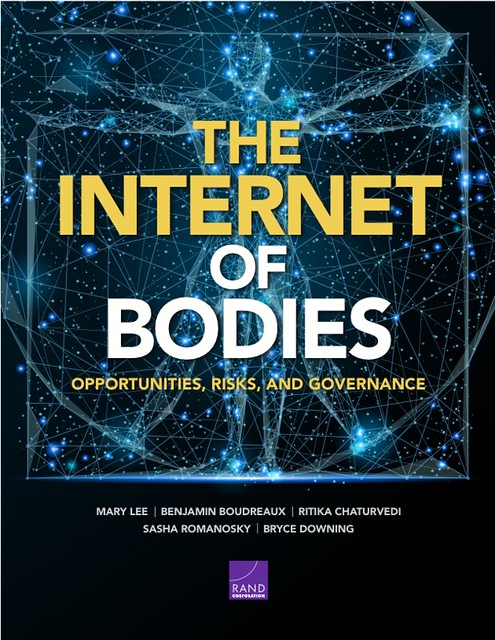
    Internet of bodies or IoB is a term that I first heard as The Internet of Bodies – a RAND Corporation report into internet connected devices that

    …monitor the human body and transmit the data collected via the internet. This development, which some have called the Internet of Bodies (IoB), includes an expanding array of devices that combine software, hardware, and communication capabilities to track personal health data, provide vital medical treatment, or enhance bodily comfort, function, health, or well-being.

    RAND Corporation
    The Internet of Bodies

    RAND Corporation were interested in the internet of bodies because of the complexity of the area. There are benefits which are well documented by others. However there are also ethical considerations around:

    • Data use by commercial organisations (advertising, health insurance, pharmaceutical industry)
    • Misleading product claims around product efficacy
    • Privacy risks
    • Data security risks
    • Underdeveloped and complex regulatory environment

    What the Internet of Bodies covers includes:

    • Fitness trackers
    • Fitness software running on smartwatches or smartphones and device sensors
    • Connected health devices: insulin pumps, pacemakers
    • Patient adherence apps on smartphones
    • Patient diaries about their condition

    The report came to a number of conclusions including:

    • As 5G, Wi-Fi 6, and satellite internet standards are rolled out, the US government conduct research projects to better understand any potential issues that might emerge
      There is a challenge that needs to be addressed to replace earlier generation devices and services with poor information security practices. The issue of cybersecurity needs to have more attention paid to it, right from the beginning of IoB product development
    • Device makers should test products and services for vulnerabilities often, and devise methods for users to patch software.
    • Data transparency and protection regulations need to be revisited to take account of materials received from the IoB
    • As with any new sector, a tighter regulation is required to prevent false or misleading product claims

    More jargon related posts here.

  • US political reporting

    Like most people at the moment I have been following the US presidential election. What struck me was the state of US political reporting I was watching on US network ABC and foreign media coverage.

    Polling station
    Polling station sign

    Polls

    Something seems to have gone wrong with polling methodologies. There are a variety of explanations for this but the impact is felt on US political reporting.

    • There is a lack of polling coverage in areas that are more likely to vote Republican: white working class, working people in rural areas
    • Conversely the models tend to skew more towards urban and suburban based voters
    • The very nature of polling questions is usually done out of context

    Qualitative data

    What becomes apparent is the there are huge swathes of the country that there is no longer qualitative research from. There are no longer local newspapers in a number of areas and ‘local’ TV networks are often an agglomeration of several former stations. This impacts on the granularity of the US political reporting. The greatest impact of this is felt in areas that are also ‘under-polled’.

    Disintermediation of the media

    The campaign for incumbent president Donald Trump seems to have been organising under the radar on social media and seems to have focused on getting more people who share their world view to get out and vote rather than reach ‘new constituencies’. This aspect of the campaign seems to have been missed by media pundits.

    In many respects it resembles the UK leave referendum grassroots campaigners and supporters of Nigel Farage’s various reactionary political efforts. What they lack in absolute numbers, they try and make up for in commitment to getting out their base.

    This resulted in Republican supporters creating convoys of cars and pickup trucks in their neighbourhoods to show their visibility, creating a form of social proof.

    Opinions

    Instead of data, the US political reporting seems to be based on the opinions of pundits affiliated to both major parties. This allowed networks and audiences to ‘drink their own kool-aid’.

    While the Democrat presidential candidate Joe Biden’s campaign strategy was to try and build interest across the spectrum – there wasn’t a manifesto the way we’d understand it in Europe.

    Instead there was an exchange of negative character messages about each candidate bolstering this wider battle of opinions over substance. This hasn’t been questioned in the US political reporting that I’ve seen, which surprised me.

    More media related content here.

  • Things that caught my eye this week

    Positive Brand Friction is a report that looks at the impact of customer experience on brand and how to get the best benefit out of it in the long term. The report was launched by the Institute of Practitioners in Advertising (IPA) at the Effworks Global Conference.

    Positive Brand Friction identifies a number of factors that increase the complexity in customer experience:

    • CX is usually designed around business functions rather than the customer
    • Ownership (but not necessarily responsiblity) falls under different business functions. Collaboration and swift decision making become even more important
    • The conflict between identifiable efficiency gains through cost reductions versus more variable returns through effectiveness and value-growth focus
    • Investment differences between operating expenditure (OPEX) and capital expenditure (CAPEX). This can make it harder for marketing to deliver long term value where OPEX is reduced

    Positive Brand Friction identifies four areas of focus for organisations and their agencies:

    • Experience intelligence / measurement. Measurement, insights and reporting system to discovers places where the experience can be improved
    • Collaboration rather than individual ownership of the experience. This also results in a customer focused culture
    • Evolving to get the right balance of positive brand friction without impacting on customer effort
    • Marketing growing into its role as the experience leader and influencer balancing customer and business value

    More here.

    Kazakhstan gets their reputation work in to balance the new Borat film on Amazon Prime Video. Rather than righteous indignation, they’ve respun Borat’s catch phrase and put together a number of short spots that challenge viewers expectations of Kazakhstan.

    Big Daddy Kane is one of the unsung heroes of hip-hop, Micro-Chip put together this great essay on him. Take out 15 minutes and give it a read: Big Daddy Kane’s Voice is an Instrument – Micro-Chop

    I happened to come across this Doug DeMuro video reviewing the BMW X5 M Competition. I haven’t suddenly turned into a car nut, but I found DeMuro’s dive into the unusual aspects of the driver experience was fascinating. What becomes apparent is how much digital has become part of the car. Look at the remote finger-twirling gesture control to alter audio volume at 7:00 in. It all feels very laboured compared to other digital products and too feature heavy.

    More on design related content here.

  • Vietnam boomtowns + more things

    Apple’s Shifting Supply Chain Creates Boomtowns in Rural Vietnam – Bloomberg – Vietnam is becoming the new China. While China has been impacted by problems of its own making, resulting in diversification of supply chains and trade disputes. This Vietnam build-out feels very much like build out in China during the late 1990s and the early 2000s after China joined the World Trade Organisation. Vietnam is now likely to experience double-digit growth. Hopefully Vietnam will climb up the value chain in a similar way to China. Vietnam is already a great place to develop software and applications. More Vietnam related posts here.

    Apple develops alternative to Google search | Financial Times“Any reasonable search engine has to have 20bn-50bn pages in its active index,” Mr Ramaswamy said. When a user runs a query, the retrieval system must sift through vast troves of data then rank them in milliseconds. Some observers still dismiss the idea of Apple creating a complete search rival to Google. Dan Wang, associate professor of business at Columbia Business School, said it would be “extremely difficult” for Apple ever to catch up. “Google’s advantage comes from scale,” he said, as the endless user feedback helps to tune results and identify areas of improvement. “Google gets hundreds of millions of queries every minute from users all over the world — that’s an enormous advantage when it comes to data.” – Apple needs search for its app store, mapping services, media services and even on device. It doesn’t necessarily mean that Apple will do a ‘Google’

    Army of avatar robots readies to invade Japanese job market – Nikkei Asia – stocking shelves in a FamilyMart

    Apple develops alternative to Google search | Financial Times – explains Apple’s massive amount of overcapacity in their datacentre space for the past decade as they built around the world

    Chinese retailer Miniso beats Uniqlo and Muji at their game – Nikkei Asia – interesting profile of Miniso. What becomes apparent is how Luckin Coffee has poisoned the well with investors for Chinese retailing businesses

    Surveillance Startup Used Own Cameras to Harass Coworkers | Vice News – not terribly surprised that this was in their sales team. It fits right in with the sales cultures I have known

    25 Years In Speech Technology. …and I still don’t talk to my computer. | by Matthew Karas | Oct, 2020 | Medium – great essay on voice technology on computers (including smartphones)

    German spy chief Gerhard Schindler: China is poised to dominate the world | World | The TimesGerhard Schindler, who led the Federal Intelligence Service (BND) from 2011 to 2016, said Germany needed to curb its “strategic dependence” on Beijing and ban Huawei from its 5G mobile phone network. He also warned that Angela Merkel’s liberal approach to the 2015 migrant crisis had left Germany with a “large reservoir” of young Muslim men susceptible to violence and jihadist ideology, and that the true scale of the danger was only now becoming clear.

    UK risks road rage with China in Africa – POLITICOUnited States Assistant Secretary of State for African Affairs Tibor Nagy told a Congressional hearing in 2019 that Washington was “weaponizing” its African embassies “to confront China on a whole range of issues, most prominently a commercial one.” Westcott, from the Royal Africa Society, pointed out that Britain was so far aiming to maintain its own influence in Africa rather than reduce Chinese influence — but that it could take a more aggressive approach in future, for example attempting to outbid China for projects.

    How The Epoch Times Created a Giant Influence Machine – The New York TimesThe Epoch Times was a small, low-budget newspaper with an anti-China slant that was handed out free on New York street corners. But in 2016 and 2017, the paper made two changes that transformed it into one of the country’s most powerful digital publishers. The changes also paved the way for the publication, which is affiliated with the secretive and relatively obscure Chinese spiritual movement Falun Gong, to become a leading purveyor of right-wing misinformation. First, it embraced President Trump, treating him as an ally in Falun Gong’s scorched-earth fight against China’s ruling Communist Party, which banned the group two decades ago – the enemy of my enemy is my friend. I see this as a failure of liberal politicians engaging with a plurality of opinions about China.

    The Belt and Road Strategy Has Backfired on Xi | Palladium MagazineThe Belt and Road is less a geoeconomic power play than a marketing strategy. Few of the myriad projects and investment schemes labeled ‘Belt and Road’ exist because of the initiative as such. Grand strategists in Beijing did not cause the tremendous outbound flows of money, men, and material that comprise Belt and Road, and they cannot direct it either. What statesmen like Xi Jinping do have power to influence is how these flows are understood and perceived by the world

    How Did China Beat Its Covid Crisis? | by Ian Johnson | The New York Review of Books – ambiguous lessons on handling COVID-19

    WeChat ban a catch-22 for Chinese Australians – The China Storysome members of the Chinese Australian community have created parallel chat groups on WhatsApp, Letstalk, Line or Telegram in case of a local WeChat ban. But they continue to be drawn back to WeChat as their main social media platform. Why do members of the Chinese diaspora choose to self-censor when they have many other options available? The answer may lie in platform affordances available in WeChat as well as techno-material features of the app that produce ‘habits’, engender ‘necessity’ and provide users with a sense of ‘vitality’.

    Inside Out: China’s Forgotten Domestic Politics – The China Story – China digging itself into a soft power hole

    Adobe’s new AI experiment syncs your dance moves perfectly to the beat | The Next Web – I was thinking about the effect that quantisation had on music software in the early 1990s which allowed for perfect beat synching (in theory, though MIDI and USB could throw that off slightly

  • North Face + more things

    From Supreme to Gucci: How North Face uses big-name collaborations to drive ‘brand heat’ – GlossyTim Hamilton, North Face’s head of global creative, said it typically does two collaborations per year, at most. In addition to its upcoming collab with Gucci, North Face has an ongoing collab with Supreme that started in 2015. And it released collabs with athletic brand Brain Dead and MM6, the sportswear line of Maison Margiela, in August.  Hamilton said the brand’s collaborations typically require a lead time of 1-2 years and are almost always manufactured and produced by North Face. The MM6 collab, for example, began with discussions between Hamilton and the Margiela design team in 2019. – This lead-up time probably explains the balance in their collabs between hype and steadier brands. Hence no Virgil Abioh or Yeezy deal with North Face. Abioh has flirted with Canadian technical brand Arcteryx; which is owned by Chinese sports and outdoor clothing conglomerate Anta – who have a lot of cash. It is interesting that nothing has come from Abioh’s visual love letter so far.

    Op-Ed | New Balance Collabs Are Second to None This YearNew Balance places an emphasis on “aligning with brands that are authentic in their space and have substance behind their message.” New Balance’s roster of collaborators represent a wide range of aesthetics, communities, and subcultures, meaning the brand can speak to a variety of consumers based on what product has been matched with which collaborator. In a sense, putting together a New Balance sneaker collaboration is like a game of exquisite corpse. “We’re able to keep product executions and stories fresh while creating different followings for each type of partnership,” – you could argue that adidas and Nike’s deals with Yeezy and Off-White relegate adidas and Nike to little more than original equipment manufacturers (OEMs). But New Balance also doesn’t have the deep pockets to go up against adidas and Nike head-on. That lack of deep pockets also affects North Face as well. I am surprised that the North Face and New Balance haven’t collaborated, though part of the issue maybe New Balance’s Danner Boots business. This competes somewhat with North Face’s boots business, but they have a very different aesthetic appealing to a different audience. North Face is owned by VF Corporation with sister brands Dickies, Timberland and JanSport. This means that brand collabs for North Face are probably complex politically.

    A millennials love affair: China’s second-hand luxury goods market booms | Reuters – yes Chinese like new things like new apartments. Yes but: Chinese luxury consumers have become more sophisticated. Chinese consumers have travelled and seen the pre-owned market like Milan Station and BRAND OFF in Hong Kong and Japan respectively. In absolute terms middle class wages are lower in China still than the US; yet this isn’t reflected in luxury product pricing

    Alibaba Takes Over China’s Top Hypermart Chain for $3.6 Billion – Bloomberg – interesting that Alibaba is working on an offline retail strategy

    Robert Lighthizer Blew Up 60 Years of Trade Policy. Nobody Knows What Happens Next. — ProPublica – I am not normally interested in publishing about politics, but this article on US trade policy is an interesting starting point to think about the current debacle

    Revisiting Lyn Collins’ “Think About It” – Micro-Chop – great essay. Its also good to see how the edits of Ultimate Breaks and Beats played a role in popularising the ‘think’ break

    Hong Kong walks: discovering traditional, trendy Tai Hang | Financial Times – it makes me ‘home sick’ as Hong Kong island was my home for a while

    Baaaa for business: Princess Diana’s iconic sheep sweater is back | Financial Times – its interesting that luxury brands are now raiding not just archives but childhood memories for cues. Also the convoluted customer journey outlined in the article for the original purchase via a bridesmaid’s mother

    Debate over vegan ‘sausages’ and ‘burgers’ heats up ahead of EU vote | Financial Times – unsurprising given the size of the beef and pork industries in the European Union

    WPP back on hunt for deals, says chief | Financial TimesRead’s challenge is to win back investors who think agency holding groups are struggling with multiple structural tests: cost-cutting and clients taking business in-house, competition from consultancies such as Accenture, and waning clout as middlemen in digital ad markets dominated by Google and Facebook. WPP’s share price is 65 per cent lower than its 2017 peak, and has fallen more than a third since the pandemic battered the economy. The three-year decline is a more severe than at rivals such as Omnicom and Publicis. Meanwhile, investors have flocked to the simpler growth story of adtech providers such as The Trade Desk, which this year has soared to almost three times WPP’s market value on a tiny fraction of its revenues. The £2bn market capitalisation of Sir Martin’s S4 Capital, a digital-only advertising group, is almost a quarter of WPP’s value even though it generated less than three per cent of its £12.4bn sales in the year to June 30.  – a number of things from this interview. The Trade Desk has a lot of heat around it, WPP attempted to do this with Xaxis but has got little credit. Read tried to spin that Accenture and WPP have sweet spots at different points in the economic cycle. Hence the comment about Accenture being good at cutting marketing costs.

    Mr Read’s pitch is that WPP has combined its traditional creative strength with the tech expertise to build ecommerce platforms for clients such as Sainsbury’s, and become the single biggest integrator of Adobe’s software. “Our goal is to be to revenue growth what Accenture is to cost reduction,”

    Chinese-Americans campaign for Trump on WeChat | Financial Timesit is becoming increasingly difficult to organise on WeChat, not only because of the looming US ban but also because of Chinese censorship. Simple WeChat filters for sensitive terms such as “democracy” can detect articles about US politics. Sometimes when Mr Ming sends articles to his groups, those with Chinese-registered phone numbers on their WeChat accounts cannot receive the links, no matter where they are in the world. Ms Wen, who used WeChat in 2016 to organise a door-knocking campaign for Mr Trump, was glad to shift away from the platform this year. “I know it is completely surveilled. Nowadays I mostly use Telegram,” she said, referring to the encrypted messaging app. – interesting move to Telegram, mirrors what I saw in my Hong Kong friend network after the Hong Kong National Security law was passed

    Google’s new ‘hum to search’ feature can figure out the song that’s stuck in your head – The Verge – now this is clever

    The future of fashion week? Look to Shanghai | Vogue BusinessShanghai Fashion Week, which pioneered digital pivots like live streaming, returns today as a largely physical event, featuring around 90 brands across a number of venues, including its main stage in fashionable shopping district Xintiandi and emerging designer platform Labelhood

    How to steer clear of discounts this holiday season | Vogue Business“Markdowns have almost single-handedly ruined our industry,” says Hewitt. “They train the consumer not to buy in-season because they can come back in three months and get a discount. It’s a vicious cycle.” – during the 2008 recession Rolex reputedly bought back watches in its retail and wholesale channels. And then recycled them

    Kibbles & Bytes #1122: Apple Releases Four iPhone 12 Models and the HomePod mini – Don Mayer nails the assessment of 5G in the latest edition of his newsletter.

    Why a new generation of challenger brands need to rethink how to challenge | A Little West of Centre – Blands. That’s what Ben Schott, writing for Bloomberg, coined them. And what a coining it is. The new generation of humble, conscious, in-it-to-sell, underdog companies, sporting D2C models, consumer champion narratives, minimalist aesthetics, affordable luxury positionings and post-choice selling techniques (this is THE mattress, that is THE toothbrush).

    Sony Launches SR Display: You Can See 3D Pictures Without Wearing 3D Glasses – Gizchina.com – really interesting technology

    Indonesia’s central bank hints burglary in e-wallet playerconsumers should look at the track record of providers before using them to save large amounts of money. Indonesia’s total e-wallet transaction value size is expected to reach US$15 billion by 2020, according to a recent report by The Asian Banker

    Problem Solved #13: A lesson in tackling bloody taboos from Bodyform | The Drumthe result was to present the viewer with flame-engulfed apartment of a perimenopausal women; a monster ripping at an endometriosis sufferer’s uterus; a ‘flood gate’ moment following an unexpected sneeze; a woman who has chosen not to have children; and the often-turbulent journey of trying to conceive

    Diane von Furstenberg: Interview | Vanity FairThe iconic wrap dress, designed in 1974 and sold more than 15 million times since, made von Furstenberg an overnight sensation and began a dialogue with women that she has maintained ever since, in a large part through admirable philanthropic efforts, including the annual DVF awards. Now she’s taking that dialogue to the podcast, a medium she champions for its value in shifting the focus away from appearance.

    British Airways Avoids Huge £180 Million Data Breach Fine for Hack That Compromised the Personal Details of Over 400,000 Customers – good for BA given airlines are haemorrhaging cash at the momen. I am worry about the message that this sends to large corporates and customer data

    Shenzhen — Justin McGuirk – pretty much nails how I found Shenzhen over the decade that I visited regularly. More on Shenzhen related posts here.

    Facial recognition data leaks are rampant in China as Covid-19 pushes wider use of the technology | South China Morning Post – interesting that this is being collected by non-state actors such as property management companies and schools as well as the state bodies

    iPhone 12 launching without earbuds or wall chargers is compared to eating without chopsticks in China | South China Morning Post – I was expecting this as Chinese consumers are value orientated, brands focus on ‘client delight’ and there is a culture of free gifts with products. So taking items out of the box and the green explanation won’t wash

    Beijing 1986: portraits of a forgotten China | Financial Times – amazing photos from 1986.

    Shenzhen/Huawei: the other Bay Area | Financial TimesThe impression of military manoeuvres by alternative means was reinforced by Tencent, another Shenzhen resident. It was among big Chinese social and video platforms including iQiyi and Weibo, that simultaneously cancelled the livecast of Apple’s iPhone 12 launch – a small example of the nexus between the Chinese government, corporate decision-making influenced by the government and an undercurrent of Han nationalism