Ideas were at the at the heart of why I started this blog. One of the first posts that I wrote there being a sweet spot in the complexity of products based on the ideas of Dan Greer. I wrote about the first online election fought by Howard Dean, which now looks like a precursor to the Obama and Trump presidential bids.
I articulated a belief I still have in the benefits of USB thumb drives as the Thumb Drive Gospel. The odd rant about IT, a reflection on the power of loose social networks, thoughts on internet freedom – an idea that that I have come back to touch on numerous times over the years as the online environment has changed.
Many of the ideas that I discussed came from books like Kim and Mauborgne’s Blue Ocean Strategy.
I was able to provide an insider perspective on Brad Garlinghouse’s infamous Peanut Butter-gate debacle. It says a lot about the lack of leadership that Garlinghouse didn’t get fired for what was a power play. Garlinghouse has gone on to become CEO of Ripple.
I built on initial thoughts by Stephen Davies on the intersection between online and public relations with a particular focus on definition to try and come up with unifying ideas.
Or why thought leadership is a less useful idea than demonstrating authority of a particular subject.
I touched on various retailing ideas including the massive expansion in private label products with grades of ‘premiumness’.
I’ve also spent a good deal of time thinking about the role of technology to separate us from the hoi polloi. But this was about active choice rather than an algorithmic filter bubble.
Hackers Make a Fake Hand to Beat Vein Verification | Motherboard – another biometric standard weakens. The big question is the cost of the hand versus the benefit gained fooling vein verification. I am quite impressed by the vein verification hack. More on biometric authentication here.
Apple’s “Color Flood”: like Picasso said | Ken Segall – interesting analysis on the influences on Apple’s iPhone X/XR/XS advertising. All I can say is thank goodness Qualcomm aren’t in the ad business or Apple would be screwed
Can Luxury Brands Tap Into China’s ‘Virtual Avatar’ Fever? | Jing Daily – reminds me of the Adidas promotion Yahoo! did as a tie into to the 2006 World Cup in Germany. Yahoo! was a FIFA sponsor (for online sports content, part of the bigger Terry Semel – ‘lets build a media company’ ethos along with ‘Kevin Sites in The Hot Zone’ – a proto-Vice TV documentary series. Often ideas have to come around a number of times before they have their day…
Things that made my day this week, apart from spending time with family, introducing my Mum to T-WOG $. T-WOG $ is the Terry Wogan secret pirate radio shows. We also ended up eating surprisingly little Christmas food; none of us really wanted the heaviness of seasonal fare that introduces food coma.
For those who haven’t heard it, T-WOG $ is Peter Serfinowicz channels Terry Wogan; IF he hosted a show on rinse.fm. He gets the light, deft responses that Wogan perfected for his fan base during his heyday on BBC Radio 2 or TOGs as they were called. TOGs stood for Terry’s Old Geezers and Gals. Serfinowicz then marries this with the call out culture from pirate radio since the late 1980s.
Terry was unfortunately taken from us going on for two years ago, but his cultural impact lives on.
To complete the illusion; I just need to find an impressionist who can do a passable impression of Daniel O’Donnell spitting lyrics over drill tracks.
RuPaul’s tic-tac diet from circa 1993… RuPaul had refined her persona by this time. This was done about the same time that RuPaul had her first album and mainstream success with Tommy Boy Records.
A more serious interview with RuPaul Charles courtesy of Houston PBS
Ireland, Brexit and the future of Transatlantic Relations
An Irish perspective on Brexit. Daithi O’Ceallaigh is a former Irish Ambassador to the United Kingdom, so is likely to have an informed opinion with regards how the Irish government views Brexit.
Three stories on video game addiction told in I Was A Winner. Its a great bit of film making about an issue that could be the tobacco industry of our time.
At a macro level, the world is in a pretty strange place at the moment. Populism is at the centre of uncertainty across many countries in terms of political direction, macro economics, technology and consumer uncertainty.
Populism and nationalism is on the march: Duterte in the Philippines. Trump in the US. The German right wing populism leaning political party AfD is shifting the Overton window in Germany. The yellow vests in France and the UK is channeling anger into political activism along fringe party lines providing an opportunity for populism. The UK has seen a rise in far right grassroots media mirroring the rise of The Canary and similar publications on the left both of which fuel different forms of populism. The Russians don’t need to do it as the populism and divisive politics is homegrown. The Queen’s speech called for unity in the country and the UK government’s Prevent anti-radicalisation programme has more far right cases than Islamic extremists. Even China has been gradually moving to a Han nationalism as part of its more forceful foreign policy. India and Pakistan have both seen a rise in sectarian politics. This has impacts in terms of foreign trade and economic growth. We are already seeing domestic brands rising in China and India; we may see a decline in brands and product SKUs in the likes of the UK – all of which will impact advertising budgets. At an agency office level; the chilling effect of nationalism is going to affect the movement of talent on both client and agency side. It’s hard to articulate the atmosphere of an agency that I was working in the day after the Brexit vote without using the word bereavement. I know people in my family and peers who are moving away. Over time this will impact culture and creativity. It is hard to remember but back in the 1970s the UK was much more parochial and less multi-cultural than it is now. Everyday things we take for granted like good food were much poorer experiences.
There are so many variables in play we don’t know where populism and divisive politics is going, but there are dark possibilities to the government ‘by the seat of their pants’ which seems to be prevalent.
Cryptocurrency and block chain: We’ve seen a wide range of crypto currencies decline in values this year. What are the factors might drive a recovery? Why would there be a spike in demand? I don’t know what that ‘X factor’ would be. I suspect that experiments in block chain such as verifying online media spend to prevent online fraud will start bumping up against the limitations of the technology. Blockchain has a relatively low transaction rate compared to legacy payment systems. Decentralisation still isn’t as good as an Oracle database or a mainframe a la the traditional banking system. Some applications just make no sense.
From Farm to Blockchain: Walmart Tracks Its Lettuce – The New York Times – is a classic example of technology for technology’s sake. How much lettuce would Walmart be selling day in, day out? That data has to be collected across a complex supply chain. Secondly, its a privatised centralised blockchain which negates the technical benefits of Blockchain and makes me wonder why IBM weren’t selling in Db2 or Oracle high transaction speed relational database on a z-series mainframe. It’s announcements like this that makes one wonder if blockchain has jumped the shark.
Virtual reality hasn’t seen the level of adoption that was predicted. The problem is no longer one of technology hardware (lets ignore battery life for a little while) but content. VR changes the way stories are told and experienced, it makes it hard to build brand experiences and compelling content. Microsoft has managed to build a community of early adopters in Altspace – a Second Life type environment. Augmented reality (AR) has been sporadically adopted and Apple has been putting a lot of work into building creator tools, but the decline of Blippar. Magic Leap’s demo film for its partnership with Cheddar doesn’t currently look like a compelling AR application to me. It does mirror, anecdotal evidence that suggests the most common use of VR is to replicate a big TV experience in a small space through the Netflix application.
https://youtu.be/xjYE-joYjQs
If 2017 and 2018 were the years when ad fraud became the bête noire of marketers, 2019 might see harder questions asked of influencer marketing practices. The move from influencers to micro-influencers was down to cost per reach and engagement. The move to nano-influencers implies a similar kind of shift again. Yet it seems to be largely taken on blind faith by marketers at the moment that influencers are good thing. I think many of the challenges that influence marketing faces when I wrote about them earlier are still valid. One question that I haven’t seen seriously considered by marketers is when you’re in a culture where ‘selling out’ has moved from being shameful to gen-x; to a badge of validation in the space of a decade that has to change the value proposition that influence brings? As a marketer the possible answer to that question worries me.
The focus on ad fraud might be partly responsible for a slight resurgence in the realisation brand advertising is valuable. Performance advertising is about the now, brand advertising is all about sowing acorns that are reaped for decades to come. As a concept it’s easy to grasp at an empirical and research driven level. But when marketers typically stay in a role for a short time, the now becomes of outsized importance. They have to make an impact and then plan their exit strategy in what’s typically a three year cycle. Brand is hard for FMCG (fast moving consumer goods) brands to take on board as they see channel and shelf disruption from the likes of Amazon and Ocado. They have experimented with the direct sales model a la Birch Box and Dollar Shave Club, but that will only work with certain products. Consultants selling disruption are selling chaos; clients hedging against black swans often miss where change isn’t happening – consumer behaviour doesn’t change at the speed of PowerPoint. I’ll leave the last word on digital disruption to Mark Ritson.
It’s hard to get emotional or feel any of the romance of news media from a home page, but the paper edition carries with it the great cultural power of journalism. Print editions will become the ‘couture’ offering of the news brands – loss-making but important assets for building and retaining authority and influence over the market
Validation of traditional media can be seen all around us. Amazon printing catalogues, online brands having flagship stores. Underground and out of home adverts for e-commerce businesses surround me as I go about my daily life in London.
Stories with everything – I don’t know whether the recent trend of every social platform having a short form video function that disappears a la ‘stories’ is a wider socio-cultural trend or the constant carousel of changing formats as part of a ploy to keep users engagement rate up. For established platforms there is little to be lost by throwing new features agains the wall and seeing what sticks.
I’ve omitted talking about 5G as it will take more than a year to get up and running. It won’t be clear what its application is until we start to see how effective the network is in practice. Gadgets like fold out phones won’t fundamentally change the pictures under glass interface used in smartphones for the past decade or so. Their impact may be exaggerated due to their high cost that consumers will bear one way or another.
I realise that these are a series of random thoughts but would be interested to know what you think. Feel free to comment below.
New Yorks information for Amazon – crazy number of data points and a must see for any planner looking at campaigns targeting New Yorkers (PDF). From a more sinister point of view about New Yorks information for Amazon – it shows a corporate culture that’s out of control.
Just who is Huawei listening to? | Business | The Sunday Times – “In the event of an international crisis — say, if the Chinese were to invade Taiwan — if you own a fleet of thousands and thousands of routers, you can launch service-denial attacks on a massive scale,” said Ross Anderson, professor of security engineering at Cambridge University. “You can potentially make the internet unavailable for days or weeks.”
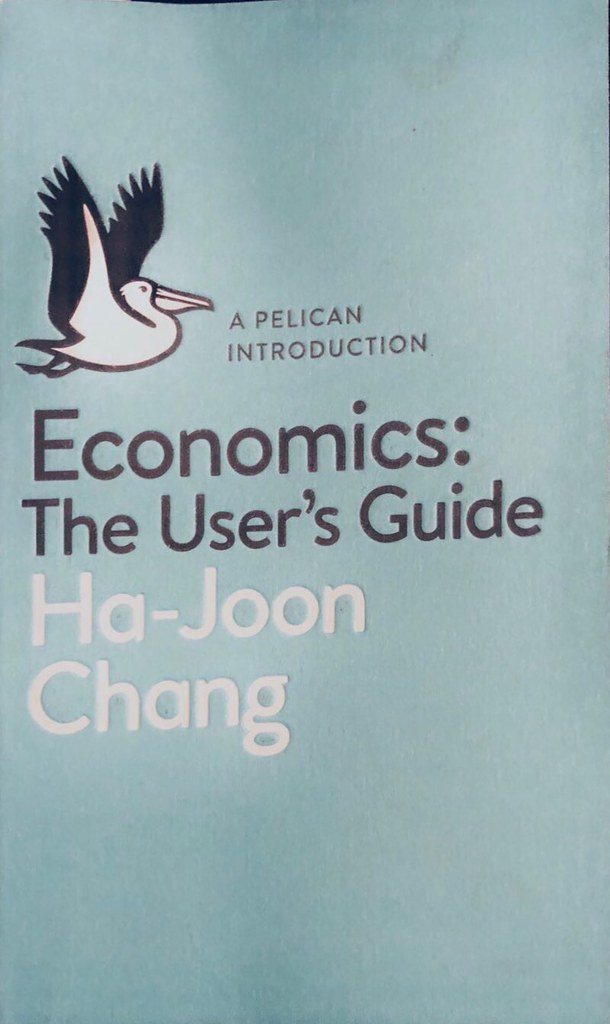
Economics The Users Guide: A Pelican Introduction by Ha-Joon Chang is a great reader for the average person on economics. If I had this during my first economics modules at college, it would have been really useful.
As an engaged member of the electorate it would allow you to for example critique Brexiters vision of Britain as a free market utopia a la Singapore just off the coast of continental Europe.
Singapore isn’t actually a free market utopia. The government houses almost 90 per cent of the population through the HDB (Housing Development Board). State-owned businesses are responsible for roughly 25% of gross national product. It is easy to set up a business there; but they have a very one dimensional view of Singapore’s success if they consider it to be a free market utopia.
Chang critiques the major economic theories and pulls no punches on any of them. It is a level of frankness that members of the public don’t normally get from experts in the media. How scientific are economic numbers?
What does deindustrialisation even mean from an economists perspective? Without spoiling the book for you, it doesn’t mean Stoke-on-Trent or Scunthorpe’s vision of post industrial dystopia. Instead it would be more honest to call it servicisation. An analogy would be if you look at industrialisation took workers away from the land, but agriculture continued on.
The move to service economy has issues with productivity that Chang covers eloquently. If you want to understand the UK’s consistent low productivity, this will give you something to consider.
Economics The Users Guide is a powerful book that calls BS on ideas like the happiness index and neoclassical economics. It is hard not have a Keynesian viewpoint having read Chang’s work and force of argument. The happiness index looks like little more than a Malcolm Gladwell fuelled daydream. More book reviews here.