Blog

  • Joyous Music School

    The Joyous Music School  string quartet have been playing together for  four years, they started when the lead cellist was four years old and they are awesome

    After the Joyous Music School its time to move on to another set of musical genius’ Frankie Knuckles’ loss continues to be felt. Underworld and the Junior Boys Own people have put together a cover of Baby Wants to Ride in tribute to the iconic DJ

    At the time when I got my copy of ‘Baby Wants to Ride’ it came with a tale of intrigue and skulduggery. Did Knuckles copy Principle’s track and then compromise and call it ‘Frankie Knuckles presents Jamie Principle’ or was he hard done by? A quick glance at Discogs shows how Frankie Knuckles is slowly written into the history of Baby Wants to Ride – the original FFRR pressing credits Jamie Principle but by the mid noughties we see it as Frankie Knuckles presents Jamie Principle. Although Knuckles is remembered fondly for being the godfather of house, it makes good sense not to gloss over some of the politicking and infighting that occurred back in the day.

    Nike Football have put together a beautifully made movie about football fans in Mexico City. It avoids using stars or technical features of their products to show a grassroots love of the beautiful game. I suspect that the football moves were choreographed but the film is none-the-worse for it

    Ogilvy and Mather Singapore have played a blinder with this video highlighting the workload and contribution of domestic helpers in Singapore. The clip looks to get Singaporean parents to give maids their legal minimum one day a week off.

    Finally Funny or Die annihilate Dove’s latest campaign, its almost like it was done for a prank by the Axe (Lynx to UK readers) marketing team

    And here is the original…

    Whilst the Dove programme is interesting because it is trying to ‘deprogramme’ women from the media messages about beauty and the marketing messages put out (including other brands in the Unilever portfolio), it starts to sound like Lake Wobegon (from Garrison Keillor’s A Prairie Home Companion).

    Welcome to Lake Wobegon, where all the women are strong, all the men are good-looking, and all the children are above average. – Garrison Keillor

    The Lake Wobegon Effect is described in Wikipedia

    The Lake Wobegon effect, where all or nearly all of a group claim to be above average, has been observed in high school students’ appraisal of their leadership, drivers’ assessments of their driving skill, and cancer patients’ expectations of survival.

    Is it wise for brands to replace one kind of delusion with another? More on branding related issues here.

  • Android device fragmentation + more

    Android Sales: Guess how many Android devices are available for sale | BGR – 18,000 different types of Android devices which is an insane amount of device fragmentation. Imagine the pain in Android device testing needed and that isn’t even getting into different app stores and non-Google Android devices –  a la Russia and China. More wireless related content here.

    Regarding Chrome’s Power Efficiency on OS X | The Verge – interesting how Google is falling into the same traps when coding across platforms that Microsoft did

    Why China’s economy is slowing and what it means for everything | Quartz – interesting bit of economic analysis via charts

    Fascinating chart in HBR (above) on the relative change in valuation of Brands… | Broadstuff – interesting data on the decline of brand value

    Hush Technology will block snoring but play your alarm with its smart earplugs | VentureBeat – interesting how noise cancelling technology has shrunk

    Moscase Is Like Batman’s Utility Belt For Your iPhone | TechCrunch – the modular nature of the back is quite interesting, I like the e-ink screen

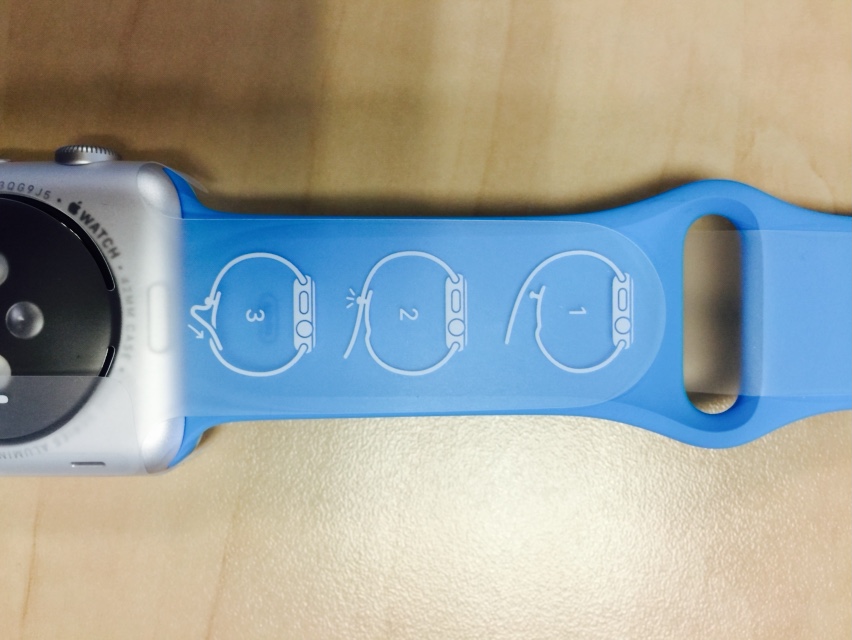
    Daring Fireball: The Apple Watch Edition’s Upgrade Dilemma – it won’t be replacing my Swiss watch any time soon

    Nokia nears deal to buy Alcatel-Lucent mobile networks unit | Hong Kong Economic Journal Insight – two turkeys won’t make an eagle

    GSMA Intelligence – interesting diagram talking about latency and bandwidth requirements of different applications on mobile networks when you scroll down the page

    Activist Puts Pressure on Qualcomm – WSJ – inevitable when one looks at the increasing competition in the chip business for them and the move by major players (Apple, Samsung, Huawei)

    Samsung Galaxy S6 review: It’s what’s on the outside that counts | Ars Technica – this review is emblematic of the pedestal that Samsung has fallen off

    LINE CEO bets on selfies and macho stamps to expand overseas | Japan Times – really interesting insight into app localisation and branding

    Twitter Ends its Partnership with DataSift – Datasift Blog – ok this could be interesting

    These slides are all you need to make the case for an all-flash data center | SiliconANGLE – that responsive data has to change the economics of cloud as well and not in a good way

    Exclusive: Twitter A/B testing a Yahoo style directory for non-logged in users | SiliconANGLE – and Google seems to be supplementing search results with content from DMOZ about links

    If Nokia Map Unit Is for Sale, Microsoft, Apple and Yahoo All Might Want a Look | Re/code – it makes sense that Nokia would want to sell this separately from the phones, but who would it go to

  • Chaebol + more news

    Chaebol

    Anger and Envy in the Chaebol Republic | Foreign Policy – there will come a point when it it will undermine the iron grip that chaebol groups have on Korean society. The irony was chaebol power was based on a compact between President Park and prominent business families as a way to jump start the economy. Somewhere along the way the power dynamic changed and the chaebols got into the driving seat rather than the other way around. The chaebol families haven’t lived up to the promise of their compact with President Park – yet the Korean government still gives them a free pass (paywall)

    Business

    Tumblr is getting sucked into the Yahoo mothership | Business Insider – likely to suffer similar kinds of challenges to flickr et al. More Yahoo! related content here.

    Korea

    LG Eyes New Approach With AKA Phones – Korea Real Time – WSJ – interesting approach to try and shake up the form factor and design as a differentiator in smartphones with its AKA phones. Anything that provides form factor like these; AKA phones is a good thing when one thinks about how it has now become a design monoculture. More gadget related content here.

    Media

    VivaKi integrates anonymised Tencent data into its DMP – Campaign Asia – focus on cross screen campaigns

    Baidu and Alibaba capture 70% of China online ad spending | Resonance China – which shows what a power house Baidu still is

    TV for Babies, Born of a Reality | WSJ – with a subsidiary plan of targeting EDM loving millennials?

    WPP’s Martin Sorrell reconsiders strength of newspapers – Media Week – newspapers starting to get some respect from Martin Sorrell

    Technology

    Intel in Talks to Buy Altera – WSJ – interesting move from a business perspective in terms of the expansion beyond micro processors and into FPGAs. Processors whose layout is ‘flashed’ on to them like software written into memory. They tend to be used in products that need a dedicated processor design, but aren’t made with the scale to justify one

  • Blade Runner & other things

    Watching Blade Runner after it had been re-released into the cinema. I have watched Blade Runner numerous times on TV, VHS, LaserDisc, DVD and Blu Ray but there is something magical about watching it on the big screen

    The cinema and Blu Ray versions of Blade Runner have a level of clarity and detail that is amazing. But watching on VHS had a softness that provided an artistic quality to the film. The lower resolution and noise felt more ‘cyber punk’.

    Hack-A-Day pointed me in the direction of this old industrial film about a Workington, Cumbria Bessemer steel plant that made railway tracks. At the time of filming the plant had been working for 102 years. More related content here.

    Google had an interesting interview with former BP chairman Lord John Browne on discrimination against gay people in their careers.

    I am a big fan of Miroslav Sasek’s work, from his This is… series of children’s travel books in the 1960s. My personal favourites are This is Hong Kong and This Is The Way To The Moon – which covered NASA’s Project Apollo space programme and Cape Canaveral. Art Republic have some amazing prints derived from his illustrations.

    Criteo has a really good presentation on m-commerce outside China

  • The Amazon Dash button post

    At the beginning of this month Amazon launched an addition to their Dash ordering hardware with the Amazon Dash button. There was a lot of incredulity amongst the media heightened by the unfortunate timing which overlapped with April’s Fool Day.

    Why the incredulity?

    I would break the cynicism down into two broad buckets:

    • The Amazon Dash button has a very singular usage / use case, narrower even the Yo! app which was a bit of a tech fad last year. Critics are at best uncertain that consumers would use them? I generally buy toilet rolls every 4-6 months, do I really need a button for that?
    • The Amazon Dash button implies that the hardware required is ridiculously cheap. How many boxes of washing powder, packets of Mac & Cheese or toilet rolls would be required for a button to break even?
    Business perspective

    Rather than ripping into this into too much depth I thought I would share Benedict Evans’ interesting hypothesis about the Amazon Dash button:

    Amazon is trying to eliminate both vendor and brand decisions, and turning itself into a utility company – get your house connected to power, water, gas and Amazon. And choosing which commodity product you need is just another piece of friction to be removed by Amazon’s kaizen

    There are some interesting directions that come out of this view point. Let’s break Benedict’s analysis down chunk-by-chunk:

    • Eliminating vendor decisions: there are two prongs to this. Firstly, it would reduce the basket size for supermarkets and also reduce impulse purchases. Let’s think about the Walmart ‘beer and diapers’ retail urban legend for a moment – if you weren’t shopping for the diapers, you aren’t likely to have picked up the beer next to it as you would have had no reason to go near those shelves. By implication it is also an attack on some of the categories carried in convenience stores. Given that the button is about ‘just-in-time’ shopping it implies that the users are not likely to have rooms in their lives for big box retailers or CostCo. The buttons are likely to aimed at urban dwellers rather than the suburbs were larger homes and larger vehicles to do the big box store shop are the norm – Sam’s Warehouse is safer than Walmart in this scenario
    • Eliminate brand decisions: since sales are diverted from supermarkets this also affects their private label sales, especially where they are acquired by accident as lookalikes stacked next to well-known brands. Challenger brands find that switching becomes much harder as they can’t intercept the customer at the point-of-intent through shopper marketing and the opportunity cost for the consumer gets raised due to the comparative nature of the friction in purchase.  It also begs a question about how much it affects the share price of WPP and other marketing combines who have spent big on shopper marketing acquisitions over the past few years. Do buttons offer a net gain or loss of value to them? I do know that the button puts Amazon in a much more powerful position versus vendors in terms of discount pricing to retailer and warehousing. The key to understand the power  that Amazon would bring is ‘choosing which commodity product you need…’. The very idea of a product being boiled down to a commodity buy would scare the living daylights of the average brand manager in an FMCG mega-corp
    • Turning itself into a utility: for Amazon this is about locking the consumer in via Prime to the consumer life. At the present time, logistics costs have been an increasing proportion of the cost of sales for Amazon, there must be a hope that the scale of grocery shopping will bring down the price of Prime and drive profits higher?

    There is no reason why the likes of Tesco, Ocado or Iceland couldn’t have done this. The wider Dash technology would make it easier for consumers to do grocery shopping and reduce the friction of online purchases. Instead they seem to have wanted to reduce cashier numbers inshore and focused on self-service tills. Time will tell if they made the right technological choice.

    What about the user?

    This is designed to make the consumers life easier and I can see how it makes purchase of otherwise annoying to shop for items frictionless, but it only works within reason. You can’t have a wall of buttons on the front door of your fridge freezer and just when do you press the button in the bathroom to order up more razor blades or toilet roll? What happens during the run up to Christmas when Amazon has had sub-optimal performance with regards deliveries on occasion? What is the buying frequency required to make the button habit forming, used without thinking about it, without consideration. When does the opportunity cost for the consumer tip in their favour regarding button usage?

    What I don’t have yet is a clear understanding on depth and breadth of the customer problem being solved by the Dash button.

    Product design

    The original Dash device was interesting because it represented a rejection of the broader theme of convergence where functionality is subsumed from dedicated hardware into a software layer running on a computer, via a web browser, tablet or smartphone. Instead Dash is a shopping appliance and wouldn’t look out of place in a cupboard full of Braun kit.

    The Dash button represents a further evolution of specialist hardware, a brand-specific, tactile hardware interface. It mirrors software like IFTTT’s ‘Do’ application, the Yo! messenger app and the Dimple smartphone button project.

    For non-food products like toilet rolls that come in a plastic bale that is quickly discarded, there may not be a barcode to scan in on your Dash device. Instead you would have to ask for a new pack of Charmin’ or more Mach3 razors. Processing each voice message is expensive, which makes the opportunity cost around creating dedicated buttons for certain classes of product much more attractive. Amazon first and foremost is a data-driven company, they will know which product categories that they want to have buttons for. However, what makes on an Excel spreadsheet doesn’t always make sense to the consumer…

    More information

    Amazon Dash button
    Benedict Evans newsletter edition 106
    Investing in smart logistics | Fidelity Worldwide Investments
    Amazon, in Threat to UPS, Tries Its Own Deliveries | WSJ (paywall)
    Supply Chain News: A 360-Degree View of E-Fulfillment Part 1 | Supply Chain Digest
    Amazon joins numerous startups in building delivery networks to disrupt Fedex and UPS. | DataFox
    The Amazon Dash post
    Dimple smartphone button project | Indiegogo
    SpinVox: the shocking allegations in full | The Kernel