Blog

  • MWC 2015 from the Sidelines: Day One

    In covering MWC 2015 yesterday I talked about the pre-event Sunday consumer product launches. These launches continued into Monday with Microsoft revealing more about Windows 10 alongside some mid-range smartphones. Sony’s press event was notable for both its style and content. Sony took a lower key approach to the show than in previous years. It hinted in interviews that this was part of a wider strategy by the company to shift Sony’s launch calendar, from being around the latest processor updates, to leading with consumer experience improvements.
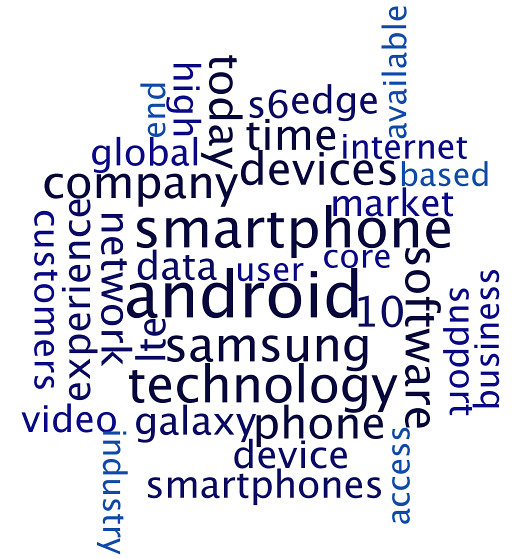
    mwc day 1
    Looking at the online conversation around MWC on Monday, it unsurprisingly dominated by consumer devices. In particular hardware specifications of the devices, which shows just how much of a mountain Sony will have to climb in trying to change the event narrative away from device ‘speeds and feeds’.

    Mark Zuckerberg’s keynote at the event looked to downplay the role of internet.org rolling web access out in the developing world. In the reality his keynote was on the fault line of a chasm between telecoms providers and internet (or ‘over-the-top web’ to use Deutsche Telekom’s parlance) companies such as Google and Facebook.

    Messaging stripping away traffic from SMS, Project Loon and Internet.org have all been factors of concern. Google’s announcement that it planned to become a wireless carrier through a global set of MVNO (mobile virtual network operator) agreements hasn’t helped either. César Alierto, chief executive officer of Telefonica talked of moving the debate from net neutrality to a wider digital neutrality in order to create a level playing field for both carriers and internet companies.

    This divide between carriers and internet companies has been characterised by Bloomberg as part of a larger US/European digital divide, with large US companies having a greater market capital that they can use to buy up European rivals and push through developments in the face of carrier resistance.

    Another gap between the US and Europe was the continued importance of digital privacy at the show. Silent Circle rolled out a more polished version of the GeeksPhone-based Blackphone and a tablet companion. Finnish security company F-Secure promoted its Freedome VPN as a way of dealing with PRISM-style internet data collection.  Finnish mobile operating system company Jolla announced SailfishSecure in association with SSH Communications Security.

    Digital privacy wasn’t only a business opportunity for gadget makers, but also of concern to telco CEOs, who where concerned that a lack of consumer confidence in privacy would adversely affect business. Vodafone, Telenor, Deutsche Telekom and Telefonica all called for policy makers to provide stronger safeguards for citizens data privacy and digital security. This wasn’t solely altruistic as carriers saw a potential role to play in helping consumers securely manage their digital identity. How realistic that might be after the Gemalto data breach remains to be seen.

    Finally, the news that caused most confusion in Racepoint’s European HQ was that Ford showcase prototype MoDe electric bikes at their MWC press conference – I know we don’t get it either.

    More information
    Rory Cellan-Jones interviews Sony on whether it should walk away from mobile (BBC)
    Why Sony didn’t announce the Xperia Z4 smartphone at MWC | The Inquirer
    MWC 2015: Google Announces Wireless Carrier Plans By Becoming A ‘Mobile Virtual Network Operator’ | TechTimes
    Telcos Demand ‘Digital Neutrality’ | EETimes
    Zuckerberg in Barcelona highlights widening US-Europe gap | Bloomberg
    Security and Microsoft take center stage as Mobile World Congress 2015 opens | CNet
    Telco CEOs see urgent need for privacy, data security | TotalTelecom
    Mikko Hypponen To Talk Privacy At The Mobile World Congress | F-secure
    Ford unveils ‘MoDe’ electric bike prototypes at MWC 2015 | CNet
  • MWC 2015 from the Sidelines: Day Zero

    Mobile World Congress (MWC) 2015 in Barcelona has kicked off, though for many of my Racepoint colleagues the event started months ago. During this week we’ll see the pay-off from preparation that involved long days and late nights burning the midnight oil.

    I won’t be there this year and so have been watching the event unfold from the sidelines.

    In contrast to previous years, MWC 2015 now has a de-facto day zero as HTC, Huawei, LG and Samsung all launched consumer devices on the Sunday. Android devices are no longer lagging in industrial design with all the smartphones launched eschewing plastic in favour of a metal chassis, or glass and metal case design; in order to provide a premium-looking product.

    Secondly wearables are improving in leaps and bounds with the Android Wear devices looking more polished than the new Pebble discussed over the previous few weeks. The Apple Watch won’t have the same gap in industrial design to competitor products that the Apple iPhone enjoyed on launch.

    HTC launched an Occulus Rift rival in association with games platform Valve. However the Vive was notable more for its clunky industrial design rather than technological disruption.

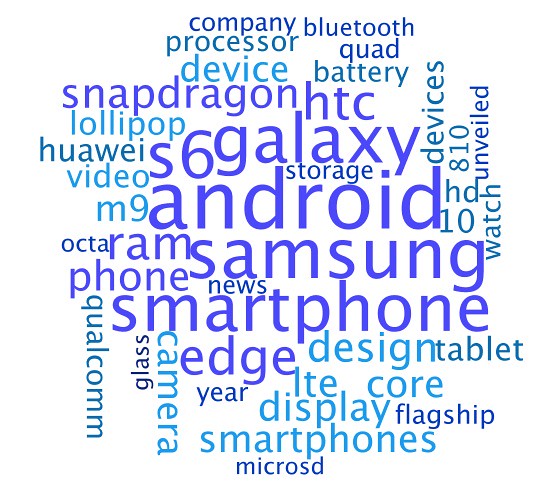
    Whist there were great leaps forward being made in product design for wearables, online discussions still centred around smartphone devices, with early adopters being focused on device core hardware – at the expense of features that provide a differentiated consumer experience.
    pr

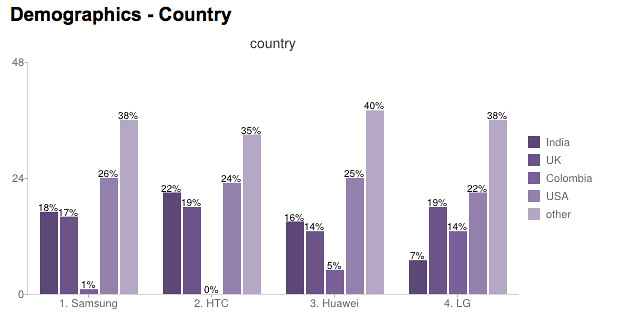
    It was immediately apparent from running analytics on online chatter was the prominence in social as a vehicle for challenger brands to get their message across, and the huge interest in MWC launches from the US.

    country by country
    Would a device launched at the US CTIA event have a similar global consumer impact?

    There is a wider question which remains to be answered regarding the efficacy of a ‘going early’ media launch strategy at MWC; particularly when one’s competitors have all adopted a similar strategy.

    It is hard to judge the answer to this question purely on the response to the Microsoft and Sony events earlier this morning. It would be unfair to compare their relatively lacklustre handset line-up in comparison to the day before. Whilst HTC, Huawei, LG and Samsung focused primarily focused on premium devices, Microsoft and Sony featured at least some mid-market handsets.

    More information
    LG launches LG Watch Urbane at MWC, but disappoints with lack of G4 flagship | The Telegraph
    MWC 2015: Huawei MediaPad X2, Watch, Talkband N1 and N2 | GSM Arena
    Live from Samsung’s Galaxy Unpacked event at MWC! | Engadget
    MWC 2015: HTC One M9, Grip hands-on | GSM Arena
    Pebble Time: Hands-on with the most successful Kickstarter project ever | Pocket Lint

    All the day  derived in the charts using Sysomos MAP.

  • Singapore police + more things

    The Singapore Police issued this video where a cardboard cut-out sign warning shoplifters is brought to life, hilarity ensued amongst Singaporean netizens

    Disclosure: Singapore Home Team is a former client. The Singapore Home Team is made up of the different services that sit under the Ministry of Home Affairs including the Singapore Police. Guns n’ Roses Welcome To The Jungle for two cellos. It sounds more of an emotional roller-coaster this way than the original version by Guns n’ Roses. In that respect it reminds me of The Nursery remake of Haunted Dancefloor, originally recorded by Sabres of Paradise. IAB on how to get consumers to actually use an app rather than just download it. A focus on putting the core focus of the app front and centre. Being able to reengage is also important. Focus on an app to do one thing really well rather than being a Swiss Army Knife type approach to app development. Like anything else, if the app doesn’t add value, it doesn’t make a difference. I surprised to hear that apps were used as a display campaign by brands. Amazing ‘flow motion’ video that showcases Dubai. It highlights the way Dubai architecture feels like a letter from the future. This is partly due because there was little in Dubai prior to the modern city being built. More on the history of Dubai can found here. The soundtrack of the week was this great tech house mix by DJ Rolando Rolando relocated from Detroit to Edinburgh, Scotland since he became famous with Jaguar. He has his own label R3 (which stands for Roland Rocha Records) The records tend to fit into the melodic side of techno, what would be later called tech house. With the move to Europe eventually came a residency at Berlin club Berghain.

  • 8K resolution & other things

    NHK unveils 8K tech | TelecomAsia – of course the challenge is having a TV big enough to make 8K worthwhile. 4K is the height of digital experience at the moment. If you go to watch a film in the West End on a digital projector, you will be watching 4K rather than 8K images. Secondly pixel density like 8K is only one aspect of image improvements. Others including high dynamic range images that are brighter and clearer. Finally the controversial double frame rate of 60 frames per second. This is supposed to provide smoother movement, but has proven to be a divisive experience with cinema audiences. Particularly when it was used on Peter Jackson’s Hobbit trilogy. More related content here.

    China

    Foreign manufacturer exodus from China | Quartz – however a lot of business isn’t moving because of the depth of expertise and clusters of related businesses that they rely on. This has been a bit overwrought and there is also further inland opportunities

    Consumer behaviour

    Where’s Britain spending? Barclaycard – interesting Q4 data (PDF data)

    Culture

    An Everton Fan On Why Scousers Hate The National Team – Sabotage Times – the complexity of national identity played out on a small scale

    Finance

    Hong Kong’s unwanted HK$1,000 banknote is the money launderer’s medium of choice | SCMP – intersting that cash usage has increased by 6 per cent in real terms. Something to ponder on in the face of cryptocurrency and electronic payments

    FMCG

    Krispy Kreme ‘KKK Wednesdays’ Facebook ad – Business Insider – I can’t believe that they went there. You would be hard pressed to make this up.

    Ideas

    London is changing – interesting experiment by Central St Martins

    Japan

    Press Releases : DOCOMO and ZENRIN DataCom Develop New Indoor Navigation Technology | NTT DOCOMO – really interesting move on indoor where2.0 services between DOCOMO and ZENRIN DataCom. I know that a wide range of vendors from aerospace and defence giant EADS to Ruckus Wireless that have explored this area over the years

    Luxury

    Wine fortunes take off for labels featured on inflight menus | SCMP – inflight cuisine is a great marketing opportunity for wine brands

    Media

    YouTube makes a move against brand-sponsored videos | Digiday – this is huge for the likes of PR agencies and networks like Nuffnang

    Online

    spaceprob.es catalogs the active human-made machines that freckle our solar system and dot our galaxy – beautiful site

    Introducing TweetDeck Teams | Twitter Blogs – tries to win back users with Tweetdeck Teams against Hootsuite

    Apple – Press Info – Apple to Invest €1.7 Billion in New European Data Centres – data centre for Athenry, County Galway, hopefully the area will get a backbone upgrade to match

    Security

    Pages – Update on the SIM card encryption keys matter | Gemalto – Initial conclusions already indicate that Gemalto SIM products (as well as banking cards, passports and other products and platforms) are secure and the Company doesn’t expect to endure a significant financial prejudice – if the hack was that obvious surely it would have been picked up before now and of flagged? If the security services dd their job well there would be few fingerprints

    The Great SIM Heist: How Spies Stole the Keys to the Encryption Castle | The//Intercept – that completely screws Gemalto

    Software

    Avicii and Other DJs Produce Hits Using Pirated Software | Torrentfreak – interesting connection to Universal Music’s Per Sundin

    Web of no web

    Daring Fireball: Thinking About the Split in Apple Watch Sales by Model – basically the WSJ numbers are rubbish, especially with luxury consumption down in China

    Why the Internet of Things matters – and what it means for marketers everywhere | Percolate – (PDF)

  • A Twitter experiment on fake followers

    In 2013, I worked with a number of companies and executives that has used services to inflate their Sina Weibo accounts standing with fake followers.  (In case you haven’t heard about it, Sina Weibo is a Chinese micro-blogging service). Often this was seen as a cheap way of getting an ego-boosting metric on their account or showing a positive delta relatively cheaply.

    The idea of follower count as a measure of worth can be seen in real life. Look at the front cover of magazines and the value of a celebrity is often measured in the number of followers that they have.
    Untitled
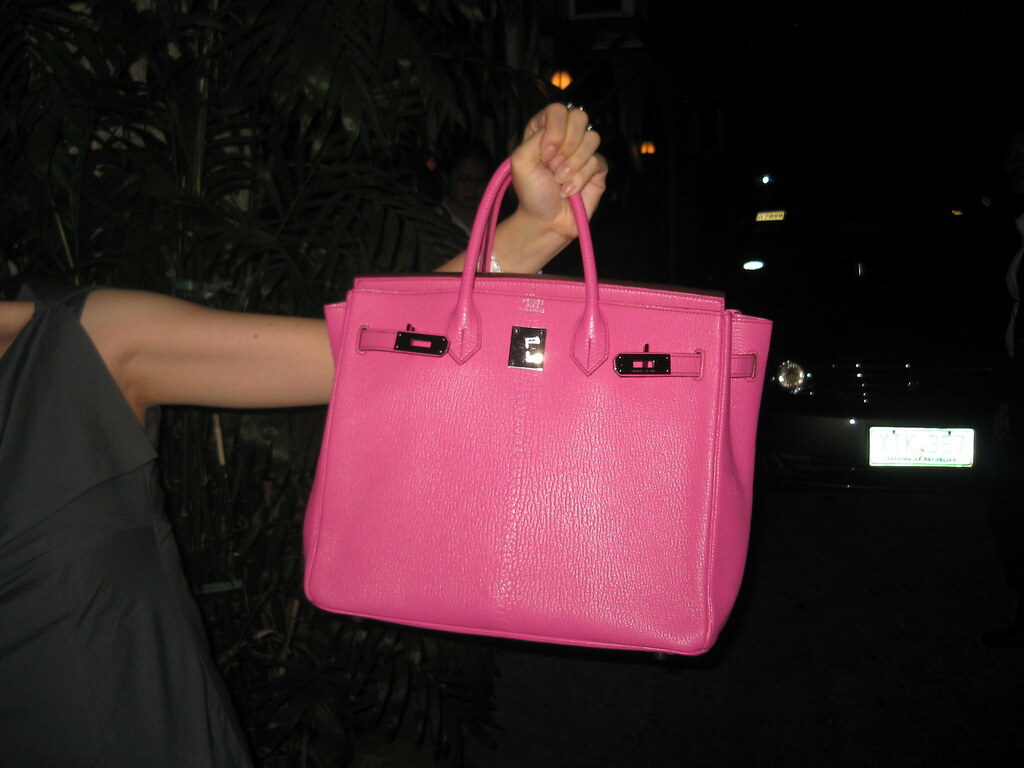
    Take this Elle magazine cover and interview with Kim Kardashian. Kardashian’s social media presence is as much a mark of status as a Hermès Birkin bag.
    ingrid's birkin
    However with Birkin bags going for as much as £55,000 online (holds head in hands and rocks slowly back-and-forth), getting fake followers on social platforms like Twitter might be a bit easier. If Twitter isn’t your thing, there are a number of suppliers of fake followers for Instagram, fake YouTube subscribers and fake Facebook likes too.

    I want to reiterate this here, acquiring fake followers is a cross-platform issue, Twitter is just a handy canary in the coal mine. The reason for this is the amount of tools that are are available to measure Twitter as a platform and the prevalence of its use amongst media elites.

    Looking at the variety of fake follower services, it seems to be a thriving business. A quick search on buy twitter followers cheap gave me over 31,100,000 results according to Google, and who am I to argue with their maths?

    De Micheli and Stroppa estimated that fake accounts used as fake followers accounted for 4 per cent of the Twitter user base, whilst Twitter claimed that the number was 5% in the S-1 document it filed prior to its IPO. The estimates of fake accounts on Sina Weibo are thought to be as high as 30% of the user base – it is hard to tell because Chinese Weibo consumption tends to be largely passive using it as a news stream rather than a ‘social’ channel.

    Politicians and celebrities have both been caught out using fake followers to bolster numbers (presumably to add credibility to their social presence).

    So what are the benefits and how does it work?

    I added 55,000 fake followers on Twitter, so that you don’t have to.

    The process itself is really easy. The fake follower services generally accept payment by PayPal and have easy-to-use e-commerce services. The followers are generally delivered over two-to-five working days.

    First I tried buying a big batch of followers, 50,000. The supplier delivered 56,000+ followers, but the number declines by about 100 followers over a week or so. This number seems to be pretty consistent. I can’t work out if this is just a common business practice or a part of Twitter’s ongoing conflict with fake accounts.

    The purchase didn’t:

    • Move my Klout score
    • Improve the quality or number of organic followers that I received

    I made a second purchase with a different vendor for 5,000 fake followers. This was delivered over five days, again an extra 10 per cent of followers were added on the top by the vendor and a similar decay pattern of about 5% of the followers occurred. This small increase had more of an effect on Klout causing a temporary bump in the score.  It has a more pronounced effect on Sysomos authority measure bumping my authority from 7 to 9 out of a possible 10.

    It didn’t improve the volume or quality of followers that my account got organically.

    With both vendors at least 5 per cent of the accounts that they used seemed to real people’s dormant accounts that had been co-opted into the fake follower game. There obviously seemed to be a market in taking over accounts that had been dormant for over 12 months. None of the fake follower accounts were set to private – this could factor into developing a heuristic for looking at fake follower accounts?

    My overall conclusion on the fake follower business is that it almost purely about personal vanity rather than gaming a system. More related content here.

    More information

    Pay up and embrace Twitter’s fake followers | Marketing Week
    Fake Twitter followers: An easy game, but not worth the risk | The Next Web
    How the market in ‘fake’ Twitter followers works | Yahoo! News
    Rihanna Loses 1.2 Million Instagram Followers After Spambot Purge | Gigwise
    Instagram makes teens and celebrities angry by killing millions of spambots | The Verge
    Twitter and the underground market by Carlo De Micheli & Andrea Stroppa at 11th Nexa Lunch Seminar, Turin, Italy (May 22, 2013) – PDF
    Inside a Twitter Robot Factory | WSJ
    Twitter Admits 5% Of Its ‘Users’ Are Fake | Business Insider
    I Bought 10,000 Fake Twitter Followers. Why Didn’t Klout, Kred (or Others) Notice? | Ignite Social Media