Blog

  • General Magic

    General Magic has a reputation of being the technology equivalent of the Jordan-era Chicago Bulls, but it ended up going nowhere. I never got to see the device in person, it was only available in Japan and the US. It’s as famous much for its alumni, as it is for its commercial failure.
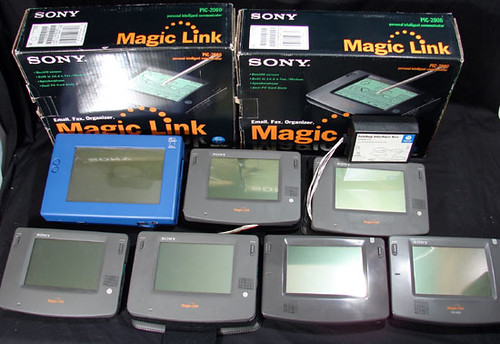
    Apple "Paradigm" project/General Magic/Sony "Magic Link" PDA

    This is captured in a documentary of the same name. For students of Silicon Valley history and Apple fan boys – the team at General Magic sounds like a who’s who of the great and the good in software development and engineering.

    General Magic started within Apple with a brief that sounds eerily like what I would have expected for the iPhone decades later.

    “A tiny computer, a phone, a very personal object . . . It must be beautiful. It must offer the kind of personal satisfaction that a fine piece of jewelry brings. It will have a perceived value even when it’s not being used… Once you use it you won’t be able to live without it.”

    Sullivan M. (July 26, 2018) “General Magic” captures the legendary Apple offshoot that foresaw the mobile revolution. (United States) Fast Company magazine

    The opening sequence tells you what the documentary is going to lay out. Over carefully curate images of Silicon Valley campuses, Segway riders and the cute bug like Google autonomous vehicle a voice talks about success and failure. That failure is part of the process of development. That General Magic has a legendary status due to its status as precursor to our always-on modern world and while the company failed, the ideas didn’t.

    Autonomous cars aren't nearly as clever as you think, says Toyota exec - Computerworld

    The genesis of the spirit of General Magic goes back to the development and launch of the Macintosh with its vision of making computers accessible. The team looked around the next thing that would have a similar vision and impact of a product. The Mac had got some of these developers on the front cover of Rolling Stone – they were literally rockstars.

    You get a tale of dedication and excitement that revolved around a pied piper type project lead Marc Porat, who managed to come to the table with a pretty complete vision and concept of where General Magic (and the world) would be heading. The archive of footage of the offices with its cool early to mid 1990s Apple Office products still amazes now. The look of the people in the archive footage, make my Yahoo! colleagues a decade later seem corporate and uptight by comparison.

    Veteran journalist Kara Swisher said that she started following the company because it was ‘the start of mobile computing, this is where it leads’.

    What sets the documentary apart is that it tapped into footage shot by film maker David Hoffman who was hired to capture the product development process. The protagonists then provide a voice over of their younger selves. Their idealism reaches back to the spirit of the 1960s. You can see how touch screen screens and the skeuomorphic metaphors were created and even animate emoticons.

    I’ve never known a development process with so much documentary footage. Having been in this process on the inside, the General Magic documentary portrays a process and dynamics that haven’t changed that much.

    The ecosystem that the startup assembled including AT&T, Apple, Motorola and Sony made sense given the ecosystem and power that Microsoft had behind it. It’s hard to explain how dominant and aggressive Microsoft was in the technology space. Newton came out as a complete betrayal and John Sculley, who is interviewed in the documentary comes across worse than he would have liked.

    The documentary also has access to the 1994 promotional film where General Magic publicly discussed the concept of ‘The Cloud’ i.e. the modern web infrastructure – but the documentary doesn’t dwell on this provable claim.

    Goldman Sachs was a key enabler, the idea of the concept IPO set the precedent for Netscape, Uber, WeWork and the 2020s SPAC fever.

    In a time when there is barely one thing changing the technology environment, General Magic were pursuing their walled garden of their private cloud and missed the web for a while. Part of this is down to their relationship with AT&T.

    The documentary covers how project management dogged the project. Part of the problem was perfectionism was winning over the art of the possible and not focusing on the critical items that needed to be done. The panic of having to ship.

    It’s about getting the balance between ‘move fast and break things’ versus crafting a jewel of a product.

    But shipping wasn’t enough, the execution of shopper marketing and sales training was a disaster. The defeat was hard given the grand vision. But the ultimate lesson is that YOU are not representative of the mainstream market.

    The documentary post-mortem featuring thinkers like Kara Swisher and Paul Saffo points out the lack of supporting infrastructure, that would take years to catch up to where General Magic’s Magic Link had gone. Paul Saffo uses a surfing analogy that I had previously read in Bob Cringely’s Accidental Empires about catching the right wave at the right time.

    John Sculley over at Apple made similar mistakes to the General Magic team which resulted in him being fired from Apple. Sculley makes the very human admission that being fired from Apple took him about 15 years to recover from personally.

    IBM Simon

    The documentary gives a lot of the credit (maybe too much of it) to General Magic as the progenitor of what we now think of as smartphones. The reality as with other inventions is that innovation has its time and several possible ‘inventors’; or what author Kevin Kelly would call ‘the technium’. This is the idea that technological progression is inevitable and that it stands on the layers of what has gone before, like fossils found inside rocks several foot deep. For instance, IBM created a device called Simon which was ‘smartphone’ which sold about 50,000 units to BellSouth customers in the six months it was on the market. Motorola – who were a General Magic partner also launched a smartphone version of the Apple Newton called the Motorola Marco in January 1995 and there are more devices around the same time.

    Reality is messy and certainly not like the clean direct line that the General Magic documentary portrays, even the Newton was only part of the story.

    The Wonder Years

    I was thinking about what I liked so much about the General Magic documentary. I immediately thought about it reminding me of my falling in love with the nascent internet and technology, which then bought me to the start of my agency career working with Palm (the company that eventually helped kill off General Magic’s product ambitions) and the Franklin REX which came out of sychronisation pioneers Starfish Software.

    But it was deeper than that. The Silicon Valley portrayed in the General Magic documentary wasn’t the dystopian hellscape of platform firms, generation rent, toxic tech bro culture and ‘churn and burn’ HR culture. Instead the General Magic documentary story represented a halcyon past of Silicon Valley portrayed in books like Where Wizards Stay Up Late, Fire In The Valley and Insanely Great. Where talented people motivated by a fantastic vision thing, with a user centred mission worked miracles. The darkness of fatigue and god knows what else is largely hidden by a Wonder Years TV show feel good nostalgia. Maybe it gives us hope again in the tech sector, despite Peter Thiel, Mark Zuckerberg, Tim Cook and Elon Musk? Maybe that hope might inspire something great again?

    Marc Porat’s personal tragedy and Tony Fadell’s business failure brings a hint of the real world through the door. The documentary uses Fadell’s link with the iPod and iPhone as a point of redemption, resilience, perseverance and vindication for General Magic.

    There’s also a cautionary tale full of lessons learned for new entrepreneurs, who often get the vision thing but forget about the details. More on General Magic here.

    More reviews here.

  • September 2023 newsletter – the difficult 2nd album

    September 2023 newsletter introduction

    The September 2023 newsletter time came around quickly. As I write this, it’s almost the end of September and it feels like no time since I curated the last edition. If you’re reading this, and it’s your first time welcome! If you read the pioneer issue; I hope that this isn’t the newsletter equivalent of the difficult second album.

    Strategic outcomes

    If this continues to go well I will put one out each month. You can find my regular writings here and more about me here

    Things I’ve written.

    Rolex Submariner 5512
    Rolex Submariner 5512
    • Analysis on the Bucherer acquisition by Rolex – which shook up the luxury sector in the run up to the end of August.
    • Psychotherapy and culture. How psychotherapy has been mainstreamed via culture, and in turn influenced culture.
    • Digital abortion clinics. How tele-health businesses are trying to address the challenges posted by US state abortion bans and how these services should be doing a better job protecting their patients, in particular their privacy.

    Books that I have read.

    • The Code by Margaret O’Mara. O’Mara’s work like my last month’s recommendation Chip War is a history of Silicon Valley. The key difference is that O’Mara approaches the history through the lens of the American political environment, whereas Miller’s Chip War considered it more in terms of global geostrategic politics. You can read more of my take on The Code here.
    • Deluxe – how luxury lost its lustre by Dana Thomas. Thomas’ book came out in 2008, but much of it is still relevant today, particularly around what my friend Jeremy dubbed the ‘Supremification’ of the luxury sector. You can read more of my take on Deluxe here.

    Things I have been inspired by.

    • Lately I have been listening to Kurena an album by Japanese jazz musician Kurena Ishikawa. I reviewed the album here
    • The Korean Cultural Centre in London has a series of rotating art exhibitions. I got to see Audible Garden by Jinjoon Lee. Lee is a multimedia artist. The exhibition usesculptures, drawings, a wall painting, prints, videos, and directional sound installation to create an experience that blends inside and outside landscapes. If you’re involved in creating experiences you’ll want to see it. The exhibition is on until October 13, 2023.
    • My friend Natalie Lowe runs The Orangeblowfish with her husband in Shanghai. One of the projects that they worked on was helping media agency Mindshare rethink their office space and employee brand through the power of comics.
    • We talk a lot about the benefits of neurodiversity in business thinking. But a less explored area is that of cognitive diversity. While Myers-Briggs Type Indicator is an imperfect measure, this work by UCL and Sense Worldwidehighlights the benefits of cognitive diversity in envisioning new possibilities. 
    Cognitive diversity
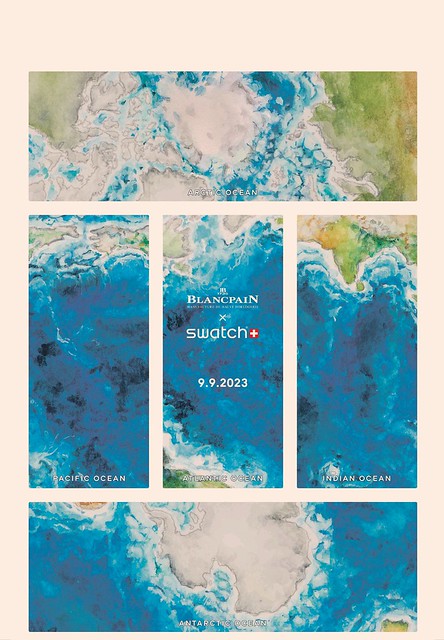
    • Swatch Group continues with its Mondelēz International -like brand mash-ups (a la Cadburys Dairy Milk x Ritz crackers), this time Swatch x Blancpain. I wonder what this does to luxury brand caché? I imagine that there will be a short burst of hype tempered by existing customers concern about paying $800,000 for a watch from a brand that also puts its name on plastic tat. Omega were a well known premium watch brand, often seen as a cheaper alternative to Rolex. Blancpain is the oldest brand in Swiss watchmaking with the longest most storied history of horology. It is a brand for die-hard watch fans, they made the first automatic self winding wrist watch and still make sophisticated complications like the 1735 Grand Complication and the highly regarded Fifty Fathoms range which pioneered modern dive watches. The company slogan has been:

    Blancpain has never made a quartz watch and never will

    Blancpain
    swatch x blancpain

    It seems the resale value on these watches on secondary market platforms has dropped almost immediately after launch.

    Finally Alzheimers Research put out a fantastic animated film to illustrate the impact of dementia on a life.

    Things I have watched. 

    Moving on from the French new wave works of Jean-Pierre Melville that I viewed in August, this month I revisited works from the Hong Kong new wave. Chow Yun Fat’s performance in the John Woo-directed film The Killer blew me away when I first watched it on VHS tape and still moves me today, more on that here. I followed this up with John Woo’s second best well-known film Hard Boiled. Watching it for the first time in several years, gave me a slightly different perspective on the film – I can see obvious influence it would have had on 1990s Hollywood – in particular the Die Hard series; but the ‘new wave cinema’ elements felt like stylistic add-ons rather than a crucial part of the story. 

    Netflix has a couple of sleeper Japanese language series:

    • Sanctuary is about the journey of a young man from a broken family in the world of professional sumo.
    • Informa is a tale of revenge and assassination played out in modern day Japan highlighting the close links between the yakusa, local politicians, the construction industry and the media.

    Useful tools

    Small fridge magnets

    Working with colleagues who had a fantastic whiteboard, this whiteboard was vast like the rolling door on a freight carriage. Everything was brilliant but for the fact that Post-It notes wouldn’t adhere at all to the surface for some reason. Thankfully, I’d had a run through on the room a few days before and found this out by accident. So I got some fridge magnets that were ideal for using with Post-It notes on the day. I now have three dozen of them in my loadout for in-person workshops.

    Flight Delay Compensation

    If like me you’ve had problems with airline delays and cancellations, Moneysavingexpert have put together:

    • An explanation of your rights
    • Links to tools that make claiming comparatively painless

    More here.

    The sales pitch.

    Now taking bookings for strategic engagements. Contact me here.

    The End.

    Ok this is the end of my September 2023 newsletter, I hope to see you all back here again in a month. Be excellent to each other. Let me know what you think or if you have any recommendations to be featured in forthcoming issues. 

  • The Freshest Kids + more things

    The Freshest Kids

    The Freshest Kids tells the story of early breakdancing. My own attempts at breakdancing were very poor. My moonwalk was closer to John Hurt’s shuffle as part of his portrayal of John Merrick in The Elephant Man. Because of that I have a real appreciation of those people who can do breakdance properly. You can watch it here.

    RAYS Engineering

    I have a thing for manufacturing videos that shows how a product is made. RAYS Engineering alloy wheels are famous as providers of high quality after market wheels, particularly among fans of Japanese import vehicles. Their manufacturing process is unique. The forging process provides their wheels with superior properties to normal cast alloy wheels.

    Anjihood pop-up book

    Anjihood is the 32 square kilometre development (less than 3% the size of Hong Kong, or over 100 times bigger than Canary Wharf in London) outside Shanghai. It looks to blend the benefits of urban living with a more green environment – a 21st century analogue to the Victorian garden city concept. They commissioned Shanghai creative agency The Orangeblowfish to create a pop-up book that would convey the concepts behind Anjihood and the emotions they hope the development will evoke.

    Innovation in Japanese hospitals

    Japan is using a mix of robotics and machine learning tools to help assist staff in its hospitals cope with its aging population. NHK World goes in-depth in how a mix of commercial off the shelf solutions are being used in concert with each other.

    No to obsolescence

    Porsche Netherlands did this film to show no matter how old you’re Porsche, if they don’t have the relevant part available. They will go back to the original design drawings and remanufacture it for your vehicle.

    I am not too sure how this would hold up for electronics components which might not be able to get the relevant integrated circuits. But it’s an interesting commitment to make. In a low carbon economy, keeping existing vehicles on the road for longer is as important as a world full of Teslas.

    The Porsche 111 was first made some time in the early 1950s. Porsche only started building sports cars in 1948, but had been building tractors on and off since 1934 under the Porsche brand.

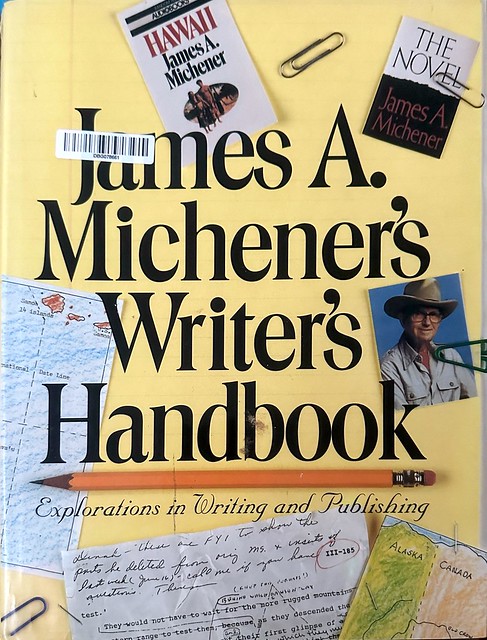
  • James A Micheners Writers Handbook

    Late on in his writing career a bestselling author created James A Micheners Writers Handbook. Now the stuff of thrift shops and the ‘for sale’ trolley in your local library, Michener was a bestselling author for over four decades. His paperback books were the size of doorstops, yet were sold in every airport for holiday reading.

    Writer’s handbook

    At the end of the first Gulf War, George W. Bush quoted one of Michener’s short stories in a celebration of the allied military effort. If you have ever watched the musical South Pacific, that was an adaption of Michener’s first book ‘Tales of the South Pacific‘. Ten of his works were adapted for film by Hollywood and there were a further five TV series or ‘mini-series’.

    Michener died in 1993, but during his life time his books sold an estimated 75 million copies worldwide. There was a distinctive Michener fingerprint to his books:

    • Geography was at the route of everything, the setting was the hero of his books
    • Deep research: Michener would research the culture, history and geology of the setting
    • A common narrative rhythm to his writing
    • Despite running to 1,000+ pages, Michener’s books were easy to read

    The writer’s handbook

    James A Micheners Writers Handbook talks through the process that Michener went through in writing a couple of his works. He talks about using a cut-and-paste methodology, where he physically cut and pasted in paragraphs on to typed sheets. He discusses the move from hot metal typesetting to phototypesetting and its effect on the editorial process.

    Michener’s career saw him move his writing process from mechanical typewriter to word processor and he discusses how this became beneficial to his writing style.

    Michener shows the feedback that he received from the publisher, the editor and even legal review – laying open how once the original draft is submitted to the publisher, creating a novel then becomes a team sport. And that’s even before marketing gets involved.

    This is all laid out including photographs of original manuscript pages and proofing copies in a coffee table book.

    Creating an easy-to-read books was deceptively hard work. The refining process that Michener went through reminded me of creating propositions for a creative brief in my day job.

    At the back of the book is his advice for future writers in terms of paths to getting published. He admitted that getting published had become much harder for a number of reasons:

    • The opportunities to showcase your writing had diminished due to the demise of short story publications
    • Publishers now relied on agents to filter manuscripts on their behalf
    • Writing courses were considered a par for the course
    • Michener recommended a number of careers to kickstart a writing career including working in public relations rather than journalism – which surprised me

    James A Micheners Writers Handbook won’t tell you how to create great stories, but it is a lesson in writing as a multi-stage process of creation, followed by refinement and further simplification of the language. Michener’s idea of simplification is still far more advanced than we write for today in business, in advertising copy or culture.

    The book itself is a bit of a curate’s egg. I would recommend it, but not too sure about who I should recommend it to. More on the book here.

    You can find more book reviews here.

  • Enquire Within + more things

    Enquire Within Upon Everything

    Enquire Within tends to appear in book collections for people of a certain age, or, where the book collector has inherited part of their collection. Spending time on the family farm in Ireland during my childhood, I used to see a copy of an early 20th century vintage sit next to a dog-eared copy of Old Moore’s Almanac (not to be mistaken for a separate UK publication: Old Moore’s Almanack), Old Moore’s was used for deciding what to plant in the garden besides potatoes.

    During the bank holiday weekend, staying with my parents, emergency works on a water main managed to take out the broadband and electricity along their road. I went back though my Dad’s boxes of books and leafed through my parents copy of Enquire Within. My Dad thinks he had received the copy as a gift from a the owner of a second hand book store in Birkenhead market right after he had moved into the first house that my parents had bought. But he can’t be certain. Given that the outer gloss paper wrap around the hardback inner cover uses a font that looks similar to Eurostile and the price is in decimal – I guess it’s from the early to mid-1970s.

    Enquire Within could be thought of as a primer for everyday life. Topics included how to play a variety of card games, basic first aid, the basics on taxation and education with the addresses of the UK government departments responsible. There was a travel section with a few paragraphs on every western European country, which had been written by the Financial Times travel correspondent. The gardening section went into much more depth explaining what a hardy annual and hardy perennial were, alongside the correct way to build a compost heap, how to dig drills and prune roses.

    At the back there is an exhaustive list of children’s names together with their meanings.

    Enquire within

    Enquire Within and the origins of the web

    What I didn’t find out until later on was that Tim Berners-Lee was partly inspired to create a predecessor to what would become the world wide web by a Victorian vintage copy of Enquire Within that was in his parents house when he was growing up. The system was called ENQUIRE and seemed to be similar conceptually to HyperCard or a Wiki. The World Wide Web came out of Berners-Lee’s efforts to integrate disparate systems including ENQUIRE together to facilitate better collaboration between CERN research projects.

    Beauty

    Digital culture is changing our face: How South Korea is inspiring new cosmetic trends | Culture | EL PAÍS English 

    Economics

    MIT Economist Daron Acemoglu Takes on Big Tech: “Our Future Will Be Very Dystopian” – DER SPIEGELThe rich and powerful have hijacked progress throughout history, says Daron Acemoglu. They did so back in the Middle Ages and also now in the age of artificial intelligence.

    Decoupling isn’t phoney – by Noah Smith – Noahpinion

    Energy

    The Japanese Companies Pursuing a Hydrogen Economy – The Diplomat 

    Bosch starts production of 800V EV technology | EE News Europe 

    Finance

    This video on money laundering is as much of interest for the phenomenon of quality documentaries on YouTube as it is for recycling known truths about HSBC.

    Gadgets

    Global Smartphone Shipments Will Hit Lowest Point in a Decade, IDC Says – CNET – likely to be a mix of market maturity and indicative of inelastic pricing in the premium sector

    Hong Kong

    Language Log » Language and politics in Hong Kong: National Security and the promotion of topolect and Hong Kong national security police target Cantonese language | Quartz 

    Bigger, better, smoother? Hong Kong, Shenzhen border zone blueprint hopes to offer best of both worlds, as Beijing ‘exerts pressure’ to spur cooperation | South China Morning PostLeonard Chan Tik-yuen, chairman of the Hong Kong Innovative Technology Development Association, said the blueprint amounted to directives from Beijing that told both cities to become more integrated.

    Innovation

    Startup uses MEMS ultrasound to improve audio speaker | EE News Europe 

    Japan

    The Japanese student dorm that governs itself – The Face 

    Marketing

    First-Party Data Is Retail’s Next Growth Engine | BCG and CPGs may have embraced data collaboration, but they need to take it further | LiveRamp | Open Mic | The Drum. Yet more from The Media Leader: Retail media: were we right to get so excited? – The Media Leader  

    Media

    Podcast: Why OOH audiences have not hit a ‘new normal’ yet – with Route’s Denise Turner – The Media Leader

    Changes in the nature of the music industry

    Goldman Sachs Exchange

    Online

    Yahoo, taken private by Apollo Global, finds a new renaissance 

    Retailing

    The Forrester Wave™: Commerce Search And Product Discovery, Q3 2023, Surfaces The Challenges Of AI UncheckedDon’t let buzzwords distract you from what your customers — and your business — need. Vendors often use their own terminology, especially in a market that hasn’t had a Forrester Wave evaluation in place already. One will talk about how extremely relevant their results are, while another will scoff at “relevancy” as outdated methodology. You’ll hear semantic, vector, hybrid, ML, AI, and all sorts of branded names for products and functions

    Security

    The Cheap Radio Hack That Disrupted Poland’s Railway System | WIREDthe ability to send the command has been described in Polish radio and train forums and on YouTube for years. “Everybody could do this. Even teenagers trolling. The frequencies are known. The tones are known. The equipment is cheap. – This reminds me of the blue boxes used for phone phreaking decades ago.

    I Tracked an NYC Subway Rider’s Movements with an MTA ‘Feature’

    Software

    Adobe’s AI diversity auditor | Patent Dropis seeking to patent a system for “diversity auditing” using computer vision. Essentially, this system uses facial detection and image classification to break down photos of employees and slot them into categories based on certain physical traits and characteristics. Adobe’s system looks through several images and detects faces in each one, then classifies each face based on a predicted “sensitive attribute” relating to “protected classes of individuals,” such as race, age or gender. For example, Adobe noted, this system may classify images from a company’s website, then compare its predictions to a “comparison population.”

    Technology

    Mexico’s Microchip Advantage | Foreign Affairsthere are significant hurdles to making Mexico a bigger player in supply chains for chips and advanced technologies. The country lacks its Asian rivals’ existing networks of high-technology firms. Until now, investments in the sphere have been sparse. To change this situation, Mexican political and business leaders need a clearer strategy for attracting semiconductor investment. The dividends, both for Mexican industry and for U.S. supply chain security, could be significant. Today’s large-scale shift away from China-focused assembly operations offers a once-in-a-generation opportunity to create a more fully integrated North American semiconductor and electronics supply chain. Despite the United States’ major involvement in many segments of the chip industry, there is at present hardly any semiconductor packaging or assembly in the country and very little anywhere else in the Western Hemisphere. The United States maintains a leading role in R&D-intensive segments of the semiconductor industry, including chip design and manufacturing equipment. The CHIPS Act is intended to increase the amount of chip fabrication in the United States. Yet neither the United States nor any country in the Western Hemisphere plays a major role in the final stages of the chip manufacturing process—assembly, testing, and packaging (ATP)—in which semiconductors are tested and assembled into sophisticated packages. The Western Hemisphere also does relatively little assembly of advanced electronic systems that require a lot of chips, such as consumer electronics.

    Web of no web

    Surfings equivalent of a dive computer: Search GPS Test User Signup