Category: business | 商業 | 상업 | ビジネス

My interest in business or commercial activity first started when a work friend of my Mum visited our family. She brought a book on commerce which is what business studies would have been called decades earlier. I read the book and that piqued my interest.

At the end of your third year in secondary school you are allowed to pick optional classes that you will take exams in. this is supposed to be something that you’re free to chose.

I was interested in business studies (partly because my friend Joe was doing it). But the school decided that they wanted me to do physics and chemistry instead and they did the same for my advanced level exams because I had done well in the normal level ones. School had a lot to answer for, but fortunately I managed to get back on track with college.

Eventually I finally managed to do pass a foundational course at night school whilst working in industry. I used that to then help me go and study for a degree in marketing.

I work in advertising now. And had previously worked in petrochemicals, plastics and optical fibre manfacture. All of which revolve around business. That’s why you find a business section here on my blog.

Business tends to cover a wide range of sectors that catch my eye over time. Business usually covers sectors that I don’t write about that much, but that have an outside impact on wider economics. So real estate would have been on my radar during the 2008 recession.

  • May 2024 newsletter – no. 10

    May 2024 newsletter introduction

    Welcome to my May 2024 newsletter, I hope that you’re looking forward to the spring bank holiday, unfortunately if like me you’re in the UK – then that was the last public holiday before the end of August. This newsletter which marks my 10th issue. I wasn’t certain that I would get to a tenth edition of this newsletter.

    The number ten has a high amount of cultural symbolism from the biblical ten commandments to the ten celestial (or heavenly) stems during the Shang dynasty that marked the days of their week. There were corresponding earthy branches based on 12 day groupings. While the stems are no longer used in calendars they still appear in feng shui, Chinese astrology, mathematical proofs instead of the roman alphabet, student grading systems and multiple choice questionnaires.

    New reader?

    If this is the first newsletter, welcome! You can find my regular writings here and more about me here

    Strategic outcomes

    Things I’ve written.

    • I wrote a comment that struck a bit of a nerve about being asked to do a project ‘for my portfolio’.
    • Omakase and luxury futures. In the face of all the changes facing the luxury sector, is the answer learning from the Japanese tradition of omakase?
    • April marked the 20th anniversary of Dove’s campaign for real beauty. I took a slower approach than the LinkedIn hot takes to reflect on its legacy.
    • Shutting down – when always-on becomes detrimental.
    • Mobilizing for Monuments and other things that grabbed my interest.
    • How behavioural science can help optimise the response to a coffee shop problem.
    • I saw clear parallels between car touchscreens and the changes that digital music instruments went through in terms of design and adoption.

    I have had Alex Kassian’s cover version of the Manuel Göttsching classic E2 – E4 on heavy rotation. It was released just in time for the Ibiza season and has Mad Professor remixes dubbing out the balearic vibes for all the deep house shamans.

    E2 - E4 cover

    Books that I have read.

    • After Watches and Wonders 2024, I finally managed to get the time to read Rolex Wristwatches: An Unauthorized History by James M Dowling. Dowling is the person that the pre-owned watch market goes to for authentication of really old or unusual Rolex models. His history of the company, while unauthorised, had the collaboration of early Rolex staffers. What comes out is an interesting tale of adaption. Rolex started off as a UK reseller. The company innovated due to client needs and somewhere along the way because the luxury watch manufacturing giant we know today. What becomes apparent that their success was partly down to timing, circumstance and a belief that you change nothing, unless you’re making it better. The last point is something that product managers the world over could learn from.
    • David McCloskey’s Damascus Station came highly recommended as leisure reading. My taste in espionage fiction is more towards Mick Herron and John Le Carre rather than the more action orientated. This book had enough intellect and imperfection to make me put up with the James Bond factor.
    • I am at the time of writing working my way through Nixonland by Rick Perlstein – which I started before the student sit-ins against the conflict in the Gaza strip happened. More on this book once I have finished it.
    • Pogue’s Basics: Essential Tips and Shortcuts (That No One Bothers to Tell You) for Simplifying the Technology in Your Life by David Pogue. I bought a copy of this for my Dad and re-read my own copy, I keep forgetting some of the life hacks that Pogue captured in this book. It’s a decade old and still tremendously useful.

    Things I have been inspired by.

    I like watches, the design and quality of engineering that they represent and even the sound of them ticking away, but I generally don’t enjoy Hodinkee interviews. However, when they interviewed sneaker legend Ronnie Fieg I watched it. Fieg’s story around his watches is amazing, with each watch marking a milestone.

    TML Partners and Accenture Song have done an interesting report on ‘the future of intelligent marketing performance‘ – basically CRM and e-commerce based on a impressive roundtable of marketers. What immediately struck me was how many of the problems would haven written about in a similar way a decade ago. We are constantly in a state of digital transformation, that is starting to feel more like ‘digital treading water’ now. It is due to relatively short organisation memory and lack of a ‘learning element’ in organisations.

    Back when I worked in Hong Kong, I got to work on Colgate alongside other agencies. The work that I was doing was in association with the dedicated agency Red Fuse which was the umbrella for all WPP work. I was eventually shut down from working on it by APAC senior management from my own agency at the time; due to internal agency politics that I long gave up trying to understand.

    While I was working on the project, I got to meet Jason Oke who is now in charge of global client relationships at Dentsu in New York. Jason appears on the Google Firestarters podcast discussing how to get great advertising ideas made. Some of the thoughts are timeless and echo the advice of Ogilvy on Advertising. It’s well worth listening to.

    Cultural Bleats
    BBH Singapore Cultural Bleats newsletter

    Every agency has some sort of email newsletter, but one that stands head-and-shoulders above other agencies is BBH Singapore’s Cultural Bleats. I promise you once you get past the name, it’s brilliant. The premise of the newsletter is that they put together interesting cultural things to act as useful provocations. This is exactly the kind of thinking, curation and sharing that planning and strategy teams should be doing if they aren’t over-committed on Workfront. A prime example of the kind of thing that Culture Bleats might pick up on is how rich people no longer appear to eat due to Ozempic and meal replacements like Huel.

    Dow and Procter & Gamble announced an agreement to make a proprietary way to recycle mixed plastics. I am all for improving recycling of plastics, but having a proprietary method adds complexity into a recycling system that’s already unfit for purpose. I hope that once commercialisation happens P&G will follow the example of Unilever who freely licensed its more efficient aerosol cans to other manufacturers who were interested in the technology.

    The Norwegian government published the results of its Mannsutvalgets or Men’s Equality Commission. The report goes into policies across several areas here (in Norwegian). It has some interesting findings that echo think tank thinking about the intersection of social class and opportunity outcomes.

    Some of the content around health is particularly interesting Dagens Medisin covered some of these findings, you can see a translation of their article here. However some of the findings in health did make me wonder. It notes that men in Norway live shorter lives than women and considers this to be an equality challenge. Most writing I have seen around the gender mortality gap see it as a biological given rather than a ‘gap’. It felt like greater research was needed to support this reframe in science rather than a well-meaning aspiration.

    The report calls on the Research Council in Norway to take up the challenge of improving the knowledge base on many of the issues tackled in the report. The commission acknowledged data-related challenges and wanted revised statistics / indicators for gender equality so that they reflect the equality challenges of boys and men than are currently available.

    If you have semiconductor clients and haven’t been on Malcolm Penn’s Future Horizons semiconductor industry awareness workshop, you’re in look he’s running it again on June 18th. I started my agency career working on technology hardware, gadgets and semiconductors – the Future Horizons course helped no end. I went on to work for numerous technology clients including AMD, ARM and Qualcomm.

    Finally this essay on human creativity provided a lot of fuel for thought. It pulls together a multi-variant model for why human creativity is on the wane.

    Factors included:

    • A childhood lack of free time for play and imagination. Instead children have much more regimented structural lifestyles today.
    • Massive access to more cultural artefacts than we could possibly consume from around the world at the touch of our fingers. The unknown space is now limited and so there is less opportunity to be creative within it.
    • Science and technology innovation is connecting less disparate areas of knowledge in order to make a ‘thing’.
    • Stimulation is focused rather than a wide range of stuff, rather than washing over us.

    Things I have watched. 

    I have found myself watching less Netflix over time. Then Netflix moved from getting paid through the Apple app store to wanting a direct payment and bumped the price up. So a mix of inertia and not wanting to watch a compelling show or two has meant that I have consciously uncoupled from Netflix for the time being. I will probably go back when I have a good enough reason. In the meantime, I am buying the odd Blu-Ray or DVD here and there instead. It seems that I am not the only one who has taken this approach.

    Amazon Prime Video seems to have a bipolar personality between Apple TV+ level tentpole content and a wide range of trashy films, some of which deserve the moniker ‘cult cinema’. Red Queen fits into the former category rather than the latter. It is based a series of books by Juan Gómez-Jurado. I have just started reading the book Red Queen, but the TV series is compelling. I didn’t realise that I had managed to watch four episodes in one sitting.

    I went back to watch the Alain Delon Traitement de choc aka Shock Treatment. Delon plays Dr Devilers, the proprietor of a clinic on the Brittany coast. The clinic focuses on rejuvenating tired wealthy clients with spa treatments, special diets and infusions. The middle-aged patients at the clinic are true believers and as their treatment happens they become more child-like as the rejuvenation happens. The dark side of the clinic is that the serum comes at a price. A new patient finds out what actually happens and what plays out is a French New Wave allegory that touches on similar ethical health concerns, rather like the film adaptation of John Le Carré’s The Constant Gardener.

    My internet went down and I managed to work my way through The Street Fighter Trilogy starring Sonny Chiba and made famous by the Tony Scott-directed True Romance. The Street Fighter series was a key influence with Quentin Tarantino, who wrote in their role as a plot device in True Romance and had Sonny Chiba appear in his Kill Bill series. All of the films feel a bit hackneyed in a post-John Wick world, but the first instalment is hard-bitten. Given the torrent of films coming out of Hong Kong at the time, The Street Fighter films stood apart with their unflinching violence displayed on screen. They became the first film in the US to receive an X certificate for violence alone.

    Along with the Shaw Brothers boxsets and Bruce Lee’s filmography, the Street Fighter trilogy, is essential viewing for both Asian cinema buffs and martial artist movie fanatics.

    How do the sequel films stack up? The second and third film in the series have a bit more playfulness and off-kilter aspects to them similar to films of a similar age made as spaghetti westerns. Sonny Chiba’s 1974 trilogy typify the martial arts craze that swept western cinema in the early 1970s onwards. In the UK, The Street Fighter was called Kung Fu Street Fighter. The likely reasons were two-fold, a similarly named Charles Bronson film and the glut of Hong Kong martial arts films being shown.

    The Source is a French police procedural series that shows the cat and mouse game between a French Moroccan crime family and the police tasked to catch them. I am in a few episodes and really enjoying the show so far.

    Useful tools.

    Email charter

    My friend Marshall mentioned this email charter on LinkedIn. Share it with anyone you work with to improve the quality and volume of team communications. Much of it is about level setting expectations. More about the email charter here.

    Martin

    Martin is an app that integrates Claude-3, Deepgram’s Novo speech to text service and GPT-4 Turbo to interact with Google personal productivity software including Google Calendar and Gmail. Conceptually it’s a better Siri-type digital assistant. I have heard good things about it, but don’t rely heavily on Google services myself, so your mileage may vary. More details here.

    Magnet

    Magnet is a handy piece of software that keeps your desktop organised. It was recommended to me by a friend who codes software for a living. It is particularly handy for keeping ‘presence’ based channels (like Slack, Teams, Mail.app together on one screen as a ‘war room” type view and having creation on another screen. It even works if you use your screen in a vertical orientation.

    PamPam

    A service that allows you to create and share maps. You can import maps in various formats or describe it in text for PamPam to render it. Strangely useful.

    Scribd downloader

    I am not sure how Scribd managed to digest so many resources and hide them behind a paywall. But this might be the antedote if you have something specific that you need.

    The sales pitch.

    I have had a great time working on a project with GREY & Tank Worldwide. I am now taking bookings for strategic engagements for a bit of time that I have in early to mid-June; or discussions on permanent roles. Contact me here.

    More on what I have done here.
    bit.ly_gedstrategy

    The End.

    Ok this is the end of my May 2024 newsletter, I hope to see you all back here again in a month. Be excellent to each other and enjoy the bank holiday.

    Don’t forget to like, comment, share and subscribe!

    Let me know if you have any recommendations to be featured in forthcoming issues. 

  • Coffee shop problem

    One of my friends who I first met when we were working on global brands at Unilever, took a change in career running their own chocolatier and coffee shop at a lovely market town outside London.

    i love coffee (Credit to https://coffee-rank.com)

    Coffee shops for years have had a nice line in selling branded insulated cups. The rationale is that these cups can be re-used and act as branded marketing for the shop. In the past you have had a push on using these insulated cups in the name of going green. There was a mix of take-up, but adoption was increasing over time.

    The barriers to using re-usable cups include:

    • Having a cup big enough to take your drink. Coffee shop chains offer their branded cups. And if you don’t want to be a Café Nero billboard, you can buy cups from the likes of Stanley that will keep your drink warm for up to eight hours.
    • Having your cup with you. For drivers having a cup and a cup holder in their vehicle is easy enough. the challenge is when they take it into the home or workplace to clean the cup. They need to remember to have it back in their car. Public transport users have a similar problem but need a bag to hold their cup and their work ritual paraphernalia. One of the benefits of a single-use cup is not having to remember.
    • Having to wash the cups. Coffee shops have to wash cups used by people drinking in a coffee shop, but customers coming in with re-usable cups would need an immediate clean. I did notice in a Starbucks in a Hong Kong neighbourhood that customers left their cups overnight with the shop. However for most shops relying on customers to clean the cup themselves and a quick blast of steam from the coffee machine cappuccino function should be enough.

    Customer habits

    Pre-COVID the coffee shop problem looked as if it was being slowly but surely being addressed. This was because a significant minority of customers were going to their local coffee shop near work or home with a reusable cup. You are building a smaller habit with a bigger habit as a trigger: taking your reusable cup with you as you leave home prepared for work.

    COVID-19 changed the whole coffee shop experience. Insurance companies had already been pushing store-owners towards cashless transactions. But now hygiene had its place as well. We were divided from baristas with a sea of perspex and reusable cups were not accepted.

    Wider daily routines were broken with working from home, and the atomic habit of a daily caffeine fix was shattered. There were other aspects going on as well. Consumers got used to making coffee at home, or not going into their workplace at all. A regular coffee habit has been more difficult to reform due to hybrid working and the cost of living crisis probably hasn’t. helped the coffee shop problem either.

    Back to my friend’s coffee shop

    So back to the discussion that inspired this post:

    We give a 30p discount for bringing your own takeaway cup, but out of the almost 400 takeaway drinks we’ve served in the last week only 11 times have we been able to give this discount. We’ve started talking about how we can help facilitate this behaviour change more as part of our sustainability drives. One idea being explored is to actually start charging for takeaway cups rather than discounting for bringing your own…

    This equates to less than 2.75% redemption rate. My take on the coffee shop problem is outlined below:

    Reduce friction and doubt: Tell people you will accept any takeaway cup that has room to hold the coffee (if its bigger thats fine).

    Optimise any behaviour change activities that you are likely to implement: a Phil Graves research outlined in Consumerology supports the heuristic that positive reinforcement tends to be slightly better over time. But one thing to remember is that behavioural change is a war of inches. For instance reframe the above statement ‘In just one week we’ve already helped almost 3 percent of our customer base move to reusable cups’. This then becomes a social proof that encourages consumer reading the copy to be part of a growing movement.

    A cup ‘fine’ might be like a sin tax – this paper on late pick up fines at an Israeli childcare centre is often quoted in behaviour change books. Here’s a synopsis of story laid out in the research paper. In day care centres in Israel, economists tried to help schools identify ways to reduce late pick-ups. Economists conducted a study by announcing that any parent arriving more than ten minutes late would pay a $3 fine. After the fine was enacted, the number of late pickups promptly went up by 100%. As soon as parents had the option to pay a small fine and avoid the guilt of making a teacher wait, they took it en masse.

    More posts similar to this can be found here.

  • Dove 20 years of real beauty

    I was privileged to freelance at Ogilvy on Dove a number of years ago and got to understand the brand a little better during that time. My work on Dove was focused on product advertising for Dove soap in Brazil, the US, Vietnam and the Philippines rather than adding to the master brand canon around beauty standards.

    When the 20th anniversary of the master brand campaign rolled around my LinkedIn was filled with posts about 20 years of the Real Beauty (or changing beauty as its currently articulated) positioning for the Dove brand. I took more of a slow read/write approach to my take on Dove.

    Dove origin.

    The origins of Dove lie in the injuries experienced by American servicemen during world war two. There was a need for a milder soap to address the needs of burn victims, and the concept of having moisturising cream (or cleansing cream as it was called in the earlier ads) was included in the soap to rehydrate skin rather than leaving it excessively dry after stripping off the skins natural oils.

    Dove was introduced as a consumer product in 1957. The original advertising focused on the functional benefits of the product.

    Decades later and the Dove advertising continued to focus on the products functional benefits.

    For instance this 1990s advert positions Dove against everyday beauty brands and premium brand Neutrogena.

    Dove still does functional benefit advertising, but it’s the master brand level advertisements that tend to get the most attention.

    2004.

    It is worthwhile considering the context that Dove was entering into with its reinvention. While we were post-9/11 the culture still has the optimism of the early 2000s. Celebrity gossip and paparazzi photos and videos were still a thing. Facebook had been launched for Harvard University students. Myspace had launched a year earlier with a focus on music and blogging was gaining a head of steam as a social channel. Real Media had launched a streaming music service but Spotify was a couple of years away from launch.

    iTunes music downloads, CD ripping and iPods were reinventing music. Television shows were used to find the next popstars, while Dido and Eminem were dominating radio play.

    DVD series box sets were a thing. Season three of TV show 24 was the must see TV with Jack Bauer trying to stop a biological terrorist attack and deal with his own heroin addiction.

    I was using a Nokia smartphone and a Palm Tungsten T personal digital assistant at the time.

    Beauty soap category at the time.

    Beauty soap was not a new category. Unilever had arguably marketed the first beauty soap called Pears. By the time real beauty happened Pears was no longer distributed or marketed by Unilever in the UK. As well as Dove, Unilever owned Lux which was seen to be a ‘milder for your skin’ soap. By this time, Lux was a heritage brand that my Grandmother had liked and its main market focus was Latin America, Africa and South / South East Asia. Lux has pivoted to a girl power like position against societal sexism in its brand purpose led advertising.

    Procter and Gamble had their own Lux analogue called Camay that traded on the glamour of famous actresses and socialites. At this time Camay was not seen as contemporary in the UK, but was selling well in Eastern Europe. By a strange twist of fate P&G sold Camay to Unilever in 2015, it was available in Latin America.

    Simple soap was a British market competitor that had been part of Smith and Nephew’s spin-off of their consumer products division to focus on their medical businesses including advanced wound management. Simple’s positioning was that it contained no unnecessary ingredients and that it was ideal for sensitive skin.

    Nivea had cleaning products like shower gels rather than soap per se but was in the personal care space.

    At the time, Dove like Palmolive and Simple might be bought by a housewife and used by all the family. My Mum and Dad still use Dove or Simple soap bars, based on which they find first on their supermarket run.

    Real beauty.

    Dove’s global brand team wanted to reposition Dove more firmly in the beauty category. The story that is promoted revolves around how the brand team presented the Unilever board at the time with interview footage from their wives and daughters about their opinions on beauty.

    There were a few iconic images that came out of the campaign.

    Dove.

    The tickbox images that appeared in a lot of out of home executions at the time.

    dove tickbox

    The Dove evolution video which captured what lots of people knew in the media industry, but tapped into wider public discussions about the use of photo manipulation that were appearing around that time.

    How real beauty memed.

    Dove’s outdoor execution in the London Underground had wags using pens and markers to suggest the negative answers. I remember on the escalator in Holborn station seeing every advert with the box ticked. It even memed with online celebrity news site Holymoly launching the campaign for real gossip.

    Campaign for Good Gossip - campaign for real beauty obituary

    Dove Men+Care range.

    Dove brand extension Dove Men+Care was launched in 2010 and now has a comprehensive range of everyday products. Unilever described this as a ‘white space’. But Nivea for Men had been in this space since 1986 and Nivea had sold shaving products to men as far back as the 1920s.

    Dove Men+Care’s purpose wasn’t that clear when I worked on Dove as the master brand is so focused on empowering women and girls.

    We believe that care makes a man stronger, and in order to best care for those that matter to you most, you need to start with care for yourself first.

    Unilever website

    This take from the Unilever website about what the Dove Man+Care brand stands for is still very generic and it could cover anything from Gillette or a Jordan Peterson sound bite to Andrew Tate’s various manosphere-oriented, fitness-focused enterprises.

    The risk of a male counterpart.

    It would be a major undertaking to build this into something a bit more pointed, yet fit for purpose. I could understand why it would be low on the priority list, particularly when Gillette’s effort was received so badly at the time.

    We know from behavioural science that positive reinforcement works better than taking a negative stance. I have heard a couple of hypotheses put around at the time that:

    • Men may use Gillette razors; but women in households buy them.
    • Women represent the largest growth market for disposable razor systems due Gillette’s male market dominance, male consumers inertia to change brand once chosen and facial hair growth – meant that the Gillette brand team didn’t feel that they were taking a risk.

    In both cases, men feature in the advert, but may not have been the ads target audience.

    However I think that the media buying suggests these hypotheses were wrong. The ad was run during a prime TV spot on the Super Bowl. Critics point to Procter & Gamble taking a $8 billion non-cash writedown for the shaving giant.

    P&G reported a net loss of about $5.24 billion, or $2.12 per share, for the quarter ended June 30, due to an $8 billion non-cash writedown of Gillette. For the same period last year, P&G’s net income was $1.89 billion, or 72 cents per share.

    …The charge was also driven by more competition over the past three years and a shrinking market for blades and razors as consumers in developed markets shave less frequently. Net sales in the grooming business, which includes Gillette, have declined in 11 out of the last 12 quarters.

    Reuters – P&G posts strong sales, takes $8 bln Gillette writedown (July 30, 2019)

    From a societal perspective in general masculinity related topics is a cultural land mine; particularly when #allmenaretrash and similar hashtags are now commonplace, so it is harder to use in an effective manner the kind of nuance Gillette attempted.

    Egard – a watch brand made this response video to Gillette.

    Impact

    Dove grew as a brand and became a form of social currency. It made the agencies involved (Ogilvy and Edelman) famous for years to come. What Edelman actually contributed to the creative concept is open for debate.

    In terms of the Dove real beauty brand purpose, the results seem to be more mixed.

    The current Dove master brand ad ‘The Code’ seems to be very similar to the original ‘Evolution’ ad, the only changes have been that Photoshop was being used by an expert and AI has now put it in the hand of teenage girls.

    The distortion remains the same. The Girl Guides Girl’s Attitude Survey ran at the end of last year indicated that things have gotten worse over the past decade rather than better. And this was supported by another research driven article I read in The New York Times: What It’s Like to Be a 13-Year-Old Girl Today.

    While the public discourse has changed behaviours haven’t and the wellbeing of girls and women seems to be in a similar or worse position today than it was 20 years ago.

    Part of this is likely to be societal, we live in more anxious times and the status quo may have been even worse, had Dove not sparked the kind of public discourse it had.

    Brand purpose?

    At the time when Dove’s campaign came out, I can’t remember purpose really being a ‘thing’. The closest thing I could remember in the marketing zeitgeist is that people would occasionally talk about technology in terms of the pitch a young Steve Jobs made to PepsiCo executive John Sculley: do you want to sell sugared water all your life, or do you want to change the world?

    There was talk about changing attitudes and creating a movement – but it was seen in terms of creativity, rather than a higher purpose.

    At the time Unilever’s fragrance brand Lynx / AXE were running creative like this.

    AXE / Lynx is still the world’s number one men’s fragrance brand, but its positioning has changed a bit.

    When you smell good, good things happen. You’re a little more confident and life opens up a world of possibilities. We believe that attraction is for everyone and between anyone. It doesn’t matter your race, your sexuality, or your pronouns. If you’re into it and they’re into it, we’re into it. That’s The New AXE Effect.

    Unilever website

    Lynx and AXE content wasn’t that far out. Advertising in the late 1990s and early 2000s wasn’t so serene. You has several ad campaigns that were subversive or transgressive in nature.

    A good deal of this was cultural zeitgeist. If you were a creative director in your mid-30s at the time, your terms of reference were very different. You would have likely enjoyed sub-cultures like the rave scene and independent music that drew from 1960s psychedelia and counterculture icons. You probably watched the Jim Rose Circus Sideshow film, one of their TV appearances or attended one of their live shows. Russell Brand was considered funny.

    Brands getting attention and critical acclaim like Sony’s Playstation gaming console, Levi’s and Skittles were taking brand risks with campaigns that were far edgier than we’d be likely to see now. One direct mail shot from Sony Playstation designed to promote the Tekken 3 fighting game was sent out in a plain manilla envelope stamped ‘private and confidential’. Inside was a convincing medical card advising that the recipient receive immediate medical treatment for a potentially serious condition. Some of those mailed were waiting for hospital test results and complained to the authorities.

    Meanwhile in the US, Mountain Dew was promoting pager plans as part of a co-marketing deal. But this was happening in the middle of a moral panic on pagers being a portal to drug dealer hook-ups and teen prostitutes receiving bookings from johns. Kids were being arrested and charged for possessing pagers in schools and colleges.

    Failed online business Pets.com had a distinctive shouty voice that we probably hadn’t seen since Poundland’s ‘teabagged’ social posts.

    Two examples give a good temperature check of what was happening in agency teams at this time up to just before 2010.

    The Volkswagen ‘terrorist’ film that was used as a door opener by creative team Lee Ford and Dan Brooks. It leaked online, much to the bemusement of Volkswagen. Creatives thought it would be well received by a brand marketing team with a sense of humour. While VW didn’t like it, it did get them work with a large production house in the US and London agency Quiet Storm.

    The second one was Lean Green Fighting Machine’s Facebook campaign for Dr Pepper in 2010, that referenced an online Brazilian porn clip known as ‘2 girls, one cup’. The client had signed it off, without knowing the context. Controversy ensued on Mumsnet and the agency was fired from the account.

    Amidst all this cynicism, boundary pushing and counterculture; Dove’s real beauty would have been distinctive and differentiated. Even if it did run a risk of being perceived as cynical self-serving corporate schmaltz.

    Brand purpose as an idea seems to have gained popular currency after Dove’s campaign for real beauty.

    You can see in this chart based on Google Books data how the English language mentions of ‘brand purpose’ took off.

    brand purpose
    Data from Google Books Ngram viewer

    Brand purpose critic Nick Asbury places the rise of brand purpose to the 2008 financial crisis and related events such as the Occupy movement, which supports the post-2014 surge in interest. 20 years later, Dove is now seen as being emblematic of brand purpose. Dove took on brand purpose as a concept over time, with the increasing prominence of the Dove Self-Esteem Project being a case in point.

    More related posts can be found here.

  • April 2024 newsletter – no. 9

    April 2024 newsletter introduction

    Welcome to my April 2024 newsletter which marks my 9th issue. We managed to make it through the winter and the clocks moved forward allowing for lighter evenings in the northern hemisphere.

    Strategic outcomes

    The number nine is full of symbolism in a good way. In Chinese culture it sounds similar to long-lasting. It was strongly associated with the mystical and powerful nature of the Chinese dragon. From the number of dragon types and children to the number of scales on the dragon – which were multiples of 9. You have nine channels in traditional Chinese medicine. In Norse mythology there are nine worlds and Odin the all-father hangs on the tree of life for 9 days to gain knowledge of the runes.

    Social media-related cognitive dissonance

    A couple of conversations with people, spurred me to write this next piece.

    I know it’s obvious and common sense, but it needs to be said occasionally. This time last year, I was on a Zurich work trip, providing support to a teammate running a workshop for a client who viewed the agency as the least worst option. We did good work and built temporary rapport, we got insight about the wider client-side politics at play. It was the classic example of the complexities involved in agency life and Lord knows we already have enough internal politics in our own shops to deal with.

    The photo I shared on Instagram at the time gave no clue to what was happening, serving as a reminder to consider the curated nature of social feeds when scrolling through.

    April work trip to Zürich

    New reader?

    If this is the first newsletter, welcome! You can find my regular writings here and more about me here

    Things I’ve written.

    • Fads versus real trends
    • A quick guide to jargon used in pharma marketing.
    • What my answers to Campaign’s a-list questions would look like.
    • Boutique e-tailers and why the multi-brand luxury retail sector has gone from boom to bust.
    • Very Ralph and other things – Ralph Lauren’s world building abilities and how others from a cancer patient or overseas migrant workers have bent the world to their needs, or made a new one.

    Books that I have read.

    • There are a few books that I revisit and the March 1974 JWT London planning guide is one of them. In many respects it feels fresh and more articulate than more modern tomes.
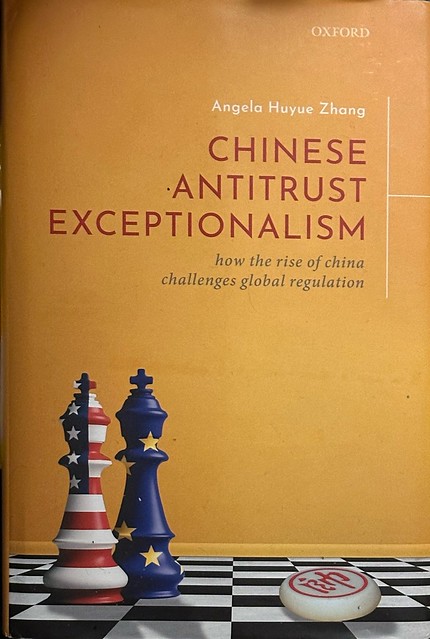
    • Chinese Antitrust Exceptionalism by Angela Zhang sounds exceptionally dry to the uninitiated. But if like me, you’ve worked on brands like Qualcomm, Huawei or GSK you realise how much of an impact China’s regulatory environment can have on your client’s success. Zhang breaks down the history of China’s antitrust regulatory environment, how it works within China’s power structures and how it differs from the US model. What becomes apparent is that Chinese power isn’t monolithic and that China is weaponising antitrust legislation for strategic and policy goals rather than consumer benefit. It is important for everything from technology to the millions of COVID deaths that happened in China due to a lack of effective vaccines. Zhang’s book won awards when it first came out in 2021, and is still valuable now given the relatively static US-China policy views. Given the recent changes in Hong Kong where she lives, we may not see as frank a book of its quality come out of Hong Kong academia again on this subject matter.
    • Van Horne and Riley’s Left of Bang was recommended by a friend who recently left military service. It codified and gave me a lexicon for describing observations of focus group dynamics and observation-based shopper marketing. Probably of bigger value to people more interested in the analytical side of behavioural science is the bibliography – which is extensive.

    Things I have been inspired by.

    Sustaining a sustainable brand

    Kantar do a good webinar series called On Brand with Kantar. I got to watch one of them: Why consumers ignore brands’ sustainability efforts. Consumers are reticent to trust in brand’s sustainable efforts. Kantar’s recommendation is to stay the course and continue to demonstrate real sustainability. Kantar’s work complemented System 1’s Greenprint US-orientated sustainable advertising report. There is a UK-specific version as well with half a dozen ideas for marketers published in partnership with ITV.

    Media platform trends

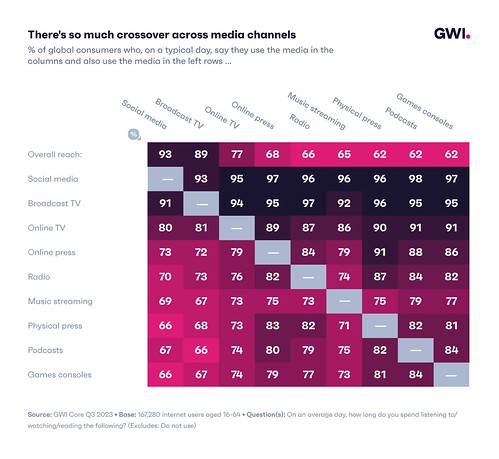
    GWI released their 2024 Global Media trends report. GWI takes a survey based approach to understand consumer media behaviour.

    • Broadcast TV still commands the greatest share of total TV time, despite Netflix, Amazon Prime Video and a plethora of other streaming platforms from Criterion to Disney+.
    • Survival/horror players are most excited about gaming luxury collabs, whether or not luxury brands are equally excited about survival or horror gamers is a bigger question.
    • Games console ownership has halved in the past ten years. This surprised me given how many of my friends have a Switch or PlayStation 5. It probably explains why Microsoft is focusing on being a publisher rather than on platforms as well.

    Japanese online media spend

    Dentsu published a report looking into 2023 Advertising Expenditures in Japan. A couple of interesting outtakes.

    • They focused exclusivity on internet advertising, which gives you a good idea on where they want the balance of media spend to go, rather than necessarily the right tool for the right job. Yes digital is very important, BUT, we live in a world were we are wrapped by and consume layers of digital and analogue media.

    We can see from GWI data that this viewpoint is likely to be still excessively myopic in terms of media due to offline – online media linkages. This is likely to be even more so in Japan that still has a more robust traditional media industry.

    There_s_so_much_crossover_across_media_channels
    • Internet advertising reached a new high, despite being a couple of years after the Olympic games were hosted in Tokyo. (Media spend when a country hosts the olympics tends to be skewed that year upwards).

    One thing I would flag is that this report is based on surveying people across the Japanese advertising industry and built on their responses. So there maybe some biases built into that process. Overall it’s a fascinating read.

    Social media engagement benchmarks

    RivalIQ published their 2024 Social Media Industry Engagement bench report, download it to get the full details. Three things that struck me straight away:

    • Macro-level decline across platforms on engagement rate, which matches the trends that Manson and Whatley outlined ten years ago in their Facebook Zero paper for Ogilvy Social.
    • If brands didn’t need enough reason already to reduce exposure to Twitter, the falling engagement rates on the platform add additional reasons. Overall video seemed to underperform on engagement compared to photos.
    • One thing leaped out to me in the industry verticals data, if you are looking to reach student age adults, why not consider collaborating with higher education institution social media accounts rather than influencers?

    Shocking health outcomes

    The Hidden Cost of Ageism | A Barrier to Innovation & Growth | Future Work – sparked a lot of discussion with its implications on workplace practices, particularly within the advertising sector. What was less discussed but more important was the implications of ageism related biases on healthcare treatment.

    Under-treatment or Over-treatment: Older adults may receive less aggressive treatment options or are overtreated because of age-related biases, rather than based on individual health needs and preferences.

    Dismissal of Concerns: Healthcare providers might dismiss older patients’ health issues as inevitable parts of ageing, potentially overlooking treatable conditions.

    Age-Based Prioritisation: In some cases, age influences the allocation of healthcare resources, with younger individuals being prioritised over older ones, assuming they have more “life worth living.”

    The Hidden Cost of Ageism | Future Work

    MSNBC News in the US did a report on what it called a ‘Post-Roe underground’ echoing the underground railroads to free slaves in the Southern states and the Vietnam war era draft dodgers who escaped north to Canada. This time it is to help women access abortion pills or procedures in other states or Mexico.

    MSNBC

    My friend Parrus hosted a talk on World Health Day, more on that here, the key takeaway for me was not trying to replicate developed market solutions in developing markets. Instead think about how it could be reinvented. Thinking that could be extended beyond health care to consumer goods, telecoms and technology sectors as well.

    Luxury market shake-up

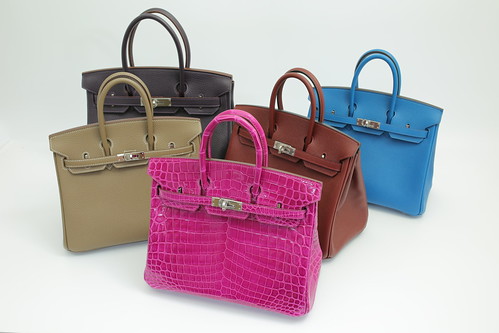
    Business of Fashion covered a US court case where two women brought a lawsuit against Hermès, alleging purchase of its sought-after Birkin bag is dependent on purchase of other products and is an “illegal tying arrangement” that violated US antitrust law.

    5D3_1690

    Hermès is more vulnerable than other brands because it owns its retail stores. The case, if successful could have implications far beyond the luxury bag-maker. For instance, how Ford selected prospective owners for its GT-40 sports cars, or most Ferrari limited edition for that matter.

    While we’re on the subject of luxury, LVMH are rerunning their INSIDE LVMH certificate which is invaluable for anyone who might work on a luxury brand now or in the future. More here.

    Morizo

    Toyota are on a tear at the moment. They correctly guessed that electric cars were too expensive at the moment and focused hybrids as a stepping stone to electric and hydrogen fuel cell production. They have also successfully use the passion for driving in their products and their marketing. The Toyota GR Yaris was a result of Chairman Akio Toyoda instructing engineers to make something sporty enough to win the World Rally Championship and affordable.

    He also outed himself as a speed demon who went under the nom de plume of Morizo.

    Quebec

    For many English speakers one of the most dissonant experiences is being confronted by a language you can’t speak. It’s part of the reason why ireland managed to become the European base of companies like Alphabet and and Intel. So I was very impressed by this campaign by the Quebec government to attract visitors and inbound investment.

    Things I have watched. 

    I watched Mr Inbetween series one in March and managed to work through series two and three this month. I couldn’t recommend them highly enough as a series. They just keep building on each other.

    Over Easter, I revisited some old VHS tapes my parents still had and rediscovered the Christopher Walken science fiction horror film “Communion.” It epitomizes its era, with alien abduction narratives emerging during the Cold War and permeating popular culture from “Close Encounters of the Third Kind” to “The X-Files,” tapering off after 9/11. “Communion” demonstrates how effective editing and minimal special effects can heighten tension and emotion. Despite the film’s incredulous premise, Walken delivers a fantastic performance.

    Modesty Blaise” is from a time when comic book adaptations were uncommon in cinemas. This 1966 adaptation of the 1960s comic strip shares stylistic similarities with “Barbarella” and stars a young Terence Stamp. I received a tape copy from a friend who was attending art college at the time. The depiction of the computer as a character with emotional reactions in the film feels contemporary, echoing the rise of virtual assistants like Siri and ChatGPT, despite being portrayed as a mainframe. It is interesting to contrast it with Spike Jonze’s movie Her made 50 years later.

    Useful tools.

    A lot of the tools this month have been inspired by my trusty Mac slowly dying and needing to get my new machine up and running before my old machine gave out.

    Time Machine

    Apple’s native backup software, Time Machine, serves as a personal sysadmin for home users. Regular backups are essential. If a crucial document disappears while you’re working on it, Time Machine, coupled with a Time Machine-enabled hard drive, allows you to retrieve earlier versions of the document, potentially saving your sanity in critical moments.

    Microsoft Office

    I prefer the one-off payment model over Office 365 services. I use Apple’s Mail, Contacts, and Calendar apps instead of Outlook. While Office is available for just £100, which is reasonable considering its features, I still prefer Keynote over PowerPoint for creating presentations.

    Superlist

    Many of you may recall Wunderlist, which Microsoft acquired, but much of its original charm was lost in the transition to Microsoft To Do. Superlist is a reboot of Wunderlist by the original team, this time without Microsoft’s involvement. It’s available on iOS, macOS, and the web, catering to both individual and team task management needs.

    https://youtu.be/2MzzbRhYlSA?si=04eBXH-MqKLpX2bN

    ESET Home Security Essential

    I used to rely on Kaspersky, and while I generally like their products, I have concerns about the potential influence of the Russian government. Therefore, I switched providers. ESET has a strong reputation and offers better Mac support than F-Secure. I can recommend their ESET HOME Security Essential package.

    Amazon Basics laptop sleeve

    I use a various bags depending on my destination and activities. Over the years, I’ve found that Amazon Basics brand laptop sleeves work well for my machines. They’re often among the cheapest options available and tend to outlast the computers they protect. 

    Laptop camera cover

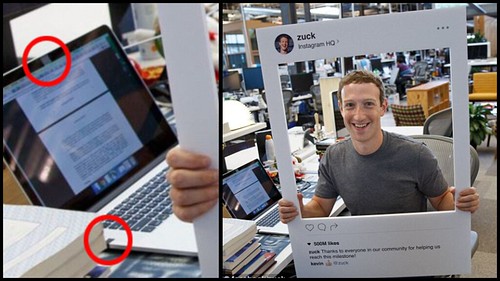
    Cover on Mark Zuckerberg laptop camera! You must have to follow this:-

    The photo of Mark Zuckerberg’s laptop with tape covering the camera raised awareness about privacy. Webcam privacy covers, such as a sliver of plastic that slides across, are ideal as they allow your laptop to close fully. A pro tip is to use a red LED torch to clearly locate your camera when applying the stick-on cover.

    Protective case and keyboard cover

    I’m a big fan of clip-on polycarbonate shells to protect my laptop, as they provide a better surface for the stickers that personalize my machine over time. You don’t necessarily need a big-name case. The one I have came with a keyboard cover that works well. Anything that prevented Red Bull, coffee, or croissant flakes from getting under my keys is worth doing.

    Screen protector film

    The screen protector film provides great protection and is easy to apply and clean, even for beginners like me. I’ll update you if my opinion changes.

    The sales pitch.

    I have enjoyed working on projects for PRECISIONeffect and am now taking bookings for strategic engagements or discussions on permanent roles. Contact me here.

    More on what I have done here.

    bit.ly_gedstrategy

    The End.

    Ok this is the end of my April 2024 newsletter, I hope to see you all back here again in a month. Be excellent to each other and enjoy the bank holiday.

    Don’t forget to like, comment, share and subscribe!

    Let me know if you have any recommendations to be featured in forthcoming issues. 

  • Chinese Antitrust Exceptionalism

    Chinese Antitrust Exceptionalism by Angela Zhang sounds exceptionally dry to the uninitiated. Zhang is a senior legal academic who works at the University of Hong Kong, which until recently got a front row seat to China disputes with both the European Union and the United States. Given the recent changes in Hong Kong where she lives, we may not see as frank a book of its quality come out of Hong Kong academia again on this subject matter if it was viewed to fall under the purview of ‘state secrets’. With the new security law that has come in, definitions have been left deliberately vague and wide-reaching.

    Chinese antitrust exceptionism

    So why is Chinese Antitrust Exceptionalism of interest?

    If like me, you’ve worked on brands like Qualcomm, Huawei or GSK you realise how much of an impact China’s regulatory environment can have on your client’s success. Around the time I worked on one client, they were shamed on the evening TV news and some of their staff disappeared for questioning by the authorities. They then reappeared months later looking haggard and worn out. It is new important for everything from technology to the millions of COVID deaths that happened in China due to a lack of effective vaccines.

    Zhang breaks down the history of China’s antitrust regulatory environment, how it works within China’s power structures and how it differs from the US model. The rise of antitrust was as much down to bureaucratic politics of the Chinese government.

    What becomes apparent is that Chinese power isn’t monolithic and that China is weaponising antitrust legislation for strategic and policy goals rather than consumer benefit.

    Zhang talks about how regulatory hostage taking and public shaming was a tool of the regulatory authorities from early on.

    The book then looks at foreign reactions to Chinese government from EU investigations to current US-China trade restrictions and discusses how China weaponised its regulatory frameworks making ‘hostage taking’ trans-national in nature.

    Last of it’s type?

    Zhang’s book won awards when it first came out in 2021, and is still valuable now given the relatively static US-China policy views. More on Chinese Antitrust Exceptionalism here. More book reviews here.