Category: design | 設計 | 예술과 디자인 | デザイン

Design was something that was important to me from the start of this blog, over different incarnations of the blog, I featured interesting design related news. Design is defined as a plan or drawing produced to show the look and function or workings of a building, garment, interfaces or other object before it is made.

But none of the definition really talks about what design really is in the way that Dieter Rams principles of good design do. His principles are:

  1. It is innovative
  2. It makes a product useful
  3. It is aesthetic
  4. It makes a product understandable
  5. It is unobtrusive
  6. It is honest
  7. It is long-lasting
  8. It is thorough down to the last detail
  9. It is environmentally-friendly – it can and must maintain its contribution towards protecting and sustaining the environment.
  10. It is as little design as possible

Bitcoin isn’t long lasting as a network, which is why people found the need to fork the blockchain and build other cryptocurrencies.

Bitcoin uses 91 terawatts of energy annually or about the entire energy consumption of Finland.

The Bitcoin network relies on thousands of miners running energy intensive machines 24/7 to verify and add transactions to the blockchain. This system is known as “proof-of-work.” Bitcoin’s energy usage depends on how many miners are operating on its network at any given time. – So Bitcoin is environmentally unfriendly by design.

On the other hand, Apple products, which are often claimed to be also influenced by Dieter Rams also fail his principles. They aren’t necessarily environmentally friendly as some like AirPods are impossible to repair or recycle.

  • Shutting down

    Shutting down is a conscious choice. You might see it described as digital detox or a digital break. I, like a number of people that I know have a ‘dumb’ phone to complement my smartphone. This is different from the pre-broadband era of the internet where going online was an active decision punctuated by the sound of the modem.

    At that time, keeping in touch was an active decision rather than the tyranny of the pings from messaging applications. We cocooned ourselves from each other with a personal audio soundtrack via an iPod or a Discman. This cocooning effect was viewed to have a positive effect on personal autonomy was called the Walkman effect by sociologists.

    Once you used a device be it the modem-connected PC, TV or music player you went through the act of shutting down devices. My parents still go room-to-room at night shutting down devices.

    Pimp my N95
    My Nokia N95

    Over the past two decades we have stopped shutting down. A number of things happened:

    • Phone as Swiss Army knife. Cellphones quickly became our alarm clock. Working on the Nokia N93 launch with Flickr (then part of Yahoo!) felt like a watershed moment allowing photos to be taken and shared instantly online. During the July 7th London bombing, I got home by navigating with the ring bound A-Z atlas of London, which lived in the bottom of my backpack. Now I have four apps that would use depending what I wanted to do.
    • Device as social currency, your smartphone says as much about your economic health as your car. It’s a hygiene level of status, just like branded training shoes (sneakers) were when I was at school.
    • Synchronous social media. The now long-forgotten iNQ SkypePhone, BlackBerry and Danger Sidekick heralded no-shutting down engagement.
    • Dark patterns / design techniques used to encourage app or service use as a compulsion. It is no coincidence that a number of senior design and engineering teams at Tinder and Instagram sat in BJ Fogg’s persuasive computing design (captology) modules, yet the products used techniques that Fogg described as unethical.

    Parent and policy voices.

    The key points that activists and concerned parents talk about revolve around the following talking points:

    • Screens now dominate our lives, and their presence is only getting stronger and more powerful. For instance, I can no longer phone up my local surgery to get a repeat prescription or book an appointment, it’s all mediated by the surgery website and the NHS app.
    • (Some) adults can control to a certain extent how often and when they use screens. Shutting down is proving hard for many adult consumers to do. But there is a commonplace screen addiction. Empirical evidence suggests that it would be damaging for children. I could make countervailing points, here is a better place to see them outlined.
    • Smartphone addiction and drug addiction share some similarities including a neglected personal life, a pre-occupation with the subject of the addiction, social media as a mood modifier or for escapism. The implication is that smartphones are an unwilling appendage which add capabilities (some of which are of a questionable value) and can’t be put down. All of which reminded me of my childhood (and adult relationship with music).

    The push seems to be on regulating the services that run on top of smartphone platforms.

    There doesn’t seem to be a corresponding focus on encouraging shutting down as a desirable behaviour; presumably because the efficiencies promised by digital government services are too alluring.

    Under-supply.

    While there might be a desire for dumb phone, there are remarkably few options as second generation mobile networks have been turned off around the world.

    HMD (what was Nokia’s terminal business) is the leading player in this sector. They are starting to do clever things that tap into the idea of shutting down and being present in the meatspace at key moments.

    HMD x Heineken x Bodega collab dumb phone

    Heineken collaborated with HMD and streetwear atelier Bodega to collaborate on a ‘dumb’ phone in a transparent case, similar to electronic devices issued in prisons.

    HMD x Heineken x Bodega collab dumb phone

    Heineken seem to doing this for a number of reasons:

    • People are less likely to be themselves when there is a broadcast studio in your pocket full of distractions to pull you away from the now.
    • Shutting down allows you to be more present for your friends.
    • Losing a £1,000+ device down the pub full of work information and access to your bank account isn’t a particularly attractive option. So providing a cheaper option is a bit like the ‘festival phone’ tough but basic Nokia that I bring to gigs and festivals.

    Punkt.

    A less well known competitor is Punkt. Punkt is a boutique Swiss consumer electronics company who have made a number of cellphones, home phones and a Braun-like alarm clock. Punkt want to promote the idea of intentional technology use, rather than as a wrapper around our everyday lives. Their MP02 phone acts as a wi-fi hotspot and a dumb cellphone, as they view a two device strategy of laptop and phone leans in better to their intentional technology use vision. Punkt make shutting down easier, by adding friction to switching on.

    More related posts can be found here.

    More information

    Battle lines drawn as US states take on big tech with online child safety bills | Guardian Online

    UK children and adults to be safer online as world-leading bill becomes law | GOV.uk

    Zuckerberg among tech bosses to testify on child safety | BBC Online

  • Omakase and luxury futures

    Omakase and luxury seem made for each other. Think about the core elements of omakase:

    • An expert provides a personalised experience that is about quality, ceremony and theatre.
    • The expert decides what you will have and prepares it for you. You are there from selection to the provision of the item.
    • The ingredients are of fine quality (and often locally sourced).
    Tokyo
    Marc Veraart

    As a trend omakase has expanded geographically with Japanese cuisine. But it has also expanded in terms of categories covered.

    Koreans have taken omakase and pushed it into other areas:

    • Coffee
    • Dessert tasting
    • Barbecue restaurants which are normally a local neighbourhood staple
    • Wine and champagne-tasting

    So how can omakase and luxury come together in the future?

    In order to understand how omakase and luxury in the future it is worthwhile paying a good deal of attention to the pressures that the luxury industry is currently under.

    Luxury is under pressure

    Undoing the mistakes of the past

    Luxury has expanded to be the size of industry it currently is due to ‘massification’ by most of the maisons. The exceptions to this would be the likes of Hermés.

    Massification

    Massification means lowering quality, using globalisation in the supply chain as well as the retail network to manufacture products cheaper. Massification occurred over a three decade period and was covered extensively by former fashion editor Dana Thomas in her book Deluxe.

    Around about 2014, Gucci led the way for luxury brands to do streetwear, leading to a more accessible luxury product. Louis Vuitton did the archetypical collection with its 2017 Supreme collaboration.

    Contrary to what most people believe luxury is aimed at the middle classes rather than the wealthy. But targeting middle class customers rather than the wealthy poses a number of problems:

    • Increased capital outlay due to the scale required.
    • Scale brings challenges in terms of supply chain management and consistency of customer experience. Greater control can be obtained by vertical integration within the supply chain and owning the retail channels. But all of this requires greater expertise and management oversight.
    • Increased economic sensitivity to shocks such as interest rate and cost of living rises.
    • Increased risk of devalued stock during an economic downturn. Gucci earnings were down 20 percent alone in Q1, 2024.

    Bigger might not always be better over a longer view.

    Secondary markets

    Secondary markets have been both a boon and a bane for the luxury sector. At one time pre-owned was seen as an ‘entry-level’ product. I bought my first nice watch secondhand once it had depreciated. It was often said that the best entry-level Porsche was a secondhand one.

    But gone are the days when you may buy a pre-owned Louis Vuitton purse on a second hand market stall in Paris. Now that will be on Vinted, Vestaire or some other platform.

    Secondary market inflated pricing affected luxury businesses in a number of ways

    • You would be interviewed to go on the waiting list for a Porsche or a Rolex.
    • Authorised dealers became order takers and dealer customer service slipped.
    • Your purchasing history would acquire you the rights to buy a Hermés bag over time.

    Luxury groups extended their businesses into the pre-owned market. LVMH owned part of secondhand watch retailer Hodinkee. Richemont owned Watchfinder and Yoox-Net-a-Porter who sold a mix of new lines and vintage preowned items. Rolex rolled out its ‘CPO’ programme selling inspected pre-owned Rolex watches through its authorised dealer network.

    Things looked really good for the luxury industry, they managed to managed to scale, to a point that LVMH is one of the largest companies in the world:

    • Massification through global manufacturing supply chains.
    • Keeping margins high, while letting quality go low.
    • Address a rising middle class in China, Korea, Japan, the Gulf countries and Russia to counteract the hollowing out of the middle class in the US and western Europe.
    • Maximising margins through controlling costs via vertical integration up and down the supply chain, from raw materials to retail.

    Market change

    A few things underpinned the craziness of COVID:

    • Money was put in consumer pockets, for which they had few outlets.
    • Supply chains were disrupted as factories closed down or pivoted to manufacturing essential products. For instances Perfums Christian Dior made hand sanitiser for hospitals for free.

    A Forrester effect (also known as a bull whip effect) resulted, driving inflation that the world’s economies are coming to terms with now. Secondary effects of this event were the increased interest rates used to reduce demand driven inflation.

    Other secondary effects include increased crime levels. London has gone from a luxury shoppers paradise, to having a global reputation amongst elites of being plagued by violent watch and bag robberies. COVID-19 isn’t the only driver of this crime wave, but is a contributing factor.

    It has also had a catalysing effect on reducing globalisation to increase national resilience.

    Consumers know that a good deal of luxury goods don’t match up with the European artisan heritage story that brands try to sell them. Experts like William Lasry has made public which brands make what kind of products where. Luxury brands often make in places like China due to capability and scale – similar reasons to why Apple products are designed in California and assembled in China. (Seriously, check out William Lasry’s channels, I love some of his visits to high-end Japanese manufacturers).

    China

    China has been a key focus for luxury brand, but it has changed in a number of different ways:

    • Chinese consumers have changed in their confidence of native brands and have a lower opinion of many foreign brands. This is partly down to a change in attitudes called guo chao. Guo chao can be traced back to the increased confidence in the run up to the 2008 olympics in Beijing. This was partly fuelled by a series of essays published in 1996 by the likes of academic Wang Xiaodong called China Can Say Now which advocated a modern robust form of Chinese nationalism, which was in stark contrast to the Deng-era vision of globalisation and biding one’s time. In the April before the olympics Chinese consumers boycotted French supermarket brand Carrefour. Over time the negativity of these boycotts have become more-and-more performative and extra-territorial in nature. The current Xi administration has seen fit to weaponise this nationalist sentiment by directing (wrangling is a more accurate term, like cowboys with a cattle train in the Old West) public opinion to further its own ends. A more positive aspect of it has been a more open market for domestic ateliers and brands than had been seen previously. Since before 2019, there have been Chinese efforts to build a rival luxury groups to LVMH and Kering and this fits in with Xi’s distaste for irrational worship of the west.
    • Xi-era growth. China under Xi Jinping faces multiple challenges around growth. The population is aging and in decline which has implications for declining consumption. Secondly economic growth has slowed compared to the double digit annual economic growth of the Deng, Jiang and Hu administrations. Foreign direct investment in China has declined for a mix of reasons including unattractive Chinese government policies, decline in China’s country brand and long term economic growth forecasts.

    Regulatory change

    I know what you’re thinking ok, this is very well Ged, but what does it have to do with omakase and luxury futures? Give me a little bit more time and all will be revealed.

    While China is an economic superpower with a desire to export its world view and the United States is a hard and soft power super power; the European Union’s super power is legislative in nature.

    European regulation drove the globalisation of the GSM mobile telephony standards during the 1990s and 2000s. They have also driven increasing internet privacy standards on web services, much to the chagrin of Alphabet, Meta and Twitter.

    Now they are driving environmental standards across a range of areas including:

    • A carbon tax to take into account the use of fossil fuels in extraction of raw materials, transportation, energy as an input to manufacturing and processing materials.
    • Product passports from raw materials to product end-of-life encouraging a circular economy and sustainable manufacturing.

    This means that the luxury sector has new restrictions on how it operates in the future.

    In summary:

    • We’ve likely reached peak massification due to economic and trade changes.
    • Market share in China looks uncertain due to changes in consumer sentiment and tastes, meaning, a more local approach might be required or a strategic withdrawal.
    • Secondary markets show that consumers are open to ownership beyond pristine new products.
    • Product passports and European legislation means re-examining the whole supply chain and the data to better control it through an entire product life.

    Finally, omakase and luxury futures!

    Omakase and luxury look like a happy meeting in the future. Think about the tenets of omakase.

    • An expert provides a personalised experience that is about quality, ceremony and theatre.
    • The expert decides what you will have and prepares it for you. You are there from selection to the provision of the item.
    • The ingredients are of fine quality (and often locally sourced).

    Going back to go forward.

    The future of luxury is about looking back. Tailors who suited generations of families and made alterations to Grandfather’s suit that the son is now wearing. The shirt maker replacing the collars and cuffs. The shoe-maker who refurbishes your shoes and has a set of lasts with your name on, for when he has to make a new set. Getting measured, having your foot cast for a last or getting your watch could be memorable events once again. So there this a precedence for expertise and service levels. But it implies a retail experience that will change dramatically.

    New techniques and questions.

    Previously with the exception of measuring sessions, these processes were largely concealed from the consumer and were difficult to scale. So it’s worthwhile thinking about how luxury’s omakase future could be extended with modern technology? We have some experiments that might give us some ideas. First up, L’Oreal has showcased bespoke make-up manufacture for a while.

    How could high-end perfume makers adapt for products beyond make-up? Improved analysis equipment from the likes of Oxford Nanopore could facilitate individually formulated fragrance products based on skin chemistry.

    Adidas experimented with its Speedfactory concept that blended the retail and shoe assembly together.

    Technologically there is a lot of promising ideas. Adidas have worked with up-cycled plastics retrieved from the debris brought together by an ocean gyre made into 3d printed soles and fibres. (Look for the Parley label, who Adidas partnered with on this.)

    How can additive or automated manufacturing and other processes feel luxe? In what way could they add to the theatre?

    This hybridisation of retail and manufacturing changes the nature of both offline and online retail completely. Would even the largest concession in Selfridges or a shopping mall be big enough, or would fashion houses need a single purpose brand experience?

    Given that there is likely to be a bit more time between manufacture and presentation of the product than there would be in a sashimi restaurant, what else would go into the maison experience? LVMH is already investing in hotels and resorts like Cheval Blanc which gives it a better understanding of more areas in luxury experience and service.

    Localisation would likely to be needed to handle omakase and luxury due to culture and the need for local materials. This might include new materials, such as fungus-derived leather. Of course, this might have negative implications for luxury house supply chains, whether it’s Louis Vuitton’s iconic plastic coated leather, or the Hermés crocodile farm.

    Which means that product line-ups could no longer be global in nature. So luxury companies may revisit that the creative process looks like. Should there be a single global vision anymore? Luxury maisons instincts would be to say yes, but could this be an opportunity to own local ateliers in markets like China or the US?

    • Will there be more local brands instead?
    • What will a maison’s heritage mean in the future? A luxury maison is about what remains the same as much as what changes. What will happen to long-standing motifs?
    • Will there be a greater opportunity for more auteurs who are closer to the customers?
    • How to bridge the tension in terms of choosing for the customer and creativity as well as quality?

    We’re talking a very different profile of creative in terms of thinking, attitudes and skills compared to the present.

    Service, repair and reuse could learn a lot lessons from traditional tailors and the service networks of watchmakers like Rolex or luggage maker Rimowa.

    I could not think of a more exciting or scary time to be setting the brand direction for a luxury maison, let alone the overall direction or the likes of LVMH. But by wrapping local materials, expertise, ritual and a bit of theatre the future could look like a fusion of omakase and luxury.

    More information

  • Vicki Dutton

    Vicki Dutton (or Vicky Dutton) was a fashion pioneer. Dutton was married to an Irish-born British civil servant working under the first Lee Kuan Yew administration of a self-run Singapore. She was a Malay woman living in Singapore.

    Singapore

    Singapore was recovering from the Japanese occupation, but there were still a large amount of social and economic problems:

    • Poor housing and overcrowding
    • Unemployment
    • Poor labour relations
    • Organised crime

    These challenges also provide opportunity for some people. And so Singapore saw the start of a vibrant media and fashion industry.

    Bright lights, big city

    The Singapore of Vicki Dutton had been moving at a rate of knots and the only constant was change.

    Growth and peak

    What we think of as modern Singapore is a relatively recent construct. When Sir Stamford Raffles arrived on behalf of the British Empire in 1819, the population was about a 1,000-strong. Of which only a few dozen were ethnic Chinese. In the next five years the population grew ten-fold. Two years later and there were move Chinese than Malays due to migration. From the end of the first world war to the beginning of the second world war, Singapore actually declined in importance as the US and Japan rose to prominence.

    During the second world war, Singapore suffered horribly with the regimented Sook Ching killings taking place across Singapore and Malaya designed to eliminate resistance before it took hold.

    Remaking

    The second world war shattered the illusion of the British Empire in Asia, as its military might was taken to pieces by the army, navy and air force of Imperial Japan. But this opened up new possibilities for Singaporeans. Europeans were no longer a breed apart. This drove a re-examination of local traditions by Singaporeans.

    Post-war saw a rebuilding of lives and preparing for a Singaporean future. By 1959 Singapore was self-ruled.

    But this process brought turmoil including riots and communist terrorism. Singapore joined the newly created state of Malaysia, but a few years later was ejected.

    Re-examination of local traditions

    Vicki Dutton was a woman of Malay heritage married to an Irish man. She was cosmopolitan enough to move within the upper-echelons of Singapore society at the time. She had also travelled to Europe and had access to the latest trends coming out of events like London and Paris fashion weeks.

    In edition, the regularly contributed to Singapore’s fashion magazines as a writer.

    Dutton was able to model her own creations as well as having the talent to design and make them.

    While she did have privilege, she also held progressive views, commenting that locals could be as pretty and equally well dressed as Europeans. Their skin tone being similar to many Spanish people. She became famous in Singapore and beyond for blending local styles with western cuts. The cinched waist popularised by Christian Dior quickly found its way into Dutton’s work that then clothed the well-to-do of Singapore and beyond. Dutton was famous for interpreting the kebaya and the sarong for a fashionable look.

    Vicki Dutton’s creation made it to Paris fashion week, thanks to a Singapore government that wanted to promote the country and its nascent industries.

    Over time, Vicki Dutton’s contribution to Singaporean fashion was forgotten and only recently brought back to the attention of the public through Channel News Asia’s programming focusing on forgotten pioneers.

    You can even see Dutton’s influence in the work Pierre Balmain did in 1972 to create the iconic kebaya and sarong based uniform for Singapore Airlines.

    Tragedy of Pulau Senang

    Pulau Senang is today largely peaceful. As an island off the coast of Singapore it is now used as a live firing range by Singapore’s air force and their navy. The name translates to ‘isle of ease’. Back in 1960, the island served a very different purpose. A work camp for organised criminal gang members was set up by Vicki Dutton’s husband at the request of the Singapore government. This was supposed to serve a few purposes

    • Ease the over-crowding at Changi prison
    • Give criminals an opportunity to return to society
    • Provide useful skills

    The first few years of the camp was successful and apparently rehabilitated some 200 secret society members. Here’s what Reuters said about what happened on July 18, 1963:

    A BRITISH PRISON SUPERINTENDENT AND THREE GUARDS WERE HACKED TO DEATH AND 28 WARDERS WERE WOUNDED IN 30 MINUTES OF SADISM AND TERROR ON FRIDAY AFTERNOON IN THE SUN-BAKED PENAL ISLAND OF PULAU SENANG (ISLE OF EASE), TEN MILES FROM SINGAPORE.

    A HEAVY ESCORT OF POLICE TOOK DETAINEES AWAY FROM THE ISLAND AFTER MORE THAN 300 OF THEM WENT ON AN INHUMAN RAMPAGE. THEY GOUGED OUT THE EYES OF MR DANIEL S. DUTTON, THE SUPERINTENDENT, AND HACKED HIM SLOWLY TO DEATH WITH NATIVE GARDENING TOOLS. MR TAILFORD, HIS DEPUTY, WAS STABBED IN THE TEMPLE AND IS IN A SINGAPORE HOSPITAL IN A SERIOUS CONDITION.

    Detainees removed from island after prison riot – British Pathé

    One can only imagine the turmoil this must have caused. Dutton eventually left Singapore behind and lived for much of the rest of her life in the United Kingdom.

    Similar posts can be found here.

    More information

    A MODEL IN A SARONG AND KEBAYA DESIGNED BY VICKI DUTTON. (Singapore Press Holdings via the National Archive of Singapore) – although not identified in the photo caption. Vicki Dutton is modelling her own creation

    [VICKY DUTTON] [PRETTY MODEL, VICKY DUTTON, POSES IN SARONG | National Archive of Singapore

    PULAU SENANG RIOT – GRIEF-STRICKEN MRS VICKY DUTTON AT THE FUNERAL OF HER LATE HUSBAND DANIEL S DUTTON AT BIDADARI CEMETARY (Singapore Press Holdings via National Archive of Singapore)

  • Six hundred pairs + more stuff

    Six hundred pairs of Nikes in a custom-built house

    The six hundred pairs of Nikes are owned by a Japanese lady who now is head of marketing for Ugg in Japan. Previously she’d spent over 20 years in sales and marketing for Nike. Her house was designed around her shoe collection and the double height ceiling in the room to host the six hundred pairs is worth watching for alone. There are more than six hundred pairs. Some of the stories about the six hundred pairs of shoes are fascinating such as how Nike Air Max 95s were responsible for thefts and muggings in Japan.

    Tom Ford

    Everyone needs a Tom Ford in their life. From personal life hacks to interior design and grooming all in the space of a few minutes. This sounds as if the interview as done around about the time that Ford was bowing out of his fashion and beauty businesses.

    Gibbs SR toothpaste

    Along with Close Up and Aquafresh; Gibbs SR toothpaste was one of the toothpastes I remember most from childhood. Unilever bundled it eventually into Mentadent and it was quietly taken off the UK market in 2018.

    I didn’t realise that Gibbs SR toothpaste was the first advertisement shown on British television. UK law had changed the previous year allowing for commercial television. The creative behind the ad was Brian Palmer of Young & Rubican (now VML).

    So, I was listening to the Uncensored CEO podcast Jon Evans when he had Les Binet and Sarah Carter on. One of them mentioned that the above ad was tested recently and scored top scores. It might be novelty, but is unlikely to be nostalgia that drove this test score. What’s more interesting it that Y&R managed to get the creative so high performing decades before the kind of tools that we have now.

    Hyper-reality

    Keiichi Matsuda took what Apple would call spatial computing to its logical conclusion in this 7 year old film HYPER-REALITY. There are a number of clever aspects to it. Watch when the device reboots in the supermarket and the glyph wearing criminal who escapes identification by the system.

    In reality, hardware will restrict how useable that these products will be. Which is the reason why the Apple Vision Pro looks so cumbersome. More related content here.

    John Glenn

    Great interview with Mercury and Apollo programme astronaut John Glenn covering different aspects of his experience as an astronaut. We hear how astronauts became so involved in the engineering and safety aspects of the Mercury and Apollo programmes.

  • CNY 2024

    What is CNY 2024

    CNY 2024 or the Chinese new year is celebrated across east and south east Asia as it marks the new year according to the lunar calendar. It is as important an advertising spot as Christmas in the UK or the Super Bowl advertising slots in America.

    This Saturday marks the new year. This year is the year of the dragon, it is a time for family and for cementing relationships through gift giving. Packaging and promotions will lean heavily on red, gold or yellow colours signifying good luck and general positive vibes.

    The packaging can often be very ornate as this example by Shanghai design agency The Orangeblowfish for client Chow Sang Sang shows.

    In many small businesses red or Christmas decorations are often left up and enhance the lunar new year decorations. Corporate florists will bring in miniature orange trees that are also a symbol of the season. (Pro-tip, don’t try one of the fruit).

    Given it’s such an important time in the marketing calendar, you see some of the most creative campaigns conducted in the region. Here’s a sampling of this year’s advertisements broken down by country.

    China

    China’s ‘Galapagos Syndrome‘ social platforms mean that it’s really hard for me to share campaigns with you here. In addition, many of the main advertising agencies no longer seem to share their work on more accessible platforms in the west any more. Each year it becomes harder to write a post like this. It’s almost like they’re ashamed of it.

    Amushi

    Food brand Amushi worked with Leo Burnett on an advert that conveys the main elements of new year celebrations. You need to watch it on Campaign Asia.

    Apple

    Apple has done some really interesting Chinese new year films documenting different aspects of Chinese new year and this focuses on the trials of childhood and the magic of new year. The protagonist is ‘Little Garlic’, a young girl with special shape-shifting powers.

    Coca-Cola

    By January 2nd, Coca-Cola already had year of the dragon cans for sale in Beijing. They created a mini-film around a family gathering, but its on WeChat. Contact me if you would like me to share it in-app with you.

    Lululemon

    I am guessing that Lululemon’s campaign was planned to be running across Mandarin-speaking markets as well as appealing to Asian Americans. The theme of spring is an analogue for the new year, but it is a celebration of traditional Chinese culture rather than lunar new year traditions per se. Michelle Yeoh is Malaysian but has global recognition amongst Asian cinema fans and her Hollywood appearances.

    The problem is that Lululemon has fallen foul of Asian Americans and this ad might have its media spend pulled outside Asia? If it happens it would be a shame, as this is the most ‘high concept’, artistic and cinematic of the ads that I have watched so far.

    Nike

    Nike in partnership with Wieden + Kennedy Shanghai have been turning out high quality Chinese New Year adverts for a number of years now and this year was no exception. It took me so long to get a copy of it, that it almost missed going into this post.

    If you have been in a rush to do your Christmas shopping you can empathise with the struggle of getting ready for lunar new year and the vignettes are really nicely done.

    Prada

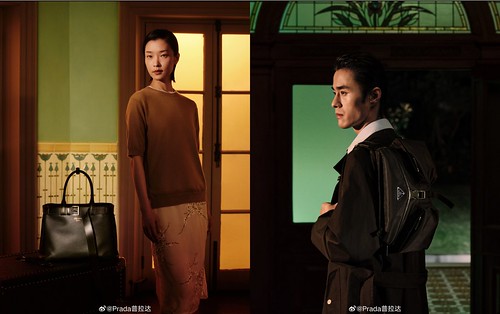
    Prada did a photo shoot which is shared on Sina Weibo microblogging platform. The photographs were designed to emulate the classic mid-century elegance of Wong Ka wai’s film In The Mood For Love. This also ties into the popularity of Wong Ka wai’s recent mainland Chinese TV series Blossom set in Shanghai during the early 1990s that is similarly visually rich.

    prada cny 2024

    Hong Kong

    Hong Kong usually doesn’t have a rich source of lunar new year video advertising. You will see print and poster ads though as sales promotions are the main driver of marketing activities.

    Coca-Cola

    Coca-Cola HK

    Coca-Cola Hong Kong went with really short takes, a celebration, fireworks, a branded giveaway and dragon-branded cans make it feel as if the creative was literally dialled in. Where’s the magic that’s integral to the brand?

    Watsons

    Hong Kong’s ubiquitous pharmacy and beauty care retailer has a brief ad promoting their new year sales promotions and the potential to win a Mofusand co-branded ‘Jenga’-style game – which would be ideal when you have young family members over for CNY 2024.

    Their associated web page has promotional price offers containing 688 which its considered to be lucky.

    Happy Beautiful Year | Watsons Hong Kong

    Macau

    Macau government tourist board

    I am not even going to try and explain what you are about to see. It’s special. But once you watch it, it can’t be unseen. I will leave it at that.

    Malaysia

    Astro

    Astro is a Malaysian satellite TV and OTT broadcaster. As is common with other media businesses in Hong Kong and Singapore they rolled out a song to celebrate Chinese new year. This video showcases their varied broadcast talent.

    Cetaphil

    Cetaphil is a range of skincare products from Galderma. Chinese new year means looking your best, including new clothes. This combined with gifting is why the holiday makes so much sense for Cetaphil.

    Coca-Cola

    Coca-Cola made use of high profile 3D OOH spaces such as this one in Malaysia with a very traditional dragon motive. It’s nicely executed and fits into the magic of the brand.

    https://youtube.com/shorts/pzkmtDpb–Y?si=CbofAjMddntIdF7n

    Eu San Yang

    Eu San Yang is a traditional Chinese medicine retailer originally from Malaysia, that now has branches in Hong Kong, Macau and Singapore. It’s advert talks about relationships particularly assumptions like ‘I thought’ or ‘I took for granted’. Click the link, as they aren’t allowing embedding. It touches on the tension between tradition and modernity that is generational and is quite meta in the way it references lunar new year adverts as a popular trope in the dialogue between father and son.

    Loong Kee

    Malaysian dried meat brand Loong Kee put together a music video featuring ethnic Chinese influencers and celebrities.

    Mr DIY

    Mr DIY is kind of like Homebase or Wilkinsons but with an extended product range. Their film has a Christmas Carol type transformation to it. I’ll leave it at that for you to enjoy.

    This comedy clip explains the universal insight above really well.

    Pepsi: Finish The Unfinished

    Pepsi’s campaign is built around the insight that during new year meals and celebrations there are lots of partly finished cans of drinks left around. The idea of finishing something is an important part of Chinese new year, echoed in the series of Hong Kong family entertainment films released for the new year called ‘Alls Well That Ends Well‘. The original film was released in 1992 featuring Maggie Cheung, Leslie Cheung and Stephen Chow – and spawned seven sequels. The advertisement connects with a gold cup giveaway that is also tied into this the theme of ‘finish the unfinished’.

    Petronas

    Malaysian government-owned energy company Petronas promotes its corporate brand with a short film that riffs on the harmony of Chinese new year. They were careful to cast talent from the countries three main ethic groups: Malays, Chinese and South Asians.

    Tune Talk

    Malaysian mobile provider Tune Talk focuses on filial piety and the high level of change that’s signified by the Dragon in the horoscope. At first when I saw the ad I thought that it would be warning about online scams, but the story is much more straight forward. It’s fun and high energy, just what you need for lunar new year.

    Watsons CNY 2024 campaign – Enter The Dragons

    Watsons is part of AS Watson, the retail arm of CK Hutchison Holdings and the owner of Superdrug. They have their own branded pharmacy stores with a large range of beauty products throughout China, Dubai, Indonesia, Hong Kong, Macau, the Philippines, Qatar, Saudi Arabia, Thailand, Ukraine, Vietnam and Malaysia as you can see.

    Yee Lee

    Yee Lee is a Malaysian manufacturing and packaging company – imagine an analogue of Unilever and Tetrapak. Their products include food, bottled water, oral care, household cleaners, and industrial products. It also manufactures corrugated cartons and aerosol cans for a wide range of customers. The music video is notable for its use of rap lyrics. Also, notice how the cast is older than Loong Kee’s music video.

    Yeo’s

    Yeo’s is a local FMCG brand with a range of products including drinks, teas, instant noodles, canned food sauces and dairy products. Every household has some Yeo’s products in the pantry or the fridge. This advert neatly captures the stress and joys of new year celebrations.

    Singapore

    Mediacorp

    Mediacorp is a Singapore government-owned commercial media company that would be analogous to the BBC in terms of the media footprint, and Channel 5 in the way it takes advertising. Chinese new year songs are a thing, with new ones launched each year. Mediacorp’s song is also an advertisement for its talent and the company’s OTT service – kind of equivalent to BBC Sounds and iPlayer.

    SingTel

    Singapore’s dominant telecoms provider SingTel have a reputation for delivering high quality Chinese New Year ads and this year was no exception. This time the ad focuses not only on reunion, but also remembering those people who we can no longer enjoy CNY 2024 with Mr DIY’s campaign we see greater than expected evolution of a senior citizen.

    Taiwan

    7-Eleven

    Convenience store 7-Eleven created a 30-second spot to promote its range of Chinese new year products.

    Here are the examples that I found in previous years:

    2023

    2021

    2020

    2019

    The sales pitch

    I work alongside Craft Associates and together have helped a number of clients including Oxford Nanopore Technologies on their successful China GTM approach and SK-II on their content strategy for Hong Kong. I have also worked with the team to help advise Chinese enterprises on going international over the years in the consumer technology space.

    Whether you want to advertise to a Chinese audience, or advertise a breakfast cereal to people in Wolverhampton, you can contact us here.

    More on what I have done to date here.