Economics or the dismal science was something I felt that I needed to include as it provides the context for business and consumption.
Prior to the 20th century, economics was the pursuit of gentleman scholars. The foundation of it is considered to be Adam Smith when he published is work An Inquiry into the Nature and Causes of the Wealth of Nations. Smith outlined one of the core tenets of classical economics: each individual is driven by self-interest and can exert only a negligible influence on prices. And it was the start of assumptions that economists model around that don’t mirror real life all the time.
What really is a rational decision maker? Do consumers always make rational decisions? Do they make decisions that maximise their economic benefit?
The problem is that they might do actions that are rational to them:
Reducing choice when they are overwhelmed
Looking for a little luxury to comfort them over time. Which was the sales of Cadbury chocolate and Revlon lipstick were known to rise in a recession
Luxury goods in general make little sense from a ration decision point of view until you realise the value of what they signal
Having a smartphone yet buying watches. Japanese consumers were known to still buy watches to show that they care about the time to employers when they could easily check their smartphone screen
All of which makes the subject area of high interest to me as a marketer. It also explains the amount of focus now being done by economists on the behavioural aspect of things.
One of the key issues of concern for the financial services sector has been the lack progress in passporting. This is where the EU says UK regulations and processes are equivalent to theirs and consequently allow market access. More related content here.
China Smartphone Market 2017: Top 10 Best-selling Models – Counterpoint Research – interesting read, basically Apple is the premium smartphone seller. Huawei’s Honor brand makes the top ten along with Xiaomi. It also explains why Huawei wants to get its main brand into the US as that is the main way it can increase the razor thin profit margins of its smartphone business. The real winner is BBK-related brands OPPO and vivo
ongoing by Tim Bray · Google Memory Loss – the whole Web is crushingly expensive, and getting more so every day. Things like 10+-year-old music reviews that are never updated, no longer accept comments, are lightly if at all linked-to outside their own site, and rarely if ever visited… well, let’s face it, Google’s not going to be selling many ads next to search results that turn them up. So from a business point of view, it’s hard to make a case for Google indexing everything, no matter how old and how obscure – the problem for Google would only be if you started to see search promiscuity
Knock and the door shall be opened unto you | FT Alphaville – in China, the data linked to technology companies is already central to the notion of credit provision. It also plays into the country’s planned social credit system. This has come alongside the rapid development of online payments, especially on WePay, part of WeChat. It would be no exaggeration to say that this is perhaps the most important technological development of the present moment, although, in part because of the impenetrability of the Chinese internet, it currently resonates less than it should
Unilever under fire over Gaytime ice cream in Indonesia | PR | Campaign Asia – no idea where they got that idea, I imagine it could become a cult brand if launched elsewhere. Gaytime ice cream makes me think of a more innocent time in my life when, if I was home from school, I would be sat down with Marie biscuits and a cup of Barry’s tea by my Mum. This was a thinly veiled bribe to be quiet, which wasn’t really needed.
The reason for this ritual would be a soap opera called Harbour Hotel and a chat show called The Gay Byrne Show. Both where on RTÉ Radio 1. Back then gay could mean happy; or in the case of Gay Byrne it was short for Gabriel. The radio meant that voices from home where beamed into our house around the clock via medium wave and long wave.
https://youtu.be/hByFDVwiQq8
Of course, I wouldn’t have mentioned it at my English school as there would have been an ocean of sniggers. The Muslim outrage at Gaytime also mirrors the PC revisionist view of The Flintstones ‘we’ll have a gay old time’ lyric in their theme tune. Apparently its original meaning of happy or fun, was interpreted as being intolerant of the LGBTQ community.
The problems that the Labour Party faces with Corbyn and the general distrust of politicians in what should be ‘heartland’ seats
The continued credibility of Nigel Farage
The anti-German sentiment. The EU was seen as a German vehicle to win the war again by stealth – this has almost a Basil Fawlty quality to it. But at least some of the panelists believed it was true
How the political divisions around the societal change driven by Margaret Thatcher’s government reverberated into the Brexit vote
Poundland’s naughty elf campaign which riffed on British smut and the ‘Elf On A Shelf’ franchise affected consumer attitudes to the brand according to YouGov. The research is at odds with the overall positive response it got from Twitter (outside the London media-advertising industrial complex) – YouGov | Poundland’s X-rated ads generated publicity, but consumer perception has dropped
Three Thoughts on Day One at CES 2018 – not surprised that computing is moving to the edge as the network represents latency and potential unreliability – think about how cloud failure when it hit Nest devices and IoT obselescence
Casio AL-1000 – the nixie tube display and ferrite core memory make it a thing of beauty to behold
Huawei’s US market dreams ‘harmed again’ after AT&T walks away from smartphone pact | South China Morning Post – “We have been harmed again,” Huawei’s consumer business unit chief executive officer Richard Yu said in a text message to the South China Morning Post – you can see from later articles how Huawei progressively got their act together in terms of media response though much of the coverage added a thin veneer of analysis whilst repeating the original WSJ article – China’s Huawei hit by last minute collapse of AT&T phone distribution deal | Reuters – the collapse of the deal with AT&T, first reported by the Wall Street Journal, will mean that Huawei will likely struggle to make a hit of its smartphones there as a U.S. mobile carrier would typically promote the products as well as provide subsidies and special package deals
There are a number of people who have done great trends / predictions for 2018. I thought that I would focus on what I would like to see across three trends: innovation stuckness, lean web design, machine learning ethical considerations, buffer bloat and redefining what a technology start-up is.
Smartphones are stuck in a period of innovation stuckness. It is becoming increasingly difficult to justify upgrades to your handset. This has had knock-on effects to mobile networks. In markets where subsidised handsets are the norm like the UK we’re seeing that SIM-only contracts are becoming the norm.
Apple is trying to innovate its way out of this problem with its work on augmented reality interaction. Consumer media consumption will take a good while to catch up.
Smartphone cameras are as good as consumers need (at the moment). Displays are now good enough that improvements look indistinguishable. They are also large enough for you to watch Amazon Prime or Netflix during a commute. Mobile wallets are merely a back-up in case one leaves your wallet at home.
Whilst the app names have changed, much of the smartphone usage now is for the same things I used a Nokia or Palm smartphone ten years ago:
Alarm clock
Web surfing
Entertainment
Media playback
Communications
I hope that we start to see smartphones going back to the future and looking at different form factors. My iPhone would be much more useful as a productive device if it was available in a similar form factor to the old Nokia communicator. Different form factors of devices for different users. Gamers would benefit from better controls a la the Nokia nGage.
Interfaces can make better use of haptic feedback, and be designed to take advantage of more hardware-optimised devices.
Innovation isn’t only the responsibility of app developers and phone makers. What about a modern 4G version of ‘Enhanced Full Rate’ on GSM (GSM-EFR) ‘hi-fi voice calls’. UK operator One2One launched GSM-EFR on 2G networks in the late 1990s as part of their Precept tariffs, but I haven’t seen any other carrier try to do a similar thing since. Why not? I suspect part of the problem is that ‘innovation’ in your average mobile network provider now is testing vendor products in a lab to ensure they work properly on their network.
The web has developed a digital equivalent of clogged arteries. Part of this is down to buffer bloat and a lack of lean web design approach. Unfortunately the mobile web has not brought a clean slate approach but hacked together adaptations. A bigger issue is the layers of advertising technology trackers, analytics and assorted chunks of Javascript. Ad tech hammers page load time and responsiveness.
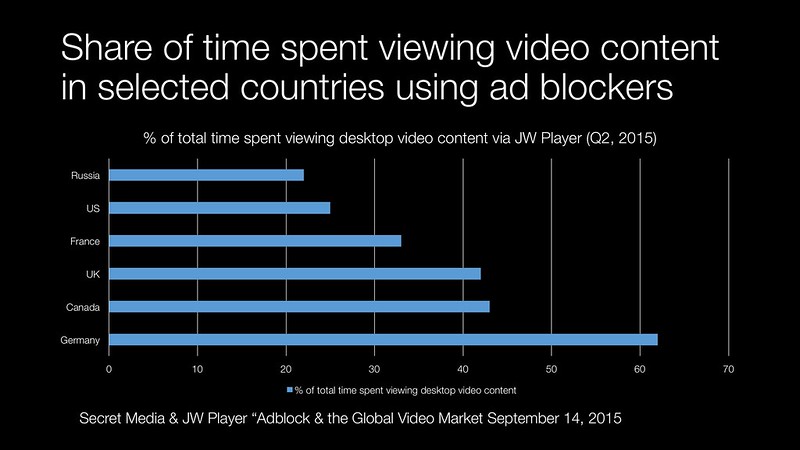
We’ve seen Apple and Mozilla try to redesign their browser technology to slow down or stimmy ad technology. Consumers are adopting ad blockers to try and improve their own web experience.
There needs to be a collective reset button. I am not sure if we see a resurgence of the paid web or a kinder lighter footprint in advertising technology. Otherwise we have an unending conflict between the media industry and the rest of us.
The debate around machine learning in 2017 highlighted a Black Mirroresque dystopia awaiting us. The good news is that we tend to overestimate technology’s impact in the short term. In the long term the impact tends to meet our expectations all be in a more banal way.
Part of the current problem around machine learning is that Silicon Valley seems to only consider technology rather than the consequences of potential use cases. This needs to change, unfortunately the people in charge of technology companies are the least capable people to achieve it. We need a kinder more holistic roadmap. Legislation and regulation will be far too late to the party. We won’t be able to stop technological progress, but we can influence the way its used.
Lying in bed ill over the Christmas period, I read that crypto currency mining currently required as much energy as Bahrain. By the end of 2018, it will require as much energy as Italy. That is insane.
Apart from speculation and buying products on the dark web what is the killer app for crypto currencies? Why is worth the energy overhead? Steve Jobs focused on computing power per watt as part of his vision for laptops and moving the Mac range to Intel. Part of the move to the cloud was about making computing more efficient for businesses and providing computing power over the network for consumers on ‘low power’ mobile devices. Yet almost a decade and a half later, the hottest thing in technology is a grossly energy inefficient process.
We are starting to see regulators in Korea and China step in to regulate the market and energy supply to miners, but western economies need to look at this. And I haven’t even got on to the ICO (intial coin offering) as Ponzi scheme…
If you substitute the words ‘fax machine’ or ‘call centre’ for app would Uber, Deliveroo etc be considered as technology companies? I suspect that the answer is no. A company may use a lot of technology – it happens a lot these days. But that doesn’t make Capita, Mastercard or Goldman Sachs a technology company, lets apply a bit of critical thinking. I wouldn’t mind, but this same mistake was made in the late 1990s during the dot com boom.
Many companies including Enron were ‘repackaged’ by management, venture capitalists, investment banks and consultancies (cough, cough McKinsey) as asset-light technology driven businesses aka ‘an internet company’. It didn’t work out well last time. It won’t this time either.
Over the past two decades the China marketing agency landscape had got used to go-go growth, just by showing up. The Xi-era of China has seen the end of the go-go years in economic growth in China. This economic maturation was one of the factors picked up on Arun Sudhaman’s analysis of Chinese marketing agency landscape changes, with a particular focus on PR services.
Arun also noted dirvergence in fortune of domestic and multi-national firms.
Here are some of my thoughts on China marketing agency landscape changes.
Digital disruption affecting China marketing agency landscape
Multi-national PR agencies often led with corporate communications and public affairs expertise. This meant that their businesses were led by leaders who paid lip-service to digital at best. My experience trying to sell digital internally was one of the most painful processes that I have ever done. It was one of almost insurmountable cultural differences: not Irish-Chinese, but analogue-digital.
To be fair many corporate and public affairs specialists in London are still trying to get to grip with what digital means. They know it’s important, but they don’t have a clue how it all comes together.
That mean’t that they didn’t really get social media beyond being a publishing platform. Chinese KOL (key opinion leader) work whilst effective, is paid media. PR agencies generally don’t have the depth of tools and analytics to provide comprehensive planning and execution for KOL projects. It is hard to get management teams to invest adequately in tools and talent.
Change in legal and regulatory environment
Premier Xi has changed the landscape for public affairs practitioners. The government is less flexible, it feels that it no longer needs to be. China is on the ascendence in the face of western existential crises and America in rapid retreat from the world stage. Hence, new laws that discriminate against foreign technology companies as part of its wider approach to cyber sovereignty. Public affairs still has a place in terms of research to provide understanding, but their foreign multinationals won’t like what the results will likely tell them.
Digital media landscape
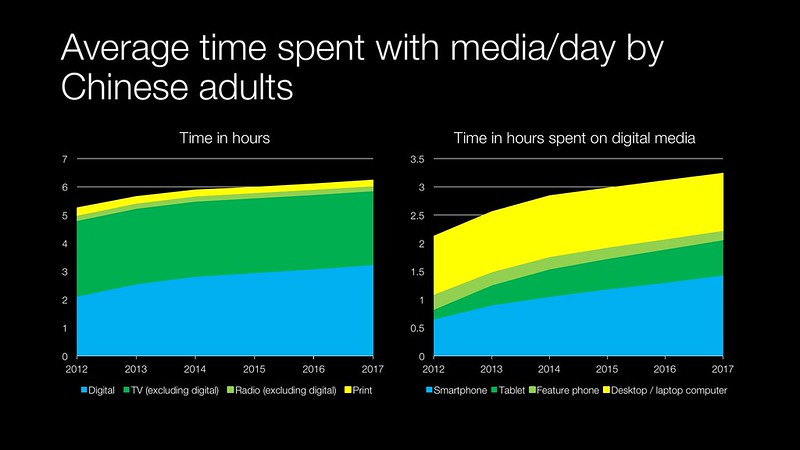
Digital has hit the industry hard. It moved at an accelerated pace compared to other industries. Unlike the west were television isn’t in decline but has stopped growing, Chinese TV isn’t undergoing the golden age that we are seeing in the west. The government has made it less entertaining – which has only helped the acceleration of digital marketing channels in China. Government control of television content has meant less reality shows or remakes of Korean drama stories and more content extolling Chinese Communist Party values. Worthy content, but not particularly engaging.
Disintermediation and displacement
In China, the major digital platform companies try and go direct to clients for social media advertising cutting out the media buying agencies. This gives media and digital agencies extra incentive to go and grab the paid engagements of key opinion leaders. These are often performance-related deals with directly attributable online sales or online-to-offline voucher redemption. Digital and media agencies are better equipped to handle influencer relations than their public relations peers. It is less about influence and more about performance.
Changes in the client boardroom
Multinational PR agencies also have problems with their established client base of international brands. Under Premier Xi we have seen a more confident China. This confidence is manifested in Chinese board rooms. The way strategy and goal-setting works in Chinese companies illuminates this difference:
Big board meeting where outrageous unrealistic targets are set by the Chairman
Planning department turns the ridiculous goals into plans
Management goes to arrange funding
The business then goes to staff up and do whatever is needed. They will build massive conglomerates – what is known as building the eco-system – something that is frowned up in the West as being bad for shareholder value
Chinese entrepreneurs care about market share more than profitability. And sometimes they fail spectacularly like LeEco or Evergrande, collapsing under the weight of their own debt.
A lot of it reads like bubble-era corporate Japan. While it seems insane to outsiders, corporate China is much more closely knitted into the government than the keiretsus ever were. Corporate China may go pop in the future, but it won’t happen at the moment.
Multinational clients struggling
By comparison, multinationals are worried about activist shareholders and meeting their quarterly numbers can’t be as aggressive in comparison to their Chinese peers. This type of aggressive pursuit of growth would also be an anathema to the likes of WPP, Omnicom, Publicis and IPG who suffer from a similar risk of activist shareholder shenanigans as their multinational clients.
Which is why Chinese brands have been blowing up across sectors. 91 percent of smartphones now sold in China are from domestic brands. Apple has somewhere around 7 per cent share. Foreign FMCG brands are being slaughtered, even Amazon has only a few percentage points of market share.
Quite simply, multinational PR firms have generally bet on the wrong horse. China is the one market were American scale and capital actually diminishes in impact over time as the Chinese domestic market picks up. Multinationals in strategic business areas were always going to lose over time.
Knowledge and business transfer
Where Chinese brands have wanted to expand globally, they have taken on foreign PR agencies. Part of this process was knowledge transfer. If one looked at an organisation like Huawei, you can see how they have learned and built internal capability with Chinese characteristics in their corporate communications function over time. It would be a similar process in other companies.
Even foreign luxury brands have struggled to be as agile as their Chinese customers. Between the crackdown on corruption and the rapid development of experienced luxury consumption – the only constant in the luxury market has been change. It is only a matter of time before China has its own answer to Michael Kors or Christian Dior. Western luxury brand problems will affect the agencies that work with them with massive fluctuation in marketing budgets.
A second transfer of capability from foreign to domestic is the move of multinational agency talent into local agencies. You combine that Chinese entrepreneurship and foreign agencies look vulnerable. Clauses that have kept western agency staff in check from plundering clients and talent don’t hold up as well in China.
What the Great Scud Hunt Says About War With North Korea | War Is Boring – pretty grime reading. The Great Scud Hunt was a key aspect of the Gulf War. The Great Scud Hunt pitted allied special forces units against the Iraqi army which had scattered its Scud launchers across the desert. The Great Scud Hunt was important to stop Israel coming into the war and fracturing the alliance against Iraq. it was also to prevent scud missile attacks on Saudi oil infrastructure and cities. Despite the terrain being reasonably flat and barren, the allies weren’t as successful the Great Scud Hunt as they would have liked. By comparison North Korea is mountainous and covered in vegetation making the job orders of magnitude harder. North Korean missiles could target the US, Japan and the whole of South Korea.
A relic of the Great Scud Hunt – a missile being examined after having been shot down in the desert by a Patriot missile
INMA: Pros, cons of EU’s General Data Protection Regulation for publishers – GDPR could lead to a reduction in programmatic ad spend because advertisers will struggle to measure whether their ads lead to purchases, according to Eric Berry, CEO of TripleLift. There’s uncertainty about how the law will be enforced, but if users have to give consent to individual publishers, demand-side platforms, and attribution vendors, the attribution companies won’t have enough data to make accurate measurements