Category: software | 軟件 | 소프트웨어 | ソフトウェア

Soon after I started writing this blog, web services came up as a serious challenger to software. The thing that swung the tide in software’s favour was the rise of the mobile app ecosystems.

Originally mobile apps solved a gnarly problem for smartphone companies. Web services took time to download and were awkward compared to native software.

Now we tend to have a hybrid model where the web holds authentication functionality and the underlying database for many applications to work. If you pick up a Nokia N900 today, while you can appreciate its beautiful design, the device is little more than a glowing brick. Such is the current symbiosis between between software apps and the web services that support them.

That symbiosis is very important, while on the one hand it makes my Yahoo! Finance and Accuweather apps very useful, it also presents security risks. Some of the trouble that dating app Grindr had with regards security was down to the programmers building on third party APIs and not understanding every part of the functionality.

This means that sometimes things that I have categorised as online services might fall into software and vice versa. In that respect what I put in this category takes on a largely arbitrary view of what is software.

The second thing about software is the individual choices as a decision making user, say a lot about us. I love to use Newsblur as an RSS reader as it fits my personal workflow. I know a lot of other people who prefer other readers that do largely the same job in a different way.

  • Alan Kay on AI + more

    Alan Kay

    Computing pioneer Alan Kay on AI, Apple and future – FactorDaily – interesting take on current approaches to AI by computer pioneer Alan Kay. I first came across Alan Kay in Bob Cringely’s book Accidental Empires. The fact that you can read this page in a browser window is partly down to Alan Kay. Alan Kay had worked at the titans driving forwards computing. He studied at the University of Utah when it was doing pioneering work on computer graphics. He went into commercial research at Xerox PARC, which basically provided a polished roadmap for computing as we know it following Doug Engelbart’s ‘mother of all demos’ while at SRI. Alan Kay came up with the concept of the Dynabook which foreshadowed the iPad and iPhone by a few decades. While Alan Kay may have slowed down his contributions, he hasn’t slowed down his critiques. Alan Kay had is last role running the Viewpoints Research Institute which explored new ideas in computing and personal computing

    Consumer behaviour

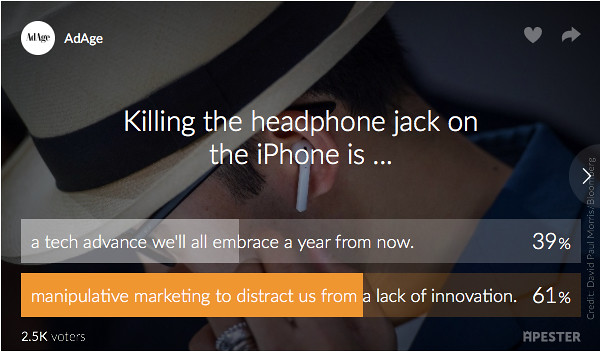
    Headphones Everywhere – The New Yorker – interesting insights into behaviour and world perception

    Why small Northern towns voted to leave. There is so much in this. Their perception that things are better in London. When you look at similar people in London there is still poverty. One of the key differences is that talent has left these area. This was the second shoe dropping from the 1985 miner’s strike and similar industrial action. Ironically de-industrialisation has been blamed implicitly on the European Union, when it was a very British decision based on the Chicago School style economics and anti-union action when Margaret Thatcher was prime minister.

    What happens when people like these realise things are going to get worse, not better for them? And being a small country between big economic blocs is going to decimate even the little jobs that they have left, their benefits and their health system?

    Culture

    Breaking up with London’s most-loved party | Dazed – I fell out of love with the internet the moment Tumblr appeared. Too accessible, too many filters… the same three pictures of Kate Moss and the Britney Spears circulating… I did, however, make a private Facebook group and an event. I love the idea of how limited Facebook is, visually. The way we used the group/event page was still very DIY. It became a resource, a way to practically get the party moving, from people getting in touch to help, to DJ’s finding out if people had spare headphones

    John Ciena on patriotism. WWE stars do a lot of work making personal appearances around the world on USO (United Services Organizations) tours. But this is different in that it presents a multi-dimensional, progressive view of patriotism. One that’s probably at odds with at least some of the stereotypes people might have of WWE fans.

    Economics

    Economic Anxiety Really Is (Part of) the Reason White Men Are So Pissed Off | Mother Jones – I would expect similar patterns driving this in the UK as well. More on economics related issues here

    225m reasons for China’s leaders to worry | The Economist – before the late 1990s China barely had a middle class. In 2000, 5m households made between $11,500 and $43,000 a year in current dollars; today 225m do

    Finance

    The chip card transition in the US has been a disaster | Quartz – with the model of the EU and many APAC countries there for them already, how could they make such a mess of it? This is beyond me

    FMCG

    Big Food is disclosing the nitty gritty details of our food—in a place where no one looks | Quartz – this could drive increasing US use of QRcodes over time

    Gadgets

    Razer made a mechanical keyboard for the iPad Pro | The Verge – regardless of whether you game or not, having a decent keyboard for the iPad is a good thing. Not sure the iPad/tablet format is a laptop killer though

    Innovation

    Fail-Safe Nuclear Power | MIT Technology Review – interesting read. China is betting big on fast breeder reactors, sodium-cooled reactors and fast breeder reactors. Technology that the west was ahead on and then walked away from for various political rather than technical reasons. The ironic thing is that we’re instead left with reactors that owe more to military needs than energy needs due to Admiral Hyman Rickover’s support of the pressurised water reactor in commercial usage. However, if you wanted a lot of plutonium for nuclear warheads fast breeder reactors are also a good option for a country like China with strong military – civilian business linkages

    China Manufacturing Contracts, Part 2: ODM Arrangements | China Law Blog – interesting legal implications on China climbing up the value stack and crowdfunding

    Where machines could replace humans–and where they can’t (yet) | McKinsey – Interesting article and good use of Tableau by McKinsey for publicly facing content

    Ireland

    Statement: the status of EU nationals in the UK – News stories – GOV.UK  – When we do leave the EU, we fully expect that the legal status of EU nationals living in the UK, and that of UK nationals in EU member states, will be properly protected. – interesting that this contradicts the keeping their options open stance of some senior government officials. Would Irish status continue to be the same?

    Brexit forces Ireland to make new friends fast — FT.com – interesting article because of nuances it implies about UK Brexit negotiations

    Japan

    ジャパンアーカイブズ – Japan Archives 日本の近現代史150年をビジュアルで振り返る – OMG I love it

    NHK World to cover Sumo in English! | Japanator – dialling up Japanese soft power

    Luxury

    Interactive Site Brings Hennessy’s Mastery To Life | Marketing Daily – Droga 5 look at the consistency and quality of Hennessy’s VSOP through an interactive site. Which a very high creative bar to get across. What surprised me more is that this was the first US ad campaign for Hennessy’s VSOP in a decade. More on luxury here.

    Marketing

    Mercedes-Benz uses influencers to reach millennials | Digiday – every brand is starting to look like Red Bull’s Mediahouse

    LG’s Ken Hong: ‘It’s Very Hard To Unseat WPP’ | Holmes Report – “There are very few companies in the world that have products as diverse as LG, so we’re finding it more challenging every time procurement calls for a review to find agencies that can handle this wide scope. Simply because there are so many players in this space and so many conflicts.” 

    Hong noted that seven contenders were invited to pitch for the business this year but declined to confirm how many actually took part. The Holmes Report understands that at least two major groups — Omnicom and Interpublic — declined the opportunity, after previous attempts to win the business proved fruitless. 

    “We invited most of the major holding companies, but I’ve seen a lot of these companies running into conflict accounts very early on,” said Hong. “We are maybe going to have rethink our strategy going forward if we’re going to keep asking agencies to come in.” – interesting article. Reading this if I were WPP I would look to gradually raise my prices as the client has basically admitted that they are in a monopoly position and both Omicom and Interpublic won’t even bother pitching for the business. Publicis and Havas aren’t likely to be in the running. More on marketing conglomerates here  including how to unseat WPP.

    Converse Gives Away 38,000 Samples for FREE feat. RJD2, HudMo, Com Truise and more – Converse had been working hard on its lifestyle brand positioning. It was fortunate that it’s affordability had already aligned it with popular culture and this sample library is a great way of reinforcing the linkage by being useful

    Toyota builds an actual Initial D concept car, plus awesome manga artwork for it 【Photos】 – the most amazing aspect of this for me, was that this project was commissioned by Toyota GB, not their Japanese domestic market (JDM) counterparts!

    The Ad Contrarian | Revenge of the Philistines – There is no one who has ever made more money from the advertising business than Martin Sorrell. There is no one who has ever had more influence on the advertising business than Martin Sorrell. And there is no one who has ever done more damage to the advertising business than Martin Sorrell. – probably disruption rather than damage, but you get the idea

    Media

    Video: Dame Kelly Holmes on the GSK Human Performance Lab – Telegraph – interesting native advertising content

    Breitbart takes its pro-Trump evangelism to the Bernie Bros. – The Washington Post – The polls suggest the pitch may not play well with most Sanders voters. But among the hardest core holdouts, there’s a chance Breitbart’s outreach could work. Many Sanders supporters resent the mainstream media, which they see as neglecting to take them seriously or address their concerns adequately. When they find a news outlet that treats them differently, they latch onto it tightly.

    Accountability Journalism: A Cost-Benefit Analysis – Nieman Reports – interesting, but I wonder what the ROI was to The Washington Post which is probably a more pertinent consideration for media companies at the moment

    Joshua Topolsky, Former Verge Editor, Raises Funding for Digital Media Venture – WSJ – funding round was led by the New York-based RRE Ventures, which has invested in the likes of BuzzFeed, Business Insider and the Skimm. Other investors include Advancit Capital, Boat Rocker Ventures and Nextview Ventures. (paywall) More media related content here.

    VIRALS – The Woolshed Company – punk’d viewers of viral content

    How technology disrupted the truth | Katharine Viner | Media | The Guardian – “It was taking an American-style media approach,” said Banks. “What they said early on was ‘Facts don’t work’, and that’s it. The remain campaign featured fact, fact, fact, fact, fact. It just doesn’t work. You have got to connect with people emotionally. It’s the Trump success.”

    Modanisa | Facebook for Business – interesting international lookalike targeting

    Google Announces New Shopping, Travel Search Features | Digital – AdAge – interesting move into visual ads in SERPs

    Is This The End Of Freemium Music On Spotify? [Mark Mulligan] – hypebot – interesting analysis on the freemium offering

    Online

    Posting photos or GIFs on Twitter | Twitter Help Center – 15GB GIFs WTF

    Uber to Merge China Business With Didi to Create $35 Billion Company – Bloomberg – the best outcome that Uber could have hoped for in China

    A messaging app will overtake Facebook by end of 2017 | Techinasia – interesting speculation by Simon Kemp, I think he’s right. The pendulum is swinging back towards privacy so this makes a perfectly sensible prediction. The only challenge is the huge footprint that Facebook has makes it a tall order to achieve

    Baidu Announces Second Quarter 2016 Results | PRNewswire – finances tanked due to Chinese government issues

    Retailing

    Amazon’s Chinese counterfeit problem is getting worse | CNBC – not just an Alibaba problem

    Security

    ‘Webcam hackers caught me wanking, demanded $10k ransom’ – ABC – great headline, serious article

    AP: Islamic State’s Twitter traffic drops amid US efforts | AP – interesting story on the US state department efforts to counter ISIS on Twitter

    Dennis Cooper fears censorship as Google erases blog without warning | Books | The Guardian – His advice to other artists who work predominantly online is to maintain your own domain and back everything up.

    The ISHU – interesting use of ‘anti’ flash photography technology in fabrics

    Technology

    Tech workers think Silicon Valley and startups are losing their luster | Quartz – not terribly surprised by this

    Web of no web

    Uber to pour $500m into global mapping project – FT.com – interesting that they don’t want to use HERE, TomTom or Google. $500m isn’t enough to support detailed 3D mapping for Uber’s autonomous car project

    More than a year after its release, and still no one wants to buy an Apple Watch | Quartz – I suspect that this is a wearables category issue and the problem is compelling use case

    Wireless

    Uhans A101 – a nostalgic Nokia phones tribute in the making ? – Gizchina.com – and I was just saying the other day I could do with a good robust voice orientated mobile phone to go alongside my iPhone

    [Update: Huawei removes photo, responds] Huawei publishes implied P9 camera sample, but EXIF data reveals $4500 camera took it – absolute corker

    Beijing Extends 4G Coverage Through All Subway Lines | ChinaTechNews – and London struggles with decent wi-fi in stations

    5G manifesto | European Union – Having read the 3,000-word document, its apparent that they don’t have a clue what the killer app for 5G will be (PDF)

  • ABZU & other things

    ABZU

    I like my computer entertainment trippy rather than action packed like this trailer for computer game ABZU

    Best battle of the bastards meme after the Game of Thrones episode caused an outburst of video creativity. Equating Jon Snow to Leeeeeeeroy Jenkins was genius. Whilst we talk about the fragmentary nature of online content, mainstream media is still providing the key cultural moments.

    Design

    The outlandish Rolls-Royce self-driving car of the future: Vision Next 100 | ExtremeTech – it has more of the design language of a Bristol than a Rolls Royce. Mercedes has an interesting take implying that UNHW individuals would still like the choice to drive rather than a self-driving car

    Amazing analysis of typography in Blade Runner. The level of detail is impressive. It also speaks volumes of the set designers and visualisers like Syd Mead

    FMCG

    Even the world’s biggest candy company doesn’t think you should be eating this much sugar | Quartz – there is another explanation to consider. Does having M&Ms in a McFlurry cheapen the brand or act as an economic substitute for a bag of M&Ms?

    Philadelphia Is the Nation’s First Major City to Pass a Soda Tax | Time – research on the effectiveness of this could be decisive in future legislation. It is interesting how it has also being rolled out in Mexico and discussed at a policy level across Europe

    Online

    Grandma with incredibly polite Google searches | BGR – it reminds me of my parents ‘Ask Google about…’

    US asks to join Irish data protection court case – Schrems argues that the use of these clauses does not change the fact that Facebook is still subject to the US mass surveillance program, and that the CJEU has already found them to be in conflict with EU law

    Software

    Samsung to Buy Joyent | WSJ – interesting move by Samsung. It makes sense for them to by as software and cloud has been a weaker capability than hardware design

    WeChat Moments – The Holy Grail of Social Media Marketing In China | Racepoint Global – my ex-B-M and Racepoint colleague James on WeChat

    Web of no web

    Biz Break: Apple Watch outlook may be dimming | SiliconBeat – the rationale is interesting and is category-wide rather than an Apple-specific platform. More on the Apple Watch here.

  • Throwback gadget: SnapperMail

    Thinking about SnapperMail takes me back to end of 2001, I started to prepare for leaving my job at Edelman. This meant upgrading my home IT set up. I picked up an iBook. The iBook was Apple’s consumer-orientated laptop made from 1999 to 2006. Mine was a second generation ‘Snow’ laptop with a G3 processor, dual USB sockets and a combo drive which allowed me to watch DVDs and burn CDs.

    I used the move to go on the first version of OSX. The move also meant that I got a new email account, my default account to date. It had two key attributes:

    • No adverts, so it looked professional in comparison to having a Yahoo! or Hotmail email address and it wasn’t tied to an ISP.
    • IMAP support which allowed me to use my email account across different devices that syncs across the devices. POP3 downloads the  emails from the server to the device, so is ideal only for when you are accessing email from one machine

    My iBook was my only source of email access whilst I left Edelman, freelanced, and then eventually joined Pirate Communications. My first smartphone was a Nokia 6600, which I used alongside a Palm  PDA – l got this sometime around the end of 2003. The 6600 supported IMAP out of the gate, it was slow, but I was connected.

    The 6600 was eclipsed by Palm’s Treo devices which were a better device. I moved from the 6600 and a Palm Tungsten T3 combo to a Treo 600 smartphone in January 2005.

    The process wasn’t smooth. The Treo was sufficiently fragile that I got a translucent silicon jacket that worked surprisingly well with the keyboard and screen protector to look after the touchscreen. Software wise the Treo 600 was a step back from the Tungsten T3 PDA. The screen was smaller and the software felt sluggish in comparison. I had deliberately chosen the 600 over the 650 because I had previously worked agency side on the Palm account and been a long-suffering device owner so knew how crap they were at bug fixes on new devices. The media didn’t call the former Palm CEO ‘Mad’ Bill Maggs for no reason (just sayin’).
    snapperfish limited
    Unfortunately Palm had not been as progressive in comparison to Nokia with its default email client. The software didn’t support IMAP. Fortunately I used to follow Mitch Kapor’s blog and he had recommended SnapperMail: an app from a small New Zealand company SnapperFish.

    SnapperMail was a compact modern email client. It has a number of features that we would expect now:

    • It supported IMAP
    • It supported SSL client to mail box encryption*
    • it was really easy to use
    • You could work with attachments including zipped files**
    • There was no restriction on the file size of attachments, the only restriction was your email account rather than your email client

    This looks like the kind of technology you would have thought Palm should have done. At the this time Palm were competing against Microsoft Windows Mobile 2003, BlackBerry 6200 series, 7100 series and early 8700 series. Yet the default email client was back in the 1990s.

    *The full-fat application cost US$39.99

    **SnapperMail came bundled with HandZipper Lite which handled the compressed files and JPEGWatch Lite image viewer

    I used this alongside MetrO – a public transit directions app and QuickOffice Pro – to read Office documents as part of my modern smartphone experience. It wasn’t just me that loved SnapperMail, it was praised by Walt Mossberg back when he wrote at the Wall Street Journal.

    SnapperMail won two Palm Source (Palm’s software licence business) Powered Up awards in 2003. It was recognised as Best Productivity and Best of the Best Solution. More on Palm here

    More information
    SnapperMail Has Solid Software For Savvy Mobile E-Mail Users | WSJ
    QuickOffice
    MetrO – open source mass transit application
    PalmSource Welcomes Developers with Awards, New Tools; Announces New Licensees | PalmSource press room

  • Blockchain deals + other news

    The Dumb Money Is Chasing After Blockchain Deals | CB Insights – true enough. Warning incoming rant on blockchain. Blockchain has a relatively low transaction rate. Traceability is reliant on a reliable database rather than the decentralisation. You have better performing open source databases that aren’t dependent on the weakest link of the decentralised network. For really high translation rates you are better investing in an Oracle database and appropriate hardware support – either through a SaaS or in-house.

    Executive Shuffle at Cyanogen Amid Challenges – can Jolla step up or is it too on the ropes? Jolla has some interesting contracts with the likes of the Russian government for trusted mobile systems. Cyanogen sold purely on improvements in user experience, so Jolla’s security infrastructure has a clear benefit for enterprise users and carriers who don’t want a smartphone botnet.  Jolla also has a strong UX, it pioneered some tactile gestures and leveraged Nokia employees deep experience in mobile experience and understanding of consumer behaviour.  Jolla also has support on some Sony smartphones. The big issue would be the failure of Jolla to turn existing deals with handset manufactured into wide availability of consumer products. It hasn’t been alone in that respect. Both Cyanogen and Firefox OS had similar issues of distribution that would then aid adoption. More on Jolla here.

    Introducing 360 Photos on Facebook – every idea becomes new again. Back before the Internet there was QuickTime VR. This rolled on to the early net but the experiment was very patchy due  to the lack of bandwidth in comparison to today. Content and interaction wise there is clearly no difference from a the consumer experience between Facebook 360 and QuickTime VR. The question is how Facebook 360 goes forward, or if it just becomes a fad like QuickTime VR did before it?

  • Google I/O 2016

    Google I/O 2016 happened on May, 18 – 20.  There had been a lot of pieces of coverage about the different products and services released. But I wanted to spend a bit of time reflecting on what Google I/O 2016 told us about their viewpoint on technology.

    Giving apps a second chance

    Google knows as well as anyone that the app moves towards a maturity model where consumers stick with the core apps that they want and then don’t go any further.
    apps
    Data shows that consumers use their top five apps 88 per cent of the time. So why would Google care when it knows that 60 percent of the top apps on the Android platform?

    The reasons for an expanded app usage include:

    • A proportion of Google’s advertising (like Facebook) is derived from the promotion of app downloads
    • Android devices are reaching market maturity in many markets, growth is likely to come from new uses – at least some of which will be derived from third party platforms
    • Google has staked its ambition in the PC sector on its Chrome operating system being able to run apps from the Android eco-system. In order for that to happen there needs to be a healthy community of developers
    • In the same way that DoubleClick’s ad network greatly expanded the inventory of Google’s advertising business, third party applications offer Google an additional source of usage for its own services. If you want to see the future of Google Apps look at the the way the likes of Baidu and Tencent allow third-party integration with their own tools

    Streaming or ‘instant’ apps is part of Google’s efforts to encourage consumer trial of new apps and enhance relationships with developers. Firebase, it’s new analytics platform for mobile developers helps them have a better relationship with their installed user base allowing them to use data to target notifications and campaigns.

    More faith in wider area networks (WANs) than personal area networks (PANs)

    Android Wear’s updates were interesting. Put simply Google has more faith in data being delivered in a timely manner over cellular or wi-fi networks than it does for inter device transfers over variants of Bluetooth. Both the Apple Watch and Android Wear products suffered from performance lags when the watch was a thin client of a phone. Having a cellular radio on board the phone presents challenges with battery life, but speeds up real world performance.

    The original design failure wasn’t down to network performance, but is likely to have implications for personal area network technology like Bluetooth in its different variants or ZigBee. These technologies are all about scale, lose a scale advantage and it poses a problem for future adoption by others. This can happen in a virtuous way. Apple’s adoption of USB benefited the standard greatly and drove interest in peripheral development for both Mac and PC. Apple’s abandonment of FireWire and the 3.5″ diskette marked their decline.

    Lots to be concerned about from a privacy point of view?

    Google Home moved yet another pair of Android powered ears into our environment. It was obvious from Google’s description of services that a paid marketing model to be the ‘car booking’ or equivalent service of Home could be very lucrative for the search giant. How this device could be used for market research, tracking brand mentions or government surveillance also poses some conundrums moving beyond smartphones to brown goods.

    Android N features file based encryption rather than treating the whole device as an encrypted disk. This raises questions around the comparative ease of access from a privacy perspective. Secondly, SafetyNet allows Google to reach into a phone to remove pre-existing applications without user permission. There is no explanation if they also have write privileges to the phone as well. If so, expect law enforcement and intellectual property owner interest. From the way it reads this would affect apps and content that have been side loaded as well as got from an app store.

    Android is giving the high ground to Apple on privacy presumably because it considers its own customers don’t care about it that much.

    Reference designs in VR to drive adoption and commoditisation 

    Google’s Daydream project looks to provide standardisation in hardware. By going down this route, Google hopes to spur on the sensor market required for improved AR experience and drive uptake. These will likely be a very different experience to the computer workstation powered Occulus Rift. Driving this technology into the smartphone market may combat the current stagnation in phone sales growth.

    More information
    Google I/O 2016 event page
    A16hz on Google I/O 2016
    Everything Google just announced at its I/O conference
    Palm, Apple, Google and the whole mobile device thing
    The Limits of Google
    If Google’s right about AI, that’s a problem for Apple – Marco.org
    ISIS’s Mobile App Developers Are in Crisis Mode | Motherboard