Category: technology | 技術 | 기술 | テクノロジー

It’s hard to explain to someone who didn’t live through it how transformation technology has been. When I was a child a computer was something mysterious. My Dad has managed to work his way up from the shop floor of the shipyard where he worked and into the planning office.

One evening he broad home some computer paper. I was fascinated by the the way the paper hinged on perforations and had tear off side edges that allowed it to be pulled through the printer with plastic sprockets connecting through holes in the paper.

My Dad used to compile and print off work orders using an ICL mainframe computer that was timeshared by all the shipyards that were part of British Shipbuilders.

I used the paper for years for notes and my childhood drawings. It didn’t make me a computer whiz. I never had a computer when I was at school. My school didn’t have a computer lab. I got to use Windows machines a few times in a regional computer labs. I still use what I learned in Excel spreadsheets now.

My experience with computers started with work and eventually bought my own secondhand Mac. Cut and paste completely changed the way I wrote. I got to use internal email working for Corning and internet connectivity when I went to university. One of my friends had a CompuServe account and I was there when he first met his Mexican wife on an online chatroom, years before Tinder.

Leaving college I set up a Yahoo! email address. I only needed to check my email address once a week, which was fortunate as internet access was expensive. I used to go to Liverpool’s cyber cafe with a friend every Saturday and showed him how to use the internet. I would bring any messages that I needed to send pre-written on a floppy disk that also held my CV.

That is a world away from the technology we enjoy now, where we are enveloped by smartphones and constant connectivity. In some ways the rate of change feels as if it has slowed down compared to the last few decades.

  • Dieter Rams

    I was watching the Dieter Rams documentary – Rams: Principles of Good Design by film maker Gary Hustwit and a small section jumped out at me.

    I immediately thought of how Spotify and other streaming services have dramatically changed our relationship with music. Music is as good a place to start as any, Dieter Rams first sprang to prominence due to a stereo dubbed Snow White’s coffin. Streamed music is not something that is actively listened to. The music disappears without leaving a trace.

    Digitisation diminishes our experience of things.

    Pictures appear and disappear one after the other without leaving a trace up here (pointing to his head).

    This goes insanely fast. 

    And maybe that’s why we can or want to, consume so much. 

    The world that can be perceived through the senses exudes an aura that I believe cannot be digitised. 

    We have to be careful now, that we rule over the digital world, and are not ruled by it. 

    Dieter Rams – Rams: Principles of Good Design

    Of course, consumerism took off at a rate of knots way before the cellphone became mainstream let alone the smartphone. But his comments about content being ephemeral in nature, lacking in memorability or substance rang through. Rams maybe right, we’re at a time where consumer interest in analogue media formats such as the vinyl record and the cassette tape is on the rise.

    There are even niche record labels that put out recordings on reel-to-reel tape for well-heeled and committed listener. As for the digital medium, the playlist is more important than the album or single, let alone the artist name. Even well established acts fail to make significant returns from streamed music. In some respects it goes back to era of the Rediffusion radio set that piped music into the consumers home, rather than ‘owned media’ from the LP to the iPod.

    Dieter Rams

    We’re seeing a move away from DAW (digital audio workstation) based instruments in music that Dieter Rams would likely approve of. And a move to hardware that would have been familiar to the 1970s version of Brian Eno. Despite the best efforts of Pearson Education and Amazon; consumers still love printed books.

    Continued love of Dieter Rams’ and his team’s own designs at Braun and Vistoe are an illustration of that championing of the real over virtual. More on design here.

  • Secure empty trash + more news

    How to replace El Capitan’s missing Secure Empty Trash | Macworld – SSD as security risks. This is because sold state drives can only be read and written to a limited amount of times which poses problems when you want to do three or more overwrites on a regular basis as part of the secure empty trash process. The irony being that hard disks despite their many faults are more secure. More on SSDs here.

    Fake Everything 2019 Update – 50 odd examples of how the online advertising marketplace is thoroughly corrupted. This is well worth a good read if you have anything to do with digital marketing. This should bring up questions around efficiency and effectiveness. Unfortunately this seems to have been supplanted by the cult of disruption above everything else.

    Internet advertising to grow at slowest rate since 2001 dotcom bust | Media | The Guardian – deceptive visuals, but interesting analysis. We’re now in the tyranny of high numbers. The sheer size of numbers required to drive percentage increases mean that growth had to slow. You also have concerns about the data supporting online advertising media planning and measurement due to ad fraud (see the Fake Everything 2019 update above this as a good primer). In addition, there is now data available that underlines concerns about having a more balanced media mix in play. More on online advertising here.

    AR/VR early stage valuations soften, leading to investment and acquisition opportunities | VentureBeat – China investing more in VR and AR than the US. These investments seem to be focused exclusively on domestic market requirements.

    Hackers breach FSB contractor, expose Tor deanonymization project and more | ZDNet – interesting that Tor networks have been breached. Tor was developed by US defence department grants to provide secure internet communications for people living under repressive regimes.

  • New MacBook Pro – some thoughts

    My old MacBook Pro, which had seen me through a lot of work had been starting to show its age, so I changed it out for a new model. The process has been challenging at times so I thought that I would write about the good, the bad and the weird parts of this experience.

    My new machine has taken a size bump to 15.4 inches. The largest MacBook I’ve had in the best part of ten years. The reason for the size bump was to try and retain a working days worth of battery life. From a size perspective the 13 inch machine suits me better but battery performance seems to be in retreat.

    Preparing the machine

    I had the opportunity to make a controlled move to the new machine, so I cleaned a lot of the data from the old computer. Trying to deal with as many duplicate files as possible.

    Once this process was done I used Apple’s migration tool. This moves across data effortlessly. I’ve done this a number of times since running MacOS X back in 2002. This had to be done over wi-fi as connecting the two machines via an ethernet cable would be problematic.

    Preparing the hardware

    I am a big fan of Incase’s hard shell that clips on to your laptop. It protects it from coffee smeared tables and the odd light prang. This is then covered in stickers like it has been bombed by a crack team of Japanese school children.
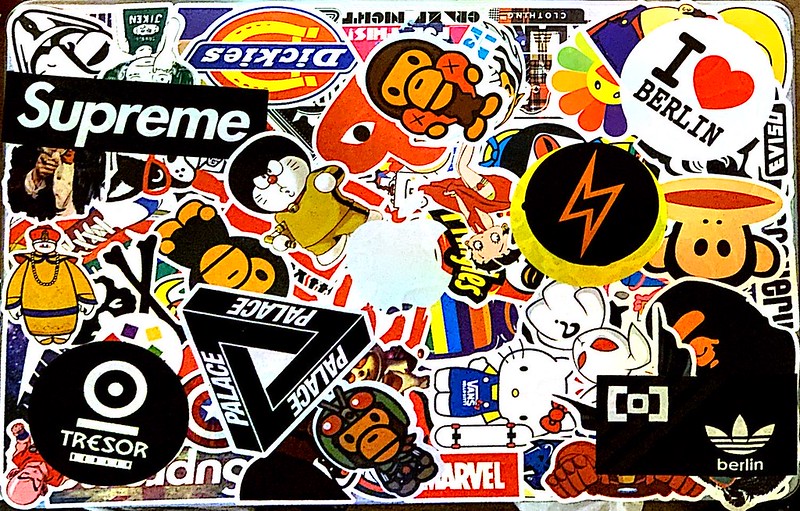
    Untitled

    So why do I have a sticker covered laptop? A good while ago I had a client at a major telecoms sector company try and swipe my laptop in front of my eyes.

    “Oh, I thought it was mine” they said whilst ignoring the Lenovo peeking out of their laptop bag.

    Opening the shell up I fit a TechPrivacy web cam privacy cover. They look very thin and are fragile during the fitting process, but once on your laptop work perfectly and don’t impede closing the laptop up fully.

    I use a torch to work out where the camera is and run FaceTime to check that I am not impeding the camera or the camera power light.

    These new Macs are known for their keyboards. They feel unresponsive to a touch typist like me and seem to be prone to the ingress of any foreign matter. Keyboards are horrible grotty things swimming in dead skin, hair folicles and food crumbs. I can’t do much to make the keyboard feel better, but I have fitted a MOSISO Keyboard Cover to provide a bit of protection.

    Finally, I topped this off with an Amazon Basics neoprene laptop sleeve. MacBook Pros are a hassle to repair, even with AppleCare+, the sleeve is a small investment.

    Powering up

    I have series of chargers including an in-car charger and airplane seat charger designed to work with American market airplanes that I have accumulated since my first Intel MacBook Pro back in 2006. Some of the cables have a silicon holder and MagSafe 2 connector attached.

    I have breathed a sigh of relief many times when my power cable has been snagged and not taken the laptop tumbling on to the floor with it. All of which are now useless given Apple’s move to USB-C. Unfortunately USB-C is not snag proof like the earlier MagSafe power connectors. Thankfully, I can still use the extension cables that I have. Apple doesn’t include them in the box with the laptop any more.

    Some third party designers have trialled products that mix the best of USB C with a MagSafe like connection. Apple’s current solution feels like a petty and backwards step.

    Making a connection

    I mentioned early on that I couldn’t do an ethernet-to-ethernet connection for the data migration to my new laptop. The problem is that the new MacBook Pro only has five connection points. Four of which are USB C and the fifth is a 3.5mm headphone socket.

    You need dongles for everything:

    SD Card reader – you need a dongle for that. Apple has one that it will sell you.

    USB connection, for when you want to connect your iPhone to your MacBook Pro…

    HDMI connector – Choetech’s product seems to be well made

    VGA connector – Amazon Basics have connector that’s relatively good value and seems to be as well made as it’s Apple cousin

    Thunderbolt 2 to USB C. Connecting to Thunderbolt 2 devices is a whole new world of pain. Apple’s own adaptor works inconsistently. Given that my home set up runs on two hubs connected to two Apple cinema displays all over Thunderbolt 2, this was critical for me to have work. In the end I found that StarTech’s adaptors whilst ugly, work a treat.

    This means that as a mobile worker going in and out of agency spaces like I’ve been doing, you need a few hundred pounds worth of add-on dongles and power cords to get anything done. My laptop starts to look like a white legged arthritic spider rather than the slick working machine I previously enjoyed.

    For mobile working, I’ve just started trying out a Pioneer Multiport adaptor that does VGA, ethernet, a single ethernet port and HDMI. It’s not particularly elegant but is also pretty cheap.

    A migration that hits the pocket and your time

    Migrating to the new MacBook Pro machine has been a major investment in peripheral hardware and a time suck in order to tune the set up to work properly. There has been much to say about good design.

    Good design (with a huge debt to Dieter Rams):

    • Is innovative (but doesn’t idolise innovation)
    • Makes a product useful (out of the box)
    • Is aesthetic (balance, good tastes and proportions)
    • Makes a product understandable (it just works)
    • Is unobtrusive (doesn’t call attention to itself in operation)
    • Is honest
    • Is long-lasting (consumption is an experience of layers with new and old products in a user journey)
    • Is thorough down to the last detail (and delights the user with that level of thought)
    • Is environmentally friendly (not wasteful, designed for the long haul, user serviceable)
    • Involves as little design as possible (Economy of experience, for instance not having a laptop’s ports hidden behind doors. it just is. This is as much about the metaphysics of quality intrinsic in the product as anything else)
    • Is knowing when to say no (or yes) – not having an FM radio on the iPhone or iPod. But having ports people would actually use on the new MacBook Pro
    • Is function first, form second (a build on making a product useful first, then aesthetically pleasing)

    The MacBook Pro fails on many of these attributes.

  • Chip implants + more stuff

    Swedish people are getting chip implants to replace cash | NY Post – is it just me who thinks that this might not be the smartest thing to do? Chip implants are the stuff of conspiracies. And the mind boggles what kind of new crimes that this might inspire.

    Israeli group’s spyware ‘offers keys to Big Tech’s cloud’ | Financial Times – affects Facebook, Amazon, Apple and more. Guessing that major state actors can also do this already. Private companies like NSO basically democratises this for countries that don’t have this capability inhouse, including some of them that authoritarian in nature

    Individual Beyond the Personal | Ogilvy Consulting – Global Strategy and Innovation – interesting take on AR/VR level immersion

    Salesforce talk about a vision that’s way beyond narrow machine learning skills to something that looks much more like general purpose AI. We are told by experts that general purpose AI is still decades away. Consequently I can’t work out if this is long term concepting or snake oil….

    ‘Cordless’ Dyson fan advert falls foul of watchdog – BBC News – really interesting judgement. I think the ASA is right, but there are implications for future demonstration visuals of products

    Black Pastors Group Petition Nike to Drop Colin Kaepernick – Footwear News – ok this is going to get interesting. More on Nike here.

    Juul CEO: “I’m Sorry” for Teen Vaping Epidemic – “First of all, I’d tell them that I’m sorry that their child’s using the product,” Burns told CNBC during an interview for an upcoming documentary on the rise of vaping in the U.S. “It’s not intended for them. I hope there was nothing that we did that made it appealing to them. As a parent of a 16-year-old, I’m sorry for them, and I have empathy for them, in terms of what the challenges they’re going through.” – Good design attracts users of all ages….

  • The Jony Ive post

    Looking back on the career of Jony Ive, its hard to believe where the company came from. When Steve Jobs returned to Apple he picked through much of Apple and didn’t like what he saw. He did see something in Jonathan Ive and the small cadre of product designers left at Apple.

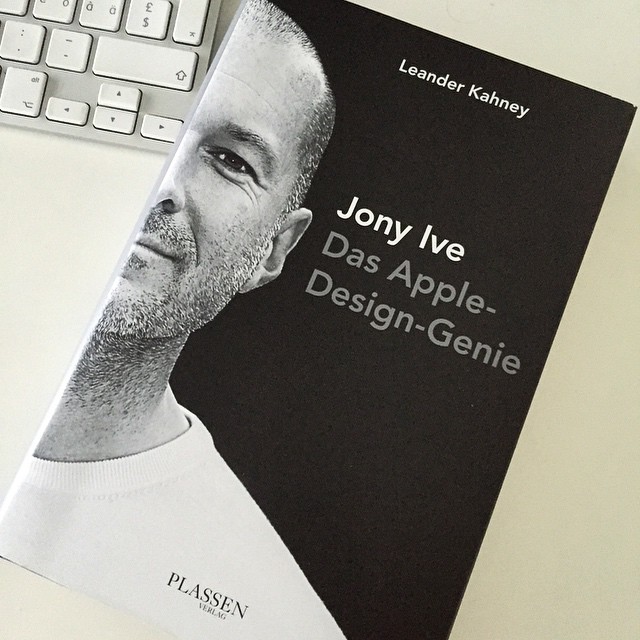
    Meine neue Bettlektüre. Jony Ive.

    Ive’s moving on from Apple some 27 years after he joined is a long innings. During that time Apple went from having a near death experience as a computer maker to selling luxury goods.

    Whilst Ive is one of the world’s best known product designers; he has had his fair share of failed products.

    • The Apple Cube
    • The Newton MessagePad 110

    I consider Ive’s body fo work as head of design at Apple to break down into three periods:

    The Candy Age

    ‘The Candy Age’ was about putting fun back into computers like the iMac. It was a break from Apple’s previous pseudo corporate product design such as the platinum or ‘Snow White’ design language. Around this time you had big organic forms that CAD and tough polycarbonate plastics made possible. From Silicon Graphics Octane and O2 workstations to retro styled Smeg fridges; fun was in.

    The Jony Ive led design team took the transparent prototypes that were usually used to see how products go together and look for things like pinched cables into production. This made a virtue of the innards.

    This provided clear differentiation between Apple and beige box PCs whilst still providing out of the box functionality of an internet appliance. It was this mix of timing and plug-and-play functionality that drove iMac and iBook sales as much as product design.

    This was when Apple started to move from being a ‘weird’ platform to a cool platform.

    Speaking of cool, Jobs pushed both the engineering and design team to keep the amount of cool fans in the devices to a minimum to reduce device noise.

    Pseudo Bauhaus

    Apple started to go from coloured translucent polycarbonate to white polycarbonate and metal. You see this in the second iteration of the iBook which went from looking like a funky toilet seat to a a clean white laptop design. The last generation PowerBooks and early MacBooks in aluminium alloys where a premium version. It gave use the iconic iPod earphones and the early iPod classic designs.

    There was a move to recto-linear shapes and details that were a nod to Dieter Rams work at Braun. During this time Ive was interviewed for the documentary Objectified and specifically stated that their products looked to embrace Rams’ ten rules of good design.

    Size Zero

    Apple was obsessed with size. There is an apocryphal story about Steve Jobs dropping a prototype iPod into a fish tank. He noticed that air bubbles came out of the case. Jobs jumped on this as proof that there was wasted internal space. What this story missed is the emphasis Jobs put on thermal performance.

    Motorola came out with two products in 2004 and 2005. One was the PEBL. The phone was rounded and smooth like a pebble – a tactile pleasure. The second was the RAZR, a phone that was broad and really thin for a feature phone. The RAZR was the more successful.

    We know that Jobs used the RAZR, he pulled his phone out on stage. You can see the influence of the RAZR in slim devices like the iPhone, the MacBook Air and the iPad.

    If Apple couldn’t make it thin, they made it small. That’s the reason why Apple went with the ‘waste paper bin’ Mac Book Pro. Being circular also cut interconnect distances in theory.

    The problem with size zero is that Apple designed itself into a corner:

    • Thermal management became an issue. As I write this my MacBook Pro is blowing up a hurricane. Apple’s Mac Pro line had to be redesigned from the ground up because the ‘waste paper basket’ design couldn’t handle the heat dissipation required for major machines
    • Minimalism to the point of commodisation. Because Ive reduced the phone down to resembling a thick sheet of class, it meant that differentiation through industrial design didn’t matter. Hence why its really hard to tell one phone from another
    • Environmental impact and repairability. Apple has to use special robots to disassemble iPhones for recycling. Apple AirPods are unrepairable and professional grade laptops can’t be upgraded post-purchase. On the MacBook Pro you have ultra slim keyboard keys that are intolerant of use

    Jony Ive leaves a mixed legacy behind at Apple. His departure gives the design team an opportunity to push the reset button and come up with a new design language for products moving forwards.