Category: ideas | 想法 | 생각 | 考える

Ideas were at the at the heart of why I started this blog. One of the first posts that I wrote there being a sweet spot in the complexity of products based on the ideas of Dan Greer. I wrote about the first online election fought by Howard Dean, which now looks like a precursor to the Obama and Trump presidential bids.

I articulated a belief I still have in the benefits of USB thumb drives as the Thumb Drive Gospel. The odd rant about IT, a reflection on the power of loose social networks, thoughts on internet freedom – an idea that that I have come back to touch on numerous times over the years as the online environment has changed.

Many of the ideas that I discussed came from books like Kim and Mauborgne’s Blue Ocean Strategy.

I was able to provide an insider perspective on Brad Garlinghouse’s infamous Peanut Butter-gate debacle. It says a lot about the lack of leadership that Garlinghouse didn’t get fired for what was a power play. Garlinghouse has gone on to become CEO of Ripple.

I built on initial thoughts by Stephen Davies on the intersection between online and public relations with a particular focus on definition to try and come up with unifying ideas.

Or why thought leadership is a less useful idea than demonstrating authority of a particular subject.

I touched on various retailing ideas including the massive expansion in private label products with grades of ‘premiumness’.

I’ve also spent a good deal of time thinking about the role of technology to separate us from the hoi polloi. But this was about active choice rather than an algorithmic filter bubble.


  • Korean customer service

    Coming from the UK, Korean customer service experience is amazing. Korea has a lower minimum wage than the UK, like China, when you pull into a filling station your fuel is pumped for you by an attendant. This means that Korean customer service often has a personal touch. However this doesn’t mean that you get table service in a coffee shop. Instead you buy your drinks and food, find a table and when your order is ready to collect a wi-fi pager usually shaped like a hockey puck starts flashing letting you know that you can collect your order. 

    Here’s an example of one of these Korean customer service pucks from A Twosome Place
    wifi puck - The Coffee Bean, Seoul, Korea
    This relies on a certain amount of social trust as you will have already put your bag down at your table may not want to take it with you to collect your order.

    This would be a major flaw here in the UK where petty thieves and pickpockets are depressingly commonplace. I would imagine that that both bags and wi-fi pagers would disappear.

    Generally, Korea is much safer in the UK so this isn’t too much of an issue. It an example of how technology has mediated a semi-table service experience.
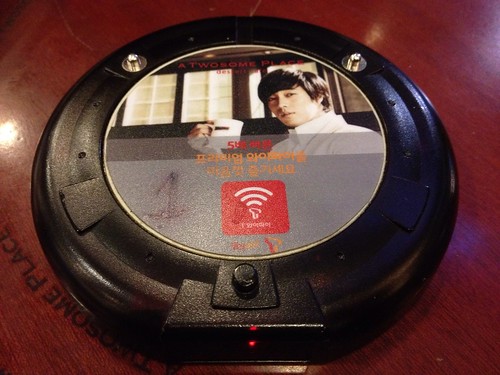
    A Twosome Place wifi puck

    More technology related content here.
  • Chain coffee shops

    I had been in Korea less than 24 hours and already the number and diversity of chain coffee shops had surprised me. Whilst some people may call Seattle the home of the coffee shop, Seoul seems to have far more at least in terms of independent coffee shops and chain coffee shops.

    The quality of chain coffee shops seem to vary enormously and they seem to be very segmented in terms of their offering. Whilst Starbucks is in the Korean market with a substantial footprint – it hasn’t managed to achieve total market dominance in the way it has in the UK.

    From the small mom-and-pop shop feel of Mr Coffee to the mega-chain to Tom Tom Coffee there is something for everyone:

    • Coffee Bean – Korea’s oldest successful coffee shop brand isn’t as trendy as Caffé Bene. It has a mix of coffee and tea drink alternatives similar to Starbucks. It uses  wi-fi enabled buzzer to let you know when your order is ready. Coffee Bean is much better quality coffee than many of its competitors including Caffé Bene
    • Caffé Bene – the shop aims for a third-space type feel similar to Starbucks – but with a Korean modern design aesthetic.  The restaurant has a range of coffees on its menu including Ethiopian blend. Generally the coffee is milder than Starbucks. It also is known for its food; which is a grade above Starbucks.  Caffé Bene uses wi-fi enabled buzzers to let you know when your order is available to pick up from the counter.  Drip coffee is about two and a half times the price of the UK. Despite weak coffee, Caffé Bene has grown to 700 branches throughout Korea
    • Angel-in-us – aimed more at female customers, apart from the cute mug designs is is very similar in terms of its product and feel to Caffé Bene
    • Mr Coffee is a kiosk operation found at local mass transit stations – it makes a passable cup of coffee
    • Tom n Toms: ubiquitous chain, not known for the quality of its coffee. Inside it is very similar to an American style family restaurant like Dennys
    • Twosome Place – aimed at women.  It has a selection of beautifully presented cakes as an indulgence. . Advertised with a good-looking male celebrity selling a fantasy experience. It is also the chain with the best coffee. if you can handle the smooth marketing alongside The Coffee Bean, A Twosome Place is probably the best major chain to frequent

    Things to watch out for:

    • Prices are generally a third more expensive than Starbucks in other countries such as the UK, Hong Kong and US
    • Forget the flat white, the trendy coffee to order here is the ‘hand drip’ served in a lot of the independent coffee shops
    • People generally don’t understand what a black coffee is; they call it an americano even when its a filter coffee
    • Paid for wi-fi – this maybe due to the ubiquity of LTE | 4G networks and wi-fi bundled into domestic cellular deals. There is one variety of milk available – diary | full-fat. If you don’t have Internet Explorer | PC chances are that you won’t be able to sign up for a temporary account due to Korean reliance on ActiveX for online security – insane, but true
    • Milk – if you are on a diet or lactose intolerant go for black coffee, as milk generally doesn’t have any choices that you can make to customize your drink

    More Korea related posts here.

  • Mobile and TV integration

    Social, search, mobile and TV is the first in a series of posts of observations and thoughts from my recent trip to Korea.

    I was stuck by how mobile and TV advertising integration is achieved through QRcodes, search social and e-commerce. The consumer is surrounded in a brand membrane whilst at home in front of the TV.

    Korea is known for being advanced in social networks and search engines. Twitter has a vibrant community there, but Me2Day gives it a good run for its money.

    KakaoTalk is like a multi-platform version of BBM that brands are using to engage with fans and mature platforms like Cafe Daum, Naver and CyWorld can still school Silicon Valley on all things social.

    The country also has a diverse and vibrant eco-system of television stations with a lot of content based around K-pop stars and celebrity participation. TV is available on mobile devices and is one of the main engines of popular culture. TV enjoys a viewership that you don’t see in the UK or Europe any more.

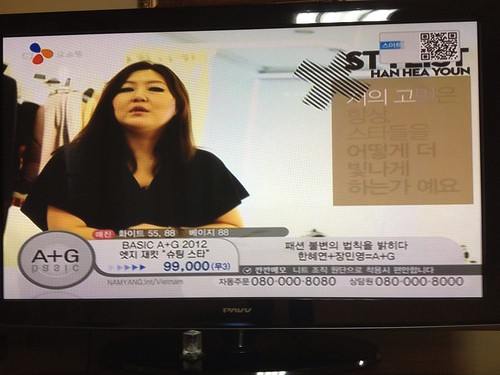
    Given these two vibrant media eco-systems; advertisers and television commerce operations seek to do multichannel marketing. Here are some examples I took pictures of during a five-minute period during a mid-morning commercial break.


    Daum Mobile search is suggested as Daum is known as a site that provides content of interest for women. Encouraging mobile use allows for an immediate call to action.

    Han Hea Youn is a Korean fashion designer who sells her range of clothing via TV shopping channel. The QRcode at the top of the screen allows for the audience to get more information online and make a purchase.

    Where the product isn’t specifically aimed at a female audience the commercials recommended a search term for Naver Mobile.

    These commercial sections were not best-practice but indicated how true integrated multichannel has become a hygiene factor in Korean advertising campaigns. More related content here.

  • The Green Linnet

    Irish public broadcaster RTÉ is celebrating 50 years of television broadcasting and one of the shows being re-broadcast is The Green Linnet. The Green Linnet in question was a drab green Citroen van based on the Citroen 2CV car in which two traditional musicians toured Europe and played music on the streets to earn their keep. The van was a former mail van with an underpowered engine. The van was named after the greenfinch (which is more yellow than green), a prominent song bird in the Irish countryside. The filming took place in 1978 and the series was shown in early 1979.

    Watching a few episodes and a retrospective of The Green Linnet, I realised that the programme was an unintentional proto-reality show; as the filming caught the eventual frayed nerves of the musicians living in an artificially-created environment under constant surveillance. It was a pint-sized Big Brother house on wheels.

    The constricted space in the van and their general condition got progressively grottier living on camp sites and spending every waking moment together. The Green Linnet pre-dated the Dutch show Nummer 28 (which is considered by many to be the first modern reality show) by some 12 years. The breakdown in The Green Linnet  also mirrored highlights in MTV’s The Real World.

    RTÉ had a history of doing pioneering work. Ireland shot its first soap opera in studios, this was Tolka Row, that focused on a couple of working class Dublin families. They then decided to shoot an equivalent show showing rural life called The Riordans. Ireland was an agrarian society at the time and so they pioneered shooting outside and on location to make it more relatable to the rural audience. The Late, Late Show is the world’s second longest running TV show in the world. It is second only to The Tonight Show on NBC in the US.

    More information here. More content on the media can be found here.

  • Being useful: or what can Lei Feng teach us about digital marketing?

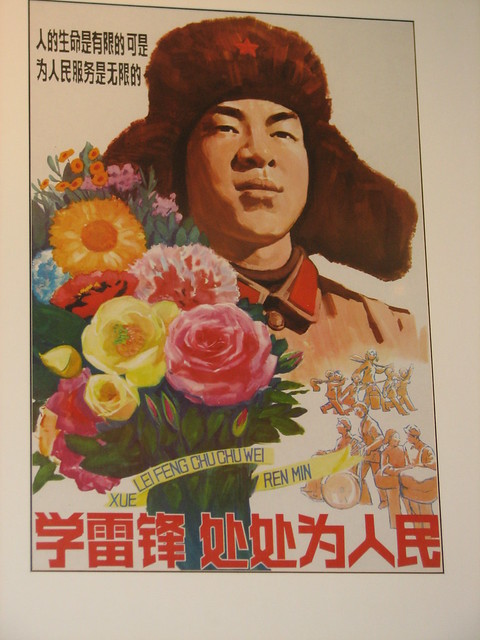
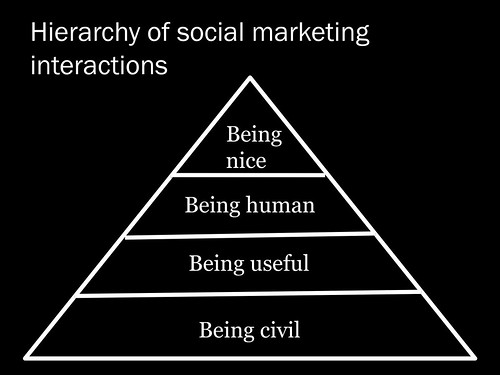
    A while ago I built a framework from a hodge lodge of ideas to think about social marketing with being useful as a foundational element. I was thinking about this as I read a number of Chinese news sources,  the name Lei Feng had started coming up a lot recently. The reason why it was coming up was that it marked the 50th anniversary of Mr Lei’s death. The Chinese government was trying to use this date to encourage a greater sense of community and altruism in modern Chinese society including a Weibo hashtag with Monday having been ‘Learn from Lei Feng’ day.
    Poster of Lei Feng selfless soldier and model citizen

    Being useful exemplar – Lei Feng

    Mr Lei was a 22-year old soldier who drove military trucks for a living. He was killed when a telegraph pole was felled by another truck and landed on his cab. This would have been just another sad but unnoteworthy accident, had not Mr Lei left behind a 200,000 word diary which was naturally full of content about how great the party was and documented an otherwise selfless life where he continually focused on being useful to those in his community.

    Mr Lei was an orphan which meant that it was easier to use him posthumously as an example to others. March in Chinese schools is learn from Lei Feng month. Today Mr Lei is considered with mixed feelings by Chinese people; his selflessness is at odds with a laissez-faire market economy and the use of his life is viewed with some cynicism by many.

    Regardless of the realpolitik surrounding the legacy of Lei Feng his focus on being useful could teach brands a lot about social media.

    A lot of the time colleagues and clients come up to me and say we want something that’s ‘viral’ and I die a little inside. Its all about the brand rather than the brand interaction with the consumer.
    Being civil
    I wish there were more brands that aspired to being useful. It’s simple to do, it opens a natural point for engagement because it fits nicely into the intent and context of the audience: – it builds long-term relationships rather than campaign statistics.

    Being useful in action

    A couple of great examples of being useful include the University of Westminster who provide tips on the shops and restaurants who offer students discounts.
    Useful social media
    Or the way Vodafone in the UK uses social media as the tip of the spear to address customer care issues.

    I contacted Vodafone so that I could merge my identities into one, with one place to manage my devices on the Vodafone network. I got in touch by Twitter; they responded below:
    voda
    I then completed a web-based form and was contacted by phone by one of the web team called Cate. She explained to me how they were going to address what I needed and resolved the problem without my having to hang on listening to hold music a la my previous experiences with 3UK or T-Mobile.

    Now I am not suggesting that we all dress in olive fatigues; but it would be a good idea to lift ourselves out of what do we want – profits, fame, fortune, a Cannes Lion award and instead start thinking a bit more about the person on the other end of the communication. Being useful like Lei Feng and being open to the insights that this provides is also more likely to provide the inspiration over time for a really great word-of-mouth idea upon which you can start to built your path to fame and glory as a marketer.

    More information

    China to step up “Learning from Lei Feng” campaigns – People’s Daily
    What China’s Talking About Today: Questioning a Maoist Icon – The Atlantic
    Chinese Heroism Effort Is Met With Cynicism – New York Times
    China promotes late altruism icon to bring hope – China Daily
    Foreign students learn more about hero – China Daily
    Lei Feng spirit to inspire new generation – China Daily
    Complete works of late Chinese altruist published – People’s Daily
    NPC deputy proposes Chinese Thanksgiving – China.org.cn
    Lei Feng spirit personified in E China – China Daily
    A guide to reviving the Lei Feng spirit – China.org.cn
    China to stage programs promoting Lei Feng spirit – People’s Daily