Soon after I started writing this blog, web services came up as a serious challenger to software. The thing that swung the tide in software’s favour was the rise of the mobile app ecosystems.
Originally mobile apps solved a gnarly problem for smartphone companies. Web services took time to download and were awkward compared to native software.
Now we tend to have a hybrid model where the web holds authentication functionality and the underlying database for many applications to work. If you pick up a Nokia N900 today, while you can appreciate its beautiful design, the device is little more than a glowing brick. Such is the current symbiosis between between software apps and the web services that support them.
That symbiosis is very important, while on the one hand it makes my Yahoo! Finance and Accuweather apps very useful, it also presents security risks. Some of the trouble that dating app Grindr had with regards security was down to the programmers building on third party APIs and not understanding every part of the functionality.
This means that sometimes things that I have categorised as online services might fall into software and vice versa. In that respect what I put in this category takes on a largely arbitrary view of what is software.
The second thing about software is the individual choices as a decision making user, say a lot about us. I love to use Newsblur as an RSS reader as it fits my personal workflow. I know a lot of other people who prefer other readers that do largely the same job in a different way.
Netflix are doubling down on The Witcher franchise with their Witcher: Nightmare of The Wolf anime. The approach is very similar to the approach that Netflix took with Altered Carbon. Looking at how well that anime turned out, I have high hopes that Nightmare of the Wolf will live up to the trailer that Netflix has dropped.
The Witcher: Nightmare of The Wolf
OpenAI Codex demo
OpenAI demo-ed the use of AI to code from normal human language a web interface design. It’s a smaller move forward than you would think it is, but it has programmers worried. Secondly, its hard enough to work out what something does if it is coded by a human who doesn’t document as it goes. A machine learning based coder represents an even greater level of opaqueness, which poses challenges for when code would need to be updated. You can learn more about OpenAI Codex here.
Mercedes Benz 300SL
The 1950s saw Germany rebuilding after the war and its companies coming back after the war. Before the space race, there was the jet age and there was motor racing. Mercedes Benz looked to make a statement about its position in the motor industry and the way to do that was through motor racing. Stirling Moss driving a Mercedes 300SLR put the company back on the map. Two years later Mercedes released a two door version of Moss’ car to the public called the 300SL. It was light, expensive, exciting and had jet age vibes with its aerodynamic styling and gull wing doors. Something that still looked futuristic almost 30 years later on the DeLorean.
But the 300SL could also kill the unwary driver due to its rear swing axles. The car could go into sudden oversteer mid-corner if you stabbed the brakes or take the foot off the throttle in the bend. I know this, not because I had driven one, but because I was an avid reader of Car magazine from the mid 1980s to the mid 1990s.
Car magazine was in a golden age, when motor journalism was as much literature as product information. Journalists wrote up to the intellect that they wanted their readers to have rather than writing to a lowest common denominator. Something that I have tried to do with this blog over time, but not nearly as well. Back to the killer handling: and the expensive coupe.
Mercedes replaced the gull wing coupe with a roadster body shape and took the opportunity to change the handling.
Tyler Hoover of Hoovies Garage had a chance to drive one of the roaders.
Tyler Cowen interview
I have been following Tyler Cowen’s economics blog Marginal Revolution for years and posted links to it here. Ashish Kulkarni interviewed Cowen about some of his blog posts, the philosophy of economics and the challenges facing universities and their students. Cowen’s day job is a professor at George Mason University in Washington DC.
Report: Apple to announce client-side photo hashing system to detect child abuse images in user’s photos libraries – 9to5Mac – photo hashing its not foolproof. Once the proof of concept exists, Apple won’t be able to withstand the pressure authoritarian government could use it to track other materials. Tencent’s WeChat is already collecting memes that the Chinese government wouldn’t like from foreign WeChat accounts so that it can train its algorithms to locate similar content with domestic users. The risk for Apple’s customers in other markets like Russia, China and the middle east is real. Apple’s development of photo hashing has garnered a lot of coverage
Apple led the market on encryption, but other players like WhatsApp have made it clear that they won’t follow Apple on photo hashing.
I read the information Apple put out yesterday and I'm concerned. I think this is the wrong approach and a setback for people's privacy all over the world.
People have asked if we'll adopt this system for WhatsApp. The answer is no.
Apple has been trying to ignore the voices complaining against its photo hashing initiative. The problem is that those voices are the early adopters and developers who have made Apple what it is today. I think that this could end very badly for Apple in the long term. Particularly when viewed in context of questionable ethical choices despite its progressive positioning on issues in western markets
Apple Discusses “Screeching Voices of the Minority” in Internal Memos – It’s difficult to even write a piece like this, pointing out that a feature ostensibly created for good could have bad implications. Again: What happens when a country like China uses this feature to find people with images critical of the government? Why wouldn’t the industry want to start searching for pirated content on iPhones in a few years?
Is Pax Sinica possible? – China will need to start upholding democratic values and norms, and cultivating peaceful relationships with other countries. Pax Americana has survived for so long, because many countries, including China’s neighbours, rely heavily on the US for trade, finance, technology, and security. They will be reluctant to accept Pax Sinica, unless China offers them something better. And that must begin with pax – I suspect that Premier Xi would be thinking more along the lines of mercantilistic trade relationships and vassal statehood, which would be more in keeping with pre-revolutionary China
Consumer behaviour
Everybody needs to get vaccinated, says Tilman Fertitta – Fertitta’s comments about employees admitting that they had fake vaccines cards is pretty disturbing. It isn’t like vaccines are in short supply in the markets that has restaurants in like New York. The counterfeit vaccine cards must be more about avoiding vaccines all together
Historical language records reveal a surge of cognitive distortions in recent decades | PNAS – Individuals with depression are prone to maladaptive patterns of thinking, known as cognitive distortions, whereby they think about themselves, the world, and the future in overly negative and inaccurate ways. These distortions are associated with marked changes in an individual’s mood, behavior, and language. We hypothesize that societies can undergo similar changes in their collective psychology that are reflected in historical records of language use. Here, we investigate the prevalence of textual markers of cognitive distortions in over 14 million books for the past 125 y and observe a surge of their prevalence since the 1980s, to levels exceeding those of the Great Depression and both World Wars. This pattern does not seem to be driven by changes in word meaning, publishing and writing standards, or the Google Books sample. Our results suggest a recent societal shift toward language associated with cognitive distortions and internalizing disorders. – literally society is sick
ongoing by Tim Bray · Apps Getting Worse – Every high-tech company has people called “Product Managers” (PMs) whose job it is to work with customers and management and engineers to define what products should do. No PM in history has ever said “This seems to be working pretty well, let’s leave it the way it is.” Because that’s not bold. That’s not visionary. That doesn’t get you promoted. – This also explains why Skype got designed into irrelevancy
FMCG
Unilever installs a detergent refill machine in Mumbai | Trendwatching – this all feels like things have gone full circle. My Mum and Dad growing up as children in rural Ireland talked about how many dry goods products were sold by weight in the village store. My Granny used to keep spices and flavourings for baking in a bucket sized tin that she’d been gifted decades before by the village store owner. Used packaging was a community asset rather than a liability. The biscuits were sold by the dozen in a paper bag by the shopkeeper. I can just about remember the village store and its long time owner Mrs Paddy Kelly, (Mr Kelly had died decades ago but I have no idea what Mrs Kelly’s name was). By the time I was born, it was more like a modern convenience store, with a farm supplies store attached. Electricity had come to the farm when I was three or four, so we had a fridge and an icebox – ideal for a block of HB vanilla ice cream that came back from the shop wrapped in newsprint to try and keep it cold.
Secondly, by having a vending machine in store; Unilever are still managing to keep control of their brand.
Japan
Japan’s fractured polity exposed by COVID-19 crisis – Nikkei Asia – Whatever the intention, the public sees hypocrisy, inconsistency and incompetence. The vaccination rollout has been a mess. The public was asked to practice “self-restraint” and stay at home for the fourth state of emergency as the country opened its doors to tens of thousands of athletes and officials for the 2020 Olympics.
This dismal state of affairs clashes with the image of competence and professionalism that Japan has enjoyed for decades, and for which it is admired around the world.
Japan looks good in international COVID comparisons, but by its own standards, the situation is perceived as chaotic and a failure of leadership. The public has lost faith. Cynicism has spread as people blame a sclerotic government that does not seem to understand the many recent transformations of Japanese society
Legal
South Africa grants patent to an AI system known as DABUS — Quartz Africa – The patent application listing DABUS as the inventor was filed in patent offices around the world, including the US, Europe, Australia, and South Africa. But only South Africa granted the patent (Australia followed suit a few days later after a court judgment gave the go-ahead). South Africa’s decision has received widespread backlash from intellectual property experts. Some have labelled it a mistake, or an oversight by the patent office. However, as a patent and AI scholar whose PhD aims to address the gaps in patent law created by AI inventorship, I suggest that the decision is supported by the government’s policy environment in recent years. This has aimed to increase innovation, and views technology as a way to achieve this – back when I worked for DSM before I went to college, a lot of of our patented products were developed using software that tested and then gave us optimal formulas – yet the patents went to the doctor who was the nominal head of the lab
Luxury
LVMH’s Deal With Google Is Groundbreaking. Here’s Why. – develop business solutions based on artificial intelligence (AI), it raised many questions about how brands are embracing the use of digital technologies to reshape the luxury experience. Google said they would join forces to empower LVMH’s individual luxury brands to create new, personalised customer experiences that fostered long-term growth, through functions like demand forecasting, inventory optimisation, as well as develop new business use cases at scale and explore co-innovation opportunities by launching a data and AI Academy in Paris
ongoing by Tim Bray · Apps Getting Worse – Every high-tech company has people called “Product Managers” (PMs) whose job it is to work with customers and management and engineers to define what products should do. No PM in history has ever said “This seems to be working pretty well, let’s leave it the way it is.” Because that’s not bold. That’s not visionary. That doesn’t get you promoted. – this explains why Skype got designed into irrelevancy
Sports
Why Puma cancelled a $2.7 million deal with Nigeria — Quartz Africa – Nigeria’s current sports administrators are delighted. The athletics federation said Nigeria’s sports minister had successfully stopped athletes from receiving Puma bags containing about 40 items each in Tokyo through the Nigerian embassy. To this set of administrators, the 2019 deal was not properly agreed between Puma and previous leaders of Nigeria’s athletics body
Samsung flagships can no longer compete with the Chinese smartphones – The current flagship Galaxy S21 series has never managed to win worldwide love. Judging by the information from South Korean publications, the flagships, which were supposed to destroy competitors, failed miserably in sales. Based on the report of Counterpoint analysts, it can be concluded that the Galaxy S21 series has not been able to repeat the success of any of its predecessors, starting with the Galaxy S5 – this looks like PC sales when ‘white box manufacturers’ disrupted Winter brands such as IBM and Compaq
Luxury Brands Must Avoid This Easy Growth Trap | Jing Daily – China has been reporting significant growth rates in the luxury sector recently, and many global luxury brands have been counting on China to be their silver lining. However, this recent growth has, to a large extent, been driven by repatriation (meaning sales that customers would otherwise have made during overseas travels). With travel routes to Europe and the US closed, Chinese luxury customers have been shopping domestically, which has driven the luxury demand inside Mainland China. Yet, this strong increase in demand in China could not offset the drastic decline in demand in both Europe and the US, at least during the second quarter of 2020. As such, many brands across categories like luxury cars, high-end jewelry, watches, and luxury fashion are sitting on enormous inventories and are looking at empty stores – Jing Daily were warning of the easy growth trap in discounting but their description of the market at the moment is very interesting. I suspect that the luxury sector is already well aware of this. The have seen department stores fall into the easy growth trap. Luxury brands have historically gone to extreme lengths to avoid the easy growth trap. Reputedly, during the last recession Rolex is alleged to have bought excess products from its dealers and the grey market to recycle, rather than discount. More on luxury and retailing.
AI in Marketing: Myths vs. Reality – Techerati – Johnny Bentwood articulates a more reasonable assessment of AI. Badging everything ‘AI’ wonder technology is the easy growth trap of the tech sector. We’ve been here before
Teens are turning themselves into Gucci models on TikTok | Dazed – Luxury is interesting because here brands really have meaning. The Gucci brand has history and meaning that comes from their behaviours and their products – rather than merely from how they have spent their ad budget in the past. Their Northern Soul homage in 2017 is just one example of the brand’s authenticity, energy and creative eye. For Gucci, it’s vital their brand continues to be culturally relevant, so they need to participate in TikTok. First, their #AccidentalInfluencer Grans in fur coats (with 8m views) showed they understood the grammar of TikTok and then the #GucciModel Challenge invites – no, demands – people play along. As Gucci makes fun of themselves they convey strong messages and have 26m views already. One thing I particularly like is how they use the audio by Lachlan Watson, star of the Netflix hit ‘Chilling Adventures of Sabrina’. This is the antithesis of the glossy spreads Gucci and others place in the top magazines and balances their marketing with authenticity which suits TikTok so well – Simon over at Great TikTok creative
China’s middle-class dream of a second home in Malaysia dashed by coronavirus and geopolitical tensions | South China Morning Post – “Most of these Chinese individual investors are not prepared – financially or psychologically – for the risks of overseas investment,” Zhao said. “They have experienced only economic growth and a booming property market on the mainland for decades, and they lack the funds and risk awareness to deal with the downside [of the economic cycle].” – the belt and road initiative isn’t all plain sailing
‘Funnel juggling’ is the answer to marketing effectiveness – Marketing Week – For the long work, in most Uber countries there are a series of brand campaigns that push the emotional benefits of travel. Inevitably and rather cleverly the focus is on the top of the benefit ladder; or, in Uber’s case, the end of the journey, when it delivers you to your destination and the emotional benefit that awaits. In the US, for example, the brand uses TV, outdoor and digital media to associate Uber with these moments. It’s mass-market, it’s emotional, it’s brand-focused and it asks nothing of the consumer other than to see Uber as more than a ride-sharing service.
I have no idea what the split in Uber’s marketing spend actually is but I will bet about half of the money in any country also goes on the short of it.
Public Image Decline of South Korean Churches – The PeninsulaThe Peninsula – Pastors in South Korea claim that church-linked COVID-19 outbreaks have tainted the public image of churches in the country. Most recently, a church in Seoul emerged as the source of the country’s second largest infection cluster following a spike in cases associated with a religious sect in Daegu earlier this year. A 2015 Gallup Korea poll finds that more South Koreans, particularly those in their twenties and thirties, are moving away from religion.
Ageism Is Not Just A Disease—It Is The New Business Model For Top Ad Agencies – the original statement inadvertently let the cat out of the bag about agencies’ cost cutting at the expense of clients: they are now inhabited by junior talent, inexpensive and inexperienced. And this is the main reasons for the decline of the advertising industry. The holding companies like WPP were formed in the eighties, and they started consolidating the industry by gobbling up independent agencies. To do so, they needed to issue debt and the industry mortgaged itself to bankers. Madison Avenue went from focusing on the clients’ business to focusing on their balance sheet. And that meant getting rid of “cost”: talented experienced people in their forties and fifties and replacing them with cheaper labor.
Hard to pardon: why Tenet’s muffled dialogue is a very modern problem | Tenet | The Guardian – “Think about it: the first few Star Wars [films], we heard them all. We heard all the lines. Listen to Apocalypse Now – you hear everything.” Price agrees: “If you watch old movies, you might hear some sound effects here and there but now they go nuts: somebody’s walking across the room in a leather jacket, you hear the zippers clink and the creak of the leather and every footstep is right in your face.” When television became commonplace in the mid-20th century and challenged cinema’s dominion, cinema needed to distinguish itself; it needed to prove that it could justify people leaving the comfort of their homes. It did so partly by becoming bigger and louder. In an era – and a pandemic – in which home streaming dominates, cinema may be forced to pull out the stops once more. “I think we’re bombarded,” Paul Markey, a projectionist at the Irish Film Institute, says of modern films. “The more expensive movies have got, the more of a bombardment they become on your senses.”
‘The Devil All The Time’ Costume Designer On Its Style | Esquire – the world has never fallen out of love with American workwear; no split, no wandering eye. The only thing that has changed is who wears it. The plaid-clad men of The Devil All The Time wear clothes that are as tough and hardscrabble as their lives. Their ancestors still flock to the same brands – think Dickies, Levi’s and Carhartt – only now it’s because they’ve collaborated with Off-White. Still, context is context, but the fact that these classics still work is testament to their longevity, both in design and build – the timelessness of American workwear
New York Times Will Move Part of Hong Kong Office to Seoul – The New York Times – a sweeping national security law passed by China in June — aimed at stymieing opposition and pro-democracy forces in Hong Kong — has unsettled news organizations and created uncertainty about the city’s prospects as a hub for journalism in Asia. Some Times employees in Hong Kong have faced challenges securing work permits, hurdles that are commonplace in China but were rarely an issue in the former colony. – The visa comments are interesting as we’ve previously only seen this with the FTjournalist Victor Mallet. In August 2018, Andy Chan (then of the Hong Kong National Party) gave a talk at the Hong Kong Foreign Correspondents Club (FCC) and Victor Mallet was the chairperson for the event. Chan went on to be arrested numerous times. Victor Mallet had his work visa renewal rejected on October 2, 2018 – one day before his old visa ran out. Victor Mallet is a watershed moment for China and Hong Kong. Victor Mallet is the mainlandisation of Hong Kong.
12 things I learned by switching from the 13-inch MacBook Pro to the 12.9-inch iPad Pro | Macworld – I really wanted it to work. A couple of weeks ago I closed my MacBook on a Friday afternoon with no plans to open it for a week. I wasn’t going on vacation—rather, I was testing the theory that the iPad could actually be “a computer….”Sadly, it didn’t work out. I spent more time fighting my iPad than loving it, and when push came to shove, it was just too difficult to get things done as quickly and efficiently as I do on my Mac. Some of it is muscle memory, of course, but there are still fundamental issues with the iPad that prevent it from being the work-first device Apple wants it to be. So I’m giving it up – not terribly surprised as they’re very different use cases
Why older people really avoid technology.| Slate – According to the Pew Research Center, 73 percent of people over 65 in the U.S. use the internet, up from 14 percent in 2000. The older the person, the less likely she is to embrace the internet, social media, or smartphones, but those who have adopted these technologies use them a lot and learn new skills to do so. Seniors are the fastest growing online demographic, though some remain holdouts. In many of those cases, the real barrier to entry isn’t technological—it’s personal – more on old people’s of technology
China will punish Britain for defying its will. We need allies to hold the line | The Guardian – whilst the historical facts in the op-ed are all true, what’s more interesting is the media tone against all aspects of UK society against China now. This indicates a failure in Chinese elite-focused influence campaigns in the UK to deliver soft power. What is more concerning is the lessons that China might take away from these defeats, will they double down on ‘victimhood’ and aggression, or will they try and broaden their ‘base’ of appeal
Understanding CCP Resilience: Surveying Chinese Public Opinion Through Time | Ash Center – since the start of the survey in 2003, Chinese citizen satisfaction with government has increased virtually across the board. From the impact of broad national policies to the conduct of local town officials, Chinese citizens rate the government as more capable and effective than ever before. Interestingly, more marginalized groups in poorer, inland regions are actually comparatively more likely to report increases in satisfaction. Second, the attitudes of Chinese citizens appear to respond (both positively and negatively) to real changes in their material well-being, which suggests that support could be undermined by the twin challenges of declining economic growth and a deteriorating natural environment. – Fascinating and mostly reassuring reading for the Chinese Communist Party
Why Consulum Isn’t Flinching About Promoting Hong Kong – good piece of analysis by Arun on Hong Kong’s selection of Consulum. Most of the budget is going into baseline mapping and research. That might come in haney for communications, or targeting extra-territorial prosecutions under the nascent National Security Law…
Vast majority of US research institute disclosure violations related to China | South China Morning Post – High profile cases include the June indictment of Charles Lieber, a former chair at Harvard University’s chemistry and chemical biology department who gave false statements regarding his involvement with the Thousand Talents programme to bring leading researchers to China. In May, Li Xiao-jiang, a former Emory University professor and participant in Thousand Talents, pled guilty to filing a false tax return that did not report foreign income from working overseas at Chinese universities. The Van Andel Research Institute in Michigan agreed last December to pay US$5.5 million to the US Department of Justice over allegations of not disclosing Chinese grants for two of its researchers. – The problem seems to be vain greedy senior academics who think they’re above it all
25 technologies that have come to prominence during the past quarter century and have changed the world. CNET came up with their own list. That inspired me to take a run at it and make my own list of 25 technologies.
CNET’s list
My list
Apple iPhone
SMS and instant messaging
Wi-Fi
Wi-Fi
IoT (internet of things)
Mobile broadband
Voice assistants
DOCSIS & DSL
Bluetooth
Bluetooth
VPN (virtual private network)
Voice recognition
Bitcoin
Search
Blockchain
SaaS (Software as a Service)
MP3
VoIP (voice (and video) over IP)
Facial recognition
Global navigation satellite systems
Artificial intelligence
OSS (open source software)
Drones
Email
DNA testing
XML (eXtensibleMarkup Language)
Quantum computing
JavaScript
Social networking
Social networking
3D printing
MPEG – (Moving Pictures Experts Group)
Video streaming
NFC – (near field communications)
Apps
Apps
Autonomous vehicles
2FA (2 factor authentication)
RFID
RFID
Virtual reality
Strong cryptography
Video conferencing
OCR
E-cigarettes
Machine learning
Ransomware
USB
Music streaming
CMOS sensors
Looking over the list of things now, I can see that my ideas were about more foundational 25 technologies required to make the modern technology environment. I also have taken a more sanguine view on the 25 technologies.
Bitcoin and blockchain didn’t make the cut. Most of the applications that people like IBM look at call for a ‘private blockchain’, which negates the distributed ledger benefit. It can’t handle as many transactions as an Oracle database as fast. Digital currency maybe a thing and central banks have been actively thinking about it, but I am less convinced by cryptocurrencies. Secondly, crypto currencies are exceptionally energy inefficient; which is important in a world trying to move towards a low carbon economy.
With quantum computing it is just too early to tell. The technology is probably only where the digital computer was back in the 1940s. IBM have form in backing alternative forms of computing that haven’t panned out, like Josephson junctions, optical computing and gallium arsenide based computing. None of which have made it into mainstream computing.
Back in the 1980s progress was made at a furious rate on superconducting materials, with a future promise of room temperature superconductors at some point in the future. Although the research gave use some novel materials, it has mostly made a difference in heavy hospital based medical equipment sensors. Hence my hesitation to get excited about technologies still in their relative infancy.
Common items in the list of 25 technologies
Wi-Fi – like many technologies, Wi-Fi didn’t suddenly spring forth from the ether. It was the child of several developments over three decades. The name itself came about in 1999, created by branding agency Interbrand. It meant nothing in and of itself except as a pun on ‘hi-fi’. The name and logo were important at the time as they were signs of compatability. A laptop with wi-fi could log on and use a network with the right security details. This changed IT and buildings dramatically. Before Wi-Fi, you needed ethernet cable, a modem, modem cables and socket adaptors. And you’d still need your laptop power brick as battery life was a lot poorer back then. Wi-Fi was easy to install and changed spaces, at home, at work and in between. If you had internet at home before brandband you were tethered to the telephone port; or the modem tethered to the telephone port. The Internet was used in a fixed space. At work you were tied to your desk and forget about working in a coffee shop if you needed to log on. Even the term log on implies a time when going on the internet was an active thing to do. Wi-Fi redefined all that, you could work wherever you wanted to in the house. Connect whatever devices you wanted. I still use ethernet at home for my computer and Apple TV, but I don’t have to. My laptop switches on to the Wi-Fi network when I move away from my desk. Wi-Fi was also critically important for smartphones. Mobile networks are patchy, even more so indoors, but with smartphones came the ability to route their cellular calls over wi-fi. This was first of use to Blackberry users and is now an option to be turned on with most modern smartphones. Logging on no longer had to be an active state, we became always on, all the time. Along the way Wi-Fi had to see off competition from a European standard called HyperLAN2. I worked on promoting Ericsson’s home hubs for that, lovely product design but it was going nowhere.
Bluetooth
While the origins of Bluetooth owe a lot to a couple of Ericsson engineers in the late 1980s. Much of what we now think of Bluetooth is down to a partnership that Ericsson and IBM did in 1997. They looked to incorporate a short link wireless connection between a laptop and a cellular phone. The cellular phone would then be used as a modem for basic email. At the time, the other options were a cable, or IrDA – an infra red connection. IrDA was supposed to have a one metre point-to-point connection. I found in practice that you had to to a third of that distance most of the time. This limitation at least made it secure. Bluetooth eventually made it to phones, laptops and headsets during the dot.com boom. A key driver in this was the more compact nature of lithium ion batteries. People found it disconcerting someone would be next to them apparently talking to no one. So Bluetooth headsets didn’t take off really well until people stopped using voice on phones so much. I was fortunate to go to the US on a business trip in 2006 and picked up a Jawbone headset. This was a major improvement in noise reduction and call quality, but I only ever used for Skype calls at home as I didn’t want to look like a doochebag boiler-room sales professional.
What’s amazing now is the sheer ubquity of Bluetooth. Industrial computing networks, medical technology, consumer electronics, gaming and electronic fences.
Social networking
Social networking as a concept had existed for as long as consumers had gone online. There was the bulletin board culture, forums, services that helped you build your own sites. Chat rooms kind of served the same role that Twitter hashtags do. 10 years ago, social networking was a place of interesting experiments. Localised solutions for different markets; Japan and Korea were way out in front doing mobile social. Mass adoption changed things. Now social is engrained in the fabric of society, like a bunion. What we didn’t get was the digital utopian dream of a harmonious global village, but the same grubby aspects of society accelerated through using a digital domain. The truth is no longer a universal concept.
Apps
Apps or more accurately an online app store and signed apps have changed computing. The app store first appeared in the early 1990s on NeXT computers. It was designed to manage intellectual property rights on digital media and software. The app store built on Unix-like system tools called a package manager. Palmix was an Indian web based app store aimed at PDA users. A year later NTT DoCoMo launched i-mode an online integrated app store for mobile phones. Vodafone, KPN and Nokia followed with stores soon after. Handango released the first on device store similar to the Apple App Store experience now.
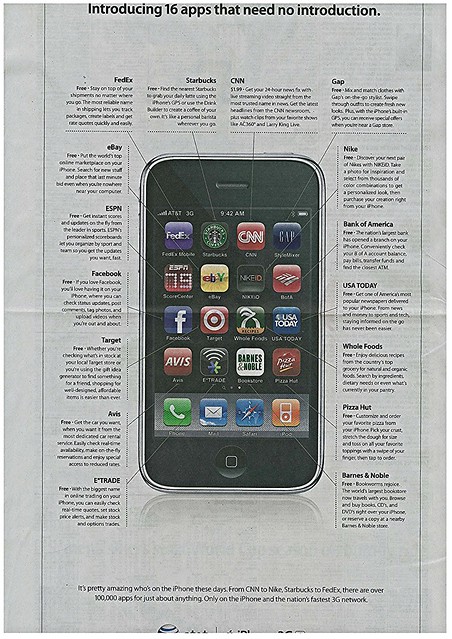
Its often forgotten that the original iPhone launched without an app store. Instead Apple thought the device would run web apps. Unless you were on wi-fi they weren’t great. Everyone had got caught up in web 2.0 fever, where by the miracle of Javascript and XML web pages were no longer catalogues but could do things. Palm made a similar mistake with its WebOS. Fortunately Apple did a pivot with iOS 2 and an app store was launched. But this didn’t stop mobile developers arguing and blogging for years afterwards about which was the best approach native apps or web apps. The thinking moderated a little and now hybrid apps make it into the mix as well.
Apple quickly realised that the app store was a winner and put it front and centre of its marketing.
RFID
It was originally used to track boxes in a warehouse and containers in a port. Technology brought the cost down so that it could track most items on a shop, or books in a library. Security guards walking a beat could tap and go at checkpoints and so could credit card payments. Pet could be returned to their owners thanks to an RFID pellet injected below the skin. In a secure lab that I worked in, it took a certain knack to swipe your card through the magnetic stripe reader and open the door. With RFID, it would be tap and go. In a post-9/11 world RFID tags went into every passport, changing immigration experience of air travel forever.
On a more prosaic level it sparked off several stored value transport cards including Oystercards in London and Octopus in Hong Kong. On average, they still get you through the turnstile faster than a phone app and NFC.
The rest of the 25 technologies
SMS and instant messaging
The UK and US developed in very different ways during the late 1990s and into the 2000s. Thanks to the EU spending so much research and development money on getting second generation networks up and running. Meanwhile over the US there was a plethora of cellular network standards and mobile roaming a nightmare. Instead the US established an internet culture earlier. Free local calling made dial up internet popular. This meant that they developed an instant messaging culture, whilst Europe saw a similar surge around SMS messaging. Both provided training wheels for adoption of our current mobile messaging culture. SMS is still used as a lingua franca for smartphone messaging, by everyone from Amazon to airlines. Like email, tales of its demise are premature.
Mobile broadband
GSM or 2G democratised mobile phone usage, but it was limited by data bandwidth and data latency. Whilst it was rated as being similar to a dial-up modem it often felt way slower. It was only 2.5G (EDGE or EGPRS), 3 and 4G that made possible what we now take for granted as a mobile experience. With 2G, getting anything done took a real effort. Downloading text emails were painfully slow. And data was expensive. Mobile connections were worthwhile for specialist applications like news and sports photographers needing to get images as fast as possible for sale to picture desks. 3G promised video calls and TikTok-esque sports highlights. The reality was passible email and access to maps. It was around about this time that I no longer carried an A-to-Z atlas of London with me everywhere. You couldn’t have Instagram, WhatsApp, Google Maps, Siri or the weather without mobile broadband. These not only empowered services like downloads, streaming and video, but changed our relationship with the internet. Our relationship with bandwidth and real terms price drops were responsible for our always-on life as much as WhatsApp and Skype.
Voice recognition
As with many of our 25 technologies, voice recognition as we understand it now started with work done at Bell Labs. Back in the early 1950s, they managed to train a system to recognise a single voice dictating digits. From there voice recognition evolved in fits and starts. This innovation was predominantly driven by the telephone companies and the defence industry. 1990 was a pivotal year. Dragon Dictate – a personal computer based system was launched. AT&T deployed the Voice Recognition Call Processing service. AT&T service allowed calls to be routed without the involvement of a receptionist. This is usually the first line of a call centre experience, or when phone banking is used to validate online banking payments.
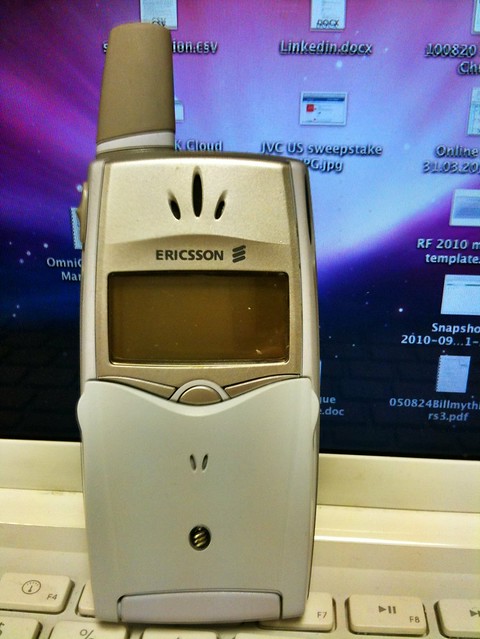
It has become more important as smartphone interfaces have hidden the number pad on calls. Voice has also been an area where phone interfaces and home devices have tried to tap into. And for many they have worked reasonably well. I have personally found that the results have been more inconsistent for me. My Ericsson T39 from 2001 was able to recognise ‘Call <insert name>’ consistently; associating the name with a person in my speed dial list. Something that Siri struggles to do now. Siri manages to play me the headlines from the BBC and Google doesn’t seem to understand me at all.
The benefits of speech recognition moves forwards in fits and starts. The UK may prove trickier due to the relative volume of accents compared to the size of the population. And then you have people like me with an accent that has changed over time as I have moved around. Unconsciously adapting to my environment and losing some of the edges of my North of England and Irish upbringing.
Search
Like most people who have been using the internet since the mid-1990s, my experience was divided not by before and after Facebook. But before and after Google. Originally the web was so small that the original search engines worked remarkably well. I remember using them as part of my research process during my degree. As the internet grew the original search engines like Hotbot, AltaVista and Excite struggled to keep up. On to the scene came Google.
Google changed the way that we found things on the web. Concepts like web rings and directories are now ancient history. Our relationship with the web was mediated through its search box and it became our gateway to the web. Search also changed our relationships with our devices. It inspired journaled index of computer drives as consumers expected answers to finding items on their computer with the same ease as the web. Search is now the primary way that I navigate my Mac and my iPhone. It is a design metaphor that will be with us for a long time.
SaaS (software as a service)
SaaS actually dates from before the web. IBM used to provide ‘time-sharing’ on mainframe computers, back before PCs were a thing. Supercomputers in many academic institutions still provide the same kind of function for organisations looking to do market or economic modelling. The internet however, provided a new way of connecting with time-shared resources. Eventually virtualisation broke out the major blockage that every user needed a separate instance of a software application to run on. Web 2.0 pioneer Oddpost – a paid for email service offered new levels of functionality. Oddpost used Javascript and XML to provide a desktop like application experience in the browser. Google extensively copied these ideas for Gmail two years later.
This then opened the door for the modern versions of Salesforce, e-Days, Workday and other SaaS. This software was now available for smaller businesses that couldn’t support running the applications on premises. SaaS, XML and Javascript are intimately connected in my choice of 25 technologies.
VoIP
Voice over Internet Protocol (VoIP) was first used in the early 1970s to pipe instructions into a flight simulator over the ARPANet. It really found its feet in 1991 with the first software programme allowing VoIP communications. The following Commuique was released which was like a Zoom analogue. As the commercial internet rolls out in the US, Israeli firm VocalTec releases its ‘Internet Phone’ application. Soon after the ITU looks at VoIP standards. The rise of the internet led to alternative telcos that routed voice minutes over data networks – a mix of old and new telecoms.
I started my agency career working on one such alternative telco that used technology from Israeli VoIP start-up deltathree. At this time, the price of voice calls declined precipitously; particularly for international calling at the expense of quality. The industry attracted numerous spivs. The SIP standard was developed as an analogue for SS7 in voice and video calls.
With 3G phones and a modicum of good interface design drove VoIP calls over services like Skype and Vonage. This was displaced in terms of popularity by a new generation of mobile first services like Viber, WhatsApp and FaceTime. Zoom built on this base for its conference call platform. In the meantime, telecoms providers have tried to reinvent themselves. Some with more success than others.
Global navigation satellite systems
The US highlighted the impact of global navigation satellite systems with its military’s use of GPS during the first Gulf War.
After the Gulf War, non-defence usage came into focus. Telematics and navigation. GPS also provided timing to a diverse range of technologies from mobile networks. to ATM machines. In the early 2000s. PDA manufacturers like Fujitsu manage to integrate GPS modules into their PDA (personal digital assistant) devices. Nokia’s N95 smartphone, was the first popular device with a built in GPS receiver and this spurred the adoption of maps on a smartphone.
Now the use cases are limitless as smartphone apps can tap into location data when a person is outside a building. The next step is accurate indoor location positioning – all be it, no longer relying on satellite signals.
OSS
Open Source Software (OSS) is pervasive in the modern day. This blog runs on OSS (Linux, Apache, MySQL and PHP). The Mac that I write this post on is based on OSS (Darwin, Mach microkernel, FreeBSD). The web browser is based on a branch of KDE Conqueror called WebKit and that’s the same with the iPhone and iPad as well. If you’re using an Android phone its based on Linux. Even smart home light bulbs run Linux.
The rise of OSS went hand-in-hand with the web. Widespread doption started in server software that worked with open standards. Pretty soon you saw attempts to put it elsewhere. Desktop Linux including Netbooks – lightweight low power laptops. Ideal for checking your email or surfing the web. At the same time Apple had transitioned from the ‘Classic’ MacOS to something based on NeXTSTEP – acquired with NeXT Computer. Motorola and other manufacturers put it into mobile phones – as forerunners of the modern smartphone. From there it went into Sony PlayStation 3 console. As globalisation drove electronics manufacturing to China; manufacturers of all kinds of gadgets saw the benefits of Linux – even if they didn’t honour the law and spirit of open source cough, cough Huawei…
Email
Despite Facebook owning all our data, email is the key identifier. The identifier that you log into your Amazon account, log on to Netflix with and countless other services. Despite email being dead and countless other services being layered on top to replace it, its still very much alive. My own email account has selected correspondence that goes back to 2001.
Email marketing statistics are declining in effectiveness yet its still a very effective medium. Just look at businesses like ASOS.
Our relationship with email changed. When I left college, I had signed up for an online account with Yahoo! I could keep in touch with friends and apply for jobs. The email address went on my CV and I went to a cyber cafe Liverpool with a disc full of email messagess to send every Saturday. I usually had coffee and carrot cake with a friend whilst I sent it. We’d then go into the shopping district of central Liverpool to chat and do some window shopping.
Working in an office, I could check my personal email at lunch time. Home broadband meant that I could check my account at home. Move forward ten years and email is in the palm of our hands, everywhere we go. I managed to get email to work on a Nokia 6600. You can see a surge in Gmail accounts that coincides with the rise in popularity of smartphones.
XML
XML (and JSON) are ways of getting formatted data on to a webpage and allowing the page to become an app. Portability of data is now a foundational technology for the modern web. Want an app or web page that uses data, like the weather forecast or a spreadsheet. It will have XML like feeds in the background. It is so pervasive alongside Javascript that it is more like data as a utility. Electric cabling or indoor plumbing would be a good real world analogy.
Prior to XML and Javascript, a web page would have to be completely refreshed to show updates. There were software as a service applications running on the web; but they were painful. I know, I was a beta tester for an early version of an IPG company’s real time reporting tool. Every agency person knows the pain of time tracking, but time tracking when the page had to constantly update was ten times worse. I know, I was there.
JavaScript
The modern web, where web pages function as an app is down to the use of a group of technologies one of which is JavaScript. JavaScript is a programming language that alters the in-browser behaviour of a web page. When this was combined with formatted data such as XML or JSON it allows a web page to perform as a piece of software. You make a change and the page doesn’t need to refresh, thus improving responsiveness. The potential of it first became obvious with a web email application called Oddpost. Oddpost was a subscription based email service. What you paid your $2.99 a month for was a web interface that thanks to JavaScript and XML worked just like a desktop app. It was Internet Explorer only, which gives you an idea how close Microsoft came to extending their monopoly from Windows to web browsers. Oddpost was eventually acquired by Yahoo! and inspired the launch of Gmail two years later. From there you got self-service enterprise apps like e-Days and Workday. JavaScript has proved surprisingly resilient and that’s why it makes the 25 technologies from the past 25 years.
MPEG
MPEG stands for Motion Picture Experts Group, which is responsible for pretty much every form of audio and video format that we use today. Whilst the technology might come from a multitude of sources, MPEG set standards are invaluable for it. Whether its digital radio, online radio, digital physical media like Blu-Ray and DVD or streaming media MPEG has had an outsized influence. It also relates directly to voice and video communications codecs, hence their place in the 25 technologies. If you’ve done a FaceTime call, listened to Spotify or watched a movie you can thank MPEG.
NFC
Near-field communications (NFC) offers a way of using devices as authentication. It has really come to its own in smartphones where they serve as contactless digital wallets, access passes and digital car keys. Admittedly mobile wallets have a poor experience and its frightening to think that you wouldn’t be able to get into your car because someone couldn’t be bothered to maintain the Android or iOS app. Yet whether we like it or not NFC has become part of our tech eco-system. I would have preferred if I didn’t have to put into this list of 25 technologies, but I had to acknowledge its impact.
2FA
Over the past ten years, two factor authentication (2FA) has gone from being an enterprise level security tool to consumer grade security. The traditional RSA dongle with its constantly changing number codes was a status symbol of the corporate road warrior alongside Tumi luggage and a Blackberry. Now we get those numbers via a smartphone app or by SMS. This has happened as online identity theft and data breaches have become commonplace and massive databases of passwords have been cracked. 2FA regrettably therefore ended up in one of my 25 technologies.
Strong cryptography
It’s hard to convey how pervasive strong cryptography has become. Up to a 1/4 of users online currently use a VPN application which encrypts their web traffic. Web connections between a site and a browser are now encrypted more often than not. If you’ve ever done online backing, or bought something online with your credit card you’re using strong cryptography. My laptop uses Apple’s FileVault to encrypt the drive completely. Messaging via iMessage, WhatsApp, Signal or Silent Phone all use strong cryptography. Back in the early 1990s, strong cryptography was seen as a weapon, it was limited in its export. I strongly recommend reading Steven Levy’s Crypto to find out how we got here. I remember when Lotus Notes came with weaker encryption outside the US during the dot com era. Now I am leery of using any communications platform that doesn’t have strong cryptography. In fact, when I freelanced encryption was an important consideration for my even being able to get professional insurance. Its now a core part of business, so is one of my 25 technologies.
OCR
Optical character recognition (OCR) is technology that has been around for decades. In its modern sense, the start of it is around 1974 with entrepreneur Ray Kurzweil. Now its a foundational technology for many leading edge applications:
Interpreting the real world (billboards, road signs, automatic number plate readers)
Real time translation (using Google translate to read restaurant menus etc)
Digitisation of books and manuscripts (Google Books)
handwriting recognition and pen computing
Making digitised documents searchable
All of this helps technology to interact with the real world in near real time. You need it for many of the wide range of future technologies that are envisaged. The slow rise of a web-of-no-web where the real world is blended with the online world is possible because of multiple technologies from GPS and QRcodes to optical character recognition. For its use in Google Translate alone, it would be enough to make it into this list of 25 technologies from the last 25 years.
Machine learning
When people talk about artificial intelligence they usually mean machine learning. Google and other companies are applying techniques that were developed at the University of Toronto in the 1980s during an AI winter. The idea is that if you show a computer programme enough pictures with cats, it will recognise cat attributes as a pattern and recognise them in the future. Its a very particular skill which is the reason why machine learning has offered so much promise and let us down at the same time.
I talked about an AI winter. That’s a time when there was a dearth of spending in artificial intelligence research. We’ve had several cycles of massive government investment and withdrawal as AI historically failed to deliver.
So under the right circumstances, machine learning can count craters on lunar photography or likely cancerous tumours in X-ray imagery. Yet machine intelligence struggles to recognise what I ask. AI driven ad platforms get targeting hilariously wrong. It mirrors some of the fuzzy logic capabilities of Japanese consumer electronics: the auto focus camera, lifts that optimise for traffic flow in tall buildings or the microwave that knows how long to cook your food for. This was based off a mathematical paper published in 1965 by an academic at UC Berkeley.
Moore’s Law and the worry of digital disruption has pushed machine learning adoption, the results may disappoint; but realpolitik will keep it in play. It will be the most invisible of the 25 technologies listed, you will feel its impact rather than you seeing it.
USB
The shock of seeing the floppy disk disappearing and the use of the USB on the first iMac would have been enough to get it on list this of 25 technologies. Computing before USB was messy. There was a range of ports for different things. Connecting a printer, connecting a keyboard and connecting an external hard drive or CD ROM drive all required different sized cable connectors. When you were setting up a computer, it would be clearly labeled on the back of the machine what its function was. I had cables which had ideograms that were moulded on the top of them which came with the Macs that I owned.
CMOS sensors
CCD sensors had been invented over 50 years ago. If you had asked me about 25 technologies, back when I was a teenager CCD would have been very close to the top of the list. They were well understood and had been incorporated in video cameras since at least the early 1980s. CCD sensors offered better quality, but had issues with lag. Techniques designed to deal with this helped the performance of CMOS sensors. CMOS sensors were invented by NASA’s Jet Propulson Lab building on work that Olympus did in the 1980s. First it went into mice, then into low end cameras. The technology got better all the time. Doing more in less space with less power. Eventually they went into webcams and cellphones. Nowadays, you’re only like to see CCDs in very particular use cases now. CMOS sensors are everywhere in modern life; even high end photography equipment like PhaseOne.
What would be in your 25 technologies, how would they differ from mine or CNet’s?