Category: branding | 品牌推廣 | 브랜드 마케팅 | ブランディング

The dictionary definition of branding is the promotion of a particular product or company by means of advertising and distinctive design.

I have covered many different things in branding including:

  • Genesis – the luxury Korean automotive brand
  • Life Bread – the iconic Hong Kong bread brand that would be equivalent of wonder loaf in the US
  • Virgil Abloh and the brand collaborations that he was involved in
  • Luxury streetwear brands
  • Burger King campaigns with Crispin Porter Bogusky
  • Dettol #washtocare and ‘back to work’ campaigns
  • Volkswagen ‘see the unseen’ campaign for its Taureg off road vehicle
  • SAS Airline – What is truly Scandinavian?
  • Brand advertising during Chinese New Year (across China, Hong Kong, Singapore and Malaysia)
  • Lovemarks as a perspective on branding
  • BMW NEXTGen event and Legend of Old McLanden campaign
  • Procter & Gamble’s Gillette toxic masculinity ads
  • Kraft Mother’s Day campaign
  • Kraft Heinz brand destruction
  • Porsche Design in the smartphone space
  • Ermenegildo Zegna
  • Nike’s work with Colin Kaepernick
  • Counterfeit brands on Instagram, Alibaba and Amazon
  • Gaytime Indonesian ice cream
  • Western Digital
  • Louis Vuitton collaboration with Supreme
  • Nokia
  • Nike Korea’s ‘Be Heard’ campaign
  • Mercedes SLS coupe campaign
  • Brand collaborations in Hong Kong
  • Beats headphones
  • Apple
  • Henrion Ludlow Schmidt’s considerations of branding
  • Cathay Pacific
  • Bosch
  • Mitt Romney’s failed presidential bid
  • Microsoft Surface launch
  • Oreo Korean campaign
  • Chain coffee shop brands and branding
  • Samsung’s corporate brand
  • North Face’s brand overeach in South Korea
  • Mr Pizza Korean pizza restaurant and delivery service brand
  • Amoy Hong Kong food brand
  • Chevrolet Corvette ‘roar’ campaign promoting a build your own car service
  • June 2024 newsletter – legs 11

    June 2024 newsletter introduction

    Welcome to my June 2024 newsletter, it’s been a bit of a mad month with the European Union elections foreshadowing a rightward lurch in policy direction. The snap call for a French general assembly election and the bizarre spectacles happening in the campaign efforts of the UK general election. And before you say it, the UK general election is not a TikTok election. In the northern hemisphere midsummer (21 June 2024) – the longest day of daylight taps into something primal bringing us back to nature with campfires to meet the dusk, seasonal food and the beauty of summer on display.

    Midsummer

    This newsletter which marks my 11th issue. The number 11 is a mixed bag associated in medieval theology with the ’11 heads of error’. However there are more positive associations for those who believe in numerology. In Chinese its sonic similarity to the phrase ‘definitely fine’ gives it a positive association. For me it’s forever associated with the old bingo call of ‘legs 11’.

    New reader?

    If this is the first newsletter, welcome! You can find my regular writings here and more about me here

    Strategic outcomes

    Things I’ve written.

    • Collapsing the funnel is a term that I have heard thrown around a lot on blogs, LinkedIn posts and podcasts, but what does it really mean?
    • A slower take on Apple’s iPad Pro launch
    • A few things I learned judging the 2024 UK Young Lions and Adforum PHNX advertising awards, together with a few inspiring entries.
    • The reasons why some people believe that #theinternetisdying.
    • IT director powers up and more stuff – a collection of interesting news and analysis around the web, including how AI is upending IT sales.

    Books that I have read.

    red queen
    • Nixonland by Rick Perlstein. Perlstein is an American historian with a progressive eye on history. His book name was passed around earlier on in the spring given perceived parallels between Biden and a likely second Trump administration, together with increased activism. It is one of a series of books that Perlstein wrote documenting post-second world war. Reaganland documents the Carter administration and America’s pivot to Reaganism. Before The Storm which looks at the rise of the modern American libertarian conservative moment and the decline in cross-party consensus – viewed through the lens of Barry Goldwater’s campaign to become the republican party candidate against Richard Nixon. I started reading Nixonland before the US college protests started, which gave the book added resonance.
    • Cinema Speculation by Quentin Tarantino. The first thing that jumps off the page when reading Cinema Speculation is the deep abiding love that Tarantino has for film. Film permeated every part of his life. His Mum took him along to films at the cinema that he probably shouldn’t have been allowed to see. In this respect he was a cinema media consumer in a time when mainstream television had already eaten Hollywood the first time around. The second thing that comes through is the way his deep knowledge allows him to build connections and linkages in non-obvious ways. Something that we lose the ability to do as we mediate knowledge seeking through Google and Perplexity instead of going through library newspaper clippings and reading magazines. I then realised that was a similar red thread in Perlstein’s Nixonland. Tarantino writes how he speaks and I was able to devour the book in two sittings despite suffering from a summer cold at the time. If you like to hear someone writing passionately about the New Hollywood movement of the early 1970s, then read Cinema Speculation.
    • It was third time lucky for me with Red Queen by Juan Gómez-Jurado. I was recommended the book by my friend Ian Wood and tried to read it a few times, but only really got into it at the third attempt. Once I got into it, I enjoyed it. There are the surface comparisons with Stig Larsson’s Millennium trilogy (The girl with the dragon tattoo and sequels). Without giving plot spoilers I found this comparison lacking. Instead I think of it as a modern-day version of the Sherlock Holmes novels of Arthur Conan-Doyle, but that view may change as I work my way through the series.

    Things I have been inspired by.

    Bad Times Disco.

    Bad Times Disco put together eclectic parties bringing out music like Japan’s 1980s ‘city pop’ sound and art to secret venues.

    Vintage Disco Sound Novelty Transistor Radio, AM Reception Only, Made In Hong Kong, Circa 1970s
    Joe Haupt – Vintage Disco Sound Novelty Transistor Radio, AM Reception Only, Made In Hong Kong, Circa 1970s

    For their closing event until autumn in Hong Kong they had developed an equitable pricing policy that allows an equally eclectic crowd.

    Come join us for our season closing party on June 21st, in a spacious and very central location, filled with BTD regulars, our loving staff, and a great lineup of vinyl-centric DJs. More than a party, BTD is truly a community and we want to see all the regulars for this one. 

    * Multi-functional space layout * 

    * Special set design, group exhibit of multidisciplinary art, and more special touches * 

    * Sober friendly party * 

    Presales: 270HKD

    Phase 1: 330HKD 

    Phase 2: 380HKD 

    Last min: 420HKD

    Solidarity ticket: 500HKD. If you are a landowner, homeowner, or have generational wealth, please consider purchasing a solidarity ticket to our party and making it possible for lower-income folks to attend the party. 

    *Limited Low Income Ticket*: 150HKD – This is *only* if you are a service worker in Hong Kong, working class, or unemployed without a safety net in Hong Kong. We will trust you to choose this option for yourself if you need it. 

    Season Closing: Bad Times Disco 21/06

    Design Discoveries: Towards a DESIGN MUSEUM JAPAN.

    Japan House London has an exhibition of industrial design that reflects on the paradox of Japan having great design, but not a museum of design. Japan has a culture of good design; it’s a living thing and expected. By comparison, the celebration of good design could ironically indicate a norm of mediocre to bad product design. The exhibition runs until September.

    Digital mortality.

    David Webb is a long time activist investor in Hong Kong. I know of him by reputation since before I first went to Hong Kong and China in the mid-2000s. He has a long-running website that is invaluable for all things Hong Kong business-related – and is likely even more valuable given the recent regulatory and legal changes in the city. In a time when Hong Kong’s retail investors are disadvantaged by the large families and opaque Chinese government, Webb-Site is one of a few assets that retail investors can use for research. The site shows its late 1990s web design roots and makes extensive use of RSS to power its content.

    David has been receiving treatment for cancer since 2020 and is now thinking about how his website might live on as a crowd-sourced online database. At the moment he is looking to bring on board volunteer editors. Part of the reason for this is that the Hong Kong Securities and Futures Commission didn’t embrace XML data output, that sites like David’s could ingest and process. More details here on how you can get involved.

    Kantar’s blueprint for brand growth.

    Kantar’s blueprint for brand growth uses a decades worth of its client’s data to refine their approach for success. It broadly meets what you would expect from the marketing science corpus built up by the likes of Ehrensberg-Bass and the IPA. They boiled down this blueprint for brand growth into three points

    • Predispose more people – which boils down to a mix of salience and fame.
    • Be more present – which equates to marketing penetration to capitalise on the increased number of people predisposed to the brand.
    • Find new spaces – this is about innovating in communications and new ways of achieving market penetration.

    This last point is particularly interesting. Much of Kantar’s clients would be mature well-known brands so breaking out into new spaces represents a blue ocean approach, designed to move beyond the fractional gains against entrenched competitors.

    Michael Page 2024 talent insights

    Michael Page have launched their annual talents insights report. It has content on a diverse set of areas including working locations (remote, hybrid and on-site), artificial intelligence and perceived job security. TL;DR – hybrid seems here to stay, AI usage is in the minority at the moment and the majority of workers feel secure in their current roles.

    Quiet pride.

    Probably not the right section in this newsletter, it would fit better in a section of ‘things I have been disappointed by’. Campaign Asia and Campaign US ran the following article: Brands plan for a quiet Pride Month. The iPA ran a similarly themed article. I guess ‘pride washing’ of brands will be less of a problem this year, but the lack of visibility is a concern.

    The Container Store Celebrates Gay Pride
    Scott Beale

    The articles imply a wider rollback from brand purpose, indicating a hollowness to the buy-in from large corporates.

    The hesitation around Pride may also be related to executives’ increasing reluctance to speak out on social issues more broadly. Wolff pointed to Edelman’s Trust Barometer, which found that 87% of executives think taking a public stance on a social issue is riskier than staying silent. “Essentially, nine out of every 10 executives believe that the return on investment for their careers is not worth the support during this turbulent time,” said (Kate) Wolff. “This is clearly problematic for both the community and the progress we have made in recent years.”

    Brands plan for a quiet Pride Month – Campaign Asia.

    It offers a different angle on the broader issue that people like Nick Ashbury with his new book The Road to Hell have been driving at with regards the state of brand purpose.

    Things I have watched. 

    I am a bit of a Federico Fellini fan and finally got to watch Roma. Roma is semi-autobiographical in nature. It is a series of vignettes all based around the city of Rome which go from the 1930s to the 1970s and cover various parts of city life with some of the aspects such as Roman frescos turning to dust on first viewing in a millennium to a religious fashion show having an especially fantastical aspect to it. The deconstructed nature of the film is also interesting from a storytelling point-of-view.

    Delicatessen was part of a wave of dystopian movies that were produced during the late 1980s and early 1990s. Films like Richard Stanley’s Hardware and Dust Devil. Given that its French there is a distinct mid-century modernism sensibility to many aspects of it such as the vehicles use. In terms of the plot it is similar to a futuristic Sweeney Todd meets Brazil. The directing and writing team  Jean-Pierre Jeunet and Marc Caro went on to make more popular films including City of Children.

    THX 1138 was George Lucas’ first professional film based on his student film. It feels modern and fresh despite being shot in the early 1970s. It captures the impersonal socially isolating aspects of modern technology. The film proper opens with Robert Duvall speaking with a system about how he is feeling echoing the nascent current use of AI for therapy. While Lucas became famous from his directing of the film, a good deal of credit is due to Walter Murch’s futurist soundscape and Lala Schiffin’s tonal soundtrack which isn’t that far away from the likes of Jóhann Jóhannsson. It’s no coincidence that later on Lucas named his audio company THX.

    Murch although less well-known is a multi-Oscar award-winning film editor and sound mixer who pioneered the use of Apple’s Final Cut software in Hollywood.

    I got a good deal of my license fee’s worth of the BBC going through the 1960s Royal Shakespeare Company performances of William Shakespeare’s Henry VI, Edward IV and Richard III which together make up the telling through an English protestant lens of the War of The Roses. Peter Hall’s direction is spot on. I only wish that I had seen this while I was studying English literature in secondary school.

    Useful tools.

    Basic Excel formulas guide.

    Nicolas Boucher usually works with finance teams looking at adapting AI, but he put together a PDF with 21 Excel commands and examples. Some of them can be handy in digging your way through quantitative data. You can get your copy of the PDF here.

    Bookfinder

    The everything store Amazon, a fair few times hasn’t had what I wanted. There are also sound moral arguments to want to buy elsewhere, or you might want to buy cheaper. That’s where Bookfinder comes in. It is fast, has a front end that looked basic back when when Netscape Navigator was your tool for coasting on the information superhighway and surfing the worldwide web.

    LittleSnitch 6.

    If you’re a long time Mac user who can remember back when Adobe creative suite came in a box, then you might know Little Snitch. It was popular for people running bootleg copies of PhotoShop and InDesign by stopping the software from ‘phoning home’ to Adobe.

    In reality Little Snitch is so much more, it’s my go-to software firewall. It allows Mac users to retain a fine control on what goes in and out of your computer stopping dodgy connections in their tracks.

    Additional MagSafe 3 cables.

    I have a surplus of USB-C chargers now, but the move towards the MagSafe 3 charging connection on newer Macs is a great back to the future move. They are magnetically connected, allowing the connection to be broken before your laptop is dragged to the floor like the original MagSafe connectors that Apple had in two versions from 2006 to 2017.

    They got rid of it, and long time users like me moaned about it as USB-C, felt like a backwards move for mobile workers. Apple brought it back with MagSafe 3, which now works with USB-C chargers.

    Third-party MagSafe 3 cables are now available so you no longer need to pay the Apple tax of premium priced cables. My favourite is the BeckenBower USB C to Mag-Safe 3 Cable, which has worked out really well for me so far.

    Organiser.

    I work from home and usually have Bloomberg or Yahoo! Finance on in the background at a very low volume ambient noise if I am not listening to podcasts. I had the classic living room problem of hunting down remote controls to turn devices on and off. I was inspired to build on existing behaviours of looking around the TV first for the remote control and bought an organiser to hold them and a supply of spare AAA, AA batteries and the lightning cord for my Apple TV remote. The one I eventually settled on was Blue Gingko Multipurpose Caddy Organiser. It’s well made from plastic and thoughtfully designed which is why I was prepared a bit more to get something made in Korea, rather than made in China.

    Caddy for remote controls

    If you are using it for artwork or as a go pack for a workshop you can stack several on top of each other.

    The sales pitch.

    I am now taking bookings for strategic engagements or discussions on permanent roles. Contact me here.

    More on what I have done here.

    bit.ly_gedstrategy

    The End.

    Ok this is the end of my June 2024 newsletter, I hope to see you all back here again in a month. Be excellent to each other and onward into the dog days of summer!

    Don’t forget to like, comment, share and subscribe!

    Let me know if you have any recommendations to be featured in forthcoming issues. 

  • Advertising awards

    I got a chance to judge the UK Young Lions advertising awards and Adforum’s PHNX awards. The Young Lions responded to a common brief with the solution viewed through their specialism:

    • A communications activation plan.
    • A creative concept.

    The standard of thinking was high, but I could also see the benefit of more agencies and brand teams tasking younger members of staff to enter the campaign. I was expected to having to wade through dozens and dozens of entries; there wasn’t that many.

    Adforum’s PHNX advertising awards attracted global entries and took a long time to go through the entries that I saw. I got to see a lot of good work and wanted to showcase some examples later.

    PHNX were more complex in nature compared to the UK Young Lions, with many more categories.

    Advertising awards mistakes.

    I saw a few unforced errors:

    • Category -spamming – award entries were submitted for categories that they weren’t appropriate for. You would see the same work turning up category-after-category with no relevance. You could see other judges becoming frustrated in the electronic chat function that ran alongside the entries.
    • Link the work tightly to the challenge that the client faces. You would be surprised how many entries failed to do this.
    • Have your entry in a language that the judges are likely to understand. You can only get so far with Google Lens when trying to tease out winning nuance of advertising awards.

    Advertising awards entries that caught my eye.

    There were a number of Adforum PHNX advertising awards entries that caught my eye and some entries that inspired me.

    Advertising for advertising

    A few years ago, LONDON Advertising (who I have freelanced for previously) ran an advertising campaign to demonstrate the power of advertising.

    LONDON Advertising campaign

    This was possible due to the cheaper media rates available early on during COVID-19 as brands paused spending.

    It’s a very unusual tactic outside of advertising festivals and trade publications. So it was interesting to see a Spanish agency submit a couple of films into the Adforum awards that purely showcased their craft capabilities for use on different aspects of advertising.

    It’s not Studio Ghibli, but still really well done by La Caseta. It was still surprising for me to see it entered for advertising awards.

    Inspiring content

    Grab Thailand

    Uber analogue Grab ran this advert in Thailand to promote its version of Uber Eats, showing how the app is on the side of the consumer in terms of pricing, choice and speed of delivery. It uses thai boxing as a metaphor and features Bella as the main protagonist. Bella is a much loved soap actress beloved in Thailand. Her coach in the corner is a highly regarded former thai boxer.

    Lux

    For me Lux beauty soap was a brand that I associated with my Granny in Ireland, who used to alternate using it alongside Oil of Olay soap.

    I was pleasantly surprised to find that Lux is still alive and well as a brand half-way around the world in Asia and Africa. Lux’s ‘change the angle’ campaign was a collaboration with female athletes to try and change the way they are portrayed in live sports coverage.

    Mistine

    Mistine is a Thai beauty brand founded in 1988. It became the go-to beauty brand in Thailand. The company sold its products via direct sales, wholesale, online, retail, and the export market. In recent years it had focused on expansion into China, but had lost touch with younger generations of Thai women. It was seen as a low-class, outdated brand. The brand team started with a campaign with a film of young generation focus group discussing on societal judgmental issues while having a make-up session. None of them chose Mistine as they were all judgmental to the brand name.The film signed off with an apologetic message to Mistine users and have been insulted by negative associations with the brand name “Sorry that my name is Mistine.”

    It’s a brave move to take that raw insight and build a campaign around it.

    That then drove a six-fold uptake in search volume and media impressions.

    Similar posts can be found here.

  • Dove 20 years of real beauty

    I was privileged to freelance at Ogilvy on Dove a number of years ago and got to understand the brand a little better during that time. My work on Dove was focused on product advertising for Dove soap in Brazil, the US, Vietnam and the Philippines rather than adding to the master brand canon around beauty standards.

    When the 20th anniversary of the master brand campaign rolled around my LinkedIn was filled with posts about 20 years of the Real Beauty (or changing beauty as its currently articulated) positioning for the Dove brand. I took more of a slow read/write approach to my take on Dove.

    Dove origin.

    The origins of Dove lie in the injuries experienced by American servicemen during world war two. There was a need for a milder soap to address the needs of burn victims, and the concept of having moisturising cream (or cleansing cream as it was called in the earlier ads) was included in the soap to rehydrate skin rather than leaving it excessively dry after stripping off the skins natural oils.

    Dove was introduced as a consumer product in 1957. The original advertising focused on the functional benefits of the product.

    Decades later and the Dove advertising continued to focus on the products functional benefits.

    For instance this 1990s advert positions Dove against everyday beauty brands and premium brand Neutrogena.

    Dove still does functional benefit advertising, but it’s the master brand level advertisements that tend to get the most attention.

    2004.

    It is worthwhile considering the context that Dove was entering into with its reinvention. While we were post-9/11 the culture still has the optimism of the early 2000s. Celebrity gossip and paparazzi photos and videos were still a thing. Facebook had been launched for Harvard University students. Myspace had launched a year earlier with a focus on music and blogging was gaining a head of steam as a social channel. Real Media had launched a streaming music service but Spotify was a couple of years away from launch.

    iTunes music downloads, CD ripping and iPods were reinventing music. Television shows were used to find the next popstars, while Dido and Eminem were dominating radio play.

    DVD series box sets were a thing. Season three of TV show 24 was the must see TV with Jack Bauer trying to stop a biological terrorist attack and deal with his own heroin addiction.

    I was using a Nokia smartphone and a Palm Tungsten T personal digital assistant at the time.

    Beauty soap category at the time.

    Beauty soap was not a new category. Unilever had arguably marketed the first beauty soap called Pears. By the time real beauty happened Pears was no longer distributed or marketed by Unilever in the UK. As well as Dove, Unilever owned Lux which was seen to be a ‘milder for your skin’ soap. By this time, Lux was a heritage brand that my Grandmother had liked and its main market focus was Latin America, Africa and South / South East Asia. Lux has pivoted to a girl power like position against societal sexism in its brand purpose led advertising.

    Procter and Gamble had their own Lux analogue called Camay that traded on the glamour of famous actresses and socialites. At this time Camay was not seen as contemporary in the UK, but was selling well in Eastern Europe. By a strange twist of fate P&G sold Camay to Unilever in 2015, it was available in Latin America.

    Simple soap was a British market competitor that had been part of Smith and Nephew’s spin-off of their consumer products division to focus on their medical businesses including advanced wound management. Simple’s positioning was that it contained no unnecessary ingredients and that it was ideal for sensitive skin.

    Nivea had cleaning products like shower gels rather than soap per se but was in the personal care space.

    At the time, Dove like Palmolive and Simple might be bought by a housewife and used by all the family. My Mum and Dad still use Dove or Simple soap bars, based on which they find first on their supermarket run.

    Real beauty.

    Dove’s global brand team wanted to reposition Dove more firmly in the beauty category. The story that is promoted revolves around how the brand team presented the Unilever board at the time with interview footage from their wives and daughters about their opinions on beauty.

    There were a few iconic images that came out of the campaign.

    Dove.

    The tickbox images that appeared in a lot of out of home executions at the time.

    dove tickbox

    The Dove evolution video which captured what lots of people knew in the media industry, but tapped into wider public discussions about the use of photo manipulation that were appearing around that time.

    How real beauty memed.

    Dove’s outdoor execution in the London Underground had wags using pens and markers to suggest the negative answers. I remember on the escalator in Holborn station seeing every advert with the box ticked. It even memed with online celebrity news site Holymoly launching the campaign for real gossip.

    Campaign for Good Gossip - campaign for real beauty obituary

    Dove Men+Care range.

    Dove brand extension Dove Men+Care was launched in 2010 and now has a comprehensive range of everyday products. Unilever described this as a ‘white space’. But Nivea for Men had been in this space since 1986 and Nivea had sold shaving products to men as far back as the 1920s.

    Dove Men+Care’s purpose wasn’t that clear when I worked on Dove as the master brand is so focused on empowering women and girls.

    We believe that care makes a man stronger, and in order to best care for those that matter to you most, you need to start with care for yourself first.

    Unilever website

    This take from the Unilever website about what the Dove Man+Care brand stands for is still very generic and it could cover anything from Gillette or a Jordan Peterson sound bite to Andrew Tate’s various manosphere-oriented, fitness-focused enterprises.

    The risk of a male counterpart.

    It would be a major undertaking to build this into something a bit more pointed, yet fit for purpose. I could understand why it would be low on the priority list, particularly when Gillette’s effort was received so badly at the time.

    We know from behavioural science that positive reinforcement works better than taking a negative stance. I have heard a couple of hypotheses put around at the time that:

    • Men may use Gillette razors; but women in households buy them.
    • Women represent the largest growth market for disposable razor systems due Gillette’s male market dominance, male consumers inertia to change brand once chosen and facial hair growth – meant that the Gillette brand team didn’t feel that they were taking a risk.

    In both cases, men feature in the advert, but may not have been the ads target audience.

    However I think that the media buying suggests these hypotheses were wrong. The ad was run during a prime TV spot on the Super Bowl. Critics point to Procter & Gamble taking a $8 billion non-cash writedown for the shaving giant.

    P&G reported a net loss of about $5.24 billion, or $2.12 per share, for the quarter ended June 30, due to an $8 billion non-cash writedown of Gillette. For the same period last year, P&G’s net income was $1.89 billion, or 72 cents per share.

    …The charge was also driven by more competition over the past three years and a shrinking market for blades and razors as consumers in developed markets shave less frequently. Net sales in the grooming business, which includes Gillette, have declined in 11 out of the last 12 quarters.

    Reuters – P&G posts strong sales, takes $8 bln Gillette writedown (July 30, 2019)

    From a societal perspective in general masculinity related topics is a cultural land mine; particularly when #allmenaretrash and similar hashtags are now commonplace, so it is harder to use in an effective manner the kind of nuance Gillette attempted.

    Egard – a watch brand made this response video to Gillette.

    Impact

    Dove grew as a brand and became a form of social currency. It made the agencies involved (Ogilvy and Edelman) famous for years to come. What Edelman actually contributed to the creative concept is open for debate.

    In terms of the Dove real beauty brand purpose, the results seem to be more mixed.

    The current Dove master brand ad ‘The Code’ seems to be very similar to the original ‘Evolution’ ad, the only changes have been that Photoshop was being used by an expert and AI has now put it in the hand of teenage girls.

    The distortion remains the same. The Girl Guides Girl’s Attitude Survey ran at the end of last year indicated that things have gotten worse over the past decade rather than better. And this was supported by another research driven article I read in The New York Times: What It’s Like to Be a 13-Year-Old Girl Today.

    While the public discourse has changed behaviours haven’t and the wellbeing of girls and women seems to be in a similar or worse position today than it was 20 years ago.

    Part of this is likely to be societal, we live in more anxious times and the status quo may have been even worse, had Dove not sparked the kind of public discourse it had.

    Brand purpose?

    At the time when Dove’s campaign came out, I can’t remember purpose really being a ‘thing’. The closest thing I could remember in the marketing zeitgeist is that people would occasionally talk about technology in terms of the pitch a young Steve Jobs made to PepsiCo executive John Sculley: do you want to sell sugared water all your life, or do you want to change the world?

    There was talk about changing attitudes and creating a movement – but it was seen in terms of creativity, rather than a higher purpose.

    At the time Unilever’s fragrance brand Lynx / AXE were running creative like this.

    AXE / Lynx is still the world’s number one men’s fragrance brand, but its positioning has changed a bit.

    When you smell good, good things happen. You’re a little more confident and life opens up a world of possibilities. We believe that attraction is for everyone and between anyone. It doesn’t matter your race, your sexuality, or your pronouns. If you’re into it and they’re into it, we’re into it. That’s The New AXE Effect.

    Unilever website

    Lynx and AXE content wasn’t that far out. Advertising in the late 1990s and early 2000s wasn’t so serene. You has several ad campaigns that were subversive or transgressive in nature.

    A good deal of this was cultural zeitgeist. If you were a creative director in your mid-30s at the time, your terms of reference were very different. You would have likely enjoyed sub-cultures like the rave scene and independent music that drew from 1960s psychedelia and counterculture icons. You probably watched the Jim Rose Circus Sideshow film, one of their TV appearances or attended one of their live shows. Russell Brand was considered funny.

    Brands getting attention and critical acclaim like Sony’s Playstation gaming console, Levi’s and Skittles were taking brand risks with campaigns that were far edgier than we’d be likely to see now. One direct mail shot from Sony Playstation designed to promote the Tekken 3 fighting game was sent out in a plain manilla envelope stamped ‘private and confidential’. Inside was a convincing medical card advising that the recipient receive immediate medical treatment for a potentially serious condition. Some of those mailed were waiting for hospital test results and complained to the authorities.

    Meanwhile in the US, Mountain Dew was promoting pager plans as part of a co-marketing deal. But this was happening in the middle of a moral panic on pagers being a portal to drug dealer hook-ups and teen prostitutes receiving bookings from johns. Kids were being arrested and charged for possessing pagers in schools and colleges.

    Failed online business Pets.com had a distinctive shouty voice that we probably hadn’t seen since Poundland’s ‘teabagged’ social posts.

    Two examples give a good temperature check of what was happening in agency teams at this time up to just before 2010.

    The Volkswagen ‘terrorist’ film that was used as a door opener by creative team Lee Ford and Dan Brooks. It leaked online, much to the bemusement of Volkswagen. Creatives thought it would be well received by a brand marketing team with a sense of humour. While VW didn’t like it, it did get them work with a large production house in the US and London agency Quiet Storm.

    The second one was Lean Green Fighting Machine’s Facebook campaign for Dr Pepper in 2010, that referenced an online Brazilian porn clip known as ‘2 girls, one cup’. The client had signed it off, without knowing the context. Controversy ensued on Mumsnet and the agency was fired from the account.

    Amidst all this cynicism, boundary pushing and counterculture; Dove’s real beauty would have been distinctive and differentiated. Even if it did run a risk of being perceived as cynical self-serving corporate schmaltz.

    Brand purpose as an idea seems to have gained popular currency after Dove’s campaign for real beauty.

    You can see in this chart based on Google Books data how the English language mentions of ‘brand purpose’ took off.

    brand purpose
    Data from Google Books Ngram viewer

    Brand purpose critic Nick Asbury places the rise of brand purpose to the 2008 financial crisis and related events such as the Occupy movement, which supports the post-2014 surge in interest. 20 years later, Dove is now seen as being emblematic of brand purpose. Dove took on brand purpose as a concept over time, with the increasing prominence of the Dove Self-Esteem Project being a case in point.

    More related posts can be found here.

  • Trends and fads

    Why trends and fads?

    Why trends and fads came about as a post, was that I was scrolling on my LinkedIn notifications on a Saturday (I know, I know I should keep my life free of this crap on the weekends.) Creative Review were talking about how trend forecasting had become rusty, but that got me thinking about did they understand the difference between trends and fads?

    A good deal of what I see described as trends are fads, which then got me wondering about how do I help people differentiate between trends and fads.

    Why has it become harder to differentiate likely trends and fads?

    I would argue that the difficulty in differentiating likely trends and fads is down to a few reasons.

    • The nature of culture has changed. It has become massively parallel in nature. This has in turn impacted trends
    • Culture has become elongated in nature.
    • The changing nature of culture means trends surface and submarine again over time.

    Mass to massively parallel.

    Culture has become massively parallel. Culture and its nature has been transformed over the last century. There were a few sub-cultures at best that mattered at a given given moment in time.

    The idea of the ‘teenager’ which was the first attempt to carve out a new generation was done in the post-war affluence of America and latterly European countries, Japan and Korea as economic development took hold. We might use different language now, but teenagers were the engines for the sale of goods and services:

    • New music
    • New spaces (gaming arcades, fast food restaurants, coffee shops, instant messaging platforms, social platforms)
    • New fashion looks (mods, rockers, greasers, ravers, emo, gorpcore etc.)

    At the time, the mass media helped facilitated the propagation of a mass culture. A few music publications, radio stations, newspapers and TV stations could make a break an artist. We can see this over time with the power of Johnny Carson, Merv Griffin or Ed Sullivan in the US, Gay Byrne and Gerry Ryan in Ireland or Top of the Pops and Pete Tong in the UK.

    Ed Sullivan introduces The Beatles.
    Paul McCartney remembering the 1964 show.

    However a combination of economic improvement and technology saw the mass media broaden with countless publications, TV channels, radio stations, websites and social channels until it is no longer ‘mass’ in nature.

    Add to this, the world got smaller. Travel while still expensive became cheaper from the 1970s and 1980s onwards allowing more people to discover culture from elsewhere. And this was despite a massive surge in the price of oil due to troubles in the Middle East. So trends and fads moved around the world. Liverpool lads brought the ideas of sports casual dress from Spanish and French department stores, Japan borrowed various parts of Americana and streetwear, hip hop went around the world.

    The connectivity from the worldwide web put this in overdrive. A world of culture opened up making things massively parallel, which allowed people to pick and choose their own cues. These choices gave us massively parallel culture and resulting trends.

    Culture has become elongated in nature.

    I have friends (and associates) in their late 50 and early 60s who DJ, surf, skateboard and do martial arts. These were people who remember club nights before house music let alone EDM, who can remember the first skate parks being built in the UK and knew of Stüssy because they were part of the original Stüssy tribe of interesting folks formed by Shawn himself.

    People who might listen to Radio 4 on occasion, but are still cooler and more culturally relevant than many teenagers. Probably more culturally relevant than their college age kids.

    This cultural elongation is something that we’re starting to see gen-z obsessed agencies. A good example of this is ZAK Agency’s Learn To Time Travel white paper. Part of it has been down to life stages happening later for each generation; or not at all.

    • Moving out on your own.
    • Settling down.
    • Having children.
    • Buying their own home.
    • Being able to afford to retire.

    Part of it is down to the world norms changing. I seldom have had to wear a shirt and tie, or suit to work. My Dad wore a tie right up until the mid-1980s to work, because that was expected of him. He wasn’t a banker, but a shipyard worker. Athletes can potentially stay in peak condition for longer, all made possible by the modern world.

    Despite what we believe about technology usage, for those who are 70 or younger, income influences tech adoption as much as age related knowledge. Giving all of us access to as much culture as we can mainline.

    Fads

    If you hear the phrase ‘TikTok trends’ that are fast-changing, it’s a clue that it’s likely to be a fad unless by some blessed miracle it sticks. In the 20th century, fads were often easier to spot and the 1970s in particular were a gold mine for the fad spotter.

    Fads appear, go large and then disappear. They are ethereal in nature, rather like most TikTok trends. The Pet Rock is a prime example with its swift rise and demise.

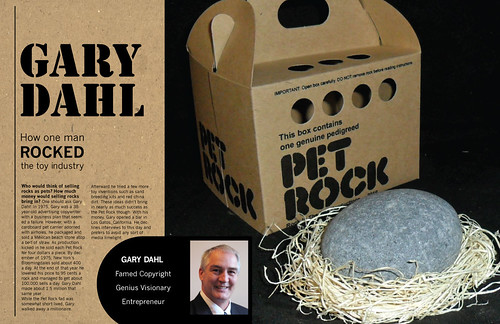
    Pet Rock

    Northern California-based copywriter Gary Dahl came up with the idea of a pet rock. Essentially adhesive googly eyes attached to a rounded pebble that might feel pleasing in your hand for skimming across a body of still water like a lake. Dahl’s insight came from sitting with friends in a bar and listening to complain about the challenges of pet care.

    Dahl started off his project by writing a satirical pet care manual for a rock, based on the kind of care guide a veterinarian might have for a new dog owner. This included on tips for when your rock was feeling anxious.

    The rock came with the instruction book for care, it sat in a nest of long wood shavings inside a card carrying crate with a handle on top and seven vent holes on each side.

    gary-dahl-2

    Dahl put his product into the market in August 1975. Dahl was apparently selling 10,000 rocks a day and it became a gag gift over the Christmas period with estimates on sales as between 1 million to 1.5 million genuine rocks. By February 1976, they started to need discounting. Dahl ploughed his profits into opening the Carry Nation’s bar in Los Gatos, which is still there.

    The Pet Rock was clearly a fad, yet it did inspire my junior school art teacher to get us to collect stones from a visit to the beach, stick googly eyes on them and varnish the whole lot. Some were brought home and the rest sold at the school fair. Dahl wasn’t able to patent his idea. As far as I know around 2010, someone started an abortive business replicating Dahl’s packaging design and rocks.

    Dahl built his freelance copywriting business up into an agency that produced radio and television ads for local businesses including wireless providers, technology firms and dot coms. The reason for this was that Campbell had been living in the Silicon Valley area as it grew up into what we know today. Dahl even wrote the For Dummies guide on advertising in 2001, which is still available today and is a good primer on the process. Dahl passed away in 2015.

    Trends are resurgent, surfacing and submarining over time.

    Take the idea of cocooning in our own soundscape as an example of a resurgent trend. If you go on the public transport headphones or AirPod type earphones are ubiquitous. If you go and work in an office, you will see a similar set up. Prior to the rise of the AirPods it would have more likely been Sony or Bose over-ear headphones rather than wireless AirPods.

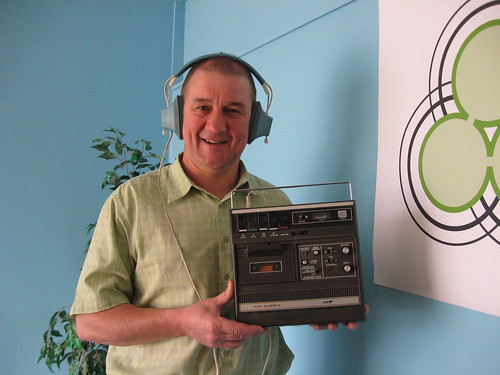
    Back in the early 1970s, my Dad took the train down to London while listening to a collection of cassettes he’d made of his record collection. The trip was one he occasionally made for the shipyard where he worked at the time. It was a long slow train journey. We had a bulky luggable cassette player similar to the one below and he wore a pair of headphones bought in Liverpool that looked like sturdy ear protectors. The tape machine was more designed for basic portable recording such as a manager recording a memo to be typed up. They were occasionally pressed into service in a similar way to my Dad’s usage.

    Old personal stereo
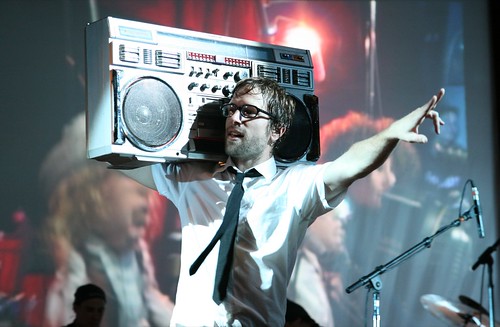
    Around about the same time, luggable stereos were being made by European manufacturers including Philips and Grundig. Soon after that Japanese manufacturers like Sharp, Sony and Panasonic released their own versions which were very successful. These were cemented into culture by young Americans who valued their portability and bass response.
    Beck at Yahoo! Hack Day
    Beck at Yahoo! Hack Day with a boom box

    Boomboxes weighed a lot, Sony provided an alternative with the Walkman and eventually the Discman. These were portable cassette and CD players respectively which offered personal listening with headphones. These were briefly joined by MiniDisc players.

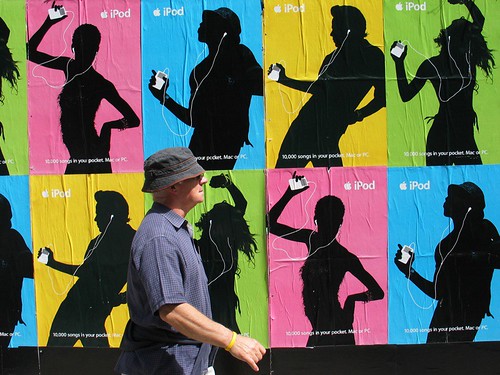
    Around about the time when the web started to take off, you had early MP3 players such as the Rio series of machines and the CreativeLabs Nomad. But things took off with the Apple iPod, offering a new level of personal audio freedom.

    San Fran - ipod advert & Jim

    Eventually a confluence of the smartphone as digital Swiss Army knife and BlueTooth wireless standards provided us with our current personal audio freedom.

    Cocooning is just one example. As far back as the post-war era we have seen military surplus clothing go in and out of style. Thrifting has taken a similar route with it driving the iconic grunge look of the early 1990s and the Dpop shopping of today’s young people.

    We could quite easily come up with a list of trends that never die. The annual trend reports tweaking the relative volumes on these trends over time to match economic and socio-cultural changes.

    More related content here.

  • Morizo and more things

    Morizo

    Akio ‘Morizo’ Toyoda, of the Toyoda family who made their first fortune designing automatic textile looms in the early 20th century and their second fortune as the founders of Toyota. During the week Toyoda-san is the chairman of Toyota Jidōsha kabushikigaisha. But in his spare time he liked to do circuit racing under the name Morizo. At first, the Morizo name was to keep his moonlighting racing of the radar of Toyota board. But recently it has become an asset, with Toyota and its GR performance brand creating some of the best drivers cars available.

    Toyota have started to use his natural enthusiasm for the company’s benefit. The Lexus LBX Morizo RR is currently a concept car that sees a baby Lexus LBX SUV benefit from the mechanicals of a Toyota GR Yaris.

    Although talk about this as a Morizo only concept, it feels like the company might be feeling consumers out to possibly put this into manufacturing. If they did this, it would allow the company to take advantage of the GR Yaris-only components currently made and use them more widely.

    The Criterion closet

    Criterion as a publisher of DVDs and Blu-Rays is a badge of quality. The closest equivalent in the UK would be Curzon who bought Artificial Eye a number of years ago. One of the things Criterion do is video taste-makers who are allowed to take away some of their favourite films away from the company’s stock. Here are a couple of my favourites.

    William Dafoe

    Hideo Kojima

    Watch trends

    While much watch collector videos know feel more like Bloomberg reporting on a commodity because of the rise in the secondary market, this wrap-up strikes a nice balance. Some of the factors mentioned in this review appeared in my 2023 wrap-up and here.

    Mexican street culture

    If you had uttered those words to me before this week, I would have immediately thought of saints festivals, the day of the dead and the Chicano culture that grew out of Mexican communities who emigrated to the US. But there is so much more in Mexico itself as Refinery 29 shows in this film.

    The 50 French words test

    You can imagine the brief that came down to this government department in Quebec: make more English speaking visitors and businesses come to our province. The insights being along the lines of most English speakers don’t feel confident dealing with a foreign language, so how to do demystify French.

    I don’t know who the Ministère des Relations internationales et de la Francophonie used, but they deserve every penny of their fee with this film.