Category: gadget | 小工具 | 가제트 | ガジェット

What constitutes a gadget? The dictionary definition would be a small mechanical or electronic device or tool, especially an ingenious or novel one.

When I started writing this blog the gadget section focused on personal digital assistants such as the Palm PDA and Sony’s Clie devices. Or the Anoto digital pen that allowed you to record digitally what had been written on a specially marked out paper page, giving the best of both experiences.

Some of the ideas I shared weren’t so small like a Panasonic sleeping room for sleep starved, but well heeled Japanese.

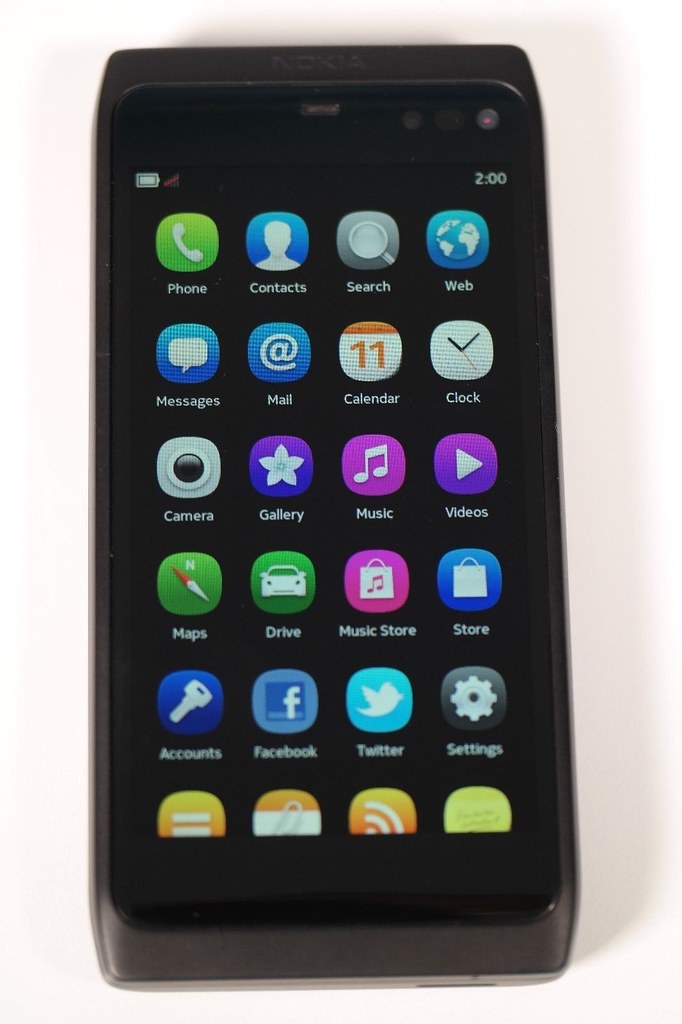
When cutting edge technology failed me, I periodically went back to older technology such as the Nokia 8850 cellphone or my love of the Nokia E90 Communicator.

I also started looking back to discontinued products like the Sony Walkman WM-D6C Pro, one of the best cassette decks ever made of any size. I knew people who used it in their hi-fi systems as well as for portable audio.

Some of the technology that I looked at were products that marked a particular point in my life such as my college days with the Apple StyleWriter II. While my college peers were worried about getting on laser printers to submit assignments, I had a stack of cartridges cotton buds and isopropyl alcohol to deal with any non catastrophic printer issues and so could print during the evening in the comfort of my lodgings.

Alongside the demise in prominence of the gadget, there has been a rise in the trend of everyday carry or EDC.

  • H1, 2018 most popular posts

    Happy Back to the Future Day

    I took a little bit of time to reflect on the content that I have been writing, what can I learn from it and how I can reuse these learnings? Specifically what are people finding of interest? This couldn’t happen without people actually reading the content, so thank you for reading; feel free to come back on a regular basis. Over the past six months readers like you have found the following articles of most interest. In reverse order

    Reuse, Re-edit, Remix and Recycle – if you read the industry publications we here about personalised ad creative driven by ad targeting. But often the core creative and is created unnecessarily. Instead, what’s the minimum viable creative tweak that can be used? How do we extend the smart processes of reuse, re-edit, remix and recycling into this world?

    This Wasn’t The Internet We Envisaged – in the word’s of Terry Pratchet:

    “If you do not know where you come from, then you don’t know where you are, and if you don’t know where you are, then you don’t know where you’re going. And if you don’t know where you’re going, you’re probably going wrong.”

    So it was time for reflection in order to get a perspective as the regulators and media discovered Facebook, Google and Amazon where not models of virtuous conduct.

    The Biggest Public Relations Agencies Stuckness and Market Dynamics – The Holmes Report came out with their top 250 (biggest) PR agencies around the world in terms of billings. I decided to delve into the numbers for financial years 2014 – 2017.

    This supports a hypothesis of slowing market growth and solidifying market dynamics at a macro level. Strategic acquisitions start to make less sense compared to improving efficiences and effectiveness.

    Throwback Gadget: Bose Wave System – usually my gadget reviews tend to be some of the better performing content. The Bose Wave review was the only one that appears this time around.

    Social Networks 10 Years Ago – a reflection on what a more diverse social media eco-system looked like.

    The Advertising Industry Post – the macro effects buffeting the world’s largest marketing services conglomerates.

    Mercedes China Syndrome – Chinese netizens are jumping the Great Firewall to vilify western brands who reflect views that ‘offend the Chinese people’ – even when this content is aimed at non-Chinese audiences. Mercedes’ offence was an Instagram image with one of their cars and a quote from the exiled Dalai Lama

    Personal online brand – at a time when we’re seeing social media turning into walled gardens. David Gallagher asked the Twitterverse if he should have his own site?

    Twitterverse: @wadds says I need a proper blog. I say I can do it on LinkedIn or Facebook. What say you? Build my own?

    I weighed in on why he should and how I manage the process.

    Chinese smartphone eco-system for beginners – Winston Sterzel did a good video for the average bystander on the Chinese smartphone eco-system. I thought it was a good film to share with marketers  – with a bit more background information answering some of the ‘why’ in terms of market dynamics.

    App constellations 2018  research – I built on work that I had done in 2014 and 2016, comparing the rate of growth across different companies apps based on Fred Wilson’s definition of app constellations. This was also the post that took me the longest to research!

    SaveSave

  • Malayan emergency + more things

    Psychological Warfare of the Malayan Emergency – interesting read; I wonder what C.C. Too would have made of the Leave and Remain campaigns? It is amazing how much of things in the UK goes back to Borneo and the Malayan emergency. The COIN strategies that were successful in the Malayan emergency were applied time and time again

    Reliance Jio has become the world leader in feature phones in just 10 months — Quartz – The strong growth in Jio, clubbed with the return of the Nokia brand, has helped the global feature phone market grow 38% year-on-year in January-March 2018, Counterpoint said. India contributed to nearly 43% of all feature phone sales during the first three months of 2018.

    Highlights from CCS Insight’s Predictions – Manufacturers’ vision for smart TVs fails. Despite their efforts to introduce apps and smart features, makers of smart TVs have failed to convince customers, who still use them as “dumb” screens. They buy TVs mainly based on design and picture quality, viewing the smartness only as a by-product. – More consumer behaviour related content here.

    The Bill Gates Line – Stratechery by Ben Thompson – interesting essay on the nature of monopoly power, platforms and aggregators

    Microsoft and Publicis unveil Marcel, an AI-based productivity platform for the ad giant | TechCrunch – interesting narrow expert apps rather than a general intelligence

    Qualcomm launches Snapdragon 710 platform in mobile AI, neural networking push | ZDNet – further enhancing neural networks on smartphones

    New Sony CEO to Detail Shift Away From Gadgets in Mid-Term Plan – Bloomberg – huge implication for innovation though

    US-China tech wars threaten global sector disruption | FT – strikes at the heart of China’s ambitions and is likely to curb revenues as well as disrupt supply chains at foreign multinationals, many of which see the country as a key market. But it is also prompting a rethink at the corporate level in China, with tech companies looking to develop their own chips (pay wall)

    Is Douyin the Right Social Video Platform for Luxury Brands? | Jing Daily – Douyin insider Fabian Bern shared that 85 percent of the app’s users are under 24 years old, over 70 percent are female, and the majority are from upper class families living in first tier cities

    Social credit system must bankrupt discredited people: former official – Global Times – China’s social credit system had blocked more than 11.14 million flights and 4.25 million high-speed train trips by the end of April.

    An improved social credit system was needed so that “discredited people become bankrupt,” Hou Yunchun, former deputy director of the development research center of the State Council

    Opinion | What the Microsoft Antitrust Case Taught Us – The New York Times – interesting how what would have isolated sporadic criticism of the big four internet giants Amazon, Apple, Facebook and Google is now morphing into criticism and calls for remedy on a regular basis. Behavioural change from a marketing perspective is usually driven by reach and repetition. It feels like the ground is being prepared for legislation or a court challenge a few years from now

    A look back: The Bloomberg Keyboard | Bloomberg Professional Services – really interesting evolution of design

    The surprising return of the repo man – The Washington Post – “So much of America is just a heartbeat away from a repossession — even good people, decent people who aren’t deadbeats,” said Patrick Altes, a veteran agent in Daytona Beach, Fla. “It seems like a different environment than it’s ever been.”

    How Judea Pearl Became One of AI’s Sharpest Critics – The Atlantic – Three decades ago, a prime challenge in artificial-intelligence research was to program machines to associate a potential cause to a set of observable conditions. Pearl figured out how to do that using a scheme called Bayesian networks. Bayesian networks made it practical for machines to say that, given a patient who returned from Africa with a fever and body aches, the most likely explanation was malaria. In 2011 Pearl won the Turing Award, computer science’s highest honor, in large part for this work.

    But as Pearl sees it, the field of AI got mired in probabilistic associations. These days, headlines tout the latest breakthroughs in machine learning and neural networks. We read about computers that can master ancient games and drive cars. Pearl is underwhelmed. As he sees it, the state of the art in artificial intelligence today is merely a souped-up version of what machines could already do a generation ago: find hidden regularities in a large set of data. “All the impressive achievements of deep learning amount to just curve fitting,” he said recently.

  • Zuckerberg to testify + more news

    UK parliament’s call for Zuckerberg to testify goes next level | TechCrunch – while taking action to get Zuckerberg to testify is a good thing. It is a pity that the UK didn’t show similar gumption when dealing with the Kraft Foods CEO with regards the Cadburys takeover. Would it be that hard for Zuckerberg to just avoid the UK all together?

    Xiaomi to sell smartphones in UK through Three | Technology | The Guardian – Huawei will be getting worried; especially as Xiaomi has a reputation for making high-specification innovative phones at a lower price point. Xiaomi has been providing good quality handsets for a while and this is the kind of springboard that they need into western markets

    ‘Forget the Facebook leak’: China is mining data directly from workers’ brains on an industrial scale | South China Morning Post – Workers outfitted in uniforms staff lines producing sophisticated equipment for telecommunication and other industrial sectors. But there’s one big difference – the workers wear caps to monitor their brainwaves, data that management then uses to adjust the pace of production and redesign workflows, according to the company. The company said it could increase the overall efficiency of the workers by manipulating the frequency and length of break times to reduce mental stress.

    WhatsApp Co-Founder Leaving Facebook’s Board Amid User Data Disputes – The New York Times – The announcement followed disagreements between Mr. Koum and Facebook’s leaders over the use of people’s data and the social network’s attempts to weaken encryption. Officially he just wants to relax and collect vintage Porsche 911’s with air-cooled engines. More related content here.

    McDonald’s admits app adoption rates are ‘pretty low’ but it will keep investing in mobile | The Drum – not terribly surprising when one thinks about macro trends in app usage and adoption

    How China Leapfrogged Ahead of the United States in the Fintech Race | PIIE – poor infrastructure, lack of access for MasterCard, Visa, Amex, Diners Club etc. Low value of Chinese note denominations

    Eavesdropping on the deep | MBARI – I found it very soothing to listen to with all the white noise

    NightWatch | Subscription – gutted that KGS no longer provide this newsletter it has been a great resource

  • Tony Kaye + more things

    Director Tony Kaye happy to be working and out of ‘Hollywood jail’ | The Drum  – He says that a story arc doesn’t really matter in six seconds. “I think you can throw anything at it, as long as it’s quite clear what it’s for. If you’re working under 20 minutes, in my opinion, you don’t need any structure. You can be as fragmented or as crazy as you want.” – Tony Kaye was a legend in the advertising world, creating some of the most iconic adverts of the 1980s and early 1990s. His Hollywood debut was American X, a brilliant provocative film with the troubled production. This saw Kaye go to the ‘Hollywood jail’ of the title where he could not get work in the film industry.

    Hackers stole a casino’s database through a thermometer in the lobby fish tank – Business Insider – “It’s probably one area where there’ll likely need to be regulation for minimum security standards because the market isn’t going to correct itself,” he said. “The problem is these devices still work. The fish tank or the CCTV camera still work.” – it’s Neal Stephenson’s Snow Crash in real life. The internet of things is now an under assessed security vector. In the right hands, a lot can be done with very little computing resources and computers have become pervasive in nature.

    An Apology for the Internet — From the People Who Built It | New York magazine – this just scratches the surface, but is an interesting read

    The Finns who refuse to give up on Sailfish OS | Engadget – given the challenges that ZTE faces. Jolla with Sailfish OS would be an ideal technology stack on their foreign handsets, particularly if they can do an English language version of the Yandex app store. That way they won’t have to localise all of their offerings as a replacement for Google Mobile Services (GMS) layer in Android. More related content here.

  • Discussion on voice interfaces and services

    Interesting discussion on the use of voice interfaces and services. There is a certain amount of cheerleading involved in the talk; but that is to be expected with vendors in the room. If found it interesting that one of the panelists; Sam Liang of AISense moved out of where2.0 services and into voice. because location is a great gateway to lots of rich contextual information and voice is desperately in need of context and by extension user intent.

    It is interesting to get a perspective on the organisations involved in the discussion on voice interfaces:

    • SRI International
    • Amazon
    • Microsoft
    • AISense

    All of them seem to be well behind where the telecoms voice services managed to get to like Orange’s Wildfire.

    Key takeouts from this:

    • 50,000,000 voice devices to ship this year (2018). A total installed user base of 100,000,000 (presumably excluding voice interfaces on smartphones)
    • AISense is looking to build in voice biometrics that would prompt you about who a person is. Privacy implications are profound
    • The panel struggled to articulate an answer to privacy concerns beyond ‘services need to build trust’ and transparency
    • Information security and hacking wasn’t a point of discussion; which surprised me a lot
    • Context still seems to be a huge issue, I think that this is a bigger issue than the panelists acknowledge. Google still struggles on user intent, without adding the additional layer of understanding voice. The biggest moves seem to be ‘social engineering’ hacks, rather than improvements in technology
    • Amazon and Microsoft don’t have plans for advertising services on voice (at the moment)
    • We’re very far away from general purpose voice services
    • Work has only started on trying to understand emotion
    More information
    • Orange’s Wildfire and The Register on its shutdown. Wildfire’s problem seemed to be a failure of marketing more than anything else. We haven’t seen anything else like it. Even Siri is only scraping over the ashes of the work done on Wildfire 15 years ago
    • Google’s published research on speech processing. What becomes apparent from looking at the list of research is how basic the current state-of-the-art currently is
    • Stuff that I have written that touch on context dependent services