Gree
Asiajin » Gree CEO Talks To National Paper Readers By A Full-Page Ad – interesting how social businesses had to respond to accusations of preying on consumers by ‘traditional’ business. Gree is a Japanese Internet media company with headquarters in Tokyo. The name was borrowed from the idea of six degrees of separation. It runs the GREE mobile focused social network, not to be mistaken for the products of Chinese domestic appliance maker GREE. Gree focuses on mobile gaming and the sale of virtual goods to games players.
Consumer behaviour
China Less and Less Enamored of Social Media, Study Finds – China Real Time Report – WSJ – “Social media has penetrated into the lives of Chinese people and they now realize they are spending too much time on it,” said Sophie Shen, who led the Kantar poll, in a statement. “At the same time, they are receiving more low-quality and duplicate content.”
Economics
Raise Taxes on Rich to Reward True Job Creators: Nick Hanauer – Businessweek – rich people don’t create jobs, customers do
Finance
Former Chairman of Anglo Irish Bank Arrested – NYTimes.com
How to
The Behavioural Economics Guide 2014 – (pdf) – this is an area of increasing interest in social policy, marketing and advertising circles. It promises the ability to better shape consumer behaviour, which is an attractive proposition to government and marketers. Especially when combined with pursuasive computing techniques in digital media.
Guide to keeping your social media accounts secure – (PDF) keeping social media accounts secure is now a key issue for brand protection. Yet brands still treat their website much more safely than their social channels. Keeping social media accounts secure needs to be a higher priority.
How to Find Websites and Domains owned by a Person?
Ideas
Jeff Mills: The Failings Of The Future | Hypnotik – interesting to read this, especially after reading William Gibson’s latest book The Peripheral. In the book, much of the story plays out after the Jackpot – a gradual long duration series of events that herald massive human population decline
Innovation
Hoping Google’s Lab Is a Rainmaker – NYTimes.com – interesting the impatience. However if you go back to Google’s red herring you can’t say that they weren’t warned. More innovation related content here.
Swatch upcoming smartwatch won’t require charging — GigaOM – It seems to charge itself via movement. Does the Swatch smartwatch use Seiko Kenetic style power? If so the smartphone device would represent spectacular innovation in low power computing. More related posts here.
Japan
Asiajin » Jerry Yang’s 1999 Order Thanked By Japanese Auction Dominator Yahuoku | Asiajin – interesting how Yahoo! engineered the product to meet Japanese characteristics back in 1999 by Jerry Yang. More on Yahoo! here.
Luxury
Nokia to sell luxury Vertu subsidiary
INSEAD Knowledge: Chinese Vogue
Luxury Goods Market Surges In China [Headlines] @PSFK
Marketing
‘Mustang’ More Popular Than ‘Superman,’ ‘Batman’ According to Research by SplashData | Ford Media Centre – just bad PR and a piss poor use of search data by the Ford Media Centre. Its a desperate gasp at cultural relevance
Media
Universal Censors Megaupload Song, Gets Branded a “Rogue Label” | TorrentFreak – IF true, this is crazy as Universal is blowing a hole in its own head from a reputational point-of-view
Patry’s How to Fix Copyright: deftly argued, incandescent book on the evidence-free state of copyright law – Boing Boing
Groklaw – ITC Recommends Finland and Canada Help Barnes & Noble Get Evidence from Nokia and MOSAID ~pj
Here’s What a Twitter Follower Costs | ClickZ
Yahoo’s Alibaba Quandary – NYTimes.com
Online
Facebook’s Video Views Rising, But Mostly For Discovery | paidContent – does mobile mean less engagement with Facebook?
SOPA: Chinese Internet Users See a Familiar Face | WebProNews
Cameron etc shamed as social media-ignorant reactionaries | TechEye
Social networking’s salad days are ending, Forrester says – CNET News
People Now Watch Videos Nearly 30 Percent Longer On Tablets Than Desktops | TechCrunch
Retailing
Data: “Coupon” Most Engaging Keyword on Facebook for Cyber Monday / Black Friday Posts | Buddy Media – says a lot about the economy
Security
Three of Tech’s Top CEOs to Skip Obama Cybersecurity Summit – Bloomberg Business – snub due to Snowden revelations
Spies are putting off writers | Channel EYE – more than 75 percent of respondents in countries classified as “free,” 84 percent in “partly free” countries, and 80 percent in countries that were “not free” said that they were “very” or “somewhat” worried about government surveillance in their countries
2012: Siri Is a Stunner, Amazon Is Amazin’ and Security Gets Spendy – AllThingsD
I, Cringely » Blog Archive » Cloudy judgement at BAE Systems
Federal domain seizure raises new concerns over online censorship — Engadget – smacks of incompetence or government corruption to gain favour with the media industry
Software
We Need to Break the Mobile Duopoly. We Need a 3rd Mobile OS | Andreessen Horowitz – there are more than three, but there seems to be barriers to adoption
Rumor: Skype Set To Launch A Social Network To Compete With Facebook | Social Networking Watch – this seems a bit pointless to me
Beijing cracks down on Uber and its rival taxi-hailing apps | Quartz – interesting that Didi has been declared illegal
WebOS Lives! (Update: And HP’s Still Making Tablets)
Technology
The Problem with Big Data | EE Times – nice analysis of big data. More technology related content here
Chinese chip makers want in on bank card business | WantChinaTimes – threat for Infineon and Gemalto
Tablets Attracting Repeat Buyers, Unemployed, Says Study – Forbes – if you have an Amazon Kindle Fire tablet you’re likely to be unemployed
Roger McNamee’s 10 Hypotheses For Technology Investing – UPDATED EDITION
You Think Your Credit Card Bills Are High? You Should See HP’s Debt – this is insane
Asiajin » Cookpad’s Listing To Be Transfered To The First Section – interesting story about quality content
The Windows 8 tablet train wreck | ExtremeTech
Web of no web
Why I’m not impressed with your smart device | VentureBeat – interesting take on CES
Dimensions – Adventures in the Multiverse – interesting web of no web game that melds computer imagery with the real world for game play
Wireless
Liveblog: Xiaomi Explains Itself To Silicon Valley | TechCrunch – contextual aspects of the OS is really interesting
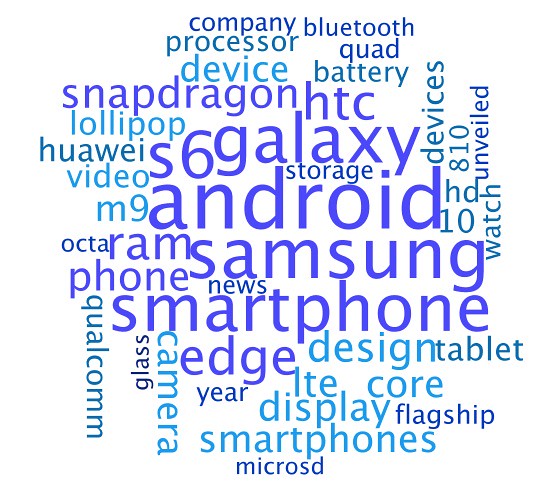
Qualcomm Cuts Outlook, Warning Its Snapdragon 810 Dropped From a Flagship Device | Re/code – likely Samsung Galaxy S6
Huawei Bets Americans Will Want Contract-Free Phones – WSJ – I guess they are struggling to get carrier deals, is the new burner phone a smartphone and is the FCC holding up approval on HiSilicon-powered smartphones?
How AT&T fumbled $39 billion bid to acquire T-Mobile – The Washington Post – they were scared about losing jobs in a presidential election year. More wireless related stories here.
How many iPhones are being discarded in the US? | asymco