Category: on the sofa | 影評 | 영화를보고 | 映画レビュー

What does on the sofa mean? So a sofa is a couch in American parlance, or may also be called a settee or chesterfield in other English speaking parts of the world. Its the big chair in the living room that people tend to view their TV set from.

By using on the sofa as a title I wanted to imply content that I had reviewed at home rather than having gone out to watch it at a cinema or attend an event.

I have tended to review material on DVD or Blu-Ray rather than streaming media, usually because I have acquired them with an intent, whereas streaming is more like content grazing, often little more than visual wallpaper for my living room.

This section has been made up of a hodge podge of films, documentaries and anime.

Films that I have seen at festivals or on trips to the cinema are more likely to be in the out and about section. So there isn’t a consistency there in that respect.

I have covered a wide range of content here including

  • Safe House – a surprisingly good Ryan Reynolds film that isn’t a comedy one
  • Bitter Lake – I am a huge Adam Curtis fan and his work is the exception that proves my rule about streaming platforms in this section mainly because I can’t get his documentaries on disk
  • The Raid 2 – which added a bit of storytelling to the mix of The Raid.
  • The Man from Mo’Wax – a documentary about the rise, fall and reinvention of James Lavelle.
  • No blood no tears – An excellent Korean heist drama
  • Tampopo

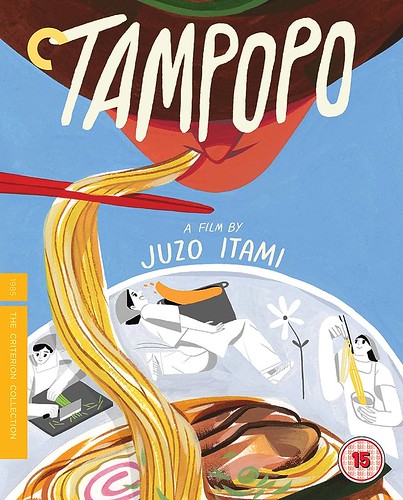
    I first got to see Tampopo at the 051 Cinema in Liverpool. It was a comedy, it had new wave vibes and I knew I could watch it several more times without getting bored. When I went to college a lecturer screened clips of it to emphasise the importance of observation as a market research tool – a lesson that has stuck with me to this day. Decades later I get Tampopo on Blu-Ray via Criterion Collection re-issue.

    Tampopo

    The print is way richer and better than what I saw a few times in Liverpool and it still holds my interest.

    Ramen western?

    Before we get into the film I want dispel the idea of the ramen western. Every magazine review you see of Tampopo will use the term ‘ramen western’ which was apparently coined by publicists during its international release. It’s a lazy phrase in the case of Tampopo for a number of reasons.

    Yes, one of the protagonists has some clothing that might evoke the image of a cowboy, but that’s like writing the entire film from a few curated still images. The clothing is more about evoking the rugged individuality of a truck driver, in a largely conformist society. Their neckerchief is more about lorry cabs having no air conditioning at the time.

    The best spaghetti westerns like A Fist Full of Dollars actually were adaptions of Japanese films. In the case of A Fist Full of Dollars, it’s the retelling in western setting of the Akira Kurosawa film Yojimbo. So the Ramen Western reference is basically saying ‘it’s a Japanese interpretation set around a neighbourhood restaurant of an Italian plagarisation of a Japanese chambara film classic’.

    The reality is that Tampopo is more complex than the simplistic ramen western label would have you believe.

    Juzo Itami

    Director Juzo Itami was an auteur: actor, script writer and director. Tampopo was his second feature film and he would eventually direct eight more. Itami’s later films courted controversy with him being attacked by Yakuza members. His eventual suicide is widely believed to have been staged by members of the Goto-gumi to prevent a film that discussed the gang’s links with the Soka Gakkai buddhist movement.

    Back to Tampopo

    Tampopo revolves around food as art and food is also the MacGuffin for the film. In the main story, a widow is struggling to manage her ramen shop following the death of her husband the cook and shop owner.

    A jobbing truck driver and drivers mate stop to eat and get sucked into a quest. The widow who is named Tampopo (Dandelion), the truck driver and driver’s mate to make great ramen and rejuvenate the fortunes of the shop.

    So if Tampopo isn’t a ramen western, what is it?

    The simple answer would be an action comedy revolving around a ramen shop and the art of cooking. But there is so much more in the film.

    There is a second story about ‘the man in white’ which has heavy overtones of French new wave cinema and features a basket of European food fit for a decadent picnic. The fourth wall is broken and one of the characters speaks directly to the audience, adding an additional layer of complexity. We are both audience and (minor) character. Over new wave vignettes in the film include:

    • Salarymen having a meal at a French restaurant 
    • A women’s etiquette class on how to eat spaghetti silently in the European manner
    • Supermarket staff stopping an older woman with a compulsion to squeeze food
    • A con man uses an elaborate meal to lure a mark into an scam
    • A woman breast feeds her infant

    Torakku Yarō

    There are references due to the plot structure to the idea of the ronin – the unattached samurai helping out common people in the plot structure. But just as important the film references Japanese culture around that time. There is a clear parallel between Tampopo and a series of trucking related comedy films that were made from 1974 – 1979. Torakku Yarō (トラック野郎) roughly translates as Truck Guys or Truck Rascals. It is a series of ten films made over a four year period to cater for the popularity of the genre.

    The plots were standardised.

    1. Truck driver falls in love with woman he meets on the road.
    2. Truck driver through his actions actually helps her fall in love with another man.
    3. Truck driver ends up going on a quest to help reunite the star-crossed lovers under some sort of time restriction.

    In this case cooking ramen is substituted for the ‘other man’. The connections don’t stop at the plot structure, one of the main characters Pisken is played by Japanese Italian actor Rikiya Yasuoka – who appeared in the first instalment of the Torakku Yarō series.

    Torakku Yarō itself was based on an earlier series of comedies called Otoko wa Tsurai yo (男はつらいよ): translated as It’s tough being a man. 48 films were made in this series from 1969 to 1995 based around the same formula.

    1. Tora-san falls in love with a woman
    2. Tora-san argues with his extended family
    3. Tora-san’s love of the woman is not reciprocated and he leaves heart-broken

    While the humour may not fully come out from Tompopo, it’s a visual tour-de-force with great acting and a distinctive vision behind the film. I look forward to rewatching it again in the future.

    More film reviews here.

  • General Magic

    General Magic has a reputation of being the technology equivalent of the Jordan-era Chicago Bulls, but it ended up going nowhere. I never got to see the device in person, it was only available in Japan and the US. It’s as famous much for its alumni, as it is for its commercial failure.

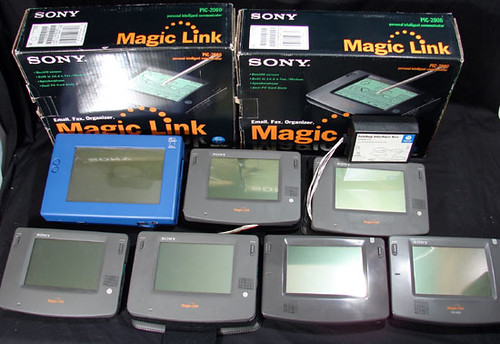
    Apple "Paradigm" project/General Magic/Sony "Magic Link" PDA

    This is captured in a documentary of the same name. For students of Silicon Valley history and Apple fan boys – the team at General Magic sounds like a who’s who of the great and the good in software development and engineering.

    General Magic started within Apple with a brief that sounds eerily like what I would have expected for the iPhone decades later.

    “A tiny computer, a phone, a very personal object . . . It must be beautiful. It must offer the kind of personal satisfaction that a fine piece of jewelry brings. It will have a perceived value even when it’s not being used… Once you use it you won’t be able to live without it.”

    Sullivan M. (July 26, 2018) “General Magic” captures the legendary Apple offshoot that foresaw the mobile revolution. (United States) Fast Company magazine

    The opening sequence tells you what the documentary is going to lay out. Over carefully curate images of Silicon Valley campuses, Segway riders and the cute bug like Google autonomous vehicle a voice talks about success and failure. That failure is part of the process of development. That General Magic has a legendary status due to its status as precursor to our always-on modern world and while the company failed, the ideas didn’t.

    Autonomous cars aren't nearly as clever as you think, says Toyota exec - Computerworld

    The genesis of the spirit of General Magic goes back to the development and launch of the Macintosh with its vision of making computers accessible. The team looked around the next thing that would have a similar vision and impact of a product. The Mac had got some of these developers on the front cover of Rolling Stone – they were literally rockstars.

    You get a tale of dedication and excitement that revolved around a pied piper type project lead Marc Porat, who managed to come to the table with a pretty complete vision and concept of where General Magic (and the world) would be heading. The archive of footage of the offices with its cool early to mid 1990s Apple Office products still amazes now. The look of the people in the archive footage, make my Yahoo! colleagues a decade later seem corporate and uptight by comparison.

    Veteran journalist Kara Swisher said that she started following the company because it was ‘the start of mobile computing, this is where it leads’.

    What sets the documentary apart is that it tapped into footage shot by film maker David Hoffman who was hired to capture the product development process. The protagonists then provide a voice over of their younger selves. Their idealism reaches back to the spirit of the 1960s. You can see how touch screen screens and the skeuomorphic metaphors were created and even animate emoticons.

    I’ve never known a development process with so much documentary footage. Having been in this process on the inside, the General Magic documentary portrays a process and dynamics that haven’t changed that much.

    The ecosystem that the startup assembled including AT&T, Apple, Motorola and Sony made sense given the ecosystem and power that Microsoft had behind it. It’s hard to explain how dominant and aggressive Microsoft was in the technology space. Newton came out as a complete betrayal and John Sculley, who is interviewed in the documentary comes across worse than he would have liked.

    The documentary also has access to the 1994 promotional film where General Magic publicly discussed the concept of ‘The Cloud’ i.e. the modern web infrastructure – but the documentary doesn’t dwell on this provable claim.

    Goldman Sachs was a key enabler, the idea of the concept IPO set the precedent for Netscape, Uber, WeWork and the 2020s SPAC fever.

    In a time when there is barely one thing changing the technology environment, General Magic were pursuing their walled garden of their private cloud and missed the web for a while. Part of this is down to their relationship with AT&T.

    The documentary covers how project management dogged the project. Part of the problem was perfectionism was winning over the art of the possible and not focusing on the critical items that needed to be done. The panic of having to ship.

    It’s about getting the balance between ‘move fast and break things’ versus crafting a jewel of a product.

    But shipping wasn’t enough, the execution of shopper marketing and sales training was a disaster. The defeat was hard given the grand vision. But the ultimate lesson is that YOU are not representative of the mainstream market.

    The documentary post-mortem featuring thinkers like Kara Swisher and Paul Saffo points out the lack of supporting infrastructure, that would take years to catch up to where General Magic’s Magic Link had gone. Paul Saffo uses a surfing analogy that I had previously read in Bob Cringely’s Accidental Empires about catching the right wave at the right time.

    John Sculley over at Apple made similar mistakes to the General Magic team which resulted in him being fired from Apple. Sculley makes the very human admission that being fired from Apple took him about 15 years to recover from personally.

    IBM Simon

    The documentary gives a lot of the credit (maybe too much of it) to General Magic as the progenitor of what we now think of as smartphones. The reality as with other inventions is that innovation has its time and several possible ‘inventors’; or what author Kevin Kelly would call ‘the technium’. This is the idea that technological progression is inevitable and that it stands on the layers of what has gone before, like fossils found inside rocks several foot deep. For instance, IBM created a device called Simon which was ‘smartphone’ which sold about 50,000 units to BellSouth customers in the six months it was on the market. Motorola – who were a General Magic partner also launched a smartphone version of the Apple Newton called the Motorola Marco in January 1995 and there are more devices around the same time.

    Reality is messy and certainly not like the clean direct line that the General Magic documentary portrays, even the Newton was only part of the story.

    The Wonder Years

    I was thinking about what I liked so much about the General Magic documentary. I immediately thought about it reminding me of my falling in love with the nascent internet and technology, which then bought me to the start of my agency career working with Palm (the company that eventually helped kill off General Magic’s product ambitions) and the Franklin REX which came out of sychronisation pioneers Starfish Software.

    But it was deeper than that. The Silicon Valley portrayed in the General Magic documentary wasn’t the dystopian hellscape of platform firms, generation rent, toxic tech bro culture and ‘churn and burn’ HR culture. Instead the General Magic documentary story represented a halcyon past of Silicon Valley portrayed in books like Where Wizards Stay Up Late, Fire In The Valley and Insanely Great. Where talented people motivated by a fantastic vision thing, with a user centred mission worked miracles. The darkness of fatigue and god knows what else is largely hidden by a Wonder Years TV show feel good nostalgia. Maybe it gives us hope again in the tech sector, despite Peter Thiel, Mark Zuckerberg, Tim Cook and Elon Musk? Maybe that hope might inspire something great again?

    Marc Porat’s personal tragedy and Tony Fadell’s business failure brings a hint of the real world through the door. The documentary uses Fadell’s link with the iPod and iPhone as a point of redemption, resilience, perseverance and vindication for General Magic.

    There’s also a cautionary tale full of lessons learned for new entrepreneurs, who often get the vision thing but forget about the details. More on General Magic here.

    More reviews here.

  • The Killer

    The media environment that drove the popularity of The Killer

    Before talking about The Killer, it makes sense to talk about the media landscape. The late 1980s and early 1990s was when consumers first started to buy video films rather than only rent them. Retail video sales had been pioneered in the UK by the music labels who sold video albums and recordings of live performances.

    The prices of films suddenly became much more accessible. Not cheap, but the price of a couple of CD albums at the time. Consumers were becoming more film literate. Curated series like:

    • Moviedrome
    • The Incredibly Strange Film Show
    • Son of the Incredibly Strange Film Show
    • Jonathan Ross Presents for One Week Only

    These series were our film studies lecture theatre with Alex Cox and Jonathan Ross as our tutors.

    Young people’s expectations and interests expanded. Video companies started to address market needs. At first, video packaging was influenced by the rental market. The rental market needed display cases that would have hundreds of people handling a box. Durability and keeping things hygienic was the primary concern. But companies realised more consumer sales with nicer packaging. Companies like Tartan and Artificial Eye looked to people with niche interests.

    The video rights for these films were cheap and there was a ready audience to watch them. These cheap film rights were already well known, fuelling US grindhouse cinema in the 1970s & ’80s. So they were the ideal vanguard to get consumers to build their own video library.

    Magazines sprang up to address the need for consumer reviews. this included Anime UK, Empire (seen as the serious film buffs read), Shivers and The Dark Side.

    The Killer and I

    The Killer was one of a number of videos that I had bought at the time. It sat by my VCR (video cassette recorder) alongside Hard Boiled and A Better Tomorrow. All three were released on the ‘Made In Hong Kong’ video label. I also had a copy of the Japanese anime opus Akira. My collection was rounded out with a few spaghetti westerns including Keoma The Violent Breed. The westerns were released by Aktiv as part of The Spaghetti Western Collection. These were films that made a real impact on me and that I watched again and again.

    I was blown away by the visual experiences that both genres offered.

    Over time I have been building up my library of Blu Ray and DVD disks and managed to reacquire a copy of The Killer. Last week I watched The Killer for the first time in a few years.

    The perfect confection

    A perfect product is a mix of the right ingredients prepared in the right way for the right time. In the mid-to-late 1980s Hong Kong cinema was reaching its cultural peak.

    The Killer
    The original Hong Kong poster for The Killer

    The Killer is made up of layers. These layers were driven by a mix of:

    • Visionary directors
    • The febrile atmosphere in the run-up to re-colonisation by the Chinese communist government
    • A deep bench of talent
    • Hong Kong itself

    John Woo – visionary director

    Depending whose article you read on John Woo, you will get a number of different influences mentioned with regards to John Woo’s works of this period. This film has all of them on screen at once. John Woo is a Christian, and you see a lot of these motifs in The Killer‘s imagery and settings including the iconic church shootout.

    There is a stylistic nod to French new wave films directed by Jean-Pierre Melville like Le Samourai. Gun-fu was influenced by Japanese yakuza films with their honour code and no-holds barred violence. Kinji Fukasaku’s Battles Without Honour and Humanity series exemplified this genre. The pacing of his films owe much to Japanese chambara films like The Seven Samurai and classic Chinese novels.

    The reality is that the Triads were seldom rule bound or honourable isn’t allowed to get in the way of a good story.

    A combination of an appreciation of westerns and the works of Melville, with being in Hong Kong during the late 1960s and early 1970s meant that Woo entered the film world as a young script supervisor for Cathay Studios. He became an assistant directors at Shaw Studios. By the mid-1970s he made kung-fu films with fighting chereographed by Jackie Chan.

    In the mid-1980s he had a chance to pivot and take more creative control, which resulted in A Better Tomorrow.

    Much is commented on Woo’s use of white doves in The Killer and subsequent films. The dove is a Christian motif; Woo also referenced the white and black crows of the Spy vs. Spy comic strip. Finally pigeons and doves were kept in coops on the top of tenement apartment buildings in Hong Kong such as John Woo would have lived in after the Shek Kip Mei Fire burnt down his first Hong Kong home. They also end up on the menu at some of the city’s restaurants.

    Doves were also very much an 1980s cultural moment from Blade Runner‘s climatic rooftop scene to Prince. Though to my knowledge Woo never mentioned either of them as influences.

    Less commonly mentioned is the scene where the stray cat enters Jennie’s flat; it signals misfortune for the main characters in the film based on Chinese superstition.

    The febrile atmosphere

    The Hong Kong of the 1980s was a city with a sell by date. It had become a modern well-run city after reaching a nadir in the early 1970s but all that could be easily done away with. Hong Kongers moved freely around overseas Chinese communities in Singapore, Malaysia, Thailand and Indonesia. Hong Kong and to a lesser extent Taiwan became media hubs. By the early 1970s, Hong Kong music was being sung in Cantonese around Asia, the films in Asian cinemas and Made in Hong Kong products were shipped around the world.

    Prior to 1984, there was a wide range of possibilities from the British muddling through and carrying on running Hong Kong to a Chinese invasion. Generations of Hong Kong emigres moved to the UK, Australia, Canada and America for education or a bolt hole if the worst happened. Post-1984 things became real.

    Vancouver’s Hong Kong community expanded during this time as middle class professionals followed the lead of ‘super man’ Li Ka shing and had their families based in the Canadian city while they visited from time to time. It also helped that Vancouver’s inner city core felt like the high density living of Hong Kong, as did the ocean edge.

    All this comings and goings meant that Hong Kongers were exposed to a variety of foreign and domestic influences like John Woo, rather than the more pedestrian content available in the UK at the time.

    The higher ‘moral’ values of The Killer were a line that connected modern Asia to an ancient Chinese past reassuring stability in a changing world.

    Star power – the deep bench of talent.

    The Killer was blessed with a strong cast of performers. Chow Yun-Fat had a perfect foil in Danny Lee. Sally Yeh is amazing in her performance as an actress and a musician. Taiwanese Canadian Yeh was already a successful Cantopop artist before acting in The Killer. The depth of talent in Hong Kong was down to the studio system operated by production companies and TV stations. Chow was a product of TVB’s actor training and made his name as a Cantonese television drama heart throb.

    Beyond the actors, you had a deep bench of technical talent to draw on such as cinematographer Peter Pau. Pau came up through the conveyor line approach to Hong Kong filmmaking and The Killer was his sixth film. Things needed to be done right first time, because films had very little shooting time in comparison to their western counterparts.

    People like Mr Pau are responsible for the professionalisation of the mainland Chinese film industry. The mainland-Hong Kong collaborations which snuffed out the Hong Kong film industry acted as a technical finishing school by Hong Kong filmmakers for their Chinese counterparts. In the same way that coercive technology transfer saw multinational companies train up their competitors.

    Hong Kong itself

    The Killer is one of the things that inspired me to move half way around the world. Hong Kong’s mix of claustrophobic yet homely flats in composite buildings, neon signage and the constant buzz of the city are something you won’t see anywhere else.

    the killer

    This contrasts with the small town feel of the islands. The Killer managed to shoot in locations like the busy Causeway Bay shopping district, which was done in just three hours.

    Just across the border mainland China feels too chaotic. Singapore too neat and ordered. Hong Kong got the mix just right, which is the reason why the anime Ghost In The Shell borrowed so much from the city’s mid-century architecture.

    All four elements come together to make a perfect confection:

    • Visionary directors
    • The febrile atmosphere in the run-up to re-colonisation by the Chinese communist government
    • A deep bench of talent
    • Hong Kong itself

    Impact

    The Killer‘s reception in the Hong Kong market was lukewarm at first, due the June 4th incident in Beijing. But by the end of the year it was a respectable 9th in Hong Kong box office earnings. What happened in the international markets was unprecedented for the time. The Killer was shown on the international festival circuit and became much more critically acclaimed outside of Hong Kong than within the city itself.

    If you’ve watched a Luc Besson film, you’ve seen a film influenced by The Killer, as have most Hollywood action directors making films in the mid-to-late 1990s like Robert Rodriguez and Quentin Tarantino. Raekwon’s Only Built 4 Cuban Linx… sampled the living daylights out of The Killer.

    Three decades on, The Killer still moves me. Given changes that have gone on in Hong Kong, we won’t see its like again.

  • Kurena by Kurena Ishikawa

    I first heard Kurena Ishikawa on a video that a friend of mine showed me of her performing at the Blue Note Jazz Club in Tokyo. Ishikawa played double bass and played a stripped down version of Michael Jackson’s off the wall.

    It completely changed the atmosphere of the original song. In Ms Ishikawa’s hands a dancefloor classic full of life became much more emotive, in particular with her plaintive voice, but still danceable.

    Kurena by Kurena Ishikawa
    Kurena by Kurena Ishikawa

    The main reason why I bought Ms Ishikawa’s self titled album on CD was for a studio recording of her Off The Wall performance. I had high expectations as the album has been released on the Japanese arm of the Verve record label. Verve is home to the largest back catalogue of jazz standards.

    Kurena as an album doesn’t disappoint. The tracks are sparse and the instruments given room to breathe. At 34 minutes the album can’t be measured by the length of the recording but the quality within.

    The album starts off with Sea Wasp which feels like a seamless mix of bossanova type vocals laid over a light jazz backdrop. The percussion evokes the winds and waves of the beach. The harder you listen, the more you get out of the track. I decided to listen to the rest of the album on a pair of AKG K872 headphones, which allowed for an open yet more detailed listening experience.

    500 Miles High has Ishikawa’s vocals leading a more free-form experimental track, taking us from crashing surf to the sky. Bird of Beauty brings back a more Brazilian feel to the recordings with the focus again on Kurena Ishikawa’s lilting vocals.

    Olea takes the tempo right down and focuses on the interplay of double bass, jazz drums and piano.

    The album version of Off The Wall sees Ishikawa play double bass and sing unaccompanied. The performance while really good, feels incongruous with the rest of the album content. Despite this I can wholeheartedly recommend Kurena as a great album. It deserves to be focused on as a listening experience as could easily disappear to the background through a casual listen.

    More Japanese related content here.

  • Bruce Mau + more things

    Bruce Mau

    I spent part of the bank holiday weekend reading and finally managed to tuck into designer Bruce Mau’s signature book MC24. For those that haven’t heard of him Bruce Mau is a Canadian designer and academic. He founded a brand design agency: Bruce Mau Design which is now part of marketing combine Stagwell. His Massive Change Network (MCN) is in the transformation business similar to Stewart Brand’s Global Business Network (acquired by the Monitor Group now called Monitor Deloitte) and The Long Now Foundation. The philosophy of Bruce Mau and feels like it had been lifted from an amalgam of TED Talks. Bruce Mau believes in a sustainable future with techno-optimist bent to his views.

    Bruce Mau's 24 principles for massive change

    The MC in MC24 is Massive Change. The 24 stands for his 24 principles for designing massive change in life and work – think Dieter Rams Ten Principles of Good Design and Brian Eno’s Oblique Strategies meets Robert Greene’s 48 Rules of Power.

    The 24 principles Bruce Mau expands upon are:

    • First inspire design leadership, lead by design
    • Begin with fact-based optimism
    • Always search for the worst
    • Quantify and visualise, seeing is believing
    • We are not separate from, or above nature
    • Design for the power double-double
    • Think forever design, for perpetuity 
    • Design your own economy
    • Sketch: hey somebody let’s fail
    • Think like you are lost in the forest
    • Be whole brain creative, its a talent and a skill
    • Compete with beauty
    • Design for all the senses
    • Rise above the noise
    • Design the time of your life
    • Design the difference not the object
    • Design the platform for constant design 
    • Scale for impact
    • Design the invisible
    • Design the new normal
    • Design what you do to tell your story
    • New wicked problems demand new wicked teams 
    • Those who do teach, get out there and do
    • Work on what you love

    Bruce Mau, like Robert Greene has principles that seem to contradict each other. Publisher Phaidon have wrapped the hard back cover of the book in an iridescent satin fabric that a photograph doesn’t do justice to. Regardless of whether you think the book is a self-help bible, your creative muse, an objet d’art or something nice to thumb through on a Sunday afternoon Bruce Mau and his book MC24 are ideal.

    China

    Where China is beating the world – by Noah Smith – interesting article, although it lacks some nuance about Chinese development, consider it a starting point that you can explore in more depth from, rather than the full story

    China Can’t Afford to Prioritize Security Over the Economy – Bloomberg 

    The Chinese youth unemployment phenomenon | Financial Times – 20 percent unemployment rate, which is reflected in China Economy: Recovery Disappointment Has Set In – Bloomberg 

    Malaysia detains Chinese ship linked to suspected illegal salvage of British WW2 wrecks | Reuters

    I have alluded to the impact of China’s new espionage law. VisualPolitik has pulled together a good video on how it’s being interpreted by multinationals, policy wonks and politicians. It will have precisely the opposite impact that China would like it to have on its economy.

    Consumer behaviour

    How many Britons agree with Andrew Tate’s views on women? | YouGov – so much in this. You also need to think about bias in questions, that its done online and the ‘you can think it, but you shouldn’t say it’ aspect of how Tate supporters might think about the questions

    Interesting debate on how the ‘evangelical bloc’ has evolved over time from being primarily theological to being primarily political in nature.

    Culture

    Nu-metal is cool now – The Face 

    Economics

    Immigration running at ‘unsustainable’ level, says senior Tory, ahead of publication of figures for 2022 – UK politics live – combination of post-COVID and post-Brexit

    De-risking trade with China is a risky business | Financial Times – the FT struggling to make an argument against de-risking shows how much the neo-liberal globalist argument is out of step with the times.

    Energy

    Ofgem wants your energy supplier to make more money (update) | Financial Times

    Solar power investment to exceed oil for first time, says IEA chief | Financial Times 

    Power of Siberia: China keeps Putin waiting on gas pipeline | Financial Times

    Saudi diesel imports from Russia, exports to Singapore hit records | Reuters – Saudi Arabia taking advantage of an arbitrage opportunity

    Lex in depth: the staggering cost of a green hydrogen economy | Financial Times – this is an area that Ireland can win due to its plentiful wind energy potential

    Ethics

    How doctors buy their way out of trouble | ReutersWhen federal enforcers alleged in 2015 that New York surgeon Feng Qin had performed scores of medically unnecessary cardiac procedures on elderly patients, they decided not to pursue a time-consuming criminal case. Instead, prosecutors chose an easier, swifter legal strategy: a civil suit. Qin agreed to pay $150,000 in a negotiated settlement and walked free to perform more cardiac surgeries at his new solo practice in lower Manhattan. Qin faced no judge or jury. He did not admit to wrongdoing. He maintained his license to practice. What’s more, neither Qin nor government officials were required to notify patients who purportedly were subjected to vascular surgical procedures they didn’t need. Those included fistulagrams to spot issues like narrowed blood vessels or clots, and angioplasties to open clogged coronary arteries. Within months of the settlement, a registered nurse working for Qin at his Manhattan practice alerted authorities that something seemed amiss. The nurse, who ultimately turned whistleblower, alleged to federal prosecutors that the surgeon was performing unnecessary procedures on patients, mostly elderly Asian and Black immigrants whose care was covered by the public programs Medicare or Medicaid. Prosecutors indicted Qin in 2018 on a felony count of fraud, which carried a maximum sentence of 10 years in prison. But in 2021, in a deal brokered behind closed doors, prosecutors dropped that charge in favor of yet another civil settlement, court records detailing that agreement show. Once again, Qin kept his New York license to practice with no restrictions; a restricted license is one of the few ways the public can learn that a doctor has been disciplined for bad behavior. Qin agreed to pay a total of $800,000 in annual installments ending in December 2025, deposited with the U.S. Department of the Treasury. As an added penalty, he was banned from billing public health programs until February 2025

    Finance

    Exclusive: Chinese hackers attacked Kenyan government as debt strains grew | Reuters – that China is deploying this kind of capability says a lot about how concerned it is about African and ‘Belt and Road’ debt. Act in haste, repent at leisure.

    Exclusive: From Russia with gold: UAE cashes in as sanctions bite | Reuters and Russian gold shipments to the UAE, China and Turkey | Reuters 

    Gadgets

    SanDisk Extreme SSDs keep abruptly failing—firmware fix for only some promised | Ars Technica – I have had this happen on my 2TB SSD

    Germany

    3nm AI chips and 6nm microcontrollers will be key to TSMC Dresden | EE Times – which assumes that the German automobile industry isn’t facing an existential threat. But the German automobile industry is facing a range of existential threats:

    • Their inability to live up to the past German reputation for quality
    • Chinese manufacturers at the low-end
    • German automobile makers struggles with software
    • Japanese and Korean car manufacturers challenging the luxury end of the market. I would rather have a Lexus LX than a G-Wagen. At the moment Lexus have had to shut down the list on the LX they are that oversold

    Hong Kong

    chanhiu design – really nice graphic design. I love their project reflecting on Hong Kong-made knock-off toys familiar to Hong Kong children as well as European children – where these toys turned up in markets during the 1960s through to the early 1980s. More here: Chan Hiu explores Hong Kong’s playful past – The China Project 

    Cayman Islands fights attempts by Singapore and Hong Kong to lure Asia’s wealthy | Financial Times – the sharp uptake of Singapore vehicles versus Hong Kong vehicles is very interesting – an order of 10x magnitude greater. Interesting implications for Hong Kong’s wealth management business and China’s efforts to prevent capital flight from Greater China. It also implies that Hong Kong hasn’t been as successful at attracting foreign funds for investment in China. So the Hong Kong pivot towards the Middle East investor makes sense.

    Hongkongers opt out of organ registry ‘amid fear of Chinese donations’ | The Guardian – the National Security Act might have suppressed open opposition, but Hong Kongers really don’t want to integrate with the mainland. Contrast this with Hong Kongers in Britain: ‘We are all thinking about how to contribute’: Hongkongers boost Britain’s suburbs | Financial Times

    Cathay Pacific to order Boeing 777-8F freighter -sources | Reuters – interesting implied expectations around air cargo, especially when one thinks about the softness in Chinese manufacturing numbers at the moment

    Did China Southern Airlines’ verbal abuse incident in Singapore draw less ire on mainland than discrimination row at Hong Kong’s Cathay Pacific? Observers weigh in | South China Morning Post – this is as much about mainland Chinese animosity towards Hong Kongers as it is about poor customer service

    Ideas

    Why Chinese Democracy is Better than Western Democracy According to Tsinghua Prof. Yan Yilong – different realities between China and the west

    Doug Rushkoff Is Ready to Renounce the Digital Revolution | WIRED – fascinating read

    Indonesia

    Key Lessons From Indonesia’s China-Backed Mining & Infrastructure Ventures – The China Project

    Innovation

    How Japan Won the Lithography Industry – by Jon Y 

    Korea

    South Korea warns US could ‘overburden’ its chipmakers with China limits | Financial Timesconcerns over the impact of US legislation on Korean chipmakers’ operations in China. The US Chips and Science Act offers $52bn in subsidies to chipmakers building new production facilities in the US, but contains “guardrails” detailing the limits on those receiving federal funds, in terms of expanding or upgrading their advanced chip capacity in China over the next 10 years. This is interesting, including: Apple and Broadcom sign multi-year deal to develop made-in-USA chips

    Samsung, SK Hynix may eventually suffer more than benefit from Micron sanction – interesting take by the DigiTimes team

    Marketing

    Effective Brand Strategies for Building Consumer Loyalty | GfK 

    Media

    The fall of Vice: private equity’s ill-fated bet on media’s future | Financial Times 

    Online

    Inside How TikTok Shares User Data – The New York TimesDriver’s licences, addresses and photos regularly shared on an internal messaging and collaboration platform called Lark

    Layoffs push down scores on Glassdoor: this is how companies respond | Pragmatic Engineer

    Security

    Chinese hackers spying on US critical infrastructure, Western intelligence says | Reuters

    China said to be negotiating arms deals with Saudi Arabia and Egypt | South China Morning Post – interesting for a couple of reasons. The US has helped both countries in terms of weapons systems. Egypt used to be a Russian client state. The US might be less worried about this than Russia will be

    China says NATO’s plan for Japan office not welcomed in Asia-Pacific | Reuters 

    The Digital Pearl Harbour preparations by Volt Typhoon

    People’s Republic of China State-Sponsored Cyber Actor Living off the Land to Evade Detection | CISA, China-backed hackers spying on US critical infrastructure, says Five Eyes | US news | The Guardian and Volt Typhoon targets US critical infrastructure with living-off-the-land techniques | Microsoft Security Blog

    Singapore

    Black magic and purveyors of the occult in Singapore

    Software

    All the reasons AI may have rejected your job application | Quartz

    China sees a rise in AI-powered fraud cases | Briefing | Technode – including face swapping and voice mimicry.

    WPP teams up with Nvidia to use generative AI in advertising | Financial Times – aimed at reducing studio time on retouching and video post production, which will likely threaten Adobe creative software packages such as Premiere, After Effects, Illustrator and Photoshop

    All the Hard Stuff Nobody Talks About when Building Products with LLMs | Honeycomb

    Technology

    Apple expanding supplier base in China, Southeast Asia, and India the number of manufacturing facilities/locations of Apple’s top 200 suppliers grew in 2022 in China, Japan, Thailand, Malaysia, the Philippines, and India. However, manufacturing facilities/locations in the US and South Korea have dropped from 72 to 62 and 42 to 36, respectively. The latest list shows that Apple’s supplier base in South and Southeast Asia is growing amid Apple’s diversification move. Meanwhile, Apple keeps expanding its reliance on China, a sign that Apple is likely to prepare for a decoupled global manufacturing ecosystem. Due to Apple’s change of methodology, disclosing only “locations” instead of “facilities,” the numbers of certain geographies, including Taiwan, cannot be compared historically. For example, Apple said that TSMC had five “facilities” globally in 2021 but had three manufacturing “locations” globally in 2022. The methodology change led to fewer listed manufacturing locations of Apple suppliers in Taiwan, from 72 to 41