Category: tools | 工具 | 도구 | ツール

Tools like my Howto category morphed out of a few things. I learned about the power of helpful content from Stewart Brand’s Whole Earth Catalog. At the heart of the Whole Earth ethos was sharing useful knowledge and tools for a person. Editor Kevin Kelly kept the Whole Earth ethos alive through his involvement with The WeLL, Wired magazine and his Cool Tools blog and book.

A second aspect of it was my natural inclination to share useful things or processes. I started writing this blog to explore the media so that I could advise clients so its roots were in the idea of channels as a useful tools mentality.

The third reason was my Dad. As a child my Dad who is a mechanical fitter by trade instilled into me a deep sense of quality in things, in ideas and in people. The idea of quality as an intrinsic thing was accelerated by my career in the UK’s dying manufacturing sector prior to going to college and having read Zen and The Art of Motorcycle Maintenance that put words to something I had felt and been driven by. Consequently I tend to gravitate to simple, overthought and overly engineered things like a Rolex Sea-Dweller watch, Carhartt jeans or the modern Victorinox Swiss army knife. My ‘iconoclastic’ view of quality continues to drive

Tools content tends to come when I am sharing things that I have found through work or solving a problem in my personal life. I have talked about tools elsewhere too, notably Kevin Kelly’s What’s in my NOW newsletter.

  • Pharma jargon

    I started my career off working on technology clients who were bad for having their own language but pharma jargon takes things to a new level of complexity. I thought I would write a bluffers guide to make other peoples lives easier.

    Berts Drugstore
    samswitzer

    Here’s some of the examples of pharma jargon that came to mind that aren’t immediately apparent to marketers coming in from other disciplines.

    ABPI – Association of the British Pharmaceutical Industry is the trade association for companies in the UK producing prescription medicines. It has a code that members should adhere to. See also PhRMA.

    Adherence – takes treatment as directed.

    Aggregated – usually in terms of electronic medical records (see EMR below), the most in-depth record of information about a patient’s historical set of conditions, treatments and tests for those conditions and much more.

    AE – Adverse event. When you get a reaction from a medicine that is negative. It could be soreness from an injection, or an upset stomach right the way through to death. Pharma companies have time-bounded compliance issues related to AEs. This was one of the reasons why they had been slow to use social media in the past.

    Behaviour change – a lot of pharma marketing hinges on behavioural science to drive behavioural change. In a lot of sectors behavioural science usually elicits small changes that might not be worth the effort. In healthcare, it could mean saving lives, so it is leaned on much more.

    Biologics – treatments made from actual live organisms rather than synthetic chemicals (which would be called drugs).

    BLA – biologics licence application. Paperwork submitted to the FDA. Similar to NDA below.

    Building the plane as we’re flying it – building the business to scale up. Usually indicates that the company is growing the amount of people it employs and marketing function to help prepare for product launch. This can be teams in a large pharma company attached to a new drug, or a smaller research company who is looking to take a discovery to launch.

    CBER – center for biologics evaluation and research (part of FDA) does the same role for biologics as CDER does for drugs.

    CDER – center for drug evaluation and research (part of the FDA)

    Clinical endpoint – Used in trials. In the trial design there will be a measurable outcome that determines clinical success… if achieved. All trials have a primary endpoint, they may have additional secondary endpoints. Think of endpoints as medical trial objectives.

    Clinical studies – research conducted to understand a treatment’s safety and efficacy,

    CME – continual medical education – used interchangeably with CPD – continual professional development. Online modules or events that allow HCPs to keep up to date with the latest developments. Useful from a marketing point-of-view to reduce barriers to prescribe through upskilling, or reframing the way a condition is used to favour one product over another.

    Co-insurance – the amount the patient has to pay on private healthcare.

    Co-morbidity – having more than one medical condition or disease at the same time. For instance, one of the reasons why obesity has become such a public health issue is down to the higher incidence of co-morbidity that can occur including cancer, diabetes, heart disease, fatty liver disease to name but a few.

    Co-pay – see co-insurance.

    CRO – contract research organisation – a company that helps move a drug to commercialisation a new drug or device from its conception to legal marketing approval. It would be analogous in a lot of other industries to IT outsourcing in terms of its role in a business value chain.

    CVA – see eDetail

    DTC – direct to consumer. With certain product categories there has been a trend to prescribe via telemedicine consultation with a qualified HCP and then the product can be sent direct to the patient.

    eDetail – an interactive presentation usually delivered using a tablet that sales reps use to discuss their client’s product (or increasingly product with a digital service attached) with healthcare professions

    EMA – European Union’s regulatory body, see FDA.

    EHR – electronic health record. Aggregated and shared across different HCPs from different organisations

    EMR – electronic medical record. Used within one medical system / one set of healthcare providers.

    EOB – explanation of benefits – the positive effects a given pharma product has for the patient. This will be expressed not only in biological terms but also impact on quality of life or improvements in standard of care enjoyed.

    Ethical pharma – branded as opposed to generic prescription products.

    FDA – Food and Drug Administration – the body that certifies whether a product is allowed to be used in the US.

    Formulary – a list of pharma products that are approved for prescribing from a finance perspective.

    GP – general practitioner – family doctor.

    Generic – a pharmaceutical product this is no longer protected by patent rights. It can be manufactured by any company. Patents protecting pharma product intellectual property rights surrounding a product run out after 14 years in the UK, but can vary in other markets.

    HCP – usually a prescriber or a gatekeeper. This can be a hospital specialist of some sort, a prescribing nurse or a prescribing pharmacist. The gatekeeper category might be wider such as specialist nurses, surgery nurses, hospital pharmacists – the rationale for reaching these people is to reduce the friction in using a product once it has been prescribed. A less common gatekeeper role is about referring a patient to a prescriber – particularly where the treatment can only be prescribed by a specialist.

    Ideopathic – as in ideopathic X disease means that the medical profession don’t know the cause.

    In-label: a use of a drug that is within its approved ‘label’ see also off-label, USPI and SmPC.

    iVA – see eDetail

    KOL – key opinion leader. Can be someone who has specialist expertise, is a prolific researcher often cited in medical journals, someone who has an active profile speaking at professional events or on social media. They may be an academic, doctor, a nurse or a pharmacist depending on the market sector, country and product.

    MHRA – Medicines and Healthcare products Regulatory Agency – a UK regulatory body that is equivalent to the EU’s EMA and the FDA in the US.

    MLR – medical, legal and regulatory. Equivalent of legal and compliance in other industries such as financial services.

    MOA – mode of action, also called mechanism of action. How a pharmaceutical product works (if known).

    MOD – mode of disease, also called mechanism of disease. What a condition does to the body, what cells it attacks or biochemical processes it interferes with.

    MSL – medical science liaison. A non-promotional specialist expert in a pharma company. The equivalent in the enterprise technology space would be a pre-sales engineering role.

    NDA – new drug application. Pharma companies like this because it extends the protected life for a drug. A classic example would be semaglutide. Initially it was marketed to treat people with diabetes. But during those trials it was found to correlate with weight loss. It then became a weight loss and management focused product as well. Each application has a patent protected time period.

    Off-label: where a doctor prescribes a medicine or treatment do do something that isn’t on its SmPC or USPI (depending which country you are in). A classic example of this at the moment is the use of Ozempic to help with weight loss and weight management. Ozempic was licensed to help with the treatment of diabetes. It is the same active ingredient, but at a different dose rate in Wegovy. Wegovy is licensed for weight loss / weight management.

    On-label: exactly the same as ‘in-label’.

    OTC – over the counter. In the UK examples would be Gaviscon or Panadol for upset stomachs and pain respectively. Both are available without a prescription.

    PAAB – Pharmaceutical Advertising Advisory Board – an American body that would be similar to the ABPI in the UK. It looks specifically at advertising practices.

    Patent cliff – intellectual property rights on drugs are protected for a period of time (which varies by market). Generally it’s between 8 – 14 years. Once this period is over, the drug can be made by anybody. When a company has a series of drugs falling out of this protected period, the company is considered to have ‘fallen’ off a patent cliff if it doesn’t have new drugs to replace the old versions.

    PAG – patient advocacy group. They advise patients, help fund research, advocate for patient standard of care.

    Patient – person with a medical condition. The end consumer of a pharma product.

    Patient advocate – a patient advocate plays multiple roles. They act as the voice of the patient with pharma companies providing insight into the patient experience. This is important in order to drive a more patient-centric approach. They may appear in the media as a spokesperson and may testify in front of regulators and legislators.

    Patient-centric – a move in marketing over the past two decades from pharma companies just thinking about getting the HCP to prescribe, to thinking about the end consumer experience. Probably one of the first things they could do is stopping using patient and try people with X instead.

    PCP – primary care provider. A family doctor or GP.

    PDUFA date – (prescription drug user fee act). Part of the FDA approval process once the application has been assessed by CBER / CDER. It’s the date that the FDA must respond to the drug approval application. There are four tracks with varying speeds to the process depending on product need etc.

    PHR – personal health record. A patient-facing record accessed through patient portals etc.

    PhRMA – Pharmaceutical Research & Manufacturers of America. Industry body that lobbies on behalf of its members. Its role and code is similar to the ABPI and its code in the UK.

    PI – prescribing information, although I have heard product information used. What dose is a product given? How often? Any adverse effects that can happen? Any groups of patients who can’t have the medicine? Any medicines or foods that the products can’t be used in combination with – like antibiotics and alcohol?

    Placebo – in this case not the moderately successful band. An inactive treatment, used in control tests for new drugs. If your new medicine doesn’t perform better than the placebo control; it’s not going to get approved for use.

    Primary care – family doctor, general practitioner or community clinic.

    Rx – prescription (which drives pharma sales).

    SmPC – summary of product characteristics, a European equivalent of the USPI. A sheet in medicine packaging covering properties, side effects, officially approved ways of using a medicine. The USPI and SmPC can be different for various reasons: a drug can be approved for different uses in different territories, or may have a different brand name. Also USPIs generally have more information.

    Submitted charges – American healthcare system speak for amount billed.

    Titrate – process of measuring and finding out the concentration of one substance is in a solution (of something else).

    Tx – treatment

    USPI – US prescribing information is a sheet that goes into every medicine box properties, side-effects and the officially approved ways of using the medicine. The US version includes details of clinical studies.

    Veeva – in the same way that Adobe has become the operating system for creative agencies, Veeva is the same thing for pharma companies. Veeva Vault PromoMats will haunt your dreams.

    Vx – vaccination

    Warning letter – as bad a news as you probably think it would be. Usually sent to pharmaceutical companies by the likes of the FDA of specific regulatory or legal violations that have happened. They have a request for action to correct the violations. This could be down to company practices, procedures or products – or a combination there-of. The company need to go back with a plan and is likely to under increased surveillance from the authorities.

  • Razors for strategists

    What are razors?

    Razors are one of a series of tools that I use for problem solving. They sit alongside the idea of ‘chunking’ that is breaking a problem down into more manageable and solvable constituent parts. Razors aid in decision-making and analysis.

    Razors are rules that guide your way through a problem, or ‘cut’ your way through a problem. They simplify, they not be right in all circumstances but are right in the vast majority of them.

    They were first used by philosophers, but as we know more about the world around us, we have developed more razors and they have become more useful in a general context.

    Gillette Fusion

    This is going to be hard, isn’t it?

    Not really, we use razors in our lives all the time, often without thinking about them. The most famous one is Occam’s Razor.

    Occam’s razor

    pluralitas non est ponenda sine necessitate, “plurality should not be posited without necessity.”

    Encyclopedia Britannica

    Or to put in simpler terms, out of two or more explanations, the simpler one is mostly likely to be the right one. In certain circumstances what’s simpler is a matter of perspective and culture. Secondly, Occam’s razor prioritises simplicity over accuracy.

    The classic example of Occam’s Razor failing is the classic crime fiction trope of the death that looks like a suicide and is considered by authorities to be one. Yet by dogged investigation, it is actually proven to be a relatively cleverly executed murder plot.

    Other razors

    Here’s some razors that I have found useful over time. A good many of them have come from fields beyond the study of philosophy.

    Gall’s law

    Gall’s law “A complex system that works is invariably found to have evolved from a simple system that worked.” John Gall was a modern-day renaissance man in turn author, scholar, and pediatrician. His law comes from a book he wrote as a critique of systems design: Systemantics: How Systems Work and How They Fail… When working on customer experience related work don’t try and cover every option first, build up complexity to cover all the options from a ‘simple system’. When dealing with clients, sell the simple system as baseline framework and see how you get on. Ironically, clients are more likely to buy the simple model and then build into it over time as an additional activity.

    Hanlon’s razor

    Hanlon’s razor – “Never attribute to malice that which can be adequately explained by stupidity.” Probably more useful when pondering third party actions rather than strategy in depth, but nonetheless very useful to bear in mind in work circumstances. It featured in joke book Murphy’s Law Book Two: More Reasons Why Things Go Wrong: Bk. 2 compiled by Arthur Bloch and was attributed to Robert J. Hanlon. It probably won’t get you promoted, but might keep you sane.

    Hick-Hyman law

    Hick-Hyman law – the time it takes for a person to make a decision is a function of the number of possible choices. Psychologists William Edmund Hick and Ray Hyman, found that increasing the number of choices will increase the decision time logarithmically. This one is handy for bearing in mind when thinking about customer experiences and engagement strategy. There is such a thing as the tyranny of choice for consumers.

    Hitchen’s razor

    Christopher Hitchens

    Hitchen’s razor – what can be asserted without evidence can also be dismissed without evidence. Christopher Hitchen popularised a version of a latin proverb in his book God Is Not Great: How Religion Poisons Everything. Quod grātīs asseritur, grātīs negātur – what is freely asserted can be freely deserted. This works quite nicely with Sagan’s standard below in terms of providing evidence. Storytelling and narrative is important, but so is evidence for the deductive leaps sometimes involved.

    Hofstadter’s law

    Hofstadter’s law – “It always takes longer than you expect, even when you take into account Hofstadter’s law”. Gödel, Escher, Bach: an Eternal Golden Braid by Douglas Hofstadter is a book about the nature of “maps” or links between formal systems. Hofstadter posits that understanding these maps could be the answer to what we’d now call general artificial intelligence. Where Hofstadter’s law comes in terms of being useful for strategists is in assessing the scope of unusual or bespoke strategic asks prior to the start of a project.

    Sagan’s standard

    Polaroid Space Series 4

    Sagan’s standard – extra-ordinary claims require extra-ordinary evidence. This was popularised by Carl Sagan’s documentary series Cosmos. Sagan had also used it in essays for various publications, which were collected in the essay compilation Broca’s Brain. It encapsulates similar ideas by thinkers over the centuries. I have found this particularly helpful when reviewing colleagues decks that make big deductive leaps. The narrative might be compelling, but make sure the right amount of proof is in the right place.

    Sturgeon’s revelation

    Pyramid Books F-974

    Sturgeon’s revelation –  ninety percent of everything is crap. The Sturgeon in question reviewed science fiction and noted that while the genre had its critics one could see a similar distribution of quality in other genres and fields. George Orwell and Rudyard Kipling made similar observations but Theodore Sturgeon got the credit. When you see mediocre advertising being derided in some LinkedIn post or other, bear in mind this observation. As for Sturgeon, while he was highly regarded in the early 1960s as a science fiction writer and script writer for the original Star Trek television series – his memory primarily lives on through his revelation.

    Twyman’s law

    Twyman’s law: “Any figure that looks interesting or different is usually wrong”, an extension of the principle that “the more unusual or interesting the data, the more likely they are to have been the result of an error of one kind or another”. The Twyman in question is Tony Twyman, was a veteran market researcher in the UK. For strategists that erroneous piece of data can be like a shiny metal object to a magpie. Look at how you can verify it further and if it can’t be done, seriously consider walking on by – particularly if it fails under Sagan’s standard as well.

    Vierordt’s law

    Vierordt’s law states that, retrospectively, “short” intervals of time tend to be overestimated, and “long” intervals of time tend to be underestimated. It’s named after Karl von Vierordt who was a 19th century German medical researcher whose body of work spanned research into blood flow and also psychology. It is worth bearing in mind and testing, particularly when you are relying on a small number of qualitative research interviews.

    More related content here.

  • February 2024 newsletter – No.7

    February 2024 newsletter introduction

    Welcome to my February 2024 newsletter which marks my 7th issue. I hope that your year of the dragon is off to a great start.

    Strategic outcomes

    The number 7 is a bit of a mixed bag, depending on how you look at it. In the old testament, the 7th heaven is where God’s throne is, alongside the angels. It had been considered a place of happiness, hence Gwen Guthrie’s Seventh Heaven. In Mandarin, the number is considered generally a positive thing, the number is a homophone for ‘arise’ and ‘life essence’. But that’s only half the story.

    Chinese Ghost Story

    Indications of 7’s unlucky nature include the seventh month in the lunar calendar being a ‘ghost month’. In Cantonese, it is a homophone for a vulgar way of saying penis. I hope your February wasn’t a dick of a month. 

    For film buffs it’s almost 28 1/2 years since the transgressive crime thriller Seven was released. It was a break out hit and became the seventh highest grossing film of 1995, behind Die Hard with a Vengeance, Toy Story and Apollo 13. It beat out other films like Braveheart in box office earnings, but Braveheart ran away with the Oscars. 

    Let’s hope that feng shui master Michael Chiang is correct in terms of the positive energies from the year of the dragon.

    New reader?

    If this is the first newsletter, welcome! You can find my regular writings here and more about me here

    Things I’ve written.

    • FOOH – and the ethical and marketing challenges it presents with a thought experiment harking back to the golden age of pornography.
    • Technonationalism – how current technological developments mirror the cold war and the 20th century Asian economic miracle.  
    • Innovation signalling – how innovation is used by brands for show, rather than for genuine progress.
    • Pipes by Yahoo – a remarkable web service that also causes us to reflect on the post modern web of today.
    • Hong Kong measurements – how something as simple as measurement units are a melding of culture, history, modernity and politics in a time of change.
    • Y2K was always more than a fashion phase, but it seems to have faded from the zeitgeist which means the fashion takes have no context. Here’s a bit of context for you.

    Books that I have read.

    • What the Taliban Told Me by Ian Fritz. Fritz writes really, really well, otherwise I probably wouldn’t have been able to complete his personal memoir about his upbringing, service in Afghanistan onboard an AC-130 gunship and depression. In some ways it reminded me of Jarhead – Anthony Swofford’s memoirs of his life up to the time of being in the US Marines during the first Gulf War. Swofford’s book came out a decade and a half after his service. Fritz’ book feels much more immediate and without the flashes of humour and beauty that was in Swofford’s book.
    • Leftover Women: The Resurgence of Gender Inequality in China by Leta Hong Fincher. This was originally written in 2016, but has been updated to incorporate changes over subsequent years. It shows how government policy, ethnographic-nationalism, law enforcement, the legal system, collective punishment and community pressure is applied on modern women. I still find the content covering domestic violence shocking. This isn’t the China of Mao where in theory women hold up half the sky, instead it seems to be on a trajectory that would eventually see it closer to Mao’s view of China’s population, or Ceaușescu’s Decree 770 and other associated pro-natalist laws. This is a world away from the equally oppressive one-child policy, which had been brought in to deal with population related problems from the Mao-era.
    • The Big Book of Cyberpunk edited by Jared Shurin. I am huge fan of cyberpunks better known authors: William Gibson, Neal Stephenson and Bruce Sterling. This collection of 100+ stories written by authors from 25 countries is a mixed bag, but that’s no bad thing.

    Things I have been inspired by.

    J Walter Thompson Wunderman Thompson VML Intelligence launched their annual Future 100 report. It’s a great read and its continuity over the years makes it stand apart from the plethora of trends reports that get published every year. Their trends which intersect luxury and health are particularly interesting:

    • Althluxe
    • Bioharmonizing spas
    • Longevity resorts
    • Idyllic idleness

    Author Cory Doctorow’s essay for Locus magazine plays devil’s advocate in considering the future of the crypto-based ecosystem and artificial intelligence is well worth a read. Doctorow speculates on what kind of bubble artificial intelligence is likely to become and the effect that its deflation may have. He draws on the outcomes of tech bubbles in the past including the dot com bubble and the telecoms bubble that accompanied it.

    Just Conecting published a report on what seems to work on LinkedIn. It’s an interesting snapshot of what works at the moment, I am sure things will change over time as the algorithm evolves. Much of the focus seems to be orientated towards personal branding over business brands.

    Over at Japan House, I marvelled at the exhibition Ainu Stories: Contemporary Lives by the Sara River. The Ainu are native to Japan’s northern islands and have survived for millenia in the extreme cold. Historically they were discriminated against, but now there is an appreciation of their culture. The art pieces on display are unique in their design, but share the attention to detail one sees in other Japanese work.

    The Science Museum has an amazing exhibition on: Zimingzhong 凝时聚珍: Clockwork Treasures from China’s Forbidden City. Prior to the opium wars, UK craftsmen created fantastic clockwork-powered creations that were given as gifts to the emperor of China. The exhibition finishes on June 2, 2024. I went during Chinese new year. I came away with a refreshed appreciation of modern watchmaking complications, in particular devices like ‘minute repeaters’.

    NS Lyons magnus opus The China Convergence is read by Regina Doman. Lyons’ premise is that western systems have converged with China’s approach to governance due to the rise of the technocrat. In this respect his perspective is similar to that shared by documentary maker Adam Curtis. Like Curtis, Lyons’ The China Convergence asks uncomfortable questions of us. Are we basically a less extreme version of the same system to the presses of mass and scale?

    While we’re talking China, I can recommend the China Update YouTube account that provides a concise summary of Chinese business news and economic analysis garnered from a wide range of Chinese and western business publications.

    Finally, IPSOS ongoing collection of reports this time reflects on the power of nostalgia. This time focusing on youth culture from cottage-core, Barbie mania, vinyl to vintage technical clothing and streetwear and the underlying drivers behind it. Why Nostalgia Is So ‘Fetch’ Right Now by Samira Brophy is well worth a read.

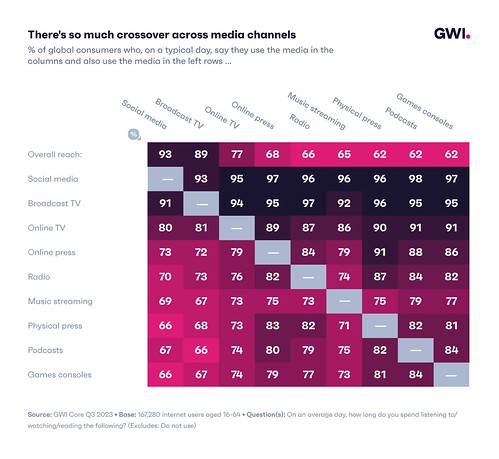
    2023 Global Trends Report by ACROSS Health is a great census of healthcare professional media preferences and insight into omnichannel communications trends for pharmaceutical marketing. It is good reading and indicates that pharma clients who have an excessive efficiency bias and want to go to digital-only customer journeys will be left behind by peers taking a mixed approach.

    Things I have watched. 

    Agent Hamilton – Carl Gustaf Hamilton is a Swedish answer to James Bond or Jack Ryan. Hamilton was the main character in a series of books written by a former investigative journalist, Jan Guillou, who served time in Sweden for exposing illegal intelligence operations. Guillou wrote the first Hamilton book in 1986 and the last one in 2012.

    Blake and Mortimer – if you’re a fan of TinTin, you’ll like Blake and Mortimer as both come from the French -Belgian comic tradition. This cartoon series is based on the adventures of an eminent Scottish scientist and a British military intelligence officer in mid-century Europe. It’s nice light entertainment and I can recommend the graphic novels as well of which there are now 30+ stories including the Before Blake and Mortimer off-shoots. The authors have also wrote other excellent series like XIII.

    Useful tools.

    Audio Hijack 4.3

    Rogue Amoeba’s Audio Hijack has been a mainstay on my Mac for far more years than I care to mention. It was great for everything from recording conference talks to putting together quick and dirty talk tracks that concepting films can be cut too. Version 4.3 features OpenAI’s Whisper transcription software that can cater to transcribing dozens of languages. I have found it better than tools like Otter.ai for me.

    Krisp

    Krisp.ai is a freemium service providing intelligent noise cancellation, call transcripts and meeting notes all in one. It works with Teams, Google Meetup, Slack and Zoom.

    Obsidian

    Just like Evernote back in the day, Obsidian has become a bit of a cult app for those that find it really useful. At its heart, it is a note taking and writing application. It will sync between desktop and mobile devices, but that costs $8/month – which is expensive. I haven’t been using it beyond a quick trial, as I have a well-defined set of tools that I use and Obsidian didn’t really slot in well. But I can appreciate the value of it to others. One thing I would be leery of, if you are moving to Obsidian is the cottage industry in snake oils salespeople hawking the ‘ultimate’ online course for Obsidian. Instead check out Obsidian’s own community pages of courses.

    Todoist

    Todoist is a shareable to do list that places it somewhere between quick and dirty project management and personal productivity. I am giving it a try following a recommendation from a friend. It’s not about whether products like this are good or not, but usually if it fits into your style of working, so your mileage may vary.

    Personal Update.

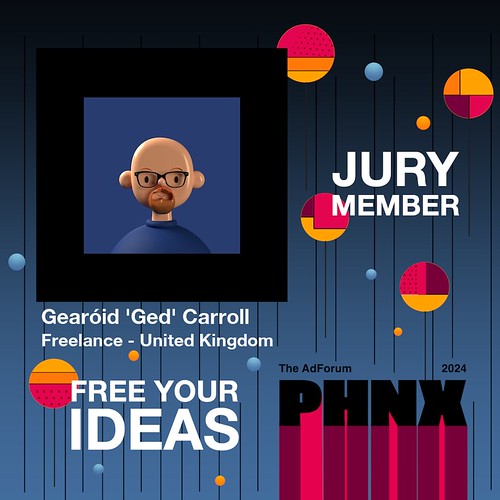
    the adforum phnx 2024 jury badge

    More details on the awards here.

    The sales pitch.

    Now taking bookings for strategic engagements (from the end of April onwards) or discussions on permanent roles. Contact me here.

    More on what I have done to date here.

    bit.ly_gedstrategy

    The End.

    Ok this is the end of my February 2024 newsletter, I hope to see you all back here again in a month. Be excellent to each other.

    Don’t forget to share and subscribe!

    Let me know if you have any recommendations to be featured in forthcoming issues. 

  • January 2024 newsletter – this makes a half dozen

    January 2024 newsletter introduction

    Welcome to my January 2024 newsletter which marks my 6th issue – bringing us to a half dozen issues in total. Here’s a quick video introduction that I recorded with HeyGen.

    Strategic outcomes

    Dozen as a word in the English language comes from the french douzaine – meaning an assembly of 12 things of the same nature. This in turn was derived from roots in Latin. Weirdly enough the use of dozen plunged to a nadir in 1983 and then enjoyed steady growth to reach its most recent peak in 2018.

    The sun rises reluctantly over the horizon every morning, disappearing each afternoon, but that doesn’t mean that inspiration stops. But each day is getting slightly more daylight here in London and in a few months we could be complaining about the heat.

    If you would like a soundtrack for this edition of the newsletter, I can heartily recommend Kizunguzungu (Mr. Turner Extended Version Edit) by Disc-o-lypso.

    New reader?

    If is your first time reading, welcome to my January 2024 newsletter! You can find my regular writings here and more about me here

    Things I’ve written.

    • A very personal (or iconoclastic) review of last year 2023 – that was twenty twenty three
    • Watch Registry – how a confluence of EU regulations and surging crime has driven a new category of online service.
    • Pebble – micro-blogging service Pebble went under in November last year. Here’s what we lost.
    • Loneliness – its impact and some of the solutions that are evolving to address it.
    • Backroom – how one of my photos went around the web and ended up in an online game.
    • Every old idea is new again – a mix of collective amnesia and the less than perfect memory of the web means that old ideas have their time as new creative.

    Books that I have read.

    • Over the new year, I curled up on the sofa with 2034 by Elliot Ackerman and Admiral James Stavridis. Ackerman and Stavridis plot out a political pot boiler about what a future war with China might look like. The realpolitik of the book feels real, the main issue would be the complete passivity of smaller powers like the United Kingdom and France. The rise of India and the fall of China as a global power at the end is an interesting commentary on the current Xi-led government. The book seems to set out to do a few jobs. First and foremost it’s a call to arms about American preparedness (it isn’t prepared). Secondly, it’s a warning about over-relying on technology, over base skills like astral navigation – something that the advertising industry could learn from as we fumble forward across AI, martech and adtech in a time of declining effectiveness. But the book also irritated me and pulled me out of of the story with magical thinking in Chinese technology and having every part of a plane including an ejector seat open to being hacked and disabled. I could imagine car manufacturers leaving their safety systems open, but would have thought that the military would have been more sensible about their safety equipment.
    • How Did Britain Come to This?: A century of systemic failures of governance by Gwen Bevan. How Clement Attlee’s administration solved issues of minimal government in the post-war period and these solutions held up until the early 1970s. How Margaret Thatcher’s solution of markets for everything suffered from market failures over the years. All of which resulted in geography as destiny in terms of social outcomes.
    • Among the Braves: Hope, Struggle, and Exile in the Battle for Hong Kong and the Future of Global Democracy by Shibani Mahtani and Timothy McLaughlin – an interesting portrayal of Hong Kong’s pro-democracy movement from the perspective of foreign journalists in the region. McLaughlin writes for The Atlantic and is based out of Singapore, Mahtani does a similar role for the Washington Post. The whole society movement of the protests is something that comes out in the books and makes me think that the authorities will have a longer term job to keep their illiberal agenda going. But on the flipside the American foreign policy looks weak and ineffective in the face of China. What most surprised me was how the authors uncovered details inside the government and the police force. Probably the most explosive allegation is that the Organised Crime and Triad Bureau of the Hong Kong Police were monitoring the WhatsApp group chat used by multiple rival gangs to organise the attack on Yuen Long train station. There is a large overlap between rural political committees in the Yuen Long area and triads. We know that the police did not prevent it, did nothing about it when it happened and conducted minimal prosecutions. Chief executive Carrie Lam was getting her news from the television rather than intelligence gathered using open source, human intelligence sources and ‘exquisite‘ means. Some members of the government related to mainland affairs seem to have had an indication of what was coming, but there is no evidence that Lam knew.

    Things I have been inspired by.

    Swiss International Airlines, the city of Geneva and the Grand Prix D’Horologerie de Genève did a classic PR stunt in October 2023. A flight crew member supervised by a watchmaker assembled a mechanical watch mid-flight between Geneva and New York at an altitude at 30,000 feet. In the idea you have precision, innovation, expertise, professionalism, quality and skill. A solid fusion of complementary brands, brand planning and creative ideation.

    Unfortunately, the story seems to have been eclipsed by the Israel – HAMAS conflict in the Gaza region. The uncertainty of the news agenda illustrates the weakest point of a campaign relying purely on earned media. 

    Swiss International, GPHG and Genève Tourisme assemble a watch mid-air
    © Genève Tourisme

    Etsy and agency The Orchard nailed gift buying with their spot ‘Dad’. The insight that family members often don’t want gifts and are concerned about clutter or the ‘wrong type’ of gifts is on-point. There is the additional layer of thriftiness that comes from being part of an immigrant family – be they Irish or Asian.

    The idea also had me reflect on the time I spent helping to sort through my late Uncle’s belongings on the family farm back home in Ireland. There were ‘new old stock’ ties still in their packaging and an Insignia aftershave / shower gel gift set from sometime in the early 1990s in his drawers. Stashed there after being gifted, but unneeded.

    Thoughtful gifts are priceless.

    While the ad is aimed at Christmas, I saw it as I thought about my Dad’s birthday. My own parents exhibit the traits of not wanting gifts and thriftiness. But in my case, no Etsy-sleuthing was required however, with a bit of cajoling he knew precisely what he wanted from the Toolstation catalogue. The collector gene runs deep in the Carroll family.

    https://youtu.be/4VI6rgps_Bc?si=pHQpElVLc_KlDecI
    The Orchard for Etsy

    While a lot of London had their out of office on until January 15th, New Balance had their skates on previewing Scorpius, Rose Water and Medusa Azúl variants of the 1906R in association with Action Bronson. The clever thing that they have done is that each of the colour ways have a variation in brightness, appealing to sneaker heads of different temperaments. For me this was more exciting than Louis Vuitton’s collaboration with Timberland also announced this month.

    7-Eleven Hong Kong did one of the first campaigns that merged generative AI techniques with traditional advertising production values including extensive use of green screens and wire work that would have been more at home in the fantasy martial arts films Hong Kong made famous.

    7 Select

    4.5 billion years in an hour. A great way to bring data to life in a way that we wouldn’t otherwise be able to fathom. It also works well as a background for writing late at night as well. It did remind me of Hitchhiker’s Guide to The Galaxy for some reason, and that’s no bad thing. 

    I was looking at the underlying code on one of my flickr photo pages and came across this recruitment advert embedded in the code. I thought it was quite cleverly done in terms of targeting a technical audience.

    Embedded recruitment ad

    A bit of a late find for me, the Computer History Museum held a 2-hour event interviewing key people in the development of the Apple Mac, in order to celebrate the 40th anniversary of its launch. There is so much that can be still learned today from their experience. You can watch it here.

    Finally, Tom Coates shed more light on what we are likely to see platform-wise from a post-Twitter future.

    Things I have watched. 

    It’s cold and dark and I make no apology for my films being unapologetically escapist and and entertaining to try and counterweight the drab conditions.

    Something Wicked This Way ComesSomething Wicked This Way Comes was made in the UK during that many Disney fans describe as the studios ‘dark period’. From 1967 – 1984, the Disney family connection to the business was severed through deaths and a resignation. Film quality declined while shows and theme parks supported the business until Michael Eisner . Something Wicked This Way Comes has a fantastic cast including blaxploitation starlet Pam Grier, Broadway and Hollywood veteran Jason Robards and a young Jonathan Pryce, now better known as David Cartwright, former spook and River Cartwright’s grandfather in Slow Horses. The film is based on a book by Ray Bradbury. The film has a similarly surreal nature to Willy Wonka and The Chocolate Factory.

    I sat and watched Wild PalmsI hadn’t watched it all the way through previously and I found it much more rewarding to watch than similar shows like Twin Peaks. There is that slight dissonance and discomfort you have watching it that reminded me of reading JG Ballard’s works. 

    The Criterion Collection released a sympathetic digital remastering of Frederico Fellini’s La Dolce Vita. With a lot of similar projects the work adds little, but The Criterion Collection are no ordinary publisher and the film needed a lot of work. So much so, that it took donations from Gucci and government bodies to ensure that the work was done to a high standards. The results are right there on screen, the sound has had excessive background noise cleaned up as well. It isn’t excessively loud like the audio on the remaster of Sergio Leone’s crowning achievement Once Upon A Time in the West, but it does benefit from the clarity provided. The films commentary on the hollowness of the media industry is timeless as is its tour of Rome: ancient and modern.

    Michael Fassbender’s Road to Le Mans – Porsche sponsored online film series that goes through Michael Fassbender’s journey to drive the Le Mans 24 hour race.

    I am a huge fan of French police dramas from the 1960s to the present day and was really impressed by Netflix show Blood Coast. It features Olivier Marchal on some of the writing and directing duties. Marchal created Braquo, which ran for three seasons until 2016.

    Not exactly something to watch, but the Hot Money: The New Narcos is an amazing high adrenalin podcast with the Kinahan family and the Dubai Super-cartel at the centre of it all.

    Useful tools.

    ABBYY Business Card Reader.

    ABBYY Business Card Reader allows you to convert business cards into contacts.app entries on your iPhone or iPad – this then syncs with my Mac as part of iCloud services. While I don’t receive as many business cards as I used to, this is still a really useful time-saver.

    WolframAlpha.

    WolframAlpha is a handy shortcut for data points that Statista, WARC etc. doesn’t or won’t have.

    Beeper.

    Beeper is a multi-protocol messaging client. You can have Slack, LinkedIn, iMessage, WhatsApp and Discord all in one client. It works on both Macs and iPhones.

    WaveAI Note taker.

    Wave AI is an app that provides call note taking functionality using speech to text conversation. It is based on a freemium business model. Give it a try to see if it works with your style of working. An alternative to consider is Vienna Scribe, both seem to give better results than otter.ai

    Portable second monitor.

    When working away from the office or home, I have found a second monitor to come in handy. The one I use is from ASUS and comes with a protective cover that doubles as a stand.

    Using generative AI tools

    Principled Instructions Are All You Need for Questioning LLaMA-1/2, GPT-3.5/4 – is an academic paper with tips on how to get the most out of your prompts.

    The sales pitch.

    Now taking bookings for strategic engagements or discussions on permanent roles. Contact me here.

    More on what I have done to date here.

    bit.ly_gedstrategy

    The End.

    Ok this is the end of my January 2024 newsletter, I hope to see you all back here again in a month. Gong hei fat choy for the forthcoming Chinese new year. It will be the year of the dragon on February 10th. 

    Be excellent to each other. Let me know what you think or if you have any recommendations to be featured in forthcoming issues. 
  • Sponsorship + more things

    Sponsorship

    Sports has created a sponsorship bonanza, with women’s sport being a particular beneficiary – Women’s elite sports to generate more than $1 billion in revenue in 2024 | Deloitte UK.

    Stands with Rakuten sponsorship at Europes largest soccer stadium Camp Nou in Barcelona, Spain

    For some brands sponsorships aid in research and product development, motorsport and mountaineering are two sports where this the case. Other sponsorship deals, for instance college athletes and premier league footballers depend on the individuals effect as an influencer as much as their role on pitch. All of these complexities will affect the perception of the sponsorship value and effectiveness. Sponsorship being unmanaged and unmeasured isn’t a new phenomenon. – Sponsorship ‘unmanaged and unmeasured’, WFA warns – The Media Leader. Shirt sponsors are basically dependent on the amount of time on screen. Sponsoring celebrities like Jackie Chan is more about attracting eyeballs to the companies advertising campaigns.

    (Jackie Chan represents a particular problem in this sector of sponsorship because he represented over 12 brands at the same time. From local companies that made game consoles suspiciously similar to Nintendo systems to Japanese multi-nationals Canon and Mitsubishi.)

    Part of this focus on sponsorship measurement might be about the culture change digital advertising created: How the digital revolution led to a greater justification for advertising – The Media Leader. Famously, telecoms executives love of particular sports influenced sponsorship programmes of their companies. Sir Peter Bonfield was a keen sailor and BT sponsored the Global Challenge yacht race series.

    Sir Chris Gent, over at Vodafone was a big cricket fan. The sponsorship would have been difficult to measure as a lot of the impact would have been in cementing existing relationships and facilitating new ones through corporate entertainment. With both, there would be some efforts to demonstrate the relevance of the sponsorship, but it was very much putting the cart before the horse.

    Beauty

    Avon Promotes CMO Kristof Neirynck to CEO

    Consumer behaviour

    Nostalgia is a curse in life and tech. – On my Om

    Culture

    Grateful Dead x Stundenglass Bong | Esquire – yes the Grateful Dead now have an official bong for resale, but the author’s deadhead memories are the thing to read on this article

    Design

    Tektronix’s Ceramic CRT Production And The Building 13 Catacombs | Hackaday

    Energy

    Virgin Atlantic is flying the first passenger plane using 100% alternative fuel from London to New York

    Finance

    This feels structural in nature and implies something is broken in Hong Kong’s capital investment and wealth management sectors: What Hong Kong’s banker malaise signifies | FT

    Health

    Let’s Talk About Obesity Drugs | Out-Of-Pocket – probably the best 101 on the current state of obesity medication as a market sector

    Hong Kong

    Deloitte and KPMG ask staff to use burner phones for Hong Kong trips | FTMoscow Rules in Hong Kong

    Innovation

    Europe finally sets date for Ariane-6 rocket debut – BBC News

    Ideas

    When journalism is emptied of journalism – Nieman Storyboard

    Luxury

    Luxury borrowing from sports apparel and mainstream fashion with its use of NFCs – From Tod’s to Balenciaga, NFC chips are luxury’s secret weapon | Jing Daily

    Louis Vuitton is selling a €6,000 digital mini trunk by Nicolas Ghesquière | Vogue Business – Louis Vuitton is selling a €6,000 digital mini trunk by Nicolas Ghesquière. The next product available to LV’s exclusive group of NFT holders is a mini trunk bag designed by the brand’s women’s artistic director. Only 200 are available, and the physical will land in March.

    Media

    Social media belongs to the creator economy—not users | Fortune – if that’s the case, expect regulation to come in much stronger

    People Are Absolutely Roasting Sports Illustrated’s Ridiculous Excuse for Its AI-Generated Writers | Futurism

    The Hundred-Year Battle for India’s Radio Airwaves | WIREDstate broadcaster All India Radio has 262 radio stations that reach almost every part of India, broadcasting in 23 languages and 146 dialects. There are over 388 private FM stations spread across the biggest and smaller cities – it is easy to forget that there are millions of people who still don’t access online media. And at the other extreme: Global SVOD subs to reach 1.79 billion by 2029 – The Media Leader

    Netflix Gave An Unproven Director $55 Million For A Sci-Fi Series, And He Blew It On Rolls-Royces, Crypto, And Dodgy Stock Bets – surprised Netflix hasn’t optioned a documentary to tell this story

    Online

    Is Argentina the First A.I. Election? – The New York Times

    Security

    War has spread to a sixth domain: the private sector | FT this concern is coming into focus as there is greater awareness of shrinkage in military orientated manufacturing capability: People are realizing that the Arsenal of Democracy is gone | Noah Smith

    A Civil Rights Firestorm Erupts Around a Looming Surveillance Power Grab | WIRED

    L3Harris to sell commercial aviation business for $800 million – Breaking Defense – renewed focus on their security business

    Software

    Magnific AI – I look at this and think of Blade Runner

    the world’s largest distributed LLM training job on TPU v5e | Google Cloud Blog

    2023 CommsIndex: Asia-Pacific Comms Heads Remain Wary Of AI’s Rise | PRovoke Media – clients are also concerned about potential job losses and skills gaps that may result from using generative AI tools to automate their work. The skills gap point doesn’t get sufficient discussion in talks about machine learning and automation

    Style

    Why Jerry Lorenzo and Adidas joined forces to create Fear of God Athletics | Vogue Business

    Deep Dive: Two DTC Brands – 2PM – Allbirds is on life support while ON Running shoes sails ahead

    Taiwan

    Taiwan and the True Sources of Deterrence | Foreign Affairs

    Tools

    Clipdrop – SDXL Turbo – stable diffusion image creation

    Kosmik • For All Mindkind – Pinterest and Pinboard meet Evernote

    The Best Social Media Analytics Tool | Measure Studio – taking a good deal of the drudgery out of social media account reporting