2023 has been an eventful year. I thought it made sense to go back and reflect on everything that has gone on this year. I was inspired to do this after coming across a similar post that I had done for 2005.

Contrary to what much of the tech sector believed just six months earlier, 2023 was not going to be the year of the metaverse. In reality, it never was. Sales of VR devices had dropped in 2022, and the technology was years away from the hype.
It was also going to be a bad year for speculators buying and selling on secondary markets. Previous hot properties like Rolex watches, Porsche 911s and the luxury industry in general dip. Rolex watch prices peaked in 2022 and prices normalised during 2023, despite the watch industry’s efforts to sustain artificial demand. The weakness in luxury markets was mirrored by a weakening of the performance of luxury business. Cryptocurrency saw successful legal proceedings brought by the US government against two of its highest profile industry advocates Sam Bankman-Fried and Changpeng Zhao – both former CEOs of trading platforms FTX and Binance, respectively.
LLMs and experiments in using them to generate a wide range of outputs drove technology trends instead. Amazon was noticeable by its absence from being at the forefront of this trend, despite its Alexa service. FOOH (fake out of home) became a marketing fad as clients didn’t have budget and still wanted to creat viral moments.
From a health perspective 2023 was the year of Semaglutide. Novo Nordisk displaced LVMH in the third quarter to become Europe’s most valuable company. FMCG brands and retailers blame the drug (likely falsely) for impacting sales of certain food categories. WW (the brand formerly known as Weight Watchers) jumps into telehealth to offer the treatment direct to patients. Ozempic, Semaglutide or Wegovy were mentioned most days in the media.
January 2023
The rail strikes that had disrupted travel in 2022, continued into 2023.
The Consumer Electronics Show (CES) kicks off 2023. Themes included narrow throw projectors to replace large panel TV screens. The Displace wireless TV looked to turn the large screen into a giant tablet device – as a gimmick it caught a good deal of media attention.
CES had new areas that weren’t given their own focus just a few years ago around the Internet of Things:
- Food technology
- Health technology
- Sports technology
Harmon showcased a modular solution to car-based computers, allowing an upgrade path. Currently cars might be based on software and processors that are over a decade old. The Wall Street Journal pointed out the forthcoming ‘gadget gap’ due to a drop off in venture capital funding, resulting in less future start-ups.
Apple launches its M2, M2 Pro and M2 Max series of processors
Brand planning pioneer Jeremy Bullmore dies. Later on in the year so does the last vestiges of J Walter Thompson – the agency where Bullmore had his career.
China ended its COVID-19 related travel restrictions as the world moved to managing the virus as endemic rather than epidemic. COVID ripped through the Chinese population with an estimated 90 percent infection rate. Lunar year related travel had been restricted in previous years under the government’s zero COVID approach. At the time there were great hopes of an economic resurgence, but the Rhodium Group pointed out that progress would be stymied by Chinese corporate and local government debt. In the face of government interference, China’s most famous entrepreneur Jack Ma cedes control of financial services business Ant Group.
I read Adam Fisher’s oral history of Silicon Valley, Valley of Genius. The reality was that technology leaders were viewed in a more complex light during 2023 and the book title was indicative of the hubris infested in many Silicon Valley leaders. The FT highlighted how it felt software leaders were failing in the physical realm. Just writing that sentence made me think of big tech executives as JRR Tolkien’s ring wraiths. IBM loses its historic top spot in US patent filings and Microsoft invests in OpenAI with a view to integrate ChatGPT into their products and services.
Mastodon the federated answer to gets a hard pass from the Financial Times after trying to run their own instance. It was a minefield of legal and regulatory issues.
The US department of justice is investigating Binance – a crypto currency exchange. Already in January 2023, the ongoing legacy of the 2019 protests in Hong Kong carries on as the Hong Kong chief executive is given the right to ban Jimmy Lai’s British barrister from representing him agains the National Security Law charges that he will face. Talking of authoritarian regimes, the UK retail sector embraces facial recognition to try and combat shop lifting and violent crime in their stores.
Huawei patents EUV lithography tools used for making microchips with pathways below 10nm in size. This news was greeted with skepticism. Later on in the year Huawei launches a processor that might have been made using this technique. This raises major questions about proliferation of critical technology.
Meanwhile other Chinese companies look to launder their Chinese identity to be more acceptable for their foreign customer base.
Professor Scott Galloway coins the term ‘Patagonia vest recession‘ to encapsulate how knowledge economy jobs have been impacted more than blue collar roles in late 2022 onwards. I write a post on it and it turns out to be the best performing blog post on my site this year.
Asian communities celebrate the lunar new year (it’s the year of the rabbit).
Work-wise I was enmeshed in a number of marketing and innovation projects for GSK Vaccines.
At the end of the month, Adaline Lau passed away. Adaline was a friend that I made in Hong Kong.

Adaline had been living in Singapore and had moved back to Hong Kong. At the time I first met her, she worked reporting on the online media and advertising worlds for ClickZ as their Asian bureau editor.
Prior ClickZ, Adaline had written at Marketing Magazine and The Singapore Marketer. Outside of her professional writing, Adaline was an avid blogger and photographer, constantly seeking out and documenting vegetarian restaurants wherever she travelled. For many years, Adaline’s Doufu Mafia blog, Flickr and Instagram account was the first place I pointed people to, when they asked about vegetarian or vegan fayre.
February 2023
The issue of the day at the start of February 2023 was Chinese spy balloons with a debate that raged for months about whether the balloons were surveilling sensitive military sites or not. The balloon in question had a payload that was 30 feet long.
If the balloon had made it to the UK, it would have found very little to observe as much of the civil service, the NHS and railway unions were on strike.
A freight train accident in Ohio inspires a barrage of online misinformation, a good deal of it happening via Chinese sources. The west and China might be locked in a cold war, but the information war is raging hot.
In Japanese media circles, the last print issue of Popteen magazine marks the transition towards digital media for consumer magazines. Adidas continues its annus horriblis into the early part of 2023 with write downs on both Yeezy and Ivy Park collaborations with Kanye West and Beyonce respectively. Drop sales later on in the year of Yeezy designs help bail Adidas out.
Online NORA (no real answer) or knowledge search is expected to become a thing as Microsoft provides ChatGPT powered search results. The results are a bit underwhelming. The Chinese government bans its own technology companies from providing services based on ChatGPT.
The EU moves to ban the sale of new petrol and diesel-powered cars in 2035, there has been a lot of reflection about whether this is the right thing as Chinese government supported electric vehicle companies eviscerate Europe’s car manufacturers.
Wegovy was launched in the US back in 2021, and by the beginning of 2023, the international discussion about obesity and weight loss management had gone global. Knowledge of the drug amongst patients and the general public spread far faster than the ability to prescribe it as a medicine.
Pharrell Williams signs on as creative director for Louis Vuitton’s men’s collection. Williams has already worked on collections for Billionaire Boys Club and adidas. His appointment reinforces the ongoing links between premium streetwear and luxury. Meanwhile long time technology veteran Susan Wojcicki steps down from the CEO role at YouTube.

TV documentary maker and journalist Bao Choy launches The Collective HK, a new news media outlet. The increasing authoritarian nature of the Hong Kong authorities has seen the closure of several media outlets who had a different perspective to the authorities. Her decision shows immense bravery. The Hong Kong government launches its ‘Hello Hong Kong’ tourism campaign which was heavily criticised.
South Park touches a British cultural live wire with their criticism of Prince Harry and Meghan Markle in the series episode ‘Worldwide Privacy Tour‘. My Mam and Dad knew far too much about this episode of South Park, it was unnerving.
Nissan America launches a four-hour advert for the Nissan Ariya electric car. It owes a lot to the Lofi Girl YouTube channel.
US television and broadband provider Dish Network gets taken offline by unknown hackers. It is an unprecedented infrastructure attack.
Some UK retailers ration sales of fresh fruit and vegetables due to disrupted supply chains on products imported from southern Europe and north Africa.
This month marked the first anniversary of the Russian invasion in Ukraine and the 50th anniversary of Pink Floyd’s Dark Side Of The Moon album.
March 2023
Silicon Valley pioneer and Intel co-founder Gordon Moore dies. Xi Jinping is appointed as the leader of China for a third term. This was considered to be a measure of how much power Mr Xi has consolidated around himself. China mediates a detente of sorts between the Kingdom of Saudi Arabia and Iran.
US regional bank SVB (Silicon Valley Bank) goes bankrupt dizzyingly fast. Concern about smaller banks ripples throughout the world. Switzerland forces UBS to takeover Credit Suisse to prevent a similar crisis. HSBC picks up SVBs European business catering to start-ups and US technology companies with European offices.
Microsoft shuts down its VR based social network Altspace VR. Altspace has a small engaged and passionate community, but it was all far too small to make a difference to Microsoft as it pivoted to LLM-based artificial intelligence. Open AI launches Chat GPT4, technology pundits and the advertising world lose their shit. Later on in the month Google opens early access to Bard – a ChatGPT competitor which receives much less publicity
The Ford Motor Company patents a particular use case for autonomous vehicles, the ability to self-repossess itself if the owner misses their finance payments. The Chinese government detains members of due diligence research firm The Mintz Group. The more opaque China becomes, the less tenable it becomes to conduct work there, do business with Chinese companies or invest in Chinese companies and the Chinese economy.
In adland, my friend Iain Tait launches a new agency called Food. An academic research paper shows that negativity drives online news consumption. This has important implications, calling into question ad-funded online news media and social platforms used to consume online news.
New York’s iconic I love NY tourism campaign gets an unnecessary makeover to We love NYC. It’s unnecessary and the typographic design is an abomination. Luxury car maker Ferrari gets hacked and its customer data gets leaked online.
In a move that anticipates more office time in the hybrid work mix. Armani advertises bespoke suits and pushes a return to the office.

Adidas’ relationship with Beyoncé finishes. Ivy Park had underwhelmed in its performance, making less than 25 percent of its projected revenue. In China, women who had fallen in love with virtual characters during COVID arrange in real life meet-ups with cos-playing analogues.
On a personal note, I had been using the Yahoo! platform including Yahoo! Mail for 25 years. I had forgotten this fact until Yahoo! emailed me to let me know.
April 2023
Chinese online marketplace app Temu launches in Europe and the UK, seven months after its US launch. It heavily features online advertising across social platforms like Instagram and Facebook. Like Wish it is the usual mix of scam listings, damaged and or late deliveries, incorrect orders and no customer service.
Amazon closes the Book Depository. The service was closed down with just three weeks notice to customers and staff. It seemed a world away from when Amazon had bought the online book store back in 2011. I will miss it. It was a life saver when I lived in Hong Kong due to its free global shipping. It was also a place that I used for gift shopping, sending items to friends based abroad.
Audemars Piguet looks to address rampant watch crime by replacing new watches that are stolen during the first year of ownership. This is a first for the luxury industry. De-influencing – a negative trend for brands used to social media influencers as boosters became a concern for industry marketers who had doubled down on influence as marketing pixie dust. De-influencing is when an influencer provides a negative review of a brand that they don’t like. In luxury beauty L’Oreal buys Aesop to bolster its luxury portfolio. The latest thing in luxury travel is a good nights sleep, with sleep tourism becoming a thing.
Telehealth startup Ro, promotes its ‘Body Program‘ service to Americans. The service prescribes and ships Wegovy the obesity and weight management medicine direct to patients.
Bud Light’s influencer marketing activity with transgender social media personality Dylan Mulvaney; sparks a boycott that sees sales drop by over 20 percent. It acts as a catalyst for a bigger discussion on the merits of brand purpose in marketing circles.
Cloud phone service 3CX gets hacked, leaving lots of large corporates vulnerable to hacking. And in Australia, satellite failures cripple GPS enabled automation on tractors. This is important for sowing crops like wheat and barley. The feature allows the farmer to do the process much more efficiently.
The modern world as we know it exists largely due to the Xerox corporately funded research centre in Palo Alto. Known as Xerox PARC had originally financed it to be ready for future innovation that would disrupt their existing business. In the end they weren’t ready. Innovation continues there to this day, but Xerox but handed over PARC to the SRI International. SRI conducts research and development on behalf of US government departments and companies across a wide range of disciplines. SRI had been where Doug Engelbart had done much of his key work.
Damien Roach, aka patten releases Mirage.FM – the first album made purely with generative AI created sounds. It sits somewhere between early Reese or Juan Atkin electronic tracks and the layered production of The Avalanches. 7-Eleven Hong Kong uses generative AI created backdrops for their TV and video ads supporting their 7-Select food range.
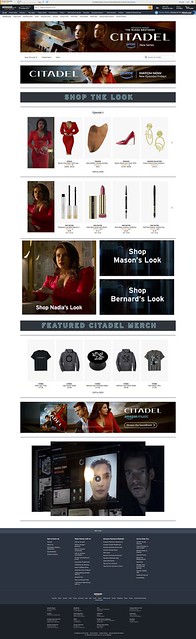
The Russo Brothers launch Citadel – a series on Amazon Prime Video. The show isn’t my cup of tea, but what was notable about it, was the degree of commerce integration. You could buy close to the same outfits the characters wore on screen.
At work, our agency teamed up with online plant seller Plant Drop and researchers from Oxford University to promote the wellbeing and detoxifying nature of house plants. The government shuts down the NHS COVID-19 tracking app as usage had declined.
A product giveaway went wrong for BMW. Not necessarily that big an issue, except this was in China at the Shanghai auto show. The brand had been giving out ice creams to stand attendees. They seem to have ran low and kept the ice creams strictly for foreign attendees. Chinese netizens, ever vigilant for anything they can construe as a slight went wild online. Meanwhile, the Milan Furniture Fair is called out for an exhibition of racist glass sculptures from the 1920s.
May 2023
The WHO had downgraded COVID-19 from its global health emergency.
“This virus is here to stay. It is still killing, and it’s still changing,”
Tedros Adhanom Ghebreyesus, director general, WHO (World Health Organisation)
The regional bank crisis continues. First Republic Bank collapses and gets acquired by JP Morgan Chase. Unlike SVB, the international impact is muted. Part of this is down to First Republic being a true regional bank, whereas SVB had an international footprint that followed its technology client base around the world.
Google demonstrates Bard, a ChatGPT analogue – with a heavy focus on generating software code at Google I/O 2023 – their version of Apple’s WWDC (worldwide developer conference).
Klick Health published research showing that ChatGPT demonstrated 10x more empathy than medical professionals. Meanwhile, WPP announces a partnership with Nvidia to use generative AI in advertising.
Disney continued its trend of poor performance in the box office with the live action adaptation of The Little Mermaid, it was particularly badly received in Asian markets. In the west, views were divided based on how important the viewer thought fidelity to the original films casting was important.
Hublot took the movement in luxury towards a circular economy a little too seriously with a limited edition watch made from recycled Nespresso pods.
The FT’s Cristina Criddle lifts the lid on how Bytedance had accessed her phone through the TikTok app and surveilled her.
June 2023
If there was a word of the month for June 2023, it would be decivilisation. President Macron used the term to encapsulate the widespread civil unrest and radical political action ripping through France in a closed door session with experts. The phrase was leaked and the rest is history. Decivilisation isn’t only a French phenomenon, in New York the beleaguered police department went after car manufacturers rather than car thieves.
Apple unveils its Vision Pro goggles. You won’t be able to buy them in 2023, but Apple wanted to get out its software development kit out to have developers come up with potential killer apps. Apple sought to avoid the traps of the metaverse and comparisons to mixed reality devices with its ‘spatial computing’ concept. Alphabet scraps its next generation of augmented reality (AR) glasses, but continues to develop software for AR devices.
German engineering manufacturer Rheinmetall puts a smart factory in a shipping container, allowing spare parts to be manufactured using additive manufacturing closer to where the parts are needed. There is a clear need in the Ukraine invasion battlefield.
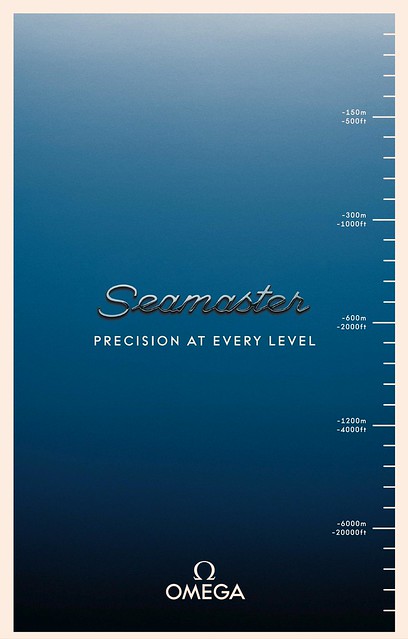
A submersible designed to take tourists to the bottom of the ocean implodes. The Ocean Gate Titan was taking passengers to visit the wreck of the Titanic. Omega chooses to launch the following teaser ad campaign at an inopportune moment.
The Hong Kong government tries to spur consumer consumption with a campaign called ‘Happy Hong Kong‘ – a key element being a series of discounts at several local businesses. The government also sponsors the floating Double Ducks temporary installation by Florentijn Hofman in Victoria Harbour. One duck deflates in the heat. Hofman had previously exhibited one duck in the harbour in 2013.
Disney’s woes continued into June with the commercial failure of Pixar film Elemental.
In advertising, GroupM forecasts low growth in media spend. Meanwhile luxury conglomerate Kering buys British fragrance house Creed.
July 2023
If decivilisation was June’s word of the month, July 2023 would be represented by the term ‘doom loop’. Doom loop hit its zeitgeist as international media including El Pais and the Financial Times discussed multiple problems that are plaguing San Francisco. San Francisco is just the canary in the coal mine, with mayor Eric Adams seeing similar challenges just a couple of months later.
Nintendo launches Pokémon Sleep – a gamified sleep tracker with Tamagotchi-type care requirements. Years of news coverage has been highlighting how insufficient sleep of Japanese workers and students has been harming their health and the economy. Twitter rival Threads is launched by Meta. It joins T2/Pebble, BlueSky Social, Mastodon and Post.news.
The FIFA Women’s World Cup is held in Australia, brands get behind it and the public gets to see great football on the pitch. This sparks a discussion about sports media budgets and football as a business.
Wild fires across Greece disrupt various holiday destinations, just as leisure travel hits its stride post-COVID. July would be eventually found to be the hottest July on record around the world.
Barbeheimer – the act of going to watch Barbie and Oppenheimer one after the other at the cinema becomes a cultural moment. The movies are so different, there contrasting nature of the films, together with the post-COVID novelty of getting back into the cinema creates a box office chimera. In Japan, Barbeheimer was viewed negatively trivialising the crime against humanity inflicted on civilians in both Hiroshima and Nagasaki.
In Hong Kong, McDonald’s Restaurants hold an art exhibition in conjunction with Kevin Poon to celebrate 40 years of the golden arches in the city.
Toyota focuses on solid state battery technology alongside its work on hydrogen fuel cell-powered vehicles. Dyson’s abortive electric car project failed partly because it was unable to source solid state batteries. Meanwhile, a Reuters investigation found that Tesla cars were designed to lie about their range to their drivers.
August 2023
August felt like the world was on fire. The UK was in the middle of a heatwave. The news had coverage of wild fires in Tenerife, Greece and Canada. The smoke from forest fires in the Northwest Territories of Canada wrapped New York in choking smog. I worried about extended family in Toronto.
The word of the month is gatekeeping – meaning to keep earned knowledge to yourself, such a personal favourite restaurant or life hack.
Wiko stores indicates intent to file for bankruptcy and Clinton’s Cards closed a fifth of their shops. It isn’t only bricks-and-mortar retailers having problems, luxury e-tailer Farfetch closed down its beauty business. Meanwhile Rolex buys international watch retailer Bucherer, though their plans for the group aren’t clear and fire a good deal of speculation.
China’s largest property developer Country Garden defaults on bond debt. Country Garden has been better managed than Evergrande and this shows how systemic problems are in the China property market.
Google has one of the biggest changes that I can remember in its UK management structure; the rationale isn’t immediately apparent. Speculation starts on Meta’s microblogging platform Threads after usage drops off. OpenAI, the company who created ChatGPT is burning through $700,000 a day to run just one of their services with no clear path to profitability.
The APG publish their results of their annual skills survey. Planners are required to have a ridiculously large set of skills, data and technology aspects were considered to be under-estimated.
In a move that feels more like it should have been done in 2020, PayPal launches its own Stablecoin pegged to the US dollar.
I launch a monthly newsletter published on this blog and on LinkedIn.
September 2023
Temperatures at the beginning of September went as high as 32 celsius. Stonegate who own the Slug and Lettuce chain of bars introduce ‘dynamic‘ aka surge pricing at the evening and during the weekend.
Following events like the Bud Light boycott, a corresponding ‘anti woke economy‘ is emerging in the US to cater for socially conservative leaning audiences.
The media and advertising sector continue to think that retail media will be the breakout channel for 2023. Meta stops supporting media on its platforms in Europe and faces a backlash from publishers and politicians. Rupert Murdoch announces his retirement and puts the family succession plan in place.
Iconic computer game series Myst celebrates its 30th anniversary. Apple’s Wanderlust event sees new evolutions of its iPhone range and Apple Watch. Meanwhile IDC predicts that global smartphone sales will hit their lowest point in a decade, indicating market maturity and saturation. The UK walks back an attempt to gain access to encrypted messaging services like Signal, iMessage and WhatsApp. Technology vendors had threatened to pull out of the UK rather than attempt to comply with the proposed British regulations. Malcolm Penn’s Future Horizons updated their forecast for the semiconductor industry, predicting a return to growth. Iran’s religious leaders use artificial intelligence to issue fatwas.
Toyota announces plans for mass production of solid state batteries for their vehicles. Production is slated to start in 2027.
Russell Brand faces a criminal investigation, allegations including sexual assault, stalking and harassment. The media don’t bother reflecting on how the had acted as an enabler of Brand’s conduct over the years. Brand wasn’t the only one in trouble, US casino brands MGM Resorts and Caesars suffer from cybersecurity incidents that force the shutdown of their computer systems.
Adidas’ Adizero Adios Pro Evo 1 are running shoes designed to last just one race. They cost $500 a pair.
October 2023
Qualcomm launches a series of processors designed to be used in personal computers. Their performance is supposed to be superior to Apple’s M2 family of processors launched back in January. A few days later Apple launches its M3 family of processors.
Conflict breaks out on the Gaza strip with HAMAS taking hundreds of hostages and killing hundreds more. The event fractures progressive political support throughout the world.
DeBeers resurrects their ‘A Diamond is Forever’ marketing campaign to try and arrest declining sales in both China and America. Studio Ghibli’s The Boy & The Heron has its UK premiere at the London Film Festival. It goes on UK and US general release in December.
The Rugby World Cup is in full swing, but sponsor luxury watch brand Tudor is wrapped up in a dispute with the tournament’s referees over its role as official timekeeper.
LVMH sees a 7 percent single day drop in share price, leading other luxury groups decline in value. Much of this decline is considered to be due to the perceived end to a golden age of luxury good consumption during the 2020s. Time will tell if this marks the luxury sector’s equivalent of the dot com bust.
A Vogue Business research report finds that the fashion industry is still failing on size inclusivity. Meanwhile Nike collaborates with Dove on girl’s body confidence due to the confluence of their brand purpose and the realisation that a combined effort would be beneficial.
Sales of electric cars decline year-on-year in the UK as vehicles don’t meet consumer needs in terms of range and pricing. Retail sales have hit a two year low; implying a broader cyclical downturn.
Intelligence chiefs warn western technology companies about an uptake in Chinese attempts at industrial espionage.
My alma mater Concentric gets acquired by Accenture Song from marketing group Stagwell. TV advertising costs have increased, but there is considerable debate on the degree of the increase. Meanwhile President Biden unveils an executive order to try and provide a regulatory framework for artificial intelligence development and distribution.
November 2023
The month starts with the closure of micro-blogging platform Pebble. Almost a year to the day of the bankruptcy of cryptocurrency exchange FTX, Sam Bankman Fried is found guilty of criminal charges including fraud. Russian volcano Klyuchevskaya Sopka erupts, while it was largely ignored by the media, the eruption disrupts trans-Pacific flights and air freight, affecting air routes to Korea and Japan in particular.
The Institute of Practitioners in Advertising (IPA) and ISBA announce their principles on the use of generative AI in advertising.
The UK hosts 2023 Artificial Intelligence Safety Summit – it probably more important in spurring a direction rather than any ‘hard outcomes’. Despite the media coverage, most of the general public didn’t care. It won’t have burnished the reputation of prime minister Rishi Sunak and his interview with Elon Musk is particularly toe-curling.
The interview is part of Musk’s launch plan for Grok – an LLM-based chat bot to compete with OpenAI’s ChatGPT and Google’s Bard.
Disney+ is to add a ‘with ads‘ subscription option.
Gallup withdraws from China as the communist government closes the country off from the west. The South China Morning Post – historically Hong Kong’s paper of record celebrates its 120th anniversary on November 6, 2023. The English language paper is still important for luxury brand advertisers, alongside the premium end of the food service and beverage sector. How long that will remain the case is open to debate as Hong Kong looks to replace expat talent with mainland Chinese? Hong Kong still has the potential to surprise with its hosting of the 2023 Gay Games. This was the first time that they had been hosted in Asia.
The China Project – a media business of informative podcasts, news and events closes abruptly on the same day as the SCMP 120th anniversary – the timing was pure coincidence. Kaiser Kuo and Jeremy Goldkorn interviewed a plurality of opinions and perspectives on all aspects of China. What did join the SCMP and The China Project was that their respective founders shared a similar vision. As the SCMP founders put it in the first edition of the newspaper:
‘tell the truth for the good of humanity’.
South China Morning Post editorial Friday November 6, 1903
Eurasia Group subsidiary, GZero Media ran a survey of attendees at the 2023 Paris Peace Forum about the state of democracy around the world. Over three quarters of participants surveyed were of the opinion that democratic progress was going backwards.

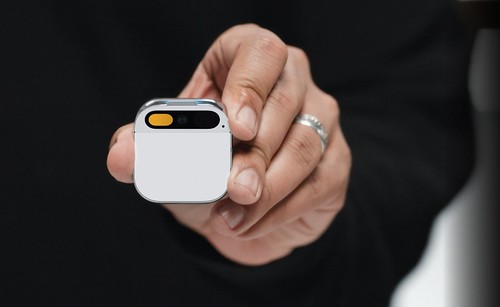
Humane launches their AI pin. It’s an interesting mix of ideas that represents a challenge to both smartphones ‘pictures under glass’ and AR goggles paradigm, but the use case for the AI pin isn’t apparent at launch.
Russian cyber crime outfit LockBit who managed to affect the Royal Mail’s IT systems in January, net two big whales: legal firm Allen & Overy and China’s largest bank by deposits ICBC. The ICBC infection is supposed to only affect the systems of its New York office. Given the symbiotic relationship that groups like this have with arms of the Russian intelligence services, it’s surprising that they didn’t back away from the ICBC infection.
ICBC is a state-owned bank, in Chinese terms this is like throwing a petrol bomb at a Chinese embassy. Changpeng Zhao, CEO of cryptocurrency platform Binance steps down over money laundering controls and could do prison time.
LinkedIn passes 1 billion registered users. WeWork files for bankruptcy, weirdly the company got additional funding from SoftBank just days before going under. SoftBank lost $16 billion from its investments and loans to WeWork. Meta and Amazon team up to reduce purchase friction between Meta advertising for items on Amazon marketplace. A new in-app experience provides seamless shopping.
Call of Duty: Modern Warfare III launches to a worldwide marketing blitz, just in time for the Black Friday consumer fest and Christmas shopping for middle-aged Dad gamers.
Eli Lilly has its obesity treatment Zepbound approved by US regulator, the FDA and the UK’s MRHA. The efficacy of the treatment and Eli Lilly’s scale from marketing to operations represent serious competition for Novo Nordisk’s portfolio. (Disclosure: in a past role I worked on global advertising creative campaigns for Novo Nordisk’s obesity products). Expect these medicines to dominate the consumer and media zeitgeist similar to Prozac or Viagra during their respective heydays.
YouTube launches a policy on AI-generated or ‘synthetic content’ as they called it. AI is already used widely in many content videos to provide a consistent narrator experience, such as King Clarence’s inner voice on the Jimmy & Clarence channel which uses Siri. What’s less clear from the policy is how YouTube will detect creators who don’t comply with their rules.
I got to spend time at the FT Future of AI conference, great to see ‘danr‘ as Yahoos knew him on stage. While the complexity of trip planning screams out as an AI use case, the solutions introduced by travel sites aren’t great. Even the Booking.com CEO admitted it to Axios. Sam Altman leaves and returns to OpenAI – the not for profit / ethical control of the business in tatters.
UK inflation drops to 4.6% as economic growth tends towards zero. WHO posts statement on undiagnosed respiratory illnesses breaking out across northern China.
Leica launches the first camera to support the C2PA standard which ‘vouches’ for the integrity of photography and considered as a way of helping authoritative sources to not publish misinformation.

Berkshire Hathaway‘s Charlie Munger dies just shy of his 100th birthday. Henry Kissinger managed to make it to a century, but many people will remember it as the day Shane Magowan left us.
December 2023
If COP 28 had been an instalment of a film franchise, rather than the UN Conference of the Parties of the UNFCCC, it would have been given a sub-heading of Oil Strikes Back? Ipsos’ Almanac highlights the consumer concerns about the latest generation of artificial intelligence models, the polycrisis, and the advertising keeps failing in numerous aspects of diversity.
The UK high street took another low-key knock, Adrian’s Records – famous to record collectors around the world (and cost-conscious indie music fans of a certain age) shut their high street store. The business is still unwinding their stock via direct sales to the record retail trade and both eBay and Amazon marketplace.
This is more down to the fact that owners Adrian Rondeau and Richard Burke are retiring. Adrian had been running the shop since 1969.
Walmart launches Add to Heart; a short form video series that allows the audience to shop-the-look as they watch. This will run on Roku, TikTok and YouTube. Of course, this is only 18 years after Girlswalker’s Tokyo Girls Collection have been doing it…
Robinhood, abandoned an effort to launch in the UK 3 years ago, it came back at the beginning of December with a waiting list. By comparison, fans of Grand Theft Auto will have to wait until some time in 2025 for the next instalment to drop. The trailer set in contemporary Florida has distinct synthwave vibes.
Games Workshop has partnered with Amazon to bring Warhammer to life. Probably a smart move given how Amazon has sympathetically developed Lee Childs’ Jack Reacher series and Michael Connolly’s Bosch books.
McDonalds delves back into their marketing archive to inspire a new format of restaurant: Cosmcs. They’re probably hope it memes like the Grimace shakes during the summer. Travis Scott’s Cactus Jack has gone from partnerships with McDonalds and Nike to hitting its acme with Audemars Piguet on a set of 200 highly customised Royal Oak watches. They are already on the secondary market for $500,000 within a week of its launch. It’s a bit of a risk, as Scott’s had moments just as controversial as Kanye West, representing brand reputational risk.
Unilever investigated in the UK by CMA over its green claims. Having been on the inside, I can say that the green efforts are genuine. They also involve trade-offs, so refill plastic sachets would have a lower carbon footprint for transport, but they’re still plastic. Being second-guessed by regulators adds to the complexity.
Former proprietor of the Hong Kong Apple Daily newspaper and British citizen Jimmy Lai goes on trial in a case that is expected to take about 80 days to be heard. Lai’s case is the most prominent trial under the Law of the People’s Republic of China on Safeguarding National Security in the Hong Kong Special Administrative Region. Lai is charged with ‘collusion with foreign forces’ and sedition.
Hong Kong Police announced bounties against five people overseas on on suspicion of inciting secession or colluding with foreign forces. This includes the founder of Hongkongers in Britain, and a US national working for World Liberty Congress.
With courtroom drama taking up much of the oxygen in Hong Kong, it’s not surprising that the top grossing domestic film in 2023 was courtroom comedy drama A Guilty Conscience – which grossed five times more than any other Hong Kong film in the box office this year – and the highest grossing Hong Kong or Chinese film in city to date, surpassing the previous record set in 2022.
The French Competition Authority €91 million ($100 million) fine for Rolex France restricting authorised dealers from selling watches online isn’t likely to benefit multi-brand dealers and instead more likely to drive vertical integration. Vertical integration was partly to blame for the fire sale of Farfetch to Korean online services firm Coupang.
From an adidas perspective, we’re now in a post-Yeezy & post-Ivy Park world. It launched a joint venture with fashion house Fear of God as a long term collaboration a la Y-3 with Yohji Yamamoto. They indicated that they want to move away from the hype drop model that fuels secondary markets (StockX, GOAT etc.) and build something ‘more sustained’.
While we’re on the subject of hype, it started for Christmas adverts started before Hallowe’en. The advertising industry needed a good news and the 4.8% lift (year on year) in UK advertising spend for Q4 was a sorely needed top-up for the sector. This year’s tone through the ads is more downbeat reflecting a subdued economic environment. Loath as I am to nominate one effort over another during the Christmas season; Uncommon Studios for JD Sports ‘a bag for life’ was an acknowledgement of how iconic the draw string bag is, and has been since before Liquid’s Sweet Harmony first rang out. Liquid’s Eamon (aka Ame) works making music for advertising and TV for Clerkenwell Sound Collective while releasing tracks under the Liquid name and Shane (aka Model) is still making music. Perhaps it’s better that they didn’t show how messed up your kicks will be after dancing all night in a basement or industrial unit.
On a more serious note, the small details in this got me and gave me goosebumps; in particular the ever-present sirens of urban Britain in the background at the end. It’s not ‘Christmas’ – it’s a working class Christmas. For me, it’s timeless and adds yet more grist to the mill on thinking about things in terms of life stages rather than ‘generations’ which hides what unites us and creates false divisions.
Midjourney version 6 is released, so by the time St Stephen’s Day (Boxing Day for UK people) or December 26th for the rest of the world – my LinkedIn feed became flooded with images people were prompting whilst bored post-turkey dinner.
Meanwhile WHSmith, quietly rolls out a rebrand for its shop signage with WHS. I didn’t think I would be writing about a rebrand this late in the year, but it makes sense being able to get shop fitters in during the Christmas holiday.
The new sans serif font and blue background parallelogram confuses the media and consumers due to its resemblance to the NHS logo. While the more design conscious among us may realise that the NHS uses italics to suggest movement, whereas WHSmith uses the box instead, some consumers won’t see the nuance.
At the time of writing, I don’t know what job the rebrand was designed to do. I have a hypothesis that the semiotics of the design were to imply that the stationery shop is a valued service to its customers (like the NHS). The consumer confusion is understandable, given that many town centres had NHS-branded COVID vaccination centres. This is part of a wider change at WHSmith; which is increasingly dependent on its travel terminus business in airports and train stations in the UK, Europe and the US.
The rebrand hadn’t been extended to their online presence so far. If the storefront signage has been confusing, extending the rebrand to mobile web bookmarks and mobile app icons would likely cause even more confusion. Might there be enough time to consider bringing back the WHSmith ‘cube’ icon?
I will finish up on Google’s year in search, though having done these lists for Yahoo! Search in the past, I have a good idea of how sanitised these trends reports are.
The sales pitch
Now taking bookings for strategic engagements or discussions on permanent roles. Contact me here.
More on what I have done to date here.