Category: luxury | 奢華 | 사치 | 贅沢

Over the space of 20 years, luxury changed enormously. The Japanese had been a set of new consumers for luxury, but in terms of numbers they hadn’t eclipsed the US as the biggest market for luxury.

China’s ascent into the WTO (World Trade Organisation) made a lot of business people and politicians a lot richer. China challenged the US in terms of luxury market size. On their rise, Chinese consumers changed a lot in their sophistication as they educated themselves on luxury consumption.

These new consumers picked up new traits such as wine drinking. This also meant that luxury goods became new asset classes as Chinese money looked to acquire only the best. Chinese culture in turn impacted luxury design. Chinese new year became more important than Christmas.

Then there was the second generation money. Young rather than old consumers. Consumers who were looking for something less formal, either because they didn’t wear anything but streetwear or they worked in the creative classes rather than the traditional professions and high finance.

The industry had traditionally avoided rap artists and R&B singers, now Jay Z and Beyonce are the face of Tiffanys and Fendi had collaborated with Rihanna.

They no longer wanted to have to wear a jacket and tie to have afternoon tea at the Mandarin. They took an eclectic look more attuned to the Buffalo Collective than Vogue Italia.

You had hybridisation with the street to create a new category of luxe streetwear in a way that also owes a debt to football casual terrace wear and the pain.

Now you have Zegna badge engineering approach shoes from alpine brand La Sportiva and Prada has done a similar thing with adidas’ iconic Stan Smith tennis shoes. Balenciaga with their Speed Sock looks like a mix between Nike’s flyknit football boots and the Nike Footscape sole.

As I have written elsewhere on this blog:

Luxury has traditionally reflected status. Goods of a superior nature that the ‘wrong sort’ of people would never be able to afford. Luxury then became a symbol that you’d made it. In Asian markets, particularly China, luxury became a tool. People gifted luxury products to make relationships work better. It also signified that you are the kind of successful business person that partners could trust. You started to see factory managers with Gucci man bags and premium golfwear to signal their success. Then when the scions of these business people and figures in authority were adults, luxury has become about premium self expression.

  • IT director powers up + more stuff

    The IT director is seeing a return to power and its thanks to the power of hackers and AI. The smartphone, the resurgence of Apple and SaaS saw IT decisions become more organic thanks to increased access to online services that provided better features than traditional enterprise software companies and the rise of knowledge working. IT teams found management of mobile devices onerous and faced hostile users.

    TSB -  8th Chief Technology Officers (CTO) Meeting
    Michiko Fukahori of the Japanese National Institute of Information and Communications Technology at ITU TSB – 8th Chief Technology Officers (CTO) Meeting

    This meant that the IT director became less important in software marketing. A decade ago marketing had pivoted to a bottom up approach of ‘land and expand’. This drove the sales of Slack, Monday.com and MongoDB.

    Two things impacted this bottom up approach to enterprise innovation:

    • Cybercrime: ransomware and supply chain attacks. Both are not new, ransomware can be traced back to 1989, with malware known as the AIDS trojan (this had much cultural resonance back then as a name). Supply chain attacks started happening in the 2010s with the Target data breach and by 2011, US politicians were considering it a security issue. Over COVID with the rise of remote working, the attacks increased. The risk put the IT director back in the firing line.
    • AI governance: generative AI systems learn from their training models and from user inputs, this led to a wide range of concerns from company intellectual property leaving via the AI system, or AI outputs based on intellectual property theft.

    The most immediate impact of this is that the IT director is becoming a prized target on more technology marketers agendas again. This takes IT director focused marketing from back in the 1980s and the early 2000s with a top-down c-suite focus including the IT director. This implies that established brands like Microsoft and IBM will do better than buzzier startups. It also means I am less likely to see adverts for Monday.com in my YouTube feed over time.

    This doesn’t mean that the IT director won’t be disrupted in other parts of his role as machine learning facilitates process automation in ways that are continuing to evolve.

    Target data breach: Why UK business needs to pay attention | Computer Weekly

    Supply chain security – DHS finds imported software and hardware contain attack tools | Inquisitr

    Software is not dead | Kevin Xu

    The bizarre story of the inventor of ransomware | CNN Business

    Silicon Valley steps up staff screening over Chinese espionage threat

    Business

    The whole supply chain is subsidised’: inside the EU’s blockbuster Chinese EV probe | South China Morning Post

    Brands plan for a quiet Pride Month | News | Campaign AsiaThe hesitation around Pride may also be related to executives’ increasing reluctance to speak out on social issues more broadly. Wolff pointed to Edelman’s Trust Barometer, which found that 87% of executives think taking a public stance on a social issue is riskier than staying silent. “Essentially, nine out of every 10 executives believe that the return on investment for their careers is not worth the support during this turbulent time,” said (Kate) Wolff. “This is clearly problematic for both the community and the progress we have made in recent years.”

    Apple, Microsoft, SpaceX talent jumped ship after return-to-office mandates, study reveals | Fortune

    China

    The whole supply chain is subsidised’: inside the EU’s blockbuster Chinese EV probe | South China Morning Post

    Resignation Bordering on Despair – by Stephen Roach – economics of China and Hong Kong – more here: An Audacious Wake-Up Call – by Stephen Roach. Roache was the head of Morgan Stanley Asia.

    China’s Global Ambitions – Part 1: A Violent Thrust Into Modernity – Preston Stewart – quite a nice China primer.

    Consumer behaviour

    Brands have misjudged the politics of youth | WARC – STRAT7 Research on how woke has become a negative terms for some as the term takes on ambiguity and polarity in societal discussions.

    Why Companies Should Add Class to Their Diversity Discussions | HBR

    What triggers brand boycotts? | WARC | The Feed – interesting research, but I would like to have seen China and South Korea in this due to the interest boycott behaviours that happen.

    People Like Harrison Butker Are Taking Over Catholicism | The New Republic – looks like the evangelical catholics

    An uneven commute | Mastercard Services

    The death (again) of the internet as we know it | Noah Smith

    THE SILVER CULTURE PROJECT – interesting project by BBH London though the age bias in marketing and adland is strong

    Culture

    Rebecca F Kuang: ‘I like to write to my friends in the style of Joan Didion’ | The Guardian

    Design

    Pedestrians Aren’t Hearing EVs on the Road | Extremetech – engine sounds in EVs would be a solution. Imagine if your EV could sound like the dignified rumble of a 1980s vintage Mercedes 560 SEL?

    Nokia’s Classic 3210 Returns With Modern 25th-Anniversary Upgrades – DesignTAXI.com

    IKEA hosts flea markets at European stores to ‘keep good things going’ | Trendwatching – its a pity that most Ikea products are now built for margin rather than quality.

    Emoji history: the missing years  ⌘I  Get Info

    Making the Band: An Oral History of the Livestrong Bracelet | Texas Monthly – history of the early 2000s social object

    Economics

    The Foundation of American Folly – by N.S. Lyons

    Finance

    StanChart’s Iran transactions subject of fresh whistleblower claims | FT

    Chinese underground banks shaking up money laundering.

    FMCG

    CosMc’s: Brand Launch — Macaihah Broussard • Art director

    Nestlé Introduces Vital Pursuit Brand to Support GLP-1 Users, Consumers Focused on Weight Management

    Gadgets

    Oral-B Hopes You Didn’t Use Your $230 Alexa-Enabled Toothbrush | Hackaday

    Germany

    German parliament will stop using fax machines : NPR – I knew fax machines were still important in Austria and Japan. Interesting to see that they were still important in Germany as well

    Health

    Benchmarks for digital marketing in the pharmaceutical industry – phamax Digital

    Hong Kong

    This city never slept. But with China tightening its grip, is the party over? | CNN Business

    HEY YU, DREAMER: Vanity car plates in Hong Kong prove an endearing, enduring trend | The Straits Times

    China’s Economic Worries Spur a Different Kind of Shopping Spree – WSJ – sales of Hong Kong based insurance policies surge again representing middle class capital flight.

    Ideas

    Is human creativity fading away? – by Joel Stein and The age of average — Alex Murrell

    Pop Culture Has Become an Oligopoly – by Adam Mastroianni

    Tony Robbins on How to Make Tough Decisions – Real Leaders

    IPA | Top Ten Practical Stress Busters | IPA

    Is modern life bad for creativity? | LinkedIn – Contagious on Sir John Hegarty’s opinion on how modern life is making great advertising campaigns harder:

    • A lack of shared cultural references
    • Pivot towards sales due to wealth of customer data
    • Remote working preventing collaboration

    IP

    Harley-Davidson sues Next over alleged trademark infringement | FT

    Luxury

    Chinese Firms Are Investing Heavily in Whisky Market | Yicai GlobalAlthough international liquor giants have developed the local whisky consumption market for many years, the market penetration rate of overseas spirits in China, including whisky, is only about 3 percent. This means domestic whisky producers will need to develop new consumption scenarios, Yang said. Whisky consumption in China centers mainly around nightclubs, gift-giving and tasting events held by affluent consumers, Yang noted, but in these scenarios, imported whisky brands with a long history tend to be more popularly accepted,, so it will be difficult for domestic rivals to compete. According to the latest report from alcohol market analysts IWSR, China’s whisky market was worth CNY5.5 billion (USD758 million) last year, having grown more than fourfold over the past 10 years. It is expected to reach CNY50 billion (USD6.9 billion) in the next five to 10 years.

    Yoox Net-a-Porter exits China to focus on more profitable markets – Multi-brand luxury clothing sales platform Yoox Net-a-Porter is closing its China operations, this against a backdrop of other brands also pulling out of Chinese e-commerce including Marc Jacobs fragrances. The corporate line from Richemont was “in the context of a global Yoox Net-a-Porter plan aimed at focusing investments and resources on its core and more profitable geographies”.

    LVMH’s unit put under court administration in Italy over labour exploitation | Reuters – shines a light on the eco-system of Chinese manufacturers inside Italy that use Chinese and immigrant staff to cut costs

    Step Into The Next Chapter Of Oakley’s Future

    Fashion Matters on the big trends from FT Business of Luxury conference and Watch live: Kering deputy CEO Francesca Bellettini in conversation with Jo Ellison

    Ignite the Scent: The Effectiveness of Implied Explosion in Perfume Ads | the Journal of Advertising Research Scent is an important product attribute and an integral component of the consumption experience as consumers often want to perceive a product’s smell to make a well-informed purchase decision. It is difficult, however, to communicate the properties of a scent without the physical presence of odorants. Through five experiments conducted in a perfume-advertising context, our research shows that implied explosion, whether visually (e.g., a spritz blast) or semantically created, can increase perceived scent intensity, subsequently enhancing perceived scent persistence. It also found a positive effect of perceived scent persistence on purchase intention. In conclusion, the research suggests that implied explosion can be a powerful tool for advertisers to enhance scent perception, consequently boosting purchase intention.

    The great fashion Brexit? Why UK designers are decamping to Milan | Milan fashion week | The Guardian

    Marketing

    How SEO moves forward with the Google Content Warehouse API leak | Searchengineland, original leak here: An Anonymous Source Shared Thousands of Leaked Google Search API Documents with Me; Everyone in SEO Should See Them – SparkToro and How independent websites are dealing with the end of Google traffic – The Verge

    CHARLOTTE TILBURY CELEBRATES A YEAR IN GAMING • Women in Games

    The Problem With Behavioral Nudges | WSJ

    Touchpoints and the Omnichannel Revolution | BCG

    Marketers’ Meta habit is reshaping the ad industry | WARC

    Bank on it: Financial media networks are the next big opportunity – The Media Leader

    Fan Bingbing tasked by Malaysia’s Melaka to lure in 1 million Chinese tourists | South China Morning Post

    Mat Baxter’s Huge turnaround job | Contagious – interesting perspective on his time at Huge. What I can’t square it all with is what we know about marketing science and declining effectiveness across digital media

    Celebrate the Unique Ways You Listen With ‘My Spotify’ — Spotify – a judo move on the sinister nature of algorithms in consumers lives

    On my LinkedIn, I couldn’t escape from the Cannes festival of advertising. Partly because one of the projects I had been involved in was a shortlisted entry. One of the most prominent films was Dramamine’s ‘The Last Barf Bag: A Tribute to a Cultural Icon’. It was notable because of its humour, which was part of this years theme across categories.

    Materials

    Renewcell secures a future | Vogue Business – manufacture a fibre that uses recycled cotton instead of wood pulp in viscose

    震災復興から生まれた刺し子プロジェクトをブランドに! 15人のお母さんの挑戦!  – CAMPFIRE (キャンプファイヤー) – ancient Japanese craft – KUON and Sashiko Gals are part of a new generation of designers keeping the traditional Japanese technique of sashiko alive. And together, they are bringing the decorative style of stitching to our favorite sneakers (including techy Salomons!). Sashiko is a type of simple running stitch used in Japan for over a thousand years to reinforce fabrics. It’s typically done with a thick white thread on indigo fabric and made into intricate patterns.

    Media

    The new dot com bubble is here: it’s called online advertising – The Correspondent – old article but useful in the way it calls BS on much of the cheerleading for online advertising.

    The Epoch Times faces a federal money laundering indictment : NPR

    Canon made a special lens for the Apple Vision Pro’s spatial videos – The Verge

    Pinterest ads set for 17.1% growth to reach $4.2bn next year | WARC | The Feed

    Streamers like Netflix, Max, and Peacock are raising prices — here’s why | Yahoo! Finance and The Dream of Streaming Is Dead – The Atlantic

    The Rot-Com Bubble | Ed Zitron

    CEOs Go to War Against Creatives – by Ted Gioia

    Meet AdVon, the AI-Powered Content Monster Infecting the Media Industry

    DVD special features draw fans back to physical media. | Slate – a digital roadmap for streaming services and also shows the power of physical artefacts

    Adtech vendors join forces for European Programmatic TV Initiative – The Media Leader

    The New York Times And Instacart Integrate For Shoppable Recipes | AdExchanger

    Online

    Apple set to be first Big Tech group to face charges under EU digital law | FT – interesting that they are going after Apple first. Japan moves the same way: Japan law forces third party App Stores on Apple & Google | Apple Insider

    Labour raced to outspend Tories online before spending caps kicked in | FT

    Nationalism in Online Games During War by Eren Bilen, Nino Doghonadze, Robizon Khubulashvili, David Smerdon :: SSRNWe investigate how international conflicts impact the behavior of hostile nationals in online games. Utilizing data from the largest online chess platform, where players can see their opponents’ country flags, we observed behavioral responses based on the opponents’ nationality. Specifically, there is a notable decrease in the share of games played against hostile nationals, indicating a reluctance to engage. Additionally, players show different strategic adjustments: they opt for safer opening moves and exhibit higher persistence in games, evidenced by longer game durations and fewer resignations. This study provides unique insights into the impact of geopolitical conflicts on strategic interactions in an online setting, offering contributions to further understanding human behavior during international conflicts.

    The Internet: Now you see it, now you don’t

    Bumble buys community building app Geneva to expand further into friendships | TechCrunch

    TikTok ‘law violations’ complaint referred to US justice department | FT

    Gambling addiction’s growing grip on the frontlines – ripping through Ukrainian armed forces and causing havoc at home

    Retailing

    Sellers Call Amazon’s Buy Box ‘Abusive.’ Now They’re Suing | WIRED

    eBay will no longer accept American Express cards over ‘unacceptably high’ fees – The Verge

    McDonalds removes AI drive-throughs after order errors – BBC News

    Security

    Huawei exec concerned over China’s inability to obtain 3.5nm chips, bemoans lack of advanced chipmaking tools | Tom’s Hardware – this is rather different to the picture that The Economist portrays of an all-conquering Huawei: America’s assassination attempt on Huawei is backfiring | The Economist

    The Stanford Internet Observatory is being dismantled | Platformer

    The West Coast’s Fanciest Stolen Bikes Are Getting Trafficked by One Mastermind in Jalisco, Mexico | WIRED“Not so long ago, bike theft was a crime of opportunity—a snatch-and-grab, or someone applying a screwdriver to a flimsy lock. Those quaint days are over. Thieves now are more talented and brazen and prolific. They wield portable angle grinders and high-powered cordless screwdrivers. They scope neighborhoods in trucks equipped with ladders, to pluck fine bikes from second-story balconies. They’ll use your Strava feed to shadow you and your nice bike back to your home.” – not terribly surprising, you’ve seen the professionalisation and industrialisation in theft across sectors from shoplifting, car theft and watch thefts so this is continuing the trend.

    Fortinet Acquires Lacework | Forrester Research – looks like its a move to prevent supply chain hacks.

    China’s Nvidia Loophole: How ByteDance Got the Best AI Chips Despite U.S. Restrictions — The Information – interesting that Oracle have been caught sanction busting and Chinese firms building US data centres that Nvidia can shop to.

    West grapples with response to Russian sabotage attempts | FT

    “Everyone is absolutely terrified”: Inside a US ally‘s secret war on its American critics – Vox – Indian black ops in the US and Canada

    NVIDIA technology found in Russian military drones | Defence Blog

    Armed gangs stage bank heists in Gaza | FT

    Software

    What’s going on with AI in Sequoia? – The Eclectic Light Company

    Google AI Gemini parrots China’s propaganda – by Wenhao Ma

    Apple Intelligence for iOS 18 is here. But can Apple beat AI rivals? | Quartz

    Anthropic course on Claude generative AI · GitHub

    Consumer Trends unveils the AI-Powered Future – Ericsson – god this is dark.

    Aptoide’s iOS game store launches on Thursday – The Verge

    The Top 100 Gen AI Consumer Apps | Andreessen Horowitz

    Which media companies have made deals with OpenAI? and Media Companies Are Making a Huge Mistake With AI – The Atlantic – sold themselves cheap.

    Microsoft can remember it for you wholesale – net.wars and Windows 11 Recall AI feature will record everything you do on your PC | BleepingComputer

    Apple plots creating AI ‘black box’ for iCloud | AppleInsider

    Future of Software development/SDLC with AI and Gen AI | Forrester Research

    OpenAI Just Gave Away the Entire Game – The Atlantic – The Scarlett Johansson debacle is a microcosm of AI’s raw deal: It’s happening, and you can’t stop it. This is important not from a technology point of view, but from the mindset of systemic sociopathy that now pervades Silicon Valley.

    Goldilocks Agents | Sequoia Capital – the quickening evolution of more capable and reliable AI agents.

    Apple Intelligence is Right On Time – Stratechery by Ben Thompson Apple’s orientation towards prioritizing users over developers aligns nicely with its brand promise of privacy and security: Apple would prefer to deliver new features in an integrated fashion as a matter of course; making AI not just compelling but societally acceptable may require exactly that, which means that Apple is arriving on the AI scene just in time.

    Style

    Can the runaway Hoka boom last? FT

    ‘Rare, vintage, Y2K’: Online thrifters are flipping fast fashion. How long can it last? | Vogue Businessas secondhand shopping becomes increasingly commonplace, this latest outburst brings to light the subjectivity of resale. What determines an item’s worth, especially in an age of viral micro-trends and heavy nostalgia? Is it ethically moral to set an item that’s the product of fast fashion — long criticised for not paying workers fairly — at such a steep upcharge, and making profit from it? If someone is willing to pay, does any of it matter?

    Tools

    YouTube Channel Statistics – ViewStats

    Web of no web

    HyperCinema | Hyper-personalized AI experiences for global attractions – although this is aimed at shopping mall events and theme parks, I could also see it being used in B2B contexts at trade shows and conferences.

    Congress unconvinced by Space Force GPS resiliency plan • The Register

  • May 2024 newsletter – no. 10

    May 2024 newsletter introduction

    Welcome to my May 2024 newsletter, I hope that you’re looking forward to the spring bank holiday, unfortunately if like me you’re in the UK – then that was the last public holiday before the end of August. This newsletter which marks my 10th issue. I wasn’t certain that I would get to a tenth edition of this newsletter.

    The number ten has a high amount of cultural symbolism from the biblical ten commandments to the ten celestial (or heavenly) stems during the Shang dynasty that marked the days of their week. There were corresponding earthy branches based on 12 day groupings. While the stems are no longer used in calendars they still appear in feng shui, Chinese astrology, mathematical proofs instead of the roman alphabet, student grading systems and multiple choice questionnaires.

    New reader?

    If this is the first newsletter, welcome! You can find my regular writings here and more about me here

    Strategic outcomes

    Things I’ve written.

    • I wrote a comment that struck a bit of a nerve about being asked to do a project ‘for my portfolio’.
    • Omakase and luxury futures. In the face of all the changes facing the luxury sector, is the answer learning from the Japanese tradition of omakase?
    • April marked the 20th anniversary of Dove’s campaign for real beauty. I took a slower approach than the LinkedIn hot takes to reflect on its legacy.
    • Shutting down – when always-on becomes detrimental.
    • Mobilizing for Monuments and other things that grabbed my interest.
    • How behavioural science can help optimise the response to a coffee shop problem.
    • I saw clear parallels between car touchscreens and the changes that digital music instruments went through in terms of design and adoption.

    I have had Alex Kassian’s cover version of the Manuel Göttsching classic E2 – E4 on heavy rotation. It was released just in time for the Ibiza season and has Mad Professor remixes dubbing out the balearic vibes for all the deep house shamans.

    E2 - E4 cover

    Books that I have read.

    • After Watches and Wonders 2024, I finally managed to get the time to read Rolex Wristwatches: An Unauthorized History by James M Dowling. Dowling is the person that the pre-owned watch market goes to for authentication of really old or unusual Rolex models. His history of the company, while unauthorised, had the collaboration of early Rolex staffers. What comes out is an interesting tale of adaption. Rolex started off as a UK reseller. The company innovated due to client needs and somewhere along the way because the luxury watch manufacturing giant we know today. What becomes apparent that their success was partly down to timing, circumstance and a belief that you change nothing, unless you’re making it better. The last point is something that product managers the world over could learn from.
    • David McCloskey’s Damascus Station came highly recommended as leisure reading. My taste in espionage fiction is more towards Mick Herron and John Le Carre rather than the more action orientated. This book had enough intellect and imperfection to make me put up with the James Bond factor.
    • I am at the time of writing working my way through Nixonland by Rick Perlstein – which I started before the student sit-ins against the conflict in the Gaza strip happened. More on this book once I have finished it.
    • Pogue’s Basics: Essential Tips and Shortcuts (That No One Bothers to Tell You) for Simplifying the Technology in Your Life by David Pogue. I bought a copy of this for my Dad and re-read my own copy, I keep forgetting some of the life hacks that Pogue captured in this book. It’s a decade old and still tremendously useful.

    Things I have been inspired by.

    I like watches, the design and quality of engineering that they represent and even the sound of them ticking away, but I generally don’t enjoy Hodinkee interviews. However, when they interviewed sneaker legend Ronnie Fieg I watched it. Fieg’s story around his watches is amazing, with each watch marking a milestone.

    TML Partners and Accenture Song have done an interesting report on ‘the future of intelligent marketing performance‘ – basically CRM and e-commerce based on a impressive roundtable of marketers. What immediately struck me was how many of the problems would haven written about in a similar way a decade ago. We are constantly in a state of digital transformation, that is starting to feel more like ‘digital treading water’ now. It is due to relatively short organisation memory and lack of a ‘learning element’ in organisations.

    Back when I worked in Hong Kong, I got to work on Colgate alongside other agencies. The work that I was doing was in association with the dedicated agency Red Fuse which was the umbrella for all WPP work. I was eventually shut down from working on it by APAC senior management from my own agency at the time; due to internal agency politics that I long gave up trying to understand.

    While I was working on the project, I got to meet Jason Oke who is now in charge of global client relationships at Dentsu in New York. Jason appears on the Google Firestarters podcast discussing how to get great advertising ideas made. Some of the thoughts are timeless and echo the advice of Ogilvy on Advertising. It’s well worth listening to.

    Cultural Bleats
    BBH Singapore Cultural Bleats newsletter

    Every agency has some sort of email newsletter, but one that stands head-and-shoulders above other agencies is BBH Singapore’s Cultural Bleats. I promise you once you get past the name, it’s brilliant. The premise of the newsletter is that they put together interesting cultural things to act as useful provocations. This is exactly the kind of thinking, curation and sharing that planning and strategy teams should be doing if they aren’t over-committed on Workfront. A prime example of the kind of thing that Culture Bleats might pick up on is how rich people no longer appear to eat due to Ozempic and meal replacements like Huel.

    Dow and Procter & Gamble announced an agreement to make a proprietary way to recycle mixed plastics. I am all for improving recycling of plastics, but having a proprietary method adds complexity into a recycling system that’s already unfit for purpose. I hope that once commercialisation happens P&G will follow the example of Unilever who freely licensed its more efficient aerosol cans to other manufacturers who were interested in the technology.

    The Norwegian government published the results of its Mannsutvalgets or Men’s Equality Commission. The report goes into policies across several areas here (in Norwegian). It has some interesting findings that echo think tank thinking about the intersection of social class and opportunity outcomes.

    Some of the content around health is particularly interesting Dagens Medisin covered some of these findings, you can see a translation of their article here. However some of the findings in health did make me wonder. It notes that men in Norway live shorter lives than women and considers this to be an equality challenge. Most writing I have seen around the gender mortality gap see it as a biological given rather than a ‘gap’. It felt like greater research was needed to support this reframe in science rather than a well-meaning aspiration.

    The report calls on the Research Council in Norway to take up the challenge of improving the knowledge base on many of the issues tackled in the report. The commission acknowledged data-related challenges and wanted revised statistics / indicators for gender equality so that they reflect the equality challenges of boys and men than are currently available.

    If you have semiconductor clients and haven’t been on Malcolm Penn’s Future Horizons semiconductor industry awareness workshop, you’re in look he’s running it again on June 18th. I started my agency career working on technology hardware, gadgets and semiconductors – the Future Horizons course helped no end. I went on to work for numerous technology clients including AMD, ARM and Qualcomm.

    Finally this essay on human creativity provided a lot of fuel for thought. It pulls together a multi-variant model for why human creativity is on the wane.

    Factors included:

    • A childhood lack of free time for play and imagination. Instead children have much more regimented structural lifestyles today.
    • Massive access to more cultural artefacts than we could possibly consume from around the world at the touch of our fingers. The unknown space is now limited and so there is less opportunity to be creative within it.
    • Science and technology innovation is connecting less disparate areas of knowledge in order to make a ‘thing’.
    • Stimulation is focused rather than a wide range of stuff, rather than washing over us.

    Things I have watched. 

    I have found myself watching less Netflix over time. Then Netflix moved from getting paid through the Apple app store to wanting a direct payment and bumped the price up. So a mix of inertia and not wanting to watch a compelling show or two has meant that I have consciously uncoupled from Netflix for the time being. I will probably go back when I have a good enough reason. In the meantime, I am buying the odd Blu-Ray or DVD here and there instead. It seems that I am not the only one who has taken this approach.

    Amazon Prime Video seems to have a bipolar personality between Apple TV+ level tentpole content and a wide range of trashy films, some of which deserve the moniker ‘cult cinema’. Red Queen fits into the former category rather than the latter. It is based a series of books by Juan Gómez-Jurado. I have just started reading the book Red Queen, but the TV series is compelling. I didn’t realise that I had managed to watch four episodes in one sitting.

    I went back to watch the Alain Delon Traitement de choc aka Shock Treatment. Delon plays Dr Devilers, the proprietor of a clinic on the Brittany coast. The clinic focuses on rejuvenating tired wealthy clients with spa treatments, special diets and infusions. The middle-aged patients at the clinic are true believers and as their treatment happens they become more child-like as the rejuvenation happens. The dark side of the clinic is that the serum comes at a price. A new patient finds out what actually happens and what plays out is a French New Wave allegory that touches on similar ethical health concerns, rather like the film adaptation of John Le Carré’s The Constant Gardener.

    My internet went down and I managed to work my way through The Street Fighter Trilogy starring Sonny Chiba and made famous by the Tony Scott-directed True Romance. The Street Fighter series was a key influence with Quentin Tarantino, who wrote in their role as a plot device in True Romance and had Sonny Chiba appear in his Kill Bill series. All of the films feel a bit hackneyed in a post-John Wick world, but the first instalment is hard-bitten. Given the torrent of films coming out of Hong Kong at the time, The Street Fighter films stood apart with their unflinching violence displayed on screen. They became the first film in the US to receive an X certificate for violence alone.

    Along with the Shaw Brothers boxsets and Bruce Lee’s filmography, the Street Fighter trilogy, is essential viewing for both Asian cinema buffs and martial artist movie fanatics.

    How do the sequel films stack up? The second and third film in the series have a bit more playfulness and off-kilter aspects to them similar to films of a similar age made as spaghetti westerns. Sonny Chiba’s 1974 trilogy typify the martial arts craze that swept western cinema in the early 1970s onwards. In the UK, The Street Fighter was called Kung Fu Street Fighter. The likely reasons were two-fold, a similarly named Charles Bronson film and the glut of Hong Kong martial arts films being shown.

    The Source is a French police procedural series that shows the cat and mouse game between a French Moroccan crime family and the police tasked to catch them. I am in a few episodes and really enjoying the show so far.

    Useful tools.

    Email charter

    My friend Marshall mentioned this email charter on LinkedIn. Share it with anyone you work with to improve the quality and volume of team communications. Much of it is about level setting expectations. More about the email charter here.

    Martin

    Martin is an app that integrates Claude-3, Deepgram’s Novo speech to text service and GPT-4 Turbo to interact with Google personal productivity software including Google Calendar and Gmail. Conceptually it’s a better Siri-type digital assistant. I have heard good things about it, but don’t rely heavily on Google services myself, so your mileage may vary. More details here.

    Magnet

    Magnet is a handy piece of software that keeps your desktop organised. It was recommended to me by a friend who codes software for a living. It is particularly handy for keeping ‘presence’ based channels (like Slack, Teams, Mail.app together on one screen as a ‘war room” type view and having creation on another screen. It even works if you use your screen in a vertical orientation.

    PamPam

    A service that allows you to create and share maps. You can import maps in various formats or describe it in text for PamPam to render it. Strangely useful.

    Scribd downloader

    I am not sure how Scribd managed to digest so many resources and hide them behind a paywall. But this might be the antedote if you have something specific that you need.

    The sales pitch.

    I have had a great time working on a project with GREY & Tank Worldwide. I am now taking bookings for strategic engagements for a bit of time that I have in early to mid-June; or discussions on permanent roles. Contact me here.

    More on what I have done here.

    bit.ly_gedstrategy

    The End.

    Ok this is the end of my May 2024 newsletter, I hope to see you all back here again in a month. Be excellent to each other and enjoy the bank holiday.

    Don’t forget to like, comment, share and subscribe!

    Let me know if you have any recommendations to be featured in forthcoming issues. 

  • Omakase and luxury futures

    Omakase and luxury seem made for each other. Think about the core elements of omakase:

    • An expert provides a personalised experience that is about quality, ceremony and theatre.
    • The expert decides what you will have and prepares it for you. You are there from selection to the provision of the item.
    • The ingredients are of fine quality (and often locally sourced).
    Tokyo
    Marc Veraart

    As a trend omakase has expanded geographically with Japanese cuisine. But it has also expanded in terms of categories covered.

    Koreans have taken omakase and pushed it into other areas:

    • Coffee
    • Dessert tasting
    • Barbecue restaurants which are normally a local neighbourhood staple
    • Wine and champagne-tasting

    So how can omakase and luxury come together in the future?

    In order to understand how omakase and luxury in the future it is worthwhile paying a good deal of attention to the pressures that the luxury industry is currently under.

    Luxury is under pressure

    Undoing the mistakes of the past

    Luxury has expanded to be the size of industry it currently is due to ‘massification’ by most of the maisons. The exceptions to this would be the likes of Hermés.

    Massification

    Massification means lowering quality, using globalisation in the supply chain as well as the retail network to manufacture products cheaper. Massification occurred over a three decade period and was covered extensively by former fashion editor Dana Thomas in her book Deluxe.

    Around about 2014, Gucci led the way for luxury brands to do streetwear, leading to a more accessible luxury product. Louis Vuitton did the archetypical collection with its 2017 Supreme collaboration.

    Contrary to what most people believe luxury is aimed at the middle classes rather than the wealthy. But targeting middle class customers rather than the wealthy poses a number of problems:

    • Increased capital outlay due to the scale required.
    • Scale brings challenges in terms of supply chain management and consistency of customer experience. Greater control can be obtained by vertical integration within the supply chain and owning the retail channels. But all of this requires greater expertise and management oversight.
    • Increased economic sensitivity to shocks such as interest rate and cost of living rises.
    • Increased risk of devalued stock during an economic downturn. Gucci earnings were down 20 percent alone in Q1, 2024.

    Bigger might not always be better over a longer view.

    Secondary markets

    Secondary markets have been both a boon and a bane for the luxury sector. At one time pre-owned was seen as an ‘entry-level’ product. I bought my first nice watch secondhand once it had depreciated. It was often said that the best entry-level Porsche was a secondhand one.

    But gone are the days when you may buy a pre-owned Louis Vuitton purse on a second hand market stall in Paris. Now that will be on Vinted, Vestaire or some other platform.

    Secondary market inflated pricing affected luxury businesses in a number of ways

    • You would be interviewed to go on the waiting list for a Porsche or a Rolex.
    • Authorised dealers became order takers and dealer customer service slipped.
    • Your purchasing history would acquire you the rights to buy a Hermés bag over time.

    Luxury groups extended their businesses into the pre-owned market. LVMH owned part of secondhand watch retailer Hodinkee. Richemont owned Watchfinder and Yoox-Net-a-Porter who sold a mix of new lines and vintage preowned items. Rolex rolled out its ‘CPO’ programme selling inspected pre-owned Rolex watches through its authorised dealer network.

    Things looked really good for the luxury industry, they managed to managed to scale, to a point that LVMH is one of the largest companies in the world:

    • Massification through global manufacturing supply chains.
    • Keeping margins high, while letting quality go low.
    • Address a rising middle class in China, Korea, Japan, the Gulf countries and Russia to counteract the hollowing out of the middle class in the US and western Europe.
    • Maximising margins through controlling costs via vertical integration up and down the supply chain, from raw materials to retail.

    Market change

    A few things underpinned the craziness of COVID:

    • Money was put in consumer pockets, for which they had few outlets.
    • Supply chains were disrupted as factories closed down or pivoted to manufacturing essential products. For instances Perfums Christian Dior made hand sanitiser for hospitals for free.

    A Forrester effect (also known as a bull whip effect) resulted, driving inflation that the world’s economies are coming to terms with now. Secondary effects of this event were the increased interest rates used to reduce demand driven inflation.

    Other secondary effects include increased crime levels. London has gone from a luxury shoppers paradise, to having a global reputation amongst elites of being plagued by violent watch and bag robberies. COVID-19 isn’t the only driver of this crime wave, but is a contributing factor.

    It has also had a catalysing effect on reducing globalisation to increase national resilience.

    Consumers know that a good deal of luxury goods don’t match up with the European artisan heritage story that brands try to sell them. Experts like William Lasry has made public which brands make what kind of products where. Luxury brands often make in places like China due to capability and scale – similar reasons to why Apple products are designed in California and assembled in China. (Seriously, check out William Lasry’s channels, I love some of his visits to high-end Japanese manufacturers).

    China

    China has been a key focus for luxury brand, but it has changed in a number of different ways:

    • Chinese consumers have changed in their confidence of native brands and have a lower opinion of many foreign brands. This is partly down to a change in attitudes called guo chao. Guo chao can be traced back to the increased confidence in the run up to the 2008 olympics in Beijing. This was partly fuelled by a series of essays published in 1996 by the likes of academic Wang Xiaodong called China Can Say Now which advocated a modern robust form of Chinese nationalism, which was in stark contrast to the Deng-era vision of globalisation and biding one’s time. In the April before the olympics Chinese consumers boycotted French supermarket brand Carrefour. Over time the negativity of these boycotts have become more-and-more performative and extra-territorial in nature. The current Xi administration has seen fit to weaponise this nationalist sentiment by directing (wrangling is a more accurate term, like cowboys with a cattle train in the Old West) public opinion to further its own ends. A more positive aspect of it has been a more open market for domestic ateliers and brands than had been seen previously. Since before 2019, there have been Chinese efforts to build a rival luxury groups to LVMH and Kering and this fits in with Xi’s distaste for irrational worship of the west.
    • Xi-era growth. China under Xi Jinping faces multiple challenges around growth. The population is aging and in decline which has implications for declining consumption. Secondly economic growth has slowed compared to the double digit annual economic growth of the Deng, Jiang and Hu administrations. Foreign direct investment in China has declined for a mix of reasons including unattractive Chinese government policies, decline in China’s country brand and long term economic growth forecasts.

    Regulatory change

    I know what you’re thinking ok, this is very well Ged, but what does it have to do with omakase and luxury futures? Give me a little bit more time and all will be revealed.

    While China is an economic superpower with a desire to export its world view and the United States is a hard and soft power super power; the European Union’s super power is legislative in nature.

    European regulation drove the globalisation of the GSM mobile telephony standards during the 1990s and 2000s. They have also driven increasing internet privacy standards on web services, much to the chagrin of Alphabet, Meta and Twitter.

    Now they are driving environmental standards across a range of areas including:

    • A carbon tax to take into account the use of fossil fuels in extraction of raw materials, transportation, energy as an input to manufacturing and processing materials.
    • Product passports from raw materials to product end-of-life encouraging a circular economy and sustainable manufacturing.

    This means that the luxury sector has new restrictions on how it operates in the future.

    In summary:

    • We’ve likely reached peak massification due to economic and trade changes.
    • Market share in China looks uncertain due to changes in consumer sentiment and tastes, meaning, a more local approach might be required or a strategic withdrawal.
    • Secondary markets show that consumers are open to ownership beyond pristine new products.
    • Product passports and European legislation means re-examining the whole supply chain and the data to better control it through an entire product life.

    Finally, omakase and luxury futures!

    Omakase and luxury look like a happy meeting in the future. Think about the tenets of omakase.

    • An expert provides a personalised experience that is about quality, ceremony and theatre.
    • The expert decides what you will have and prepares it for you. You are there from selection to the provision of the item.
    • The ingredients are of fine quality (and often locally sourced).

    Going back to go forward.

    The future of luxury is about looking back. Tailors who suited generations of families and made alterations to Grandfather’s suit that the son is now wearing. The shirt maker replacing the collars and cuffs. The shoe-maker who refurbishes your shoes and has a set of lasts with your name on, for when he has to make a new set. Getting measured, having your foot cast for a last or getting your watch could be memorable events once again. So there this a precedence for expertise and service levels. But it implies a retail experience that will change dramatically.

    New techniques and questions.

    Previously with the exception of measuring sessions, these processes were largely concealed from the consumer and were difficult to scale. So it’s worthwhile thinking about how luxury’s omakase future could be extended with modern technology? We have some experiments that might give us some ideas. First up, L’Oreal has showcased bespoke make-up manufacture for a while.

    How could high-end perfume makers adapt for products beyond make-up? Improved analysis equipment from the likes of Oxford Nanopore could facilitate individually formulated fragrance products based on skin chemistry.

    Adidas experimented with its Speedfactory concept that blended the retail and shoe assembly together.

    Technologically there is a lot of promising ideas. Adidas have worked with up-cycled plastics retrieved from the debris brought together by an ocean gyre made into 3d printed soles and fibres. (Look for the Parley label, who Adidas partnered with on this.)

    How can additive or automated manufacturing and other processes feel luxe? In what way could they add to the theatre?

    This hybridisation of retail and manufacturing changes the nature of both offline and online retail completely. Would even the largest concession in Selfridges or a shopping mall be big enough, or would fashion houses need a single purpose brand experience?

    Given that there is likely to be a bit more time between manufacture and presentation of the product than there would be in a sashimi restaurant, what else would go into the maison experience? LVMH is already investing in hotels and resorts like Cheval Blanc which gives it a better understanding of more areas in luxury experience and service.

    Localisation would likely to be needed to handle omakase and luxury due to culture and the need for local materials. This might include new materials, such as fungus-derived leather. Of course, this might have negative implications for luxury house supply chains, whether it’s Louis Vuitton’s iconic plastic coated leather, or the Hermés crocodile farm.

    Which means that product line-ups could no longer be global in nature. So luxury companies may revisit that the creative process looks like. Should there be a single global vision anymore? Luxury maisons instincts would be to say yes, but could this be an opportunity to own local ateliers in markets like China or the US?

    • Will there be more local brands instead?
    • What will a maison’s heritage mean in the future? A luxury maison is about what remains the same as much as what changes. What will happen to long-standing motifs?
    • Will there be a greater opportunity for more auteurs who are closer to the customers?
    • How to bridge the tension in terms of choosing for the customer and creativity as well as quality?

    We’re talking a very different profile of creative in terms of thinking, attitudes and skills compared to the present.

    Service, repair and reuse could learn a lot lessons from traditional tailors and the service networks of watchmakers like Rolex or luggage maker Rimowa.

    I could not think of a more exciting or scary time to be setting the brand direction for a luxury maison, let alone the overall direction or the likes of LVMH. But by wrapping local materials, expertise, ritual and a bit of theatre the future could look like a fusion of omakase and luxury.

    More information

  • April 2024 newsletter – no. 9

    April 2024 newsletter introduction

    Welcome to my April 2024 newsletter which marks my 9th issue. We managed to make it through the winter and the clocks moved forward allowing for lighter evenings in the northern hemisphere.

    Strategic outcomes

    The number nine is full of symbolism in a good way. In Chinese culture it sounds similar to long-lasting. It was strongly associated with the mystical and powerful nature of the Chinese dragon. From the number of dragon types and children to the number of scales on the dragon – which were multiples of 9. You have nine channels in traditional Chinese medicine. In Norse mythology there are nine worlds and Odin the all-father hangs on the tree of life for 9 days to gain knowledge of the runes.

    Social media-related cognitive dissonance

    A couple of conversations with people, spurred me to write this next piece.

    I know it’s obvious and common sense, but it needs to be said occasionally. This time last year, I was on a Zurich work trip, providing support to a teammate running a workshop for a client who viewed the agency as the least worst option. We did good work and built temporary rapport, we got insight about the wider client-side politics at play. It was the classic example of the complexities involved in agency life and Lord knows we already have enough internal politics in our own shops to deal with.

    The photo I shared on Instagram at the time gave no clue to what was happening, serving as a reminder to consider the curated nature of social feeds when scrolling through.

    April work trip to Zürich

    New reader?

    If this is the first newsletter, welcome! You can find my regular writings here and more about me here

    Things I’ve written.

    • Fads versus real trends
    • A quick guide to jargon used in pharma marketing.
    • What my answers to Campaign’s a-list questions would look like.
    • Boutique e-tailers and why the multi-brand luxury retail sector has gone from boom to bust.
    • Very Ralph and other things – Ralph Lauren’s world building abilities and how others from a cancer patient or overseas migrant workers have bent the world to their needs, or made a new one.

    Books that I have read.

    • There are a few books that I revisit and the March 1974 JWT London planning guide is one of them. In many respects it feels fresh and more articulate than more modern tomes.
    • Chinese Antitrust Exceptionalism by Angela Zhang sounds exceptionally dry to the uninitiated. But if like me, you’ve worked on brands like Qualcomm, Huawei or GSK you realise how much of an impact China’s regulatory environment can have on your client’s success. Zhang breaks down the history of China’s antitrust regulatory environment, how it works within China’s power structures and how it differs from the US model. What becomes apparent is that Chinese power isn’t monolithic and that China is weaponising antitrust legislation for strategic and policy goals rather than consumer benefit. It is important for everything from technology to the millions of COVID deaths that happened in China due to a lack of effective vaccines. Zhang’s book won awards when it first came out in 2021, and is still valuable now given the relatively static US-China policy views. Given the recent changes in Hong Kong where she lives, we may not see as frank a book of its quality come out of Hong Kong academia again on this subject matter.
    • Van Horne and Riley’s Left of Bang was recommended by a friend who recently left military service. It codified and gave me a lexicon for describing observations of focus group dynamics and observation-based shopper marketing. Probably of bigger value to people more interested in the analytical side of behavioural science is the bibliography – which is extensive.

    Things I have been inspired by.

    Sustaining a sustainable brand

    Kantar do a good webinar series called On Brand with Kantar. I got to watch one of them: Why consumers ignore brands’ sustainability efforts. Consumers are reticent to trust in brand’s sustainable efforts. Kantar’s recommendation is to stay the course and continue to demonstrate real sustainability. Kantar’s work complemented System 1’s Greenprint US-orientated sustainable advertising report. There is a UK-specific version as well with half a dozen ideas for marketers published in partnership with ITV.

    Media platform trends

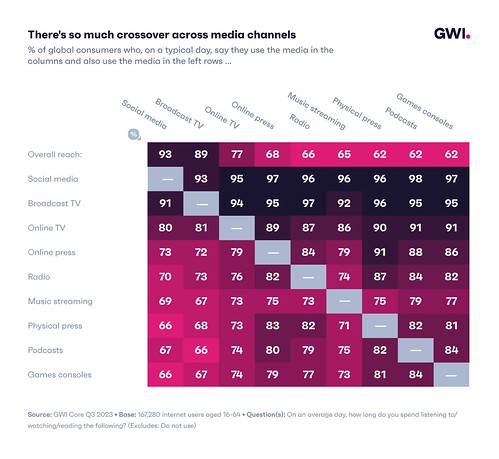
    GWI released their 2024 Global Media trends report. GWI takes a survey based approach to understand consumer media behaviour.

    • Broadcast TV still commands the greatest share of total TV time, despite Netflix, Amazon Prime Video and a plethora of other streaming platforms from Criterion to Disney+.
    • Survival/horror players are most excited about gaming luxury collabs, whether or not luxury brands are equally excited about survival or horror gamers is a bigger question.
    • Games console ownership has halved in the past ten years. This surprised me given how many of my friends have a Switch or PlayStation 5. It probably explains why Microsoft is focusing on being a publisher rather than on platforms as well.

    Japanese online media spend

    Dentsu published a report looking into 2023 Advertising Expenditures in Japan. A couple of interesting outtakes.

    • They focused exclusivity on internet advertising, which gives you a good idea on where they want the balance of media spend to go, rather than necessarily the right tool for the right job. Yes digital is very important, BUT, we live in a world were we are wrapped by and consume layers of digital and analogue media.

    We can see from GWI data that this viewpoint is likely to be still excessively myopic in terms of media due to offline – online media linkages. This is likely to be even more so in Japan that still has a more robust traditional media industry.

    There_s_so_much_crossover_across_media_channels
    • Internet advertising reached a new high, despite being a couple of years after the Olympic games were hosted in Tokyo. (Media spend when a country hosts the olympics tends to be skewed that year upwards).

    One thing I would flag is that this report is based on surveying people across the Japanese advertising industry and built on their responses. So there maybe some biases built into that process. Overall it’s a fascinating read.

    Social media engagement benchmarks

    RivalIQ published their 2024 Social Media Industry Engagement bench report, download it to get the full details. Three things that struck me straight away:

    • Macro-level decline across platforms on engagement rate, which matches the trends that Manson and Whatley outlined ten years ago in their Facebook Zero paper for Ogilvy Social.
    • If brands didn’t need enough reason already to reduce exposure to Twitter, the falling engagement rates on the platform add additional reasons. Overall video seemed to underperform on engagement compared to photos.
    • One thing leaped out to me in the industry verticals data, if you are looking to reach student age adults, why not consider collaborating with higher education institution social media accounts rather than influencers?

    Shocking health outcomes

    The Hidden Cost of Ageism | A Barrier to Innovation & Growth | Future Work – sparked a lot of discussion with its implications on workplace practices, particularly within the advertising sector. What was less discussed but more important was the implications of ageism related biases on healthcare treatment.

    Under-treatment or Over-treatment: Older adults may receive less aggressive treatment options or are overtreated because of age-related biases, rather than based on individual health needs and preferences.

    Dismissal of Concerns: Healthcare providers might dismiss older patients’ health issues as inevitable parts of ageing, potentially overlooking treatable conditions.

    Age-Based Prioritisation: In some cases, age influences the allocation of healthcare resources, with younger individuals being prioritised over older ones, assuming they have more “life worth living.”

    The Hidden Cost of Ageism | Future Work

    MSNBC News in the US did a report on what it called a ‘Post-Roe underground’ echoing the underground railroads to free slaves in the Southern states and the Vietnam war era draft dodgers who escaped north to Canada. This time it is to help women access abortion pills or procedures in other states or Mexico.

    MSNBC

    My friend Parrus hosted a talk on World Health Day, more on that here, the key takeaway for me was not trying to replicate developed market solutions in developing markets. Instead think about how it could be reinvented. Thinking that could be extended beyond health care to consumer goods, telecoms and technology sectors as well.

    Luxury market shake-up

    Business of Fashion covered a US court case where two women brought a lawsuit against Hermès, alleging purchase of its sought-after Birkin bag is dependent on purchase of other products and is an “illegal tying arrangement” that violated US antitrust law.

    5D3_1690

    Hermès is more vulnerable than other brands because it owns its retail stores. The case, if successful could have implications far beyond the luxury bag-maker. For instance, how Ford selected prospective owners for its GT-40 sports cars, or most Ferrari limited edition for that matter.

    While we’re on the subject of luxury, LVMH are rerunning their INSIDE LVMH certificate which is invaluable for anyone who might work on a luxury brand now or in the future. More here.

    Morizo

    Toyota are on a tear at the moment. They correctly guessed that electric cars were too expensive at the moment and focused hybrids as a stepping stone to electric and hydrogen fuel cell production. They have also successfully use the passion for driving in their products and their marketing. The Toyota GR Yaris was a result of Chairman Akio Toyoda instructing engineers to make something sporty enough to win the World Rally Championship and affordable.

    He also outed himself as a speed demon who went under the nom de plume of Morizo.

    Quebec

    For many English speakers one of the most dissonant experiences is being confronted by a language you can’t speak. It’s part of the reason why ireland managed to become the European base of companies like Alphabet and and Intel. So I was very impressed by this campaign by the Quebec government to attract visitors and inbound investment.

    Things I have watched. 

    I watched Mr Inbetween series one in March and managed to work through series two and three this month. I couldn’t recommend them highly enough as a series. They just keep building on each other.

    Over Easter, I revisited some old VHS tapes my parents still had and rediscovered the Christopher Walken science fiction horror film “Communion.” It epitomizes its era, with alien abduction narratives emerging during the Cold War and permeating popular culture from “Close Encounters of the Third Kind” to “The X-Files,” tapering off after 9/11. “Communion” demonstrates how effective editing and minimal special effects can heighten tension and emotion. Despite the film’s incredulous premise, Walken delivers a fantastic performance.

    Modesty Blaise” is from a time when comic book adaptations were uncommon in cinemas. This 1966 adaptation of the 1960s comic strip shares stylistic similarities with “Barbarella” and stars a young Terence Stamp. I received a tape copy from a friend who was attending art college at the time. The depiction of the computer as a character with emotional reactions in the film feels contemporary, echoing the rise of virtual assistants like Siri and ChatGPT, despite being portrayed as a mainframe. It is interesting to contrast it with Spike Jonze’s movie Her made 50 years later.

    Useful tools.

    A lot of the tools this month have been inspired by my trusty Mac slowly dying and needing to get my new machine up and running before my old machine gave out.

    Time Machine

    Apple’s native backup software, Time Machine, serves as a personal sysadmin for home users. Regular backups are essential. If a crucial document disappears while you’re working on it, Time Machine, coupled with a Time Machine-enabled hard drive, allows you to retrieve earlier versions of the document, potentially saving your sanity in critical moments.

    Microsoft Office

    I prefer the one-off payment model over Office 365 services. I use Apple’s Mail, Contacts, and Calendar apps instead of Outlook. While Office is available for just £100, which is reasonable considering its features, I still prefer Keynote over PowerPoint for creating presentations.

    Superlist

    Many of you may recall Wunderlist, which Microsoft acquired, but much of its original charm was lost in the transition to Microsoft To Do. Superlist is a reboot of Wunderlist by the original team, this time without Microsoft’s involvement. It’s available on iOS, macOS, and the web, catering to both individual and team task management needs.

    https://youtu.be/2MzzbRhYlSA?si=04eBXH-MqKLpX2bN

    ESET Home Security Essential

    I used to rely on Kaspersky, and while I generally like their products, I have concerns about the potential influence of the Russian government. Therefore, I switched providers. ESET has a strong reputation and offers better Mac support than F-Secure. I can recommend their ESET HOME Security Essential package.

    Amazon Basics laptop sleeve

    I use a various bags depending on my destination and activities. Over the years, I’ve found that Amazon Basics brand laptop sleeves work well for my machines. They’re often among the cheapest options available and tend to outlast the computers they protect. 

    Laptop camera cover

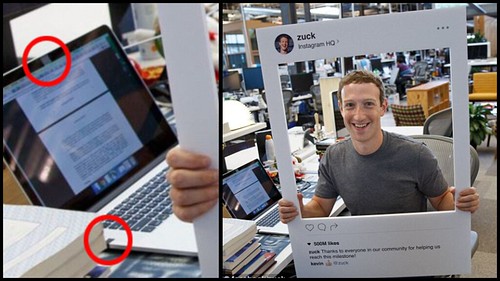
    Cover on Mark Zuckerberg laptop camera! You must have to follow this:-

    The photo of Mark Zuckerberg’s laptop with tape covering the camera raised awareness about privacy. Webcam privacy covers, such as a sliver of plastic that slides across, are ideal as they allow your laptop to close fully. A pro tip is to use a red LED torch to clearly locate your camera when applying the stick-on cover.

    Protective case and keyboard cover

    I’m a big fan of clip-on polycarbonate shells to protect my laptop, as they provide a better surface for the stickers that personalize my machine over time. You don’t necessarily need a big-name case. The one I have came with a keyboard cover that works well. Anything that prevented Red Bull, coffee, or croissant flakes from getting under my keys is worth doing.

    Screen protector film

    The screen protector film provides great protection and is easy to apply and clean, even for beginners like me. I’ll update you if my opinion changes.

    The sales pitch.

    I have enjoyed working on projects for PRECISIONeffect and am now taking bookings for strategic engagements or discussions on permanent roles. Contact me here.

    More on what I have done here.

    bit.ly_gedstrategy

    The End.

    Ok this is the end of my April 2024 newsletter, I hope to see you all back here again in a month. Be excellent to each other and enjoy the bank holiday.

    Don’t forget to like, comment, share and subscribe!

    Let me know if you have any recommendations to be featured in forthcoming issues. 

  • Very Ralph and other things

    Very Ralph

    Very Ralph is a documentary that celebrates the career of Ralph Lauren. What’s interesting is Lauren’s lack of expertise in fashion and design. Instead Very Ralph captures Lauren’s childhood ability as a stylist and art director to eventually create a Ralph Lauren world. Very Ralph became a descriptor of a style and a lifestyle. It’s a very unique way of brand building that you usually see from the likes of Muji rather than many luxury brands.

    Polo Ralph Lauren

    If Apple could have a ‘Very Ralph‘ moment their role in luxury tech would be cemented beyond the Mac and the iPhone. Charlie Rose’s seminal interview with Ralph Lauren is also worth watching.

    Living wake

    A generation before me in Ireland, living wakes were a thing. Usually it was when a member of the family was migrating to the United States, Canada or Australia. Michelle ‘Mike’ Ng’s living wake was because she had state four cancer. The film is an emotional rollercoaster.

    Miss Goddess of Beauty

    A lot of what keeps Hong Kong (and Singapore for that matter), is the hundreds of thousands of domestic helpers who run middle class households. They cook, care for the elderly, clean the homes, do the shopping and bring up the children. While being cheery and sociable people they largely remain unseen and unheard; except for Sundays when they congregate in public spaces.

    Despite the western view of beauty pageants as objectifying women by MEN, Miss Goddess of Beauty is different. It allows these women to to be seen and creatively express themselves. The entire event is organised by the community of domestic helpers. Although the ladies are predominantly Filipinas, there is at least one Indonesian participant in the pageant – a solidarity built on a shared experience in Hong Kong.

    Quentin Tarantino on going to see The Matrix

    Tarantino recalls how the TV spots, rather than reviews or word-of-mouth drove the viewership of The Matrix. The power of advertising to build a world that excited the heck out of the audience before they saw the movie.